19 Results for "

GABA release

" in MedChemExpress (MCE) Product Catalog:
Products (19)

19 Results for "GABA release" in MCE Product Catalog:

15
15 Publications Verification
Cat. No.: HY-A0057
CAS No.: 60142-96-3
Target:  

Calcium Channel

Research Areas:  

Neurological Disease Cancer

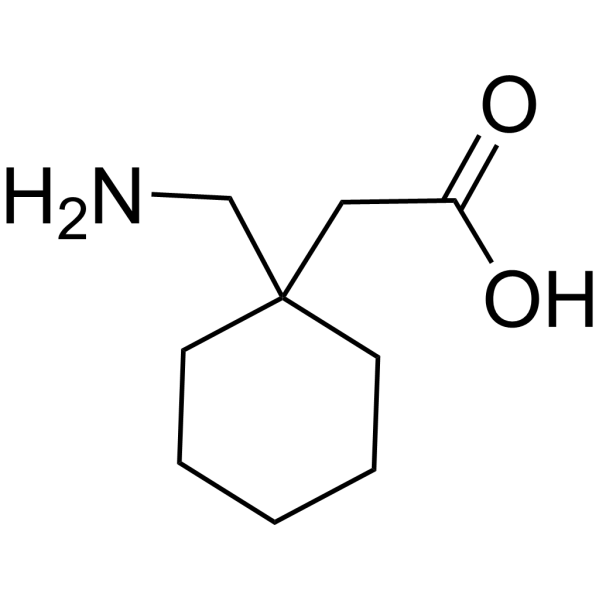
Gabapentin is a potent, orally active P/Q type Ca 2+ channel blocker. Gabapentin inhibits neuronal Ca 2+ influx and reduction of neurotransmitter release. Gabapentin is a GABA analog that can be used to relieve neuropathic pain .
loading...
    loading...
15
15 Publications Verification
Cat. No.: HY-A0057A
CAS No.: 60142-95-2
Target:  

Calcium Channel

Research Areas:  

Neurological Disease Cancer

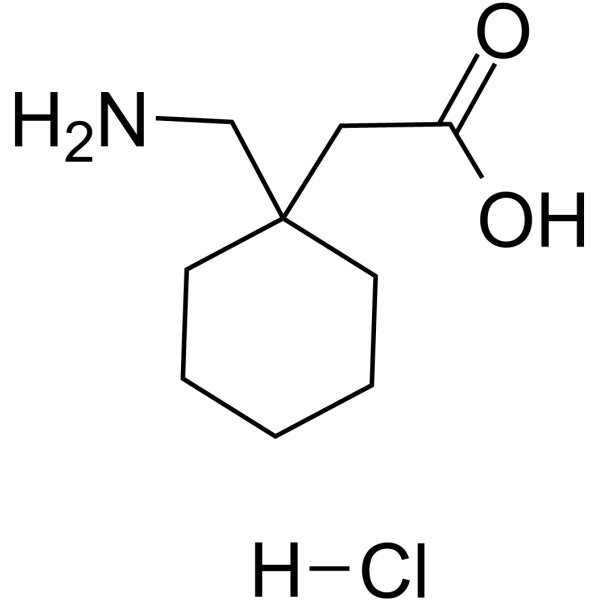
Gabapentin hydrochloride is a potent, orally active P/Q type Ca 2+ channel blocker. Gabapentin hydrochloride inhibits neuronal Ca 2+ influx and reduction of neurotransmitter release. Gabapentin hydrochloride is a GABA analog that can be used to relieve neuropathic pain .
loading...
    loading...
Cat. No.: HY-12783A
CAS No.: 733717-87-8
Purity:  ≥98.0%
Target:  

GABA Receptor

Research Areas:  

Neurological Disease

SCH 50911 is a selective, orally active, blood-brain barrier permeable GABA-B receptor (GABA-B Receptor) antagonist with an IC50 of 1.1 μM in rats. SCH 50911 blocks baclofen-induced antitussive effects, regulates neuronal firing and GABA release. SCH 50911 promotes spontaneous seizures during withdrawal in ethanol-dependent rats, alters reward-related neurotransmission, and reduces or suppresses lever responding and self-administration behaviors of alcohol and sucrose in rats. SCH 50911 is applicable to research related to ethanol withdrawal syndrome, absence epilepsy and alcohol use disorder .
loading...
    loading...
Cat. No.: HY-N6776
CAS No.: 12627-35-9
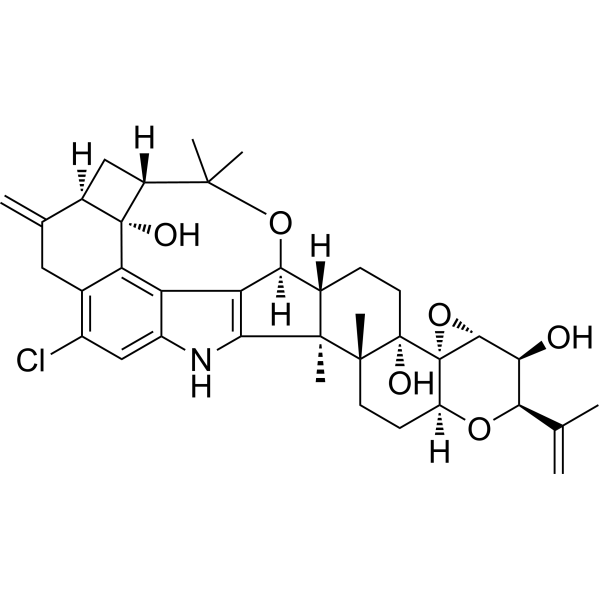
Penitrem A is an indole diterpene neurotoxic alkaloid produced by Penicillium, acts as a selective BK channel antagonist with antiproliferative and anti-invasive activities against multiple malignancies. Penitrem A increases the spontaneous release of endogenous glutamate, gamma-aminobutyric acid (GABA) and aspartate from cerebrocortical synaptosomes, and induces tremorgenic syndromes in animals .
loading...
    loading...
Cat. No.: HY-103527
CAS No.: 1028141-88-9
Purity:  90.43%
Target:  

GABA Receptor

Research Areas:  

Neurological Disease

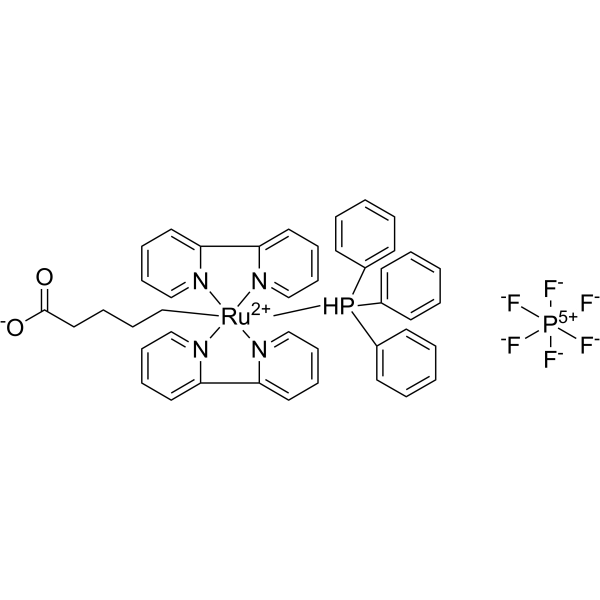
RuBi-GABA is a new ruthenium-based caged GABA compound. RuBi-GABA photocleaves and releases GABA after being excited with visible wavelengths. RuBi-GABA produces gaba receptor-mediated currents .
loading...
    loading...
Cat. No.: HY-115856
CAS No.: 790633-59-9
Target:  

GABA Receptor

Research Areas:  

Neurological Disease

Sch 50910 is a GABA(B) receptor antagonist with some activity in inhibiting GABA(B) autoreceptors. Sch 50910 had no effect on electrically stimulated release at a concentration of 100 μM. The activity of Sch 50910 suggests that it may not have a significant role in studies of GABA(B) receptor function .
loading...
    loading...
Cat. No.: HY-103563
CAS No.: 518357-51-2
Target:  

mGluR

Research Areas:  

Neurological Disease

3-MATIDA is a metabolic glutamate 1 (mGlu1) receptor antagonist. 3-MATIDA alleviates neuronal death in cerebral ischemia models. 3-MATIDA can be used in the study of neuronal injury and epileptiform activity after ischemia .
loading...
    loading...
Cat. No.: HY-12783
CAS No.: 160415-07-6
Target:  

GABA Receptor

Research Areas:  

Neurological Disease

SCH 50911 dihydrochloride is a selective, orally active, blood-brain barrier permeable GABA-B receptor (GABA-B Receptor) antagonist with an IC50 of 1.1 μM in rats. SCH 50911 dihydrochloride blocks baclofen-induced antitussive effects, regulates neuronal firing and GABA release. SCH 50911 dihydrochloride promotes spontaneous seizures during withdrawal in ethanol-dependent rats, alters reward-related neurotransmission, and reduces or suppresses lever responding and self-administration behaviors of alcohol and sucrose in rats. SCH 50911 dihydrochloride is applicable to research related to ethanol withdrawal syndrome, absence epilepsy and alcohol use disorder .
loading...
    loading...
Cat. No.: HY-A0057R
CAS No.: 60142-96-3
Gabapentin (Standard) is the analytical standard of Gabapentin. This product is intended for research and analytical applications. Gabapentin is a potent, orally active P/Q type Ca2+ channel blocker. Gabapentin inhibits neuronal Ca2+ influx and reduction of neurotransmitter release. Gabapentin is a GABA analog that can be used to relieve neuropathic pain .
loading...
    loading...
Cat. No.: HY-107717
CAS No.: 1227675-52-6
Target:  

iGluR

Research Areas:  

Neurological Disease

MNI-caged-NMDA is a light-sensitive amino acid with rapid release properties suitable for use in the study of fast synaptic receptor mechanisms. MNI-caged-NMDA shows metered release of NMDA receptors, inducing rapid and sustained receptor activation in cerebellar interneurons. MNI-caged-NMDA is able to achieve rapid transient responses and generate large inward currents by local laser photolysis. The use of MNI-caged-NMDA can effectively study neurotransmitter signaling and its inhibitory effects on GABA-A receptors .
loading...
    loading...
Cat. No.: HY-W721517
CAS No.: 1126623-20-8
Gabapentin-d10 is the deuterium labeled Gabapentin (HY-A0057). Gabapentin is a potent, orally active P/Q type Ca2+ channel blocker. Gabapentin inhibits neuronal Ca2+ influx and reduction of neurotransmitter release. Gabapentin is a GABA analog that can be used to relieve neuropathic pain .
loading...
    loading...
Cat. No.: HY-A0057AS2
Gabapentin-d4 hydrochloride is the deuterium labeled Gabapentin hydrochloride (HY-A0057A). Gabapentin hydrochloride is a potent, orally active P/Q type Ca 2+ channel blocker. Gabapentin hydrochloride inhibits neuronal Ca 2+ influx and reduction of neurotransmitter release. Gabapentin hydrochloride is a GABA analog that can be used to relieve neuropathic pain .
loading...
    loading...
Cat. No.: HY-133596
CAS No.: 65281-77-8
Research Areas:  

Neurological Disease

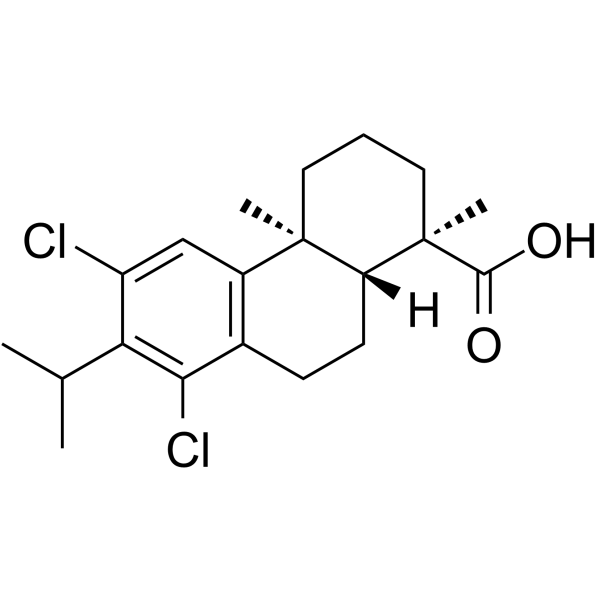
12,14-Dichlorodehydroabietic acid, a chlorinated resin acid, is a potent Ca 2+-activated K + (BK) channel opener. 12,14-Dichlorodehydroabietic acid blocks GABA-dependent chloride entry in mammalian brain and operates as a non-competitive GABAA antagonist. 12,14-Dichlorodehydroabietic acid increases cytosolic free Ca 2+ and stimulates transmitter release .
loading...
    loading...
Cat. No.: HY-114076
CAS No.: 150175-54-5
Target:  

GABA Receptor

Research Areas:  

Neurological Disease

CGP55845 is a potent and selective GABAB receptor antagonist with activity that blocks agonist binding. The IC50 value of CGP55845 is 5 nM, indicating that it exhibits significant activity in inhibiting GABA and glutamate release. The apparent Kd of CGP55845 when forming a complex with the GABAB receptor is 30 nM, indicating its high affinity for this receptor. CGP55845 is as potent as 100 μM CGP 35348 in relieving the inhibitory effect of (R)-(-)-baclofen .
loading...
    loading...
Cat. No.: HY-129907
CAS No.: 321882-95-5
Synonyms: 2-Aminoethyl methylphosphonate
Target:  

GABA Receptor

Research Areas:  

Neurological Disease

2-AEMP (2-Aminoethyl methylphosphonate) is an anti-GABA(A)-ρ1 receptor compound with antagonist activity. 2-AEMP exhibits competitive inhibition compared to TPMPA with an IC(50) value of 18 μM, compared to 7 μM for TPMPA. The release rate of inhibition at termination of 2-AEMP is significantly higher than that of TPMPA. The preincubation time required for the onset of inhibition of 2-AEMP is much shorter than that of TPMPA. Some analogs of 2-AEMP, especially those with benzyl or n-butyl substituents, show lower potency in terms of biological activity .
loading...
    loading...
Cat. No.: HY-111136
CAS No.: 916898-61-8
BL-1020 mesylate is the mesylate salt form of BL-1020. BL-1020 mesylate is an antipsychotic agent. BL-1020 mesylate is inhibitor for dopamine receptor and serotonin receptor (5-HT receptor), with Ki of 0.066, 0.062 and 0.21 nM, for D2L, D2S and 5-HT2A receptors, respectively. BL-1020 mesylate is agonist for GABAA receptor with Ki of 3.74 μM, and enhances the GABA release. BL-1020 mesylate exhibits high affinity with histamine receptor (Ki is 0.47 nM). BL-1020 mesylate reduces Amphetamine-induced hyperactivity, with lower catalepsy and sedation. BL-1020 mesylate is blood-brain barrier penetrate .
loading...
    loading...
Cat. No.: HY-W1025152
CAS No.: 760947-97-5
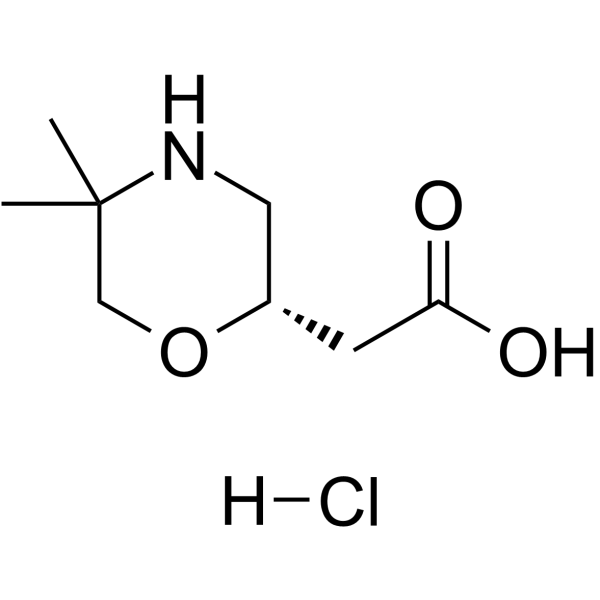
CPP-115 hydrochloride is an orally active, selective GABA-AT inhibitor with a Ki value of 9.7 μM. CPP-115 hydrochloride blocks GABA degradation and increases GABA levels in the brain. CPP-115 hydrochloride does not bind to GABA transporters, does not displace GABA from GABAA/GABAB receptors, and does not act as an agonist/antagonist of GABAC receptors. CPP-115 hydrochloride reduces cocaine-induced dopamine release, blocks cocaine-induced conditioned place preference, and suppresses seizure activity in a rat model of infantile spasms. CPP-115 hydrochloride can be used in research related to infantile spasms and epilepsy .
loading...
    loading...
Cat. No.: HY-A0057AR
CAS No.: 60142-95-2
Gabapentin (hydrochloride) (Standard) is the analytical standard of Gabapentin (hydrochloride). This product is intended for research and analytical applications. Gabapentin hydrochloride is a potent, orally active P/Q type Ca2+ channel blocker. Gabapentin hydrochloride inhibits neuronal Ca2+ influx and reduction of neurotransmitter release. Gabapentin hydrochloride is a GABA analog that can be used to relieve neuropathic pain .
loading...
    loading...
Cat. No.: HY-154792
CAS No.: 115621-24-4
Synonyms: PCA
Pyrrolidone carboxylic acid (PCA) is one of the main components (accounting for approximately 12%) of natural moisturizing factors (NMF) in the mammalian epidermal stratum corneum, and it is produced by the degradation of filaggrin. It exhibits multiple biological activities such as skin moisturization, central GABA release, anxiolysis, and auxiliary ethanol metabolism. The content of Pyrrolidone carboxylic acid correlates with the clinical severity of atopic dermatitis lesions, skin barrier function, and inflammation levels, and shows a negative correlation with the expression of TNF-α and IL-13. Pyrrolidone carboxylic acid can serve as a key skin biomarker for skin barrier function and health .
loading...
    loading...
  • 1

