37 Results for "

Hyaluronan

" in MedChemExpress (MCE) Product Catalog:
Products (37)

37 Results for "Hyaluronan" in MCE Product Catalog:

21
21 Publications Verification
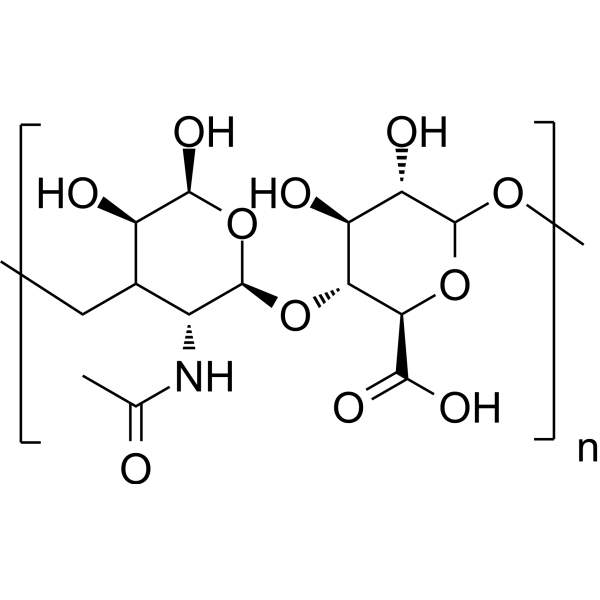
Cat. No.: HY-B0633A
CAS No.: 9004-61-9
Synonyms: Hyaluronan; Hyaluronate
Hyaluronic acid is a biopolymer composed of repeating units of disaccharides with various applications. Hyaluronic acid is a major component of the extracellular matrix (ECM). Hyaluronic acid is synthesized at the plasma membrane. Increased hyaluronic acid levels are associated with tumor cell growth, adhesion, migration, invasion and angiogenesis in digestive cancers. Hyaluronic acid participates in tissue remodeling and rapid cell proliferation in some physiological processes including embryonic morphogenesis and wound-healing. Hyaluronic acid activates the PI3K-Akt signaling. Hyaluronic acid acts as a regulator of cancer-associated lymphangiogenesis. Hyaluronic acid also enhances cell invasion and angiogenesis by promoting proteolytic MMP-9 binding to cell surface or stimulating MMP-9 binding to cell surface. Hyaluronic acid can be used as drug delivery for sodium butyrate to improve the anti-proliferative activity on breast cancer cell line. Hyaluronic acid can be studied in joint diseases, wound healing and cancer .
loading...
    loading...
8
8 Cited Publications
Cat. No.: HY-N0187A
CAS No.: 5980-33-6
Synonyms: Hymecromone sodium salt; 4-MU sodium salt
Research Areas:  

Cancer

4-Methylumbelliferone (sodium salt) is a coumarin derivative. 4-Methylumbelliferone (sodium salt) can be used as a standard to quantify the free 4-methylumbelliferone released as a result of enzyme-substrate action. 4-Methylumbelliferone (sodium salt) inhibits hyaluronan production in vitro. 4-Methylumbelliferone (sodium salt) can be studied in ovarian cancer research .
loading...
    loading...
2
2 Cited Publications
Cat. No.: HY-P990859

Research Areas:  

Cancer

Anti-CD44 Antibody (Hermes-1) is a kind of rat IgG2a κ chimeric antibody, targeting to human CD44. Anti-CD44 Antibody (Hermes-1) blocks the binding of hyaluronan to CD44. Anti-CD44 Antibody (Hermes-1) restores (Platelet-derived Growth Factor-BB)-induced β-receptor activation and motility in fibroblasts. Anti-CD44 Antibody (Hermes-1) causes partial loss of the anti-aging effect of hyaluronic .
loading...
    loading...
2
2 Cited Publications
Cat. No.: HY-P70832
Purity:  ≥ 95%, as determined by reducing SDS-PAGE.
Synonyms: Hyaluronan-binding protein 2; Factor VII-activating protease; Factor seven-activating protease; Hepatocyte growth factor activator-like protein; Plasma Hyaluronan-binding protein
Species:  
Source:  
loading...
    loading...
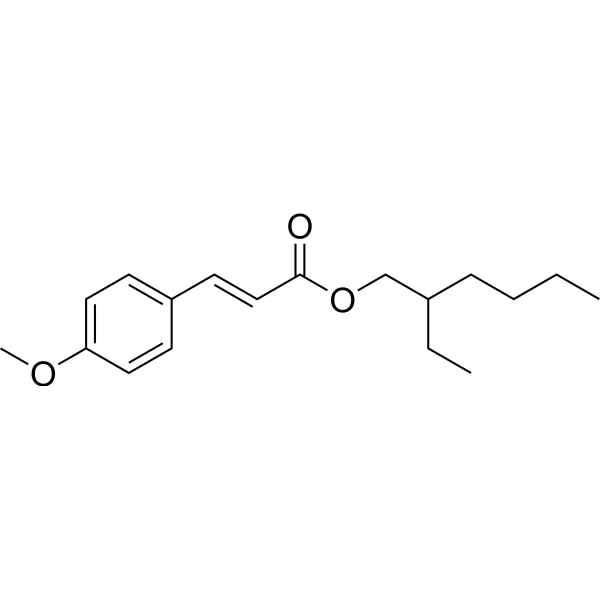
Cat. No.: HY-B1234
CAS No.: 5466-77-3
Synonyms: Octyl methoxycinnamate
Octinoxate (Octyl methoxycinnamate) is a thyroid hormone receptor agonist, reducing the levels of triiodothyronine (T3) and thyroxine (T4) and transcription levels of genes related to type II deiodinase (deio2) in Japanese Medaka. Octinoxate is commonly used as a safe ultraviolet (UV) filter used in the aquatic environment. Octinoxate inhibits CYP1A1 and CYP1B1 to regulate hyaluronan (HA) (HY-B0633A) metabolism in a PI3K pathway-dependent manner in human keratinocytes. Octinoxate also exhibits an anti-estrogenic and anti-androgenic effect in vitro and in vivo .
loading...
    loading...
Cat. No.: HY-B0633E
CAS No.: 9004-61-9
Synonyms: Hyaluronan, low endotoxin; Hyaluronate, low endotoxin
Hyaluronic acid, low endotoxin (Hyaluronan, low endotoxin) is a biopolymer composed of repeating disaccharide units containing low levels of endotoxin. Hyaluronic acid is a major component of the extracellular matrix (ECM). It is synthesized on the plasma membrane. Hyaluronic acid exerts its effects by binding to receptors CD44 and RHAMM. Hyaluronic acid activates PI3K-Akt signaling. Hyaluronic acid also enhances cell invasion and angiogenesis by promoting or stimulating the binding of proteolytic MMP-9 to the cell surface. Elevated hyaluronic acid levels are associated with tumor cell growth, adhesion, migration, invasion, and angiogenesis in digestive system cancers. Hyaluronic acid is involved in tissue remodeling and rapid cell proliferation in several physiological processes, including embryonic morphogenesis and wound healing. Hyaluronic acid can be used as a regulator of cancer-associated lymphangiogenesis. Hyaluronic acid can be used as a drug delivery carrier for sodium butyrate, enhancing its anti-proliferative activity against breast cancer cell lines. Hyaluronic acid can lubricate the corneal endothelium. Hyaluronic acid can improve tissue hydration and enhance the resistance of cells to mechanical damage. Hyaluronic acid has been conjugated with antibodies to ensure that the active compound continues to exert its effects at the site of inflammation. Hyaluronic acid can be used in research in the fields of osteoarthritis, ophthalmology, cosmetic dermatology, oncology, and liver diseases .
loading...
    loading...
Cat. No.: HY-B0633B
CAS No.: 9004-61-9
Synonyms: Hyaluronan (MW 50000-100000); Hyaluronate (MW 50000-100000)
Hyaluronic acid (MW 50000-100000) (Hyaluronan (MW 50000-100000)) is a biopolymer composed of repeating units of disaccharides with a molecular weight of 50000-100000 Da. Hyaluronic acid (MW 50000-100000) can be used as a drug carrier for drug delivery .
loading...
    loading...
Cat. No.: HY-P991487

Research Areas:  

Inflammation/Immunology

LASN01 is a humanized antibody targeting IL-11R, with a Kd of 37 pM. LASN01 blocks the IL-11 signaling pathway via IL-11Rα, and inhibits the phosphorylation of STAT3 and ERK, as well as the expression of pro-inflammatory cytokines, hyaluronic acid, procollagen and fibrotic markers. LASN01 can be used in studies related to thyroid eye disease .
loading...
    loading...
Cat. No.: HY-P5232
CAS No.: 960608-17-7
Target:  

Collagen

Research Areas:  

Metabolic Disease

Tetrapeptide-21 is a bioactive peptide composed of four amino acids. Tetrapeptide-21 effectively enhances the vitality of human dermal fibroblasts. Tetrapeptide-21 upregulates the expression of key extracellular matrix (ECM) genes and promotes the synthesis of ECM proteins (such as type I collagen, hyaluronic acid synthase 1, and fibronectin). Tetrapeptide-21 has the efficacy of anti-wrinkle and improving skin elasticity, and has been reported to be used as a cosmetic ingredient .
loading...
    loading...
Cat. No.: HY-P5351A
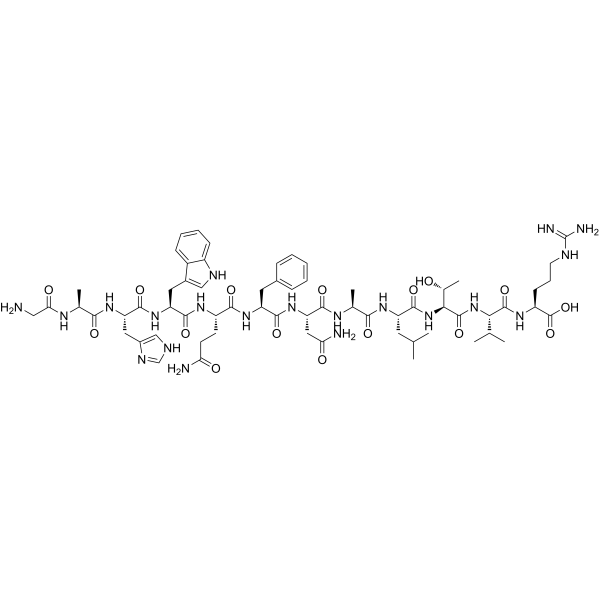
Hyaluronan-binding peptide, biotin labeled TFA is a biological active peptide. (This peptide is a hyaluronan-binding peptide biotinylated through a C-terminal GGGSK linker. Hyaluronan (HA) is a nonsulfated glycosaminoglycan expressed in the extracellular matrix and on cell surfaces. HA plays a role in fertilization, embryonic development, wound healing, angiogenesis, leukocyte trafficking to inflamed tissues, and cancer metastasis. This peptide has been shown to block HA binding to CD44 receptors and inhibit T cell proliferation.) .
loading...
    loading...
Cat. No.: HY-P5352
CAS No.: 299157-43-0
Target:  

CD44

Research Areas:  

Inflammation/Immunology Cancer

Hyaluronan-IN-1 (Pep-1) is a Hyaluronan inhibitor with a Kd value of 1.65 μM. Hyaluronan-IN-1 blocks CD44-dependent cell adhesion. Hyaluronan-IN-1 inhibits cell adhesion to hyaluronan substrates. Hyaluronan-IN-1 suppresses the development of contact hypersensitivity in mice by blocking the homing process of inflammatory cells to the skin. Hyaluronan-IN-1 also inhibits responses during the sensitization phase. Hyaluronan-IN-1 reduces lung metastasis of melanoma and prolongs the survival of mice. Hyaluronan-IN-1 can be used in research related to contact hypersensitivity, chronic skin inflammation, and melanoma .
loading...
    loading...
Cat. No.: HY-P5351
Target:  

Peptides

Research Areas:  

Others

Hyaluronan-binding peptide, biotin labeled is a biological active peptide. (This peptide is a hyaluronan-binding peptide biotinylated through a C-terminal GGGSK linker. Hyaluronan (HA) is a nonsulfated glycosaminoglycan expressed in the extracellular matrix and on cell surfaces. HA plays a role in fertilization, embryonic development, wound healing, angiogenesis, leukocyte trafficking to inflamed tissues, and cancer metastasis. This peptide has been shown to block HA binding to CD44 receptors and inhibit T cell proliferation.)
loading...
    loading...
Cat. No.: HY-P10403
CAS No.: 319426-26-1
Target:  

IGF-1R

Research Areas:  

Inflammation/Immunology Cancer

IGFBP-3 peptide is a 18-amino acid insulin-like growth factor binding protein-3. IGFBP-3 peptide binds Humanin (HY-P1928) and Hyaluronan (HY-B0633A), blocks the interaction of CD44 and hyaluronan .
loading...
    loading...
Cat. No.: HY-W015860
CAS No.: 2687-25-4
Synonyms: Tolylene-2,3-diamine
Target:  

CD44

Research Areas:  

Others

3-Methylbenzene-1,2-diamine (Tolylene-2,3-diamine) is a CD44 hyaluronic acid-binding domain ligand, with a Kd of 8.5 mM for hCD44 HABD and a Kd of 6.4 mM for mCD44 HABD. 3-Methylbenzene-1,2-diamine acts as a non-inhibitor that does not interfere with the binding of CD44 HABD to polymeric hyaluronic acid in vitro .
loading...
    loading...
Cat. No.: HY-B1234S
Octinoxate-13C,d3 is the deuterium labeled Octinoxate (HY-W245806). Octinoxate (Octyl methoxycinnamate) is a thyroid hormone receptor agonist, reducing the levels of triiodothyronine (T3) and thyroxine (T4) and transcription levels of genes related to type II deiodinase (deio2) in Japanese Medaka. Octinoxate is commonly used as a safe ultraviolet (UV) filter used in the aquatic environment. Octinoxate inhibits CYP1A1 and CYP1B1 to regulate hyaluronan (HA) (HY-B0633A) metabolism in a PI3K pathway-dependent manner in human keratinocytes. Octinoxate also exhibits an anti-estrogenic and anti-androgenic effect in vitro and in vivo .
loading...
    loading...
Cat. No.: HY-W713284
CAS No.: 2734919-82-3
2-Ethylhexyl (E)-3-(4-(methoxy-d3)phenyl)acrylate is the deuterium labeled Octinoxate (HY-B1234). Octinoxate (Octyl methoxycinnamate) is a thyroid hormone receptor agonist, reducing the levels of triiodothyronine (T3) and thyroxine (T4) and transcription levels of genes related to type II deiodinase (deio2) in Japanese Medaka. Octinoxate is commonly used as a safe ultraviolet (UV) filter used in the aquatic environment. Octinoxate inhibits CYP1A1 and CYP1B1 to regulate hyaluronan (HA) (HY-B0633A) metabolism in a PI3K pathway-dependent manner in human keratinocytes. Octinoxate also exhibits an anti-estrogenic and anti-androgenic effect in vitro and in vivo .
loading...
    loading...
Cat. No.: HY-E70182
Synonyms: EC:3.2.1.35; HYAL2
Hyaluronidase 2 (EC:3.2.1.35; HYAL2) is a hyaluronidase. Hyaluronidase 2 cleaves high-molecular-weight hyaluronan into intermediate, ~20 kDa, and tetrasaccharide fragments. Hyaluronidase 2 directly interacts with CD44 and ERM proteins, reduces CD44 hyaluronan binding capacity and ERM activation. Hyaluronidase 2 can be used for the research of gliomas, inflammatory bowel disease, congenital heart defects, heart failure .
loading...
    loading...
Cat. No.: HY-P706014
Purity:  ≥ 90%, as determined by reducing SDS-PAGE.
Synonyms: Cell migration-inducing and Hyaluronan-binding protein; EC:3.2.1.35; Hyaluronan binding protein involved in Hyaluronan depolymerization; CEMIP; HYBID
Species:  
Source:  
loading...
    loading...
Cat. No.: HY-W728933
CAS No.: 97747-46-1
Target:  

Drug Intermediate

Research Areas:  

Others

2-Acetamido-2-deoxy-3-O-(β-D-glucopyranuronosyl)-D-glucopyranose is a hyaluronan disaccharide, can be used for pharmaceutical research .
loading...
    loading...
Cat. No.: HY-P89533
Synonyms: CEMIP, KIAA1199, EC:3.2.1.35, Hyaluronan binding protein involved in Hyaluronan depolymerization, HYBID

Host:  

Mouse

Application:  

WB, IP, ELISA

Reactivity:  

human

loading...
    loading...

