46 Results for "

IPSC

" in MedChemExpress (MCE) Product Catalog:
Products (46)

46 Results for "IPSC" in MCE Product Catalog:

12
12 Publications Verification
Cat. No.: HY-13257
CAS No.: 1226056-71-8
Purity:  99.57%
Target:  

ROCK

Research Areas:  

Cancer

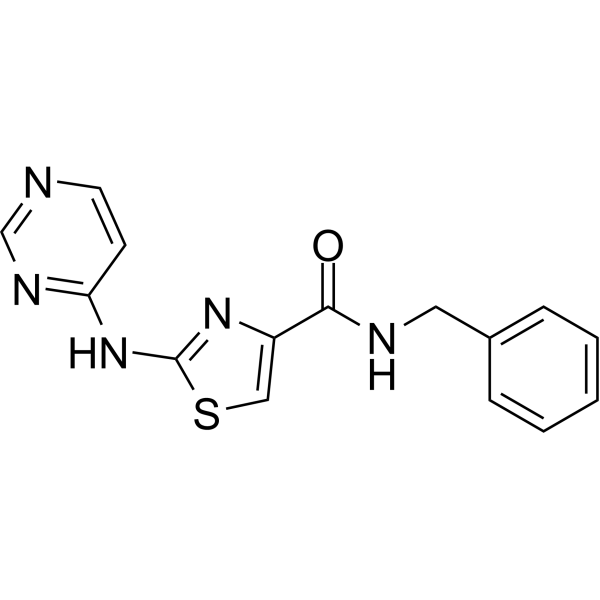
Thiazovivin is a potent ROCK inhibitor, which can protect human embryonic stem cells. Thiazovivin improves the efficiency of iPSC generation.
loading...
    loading...
1
1 Cited Publications
Cat. No.: HY-10232
CAS No.: 64603-91-4
Purity:  99.93%
Synonyms: Gaboxadol
Target:  

GABA Receptor

Research Areas:  

Neurological Disease

THIP (Gaboxadol) is a selective extrasynaptic GABAA receptors (eGABARs) agonist (with blood-brain barrier permeability), shows an EC50 value of 13 μM for δ-GABAAR. THIP induces strong tense GABAA-mediated currents in layer 2/3 neurons, but shows on effect on miniature IPSCs. THIP can be used in studies of sleep disorders .
loading...
    loading...
1
1 Cited Publications
Cat. No.: HY-12303
CAS No.: 300586-90-7
Purity:  99.56%
Target:  

Oct3/4 TET Protein

Research Areas:  

Cancer

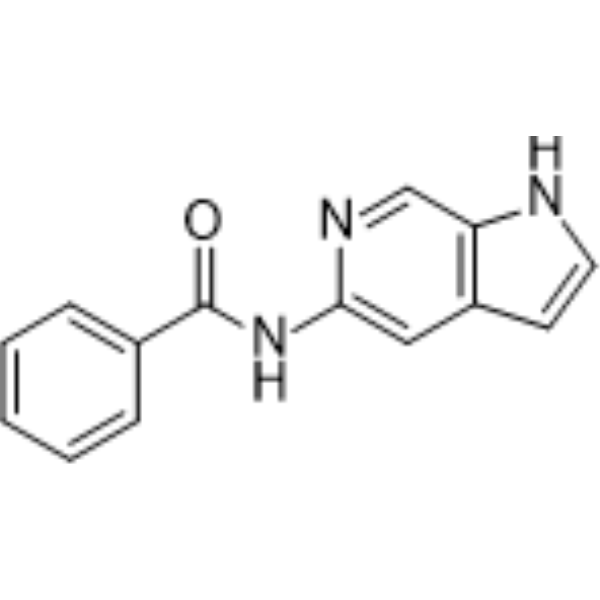
OAC1 is a potent Oct4 activator. OAC1 activates Oct4 and Nanog promoters and enhances induced pluripotent stem cells (iPSC) formation. OAC1 activates OCT4 through upregulation of HOXB4 expression. OAC1 increases transcription of the Oct4-Nanog-Sox2 triad and TET1. OAC1 facilitates the reprogramming of cells by enhancing efficiency and shortening the reprogramming time .
loading...
    loading...
Cat. No.: HY-137817
CAS No.: 384859-58-9
Purity:  98.83%
Target:  

DNA/RNA Synthesis

Research Areas:  

Metabolic Disease

BCH001, a quinoline derivative, is a specific PAPD5 inhibitor. BCH001 restores telomerase activity and telomere length in dyskeratosis congenita (DC) induced pluripotent stem cells. BCH001 shows no inhibition of poly(A)-specific ribonuclease (PARN) or several other canonical and non-canonical polynucleotide polymerases. BCH001 is used to regulate aging .
loading...
    loading...
Cat. No.: HY-12346
CAS No.: 2719-05-3
Purity:  99.17%
Synonyms: NSC 12407; BRD-K4477
Target:  

Quinone Reductase

Research Areas:  

Others

FH1 (NSC 12407) is a NQO2 inhibitor with hepatoprotective effects. FH1 enhances hepatocyte function and promotes differentiation of induced pluripotent stem (iPS)-derived hepatocytes to a more mature phenotype and maturation of well-differentiated hepatocyte-like cell (iHeps) cultures. FH1 protects against Acetaminophen (HY-66005)-induced hepatotoxicity in both embryos and adult zebrafish .
loading...
    loading...
Cat. No.: HY-125283
CAS No.: 1643659-96-4
Purity:  99.38%
Synonyms: 2-Me-Phen hydrochloride; 2-Me-Phenformin hydrochloride
IM176OUT05 (2-Me-Phen hydrochloride), a biguanide, is a mitochondrial OXPHOS inhibitor. IM176OUT0 inhibits mitochondrial electron transport chain (ETC) activity with an IC50 of 3.2 μM. IM176OUT05 activates stem cell metabolism, promotes hair regrowth and increases stemness induction and maintenance during the pluripotent stem cell generation process .
loading...
    loading...
Cat. No.: HY-18772
CAS No.: 165682-93-9
Research Areas:  

Others

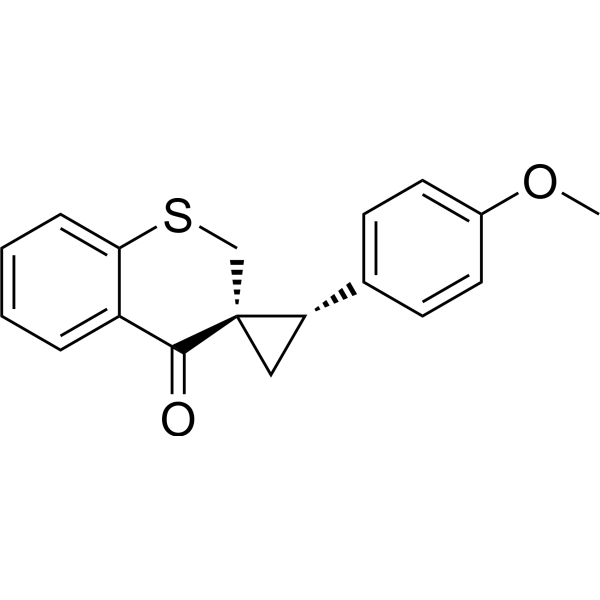
O4I2 is a potent Oct3/4 inducer. O4I2 induces the expression of pluripotent-associated genes Lin28, Sox2 and Nanog, and suppresses Rex1 .
loading...
    loading...
Cat. No.: HY-141591
CAS No.: 1799392-31-6
Purity:  99.80%
Research Areas:  

Others

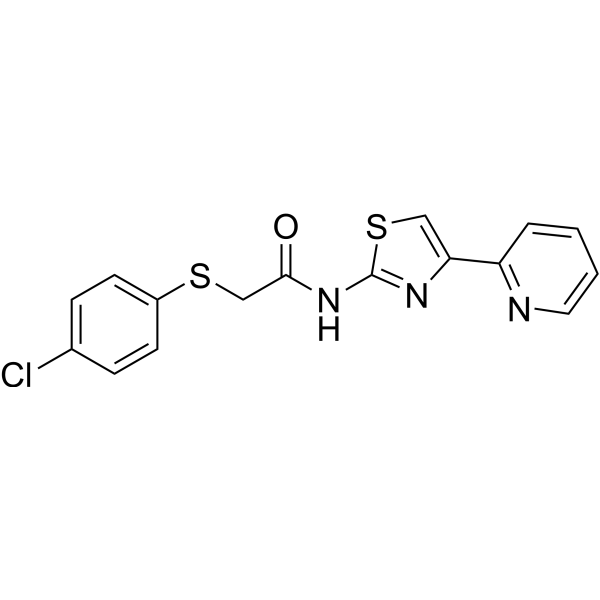
CYT296 is a target chromatin de-condensation compound. CYT296 can improve the induction of induced pluripotent stem cell (iPSCs) mediated by defined factors (OSKM) and induce an open chromatin state in Mouse Embryonic Fibroblast (MEFs) to facilitate somatic cell reprogramming. CYT296 can be used for cell replacement therapies and drug screening research .
loading...
    loading...
Cat. No.: HY-124815
CAS No.: 895470-67-4
Purity:  99.69%
Research Areas:  

Others

CP-312 is a potent Heme Oxygenase-1 (HO-1) inducer. CP-312 protects hiPSC-CM viability by targeting the antioxidant response network through induction of HMOX1 expression. CP-312 protects human iPSC-derived cardiomyocytes from oxidative stress .
loading...
    loading...
Cat. No.: HY-170781
CAS No.: 3099003-91-2
Target:  

LIM Kinase (LIMK)

Research Areas:  

Metabolic Disease

MDI-114215 (compound 85) is an allosteric LIMK1/2 dual inhibitor with good in vivo tolerance. MDI-114215 can inhibit cofilin phosphorylation in mouse brain region-induced pluripotent stem cells (iPSCs), which can be used for Fragile X Syndrome (FXS) research .
loading...
    loading...
Cat. No.: HY-141878
CAS No.: 2767983-76-4
Research Areas:  

Neurological Disease

di-Ellipticine-RIBOTAC is a RNase recruiting chimera (RIBOTAC) degrader, capable of specifically binding and degrading expanded G4C2 RNA repeat (r(G4C2) exp). di-Ellipticine-RIBOTAC selectively binds the three-dimensional (3D) structure formed by r(G4C2) exp and that recruits an endogenous ribonuclease (RNase) to cleave r(G4C2) exp. di-Ellipticine-RIBOTAC selectively degrades the mutant chromosome 9 open reading frame 72 (C9orf72) allele and reduces quantities of toxic dipeptide repeat proteins (DPRs) translated from r(G4C2) exp. di-Ellipticine-RIBOTAC significantly improves the pathological phenotype of amyotrophic lateral sclerosis/ frontotemporal dementia (c9ALS/FTD) in cells and mouse models. di-Ellipticine-RIBOTAC can be used for the study of amyotrophic lateral sclerosis (ALS) and frontotemporal dementia (FTD) .
loading...
    loading...
Cat. No.: HY-160842
CAS No.: 3024322-57-1
Target:  

c-Fms

Research Areas:  

Neurological Disease

CSF1R-IN-24 (Example 134) is an orally active CSF1R inhibitor. CSF1R-IN-24 significantly inhibits the survival of human ipSC-derived microglia (hiPSC-MG) .
loading...
    loading...
Cat. No.: HY-N0229R
CAS No.: 56-41-7
Synonyms: L-2-Aminopropionic acid (Standard)
L-Alanine (Standard) is the analytical standard of L-Alanine. This product is intended for research and analytical applications. L-Alanine is a non-essential amino acid, involved in sugar and acid metabolism, increases immunity, and provides energy for muscle tissue, brain, and central nervous system. In Vitro: The viability of both hiPSCs, 201B7 cells and ehiPSCs decrease with an increase in L-Alanine concentration, and reach 7.5±1.3% and 3.7±0.7% respectively at 1.2 M of L-Alanine. On the other hand, no decrease in the viability of hFBs and hSkMCs are observed. Although the viability of iCMs slightly decreases along with the increase of the L-Alanine concentration, viability of iCMs at 1.2 M concentration of L-Alanine, 49.4±6.9%, is significantly higher than that of undifferentiated iPSCs, 201B7 cells and ehiPSCs (p< 0.01). The viability of hiPSCs, 201B7 cells and ehiPSCs, drastically decrease even after 2 or 4 h treatment. In contrast, the viability of hFBs fails to decrease at 1, 2, and 4 h and shows a small decrease at 24 h treatment. The viability of 201B7 cells in suspension culture decreases to 11.8±6.0% following treatment with 1.2 M L-Alanine for 2 h, whereas that of hFBs is 72.9±14.2% .
loading...
    loading...
Cat. No.: HY-W611371
CAS No.: 61694-81-3
Target:  

TRP Channel iGluR

Research Areas:  

Neurological Disease

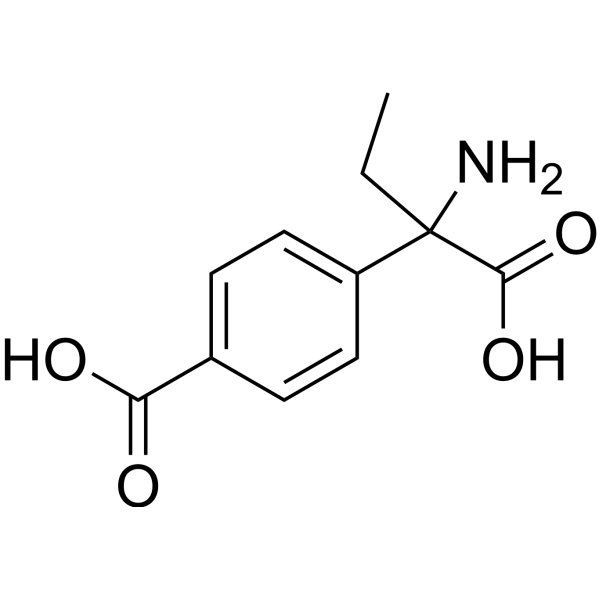
FP802 is an orally active potent TwinF interface inhibitor that disrupts and detoxifies the NMDAR/TRPM4 death complex. FP802 exerts powerful neuroprotective effects in the 5xFAD mouse model of Alzheimer’s disease (AD) by preventing cognitive decline, preserving neuronal structural integrity, reducing amyloid-β plaque formation, and mitigating mitochondrial pathology . FP802 stops loss of motor neurons, reduces serum neurofilament light chain (NfL) levels, improves motor performance, and extends life in a mouse model of amyotrophic lateral sclerosis (ALS). FP802 can be used for AD and ALS research .
loading...
    loading...
Cat. No.: HY-P2286
CAS No.: 1967815-98-0
Target:  

Phosphatase

Research Areas:  

Cancer

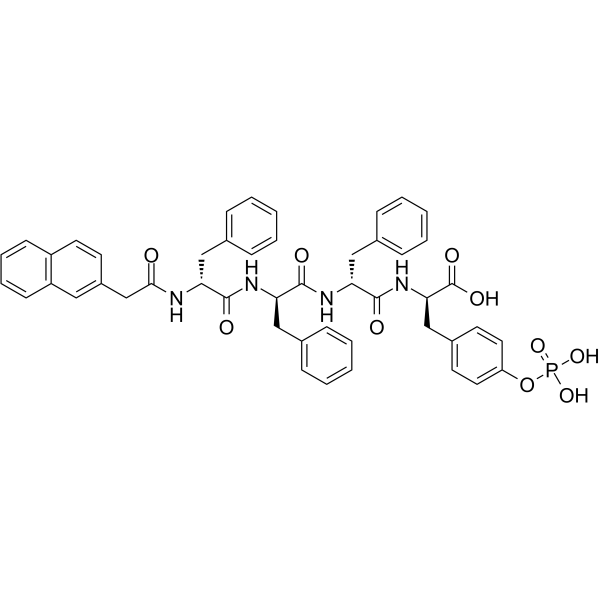
D-3, a phosphorpeptide, is an efficient, simple, and specific iPSC-eliminating agent .
loading...
    loading...
Cat. No.: HY-13526G
CAS No.: 209984-56-5
Synonyms: Dibenzazepine (GMP); DBZ (GMP)
YO-01027 (Dibenzazepine) (GMP) is YO-01027 (HY-13526) produced by using GMP guidelines. GMP small molecules work appropriately as an auxiliary reagent for cell therapy manufacture. YO-01027 is a potent γ-secretase inhibitor .
loading...
    loading...
Cat. No.: HY-18773
CAS No.: 1016535-83-3
Target:  

Oct3/4

Research Areas:  

Inflammation/Immunology

Oct3/4-inducer-1 (compound 2) is a potent Oct3/4 inducer. Oct3/4-inducer-1 promotes expression and stabilization of Oct3/4, and enhances its transcriptional activity in diverse human somatic cells .
loading...
    loading...
Cat. No.: HY-119672
CAS No.: 182564-41-6
Purity:  98.27%
Target:  

Oct3/4

Research Areas:  

Others

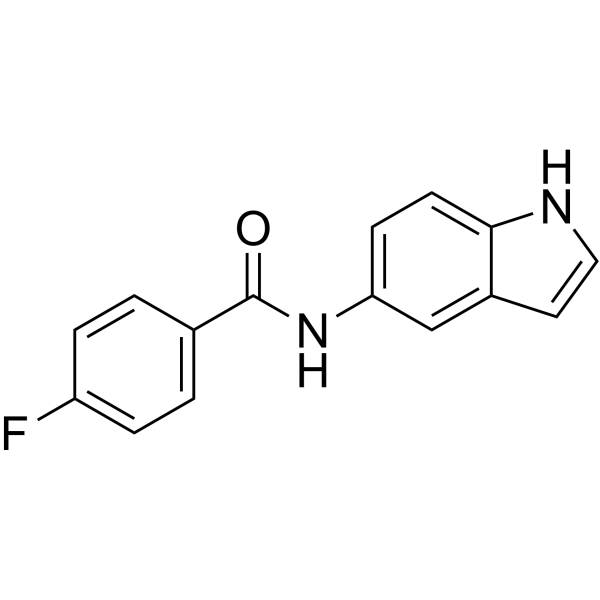
Oct4 inducer-1 (compound OAC-3) is a potent Oct4 activator. Oct4 inducer-1 activates Oct4 and Nanog promoters and enhances induced pluripotent stem cells (iPSC) formation. Oct4 inducer-1 facilitates the reprogramming of cells by enhancing efficiency and shortening the reprogramming time .
loading...
    loading...
Cat. No.: HY-50751G
CAS No.: 796967-16-3
Synonyms: ABT-869 (GMP); AL-39324 (GMP)
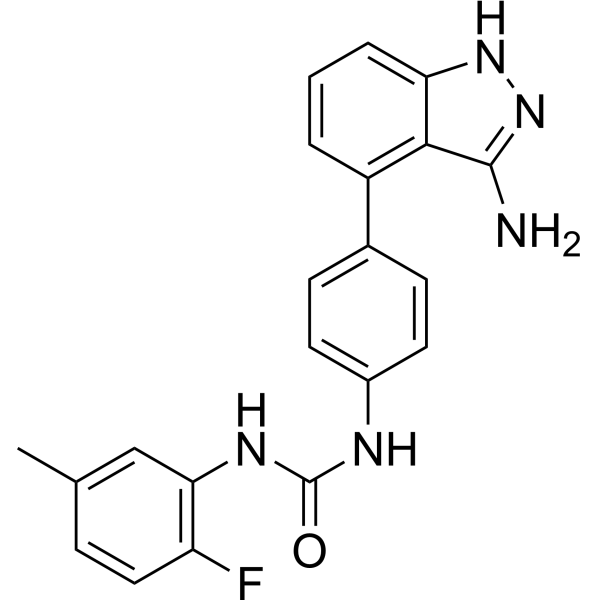
Linifanib (ABT-869) (GMP) is Linifanib (HY-50751) produced by using GMP guidelines. GMP small molecules work appropriately as an auxiliary reagent for cell therapy manufacture. Linifanib is a potent and orally active multi-target inhibitor of VEGFR and PDGFR family with IC50s of 4, 3, 66, and 4 nM for KDR, FLT1, PDGFRβ, and FLT3, respectively. Linifanib (GMP) promotes the generation and reprogramming of iPSCs from somatic cells .
loading...
    loading...
Cat. No.: HY-178048
CAS No.: 3086460-35-4
Target:  

Autophagy

Research Areas:  

Neurological Disease

Neuroprotective agent 13 is a brain-penetrant 1H-benzo[d]imidazoles compound with neuroprotective effect. Neuroprotective agent 13 can activate autophagy and clear SCMAS accumulation from iPSC-derived neural progenitor cells. Neuroprotective agent 13 can be used for the research of neurological disease, such as neuronal ceroid lipofuscinoses (NCLs) .
loading...
    loading...

