1. Search Result
Search Result
Results for "

Kainic acid

" in MedChemExpress (MCE) Product Catalog:

18

Inhibitors & Agonists

1

Fluorescent Dyes

2

Natural
Products

Cat. No. Nombre del producto Target Áreas de investigación Chemical Structure
  • HY-N2309
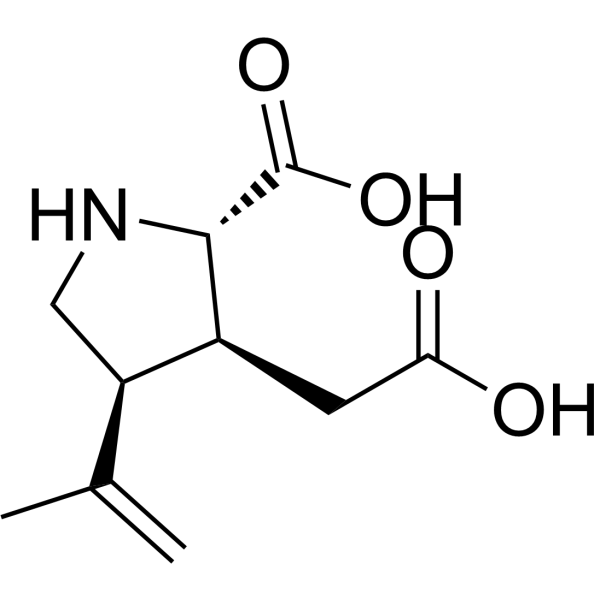
    Kainic acid
    30+ Cited Publications

    EAAT Neurological Disease
    Kainic acid is a potent excitotoxic agent. Kainic acid hydrate also is an agonist for a subtype of ionotropic glutamate receptor. Kainic acid induces seizures .
    Kainic acid
  • HY-100815B

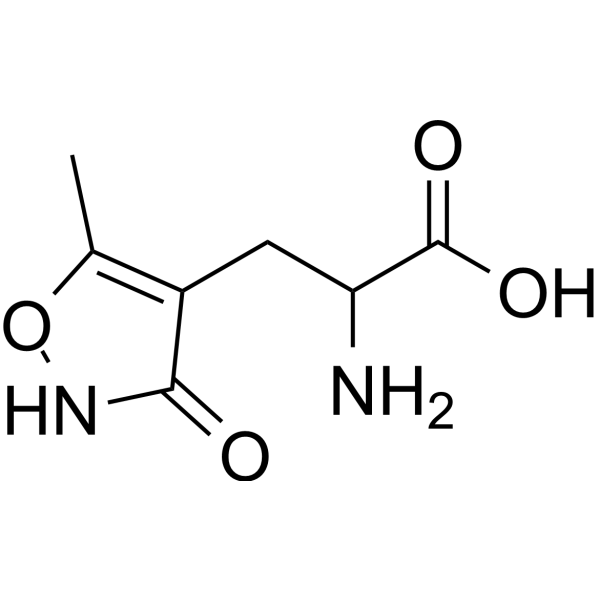
    (±)-AMPA

    iGluR Neurological Disease
    (RS)-AMPA ((±)-AMPA) is a glutamate analogue and a potent and selective excitatory neurotransmitter L-glutamic acid agonist. (RS)-AMPA does not interfere with binding sites for kainic acid or NMDA receptors .
    (RS)-AMPA
  • HY-N2309A
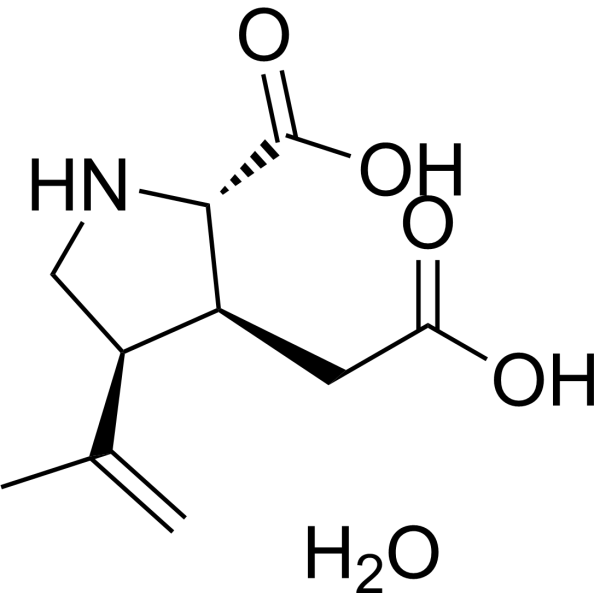
    Kainic acid hydrate
    30+ Cited Publications

    mGluR Neurological Disease
    Kainic acid hydrate is a potent excitotoxic agent. Kainic acid hydrate also is an agonist for a subtype of ionotropic glutamate receptor. Kainic acid hydrate induces seizures .
    Kainic acid hydrate
  • HY-N8115

    Others Neurological Disease
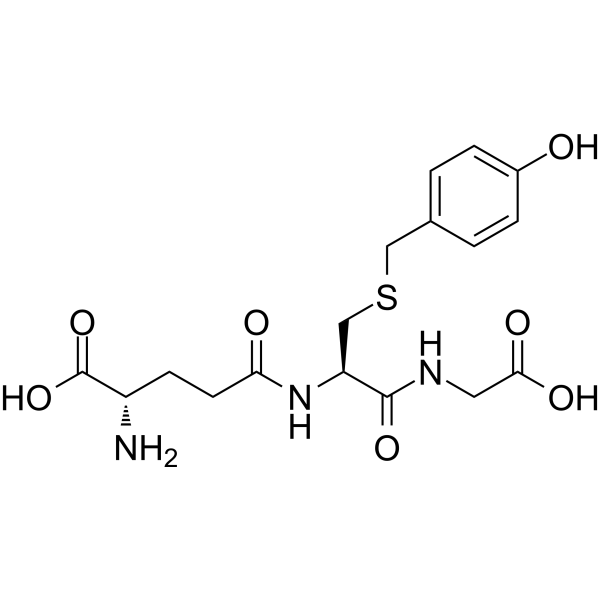
    S-(4-Hydroxybenzyl)glutathione is a glutathione derivative. S-(4-Hydroxybenzyl)glutathione inhibits the in vitro binding of kainic acid to brain glutamate receptors, with an IC50 of 2 μM .
    S-(4-Hydroxybenzyl)glutathione
  • HY-100815C

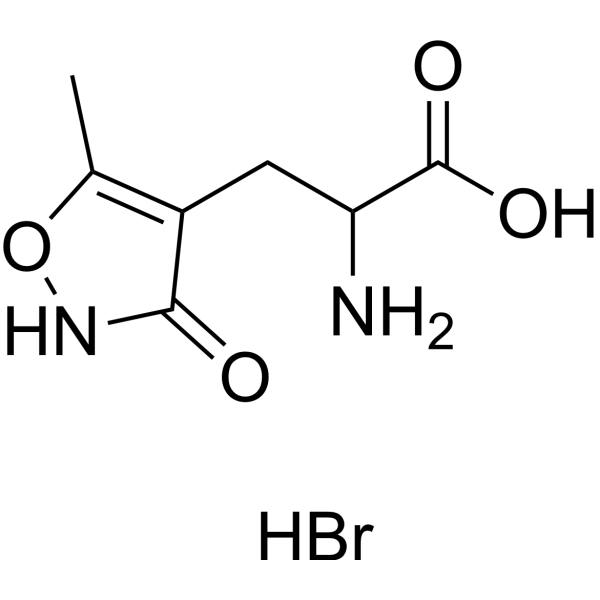
    (±)-AMPA hydrobromide

    iGluR Neurological Disease
    (RS)-AMPA ((±)-AMPA) hydrobromide is a glutamate analogue and a potent and selective excitatory neurotransmitter L-glutamic acid agonist. (RS)-AMPA hydrobromide does not interfere with binding sites for kainic acid or NMDA receptors .
    (RS)-AMPA hydrobromide
  • HY-147382

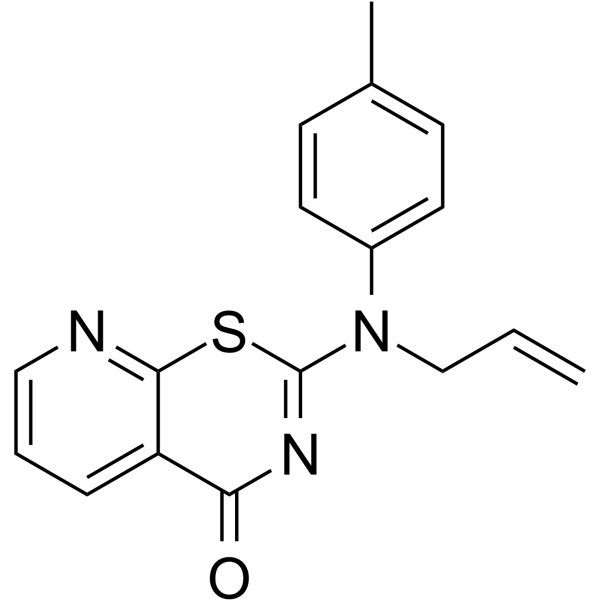
    Drug Derivative Neurological Disease
    Neuronotoxicity-IN-1, a pyridothiazine derivative, is a kainic acid neurotoxicity inhibitor. Neuronotoxicity-IN-1 is a neuroprotective agent .
    Neuronotoxicity-IN-1
  • HY-118758

    γ-Kainic acid-glutamic acid

    Sodium Channel Neurological Disease
    γ-Kainylglutamic acid (γ-Kainic acid-glutamic acid), a dipeptide derived from kainic and L-Glutamic acids, is a selective antagonist of amino acid induced neuroexcitation with anticonvulsant properties. γ-Kainylglutamic acid inhibits the stimulation of Na + fluxes induced in brain slices by the neuroexcitant N-methyl-D-aspartic acid. γ-Kainylglutamic acid is also effective in protecting mice from picrotoxin-induced convulsions with an EC50 value of 0.17 μmol .
    γ-Kainylglutamic acid
  • HY-118072

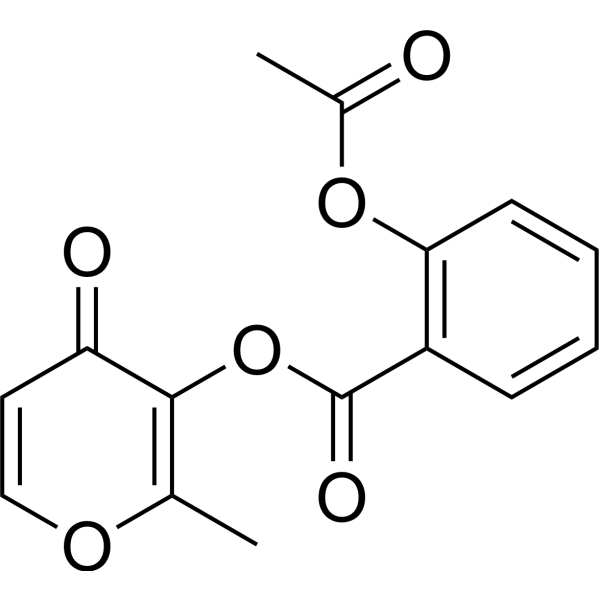
    Reactive Oxygen Species (ROS) Neurological Disease
    Aspalatone is an orally active antiplatelet aggregant with IC50 of 180 μM. Aspalatone has antioxidant and neuroprotective activities .
    Aspalatone
  • HY-100815D

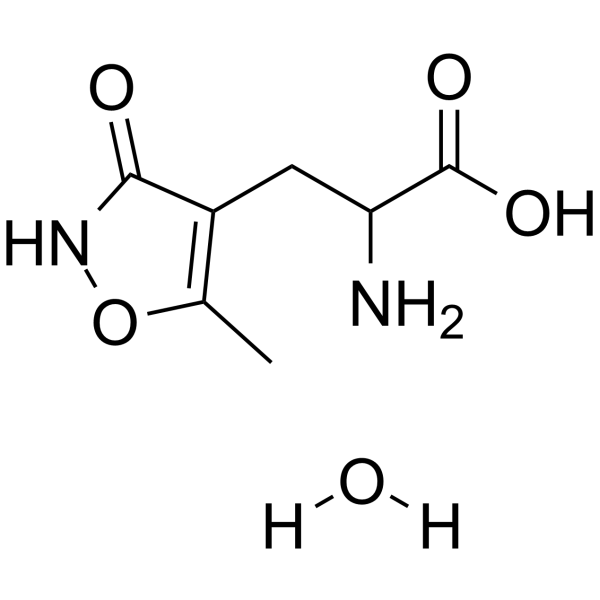
    (±)-AMPA monohydrate

    iGluR Neurological Disease
    (RS)-AMPA ((±)-AMPA) monohydrate is a glutamate analogue and a potent and selective excitatory neurotransmitter L-glutamic acid agonist. (RS)-AMPA monohydrate does not interfere with binding sites for kainic acid or NMDA receptors .
    (RS)-AMPA monohydrate
  • HY-100815E

    (±)-AMPA hydrochloride

    iGluR Neurological Disease
    (RS)-AMPA ((±)-AMPA) hydrochloride is a glutamate analogue and a potent and selective excitatory neurotransmitter L-glutamic acid agonist. (RS)-AMPA hydrobromide does not interfere with binding sites for kainic acid or NMDA receptors .
    (RS)-AMPA hydrochloride
  • HY-19465

    iGluR Neurological Disease
    Dasolampanel is a kainate receptor antagonist that helps regulate the excitability of the nervous system by blocking kainate receptors and reducing glutamate-mediated excitatory transmission. Dasolampanel can be used in the study of diseases such as overexcitement and sleep disorders .
    Dasolampanel
  • HY-100815BR

    (±)-AMPA (Standard)

    Reference Standards iGluR Neurological Disease
    (RS)-AMPA (Standard) is the analytical standard of (RS)-AMPA. This product is intended for research and analytical applications. (RS)-AMPA ((±)-AMPA) is a glutamate analogue and a potent and selective excitatory neurotransmitter L-glutamic acid agonist. (RS)-AMPA does not interfere with binding sites for kainic acid or NMDA receptors .
    (RS)-AMPA (Standard)
  • HY-133956

    NSC 680434

    Apoptosis CDK Neurological Disease Cancer
    3-ATA (NSC 680434) is a selective inhibitor of cyclin-dependent kinase 4 (CDK4) with neuroprotective and antitumor effects. 3-ATA can alleviate kainic acid (HY-N2309)-induced apoptosis in cerebellar granule neurons, which can be used in the study of neurodegenerative diseases .
    3-ATA
  • HY-162757

    GABA Receptor Sodium Channel Neurological Disease
    Anticonvulsant agent 5 (Compound 5c) exhibits high affinity for GABAA receptors and NaV1.3 receptors. Anticonvulsant agent 5 shows anticonvulsant efficacy in mice psychomotor epilepsy test with an ED50 of 107 mg/kg. Anticonvulsant agent 5 exhibits neuroprotective activity against Kainic acid (HY-N2309) with an IC50 of 113 μM. Anticonvulsant agent 5 is blood-brain barrier (BBB) penetrable .
    Anticonvulsant agent 5
  • HY-149422

    Fluorescent Dye Neurological Disease
    NIR-FP is a near-infrared fluorescent probe with high sensitivity and selectivity for superoxide anion O 2-. O 2- is the main precursor of ROS, and ferroptosis-mediated epilepsy models can be dynamically tracked by detecting O 2-. Ferroptosis-mediated epilepsy models include: kainic acid (HY-N2309)-induced chronic epilepsy model, Pentylenetetrazole-induced acute epilepsy model, and pilocarpine (HY-B0726A)-induced epilepsy model .
    NIR-FP
  • HY-175670

    GABA Receptor Neurological Disease
    GABAA receptor modulator-10 is an orally active, potent positive allosteric modulator (PAM) of the α1β2γ2 GABAA receptor with favorable blood-brain barrier (BBB) penetration. GABAA receptor modulator-10 enhances α1β2γ2 GABAA receptor function and potentiates GABA-evoked currents. GABAA receptor modulator-10 demonstrates potent antiepileptic efficacy in both the Pentetrazol (PTZ)- and Kainic Acid (KA) (HY-N2309)-induced mice epilepsy models. GABAA receptor modulator-10 can be used for the study of epilepsy .
    GABAA receptor modulator-10
  • HY-15083

    BIIR-561-CL

    iGluR Sodium Channel Neurological Disease
    Irampanel hydrochloride (BIIR 561-CL) is an AMPA receptor and voltage-dependent sodium channel blocker. Irampanel hydrochloride inhibits Kainic acid (HY-N2309)-induced currents in rat cortical neurons .
    Irampanel hydrochloride
  • HY-D3224

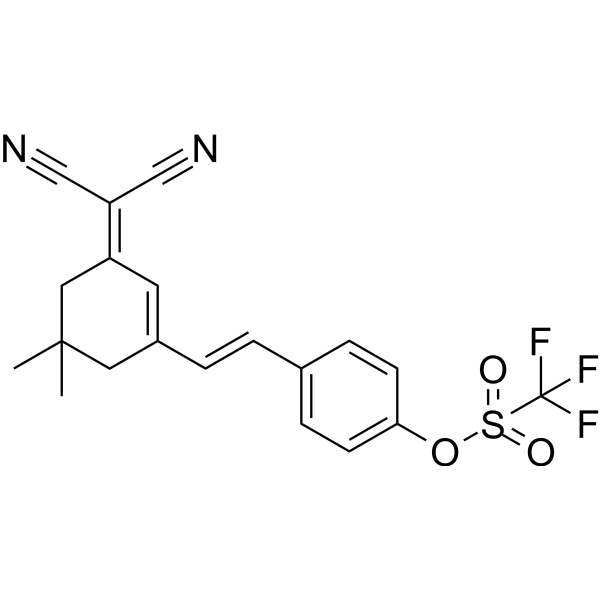
    Fluorescent Dye Neurological Disease
    HCP is a two-photon fluorescent probe capable of crossing the blood-brain barrier, which is specifically designed for real-time detection of hypochlorous acid (HClO/ClO -) produced by myeloperoxidase (MPO). Chlorination of the quinoline skeleton of HCP generates HCP-Cl, which eliminates intramolecular charge transfer (ICT) quenching and thereby produces fluorescence. HCP is suitable for in vivo dynamic imaging of HClO in the brains of epileptic mice and high-throughput screening of antiepileptic drugs (HCP-Cl: Ex/Em = 800 nm/495 nm) .
    HCP

Consulta en línea

Your information is safe with us. * Required Fields.

Saludo


Country or Region *

Nombre del solicitante *


Nombre de la Organizaciòn *

Department *


Direcciòn del E-mail *


Nombre del producto *

Cat. No.


Requested quantity *

Número de teléfono *


Observaciones

Consulta en línea

Inquiry Information

Nombre del producto:
Cat. No.:
Cantidad:
MCE Japan Authorized Agent:

