
1. Search Result
Search Result
Results for "

MDA

" in MedChemExpress (MCE) Product Catalog:

518

Inhibitors & Agonists

2

Fluorescent Dye

9

Biochemical Assay Reagents

10

Peptides

1

MCE Kits

5

Inhibitory Antibodies

76

Natural
Products

9

Recombinant Proteins

20

Isotope-Labeled Compounds

24

Antibodies

8

Click Chemistry

5

Oligonucleotides

1

GMP Molecules

Targets Recommended:
Cat. No. Product Name Target Research Areas Chemical Structure
  • HY-B1029
    Danazol
    4 Publications Verification

    PKC Apoptosis Tyrosinase Endocrinology Cancer
    Danazol inhibits the proliferation of cancer cell MDA-MB-231 and MCF-7 with IC50 of 65 µg/mL and 31 µg/mL. Danazol arrests the cell cycle at G1 phase, induces apoptosis in MDA-MB-231 through PKCα signaling pathway .
    Danazol
  • HY-11038
    Zelavespib
    10+ Cited Publications

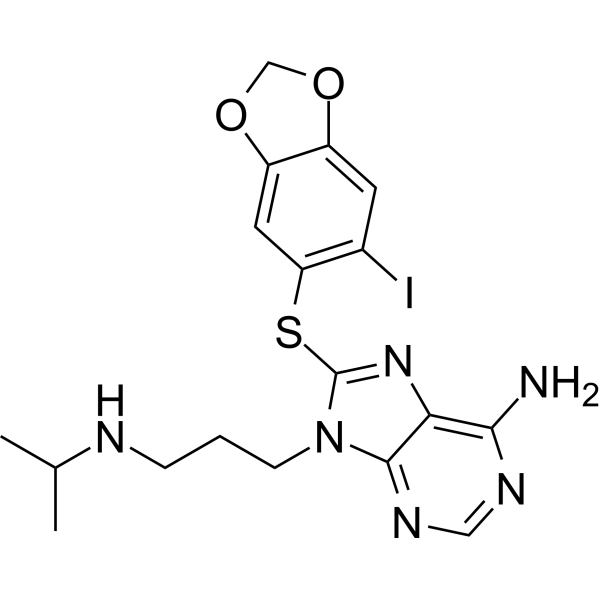
    PU-H71

    HSP Cancer
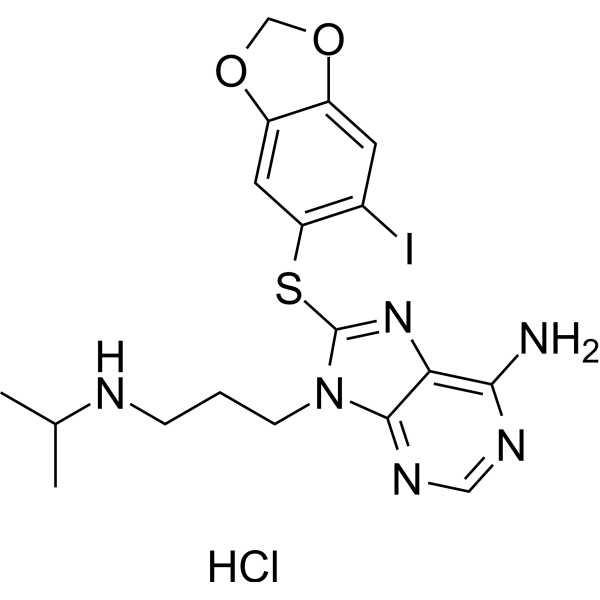
    Zelavespib (PU-H71) is a potent Hsp90 inhibitor, with an IC50 of 51 nM in MDA-MB-468 cells.
    Zelavespib
  • HY-119706
    Barbadin
    15+ Cited Publications

    Apoptosis Arrestin Others
    Barbadin is a novel and selective β-arrestin/β2-adaptin interaction inhibitor, has IC50 values of 19.1 μM for β-arrestin1 and 15.6 μM for β-arrestin2. Barbadin blocks agonist-promoted endocytosis of the prototypical β2-adrenergic, V2-vasopressin and angiotensin-II type-1 receptors. Barbadin can induce apoptosis .
    Barbadin
  • HY-15518
    LCL161
    40+ Cited Publications

    IAP Cancer
    LCL161 is a IAP inhibitor which inhibits XIAP in HEK293 cell and cIAP1 in MDA-MB-231 cell with IC50s of 35 and 0.4 nM, respectively.
    LCL161
  • HY-77962

    Biochemical Assay Reagents Others
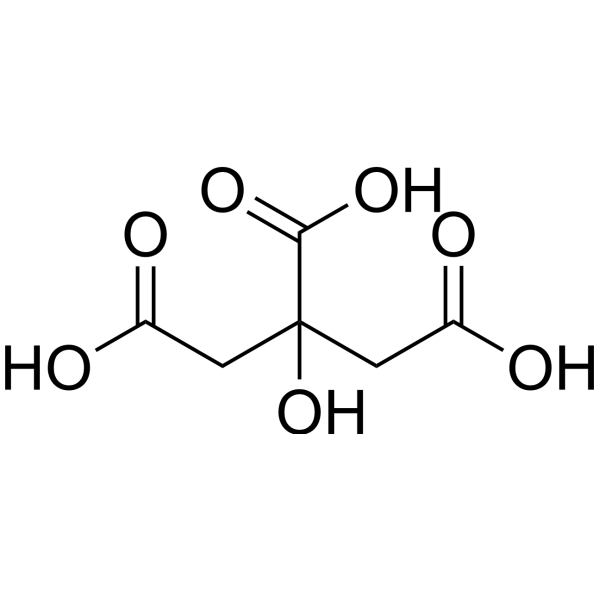
    2-Thiobarbituric acid is a commonly used colorimetric reagent for the detection of malondialdehyde (MDA), a marker of lipid peroxidation. 2-Thiobarbituric acid forms a complex with MDA that can be quantified by colorimetric detection at 532 nm as a measure of lipid peroxidation .
    2-Thiobarbituric acid
  • HY-13720A
    Pergolide mesylate
    1 Publications Verification

    Pergolide methanesulfonate; LY127809

    Dopamine Receptor Drug Derivative Cardiovascular Disease Neurological Disease Metabolic Disease
    Pergolide mesylate (Pergolide methanesulfonate), an Ergoline derivative, is a potent and orally active dopamine D1 and D2 receptors agonist. Pergolide mesylate can be used for Parkinson's disease and hyperprolactinaemia research .
    Pergolide mesylate
  • HY-163897

    PROTACs Ferroptosis Reactive Oxygen Species (ROS) Inflammation/Immunology
    PROTAC NCOA4 degrader-1 is a VHL-based PROTAC NCOA4 degrader. PROTAC NCOA4 degrader-1 is a ferroptosis inhibitor. PROTAC NCOA4 degrader-1 reduces Fe 2+ elevation, ROS production, MDA content and PTGS2 mRNA expression. PROTAC NCOA4 degrader-1 ameliorates liver damage in a CCl4-induced acute liver injury model. PROTAC NCOA4 degrader-1 can be used for the researches of inflammation and immunology. (Pink: NCOA4 ligand (HY-149457). Black: linker (HY-163903). Blue: VHL ligand (HY-138678B)) .
    PROTAC NCOA4 degrader-1
  • HY-15451
    MDA 19
    2 Publications Verification

    BZO-HEXOXIZID

    Cannabinoid Receptor Neurological Disease
    MDA 19 is a potent and selective agonist of human cannabinoid receptor 2 (CB2), with a Ki of 43.3 nM. MDA 19 has antiallodynic effects in a rat model of neuropathic pain and does not affect rat locomotor activity .
    MDA 19
  • HY-145652
    Narmafotinib
    1 Publications Verification

    AMP-945

    Narmafotinib (AMP-945) is an orally active inhibitor of the enzyme focal adhesion kinase (FAK, KD=0.21 nM). Narmafotinib inhibits autophosphorylation of 397Y-FAK in MDA-MB-231 cells with an IC50=7 nM and exhibits low general cellular toxicity (IC50=2.7 μM, MDA-MB-231 cells). Narmafotinib can be used for anti-cancer study .
    Narmafotinib
  • HY-P99274
    Xentuzumab
    1 Publications Verification

    BI 836845; Anti-Human IGF1 and IGF2 Recombinant Antibody

    IGF-1R Cancer
    Xentuzumab (Anti-Human IGF1 and IGF2 Recombinant Antibody; BI836845) is a recombinant a human monoclonal antibody that targets IGF ligands IGF1 and IGF2. Xentuzumab inhibits both of IGF1 and IGF2 growth-promoting signalling and suppresses AKT activation .
    Xentuzumab
  • HY-112842
    MBQ-167
    10+ Cited Publications

    Ras CDK Cancer
    MBQ-167 is a dual Rac/Cdc42 inhibitor, with IC50s of 103 nM for Rac 1/2/3 and 78 nM for Cdc42 in MDA-MB-231 cells, respectively.
    MBQ-167
  • HY-112338

    CPD188

    STAT Apoptosis Cancer
    C188 (CPD188) is a STAT3 inhibitor with anticancer effects. C188 inhibits STAT3 SH2/pY-peptide binding (IC50 of 20 µM against pY-peptide binding) and IL-6-mediated STAT3 phosphorylation. C188 is selective for STAT3 over STAT1. C188 inhibits nuclear-to-cytoplasmic translocation of Stat3. C188 shows highly active induces apoptosis in breast cancer cell lines with constitutive Stat3 activation (EC50s of 0.73 µM, 3.96 µM, and 7.01 µM in MDA-MB-468, MDA-MB-231, and MDA-MB-435 cultures, respectively) .
    C188
  • HY-132305
    VEGFR-3-IN-1
    2 Publications Verification

    VEGFR Cancer
    VEGFR-3-IN-1 is a potent and selective VEGFR3 inhibitor with an IC50 of 110.4 nM. VEGFR-3-IN-1 significantly inhibits proliferation and migration of VEGF-C-induced human dermal lymphatic endothelial cells (HDLEC), MDA-MB-231, and MDA-MB-436 cells by inactivating the VEGFR3 signaling pathway, and also effectively inhibits breast cancer growth .
    VEGFR-3-IN-1
  • HY-155113

    PROTACs HSP Cancer
    PROTAC Hsp90α degrader 1 (Compound X10g) is a selective PROTAC Hsp90α degrader. PROTAC Hsp90α degrader 1 can be used for breast cancer research. PROTAC Hsp90α degrader 1 inhibits the proliferation of MDA-MB-231, MDA-MB-468, MCF-7, MX-1 cells with IC50s of 51.48 μM, 16.46 μM, 8.93 μM, 11.95 μM respectively .
    PROTAC Hsp90α degrader 1
  • HY-115605

    EGFR p38 MAPK ERK Phosphatase Cancer
    CN009543V is an epidermal growth factor receptor (EGFR) agonist. CN009543V enhances tyrosine phosphorylation of EGFR at Tyr1068 and Tyr1173, thereby activating the MAPK/ERK cascade. CN009543V inhibits the activity of PTP-1B in MDA MB468 cells. CN009543V can be used in cancer research .
    CN009543V
  • HY-116447

    Mitochondrial Metabolism Apoptosis Cancer
    Antitumor agent-159 (Compound 13b) targets the mitochondria and downregulates cardiolipin levels. Antitumor agent-159 inhibits the proliferation of cancer cell MDA-MB-231, arrests the cell cycle at sub-G1 phase, and induces apoptosis in MDA-MB-231. Antitumor agent-159 exhibits antitumor efficacy in MDA-MB-231 xenograft mouse models .
    Antitumor agent-159
  • HY-13607

    Androgen Receptor Cancer
    BMS-641988 (compound 23) is an oral active nonsteroidal androgen receptor antagonist with the Ki of 1.7 nM. BMS-641988 shows anticancer activity .
    BMS-641988
  • HY-11038B
    Zelavespib hydrochloride
    10+ Cited Publications

    PU-H71 hydrochloride

    HSP Cancer
    Zelavespib (PU-H71) hydrochloride is a potent Hsp90 inhibitor, with an IC50 of 51 nM in MDA-MB-468 cells.
    Zelavespib hydrochloride
  • HY-N8187

    Apoptosis Cancer
    Eupalinolide O is a sesquiterpene lactone with anticancer activities. Eupalinolide O induces cell apoptosis in human MDA-MB-468 breast cancer cells .
    Eupalinolide O
  • HY-11038D
    Zelavespib formic
    10+ Cited Publications

    PU-H71 formic

    HSP Cancer
    Zelavespib formic (PU-H71 formic) is a potent Hsp90 inhibitor with an IC50 value of 51 nM for Hsp90 in MDA-MB-468 cells .
    Zelavespib formic
  • HY-120275

    Bcl-2 Family Apoptosis Cancer
    CYD-2-11 is a selective Bax agonist with a Ki value of 34.1 nM. CYD-2-11 induces cell apoptosis and shows antiproliferative activity to breast cancer MDA-MB-231 and MCF-7 cell lines with IC50 values of 3.22 and 3.81 μM, respectively. CYD-2-11 suppresses tumor growth in MDA-MB-231 tumor models. CYD-2-11 can be used for the research of breast and lung cancer .
    CYD-2-11
  • HY-N6990

    Others Cancer
    Anhydrosecoisolariciresinol is from the flower of Wedelia biflora, has anti-tumor activities . Anhydrosecoisolariciresinol decreases the growth of human breast cancer MCF-7 and MDA-MB-231 cell lines .
    Anhydrosecoisolariciresinol
  • HY-N2439

    Environmental Pollutants Pyroptosis SOD Quinone Reductase Keap1-Nrf2 NF-κB Cardiovascular Disease
    Methyl isoeugenol is an orally active, blood-brain barrier-permeable isoeugenol-type eugenol analog. Methyl isoeugenol promotes the nuclear translocation of Nrf2, upregulates the expressions of HO-1, NQO1 and SOD, and reduces the expression level of MDA. Methyl isoeugenol decreases the nuclear translocation of NF-κB. Methyl isoeugenol inhibits NLRP3 inflammasome-mediated pyroptosis. Methyl isoeugenol reduces cerebral infarction volume and regulates the M1/M2 phenotypic balance of microglia. Methyl isoeugenol can be used for the research of cerebral ischemia-reperfusion injury .
    Methyl isoeugenol
  • HY-178389

    Molecular Glues Glutathione Peroxidase Ferroptosis Reactive Oxygen Species (ROS) Cancer
    GPX4-IN-20, a Arctigenin (HY-N0035) derived, is a GPX4& molecular gluedegrader. GPX4-IN-20 induces ferroptosis by increasing lipid ROS levels and suppressing GSH levels. GPX4-IN-20 reduces the protein expression and enzyme activity of GPX4 in a dose-dependent manner without affecting other ferroptosis-related proteins. GPX4-IN-20 induces ubiquitination-dependent proteasomal degradation of GPX4. GPX4-IN-20 also increases the level of malondialdehyde (MDA) in HCT-116 cells. GPX4-IN-20 can be used for the research of colorectal cancer .
    GPX4-IN-20
  • HY-N9097

    Reactive Oxygen Species (ROS) SOD Glutathione Peroxidase PKC NADPH Oxidase Metabolic Disease Inflammation/Immunology
    Niazirin is an orally active antioxidant. Niazirin can be isolated from Moringa oleifera Lam. Niazirin reduces the production levels of ROS and MDA, while increasing the levels of superoxide dismutase SOD and glutathione peroxidase GPx. Niazirin also abolishes high glucose-induced PKCζ activation and inhibits Nox4 protein expression. Niazirin exhibits excellent free radical scavenging activity. Niazirin significantly inhibits high glucose-induced proliferation of vascular smooth muscle cells. Niazirin can be used in the research of diabetic atherosclerosis .
    Niazirin
  • HY-172957

    JAK Cancer
    JNN-5 is a potent and selective JAK2 inhibitor with an IC50 of 0.41 nM. JNN-5 shows strong antiproliferative activities in the TNBC cell lines (MDA-MB-468, MDA-MB-213, HCC70, MDA-MB-157) .
    JNN-5
  • HY-159990

    Glutathione Peroxidase Cancer
    GPX4-IN-15 (Compound C1) is an inhibitor for GPX4, that inhibits 19.8% GPX4 at 1 μM. GPX4-IN-15 inhibits the proliferation of cancer cell MDA-MB-468, BT-549 and MDA-MB-231 with IC50 of 0.86, 0.96 and 0.48 μM .
    GPX4-IN-15
  • HY-165421

    Mps1 Cancer
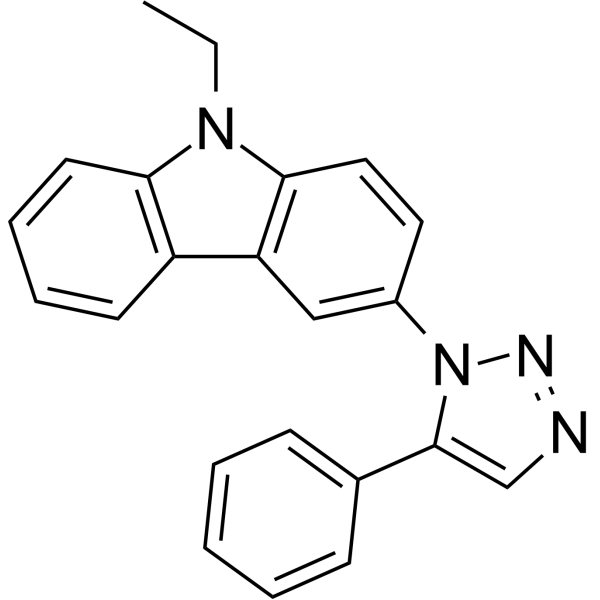
    Mps1-IN-10 (Compound 9) is an inhibitor for Mps1 with an IC50 of 6.4 nM. Mps1-IN-10 inhibits the proliferation of cancer cell MDA-MB-231 with a GI50 of 11 nM. Mps1-IN-10 exhibits anti-tumor efficacy in mice MDA-MB-231 xenograft models .
    Mps1-IN-10
  • HY-163676

    Sirtuin Apoptosis Cancer
    MI-217 is a potent SIRT3 inhibitor. MI-217 induces MDA-MB-231 apoptosis. MI-217 can be used in the study of breast cancer .
    MI-217
  • HY-163709

    PROTACs FAK Cancer
    PROTAC FAK degrader 2 (Compound F2) is a PROTAC degrader for focal adhesion kinase (FAK), with DC50 of 27.72 and 60.1 nM, for total FAK and phosphorylated p-FAK. PROTAC FAK degrader 2 inhibits cell viability of cancer cells 4T1, MDA-MB-231, MDA-MB-468 and MDA-MB-435, with IC50s of 0.73-5.84 μM. PROTAC FAK degrader 2 reverses the multidrug resistance (MDR) through inhibition of AKT and ERK signaling pathway. PROTAC FAK degrader 2 exhibits antitumor efficacy in HCT/8 xenograft mouse model. (Pink: ligand for target protein Ifebemtinib (HY-122844); Black: linker (HY-Y0681); Blue: ligand for E3 ligase Thalidomide (HY-14658))
    PROTAC FAK degrader 2
  • HY-173083

    Cannabinoid Receptor Neurological Disease
    MDA7 is the selective agonist for cannabinoid receptor 2 with EC50 of 128 nM and 67.4 nM in human CB2 receptor and rat CB2 receptor. MDA7 exhibits good affinity to human CB2 receptor and rat CB2 receptor with Ki of 422 nM and 238 nM. MDA7 exhibits analgesic activity in rats models .
    MDA7
  • HY-172346

    N-OH MDMA hemioxalate; FLEA hemioxalate

    Drug Derivative Neurological Disease Metabolic Disease
    N-Hydroxy MDMA (N-OH MDMA) hemioxalate is an N-hydroxy analogue of 3,4-methylenedioxymethamphetamine (MDMA). N-Hydroxy MDMA hemioxalate can be rapidly metabolized to MDMA and MDA in rats, which are mainly excreted in urine, and can also be detected in hair .
    N-Hydroxy MDMA hemioxalate
  • HY-160598

    ADC Payload Topoisomerase Cancer
    Exatecan-amide-bicyclo[1.1.1]pentan-1-ylmethanol (compound 45) is a camptothecin compound that can inhibit cell proliferation, with an IC50 of 2.92 ng/mL for MDA‑MB‑468 cells. Exatecan-amide-bicyclo[1.1.1]pentan-1-ylmethanol can be used for the research of cancer .
    Exatecan-amide-bicyclo[1.1.1]pentan-1-ylmethanol
  • HY-156247

    SDCBP NF-κB MMP Cancer
    IVMT-Rx-3 is a inhibitor of SDCBP targeting of the PDZ1 and PDZ2 Domains of MDA-9/Syntenin. IVMT-Rx-3 blocks MDA-9/Syntenin interaction with Src, reduces NF-κB activation, and inhibits MMP-2/MMP-9 expression. IVMT-Rx-3 inhibits Melanoma Metastasis [1]
    IVMT-Rx-3
  • HY-W348226

    Drug Derivative Neurological Disease
    MMDPPA is an amphetamine and is a precursor in the synthesis of MDA .
    MMDPPA
  • HY-10062

    EBP-921

    Akt Farnesyl Transferase Cancer
    AZD3409 is a prenyl inhibitor that exhibits inhibitory activity against both farnesyl transferase and geranylgeranyl transferase I. AZD3409 inhibits the growth of breast cancer cells, with IC50s of 220 nM (MDA-MB-468), 180 nM (MDA-MB-361), and 290 nM (SK-Br-3). AZD3409 significantly reduces the activation level of AKT in breast cancer cell lines. AZD3409 induces G0/G1 phase arrest in MDA-MB-468 cells, causes G2/M phase arrest in MDA-MB-361 cells. AZD3409 can be used for the study of breast cancer .
    AZD3409
  • HY-175030

    HDAC Apoptosis Pyroptosis Necroptosis PANoptosis Cancer
    TNI-97 is a selective and orally active HDAC6 inhibitor, with an IC50 of 0.2 nM. TNI-97 potently inhibited TNBC cell MDA-MB-453 growth and clonogenicity. TNI-97 induces PANoptosis including apoptosis, necroptosis and pyroptosis in MDA-MB-453 cells. TNI-97 shows antitumor activity in the mice carrying the MDA-MB-453 xenograft or carrying murine-derived TNBC cell allografts. TNI-97 can be used for the study of triple-negative breast cancer .
    TNI-97
  • HY-P10760

    Peptide-Drug Conjugates (PDCs) Cancer
    PhAc-ALGP-Dox, a peptide-drug conjugate, is a novel anticancer prodrug, with IC50 values ranged from 311 nM to 34.25 μM for TNBC (E0771), normal murine epithelium (HC-11), human TNBC (MDA-MB-231 and MDA-MB-468), human CrC (LS 174T), normal human epithelium (HME-1) cells .
    PhAc-ALGP-Dox
  • HY-178261

    Glutathione S-transferase Cancer
    KT53 is a highly active, selective, and cell penetrable GSTO1 inhibitor. KT53 can effectively inhibit GSTO1 activity in MDA-MB-435 (IC50 = 35 nM) cells. KT53 significantly enhances the killing effect of cisplatin (HY-17394) on MDA-MB-435 cancer cells. KT53 can be used for cancer research .
    KT53
  • HY-175497

    ROR Apoptosis Bcl-2 Family PARP Cancer
    ROR1-IN-4 is a selective ROR1 inhibitor with a Kd of 52 nM. ROR1-IN-4 shows potent anti-proliferative activity against TNBC cell line MDA-MB-231 (IC50 = 75 nM). ROR1-IN-4 reduces colony formation, induces apoptosis and inhibits the phosphorylation of ROR1 (Tyr786) in MDA-MB-231 cells. ROR1-IN-4 demonstrates superior anti-tumor efficacy in nude mice bearing MDA-MB-231 subcutaneous xenografts. ROR1-IN-4 can be used for the study of triple-negative breast cancer (TNBC) .
    ROR1-IN-4
  • HY-164306

    PROTACs PARP Cancer
    PROTAC PARP1 degrader-2 (Compound 72) is a PROTAC degrader for PARP with a DC50<10 nM in MDA-MB-231 cell. PROTAC PARP1 degrader-2 inhibits the cell viability of MDA-MB-436 with an IC50 <100 nM. (Blue: ligand for target protein (HY-160937); Pink: ligand for E3 ligase (HY-W998262))
    PROTAC PARP1 degrader-2
  • HY-101447

    EPH 116

    Src Apoptosis Cancer
    SI-2 (EPH 116) is an inhibitor for steroid receptor coactivator-3 (SRC-3), which reduces the transcriptional activity and protein concentration of SRC-3 in cells, exhibits cytotoxicity in cancer cell, inhibits migration of MDA-MB-468, induces apoptosis of MDA-MB-468. SI-2 inhibits the tumor growth in mouse models, without significant toxicity for heart and other major organs (20 mg/kg) .
    SI-2
  • HY-160899A

    Drug-Linker Conjugates for ADC Cancer
    Thailanstatin A cyclohexane diamine formic is an analog of Spliceostatin (HY-16466). Thailanstatin A cyclohexane diamine formic inhibits proliferations of cells N87 (IC50 is 0.33 μM), BT474 (IC50 is 0.34 μM), MDA-MB-361-DYT2 (IC50 is 0.88 μM) and MDA-MB-468 (IC50 is 0.27 μM). Thailanstatin A cyclohexane diamine formic is used as a drug-linker conjugate for ADC molecule .
    Thailanstatin A cyclohexane diamine formic
  • HY-103043

    Others Cancer
    Pz 285 is an anti-cancer agent. Pz 285 shows significant inhibitory effect on the viability of MDA-MB-231 breast cancer cells, with an IC50 of 15.0 μM. Pz 285 exhibits remarkable antitumor effects in the mouse tumor xenograft model constructed with highly lung-metastatic MDA-MB-231 LM24 Her2+ breast cancer cells. Pz 285 can be used for the study of breast cancer, especially metastatic breast cancer .
    Pz 285
  • HY-175815

    Apoptosis Bcl-2 Family Caspase MMP Cadherin Cancer
    Apoptosis inducer 44 is an apoptosis inducer. Apoptosis inducer 44 triggers apoptosis in MDA-MB-231 cells by increasing the levels of Bax and Cyt C, reducing Bcl-2, and initiating caspase-3 cleavage. Apoptosis inducer 44 suppresses the invasion and migration of MDA-MB-231 cells by down-regulating MMP-2 and MMP-9 expression and up-regulating E-cadherin protein levels. Apoptosis inducer 44 can be used for the study of breast cancer .
    Apoptosis inducer 44
  • HY-164521

    STAT Cancer
    PMMB-187 is a selective STAT3 inhibitor with an IC50 value of 1.81 μM for MDA-MB-231 cells. PMMB-187 induces apoptosis (Apoptosis) in MDA-MB-231 cells by inhibiting STAT3 transcriptional activity, nuclear translocation, and downstream target gene expression, while also reducing mitochondrial membrane potential, generating reactive oxygen species (ROS), and upregulating the expression levels of apoptosis-related proteins. PMMB-187 has potential applications in cancer research .
    PMMB-187
  • HY-15451R

    BZO-HEXOXIZID (Standard)

    Reference Standards Cannabinoid Receptor Neurological Disease
    MDA 19 (Standard) is the analytical standard of MDA 19. This product is intended for research and analytical applications. MDA 19 is a potent and selective agonist of human cannabinoid receptor 2 (CB2), with a Ki of 43.3 nM. MDA 19 has antiallodynic effects in a rat model of neuropathic pain and does not affect rat locomotor activity .
    MDA 19 (Standard)
  • HY-W743300

    Drug Isomer Neurological Disease
    2,3-MDA hydrochloride is a structural isomer of 3,4-Methylenedioxyamphetamine (MDA) which differs only in the placement of the methyledioxy group.
    2,3-MDA hydrochloride
  • HY-173543

    Cannabinoid Receptor Neurological Disease
    MDA-19 N-(5-hydroxyhexyl) is a cannabinoid receptor modulator targeting CB1R/CB2R. MDA-19 N-(5-hydroxyhexyl) is used to study neurological diseases, cancer, and pain regulation .
    MDA-19 N-(5-hydroxyhexyl)
  • HY-113885

    Cannabinoid Receptor Neurological Disease Inflammation/Immunology
    MDA77 is a CB2 inverse agonist with an EC50 of 5.82 nM, showing selectivity for human CB2 and no activity on CB1 .
    MDA77

Inquiry Online

Your information is safe with us. * Required Fields.

Salutation


Country or Region *

Applicant Name *


Organization Name *

Department *


Email Address *


Product Name *

Cat. No.


Requested quantity *

Phone Number *


Remarks

Inquiry Online

Inquiry Information

Product Name:
Cat. No.:
Quantity:
MCE Japan Authorized Agent:

