1. Search Result
Search Result
Results for "

Morphine

" in MedChemExpress (MCE) Product Catalog:

67

Inhibitors & Agonists

1

Screening Libraries

18

Peptides

4

Natural
Products

2

Isotope-Labeled Compounds

1

Oligonucleotides

Cat. No. Product Name Target Research Areas Chemical Structure
  • HY-16900
    Rolipram
    Maximum Cited Publications
    19 Publications Verification

    (R,S)-Rolipram; (±)-Rolipram; ZK 62711

    Bacterial HIV Phosphodiesterase (PDE) Epigenetic Reader Domain Amyloid-β Infection Neurological Disease Cancer
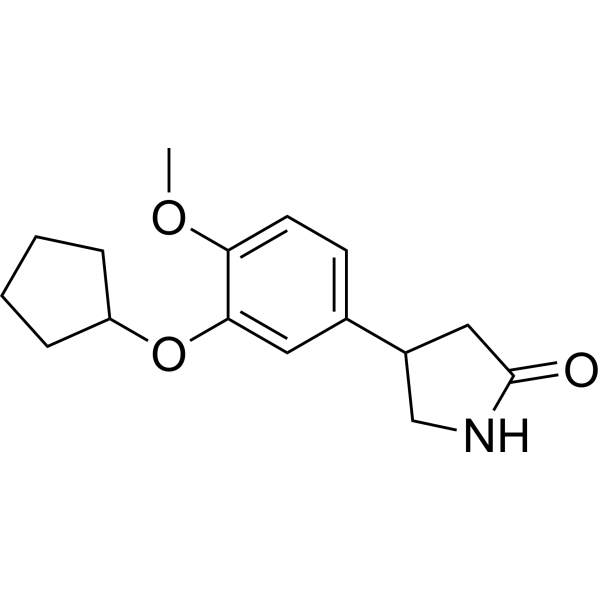
    Rolipram is a PDE4 inhibitor, with blood-brain barrier permeability, that reverses β-amyloid-induced learning and memory impairment in rats. Rolipram elevates intracellular cAMP and clevels and regulates the cAMP/CREB signaling pathway, thereby alleviating neuroinflammation and apoptotic responses. Rolipram promotes neuronal differentiation of human bone marrow mesenchymal stem cells and inhibits Methamphetamine- and morphine-induced hyperlocomotion in mice. Rolipram also reduces the viability of glioblastoma stem-like cells and enhances Bevacizumab (HY-P9906)-induced cell death. Rolipram inhibits the expression of proinflammatory cytokines and enhances central noradrenergic transmission. Rolipram is mainly used in studies related to various central nervous system diseases including Alzheimer's disease, major depressive disorder, glioblastoma multiforme, and multiple sclerosis .
    Rolipram
  • HY-P0288
    [Leu5]-Enkephalin
    2 Publications Verification

    Leu-enkephalin; Leucine enkephalin; Leucyl-enkephalin

    Opioid Receptor Endogenous Metabolite Neurological Disease
    [Leu5]-Enkephalin is a pentapeptide with morphine like properties. [Leu5]-Enkephalin is a five amino acid endogenous peptide that acts as an agonist at opioid receptors.
    [Leu5]-Enkephalin
  • HY-10895
    SB-334867
    5+ Cited Publications

    SB 334867A

    Orexin Receptor (OX Receptor) Neurological Disease Endocrinology
    SB-334867 (SB 334867A) is an excellent,selective and blood-brain barrier permeable orexin-1 (OX1) receptor antagonist, shows selectivity over OX2 (pKb=7.4), 100-fold over 5-HT2B, 5-HT2C with pKi values of 5.4 and 5.3, respectively . SB-334867 reduces ethanol consumption and inhibits the acquisition of morphine-induced sensitization to locomotor activity in vivo .
    SB-334867
  • HY-P1291
    PKI 14-22 amide,myristoylated
    3 Publications Verification

    PKA Epigenetic Reader Domain Flavivirus Infection Neurological Disease
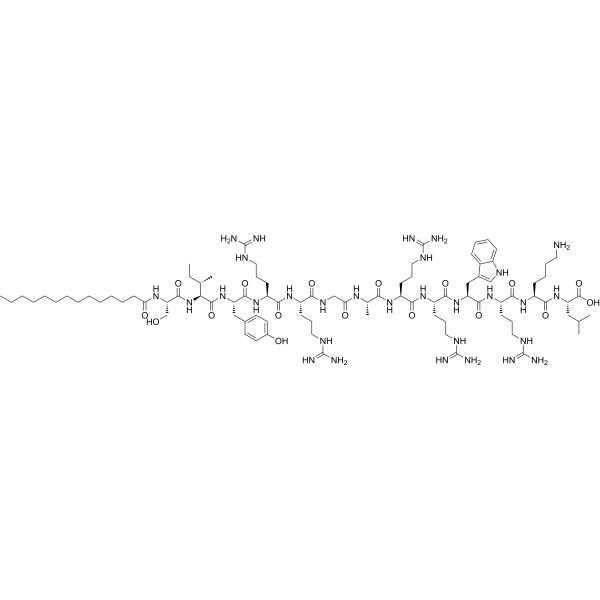
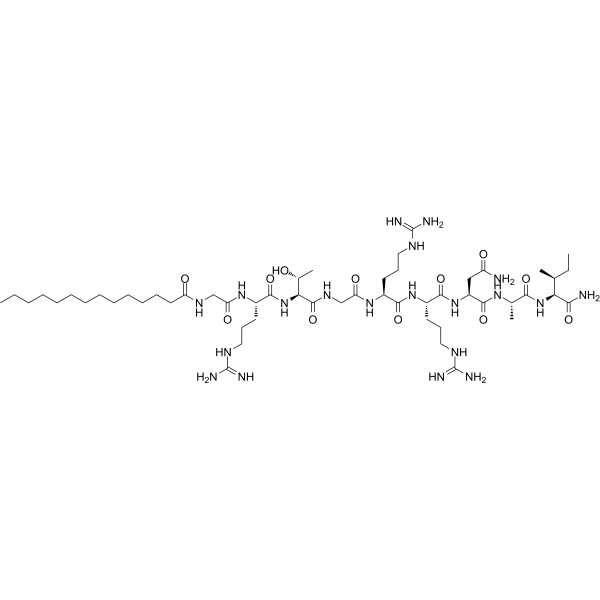
    PKI 14-22 amide, myristoylated is a selective, cAMP-dependent, competitive PKA inhibitor with Ki=~36 nM. The myristoylation modification of PKI 14-22 amide, myristoylated makes it more permeable to cell membranes and blood-brain barriers than the precursor molecule. PKI 14-22 amide, myristoylated can block the phosphorylation of cAMP-dependent downstream targets (such as CREB). PKI 14-22 amide, myristoylated can prevent the development of morphine analgesic tolerance in mice, and also inhibits protein translation and negative-strand RNA synthesis of Zika virus. PKI 14-22 amide, myristoylated can be used in research fields such as opioid tolerance mechanisms and antiviral drugs .
    PKI 14-22 amide,myristoylated
  • HY-P2798

    EC 3.1.1.8; BCHE, Horse serum

    Cholinesterase (ChE) Neurological Disease
    Cholinesterase, Horse serum infers to acetylcholinesterase (AChE) and butyryl cholinesterase (BChE). AChE and BChE catalyze the hydrolysis of 6-MAM to morphine .
    Cholinesterase, Horse serum
  • HY-N0541
    Pseudoginsenoside F11
    2 Publications Verification

    Ginsenoside A1

    Endogenous Metabolite Others
    Pseudoginsenoside F11 (Ginsenoside A1), a component of Panax quinquefolium (American ginseng), has been demonstrated to antagonize the learning and memory deficits induced by scopolamine, morphine and methamphetamine in mice.
    Pseudoginsenoside F11
  • HY-B0424
    Nitrendipine
    3 Publications Verification

    BAY-E-5009

    Calcium Channel Apoptosis Cardiovascular Disease Neurological Disease Cancer
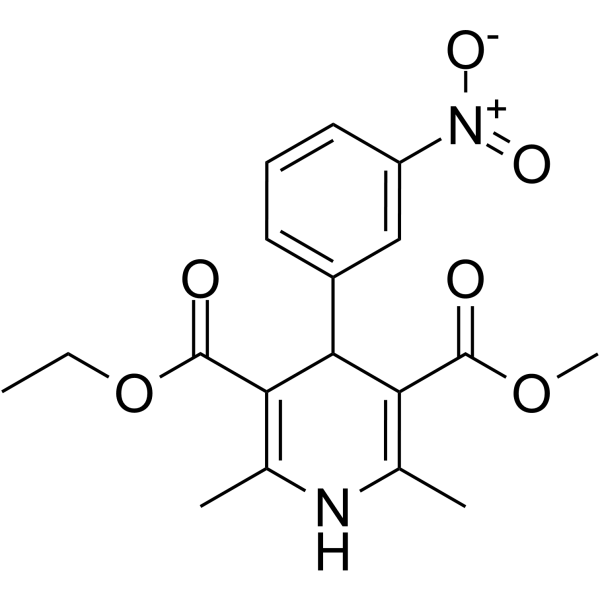
    Nitrendipine (BAY-E-5009) is an orally active analog of Nifedipine (HY-B0284) and dihydropyridine calcium channel blocker. Nitrendipine induces Apoptosis. Nitrendipine has antihypertensive effects. Nitrendipine blocks alcohol and Morphine withdrawal symptoms. Nitrendipine reduces right ventricular hypertrophy and pulmonary vascular changes induced by intermittent hypoxia. Nitrendipine has anticancer effects on neuroblastoma .
    Nitrendipine
  • HY-10895A
    SB-334867 free base
    5+ Cited Publications

    SB334867A free base

    Orexin Receptor (OX Receptor) Neurological Disease Endocrinology
    SB-334867 free base (SB334867A free base) is an excellent, selective and blood–brain barrier permeable orexin-1 (OX1) receptor antagonist, shows selectivity over OX2 (pKb=7.4), 100-fold over 5-HT2B, 5-HT2C with pKi values of 5.4 and 5.3, respectively . SB-334867 reduces ethanol consumption and inhibits the acquisition of morphine-induced sensitization to locomotor activity in vivo .
    SB-334867 free base
  • HY-P1248

    NPFF

    Neuropeptide FF Receptor Cardiovascular Disease Neurological Disease
    Neuropeptide FF (NPFF), an octapeptide belonging to the RF-amide family of peptides, is a NPFF1 and NPFF2 receptors agonist with Ki values of 2.82 nM and 0.21 nM, respectively. Neuropeptide FF induces abstinence syndrome, exerts antiopioid and analgesic effects, releases via calcium-dependent mechanisms from rat spinal cord, regulates memory, autonomic function, and neuroendocrine function, modulates pain and opioid antinociception, reduces food intake, stimulates water intake, alters cardiovascular parameters, and shows differential activity in hypothalamic paraventricular nucleus neurons. Neuropeptide FF is present in mammalian central nervous system and periphery, with NPFF-immunoreactivity increases in rat cerebrospinal fluid during opiate tolerance, and its NPFF gene and NPFF-R2 gene are up-regulated in rat spinal cord and dorsal root ganglia during peripheral inflammation. Neuropeptide FF can be used for the research of opioid tolerance, morphine-induced analgesia, abstinence syndrome, pain, hypertension, nociception, inflammatory pain, and neuropathic pain .
    Neuropeptide FF
  • HY-P1290
    PKA Inhibitor Fragment (6-22) amide
    5 Publications Verification

    PKI-(6-22)-amide

    PKA Neurological Disease
    PKA Inhibitor Fragment (6-22) amide is a highly potent and specific competitive inhibitor of PKA, with Ki values of 1.7 nM and 1.6 nM against human and bovine PKA catalytic subunits, respectively. The IC50 of PKA Inhibitor Fragment (6-22) amide targeting bovine PKA is 8.6 nM. PKA Inhibitor Fragment (6-22) amide effectively abolishes PKA activity in mouse brain and spinal cord, and exerts in vivo efficacy via intracerebroventricular administration. PKA Inhibitor Fragment (6-22) amide significantly reverses low-dose morphine analgesic tolerance in mice and blocks photoaffinity labeling of cAMP-dependent protein kinase. PKA Inhibitor Fragment (6-22) amide can be applied to research in fields related to the mechanism of morphine analgesic tolerance and skin wound healing .
    PKA Inhibitor Fragment (6-22) amide
  • HY-P1701

    Opioid Receptor Cardiovascular Disease Neurological Disease
    Morphiceptin is a potent and specific agonist for morphine (μ) receptors. Morphiceptin, as a synthetic peptide, is the amide of a fragment of the milk protein β-casein. Morphiceptin has morphinelike activities and is highly specific for morphine (μ) receptors but not for Enkephalin receptors .
    Morphiceptin
  • HY-147428

    MM-110; (±)​-18-Methoxycoronaridine

    nAChR Parasite Infection Neurological Disease
    Zolunicant (MM-110) is a potent inhibitor against nicotinic α3β4 receptors with an IC50 of 0.90 μM to combat addiction. Zolunicant can decrease the self-administration of several addictive agents including morphine, methamphetamine, nicotine, and ethanol in rat model. Zolunicant can be studied as a potential research for multiple forms of agent abuse . Zolunicant also reveals a potent leishmanicide effect against Leishmania amazonensis .
    Zolunicant
  • HY-106840
    L-365260
    2 Publications Verification

    Cholecystokinin Receptor Neurological Disease Metabolic Disease
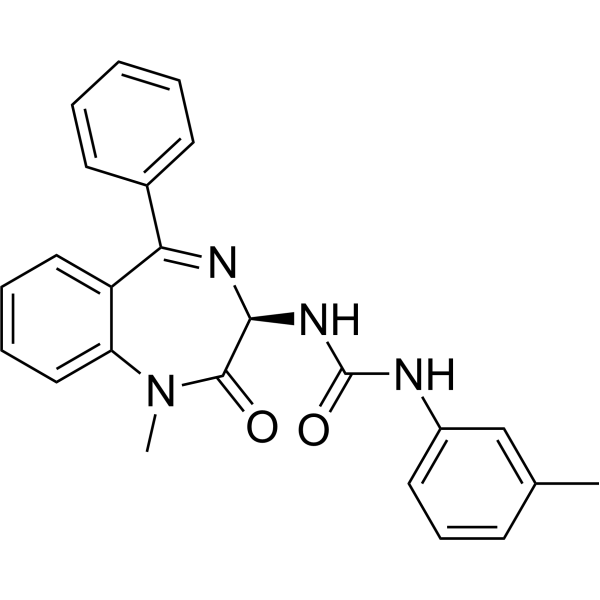
    L-365260 is an orally active and selective antagonist of non-peptide gastrin and brain cholecystokinin receptor (CCK-B), with Kis of 1.9 nM and 2.0 nM, respectively. L-365260 interacts in a stereoselective and competitive manner with guinea pig stomach gastrin and brain CCK receptors. L-365260 can enhance Morphine analgesia and prevents Morphine tolerance .
    L-365260
  • HY-P1290A
    PKA Inhibitor Fragment (6-22) amide TFA
    5 Publications Verification

    PKI-(6-22)-amide TFA

    PKA Neurological Disease
    PKA Inhibitor Fragment (6-22) amide TFA is an inhibitor of cAMP-dependent protein kinase A (PKA), with a Ki of 2.8 nM. PKA Inhibitor Fragment (6-22) amide TFA can significantly reverse antinociceptive tolerance in mice .
    PKA Inhibitor Fragment (6-22) amide TFA
  • HY-P2259
    TAT-GluA2 3Y
    2 Publications Verification

    iGluR HIV Integrase Adenosine Receptor Cardiovascular Disease Neurological Disease
    TAT-GluA2 3Y is a blood-brain barrier-permeable AMPA receptor inhibitory peptide that crosses cell membranes via the HIV-1 TAT protein domain. TAT-GluA2 3Y blocks the endocytosis of AMPA receptors, including the internalization of GluA1/GluA2 subunits, by disrupting interactions with the AP2, Brag2 and Syt3-GluA2 complexes, while also inhibiting long-term depression. TAT-GluA2 3Y blocks hypoxia-mediated AMPAR internalization, alleviates A1R-induced persistent synaptic inhibition, and reduces cerebral ischemic volume, neurological deficits and spatial memory deficits. TAT-GluA2 3Y blocks the effect of NLRP3 deficiency on fear generalization, inhibits amphetamine-induced behavioral/neurochemical sensitization, weakens the unconditioned stimulus-conditioned stimulus association of morphine, and promotes the extinction of morphine CPP. TAT-GluA2 3Y can be used in studies related to fear generalization, ischemic stroke, hypoxia, drug addiction and opioid addiction .
    TAT-GluA2 3Y
  • HY-N1356A

    Cytochrome P450 Inflammation/Immunology
    (R)-Reticuline is a key intermediate and precursor in the biosynthetic pathway of morphinan alkaloids. (R)-Reticuline plays a central role in the metabolism of opium poppy (Papaver somniferum). (R)-Reticuline can either undergo O-methylation catalyzed by PSOMT1, or be converted to (+)-Salutaridine via regioselective and stereoselective oxidative coupling under the action of salutaridine synthase (CYP719B1). (R)-Reticuline serves as a direct precursor for the synthesis of important alkaloids such as morphine, codeine and thebaine .
    (R)-Reticuline
  • HY-P1284
    ZIP
    2 Publications Verification

    PKC Neurological Disease Cancer
    ZIP is a selective peptide inhibitor of PKMζ. ZIP injections can block the impairment in morphine conditioned place preference induced .
    ZIP
  • HY-104006

    Opioid Receptor Neurological Disease
    CYM51010 is a biased ligand of μ-opioid receptor – δ-opioid receptor heterodimers with an EC50 of 403 nM. CYM51010 exhibits anti-nociceptive activity similar to morphine but with a decreased levels of tolerance development and withdrawal symptoms .
    CYM51010
  • HY-W013113

    Environmental Pollutants nAChR Neurological Disease
    BTMPS is a nicotine receptor (nAChR) antagonist that can lessen the negative effects of morphine on rats .
    BTMPS
  • HY-108229

    6β-Hydroxynaltrexone

    Drug Metabolite Opioid Receptor Neurological Disease
    6β-Naltrexol (6β-Hydroxynaltrexone), the primary metabolite of Naltrexone, is a peripherally selective opioid antagonist. 6β-Naltrexol selectively inhibits gastrointestinal opioid effects in human subjects and inhibits Morphine-induced slowing of gastrointestinal transit .
    6β-Naltrexol
  • HY-W152604

    Cyclo(leu-gly)

    Dopamine Receptor Neurological Disease
    Cyclo(glycyl-L-leucyl) (Cyclo(leu-gly)), a neuropeptide, down-regulates dopamine (DA) receptors and attenuates dopaminergic supersensitivity. Cyclo(glycyl-L-leucyl) inhibits the development of Morphine induced pain relief as well as dopamine receptor supersensitivity in rats. Cyclo(glycyl-L-leucyl) has the potential for the prevention of tardive and/or L-DOPA (HY-N0304)-induced dyskinesias .
    Cyclo(glycyl-L-leucyl)
  • HY-101352

    Cholecystokinin Receptor Neurological Disease
    LY 225910 is a selective antagonist for cholecystokinin receptor (CCK2 receptor), which affects the excitatory response to morphine, and leads to morphine sensitization .
    LY 225910
  • HY-136208

    Opioid Receptor Neurological Disease
    TAN-452 is an orally active, selective peripherally acting δ-opioid receptor (DOR) antagonist with a Ki of 0.47 nM and a Kb of 0.21 nM. TAN-452 is an antagonist for μ-opioid receptor (MOR; Ki=36.56 nM and Kb=9.43 nM) and κ-opioid receptor (KOR; Ki=5.31 nM and Kb=7.18 nM). TAN-452, a derivative of Naltrindole, demonstrates low brain penetrability and attenuates morphine-induced side effects without affecting pain control .
    TAN-452
  • HY-P3870

    Opioid Receptor Neurological Disease
    DALDA is a potent and highly selective μ-opioid receptor agonist with a Ki of 1.69 nM. DALDA shows antinociceptive and respiratory effects .
    DALDA
  • HY-138885

    TpGc

    Tyrosinase DNA/RNA Synthesis Neurological Disease
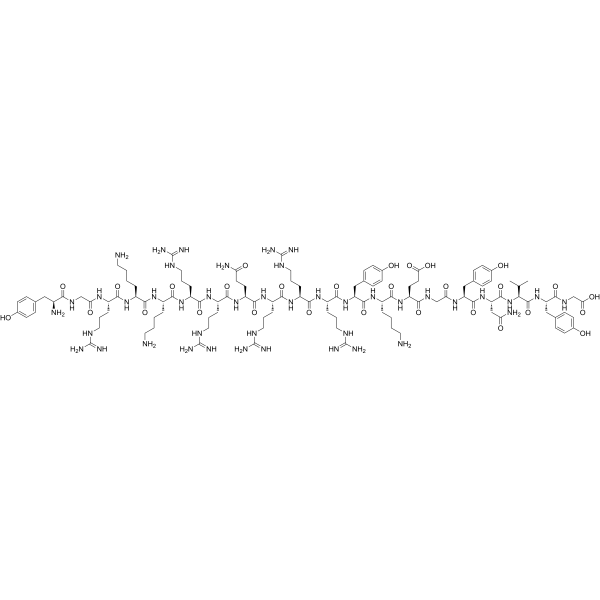
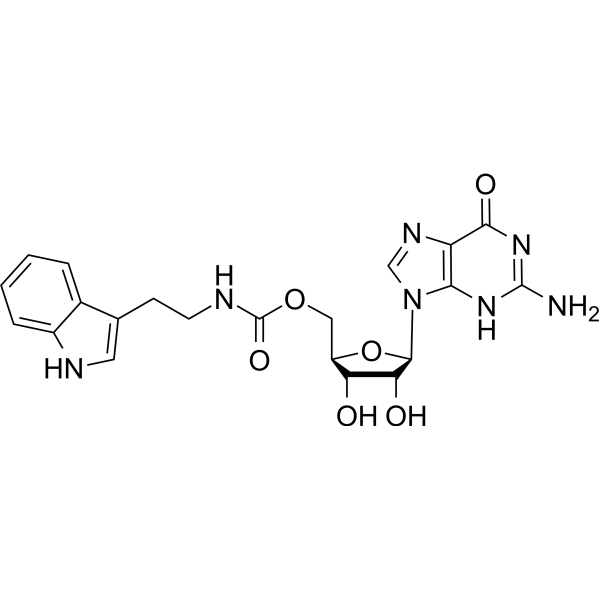
    Tryptamine guanosine carbamate (TpGc) is a selective HINT1 (histidine triad nucleotide-binding protein 1) inhibitor (Ki=34 μM, Kd=3.65 μM). Tryptamine guanosine carbamate significantly enhances morphine antinociception while preventing the development of tolerance .
    Tryptamine guanosine carbamate
  • HY-108229S

    6β-Hydroxynaltrexone-d3

    Isotope-Labeled Compounds Opioid Receptor Drug Metabolite Neurological Disease
    6β-Naltrexol-d3 (6β-Hydroxynaltrexone-d3) is deuterium labeled 6β-Naltrexol. 6β-Naltrexol (6β-Hydroxynaltrexone), the primary metabolite of Naltrexone, is a peripherally selective opioid antagonist. 6β-Naltrexol selectively inhibits gastrointestinal opioid effects in human subjects and inhibits Morphine-induced slowing of gastrointestinal transit .
    6β-Naltrexol-d3
  • HY-N1989

    Na+/K+ ATPase CaMK Apoptosis Cholinesterase (ChE) NO Synthase NF-κB Neurological Disease Cancer
    Bacoside A is an orally active, blood-brain barrier-permeable triterpenoid saponin that modulates the activities of ATPases, AChE, CaMK2A and iNOS. Derived from Bacopa monniera. Bacoside A exerts significant antioxidant, anti-inflammatory and anti-apoptotic effects by maintaining ion balance, scavenging reactive oxygen species, stabilizing cell membranes, and regulating the expression of NF-κB and apoptosis-related proteins. Bacoside A counteracts morphine-induced reductions in Na +/K +-ATPase, Ca 2+-ATPase and Mg 2+-ATPase activities, increases mitochondrial membrane potential, and decreases intracellular reactive oxygen species levels. Bacoside A specifically binds to calcium/calmodulin-dependent protein kinase IIA to trigger endoplasmic reticulum calcium release. Bacoside A exhibits non-apoptotic cytotoxicity against glioblastoma cells while protecting normal nerve cells from stress-induced damage. Bacoside A is applicable to the research of Parkinson's disease and glioblastoma multiforme .
    Bacoside A
  • HY-116181

    Dopamine Receptor Neurological Disease
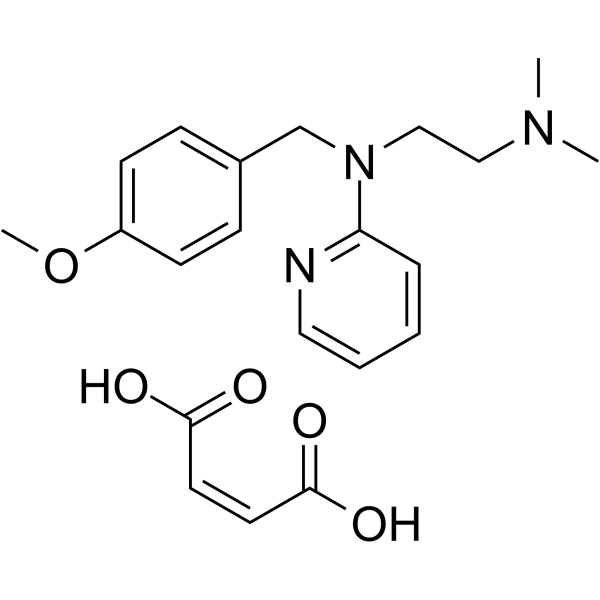
    YQA14 is a high affinity dopamine D3 receptor antagonist. YQA14 is anti-opioid addiction agent. YQA14 inhibits Morphine/Cocaine-induced conditioned place preference (CPP) in animals .
    YQA14
  • HY-123468

    Cyclic GMP-AMP Synthase PKA ERK Tyrosine Hydroxylase Calcium Channel Cardiovascular Disease Metabolic Disease
    HA-1004 is a selective inhibitor of PKA, which can inhibit lipolysis and induce vascular relaxation. HA-1004 is also a dual inhibitor of cyclic GMP-dependent protein kinase and cyclic AMP-dependent protein, and is involved in smooth muscle, second messenger, cyclic AMP and cyclic GMP regulation mechanisms. HA-1004 is an antagonist for calcium, that can be used as a vasodilator to inhibit the contraction of rabbit aortic strips, or to antagonize ERK and tyrosine hydroxylase (TH) phosphorylation in morphine abstinence rat models .
    HA-1004
  • HY-P3870A

    Opioid Receptor Neurological Disease
    DALDA acetate is a potent and highly selective μ-opioid receptor agonist with a Ki of 1.69 nM. DALDA acetate shows antinociceptive and respiratory effects .
    DALDA acetate
  • HY-110099

    CXCR Inflammation/Immunology
    (±)-NBI-74330 is a potent and selective CXCR3 antagonist. (±)-NBI-74330 not only reduces tactile and thermal hypersensitivity but also enhances the analgesic properties of morphine. (±)-NBI-74330 can reduce microglial cell activation, increase astroglial cell activation, and downregulate the expression of some CXCR3 ligands in a rat neuropathic pain model .
    (±)-NBI-74330
  • HY-155850

    Pyruvate Kinase Neurological Disease
    CIAC001 is a Pyruvate Kinase PKM2 inhibitor with anti-neuroinflammatory activity. CIAC001 inhibits LPS-induced proinflammatory nitric oxide (NO) production and protects immunologically active BV-2 cells (IC50=2.5 μM). CIAC001 also has anti-neuroinflammation in mouse models and inhibits chronic morphine-induced addiction .
    CIAC001
  • HY-B0424S

    AY-E-5009-d5

    Isotope-Labeled Compounds Calcium Channel Apoptosis Cardiovascular Disease Neurological Disease Cancer
    Nitrendipine-d5 is the deuterium labeled Nitrendipine (HY-B0424). Nitrendipine (BAY-E-5009) is an orally active analog of Nifedipine (HY-B0284) and dihydropyridine calcium channel blocker. Nitrendipine induces Apoptosis. Nitrendipine has antihypertensive effects. Nitrendipine blocks alcohol and Morphine withdrawal symptoms. Nitrendipine reduces right ventricular hypertrophy and pulmonary vascular changes induced by intermittent hypoxia. Nitrendipine has anticancer effects on neuroblastoma .
    Nitrendipine-d5
  • HY-P1329

    Opioid Receptor Neurological Disease
    CTOP is a potent and highly selective μ-opioid receptor antagonist. CTOP antagonizes the acute morphine-induced analgesic effect and hypermotility. CTOP enhances extracellular dopamine levels in the nucleus accumbens. CTOP dose-dependently enhances locomotor activity .
    CTOP
  • HY-P1216

    Melanocortin Receptor Neurological Disease
    HS014 is a potent and selective melanocortin-4 (MC4) receptor antagonist, with Kis of 3.16, 108, 54.4 and 694 nM for human MC4, MC1, MC3 and MC5 receptors, respectively. HS014 modulates the behavioral effects of morphine in mice. HS014 increases food intake in free-feeding rats .
    HS014
  • HY-178235

    Opioid Receptor Neurological Disease
    MDAN-21 is a bivalent opioid ligand that contains both μ-opioid receptor agonists and δ-opioid receptor antagonists. MDAN-21 has a strong analgesic effect and does not produce tolerance in mouse studies. MDAN-21 can effectively inhibit the withdrawal of morphine dependent monkeys and alleviate abnormal pain in the study of rhesus monkeys. MDAN-21 can be used for the study of allodynia .
    MDAN-21
  • HY-B0424R

    BAY-E-5009 (Standard)

    Reference Standards Calcium Channel Apoptosis Cardiovascular Disease Neurological Disease Cancer
    Nitrendipine (Standard) is the analytical standard of Nitrendipine (HY-B0424). This product is intended for research and analytical applications. Nitrendipine (BAY-E-5009) is an orally active analog of Nifedipine (HY-B0284) and dihydropyridine calcium channel blocker. Nitrendipine induces Apoptosis. Nitrendipine has antihypertensive effects. Nitrendipine blocks alcohol and Morphine withdrawal symptoms. Nitrendipine reduces right ventricular hypertrophy and pulmonary vascular changes induced by intermittent hypoxia. Nitrendipine has anticancer effects on neuroblastoma .
    Nitrendipine (Standard)
  • HY-112348

    Cyclic GMP-AMP Synthase PKA ERK Calcium Channel Cardiovascular Disease Metabolic Disease
    HA-1004 hydrochloride is a selective inhibitor of PKA, which can inhibit lipolysis and induce vascular relaxation. HA-1004 hydrochloride is also a dual inhibitor of cyclic GMP-dependent protein kinase and cyclic AMP-dependent protein (Cyclic GMP-AMP Synthase), and is involved in smooth muscle, second messenger, cyclic AMP and cyclic GMP regulation mechanisms. HA-1004 hydrochloride an antagonist for calcium, that can be used as a vasodilator to inhibit the contraction of rabbit aortic strips, or to antagonize ERK and tyrosine hydroxylase (TH) phosphorylation in morphine abstinence rat models .
    HA-1004 hydrochloride
  • HY-169469

    Opioid Receptor Neurological Disease
    N-Phenethylnoroxymorphone is an opioid compound. N-Phenethylnoroxymorphone enhances morphine-induced analgesia in rats. N-Phenethylnoroxymorphone can be used for research on neurological diseases .
    N-Phenethylnoroxymorphone
  • HY-144606

    Opioid Receptor Neurological Disease
    Mu opioid receptor antagonist 1 (compound 19) is a selective and orally active μ opioid receptor (MOR) ligand with an Ki value of 0.58 nM and an EC50 of 1.15 nM. Orally administrating with Mu opioid receptor antagonist 1 increases intestinal motility during morphine-induced constipation. Mu opioid receptor antagonist 1 can be used for researching opioid-induced constipation (OIC) .
    Mu opioid receptor antagonist 1
  • HY-144609

    Opioid Receptor Neurological Disease
    Mu opioid receptor antagonist 4 (compound 31) is a potent and selective μ opioid receptor (MOR) antagonist with a Ki of 0.38 nM and an EC50 of 1.07 nM. Mu opioid receptor antagonist 4 has remarkable CNS antagonism against morphine, and precipitated fewer withdrawal symptoms than Naloxone. Mu opioid receptor antagonist 4 Mu opioid receptor antagonist 4 can be used for researching opioid use disorders (OUD) .
    Mu opioid receptor antagonist 4
  • HY-144607

    Opioid Receptor Neurological Disease
    Mu opioid receptor antagonist 2 (compound 25) is a potent, selective and blood-brain barrier (BBB) penetrant μ opioid receptor (MOR) antagonist with a Ki of 0.37 nM and an EC50 of 0.44 nM. Mu opioid receptor antagonist 2 has remarkable CNS antagonism against morphine, and precipitated fewer withdrawal symptoms than Naloxone. Mu opioid receptor antagonist 2 can be used for researching opioid use disorders (OUD) .
    Mu opioid receptor antagonist 2
  • HY-173016

    Opioid Receptor Neurological Disease
    HINT1-IN-1 (Compound 8) is the inhibitor for histidine triad nucleotide-binding protein 1 (HINT1) with a Ki of 1.14 μM. HINT1-IN-1 affects the cross-regulation between μ-opioid receptor (MOR) and NMDA receptor (NMDAR). HINT1-IN-1 enhances the analgesic effect of morphine without causing opioid tolerance and has independent analgesic effects in mouse model .
    HINT1-IN-1
  • HY-171758

    Opioid Receptor Neurological Disease
    BU72 is a highly potent and long-acting agonist of μ and κ opioid receptors, and also has a partial agonist effect on δ opioid receptors (EC50 values are 0.054, 0.033, and 0.58 nM, respectively). BU72 has a strong and long-lasting analgesic effect, which is mainly mediated by μ opioid receptors. BU72 has a long-lasting activity and can partially reverse the analgesic effect of morphine. BU72 can be used in the study of opioid dependence .
    BU72
  • HY-16900R

    (R,S)-Rolipram (Standard); (±)-Rolipram (Standard); ZK 62711 (Standard)

    Reference Standards Bacterial HIV Phosphodiesterase (PDE) Epigenetic Reader Domain Amyloid-β Neurological Disease Cancer
    Rolipram (Standard) is the analytical standard of Rolipram (HY-16900). This product is intended for research and analytical applications. Rolipram is a PDE4 inhibitor, with blood-brain barrier permeability, that reverses β-amyloid-induced learning and memory impairment in rats. Rolipram elevates intracellular cAMP and clevels and regulates the cAMP/CREB signaling pathway, thereby alleviating neuroinflammation and apoptotic responses. Rolipram promotes neuronal differentiation of human bone marrow mesenchymal stem cells and inhibits Methamphetamine- and morphine-induced hyperlocomotion in mice. Rolipram also reduces the viability of glioblastoma stem-like cells and enhances Bevacizumab (HY-P9906)-induced cell death. Rolipram inhibits the expression of proinflammatory cytokines and enhances central noradrenergic transmission. Rolipram is mainly used in studies related to various central nervous system diseases including Alzheimer's disease, major depressive disorder, glioblastoma multiforme, and multiple sclerosis .
    Rolipram (Standard)
  • HY-149274

    Sigma Receptor Neurological Disease
    Sigma-1 receptor antagonist 4 (Compound 32) is a potent σ1R antagonist that significantly enhances the analgesic effect of morphine and rescues morphine-induced analgesic tolerance, with potential to prevent morphine tolerance .
    Sigma-1 receptor antagonist 4
  • HY-119174

    Thyroid Hormone Receptor Neurological Disease
    MK771 is a thyrotrophin-releasing hormone analog. MK771 induces blinking and forepaw licking. MK771 has the potential for the research of morphine abstinence syndrome .
    MK771
  • HY-144608

    Opioid Receptor Neurological Disease
    Mu opioid receptor antagonist 3 (compound 26) is a potent and selective μ opioid receptor (MOR) antagonist with a Ki of 0.24 nM and an EC50 of 0.54 nM. Mu opioid receptor antagonist 3 has remarkable CNS antagonism against morphine, and precipitated fewer withdrawal symptoms than Naloxone. Mu opioid receptor antagonist 3 can be used for researching opioid use disorders (OUD) .
    Mu opioid receptor antagonist 3
  • HY-123468A

    Cyclic GMP-AMP Synthase PKA ERK Calcium Channel Cardiovascular Disease Metabolic Disease
    HA-1004 dihydrochloride is a selective inhibitor of PKA, which can inhibit lipolysis and induce vascular relaxation. HA-1004 dihydrochloride is also a dual inhibitor of cyclic GMP-dependent protein kinase and cyclic AMP-dependent protein, and is involved in smooth muscle, second messenger, cyclic AMP and cyclic GMP regulation mechanisms. HA-1004 dihydrochloride is an antagonist for calcium, that can be used as a vasodilator to inhibit the contraction of rabbit aortic strips, or to antagonize ERK and tyrosine hydroxylase (TH) phosphorylation in morphine abstinence rat models .
    HA-1004 dihydrochloride
  • HY-P5061

    Opioid Receptor Neurological Disease
    Dynorphin A (1-13) amide is an endogenous opioid peptide that antagonizes morphine-induced analgesia .
    Dynorphin A (1-13) amide

Inquiry Online

Your information is safe with us. * Required Fields.

Salutation


Country or Region *

Applicant Name *


Organization Name *

Department *


Email Address *


Product Name *

Cat. No.


Requested quantity *

Phone Number *


Remarks

Inquiry Online

Inquiry Information

Product Name:
Cat. No.:
Quantity:
MCE Japan Authorized Agent: