

68 Results for "

Mouse neutrophil

" in MedChemExpress (MCE) Product Catalog:
Products (68)

68 Results for "Mouse neutrophil" in MCE Product Catalog:

23
23 Publications Verification
Cat. No.: HY-16997
CAS No.: 1334298-90-6
Synonyms: INCB039110
Target:  

JAK STAT

Research Areas:  

Inflammation/Immunology Cancer

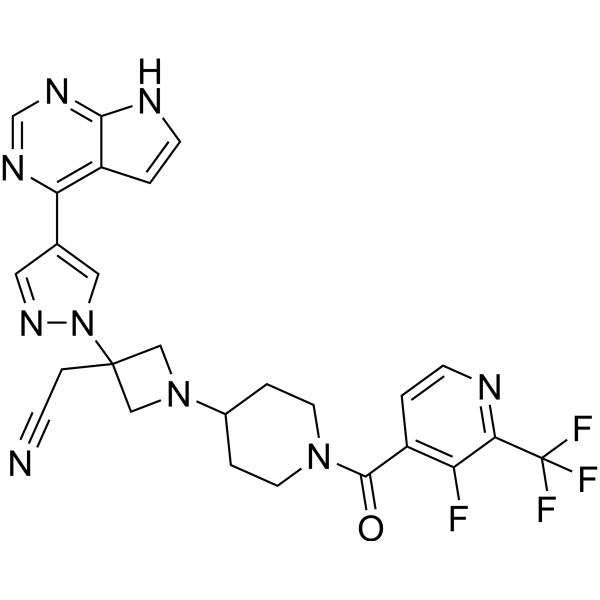
Itacitinib (INCB039110) is an orally active selective inhibitor of JAK1 with an IC50 value of 2 nM for human JAK1. Itacitinib inhibits IFN-γ-mediated phosphorylation of STAT1 and downstream pro-inflammatory signaling pathways. Itacitinib reduces the frequency and number of splenic neutrophils in mouse models, downregulates the levels of pro-inflammatory cytokines and chemokines, and inhibits pro-inflammatory gene expression pathways. Itacitinib improves survival rate and clinical scores in mouse models of hemophagocytic lymphohistiocytosis (HLH), and also suppresses metastasis in NSCLC models with high Rab1A expression. Itacitinib can be used for research on hemophagocytic lymphohistiocytosis and non-small cell lung cancer .
loading...
    loading...
23
23 Publications Verification
Cat. No.: HY-16997A
CAS No.: 1334302-63-4
Synonyms: INCB039110 adipate
Target:  

JAK STAT

Research Areas:  

Inflammation/Immunology Cancer

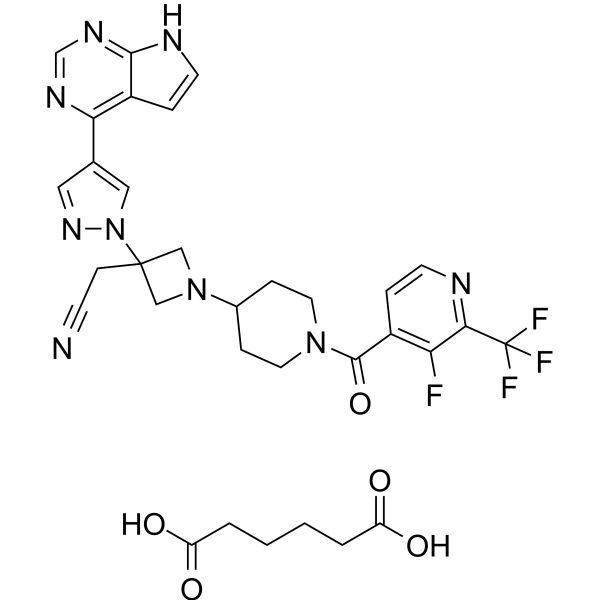
Itacitinib adipate (INCB039110 adipate) is an orally active JAK1-selective inhibitor. Itacitinib adipate inhibits IFN-γ-mediated phosphorylation of STAT1 and downstream pro-inflammatory signaling pathways. Itacitinib adipate reduces the frequency and number of splenic neutrophils in mouse models, downregulates the levels of pro-inflammatory cytokines and chemokines, and inhibits pro-inflammatory gene expression pathways. Itacitinib adipate improves survival rate and clinical scores in mouse models of hemophagocytic lymphohistiocytosis (HLH), and also suppresses metastasis in NSCLC models with high Rab1A expression. Itacitinib adipate can be used for research on hemophagocytic lymphohistiocytosis and non-small cell lung cancer .
loading...
    loading...
4
4 Cited Publications
Cat. No.: HY-P70658A
Purity:  ≥ 95%, as determined by reducing SDS-PAGE.
Synonyms: LCN2; P25; Lipocalin 2; Migration-Stimulating Factor Inhibitor; NGAL; Lipocalin 2 (Oncogene 24p3); neutrophil Gelatinase-Associated Lipocalin; Siderocalin LCN2; Oncogene 24p3; Lipocalin-2; 24p3; MSFI; 25 KDa Alpha-2-Microglobulin-Related Subunit Of MMP-9; HNL; Siderocalin
Species:  
Mouse
Source:  
HEK293
loading...
    loading...
2
2 Cited Publications
Cat. No.: HY-P72791
Purity:  ≥ 95%, as determined by reducing SDS-PAGE.
Synonyms: CXCL5; Chemokine (C-X-C Motif) Ligand 5; Prev. SCYB5; neutrophil-Activating Protein 78; ENA-78; Small-Inducible Cytokine B5; Small Inducible Cytokine Subfamily B (Cys-X-Cys), Member 5 (Epithelial-Derived neutrophil-Activating Peptide 78); C-X-C Motif Chem
Species:  
Mouse
Source:  
E. coli
loading...
    loading...
2
2 Cited Publications
Cat. No.: HY-P73810
Purity:  ≥ 95%, as determined by reducing SDS-PAGE.
Synonyms: MMP2; Matrix Metallopeptidase 2 (Gelatinase A, 72kDa Gelatinase, 72kDa Type IV Collagenase); Prev. CLG4A; Collagenase Type IV-A; Prev. CLG4; neutrophil Gelatinase; TBE-1; 72 KDa Gelatinase; MMP-2; Gelatinase A; 72 KDa Type IV Collagenase; MMP-II; Matrix M
Species:  
Mouse
Source:  
HEK293
loading...
    loading...
2
2 Cited Publications
Cat. No.: HY-P70658
Purity:  ≥ 95%, as determined by reducing SDS-PAGE.
Synonyms: LCN2; P25; Lipocalin 2; Migration-Stimulating Factor Inhibitor; NGAL; Lipocalin 2 (Oncogene 24p3); neutrophil Gelatinase-Associated Lipocalin; Siderocalin LCN2; Oncogene 24p3; Lipocalin-2; 24p3; MSFI; 25 KDa Alpha-2-Microglobulin-Related Subunit Of MMP-9
Species:  
Mouse
Source:  
HEK293
loading...
    loading...
1
1 Cited Publications
Cat. No.: HY-P990118
Target:  

Others

Research Areas:  

Inflammation/Immunology

Anti-Mouse Ly6G Antibody (1A8) is a rat-derived anti-mouse Ly6G IgG2a, κ type antibody inhibitor. Anti-Mouse Ly6G Antibody (1A8) can deplete neutrophil in various mice. Anti-Mouse Ly6G Antibody (1A8) can be used for the researches of inflammation, such as arthritis and peritonitis [2].
loading...
    loading...
1
1 Cited Publications
Cat. No.: HY-13508
CAS No.: 459168-41-3
Purity:  99.95%
Target:  

Histamine Receptor

Research Areas:  

Inflammation/Immunology

JNJ-7777120 is a potent and selective histamine H4 receptor antagonist (Ki=4.5 nM). JNJ-7777120 effectively blocks histamine-induced migration of mouse tracheal mast cells from connective tissue to epithelial cells. JNJ-7777120 also significantly blocks neutrophil infiltration in a mouse Zymosan-induced peritonitis model. JNJ-7777120 has a good potential to study antipruritic and anti-inflammatory .
loading...
    loading...
1
1 Cited Publications
Cat. No.: HY-P99142

Target:  

Inhibitory Antibodies

Research Areas:  

Inflammation/Immunology

Anti-Mouse Ly-6G/Ly-6C Antibody (RB6-8C5) is an anti-mouse Ly-6G/Ly-6C IgG2b monoclonal antibody. Anti-Mouse Ly-6G/Ly-6C Antibody (RB6-8C5) can deplete neutrophils and monocytes. Anti-Mouse Ly-6G/Ly-6C Antibody (RB6-8C5) can be used for research on immunology .
loading...
    loading...
1
1 Cited Publications
Cat. No.: HY-N0352
CAS No.: 6879-01-2
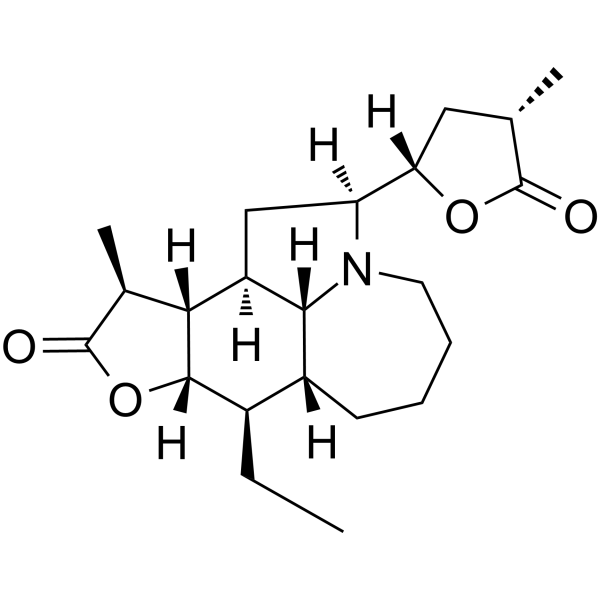
Tuberostemonine is a stenine alkaloid that can be isolated from Stemona tuberosa and Stemona sessifolia. Tuberostemonine is an antimalarial agent that has inhibitory activity against Ferredoxin-NADP + reductases (FNRs) from Plasmodium falciparum (PfFNR). Tuberostemonine can reduce the number of citric acid-induced coughs in guinea pigs. Tuberostemonine decreases bronchoalveolar lavage fluid (BALF), neutrophil and macrophage infiltration and reduces peribronchial and perivascular inflammatory cell infiltration in mouse model of acute lung inflammation. Tuberostemonine has a level of activity as a feeding deterrent .
loading...
    loading...
1
1 Cited Publications
Cat. No.: HY-P990181

Research Areas:  

Inflammation/Immunology

Anti-Mouse myeloperoxidase/MPO Antibody (6G4) is an anti-mouse myeloperoxidase/MPO IgG2c monoclonal antibody. Anti-Mouse myeloperoxidase/MPO Antibody (6G4) can activate the cGAS/STING pathway. Anti-Mouse myeloperoxidase/MPO Antibody (6G4) induces acute and chronic kidney injury in mice. Anti-Mouse myeloperoxidase/MPO Antibody (6G4) is often used in the construction of inflammation conditions models such as anti-neutrophil cytoplasmic antibody (ANCA)-associated vasculitides (AAV) .
loading...
    loading...
1
1 Cited Publications
Cat. No.: HY-K0350

MCE Mouse Neutrophil Negative Selection Kit can isolate neutrophils from single-cell suspensions of mouse bone marrow or other tissue samples.

loading...
    loading...
1
1 Cited Publications
Cat. No.: HY-P7188
Purity:  ≥ 95%, as determined by reducing SDS-PAGE.
Synonyms: CXCL1; neutrophil-Activating Protein 3; Prev. GRO1; Fibroblast Secretory Protein; Prev. MGSA; C-X-C Motif Chemokine 1; Prev. FSP; GRO-Alpha(1-73); SCYB1; GRO1 Oncogene (Melanoma Growth-Stimulating Activity); NAP-3; Melanoma Growth Stimulatory Activity Alp
Species:  
Mouse
Source:  
E. coli
loading...
    loading...
1
1 Cited Publications
Cat. No.: HY-P75698
Purity:  ≥ 90%, as determined by reducing SDS-PAGE.
Synonyms: PPBP; Macrophage-Derived Growth Factor; Prev. THBGB1; C-X-C Motif Chemokine 7; SCYB7; Beta-Thromboglobulin; CTAP3; NAP-2-L1; CXCL7; Small Inducible Cytokine Subfamily B, Member 7; MDGF; neutrophil-Activating Peptide-2; LDGF; Low-Affinity Platelet Factor I
Species:  
Mouse
Source:  
E. coli
loading...
    loading...
Cat. No.: HY-111355B
CAS No.: 2864-50-8
Purity:  98.22%
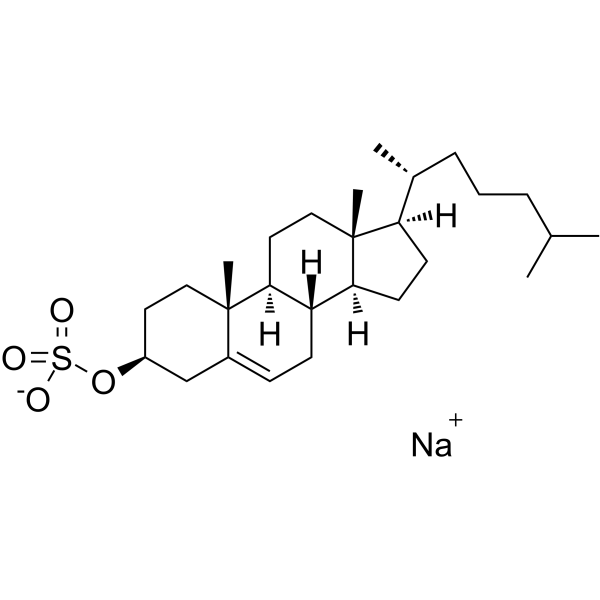
Cholesterol sulfate sodium is a naturally occurring, orally active cholesterol derivative that is widely distributed in various tissues and body fluids. Cholesterol sulfate sodium acts as a DOCK2 inhibitor, with IC50 values of 2 μM and 2.9 μM against mouse and human targets, respectively. Cholesterol sulfate sodium restricts excessive neutrophil infiltration and alleviates intestinal inflammation and damage. Cholesterol sulfate sodium serves as an activator of protein kinase C (PKC), which promotes squamous cell differentiation and inhibits skin carcinogenesis. Cholesterol sulfate sodium regulates cholesterol homeostasis and cellular metabolism by activating the AMPK-Sirt1 pathway. Cholesterol sulfate sodium can be used in research related to actinic keratitis, ulcerative colitis, skin cancer, and other conditions .
loading...
    loading...
Cat. No.: HY-P99396
CAS No.: 2097104-58-8
Synonyms: BI 655130

Target:  

Interleukin Related

Research Areas:  

Inflammation/Immunology

Spesolimab (BI 655130) is a mouse-derived humanized IgG1k antibody against IL-36R. IL-36 plays an important role in the immune system and Spesolimab is being investigated in palmoplantar pustulosis (PPP). Spesolimab was associated with a reduction in biomarkers associated with the innate, Th1/Th17 and neutrophil pathways .
loading...
    loading...
Cat. No.: HY-111355
CAS No.: 1256-86-6
Cholesterol sulfate is a naturally occurring, orally active cholesterol derivative that is widely distributed in various tissues and body fluids. Cholesterol sulfate acts as a DOCK2 inhibitor, with IC50 values of 2 μM and 2.9 μM against mouse and human targets, respectively. Cholesterol sulfate restricts excessive neutrophil infiltration and alleviates intestinal inflammation and damage. Cholesterol sulfate serves as an activator of protein kinase C (PKC), which promotes squamous cell differentiation and inhibits skin carcinogenesis. Cholesterol sulfate regulates cholesterol homeostasis and cellular metabolism by activating the AMPK-Sirt1 pathway. Cholesterol sulfate can be used in research related to actinic keratitis, ulcerative colitis, skin cancer, and other conditions .
loading...
    loading...
Cat. No.: HY-103445
CAS No.: 344930-95-6
Purity:  ≥98.0%
Target:  

Elastase

Research Areas:  

Cardiovascular Disease

SSR69071 is a potent, orally active and selective inhibitor of neutrophil elastase. SSR69071 reduces myocardial infarct size following ischemia-reperfusion injury . SSR69071 displays a higher affinity for human elastase (Ki=0.0168 nM) than for rat (Ki=3 nM), mouse (Ki=1.8 nM), and rabbit (Ki= 58 nM) elastases .
loading...
    loading...
Cat. No.: HY-168894
CT-1 is a secreted protein belonging to the IL-6 cytokine family. Overexpression of CT-1 enhances cell proliferation, migration and angiogenesis via the ADMA/DDAH pathway. CT-1 inhibits the growth of triple-negative breast cancer cells by simultaneously inducing Ferroptosis in N2-type tumor-associated neutrophils and cancer cells. CT-1 activates the Jak/STAT-3, p42/p44 MAPK and AMPK pathways, and inhibits GSK-3β activity through phosphorylation to induce cardiomyocyte hypertrophy. CT-1 enhances the viability of cardiomyocytes and neurons, reduces cell Apoptosis, induces the expression of heat shock proteins (HSP) and BNP, and inhibits TNF levels. CT-1 exerts anti-tumor activity in mouse models of triple-negative breast cancer. CT-1 improves cognitive impairment in mice. CT-1 is applicable to the research of ischemic heart disease, triple-negative breast cancer, myocardial hypertrophy, Parkinson's disease, hypertensive heart disease, myocardial infarction, acute Chagas cardiomyopathy, high-fat diet-induced cognitive impairment and diabetes-related cognitive impairment .
loading...
    loading...
Cat. No.: HY-165613
CAS No.: 656831-18-4
Synonyms: Dipalmitoyl-S-glyceryl-cysteine; S-[2,3-Bis(palmitoyloxy)propyl]cysteine
Pam2Cys (Dipalmitoyl-S-glyceryl-cysteine; S-[2,3-Bis(palmitoyloxy)propyl]cysteine) is a TLR2 agonist and immunostimulant. Pam2Cys binds to TLR2 to activate dendritic cells and trigger the TLR2-dependent NF-κB signaling pathway. Pam2Cys also induces dendritic cell maturation by upregulating the expression of cell surface MHC II molecules. Pam2Cys activates innate immune signaling pathways, drives pro-inflammatory and antimicrobial responses, enhances the expression of macrophage activation markers, increases phagocytic activity, induces the release of IL-12 and pro-inflammatory cytokines, and polarizes macrophages into a pro-inflammatory, antimicrobial phenotype without interfering with IL-10-induced macrophage polarization. Pam2Cys also serves as the lipid moiety in synthetic lipopeptide vaccines and possesses self-adjuvant properties. Pam2Cys enhances the immunogenicity of conjugated peptide segments and induces cellular and humoral immune responses. However, it does not activate CD4 T cells in mouse splenocyte cultures when used alone. Pam2Cys activates pulmonary TLR2 signaling pathways, triggers innate immune responses, recruits neutrophils and macrophages, induces the secretion of various cytokines, alleviates symptoms and damages associated with influenza A virus infection in mice without impairing adaptive immunity. Pam2Cys can be used in studies related to tuberculosis and influenza A virus infection .
loading...
    loading...

