1. Search Result
Search Result
Results for "

PC-9

" in MedChemExpress (MCE) Product Catalog:

42

Inhibitors & Agonists

1

Biochemical Assay Reagents

3

Natural
Products

17

Recombinant Proteins

2

Isotope-Labeled Compounds

3

Antibodies

3

Oligonucleotides

Targets Recommended:
Cat. No. Product Name Target Research Areas Chemical Structure
  • HY-15772
    Osimertinib
    Maximum Cited Publications
    185 Publications Verification

    AZD-9291; Mereletinib

    EGFR Cancer
    Osimertinib (AZD9291) is a covalent, orally active, irreversible, and mutant-selective EGFR inhibitor with an apparent IC50 of 12 nM against L858R and 1 nM against L858R/T790M, respectively. Osimertinib overcomes T790M-mediated resistance to EGFR inhibitors in lung cancer .
    Osimertinib
  • HY-15772A
    Osimertinib mesylate
    Maximum Cited Publications
    185 Publications Verification

    AZD-9291 mesylate; Mereletinib mesylate

    EGFR Cancer
    Osimertinib mesylate (AZD9291 mesylate) is a covalent, orally active, irreversible, and mutant-selective EGFR inhibitor with an apparent IC50 of 12 nM against L858R and 1 nM against L858R/T790M. Osimertinib overcomes T790M-mediated resistance to EGFR inhibitors in lung cancer .
    Osimertinib mesylate
  • HY-112299
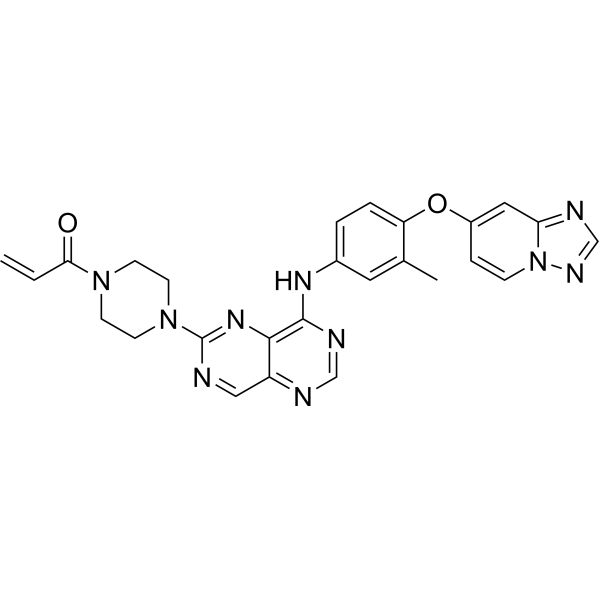
    Zipalertinib
    3 Publications Verification

    TAS6417; CLN-081

    EGFR Apoptosis Cancer
    Zipalertinib (TAS6417; CLN-081) is a highly effective, orally active and pan-mutation-selective EGFR tyrosine kinase inhibitor with a unique scaffold fitting into the ATP-binding site of the EGFR hinge region, with IC50 values ranging from 1.1-8.0 nM .
    Zipalertinib
  • HY-15772R

    AZD-9291 (Standard); Mereletinib (Standard)

    Reference Standards EGFR Cancer
    Osimertinib (Standard) is the analytical standard of Osimertinib. This product is intended for research and analytical applications. Osimertinib (AZD9291) is a covalent, orally active, irreversible, and mutant-selective EGFR inhibitor with an apparent IC50 of 12 nM against L858R and 1 nM against L858R/T790M, respectively. Osimertinib overcomes T790M-mediated resistance to EGFR inhibitors in lung cancer .
    Osimertinib (Standard)
  • HY-128733
    Phenyl acetate
    1 Publications Verification

    Endogenous Metabolite Neurological Disease Metabolic Disease Cancer
    Phenyl acetate is an endogenous metabolite and a metabolite of 2-phenylethylamine, which can be found in urine. Phenyl acetate regulates the metabolism of glutamine. In addition, Phenyl acetate can be used as a detection index for certain diseases, such as depression .
    Phenyl acetate
  • HY-100014
    KDM5A-IN-1
    4 Publications Verification

    Histone Demethylase Cancer
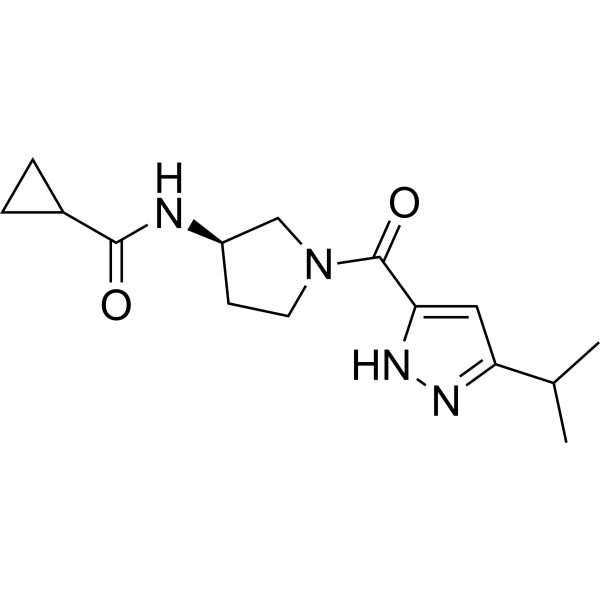
    KDM5A-IN-1 is a potent, orally bioavailable pan-histone lysine demethylases 5 (KDM5) inhibitor with IC50s of 45 nM, 56 nM and 55 nM for KDM5A, KDM5B and KDM5C, respectively, and with an EC50 value of 960 nM for PC9 H3K4Me3. KDM5A-IN-1 is significantly less potent against other KDM5B enzymes (1A, 2B, 3B, 4C, 6A, 7B) .
    KDM5A-IN-1
  • HY-17602

    BBI503

    Apoptosis Cancer
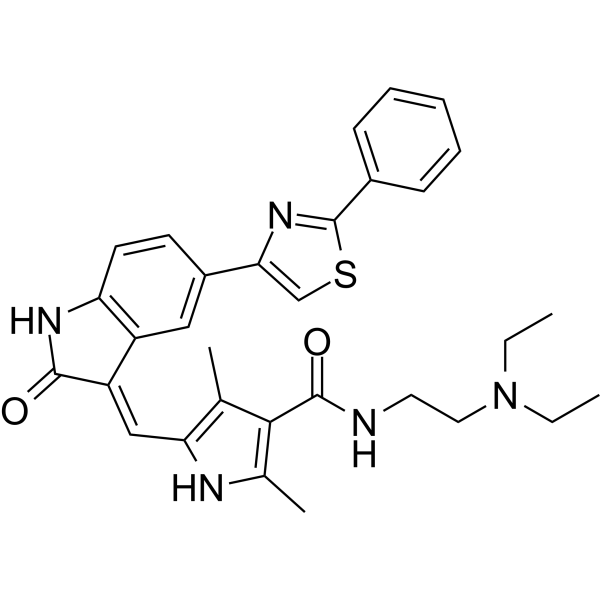
    Amcasertib (BBI503) is an orally activate cancer stemness kinase inhibitor that enhances apoptosis. Amcasertib inhibits the expression of NANOG and CD133 and cell viability in PC-9/GR cells.
    Amcasertib
  • HY-150024

    EGFR Cancer
    BI-4142 is a potent, highly selective and orally active HER2 inhibitor with an IC50 of 5 nM .
    BI-4142
  • HY-N0429
    Diosbulbin B
    1 Publications Verification

    Apoptosis MDM-2/p53 Bcl-2 Family CDK Cancer
    Diosbulbin B, a diterpene lactone, is an anticancer agent. Diosbulbin B is an orally active component of Dioscorea. bulbifera L. Diosbulbin B can inhibit cell proliferation, induce G0/G1 phase arrest and apoptosis. Diosbulbin B can induce autophagy and mitochondrial dysfunction. Diosbulbin B can induce liver injury. Diosbulbin B can be used for the research of cancer, such as non-small cell lung cancer (NSCLC) .
    Diosbulbin B
  • HY-15772S

    AZD-9291-d6; Mereletinib-d6

    EGFR Cancer
    Osimertinib-d6 is a deuterium labeled osimertinib. Osimertinib is a covalent, orally active, irreversible, and mutant-selective EGFR inhibitor with an apparent IC50 of 12 nM against L858R and 1 nM against L858R/T790M. Osimertinib overcomes T790M-mediated resistance to EGFR inhibitors in lung cancer .
    Osimertinib-d6
  • HY-108016

    Encordin

    Src PI3K JNK STAT EGFR Apoptosis Autophagy Cancer
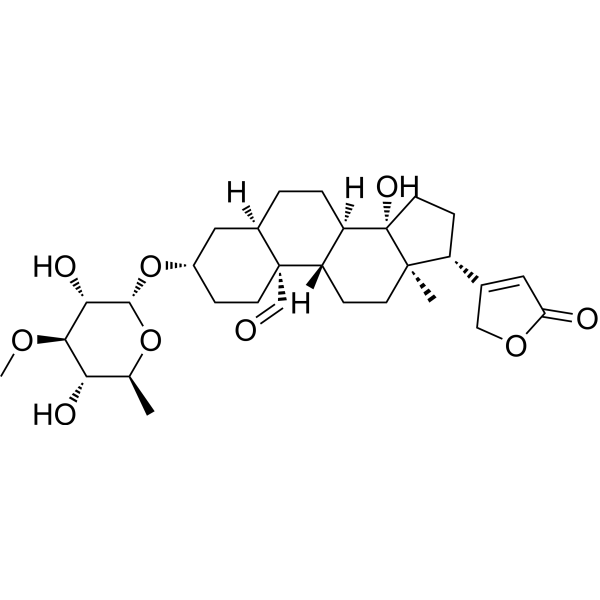
    Peruvoside is a potent inhibitor of Src, PI3K, JNK, STAT, and EGFR. Peruvoside induces apoptosis and autophagy and possesses a broad spectrum of anticancer activity in breast, lung, liver cancers and leukemia. Peruvoside is a broad-spectrum and potent antiviral activity against positive-sense RNA viruses. Peruvoside sensitizes Gefitinib (HY-50895)-resistant tumour cells (A549, PC9/gef and H1975) to Gefitinib .
    Peruvoside
  • HY-153901

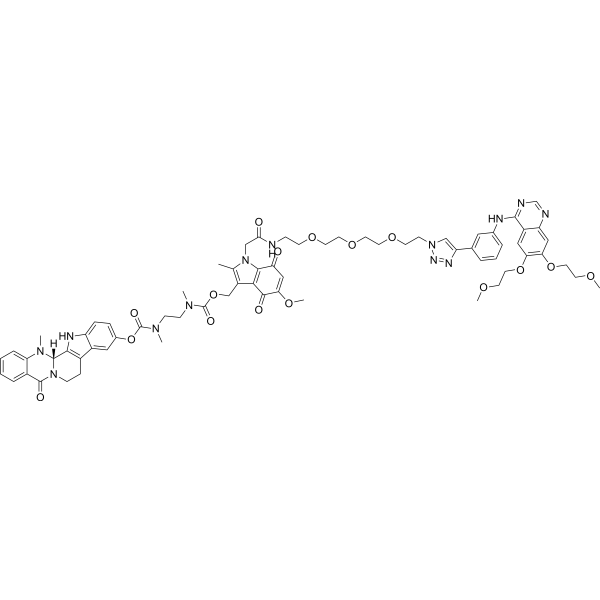
    EGFR PROTACs Cancer
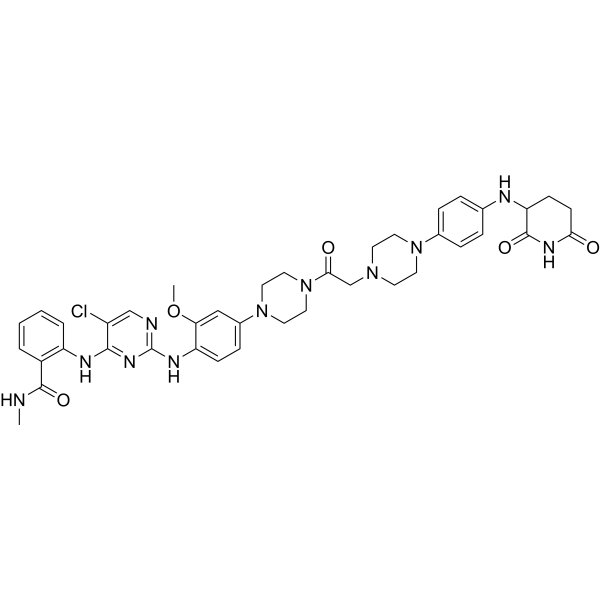
    PROTAC EGFR degrader 8 (T-184) is a PROTAC EGFR degrader. PROTAC EGFR degrader 8 degrades EGFR in HCC827 cell with a DC50 of 15.56 nM. PROTAC EGFR degrader 8 inhibits H1975, PC-9, HCC827 cell growth with IC50s of 7.72 nM, 121.9 nM, 14.21 nM. PROTAC EGFR degrader 8 can be used for research of cancer, especially NSCLC .
    PROTAC EGFR degrader 8
  • HY-147185

    Histone Methyltransferase Cancer
    PRMT7-IN-1 (Compound 14) is a PRMT7 inhibitor with an IC50 of 2.1 μM. PRMT7-IN-1 shows anticancer activity against different cancer cells .
    PRMT7-IN-1
  • HY-168135

    PROTACs c-Met/HGFR Cancer
    PROTAC c-Met degrader-1 is a selective and orally active c-Met PROTAC degrader with a DC50 of 6.21 nM against c-Met. PROTAC c-Met degrader-1 induces CRBN-dependent ubiquitination and proteasomal degradation of c-Met. PROTAC c-Met degrader-1 induces G0/G1 phase arrest in c-Met-dependent cancer cells. PROTAC c-Met degrader-1 kills c-Met-dependent cancer cells. PROTAC c-Met degrader-1 inhibits tumor growth in animal models. PROTAC c-Met degrader-1 can be used for the research of gastric cancer .
    PROTAC c-Met degrader-1
  • HY-W096169D

    Biochemical Assay Reagents Drug Intermediate Cancer
    Platinum is a metallic element, and its complexes act as orally active anticancer agents. Platinum-based complexes used for tumors include Cisplatin (HY-17394), Carboplatin (HY-17393), and Oxaliplatin (HY-17371) .
    Platinum
  • HY-150023

    EGFR Itk PI4K Btk CDK Raf JAK Cancer
    BI-1622 is an orally active, potent and highly selective HER2 (ERBB2) inhibitor, with an IC50 of 7 nM. BI-1622 shows greater than 25-fold selectivity over EGFR. BI-1622 shows high antitumor efficacy in vivo in xenograft mouse tumor models with engineered H2170 and PC9 cells and had a favorable agent metabolism and pharmacokinetics profile .
    BI-1622
  • HY-17654

    EGFR mTOR Cancer
    BIEGi-1 is an EGFR inhibitor. BIEGi-1 effectively disrupts the EGFR-Rheb interaction in cells. BIEGi-1 robustly inhibits EGFR kinase activity (reduces p-Y1068-EGFR) as well as mTORC1 activation (reduces p-T389-S6K1) in EGFR-mutant cells. BIEGi-1 shows strong antiproliferative effects on EGFR-mutant PC9 and HCC827 cells with IC50 values of 17 nM and 20 nM, respectively. BIEGi-1 can be used for the study of cancers harboring EGFR mutations, such as non-small cell lung cancer (NSCLC) .
    BIEGi-1
  • HY-RS16505

    Small Interfering RNA (siRNA) Others

    Pcsk9 Mouse Pre-designed siRNA Set A contains three designed siRNAs for Pcsk9 gene (Mouse), as well as a negative control, a positive control, and a FAM-labeled negative control.

    Pcsk9 Mouse Pre-designed siRNA Set A
    Pcsk9 Mouse Pre-designed siRNA Set A
  • HY-15772AR

    AZD-9291 mesylate (Standard); Mereletinib mesylate (Standard)

    Reference Standards EGFR Cancer
    Osimertinib (mesylate) (Standard) is the analytical standard of Osimertinib (mesylate). This product is intended for research and analytical applications. Osimertinib mesylate (AZD9291 mesylate) is a covalent, orally active, irreversible, and mutant-selective EGFR inhibitor with an apparent IC50 of 12 nM against L858R and 1 nM against L858R/T790M. Osimertinib overcomes T790M-mediated resistance to EGFR inhibitors in lung cancer .
    Osimertinib mesylate (Standard)
  • HY-162890

    EGFR Cancer
    EGFR-IN-122 (compound Yfq07) is a potent EGFR inhibitor. EGFR-IN-122 suppresses the proliferation of PC-9GR and HCC827GR cells .
    EGFR-IN-122
  • HY-175244

    SOS1 Ras Potassium Channel Cancer
    SOS1-IN-20 (Compound 12f) is an orally active SOS1 inhibitor with an IC50 of 5.11 nM against KRAS G12C::SOS1. By disrupting the interaction between KRAS and SOS1, SOS1-IN-20 inhibits KRAS activation and downstream signal transduction. SOS1-IN-20 has an IC50 of 253 nM for p-ERK in PC-9 cells and 16.71 μM for hERG channel . SOS1-IN-20 can inhibit the proliferation of tumor cells and has antitumor activity .
    SOS1-IN-20
  • HY-143337

    Apoptosis EGFR Cancer
    EGFR-IN-47 is a potent and orally active EGFR L858R/T790M/C797S inhibitor with an IC50 of 0.01 μM. EGFR-IN-47 induces cell cycle attest and cell apoptosis. EGFR-IN-47 has the potential for the research of NSCLC .
    EGFR-IN-47
  • HY-176284

    Oxidative Phosphorylation Mitochondrial Metabolism Apoptosis Reactive Oxygen Species (ROS) AMPK Keap1-Nrf2 Cancer
    OXPHOS-IN-2 is an orally active OXPHOS inhibitor. OXPHOS-IN-2 exhibits potent inhibitory activity in PC9 (IC50 = 12.3 nM) and Bxpc-3 cells (IC50 = 250 nM in glucose medium, IC50 = 17.5 nM in galactose medium). OXPHOS-IN-2 decreases the NADH/NAD + ratio and reduces ATP levels. OXPHOS-IN-2 induces tumor cells apoptosis by activating reactive oxygen species (ROS) and downregulating the level of Nrf2. OXPHOS-IN-2 can be used for research on cancer such as non-small cell lung cancer and pancreatic cancer .
    OXPHOS-IN-2
  • HY-178057

    EGFR Akt Anaplastic lymphoma kinase (ALK) Apoptosis Cancer
    EGFR-IN-176 is an orally active and ATP-competitive EGFR mutant inhibitor (particularly C797S-mediated EGFR triple mutant). EGFR-IN-176 effectively inhibits subsequent AKT signaling and induces apoptosis in Ba/F3 and PC-9 cells expressing EGFR 19del/T790M/C797S and EGFR L858R/T790M/C797S. EGFR-IN-176 selectively inhibits EGFR signaling in cell lines harboring EGFR triple mutation and shows no inhibitory effect against A431 cells that express wild-type EGFR. EGFR-IN-176 can effectively inhibit the enzymatic activity of ALK (IC50 < 0.5 nM). EGFR-IN-176 can be used for the study of non-small cell lung cancer (NSCLC) .
    EGFR-IN-176
  • HY-157564

    Apoptosis Cancer
    Antitumor agent-135 (Compound 13) is a potent antitumor agent. Antitumor agent-135 induces cell apoptosis, with IC50s of 3.79 , 10.55, 1.14, and 4.14 μM for NSCLC cell lines (A549, H460, PC-9, and PC-9/GR) .
    Antitumor agent-135
  • HY-157413

    EGFR Cancer
    YS-67 is a potent inhibitor of EGFR with an IC 50 of 5.2 nM. YS-67 significantly inhibits p-EGFR and p-AKT. YS-67 inhibits the proliferation of A549, PC-9, and A431cells with IC 50s of 4.1, 0.5, and 2.1 μM, respectively .
    YS-67
  • HY-146223A

    Ras PI3K p38 MAPK Apoptosis Cancer
    (3R,10R,14aS)-AZD4625 is the isomer of AZD4625 (HY-146223), and can be used as an experimental control. AZD4625 is an orally active, selective irreversible, covalent allosteric GTPase KRASG12C inhibitor with an IC50 of 3 nM. AZD4625 can inhibit the MAPK pathway (with decreased pCRAF, pMEK, and pERK) and the PI3K pathway (with decreased pAKT and pS6), and induce cell apoptosis. AZD4625 has no binding and inhibition of wild-type RAS or isoforms carrying non-KRASG12C mutations. AZD4625 can be used for the study of KRASG12C mutant non-small cell lung cancer .
    (3R,10R,14aS)-AZD4625
  • HY-178485

    PI3K HDAC Akt Histone Methyltransferase Cancer
    SJY26 is a PI3K/HDAC dual-target inhibitor with IC50s of 0.59 nM (PI3Kα and PI3Kδ), 2.02 nM (PI3Kγ), 12.69 nM (PI3Kβ) and 114 nM (HDAC1). SJY26 exhibits potent broad-spectrum anti-proliferative activity, and is particularly sensitive to Jurkat and PC9R cells. SJY26 inhibited the migration of PC9R cells, arrested the cell cycle and induced cell apoptosis. SJY26 reduces AKT phosphorylation, and decreases histone H3 deacetylation (Ac-H3). SJY26 can be used for the studies of non-small cell lung cancer and leukemia .
    SJY26
  • HY-161785

    Apoptosis EGFR Cancer
    EGFR-IN-117 (Compound 8h) exhibits inhibitory activity against EGFR mutation, targets the tumor environment, and induces apoptosis of cancer cells. EGFR-IN-117 inhibits proliferations of H1975, PC-9, and EGFR mutant cells BaF3-EGFR L858R/T790M/C797S and BaF3– C797S/Del19/T790M, with IC50 of 13 nM, 19 nM, 1.2 nM and 1.3 nM, respectively. EGFR-IN-117 exhibits antitumor efficacy in mouse models .
    EGFR-IN-117
  • HY-B0021S

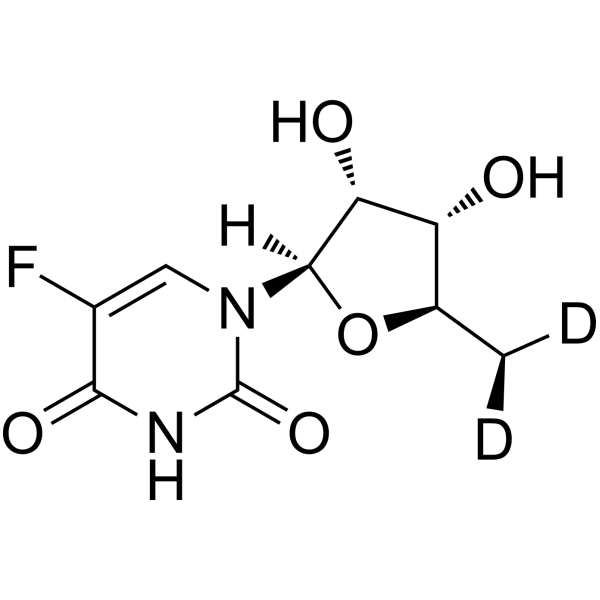
    Ro 21-9738-d2; 5-Fluoro-5'-deoxyuridine-d2; 5'-DFUR-d2

    Nucleoside Antimetabolite/Analog Cancer
    Doxifluridine-d2 is the deuterium labeled Doxifluridine . Doxifluridine is a thymidine phosphorylase activator for PC9-DPE2 cells with IC50 of 0.62 μM.
    Doxifluridine-d2
  • HY-155227B

    Anaplastic lymphoma kinase (ALK) Cancer
    ALK/EGFR-IN-3 is a dual inhibitor of ALK and EGFR. ALK/EGFR-IN-3 inhibits the cell proliferation of H1975, PC9, and Baf3-EML4-ALK cancer cell lines with IC50s of 0.1360, 0.0332, and 0.0339 μM, respectively .
    ALK/EGFR-IN-3
  • HY-143445

    EGFR Cancer
    EGFR-IN-48 is a potent and orally active EGFR inhibitor with IC50s of 0.193 nM, 0.251 nM, 10.4 nM for EGFR d19/TM/CS, EGFR LR/TM/CS, EGFR WT, respectively. EGFR-IN-48 inhibits the proliferation of BaF3 EGFR del19/T790M/C797S and PC-9 EGFR del19/T790M/C797S cells with IC50s of 1.526, 66.7 nM, respectively .
    EGFR-IN-48
  • HY-155227A

    Anaplastic lymphoma kinase (ALK) Cancer
    ALK/EGFR-IN-2 is a potent dual inhibitor of ALK and EGFR. ALK/EGFR-IN-2 induces apoptosis and G0/G1 cell cycle arrest in cancer cells. ALK/EGFR-IN-2 significantly inhibits the cell proliferation of H1975, PC9, and Baf3-EML4-ALK cancer cell lines with IC50s of 0.0034, 0.0065, and 0.0018 μM, respectively .
    ALK/EGFR-IN-2
  • HY-147682

    NF-κB Apoptosis Cancer
    NF-κB-IN-5 (compound 4d) is an orally active and potent NF-κB inhibitor by interacting directly with NF-κB. NF-κB-IN-5 shows antitumor activity against human cancer cell lines (HCT116, U87-MG, HepG2, BGC823, PC9), with IC50 values of 5.35, 2.81, 2.83, 2.02 and 3.90 μM, respectively. NF-κB-IN-5 induces apoptosis in U87-MG tumor cell and cell cycle arrest in G0/G1 phase .
    NF-κB-IN-5
  • HY-173007

    Akt PI3K Anaplastic lymphoma kinase (ALK) CDK Apoptosis Mitochondrial Metabolism Cancer
    ALK/PI3K/AKT-IN-1 (Compound 45) inhibits the proliferation of cancer cell A549, H1975 and PC9 with an IC50 of 0.44, 0.83 and 1.51 μM. ALK/PI3K/AKT-IN-1 increases the expression of p21 and p27, inhibits the activity of CDK2 and p-Rb, arrests the cell cycle at G1 phase. ALK/PI3K/AKT-IN-1 inhibits the ALK/PI3K/AKT signaling pathway, promotes the depolarization of mitochondrial membrane potential, and inducing apoptosis in A549 cell. ALK/PI3K/AKT-IN-1 inhibits the formation and growth of A549 cell spheroids .
    ALK/PI3K/AKT-IN-1
  • HY-162891

    EGFR Cancer
    EGFR-IN-123 (compound D06) is a potent EGFR inhibitor. EGFR-IN-123 inhibits PC-9G, A549, A431 and HCT116 cells with IC50s of 0.74, 1.36, 1.20 and 2.53 μM, respectively .
    EGFR-IN-123
  • HY-RS22937

    Small Interfering RNA (siRNA) Others

    Pcsk9 Rat Pre-designed siRNA Set A contains three designed siRNAs for Pcsk9 gene (Rat), as well as a negative control, a positive control, and a FAM-labeled negative control.

    Pcsk9 Rat Pre-designed siRNA Set A
    Pcsk9 Rat Pre-designed siRNA Set A
  • HY-123891

    EGFR Cancer
    NS-062 is an orally active, irreversible targeted covalent inhibitor for EGFR, and exhibits antiproliferative efficacy in drug-resistant double mutated H1975 cell with an IC50 of 0.19 μM. NS-062 exhibits antitumor efficacy in mouse H1975 xenograft model .
    NS-062
  • HY-RS10177

    Small Interfering RNA (siRNA) PCSK9 Others

    PCSK9 Human Pre-designed siRNA Set A contains three designed siRNAs for PCSK9 gene (Human), as well as a negative control, a positive control, and a FAM-labeled negative control.

    PCSK9 Human Pre-designed siRNA Set A
    PCSK9 Human Pre-designed siRNA Set A
  • HY-171884

    EGFR Cancer
    BI-8128 is a potent EGFR inhibitor, with IC50 values of 12, 6.7, 22, 10, and 3 nM against wild-type, T790M, C797S, T790M/C797S, and L858R/T790M/C797S mutant EGFR, respectively. BI-8128 significantly inhibits the proliferation of Ba/F3 and PC-9 drug-resistant mutant cells. BI-8128 is applicable for the research of non-small cell lung cancer .
    BI-8128
  • HY-100014R

    Histone Demethylase Reference Standards Cancer
    KDM5A-IN-1 (Standard) is the analytical standard of KDM5A-IN-1 (HY-100014). This product is intended for research and analytical applications. KDM5A-IN-1 is a potent, orally bioavailable pan-histone lysine demethylases 5 (KDM5) inhibitor with IC50s of 45 nM, 56 nM and 55 nM for KDM5A, KDM5B and KDM5C, respectively, and with an EC50 value of 960 nM for PC9 H3K4Me3. KDM5A-IN-1 is significantly less potent against other KDM5B enzymes (1A, 2B, 3B, 4C, 6A, 7B) .
    KDM5A-IN-1 (Standard)
  • HY-182742

    EGFR Cancer
    EGFR-IN-208 is an allosteric mutant EGFR L858R/T790M and EGFR L858R/T790M/C797S inhibitor, with IC50 values of 3.06 μM and 1.08 μM, respectively. EGFR-IN-208 binds to the allosteric site of EGFR and inhibits EGFR phosphorylation. EGFR-IN-208 induces apoptosis and exhibits antiproliferative effects in cancer cells. EGFR-IN-208 can be used in research related to non-small cell lung cancer .
    EGFR-IN-208

Inquiry Online

Your information is safe with us. * Required Fields.

Salutation


Country or Region *

Applicant Name *


Organization Name *

Department *


Email Address *


Product Name *

Cat. No.


Requested quantity *

Phone Number *


Remarks

Inquiry Online

Inquiry Information

Product Name:
Cat. No.:
Quantity:
MCE Japan Authorized Agent:

