Search Result
Results for "
Silver
" in MedChemExpress (MCE) Product Catalog:
23
Biochemical Assay Reagents
7
Isotope-Labeled Compounds
| Cat. No. |
Product Name |
Target |
Research Areas |
Chemical Structure |
-
- HY-W020983
-
|
Triflic acid Silver; Perfluoromethanesulfonic acid Silver; Fluorad FC 24 Silver
|
Biochemical Assay Reagents
|
Others
|
|
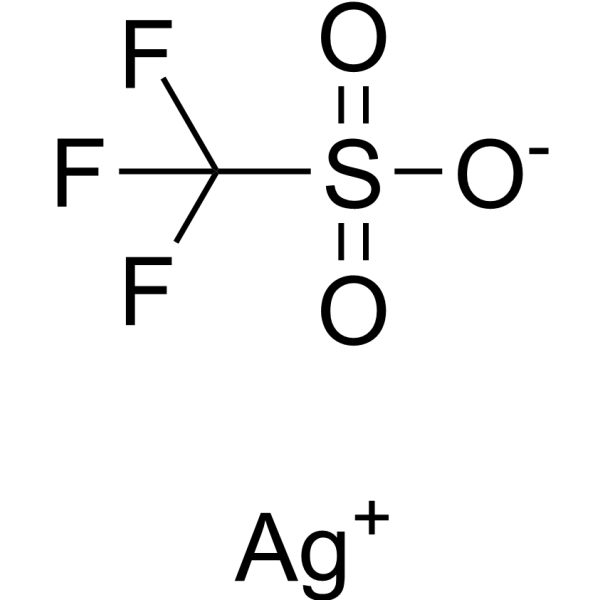
Silver trifluoromethanesulfonate, a perfluoroalkanesulfonic acid, is one of the superior catalysts for C- or O-acylation. Silver trifluoromethanesulfonate is widely used as a cationic catalyst in promoting Friedel-Crafts reactions and esterification reactions .
|
-
-
- HY-W051140
-
|
DiSilver sulfate, 99%
|
Environmental Pollutants
Biochemical Assay Reagents
|
Others
|
|
Silver sulfate acts as an ethylene inhibitor and a shoot regeneration promoter. Silver sulfate promotes shoot proliferation in explants of the cherry rootstock CAB-6P. Silver sulfate is applicable to studies on the optimization of micropropagation for cherry rootstocks .
|
-
-
- HY-W021005
-
|
Silver triflimide
|
Biochemical Assay Reagents
|
Others
|
|
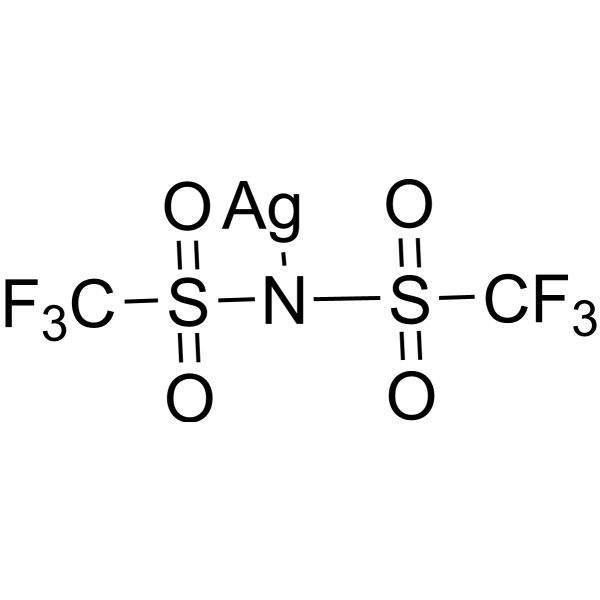
Silver bis(trifluoromethanesulfonyl)imide is a kind of silver salt and is widely used as an organic synthesis catalyst. Silver bis(trifluoromethanesulfonyl)imide is used for the C-3 regioselective alkylation of indole derivatives with α,β -enones through conjugated addition reactions. Silver bis(trifluoromethanesulfonyl)imide can also be used as a highly efficient and stable solid-state dye sensitization and P-type dopant for perovskite solar cells .
|
-
-
- HY-Y0975
-
|
|
Environmental Pollutants
Drug Intermediate
|
Others
|
|
Silver(I) fluoride is a drug intermediate for synthesis of various active compounds. Silver(I) fluoride is a silver(I) complex that can form hydrates in aqueous solutions and in the solid state, enabling its localized application to the tooth decay area for oral health research .
|
-
-
- HY-N2362
-
|
DL-2-Aminopropionic acid
|
Endogenous Metabolite
|
Metabolic Disease
|
|
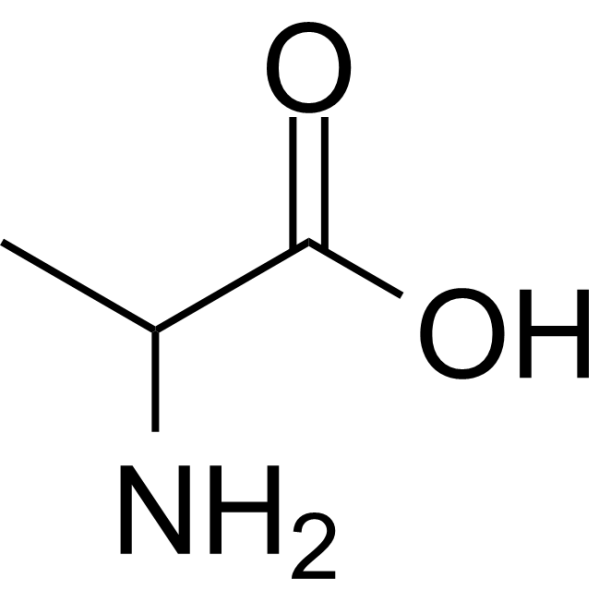
DL-alanine, an orally active amino acid, is the racemic compound of L- and D-alanine. DL-alanine is employed both as a reducing and a capping agent, used with silver nitrate aqueous solutions for the production of nanoparticles. DL-alanine can be used for the research of transition metals chelation, such as Cu(II), Zn(II), Cd(11). DL-alanine, a sweetener, is classed together with glycine and sodium saccharin. DL-alanine plays a key role in the glucose-alanine cycle between tissues and liver .
|
-
-
- HY-W034067
-
|
|
Biochemical Assay Reagents
Bacterial
|
Infection
|
|
Silver nitrite is an inorganic compound with the chemical formula AgNO2. Silver nitrite can inhibit cell division and bacterial growth by interfering with protein synthesis .
|
-
-
- HY-B1497
-
|
AgSD
|
Bacterial
DNA/RNA Synthesis
Antibiotic
|
Infection
|
|
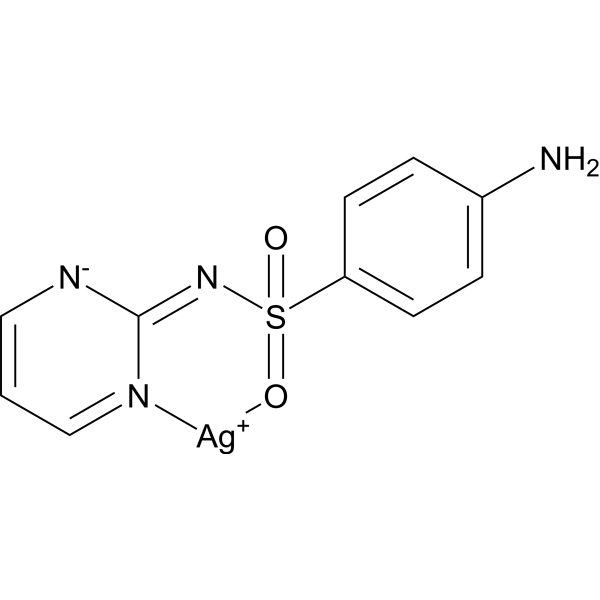
Silver sulfadiazine (AgSD), a sulfonamide antibiotic, effects a dual inhibitory action on bacterial growth by its sulfa moiety (SD-SDZ) that prevents bacterial folate absorption and subsequent DNA synthesis. The silver that is released from Silver sulfadiazine binds and disrupts the DNA structure, precluding bacterial DNA replication .
|
-
-
- HY-N6613
-
|
Galacturonic acid polymer
|
Others
|
Infection
Inflammation/Immunology
|
|
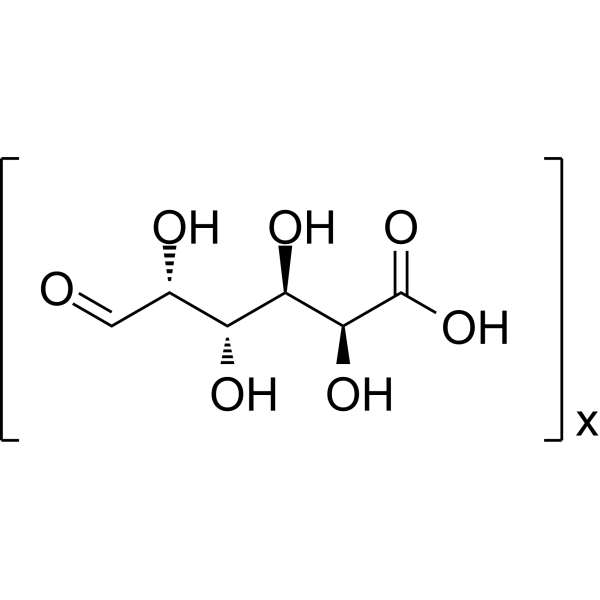
Polygalacturonic acid (Galacturonic acid polymer) is transparent colloid, is a major component of the cell wall. Polygalacturonic acid can be used to prepare silver nanoparticles (AgNPs), as an antioxidant and anti-inflammatory that protect cells from destructive effect of elevated ROS and accelerate wound healing. Polygalacturonic acid nanoparticles also displays anti-bacterial activity .
|
-
-
- HY-G0006
-
|
Ufiprazole
|
Drug Metabolite
Aryl Hydrocarbon Receptor
Bacterial
|
Infection
Metabolic Disease
|
|
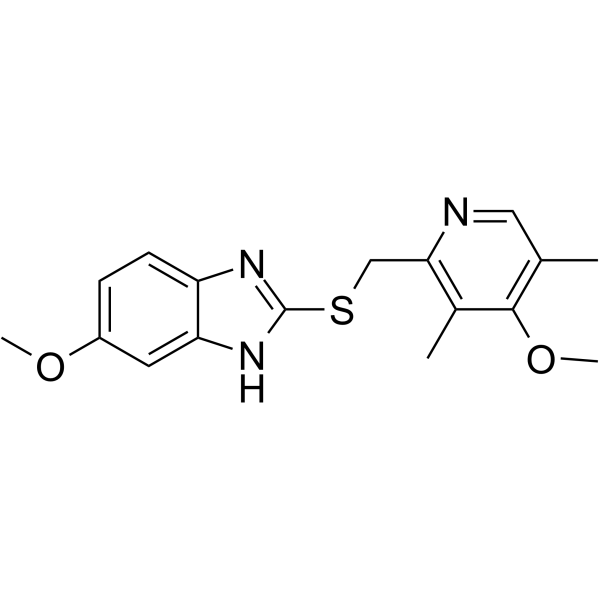
Omeprazole sulfide (Ufiprazole) is a metabolic degradation product of Omeprazole (HY-B0113). Omeprazole sulfide acts as a modulator of AhR. Omeprazole sulfide in cells with low CYP3A4 expression, functions as an AhR antagonist; however, in cells with high CYP3A4 expression, it is rapidly metabolized to Omeprazole, thereby acting as an AhR agonist. Omeprazole sulfide exhibits antibacterial activity when conjugated with silver nanoparticles (AgNPs). Omeprazole sulfide can be used in research on acid suppression and bacterial infections .
|
-
-
- HY-W041988
-
|
|
Bacterial
|
Infection
|
|
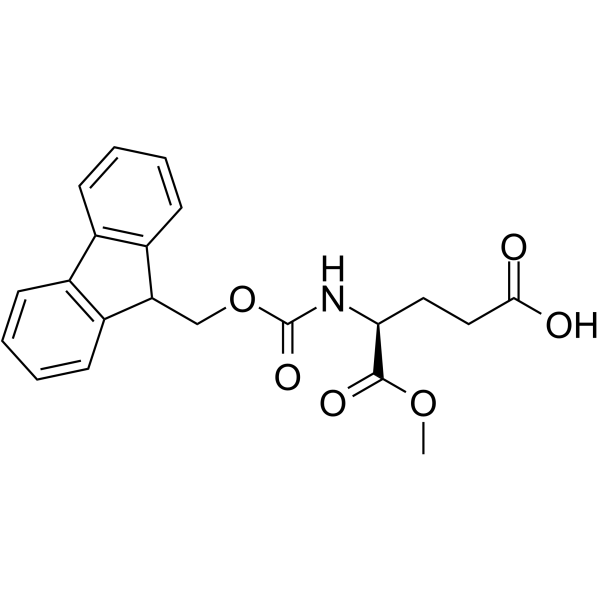
Fmoc-Glu-OMe is a glutamic acid derivative. Fmoc-Glu-OMe exhibits significant antibacterial activity and excellent gelation properties in silver nitrate (AgNO3) solution. Fmoc-Glu-OMe promotes wound healing in rat models and eliminates bacteria in MRSA-infected rat wound models. Fmoc-Glu-OMe can be used in studies related to wound infections and MRSA-infected wounds .
|
-
-
- HY-W034674
-
|
Silver(1+) diethyldithiocarbamate
|
Biochemical Assay Reagents
|
Others
|
|
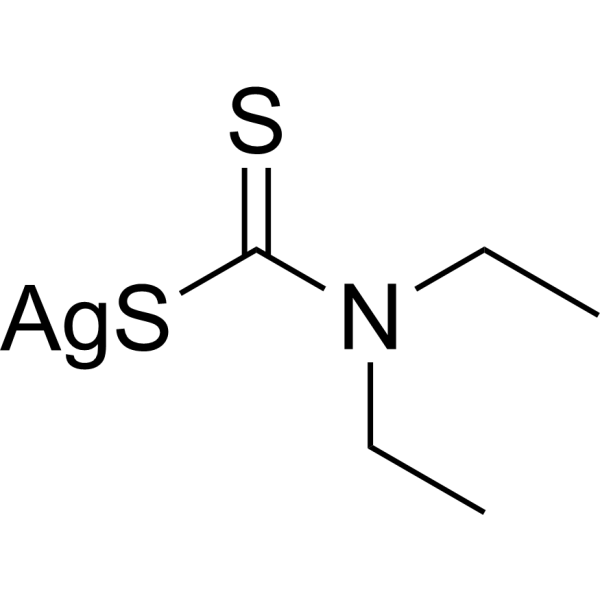
Silver diethyldithiocarbamate (SDDC) is an organic compound consisting of silver ions complexed with the ligand diethyldithiocarbamate. SDDC is mainly used as a reagent in analytical chemistry to detect the presence of copper, iron and other heavy metals in various materials. It acts as a chelating agent, binding to metal ions and forming stable complexes that can be easily analyzed using techniques such as UV-Vis spectroscopy.
|
-
-
- HY-W587415
-
|
|
Others
|
Others
|
|
Nepetalactol is an iridoid. It has been found in Actinidia polygama (the silver vine) as a major cat attractant, and a mosquito repellent.
|
-
-
- HY-D1895A
-
|
|
Biochemical Assay Reagents
|
Others
|
|
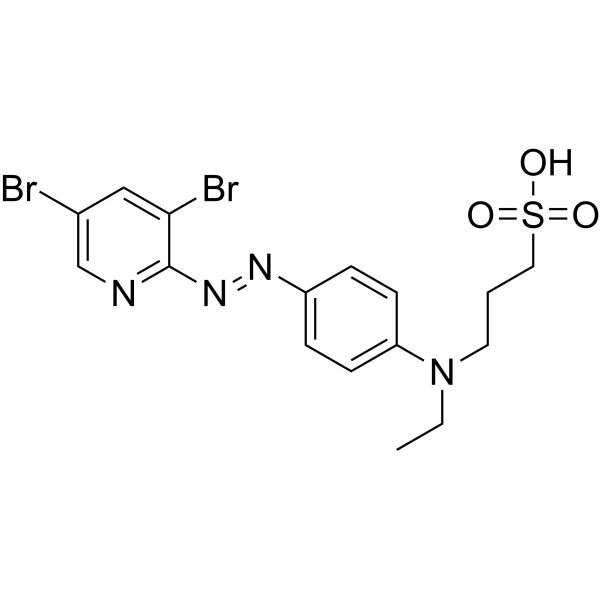
3,5-DiBr-PAESA sodium is a water-soluble pyridylazo-based highly sensitive chromogenic reagent. With the assistance of EDTA for masking copper and bromide ions for dissociating silver chelates, 3,5-DiBr-PAESA sodium enables accurate determination of sub-milligram level silver ions in strongly acidic high-copper systems via flow injection spectrophotometry .
|
-
-
- HY-W019930
-
-
-
- HY-W019929
-
-
-
- HY-D1895
-
|
|
Biochemical Assay Reagents
|
Others
|
|
3,5-DiBr-PAESA is a water-soluble pyridylazo-based highly sensitive chromogenic reagent. With the assistance of EDTA for masking copper and bromide ions for dissociating silver chelates, 3,5-DiBr-PAESA enables accurate determination of sub-milligram level silver ions in strongly acidic high-copper systems via flow injection spectrophotometry .
|
-
-
- HY-W009062
-
-
-
- HY-N5070
-
|
Depressin
|
Biochemical Assay Reagents
|
Others
|
|
Depressine is an iridoid glycoside that can be isolated from the methanol extract of the aerial parts of Gentiana depressa. Depressine can be used to reduce oxidative DNA base damage and strand breaks that are prone to occur during the preparation of silver nanoparticles (AgNPs) .
|
-
-
- HY-W008145
-
|
|
Biochemical Assay Reagents
|
Others
|
|
Sodium tetrachloropalladate(II) is an organic compound commonly used as a catalyst and as a raw material for dye production. It can be used to catalyze or promote reactions in certain chemical reactions, and is widely used in the fields of organic synthesis and dye preparation. In addition, the compound is also used for metallization, silver plating and electroplating of circuit boards.
|
-
-
- HY-W015793
-
|
|
GABA Receptor
|
Others
|
|
6-Aminonicotinic acid is a GABAA receptor agonist with Ki value of 4.4 nM. 6-Aminonicotinic acid can be formed via electrocatalytic synthesis at silver cathodes. 6-Aminonicotinic acid has a variety of biological properties, such as protein synthesis inhibitor, vitamin B3 agonist, and modulating agent in chemotherapy .
|
-
-
- HY-W1048849B
-
|
4-Arm PEG-thiol (MW 10000)
|
Biochemical Assay Reagents
|
Others
|
|
4-Arm PEG-SH (MW 10000) (4-Arm PEG-thiol (MW 10000)) is a multi-arm PEG derivative with thiol groups at each end of the four arms. The reactive free thiol, SH or sulfhydryl groups react selectively with maleimide and transition metal surfaces including gold and silver .
|
-
-
- HY-W1048849A
-
|
4-Arm PEG5000-thiol
|
Biochemical Assay Reagents
|
Others
|
|
4-Arm PEG5000-SH (4-Arm PEG5000-thiol) is a multi-arm PEG derivative with thiol groups at each end of the four arms. The reactive free thiol, SH or sulfhydryl groups react selectively with maleimide and transition metal surfaces including gold and silver .
|
-
-
- HY-Y0700
-
|
|
Fluorescent Dye
|
Others
|
|
Calconcarboxylic acid, an azo dye, acts as a silver-ion sensitizer to stain protein in SDS-PAGE gels. Calconcarboxylic acid increases silver binding on protein bands or spots by the formation of a silver-dye complex and also increases the reducing power o
|
-
-
- HY-W099571
-
|
Stearic acid lithium; Lithium octadecanoate
|
Environmental Pollutants
Biochemical Assay Reagents
|
Others
|
|
Lithium stearate (Stearic acid (lithium)) is a compound that forms vesicles in reaction with silver nitrate, thereby changing the reaction kinetics of the nucleation and self-assembly process of silver stearate. It has the activity that even in the presence of excess silver nitrate, only about 80% can be converted into silver stearate and the residual lithium stearate will inhibit the growth process of silver stearate crystals, thereby producing silver stearate crystals that are much smaller than those obtained from sodium stearate, providing an opportunity to further control the self-assembly and crystal growth of silver stearate.
|
-
-
- HY-W009235
-
|
Tetraethylammonium 4-methylbenzenesulfonate
|
Biochemical Assay Reagents
|
Others
|
|
Tetraethylammonium p-toluenesulfonate p-toluenesulfonate is an organic compound commonly used as a catalyst and surfactant. It can be used to catalyze or promote reactions in certain organic synthesis reactions, and is widely used in the fields of surfactants, lubricants and antistatic agents. In addition, the compound is also used for metallization, silver plating and electroplating of circuit boards.
|
-
-
- HY-W1048849C
-
|
4-Arm PEG20000-thiol
|
Biochemical Assay Reagents
|
Others
|
|
4-Arm PEG20000-SH (4-Arm PEG20000-thiol) is a multi-arm PEG derivative with thiol groups at each end of the four arms. The reactive free thiol, SH or sulfhydryl groups react selectively with maleimide and transition metal surfaces including gold and silver .
|
-
-
- HY-W414069
-
|
|
Endogenous Metabolite
Liposome
|
Others
|
|
Thiocholesterol is a member of the class of cholesteric liquid crystals (CLCs) that can be used to synthesis cationic lipid. Thiocholesterol is a stronger stabilizer of silver nanoparticles (SNPs). Thiocholesterol can be used for plasma membrane research and drug delivery .
|
-
-
- HY-N2362S2
-
|
DL-2-Aminopropionic acid-d3
|
Endogenous Metabolite
|
Metabolic Disease
|
|
DL-Alanine-d3 is the deuterium labeled DL-Alanine. DL-alanine, an amino acid, is the racemic compound of L- and D-alanine. DL-alanine is employed both as a reducing and a capping agent, used with silver nitrate aqueous solutions for the production of nanoparticles. DL-alanine can be used for the research of transition metals chelation, such as Cu(II), Zn(II), Cd(11). DL-alanine, a sweetener, is classed together with glycine, and sodium saccharin. DL-alanine plays a key role in the glucose-alanine cycle between tissues and liver .
|
-
-
- HY-Y0449C
-
|
Ammonium rhodanide, 99.99% trace metals basis
|
Biochemical Assay Reagents
|
Others
|
|
Ammonium thiocyanate, 99.99% trace metals basis is widely used in titration methods to determine the concentrations of various metal ions (especially iron and silver) by forming distinctly different complexes.
|
-
-
- HY-W590555
-
|
|
Liposome
|
Cancer
|
|
Thiol-PEG2000-DMG is a phospholipid polyPEG which can be used to prepare liposomes or nanoparticles. The terminal thiol group reacts with maleimide, OPSS, vinylsulfone and transition metal surfaces including gold, silver, etc.
|
-
-
- HY-W013327
-
|
|
Biochemical Assay Reagents
|
Others
|
|
Cyclohexyldiphenylphosphine is a chemical compound commonly used as a ligand in coordination chemistry and organometallic synthesis. Cyclohexyldiphenylphosphine facilitates various catalytic reactions through acting as a stabilizing agent. Cyclohexyldiphenylphosphine is a ligand for some nickel(II) complexes. Cyclohexyldiphenylphosphine exhibits anti-cancer properties against SNO cancer cells when formed complex with silver .
|
-
-
- HY-W1048849D
-
|
4-Arm PEG40000-thiol
|
Biochemical Assay Reagents
|
Others
|
|
4-Arm PEG40000-SH (4-Arm PEG40000-thiol) is a multi-arm PEG derivative with thiol groups at each end of the four arms. The reactive free thiol, SH or sulfhydryl groups react selectively with maleimide and transition metal surfaces including gold and silver .
|
-
-
- HY-W1048545H
-
|
Amine-PEG1000-Thiol hydrochloride
|
Biochemical Assay Reagents
|
Others
|
|
H2N-PEG1000-SH (Amine-PEG1000-Thiol) hydrochloride is a linear heterobifunctional PEGylated product containing thiol and amine. H2N-PEG1000-SH hydrochloride is an important cross-linking or bioconjugation reagent with PEG chains. Thiol or SH, sulfhydryl or thiol selectively reacts with maleimide, OPSS, vinyl sulfone and transition metal surfaces (including gold, silver, etc.) .
|
-
-
- HY-B1497R
-
|
AgSD (Standard)
|
Reference Standards
Bacterial
DNA/RNA Synthesis
Antibiotic
|
Infection
|
|
Silver sulfadiazine (Standard) is the analytical standard of Silver sulfadiazine. This product is intended for research and analytical applications. Silver sulfadiazine (AgSD), a sulfonamide antibiotic, effects a dual inhibitory action on bacterial growth by its sulfa moiety (SD-SDZ) that prevents bacterial folate absorption and subsequent DNA synthesis. The silver that is released from Silver sulfadiazine binds and disrupts the DNA structure, precluding bacterial DNA replication .
|
-
-
- HY-153936
-
|
|
Apoptosis
ROS Kinase
|
Others
|
|
Methyl 12-methyltridecanoate is a biosurfactant. Methyl 12-methyltridecanoate provides a novel approach for functionalizing the silver nanoparticles higher biocompatibility in vivo environmental .
|
-
-
- HY-N16510
-
|
|
Others
|
Others
|
|
Cinnabarone is a biflavonoid that can be isolated from dragon's blood of Dracaena cinnabari. Cinnabarone is a reducing and stabilizing agent which can be used for formation of silver nanoparticles .
|
-
-
- HY-128413
-
|
|
Drug Derivative
|
Others
|
|
1-Iodoadamantane is a 1-substituted adamantane derivative. On a silver electrode in aprotic solvents, 1-Iodoadamantane can be reduced to form a mixture of adamantane and 1,1'-biadamantane without insonation, while only adamantane is formed under the action of 10 kHz insonation .
|
-
-
- HY-W1048545D
-
|
Amine-PEG10000-Thiol hydrochloride
|
Biochemical Assay Reagents
|
Others
|
|
H2N-PEG10000-SH (Amine-PEG10000-Thiol) hydrochloride is a linear heterobifunctional PEGylated product containing thiol and amine. H2N-PEG10000-SH hydrochloride is an important cross-linking or bioconjugation reagent with PEG chains. Thiol or SH, sulfhydryl or thiol selectively reacts with maleimide, OPSS, vinyl sulfone and transition metal surfaces (including gold, silver, etc.) .
|
-
-
- HY-W1048545A
-
|
Amine-PEG2000-Thiol hydrochloride
|
Biochemical Assay Reagents
|
Others
|
|
H2N-PEG2000-SH (Amine-PEG2000-Thiol) hydrochloride is a linear heterobifunctional PEGylated product containing thiol and amine. H2N-PEG2000-SH hydrochloride is an important cross-linking or bioconjugation reagent with PEG chains. Thiol or SH, sulfhydryl or thiol selectively reacts with maleimide, OPSS, vinyl sulfone and transition metal surfaces (including gold, silver, etc.) .
|
-
-
- HY-N2362S5
-
|
DL-2-Aminopropionic acid-15N
|
Endogenous Metabolite
|
Metabolic Disease
|
|
DL-Alanine- 15N is the 15N labeled DL-Alanine . DL-alanine, an amino acid, is the racemic compound of L- and D-alanine. DL-alanine is employed both as a reducing and a capping agent, used with silver nitrate aqueous solutions for the production of nanoparticles. DL-alanine can be used for the research of transition metals chelation, such as Cu(II), Zn(II), Cd(11). DL-alanine, a sweetener, is classed together with glycine, and sodium saccharin. DL-alanine plays a key role in the glucose-alanine cycle between tissues and liver .
|
-
-
- HY-N2362S
-
|
DL-2-Aminopropionic acid-13C-1
|
Endogenous Metabolite
|
Metabolic Disease
|
|
DL-Alanine- 13C-1 is the 13C-labeled DL-Alanine. DL-alanine, an amino acid, is the racemic compound of L- and D-alanine. DL-alanine is employed both as a reducing and a capping agent, used with silver nitrate aqueous solutions for the production of nanoparticles. DL-alanine can be used for the research of transition metals chelation, such as Cu(II), Zn(II), Cd(11). DL-alanine, a sweetener, is classed together with glycine, and sodium saccharin. DL-alanine plays a key role in the glucose-alanine cycle between tissues and liver .
|
-
-
- HY-N2362S1
-
|
DL-2-Aminopropionic acid-13C-3
|
Isotope-Labeled Compounds
Endogenous Metabolite
|
Metabolic Disease
|
|
DL-Alanine- 13C-3 is the 13C-labeled DL-Alanine. DL-alanine, an amino acid, is the racemic compound of L- and D-alanine. DL-alanine is employed both as a reducing and a capping agent, used with silver nitrate aqueous solutions for the production of nanoparticles. DL-alanine can be used for the research of transition metals chelation, such as Cu(II), Zn(II), Cd(11). DL-alanine, a sweetener, is classed together with glycine, and sodium saccharin. DL-alanine plays a key role in the glucose-alanine cycle between tissues and liver .
|
-
-
- HY-N2362S8
-
|
DL-2-Aminopropionic acid-d7
|
Isotope-Labeled Compounds
|
Metabolic Disease
|
|
DL-Alanine-d7 (DL-2-Aminopropionic acid-d7) is deuterium labeled DL-Alanine. DL-alanine, an orally active amino acid, is the racemic compound of L- and D-alanine. DL-alanine is employed both as a reducing and a capping agent, used with silver nitrate aqueous solutions for the production of nanoparticles. DL-alanine can be used for the research of transition metals chelation, such as Cu(II), Zn(II), Cd(11). DL-alanine, a sweetener, is classed together with glycine and sodium saccharin. DL-alanine plays a key role in the glucose-alanine cycle between tissues and liver .
|
-
-
- HY-N2362S9
-
|
DL-2-Aminopropionic acid-13C2,15N2
|
Isotope-Labeled Compounds
Endogenous Metabolite
|
Metabolic Disease
|
|
DL-Alanine- 13C2, 15N (DL-2-Aminopropionic acid- 13C2, 15N) is 13C and 15N labeled DL-Alanine. DL-alanine, an orally active amino acid, is the racemic compound of L- and D-alanine. DL-alanine is employed both as a reducing and a capping agent, used with silver nitrate aqueous solutions for the production of nanoparticles. DL-alanine can be used for the research of transition metals chelation, such as Cu(II), Zn(II), Cd(11). DL-alanine, a sweetener, is classed together with glycine and sodium saccharin. DL-alanine plays a key role in the glucose-alanine cycle between tissues and liver .
|
-
-
- HY-W093378
-
|
|
Biochemical Assay Reagents
Bacterial
|
Infection
|
|
Silver (I) sulfide is a biochemical reagent. Silver (I) sulfide nanoparticles exert Antibacterial effects against a variety of resistant bacteria, including Gram-positive and Gram-negative bacteria. Silver (I) sulfide can be used in the research of bacterial infections, such as infections caused by Staphylococcus aureus, Streptococcus agalactiae, Escherichia coli and Pseudomonas species .
|
-
-
- HY-W722084
-
|
|
Others
|
Others
|
|
3,7-Dimethylnonane is a saturated aliphatic hydrocarbon compound found in the leaves of silver acacia (Leucaena leucocephala (Lam.) De Wit) .
|
-
-
- HY-W035708
-
|
|
Biochemical Assay Reagents
|
Others
|
|
Hydrocinchonidine is an alkaloid that can be used as a chiral base in the 1,3-dipolar cycloaddition reactions of alkenes and azomethine ylides using silver fluoride. Hydrocinchonidine can also be used to synthesize molecules withoptically active quaternary centers via the aza-Henry reaction .
|
-
-
- HY-Y1375
-
|
1,3-DPPP
|
Biochemical Assay Reagents
|
Cancer
|
|
1,3-Bis(diphenylphosphino)propane (1,3-DPPP) is a metal ligand. 1,3-Bis(diphenylphosphino)propane can exert anticancer and antibacterial activities coupled with silver. 1,3-Bis(diphenylphosphino)propane can be used for the research of cancer and infection, such as breast cancer .
|
-
-
- HY-W009353S
-
|
IPC-TBA-Cl-d36 chloride
|
Isotope-Labeled Compounds
|
Others
|
|
Tetrabutylammonium-d36 chloride (IPC-TBA-Cl-d36 chloride) is the deuterium labeled Tetrabutylammonium (chloride). Tetrabutylammonium chloride (IPC-TBA-Cl) is an organic compound commonly used as a catalyst and as an ionic liquid. It can be used to catalyze or promote reactions in certain organic reactions, and is widely used in batteries, solar cells and pigments. In addition, the compound is also used for metallization, silver plating and electroplating of circuit boards.
|
-
-
- HY-181178
-
|
|
Amyloid-β
|
Neurological Disease
|
|
(Mor-Cor)Ag(III) is a blood-brain barrier-penetrant silver(III) corrole complex that penetrates the blood-brain barrier. (Mor-Cor)Ag(III) scavenges reactive oxygen species induced by Aβ42 and disrupts Aβ42 aggregation, attenuating Aβ42-induced neuronal hyperactivity. (Mor-Cor)Ag(III) can be used for the research of Alzheimer's disease .
|
-
- HY-165093
-
|
1-Arachidin-2-olein-3-palmitin; TG(20:0/18:1/16:0)
|
Others
|
Others
|
|
1-Arachidoyl-2-oleoyl-3-palmitoyl-rac-glycerol (1-Arachidin-2-olein-3-palmitin) is a triglyceride characterized by regioisomerism by silver ion HPLC/MS. The method can be applied to the analysis of complex samples of vegetable oils and animal fats, and the results show that plant and animal fats have different preferences for fatty acid occupancy at the sn-2 position.
|
-
- HY-W1048545J
-
|
Amine-PEG40000-Thiol hydrochloride
|
Biochemical Assay Reagents
|
Others
|
|
H2N-PEG40000-SH (Amine-PEG40000-Thiol) hydrochloride is a linear heterobifunctional PEGylated product containing thiol and amine. H2N-PEG40000-SH hydrochloride is an important cross-linking or bioconjugation reagent with PEG chains. Thiol or SH, sulfhydryl or thiol selectively reacts with maleimide, OPSS, vinyl sulfone and transition metal surfaces (including gold, silver, etc.) .
|
-
- HY-W1048545I
-
|
Amine-PEG3400-Thiol hydrochloride
|
Biochemical Assay Reagents
|
Others
|
|
H2N-PEG3400-SH (Amine-PEG3400-Thiol) hydrochloride is a linear heterobifunctional PEGylated product containing thiol and amine. H2N-PEG3400-SH hydrochloride is an important cross-linking or bioconjugation reagent with PEG chains. Thiol or SH, sulfhydryl or thiol selectively reacts with maleimide, OPSS, vinyl sulfone and transition metal surfaces (including gold, silver, etc.) .
|
-
- HY-W1048545E
-
|
Amine-PEG20000-Thiol hydrochloride
|
Biochemical Assay Reagents
|
Others
|
|
H2N-PEG20000-SH (Amine-PEG20000-Thiol) hydrochloride is a linear heterobifunctional PEGylated product containing thiol and amine. H2N-PEG20000-SH hydrochloride is an important cross-linking or bioconjugation reagent with PEG chains. Thiol or SH, sulfhydryl or thiol selectively reacts with maleimide, OPSS, vinyl sulfone and transition metal surfaces (including gold, silver, etc.) .
|
-
- HY-W1048545C
-
|
Amine-PEG5000-Thiol hydrochloride
|
Biochemical Assay Reagents
|
Others
|
|
H2N-PEG5000-SH (Amine-PEG5000-Thiol) hydrochloride is a linear heterobifunctional PEGylated product containing thiol and amine. H2N-PEG5000-SH hydrochloride is an important cross-linking or bioconjugation reagent with PEG chains. Thiol or SH, sulfhydryl or thiol selectively reacts with maleimide, OPSS, vinyl sulfone and transition metal surfaces (including gold, silver, etc.) .
|
-
| Cat. No. |
Product Name |
Type |
-
- HY-D1895A
-
|
|
Fluorescent Dye
|
|
3,5-DiBr-PAESA sodium is a water-soluble pyridylazo-based highly sensitive chromogenic reagent. With the assistance of EDTA for masking copper and bromide ions for dissociating silver chelates, 3,5-DiBr-PAESA sodium enables accurate determination of sub-milligram level silver ions in strongly acidic high-copper systems via flow injection spectrophotometry .
|
-
- HY-D1895
-
|
|
Fluorescent Dye
|
|
3,5-DiBr-PAESA is a water-soluble pyridylazo-based highly sensitive chromogenic reagent. With the assistance of EDTA for masking copper and bromide ions for dissociating silver chelates, 3,5-DiBr-PAESA enables accurate determination of sub-milligram level silver ions in strongly acidic high-copper systems via flow injection spectrophotometry .
|
-
- HY-Y0700
-
|
|
Fluorescent Dye
|
|
Calconcarboxylic acid, an azo dye, acts as a silver-ion sensitizer to stain protein in SDS-PAGE gels. Calconcarboxylic acid increases silver binding on protein bands or spots by the formation of a silver-dye complex and also increases the reducing power o
|
| Cat. No. |
Product Name |
Type |
-
- HY-W020983
-
|
Triflic acid Silver; Perfluoromethanesulfonic acid Silver; Fluorad FC 24 Silver
|
Biochemical Assay Reagents
|
|
Silver trifluoromethanesulfonate, a perfluoroalkanesulfonic acid, is one of the superior catalysts for C- or O-acylation. Silver trifluoromethanesulfonate is widely used as a cationic catalyst in promoting Friedel-Crafts reactions and esterification reactions .
|
-
- HY-W021005
-
|
Silver triflimide
|
Biochemical Assay Reagents
|
|
Silver bis(trifluoromethanesulfonyl)imide is a kind of silver salt and is widely used as an organic synthesis catalyst. Silver bis(trifluoromethanesulfonyl)imide is used for the C-3 regioselective alkylation of indole derivatives with α,β -enones through conjugated addition reactions. Silver bis(trifluoromethanesulfonyl)imide can also be used as a highly efficient and stable solid-state dye sensitization and P-type dopant for perovskite solar cells .
|
-
- HY-W034067
-
|
|
Biochemical Assay Reagents
|
|
Silver nitrite is an inorganic compound with the chemical formula AgNO2. Silver nitrite can inhibit cell division and bacterial growth by interfering with protein synthesis .
|
-
- HY-W034674
-
|
Silver(1+) diethyldithiocarbamate
|
Biochemical Assay Reagents
|
|
Silver diethyldithiocarbamate (SDDC) is an organic compound consisting of silver ions complexed with the ligand diethyldithiocarbamate. SDDC is mainly used as a reagent in analytical chemistry to detect the presence of copper, iron and other heavy metals in various materials. It acts as a chelating agent, binding to metal ions and forming stable complexes that can be easily analyzed using techniques such as UV-Vis spectroscopy.
|
-
- HY-W019930
-
|
|
Biochemical Assay Reagents
|
|
Silver iodide is a kind of biological materials or organic compounds that are widely used in life science research .
|
-
- HY-W019929
-
|
Silver(Ⅰ) Chloride, 99.5%
|
Biochemical Assay Reagents
|
|
Silver chloride, 99.5% is a kind of biological materials or organic compounds that are widely used in life science research .
|
-
- HY-W009062
-
|
|
Biochemical Assay Reagents
|
|
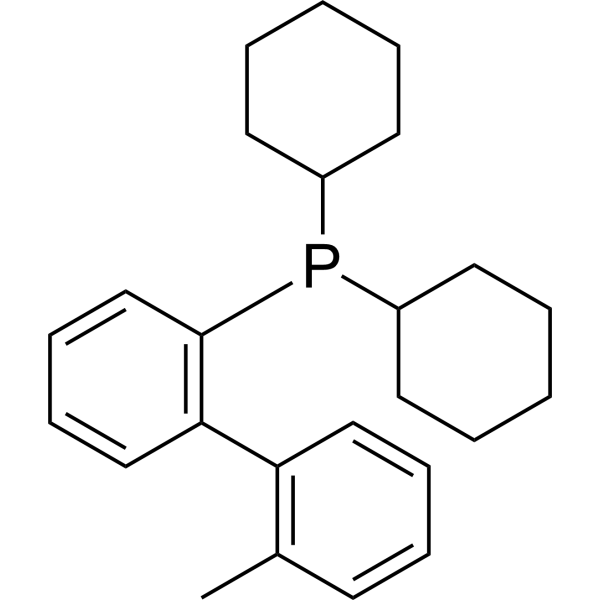
MePhos is an o-BPP ligand. The combination of MePhos and silver carbonate serves as a catalyst for H/D exchange reactions .
|
-
- HY-W008145
-
|
|
Biochemical Assay Reagents
|
|
Sodium tetrachloropalladate(II) is an organic compound commonly used as a catalyst and as a raw material for dye production. It can be used to catalyze or promote reactions in certain chemical reactions, and is widely used in the fields of organic synthesis and dye preparation. In addition, the compound is also used for metallization, silver plating and electroplating of circuit boards.
|
-
- HY-W1048849B
-
|
4-Arm PEG-thiol (MW 10000)
|
Biochemical Assay Reagents
|
|
4-Arm PEG-SH (MW 10000) (4-Arm PEG-thiol (MW 10000)) is a multi-arm PEG derivative with thiol groups at each end of the four arms. The reactive free thiol, SH or sulfhydryl groups react selectively with maleimide and transition metal surfaces including gold and silver .
|
-
- HY-W1048849A
-
|
4-Arm PEG5000-thiol
|
Biochemical Assay Reagents
|
|
4-Arm PEG5000-SH (4-Arm PEG5000-thiol) is a multi-arm PEG derivative with thiol groups at each end of the four arms. The reactive free thiol, SH or sulfhydryl groups react selectively with maleimide and transition metal surfaces including gold and silver .
|
-
- HY-W009235
-
|
Tetraethylammonium 4-methylbenzenesulfonate
|
Biochemical Assay Reagents
|
|
Tetraethylammonium p-toluenesulfonate p-toluenesulfonate is an organic compound commonly used as a catalyst and surfactant. It can be used to catalyze or promote reactions in certain organic synthesis reactions, and is widely used in the fields of surfactants, lubricants and antistatic agents. In addition, the compound is also used for metallization, silver plating and electroplating of circuit boards.
|
-
- HY-W1048849C
-
|
4-Arm PEG20000-thiol
|
Biochemical Assay Reagents
|
|
4-Arm PEG20000-SH (4-Arm PEG20000-thiol) is a multi-arm PEG derivative with thiol groups at each end of the four arms. The reactive free thiol, SH or sulfhydryl groups react selectively with maleimide and transition metal surfaces including gold and silver .
|
-
- HY-W414069
-
|
|
Biochemical Assay Reagents
|
|
Thiocholesterol is a member of the class of cholesteric liquid crystals (CLCs) that can be used to synthesis cationic lipid. Thiocholesterol is a stronger stabilizer of silver nanoparticles (SNPs). Thiocholesterol can be used for plasma membrane research and drug delivery .
|
-
- HY-Y0449C
-
|
Ammonium rhodanide, 99.99% trace metals basis
|
Biochemical Assay Reagents
|
|
Ammonium thiocyanate, 99.99% trace metals basis is widely used in titration methods to determine the concentrations of various metal ions (especially iron and silver) by forming distinctly different complexes.
|
-
- HY-W013327
-
|
|
Biochemical Assay Reagents
|
|
Cyclohexyldiphenylphosphine is a chemical compound commonly used as a ligand in coordination chemistry and organometallic synthesis. Cyclohexyldiphenylphosphine facilitates various catalytic reactions through acting as a stabilizing agent. Cyclohexyldiphenylphosphine is a ligand for some nickel(II) complexes. Cyclohexyldiphenylphosphine exhibits anti-cancer properties against SNO cancer cells when formed complex with silver .
|
-
- HY-W1048849D
-
|
4-Arm PEG40000-thiol
|
Biochemical Assay Reagents
|
|
4-Arm PEG40000-SH (4-Arm PEG40000-thiol) is a multi-arm PEG derivative with thiol groups at each end of the four arms. The reactive free thiol, SH or sulfhydryl groups react selectively with maleimide and transition metal surfaces including gold and silver .
|
-
- HY-W1048545H
-
|
Amine-PEG1000-Thiol hydrochloride
|
Biochemical Assay Reagents
|
|
H2N-PEG1000-SH (Amine-PEG1000-Thiol) hydrochloride is a linear heterobifunctional PEGylated product containing thiol and amine. H2N-PEG1000-SH hydrochloride is an important cross-linking or bioconjugation reagent with PEG chains. Thiol or SH, sulfhydryl or thiol selectively reacts with maleimide, OPSS, vinyl sulfone and transition metal surfaces (including gold, silver, etc.) .
|
-
- HY-W1048545D
-
|
Amine-PEG10000-Thiol hydrochloride
|
Biochemical Assay Reagents
|
|
H2N-PEG10000-SH (Amine-PEG10000-Thiol) hydrochloride is a linear heterobifunctional PEGylated product containing thiol and amine. H2N-PEG10000-SH hydrochloride is an important cross-linking or bioconjugation reagent with PEG chains. Thiol or SH, sulfhydryl or thiol selectively reacts with maleimide, OPSS, vinyl sulfone and transition metal surfaces (including gold, silver, etc.) .
|
-
- HY-W1048545A
-
|
Amine-PEG2000-Thiol hydrochloride
|
Biochemical Assay Reagents
|
|
H2N-PEG2000-SH (Amine-PEG2000-Thiol) hydrochloride is a linear heterobifunctional PEGylated product containing thiol and amine. H2N-PEG2000-SH hydrochloride is an important cross-linking or bioconjugation reagent with PEG chains. Thiol or SH, sulfhydryl or thiol selectively reacts with maleimide, OPSS, vinyl sulfone and transition metal surfaces (including gold, silver, etc.) .
|
-
- HY-W1048545J
-
|
Amine-PEG40000-Thiol hydrochloride
|
Biochemical Assay Reagents
|
|
H2N-PEG40000-SH (Amine-PEG40000-Thiol) hydrochloride is a linear heterobifunctional PEGylated product containing thiol and amine. H2N-PEG40000-SH hydrochloride is an important cross-linking or bioconjugation reagent with PEG chains. Thiol or SH, sulfhydryl or thiol selectively reacts with maleimide, OPSS, vinyl sulfone and transition metal surfaces (including gold, silver, etc.) .
|
-
- HY-W1048545I
-
|
Amine-PEG3400-Thiol hydrochloride
|
Biochemical Assay Reagents
|
|
H2N-PEG3400-SH (Amine-PEG3400-Thiol) hydrochloride is a linear heterobifunctional PEGylated product containing thiol and amine. H2N-PEG3400-SH hydrochloride is an important cross-linking or bioconjugation reagent with PEG chains. Thiol or SH, sulfhydryl or thiol selectively reacts with maleimide, OPSS, vinyl sulfone and transition metal surfaces (including gold, silver, etc.) .
|
-
- HY-W1048545E
-
|
Amine-PEG20000-Thiol hydrochloride
|
Biochemical Assay Reagents
|
|
H2N-PEG20000-SH (Amine-PEG20000-Thiol) hydrochloride is a linear heterobifunctional PEGylated product containing thiol and amine. H2N-PEG20000-SH hydrochloride is an important cross-linking or bioconjugation reagent with PEG chains. Thiol or SH, sulfhydryl or thiol selectively reacts with maleimide, OPSS, vinyl sulfone and transition metal surfaces (including gold, silver, etc.) .
|
-
- HY-W1048545C
-
|
Amine-PEG5000-Thiol hydrochloride
|
Biochemical Assay Reagents
|
|
H2N-PEG5000-SH (Amine-PEG5000-Thiol) hydrochloride is a linear heterobifunctional PEGylated product containing thiol and amine. H2N-PEG5000-SH hydrochloride is an important cross-linking or bioconjugation reagent with PEG chains. Thiol or SH, sulfhydryl or thiol selectively reacts with maleimide, OPSS, vinyl sulfone and transition metal surfaces (including gold, silver, etc.) .
|
| Cat. No. |
Product Name |
Target |
Research Area |
-
- HY-W041988
-
|
|
Bacterial
|
Infection
|
|
Fmoc-Glu-OMe is a glutamic acid derivative. Fmoc-Glu-OMe exhibits significant antibacterial activity and excellent gelation properties in silver nitrate (AgNO3) solution. Fmoc-Glu-OMe promotes wound healing in rat models and eliminates bacteria in MRSA-infected rat wound models. Fmoc-Glu-OMe can be used in studies related to wound infections and MRSA-infected wounds .
|
-
- HY-K0606
-
|
|
|
MCE Methenamine Silver Stain Kit For Basement Membrane (PASM) is developed based on the classical staining principle. Through an optimized staining system and standardized reagent combination, it enables clear visualization of basement membranes and related reticular structures in tissue sections. This method is particularly widely used in renal pathology research, where it is commonly applied to examine morphological alterations of the glomerular capillary basement membrane, such as thickening, rupture, folding, double-contour (tram-track) appearance, or abnormal proliferation caused by inflammatory injury. In addition, this method can also be applied to the histological investigation and morphological observation of glomerular diseases, diabetic nephropathy, and other basement membrane–associated pathological changes.
|
| Cat. No. |
Product Name |
Category |
Target |
Chemical Structure |
| Cat. No. |
Product Name |
Chemical Structure |
-
- HY-N2362S2
-
|
|
|
DL-Alanine-d3 is the deuterium labeled DL-Alanine. DL-alanine, an amino acid, is the racemic compound of L- and D-alanine. DL-alanine is employed both as a reducing and a capping agent, used with silver nitrate aqueous solutions for the production of nanoparticles. DL-alanine can be used for the research of transition metals chelation, such as Cu(II), Zn(II), Cd(11). DL-alanine, a sweetener, is classed together with glycine, and sodium saccharin. DL-alanine plays a key role in the glucose-alanine cycle between tissues and liver .
|
-
-
- HY-N2362S5
-
|
|
|
DL-Alanine- 15N is the 15N labeled DL-Alanine . DL-alanine, an amino acid, is the racemic compound of L- and D-alanine. DL-alanine is employed both as a reducing and a capping agent, used with silver nitrate aqueous solutions for the production of nanoparticles. DL-alanine can be used for the research of transition metals chelation, such as Cu(II), Zn(II), Cd(11). DL-alanine, a sweetener, is classed together with glycine, and sodium saccharin. DL-alanine plays a key role in the glucose-alanine cycle between tissues and liver .
|
-
-
- HY-N2362S
-
|
|
|
DL-Alanine- 13C-1 is the 13C-labeled DL-Alanine. DL-alanine, an amino acid, is the racemic compound of L- and D-alanine. DL-alanine is employed both as a reducing and a capping agent, used with silver nitrate aqueous solutions for the production of nanoparticles. DL-alanine can be used for the research of transition metals chelation, such as Cu(II), Zn(II), Cd(11). DL-alanine, a sweetener, is classed together with glycine, and sodium saccharin. DL-alanine plays a key role in the glucose-alanine cycle between tissues and liver .
|
-
-
- HY-N2362S1
-
|
|
|
DL-Alanine- 13C-3 is the 13C-labeled DL-Alanine. DL-alanine, an amino acid, is the racemic compound of L- and D-alanine. DL-alanine is employed both as a reducing and a capping agent, used with silver nitrate aqueous solutions for the production of nanoparticles. DL-alanine can be used for the research of transition metals chelation, such as Cu(II), Zn(II), Cd(11). DL-alanine, a sweetener, is classed together with glycine, and sodium saccharin. DL-alanine plays a key role in the glucose-alanine cycle between tissues and liver .
|
-
-
- HY-N2362S8
-
|
|
|
DL-Alanine-d7 (DL-2-Aminopropionic acid-d7) is deuterium labeled DL-Alanine. DL-alanine, an orally active amino acid, is the racemic compound of L- and D-alanine. DL-alanine is employed both as a reducing and a capping agent, used with silver nitrate aqueous solutions for the production of nanoparticles. DL-alanine can be used for the research of transition metals chelation, such as Cu(II), Zn(II), Cd(11). DL-alanine, a sweetener, is classed together with glycine and sodium saccharin. DL-alanine plays a key role in the glucose-alanine cycle between tissues and liver .
|
-
-
- HY-N2362S9
-
|
|
|
DL-Alanine- 13C2, 15N (DL-2-Aminopropionic acid- 13C2, 15N) is 13C and 15N labeled DL-Alanine. DL-alanine, an orally active amino acid, is the racemic compound of L- and D-alanine. DL-alanine is employed both as a reducing and a capping agent, used with silver nitrate aqueous solutions for the production of nanoparticles. DL-alanine can be used for the research of transition metals chelation, such as Cu(II), Zn(II), Cd(11). DL-alanine, a sweetener, is classed together with glycine and sodium saccharin. DL-alanine plays a key role in the glucose-alanine cycle between tissues and liver .
|
-
-
- HY-W009353S
-
|
|
|
Tetrabutylammonium-d36 chloride (IPC-TBA-Cl-d36 chloride) is the deuterium labeled Tetrabutylammonium (chloride). Tetrabutylammonium chloride (IPC-TBA-Cl) is an organic compound commonly used as a catalyst and as an ionic liquid. It can be used to catalyze or promote reactions in certain organic reactions, and is widely used in batteries, solar cells and pigments. In addition, the compound is also used for metallization, silver plating and electroplating of circuit boards.
|
-
| Cat. No. |
Product Name |
|
Classification |
-
- HY-W414069
-
|
|
|
Cholesterol
|
|
Thiocholesterol is a member of the class of cholesteric liquid crystals (CLCs) that can be used to synthesis cationic lipid. Thiocholesterol is a stronger stabilizer of silver nanoparticles (SNPs). Thiocholesterol can be used for plasma membrane research and drug delivery .
|
-
- HY-W590555
-
|
|
|
Pegylated Lipids
|
|
Thiol-PEG2000-DMG is a phospholipid polyPEG which can be used to prepare liposomes or nanoparticles. The terminal thiol group reacts with maleimide, OPSS, vinylsulfone and transition metal surfaces including gold, silver, etc.
|
Your information is safe with us. * Required Fields.
Inquiry Information
- Product Name:
- Cat. No.:
- Quantity:
- MCE Japan Authorized Agent:

