1. Search Result
Search Result
Results for "

T47D

" in MedChemExpress (MCE) Product Catalog:

110

Inhibitors & Agonists

1

Fluorescent Dye

2

Biochemical Assay Reagents

2

Peptides

2

Inhibitory Antibodies

14

Natural
Products

1

Isotope-Labeled Compounds

1

Oligonucleotides

Cat. No. Product Name Target Research Areas Chemical Structure
  • HY-19822
    Elacestrant
    Maximum Cited Publications
    17 Publications Verification

    RAD1901

    Estrogen Receptor/ERR Cancer
    Elacestrant (RAD1901) is an orally available and selective estrogen receptor degrader (SERD) with IC50s of 48 and 870 nM for ERα and ERβ, respectively. Elacestrant also can inhibit growth of ER + breast cancer cell lines in vitro and in vivo .
    Elacestrant
  • HY-113293B
    Estrone sulfate sodium
    3 Publications Verification

    Endogenous Metabolite Estrogen Receptor/ERR Metabolic Disease Cancer
    Estrone sulfate sodium is an inactive endogenous estrogen that can be converted into Estrone (HY-B0234) and Estradiol (HY-B0141). Estrone sulfate sodium is also a substrate of the OATP1B3 transporter. Estrone sulfate sodium can be converted into Estrone and Estradiol in normal mammary parenchymal cells. Estrone sulfate sodium stimulates the growth of nitrosomethylurea-induced mammary tumors in ovariectomized rats and the colony formation of dispersed nitrosomethylurea mammary cells, with conversion into Estrone and Estradiol occurring both in vivo and in vitro during this process. Estrone sulfate sodium is applicable to breast cancer-related research .
    Estrone sulfate sodium
  • HY-153444

    PF-07248144

    Histone Acetyltransferase Cancer
    Prifetrastat (PF-07248144), a first-in-class, selective, and orally active KAT6A and KAT6AB inhibitor. Prifetrastat can be used for the study of ER+/HER2− breast cancer .
    Prifetrastat
  • HY-Y1103
    Iron(II) sulfate heptahydrate, 99%
    1 Publications Verification

    Ferrous sulfate heptahydrate, 99%

    Environmental Pollutants Biochemical Assay Reagents Cardiovascular Disease Cancer
    Iron(II) sulfate heptahydrate, 99% (Ferrous sulfate heptahydrate, 99%) is an orally active iron salt. Iron(II) sulfate heptahydrate, 99% replaces iron found in hemoglobin and myoglobin, allowing for the transportation of oxygen via hemoglobin. Iron(II) sulfate heptahydrate, 99% is mainly used for the prevention of iron-deficiency anemia. Iron(II) sulfate heptahydrate, 99% also has anti-tumor effects on chronic myeloid leukemia and breast cancer .
    Iron(II) sulfate heptahydrate, 99%
  • HY-129180

    PROTACs CDK Cancer
    XY028-133 (example 14) is a PROTAC-based CDK4/6 degrader with anti-tumor activity, which consists of ligands for von Hippel-Lindau and CDK .
    XY028-133
  • HY-19822A
    Elacestrant dihydrochloride
    Maximum Cited Publications
    17 Publications Verification

    RAD1901 dihydrochloride

    Estrogen Receptor/ERR Cancer
    Elacestrant (RAD1901) dihydrochloride is an orally available and selective estrogen receptor degrader (SERD) with IC50s of 48 and 870 nM for ERα and ERβ, respectively. Elacestrant dihydrochloride also can inhibit growth of ER + breast cancer cell lines in vitro and in vivo .
    Elacestrant dihydrochloride
  • HY-175465

    Interleukin Related STAT Cancer
    SMI-10B13 is an Oncostatin M (OSM) inhibitor with a KD of 6.6 μM. SMI-10B13 inhibits OSM-mediated STAT3 phosphorylation in T47D and MCF-7 cell lines (IC50 = 136 and 164 nM, respectively). SMI-10B13 shows anti-tumor effect in human breast cancer mice models .
    SMI-10B13
  • HY-119384
    Promegestone
    1 Publications Verification

    R-5020; Surgestone

    Progesterone Receptor Endocrinology Cancer
    Promegestone (R-5020), a progestin, is a potent progesterone receptor (PR) agonist. Promegestone has the potential for endocrine regulation and cancer research .
    Promegestone
  • HY-Y1103A

    Ferrous sulfate heptahydrate, for cell culture, 99%

    Environmental Pollutants Biochemical Assay Reagents Cardiovascular Disease Cancer
    Iron(II) sulfate heptahydrate, for cell culture, 99% (Ferrous sulfate heptahydrate, for cell culture, 99%) is an orally active iron salt. Iron(II) sulfate heptahydrate, for cell culture, 99% replaces iron found in hemoglobin and myoglobin, allowing for the transportation of oxygen via hemoglobin. Iron(II) sulfate heptahydrate, for cell culture, 99% is mainly used for the prevention of iron-deficiency anemia. Iron(II) sulfate heptahydrate, for cell culture, 99% also has anti-tumor effects on chronic myeloid leukemia and breast cancer .
    Iron(II) sulfate heptahydrate, for cell culture, 99%
  • HY-110195
    Smurf1-IN-A01
    3 Publications Verification

    A01

    HSP Interleukin Related MyD88 NF-κB Estrogen Receptor/ERR Others Cancer
    Smurf1-IN-A01 is a Smurf1 inhibitor. Smurf1-IN-A01 has anticancer activity and can be used for the research of osteoporosis and age-related macular degeneration .
    Smurf1-IN-A01
  • HY-N2460
    Aloesin
    1 Publications Verification

    Aloeresin

    Tyrosinase Apoptosis Infection Inflammation/Immunology Cancer
    Aloesin (Aloeresin) is a tyrosinase inhibitor, and shows anti-inflammatory activity, ultraviolet protection, and antibacterium effects. Aloesin can induce apoptosis and be used in ovarian cancer research .
    Aloesin
  • HY-B0648
    Medroxyprogesterone
    5+ Cited Publications

    17α-Hydroxy-6α-methylprogesterone; U8840

    Progesterone Receptor Endocrinology Cancer
    Medroxyprogesterone (17α-Hydroxy-6α-methylprogesterone) is a synthetic human variant of progesterone that is a progesterone receptor agonist with oral activity. Medroxyprogesterone can induce cell proliferation through the PI3K/Akt signaling pathway. Medroxyprogesterone has an inhibitory effect on atherosclerosis in mice. The progesterone agonist activity of Medroxyprogesterone is less effective than Medroxyprogesterone acetate (HY-B0469) .
    Medroxyprogesterone
  • HY-168660
    CPD-10
    1 Publications Verification

    PROTACs Apoptosis CDK Cancer
    CPD-10 is a potent CCND1 and CDK4 PROTAC degrader. CPD-10 exhibits anti-proliferative effects on tumor cells and can also induce apoptosis. CPD-10 can be used for the study of breast cancer and lung cancer .
    CPD-10
  • HY-138657
    NCGC00378430
    2 Publications Verification

    Phosphatase Cancer
    NCGC00378430 is a potent SIX1/EYA2 interaction inhibitor. NCGC00378430 partially reverses transcriptional and metabolic profiles mediated by SIX1 overexpression and reverses SIX1-induced TGF-β signaling and epithelial-mesenchymal transition (EMT). NCGC00378430 inhibits SIX1-mediated breast cancer metastasis in a mouse model .
    NCGC00378430
  • HY-153932

    PROTACs p38 MAPK Cancer
    NR-7h is a potent and selective p38α and p38β degrader with DC50 values of 24 nM and 27.2 nM for p38α in T47D, MB-MDA-231 cells, respectively .
    NR-7h
  • HY-129578

    Autophagy Cathepsin Infection Inflammation/Immunology Cancer
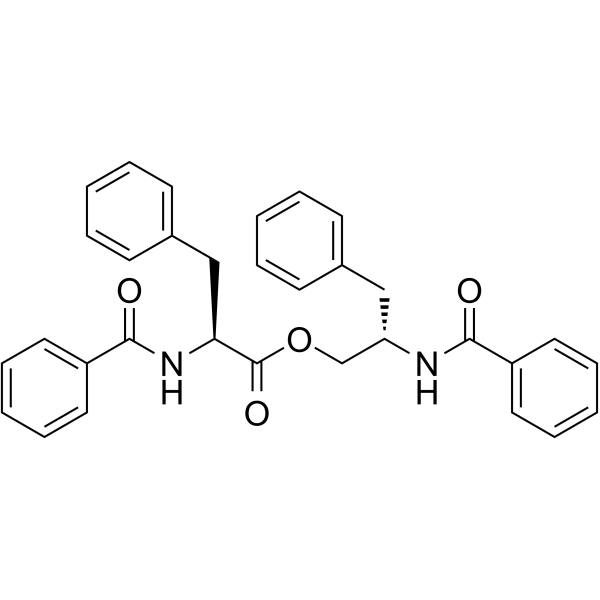
    Asperphenamate, a fungal metabolite of Aspergillus flatiipes with anti-cancer effect, exhibits IC50 values of 92.3 μM, 96.5 μM and 97.9 μM in T47D, MDA-MB-231 and HL-60 cells, respectively .
    Asperphenamate
  • HY-170620
    PARP1 PROTAC 180055
    1 Publications Verification

    PROTACs PARP Cancer
    PARP1 PROTAC 180055 (Compound 180055) is a selective PARP1 PROTAC degrader (DC50 in T47D and MDA-MB-231 cell lines is 180 nM and 240 nM, respectively). PARP1 PROTAC 180055 promotes ubiquitination and degradation of PARP1 as well as inhibits PARP1 enzyme activity without a noticeable DNA trapping effect. PARP1 PROTAC 180055 inhibits tumors carrying BRCA mutations with a minor impact on the growth of normal cells (Pink: PARP1 ligand (HY-10617A); Blue: E3 ligase VHL ligand (HY-125845); Black: linker (HY-W014787)) .
    PARP1 PROTAC 180055
  • HY-128600
    ERD-308
    1 Publications Verification

    PROTACs Estrogen Receptor/ERR Cancer
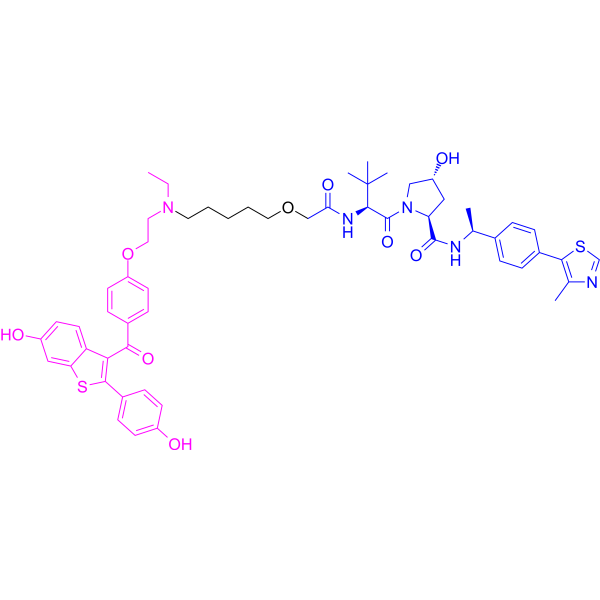
    ERD-308 is a potent estrogen receptor (ER) PROTAC degrader. ERD-308 has DC50 values of 0.17 nM and 0.43 nM in MCF-7 and T47D ER+ cells. ERD-308 can inhibit the proliferation of breast cancer cells and exhibits anti-tumor activity. (Pink: Target Protein Ligand (HY-48027); Black: Linker (HY-172643); Blue: VHL Ligand (HY-112078); VHL Ligand+Linker:(HY-172645))
    ERD-308
  • HY-137552
    MKI-1
    1 Publications Verification

    MASTL Kinase Inhibitor-1

    MASTL Cancer
    MKI-1, an inhibitor of MASTL (microtubule-associated serine/threonine kinase-like) with an IC50 of 9.9 μM, exerts antitumor and radiosensitizer activities through PP2A activation in breast cancer .
    MKI-1
  • HY-103302

    CGRP Receptor Endocrinology
    SUN B8155, a non-peptide agonist of calcitonin (CT) receptor, selectively mimics the biological actions of calcitonin. Calcitonin, a 32-amino acid peptide hormone secreted mainly from the thyroid gland, plays an important role in maintaining bone homeostasis .
    SUN B8155
  • HY-160066

    Transmembrane Glycoprotein Cancer
    SYL3C aptamer sodium is a DNA aptamer that targets epithelial cell adhesion molecule (EpCAM) on the surface of cancer cells. SYL3C aptamer sodium targets a variety of human cancer cell lines including MDA-MB-231, Kato III, HT-29, T47D and SW480. The Kd values of SYL3C aptamer sodium against breast cancer cell line MDA-MB-231 and gastric cancer cell line Kato III are 38 nM and 67 nM, respectively. SYL3C aptamer sodium possesses stability, high binding affinity and selectivity, and can be used for targeted cancer cell imaging and circulating tumor cell detection .
    SYL3C aptamer sodium
  • HY-160469

    Akt PROTACs Cancer
    INY-05-040 is an AKT degrader that can selectively and quickly degrade all three AKT isoforms. INY-05-040 exhibits anti-cancer activity. INY-05-040 can inhibit downstream signaling and cell proliferation in 288 cancer cell lines. INY-05-040 can suppress AKT signaling and induces the stress mitogen-activated protein kinase (MAPK) c-Jun N-terminal kinase (JNK). INY-05-040 is effective for breast cancer lines with a low-baseline activation of stress MAPK pathway. INY-05-040 can be studied for anti-cancer research .
    INY-05-040
  • HY-168664

    PROTACs CDK Cancer
    CPD-39 is a potent and orally active CCND1 and CDK4 heterobifunctional PROTAC degrader. CPD-39 shows anti-proliferation. (Pink: ligand for target protein (HY-50767); black: linker (HY-20240); Blue: E3 ligase ligand (HY-168667)) .
    CPD-39
  • HY-124053

    HDAC Cancer
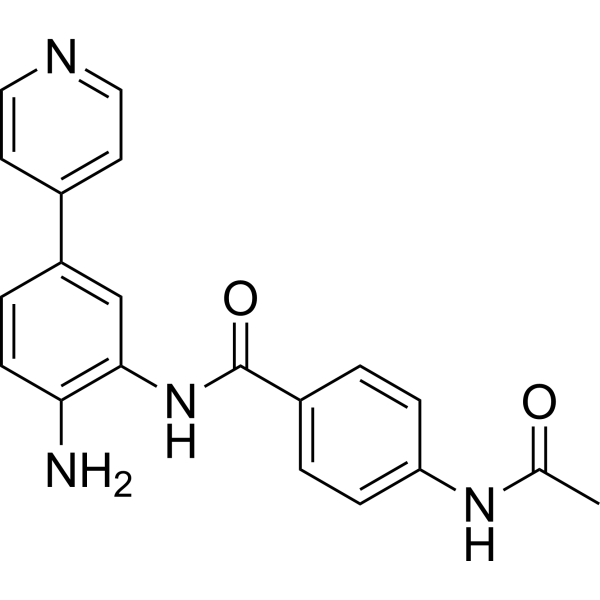
    BRD2492 (compound 6d) is a potent, selective HDAC1 and HDAC2 inhibitor with IC50s of 13.2 nM and 77.2 nM, respecrtively. BRD2492 exhibits >100-fold selectivity for HDAC1/2 over selectivity over HDAC3 and HDAC6. BRD2492 inhibits breast cancer cell lines growth with IC50s of 1.01 μM and 11.13 μM for T-47D and MCF-7 cells, respectively .
    BRD2492
  • HY-155231

    Elastase Cancer
    Neutrophil elastase inhibitor 4 (compound 4f) is a competitive human neutrophil elastase (HNE) inhibitor (IC50: 42.30 nM, Ki: 8.04 nM). Neutrophil elastase inhibitor 4 induces T47D cell apoptosis. Neutrophil elastase inhibitor 4 inhibits cell proliferation with IC50s of 21.25, 34.17, 29.93, 99.11 nM for T47D, RPMI 8226, A549, and HSF cells .
    Neutrophil elastase inhibitor 4
  • HY-N4010

    Others Cancer
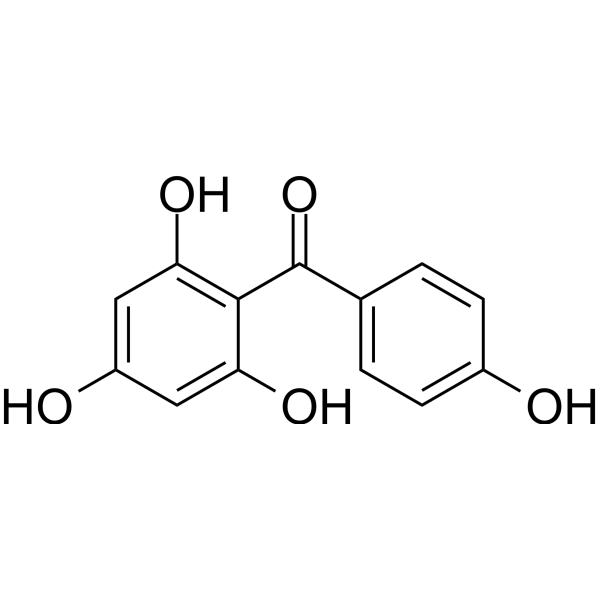
    Iriflophenone, isolated from Aquilaria sinensis, stimulates MCF-7 and T-47D human breast cancer cells proliferation .
    Iriflophenone
  • HY-120234

    Z-Leu-Leu-Nle-CHO; GSII

    γ-secretase Proteasome Apoptosis Cancer
    Z-LLNle-CHO (Z-Leu-Leu-Nle-CHO) is a γ-secretase inhibitor I. Z-LLNle-CHO induces caspase and ROS-dependent apoptosis by blocking the Akt-mediated pro-survival pathway. Z-LLNle-CHO can be used in cancer research, such as breast cancer and leukaemia .
    Z-LLNle-CHO
  • HY-175785

    Estrogen Receptor/ERR Aryl Hydrocarbon Receptor Apoptosis MDM-2/p53 Cancer
    X15695 is selective and orally active estrogen receptor (ERα) degrader. X15695 is an aryl hydrocarbon receptor (AHR) ligand. X15695 enables AHR to form a complex with the ERα, promoting its proteasomal degradation. X15695 inhibits the breast cancer cells proliferation, promotes cell cycle block and induces apoptosis. X15695 can be used for the study of breast cancer .
    X15695
  • HY-P991358

    LFA-102; X213

    Estrogen Receptor/ERR STAT Akt Cancer
    XOMA-213 (LFA-102; X213) is a human monoclonal antibody (mAb) targeting the prolactin receptor (PRLR), with a Kd value of 2 nM against the human target. XOMA-213 blocks PRL-induced cell proliferation and inhibits the activation of multiple PRLR ligands, including PRL and human growth hormone (hGH). XOMA-213 suppresses PRL-induced phosphorylation of Stat5, Akt and ERK1/2 in cells. XOMA-213 induces tumor regression, delays disease progression, and inhibits PRLR signaling as well as tumor growth. XOMA-213 can be used in research related to breast cancer .
    XOMA-213
  • HY-D2188

    Deubiquitinase Cancer
    IMP-2373 is a low-toxicity activity-based probe targeting covalent pan-deubiquitinase (DUB), which modulates and monitors DUB activity via covalent binding to the catalytic cysteine and active site of DUB. IMP-2373 enables real-time tracking of dynamic intracellular DUB activity in physiologically relevant living cell systems, and quantitative analysis of activity changes induced by pharmacological inhibition or MYC dysregulation. IMP-2373 can be used for research on related diseases such as B-cell lymphoma .
    IMP-2373
  • HY-145341

    Estrogen Receptor/ERR Cancer
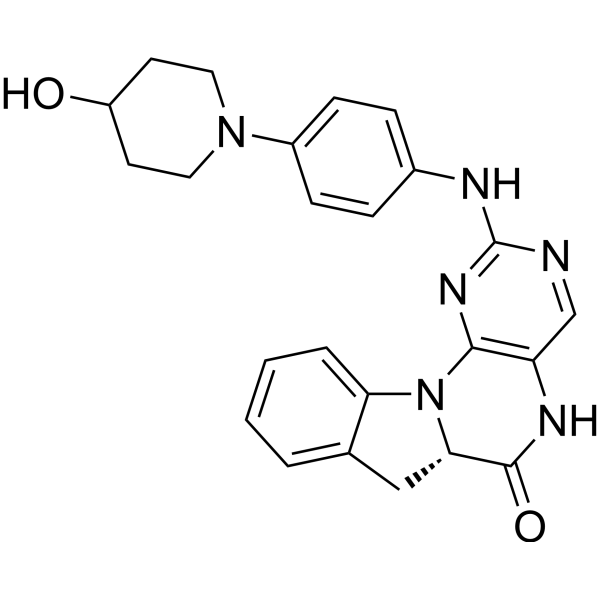
    GNE-149 is an orally bioavailable full antagonist of estrogen receptor α (ERα; IC50=0.053 nM). GNE-149 is a selective estrogen receptor degrader (SERD). GNE-149 can be used for the research of breast cancer .
    GNE-149
  • HY-125443

    Others Cancer
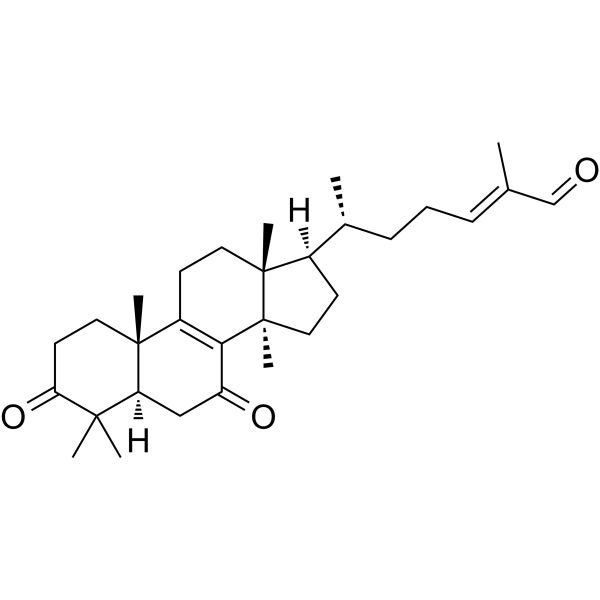
    Lucialdehydes A is a lanostante-type triterpene aldehydes, isolated from the fruiting bodies of Ganoderma lucidum. Lucialdehydes A shows cytotoxic effects on tumor cells, including Lewis lung carcinoma (LLC), T-47D, Sarcoma 180, and Meth-A tumor cell lines .
    Lucialdehyde A
  • HY-179148

    EGFR Apoptosis Cancer
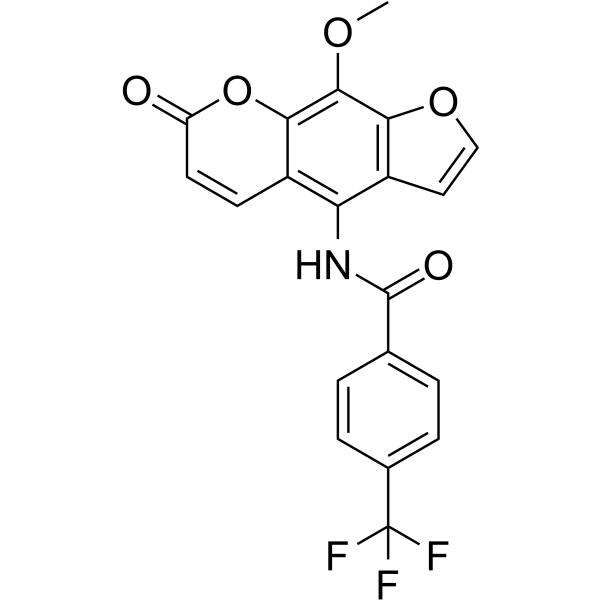
    EGFR-IN-184 (compound 5p) is an EGFR inhibitor (IC50 = 65.6 nM). EGFR-IN-184 has anti proliferative activity against various tumor cells, such as T47D (IC50 = 15 μM), PC3 (IC50 = 55 μM), HCT116 (IC50 = 36 μM) cells. EGFR-IN-184 can significantly induce cell apoptosis and block the cell cycle. EGFR-IN-184 can be used for research on various types of cancer .
    EGFR-IN-184
  • HY-15668

    MMP Bcl-2 Family Caspase Apoptosis Drug Derivative Cancer
    ST09 is an efficient and low toxicity Curcumin (HY-N0005) derivative. ST09 significantly inhibits cell migration and downregulates the expression of MMP1, MMP2, and Vimentin. ST09 has strong cytotoxicity to breast cancer cells, such as MDA-MB-231, MCF7 and T47D cells. ST09 induces cell apoptosis by upregulating Bax and cleaved caspase-3/9. ST09 can be used in the research of cancer such as breast cancer .
    ST09
  • HY-157574

    TRP Channel Cancer
    TRPV6-IN-1 is a potent and selective TRPV6 inhibitor. TRPV6-IN-1 has anti-proliferative effect and can be used for the research of cancer .
    TRPV6-IN-1
  • HY-123351

    Fungal Infection Cancer
    Kievitone, an isoflavanone, could be isolated from hypocotyls of Phaseolus vulgaris L. infected with Rhizoctonia solani Kühn. Kievitone has antifungal activity and antitumor activity .
    Kievitone
  • HY-119995

    Apoptosis Histamine Receptor Cardiovascular Disease Cancer
    Chloropyramine is competitive reversible H1 receptor antagonist. Chloropyramine also has anti-tumour activity in breast cancer. Chloropyramine can be used for the research of allergic conditions, such as conjunctivitis and bronchial asthma .
    Chloropyramine
  • HY-146087

    Autophagy Cancer
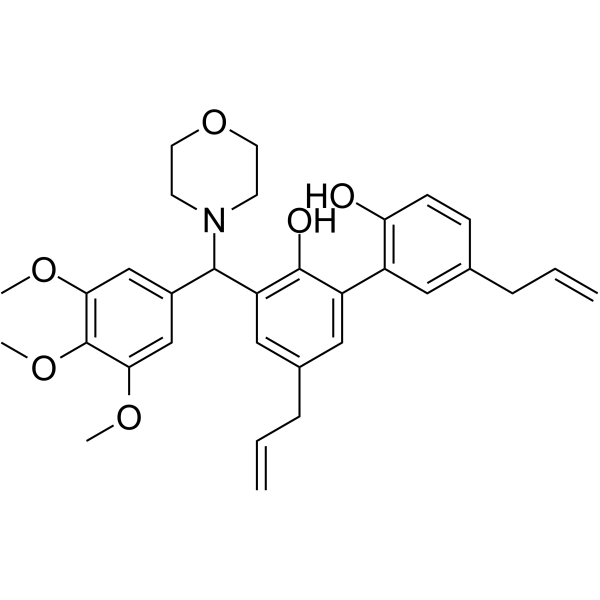
    Autophagy inducer 4 is a Magnolol-based Mannich base derivatives, which can be used as an anticancer agent. Autophagy inducer 4 suppresses cancer cells via inducing autophagy. Autophagy inducer 4 has 76-fold improvement in cytotoxicity against T47D cells compared with Magnolol. Autophagy inducer 4 also possesses suppressive effects on migration of T47D and Hela cancer cells .
    Autophagy inducer 4
  • HY-125664

    Antibiotic Cancer
    Lucialdehyde B is a tetracyclic triterpene isolated from the substrates of Ganoderma lucidum with antiviral and cytotoxic activities. Lucialdehyde B has cytotoxic effects against Lewis lung cancer (LLC), T-47D, Sarcoma 180 and Meth-A tumor cell lines .
    Lucialdehyde B
  • HY-157151

    Histone Methyltransferase Cancer
    iPRMT1 is a potent and selective PRMT1 inhibitor for breast cancer research. iPRMT1 inhibits breast cancer cell growth in vitro and in vivo with EC50 values of 90, 70, and 9 nM in MCF7, T47D, and MDA-MB-231 cells, respectively .
    iPRMT1
  • HY-172964

    PI3K Akt mTOR Apoptosis Reactive Oxygen Species (ROS) Cancer
    KIM-161 is a PIK3CA inhibitor. KIM-161 has significant antiproliferative activity with IC50 values of 1.428 and 1.562 µM against PI3KCA mutant breast cancer MCF7 and T47D cells, respectively. KIM-161 induces apoptosis and cell cycle arrest by inhibiting the PI3K/AKT/mTOR signaling pathway and inducing ROS production. KIM-161 can be used to study breast cancer and its PI3KCA mutant subtypes .
    KIM-161
  • HY-173034

    Phosphatase Apoptosis Cancer
    PTP1B-IN-30 (Compound 3j) is the inhibitor for PTP1B with an IC50 of 0.51 µM. PTP1B-IN-30 inhibits the proliferation of cancer cell T47D with an IC50 of 21.21 µM, arrests the cell cycle at S phase, and induces apoptosis in T47D .
    PTP1B-IN-30
  • HY-149631

    HDAC Cancer
    HFY-4A is a HDAC inhibitor. HFY-4A inhibits breast cancer cell proliferation, migration, and invasion, and induces cell apoptosis. HFY-4A induces immunogenic cell death (ICD). HFY-4A inhibits tumor growth in breast cancer xenograft mouse models .
    HFY-4A
  • HY-174867

    PROTACs Ferroptosis Cancer
    AY-4 (Compound AY-4) is an efficient PROTAC degrader targeting FTH1 (Kd = 3.17 nM). AY-4 effectively upregulates the levels of ferrous (Fe 2+) and ferric (Fe 3+) ions in cells. AY-4 is a potential anticancer candidate compound that regulates iron homeostasis through ferritin degradation and enhances the efficacy of existing drugs. AY-4 can effectively reduce the level of FTH1 in breast cancer cells (Pink: FTH1 ligand AY-2 (HY-174871); Blue: E3 ligand Pomalidomide (HY-10984); Black: Linker, Pomalidomide-PEG3-acid (HY-174872)) .
    AY-4
  • HY-172112

    VEGFR Apoptosis Cancer
    VEGFR-2-IN-64 (Compound 28) is the inhibitor for VEGFR2 with IC50 of 27.8 nM. VEGFR-2-IN-64 inhibits the proliferation of cancer cell A549, T-47D and Caco-2, exhibits anti-migration and anti-cloning activities in cell T-47D, induces apoptosis in T-47D .
    VEGFR-2-IN-64
  • HY-155197

    Microtubule/Tubulin Estrogen Receptor/ERR Cancer
    ER degrader 7 (Compound 35t) is an ERα and ERβ degrader. ER degrader 7 inhibits tubulin polymerization. ER degrader 7 inhibits cell viability with IC50s of 0.06, 2.56, 15.84, 1.59, 1.67, 1.37 μM for MCF-7, T47D, MCF-10A, LCC2, T47D D538G, and T47D Y537S cells respectively. ER degrader 7 also inhibits breast cancer tumor growth .
    ER degrader 7
  • HY-118382

    STX1383

    17β-HSD Cancer
    SCH-451659 (STX1383) is an orally active, selective 17β-HSD3 inhibitor with an IC50 of 2.4 nM against h17β-HSD3. SCH-451659 selectively blocks the conversion of androstenedione to testosterone. SCH-451659 reduces testosterone levels in mice. SCH-451659 exhibits anticancer activity against androstenedione-dependent prostate tumors .
    SCH-451659
  • HY-161995

    Apoptosis Necroptosis FGFR VEGFR PDGFR Cancer
    FGFR1/VEGFR2-IN-2 (compound 6l) is a VEGFR2/FGFR1 dual inhibitor. The IC50 values for VEGFR2 and FGFR1 are 0.025 µM and 0.026 µM respectively, and for EGFR and PDGFR-β, the IC50 values are 0.106 µM and 0.077 µM. FGFR1/VEGFR2-IN-2 showes significant anti-cancer activity (GI=60.38%) on NCI-60 cell line, with an IC50 of 8.51 µM in T-47D cell line and anti-migration. FGFR1/VEGFR2-IN-2 acts to arrest cells in the G1 phase and promote apoptosis and necrosis; the IC50 for MCF-7 cell line exceeds 100 µM, and the IC50 for MDA-MB-231 is 69.17 µM, non-toxic to normal cells .
    FGFR1/VEGFR2-IN-2
  • HY-N4010R

    Reference Standards Others Cancer
    Iriflophenone, isolated from Aquilaria sinensis, stimulates MCF-7 and T-47D human breast cancer cells proliferation .
    Iriflophenone (Standard)
  • HY-N15759

    Biochemical Assay Reagents Cancer
    8,2'-Diprenylquercetin 3-methyl ether is isolated from Sinopodophyllum hexandrum (Royle) Ying (Sinopodophylli Fructus). 8,2'-Diprenylquercetin 3-methyl ether is cytotoxic to MDA-231 and T47D breast cancer cell lines .
    8,2'-Diprenylquercetin 3-methyl ether

Inquiry Online

Your information is safe with us. * Required Fields.

Salutation


Country or Region *

Applicant Name *


Organization Name *

Department *


Email Address *


Product Name *

Cat. No.


Requested quantity *

Phone Number *


Remarks

Inquiry Online

Inquiry Information

Product Name:
Cat. No.:
Quantity:
MCE Japan Authorized Agent:

