13 Results for "

TET2

" in MedChemExpress (MCE) Product Catalog:
Products (13)

13 Results for "TET2" in MCE Product Catalog:

26
26 Publications Verification
Cat. No.: HY-111558
CAS No.: 2280037-51-4
Purity:  99.44%
Research Areas:  

Cancer

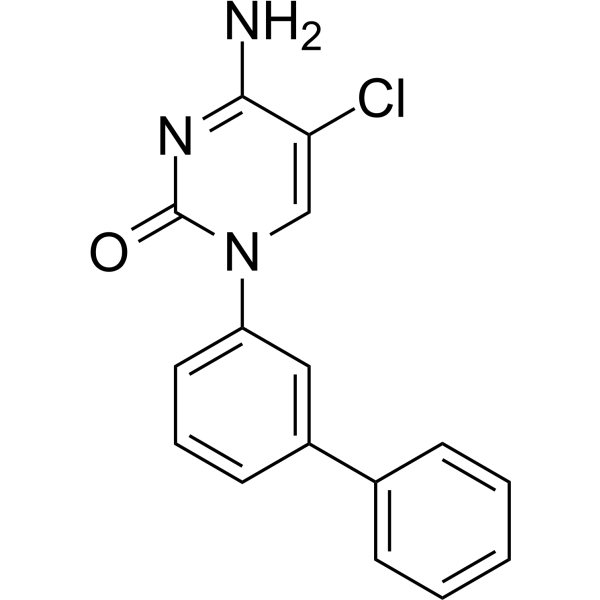
Bobcat339 is a potent and selective cytosine-based inhibitor of TET enzyme, with IC50s of 33 μM and 73 μM for TET1 and TET2, respectively. Bobcat339 is useful to the field of epigenetics and serves as a starting point for new therapeutics that target DNA methylation and gene transcription .
loading...
    loading...
26
26 Publications Verification
Cat. No.: HY-111558A
CAS No.: 2436747-44-1
Purity:  99.59%
Research Areas:  

Cancer

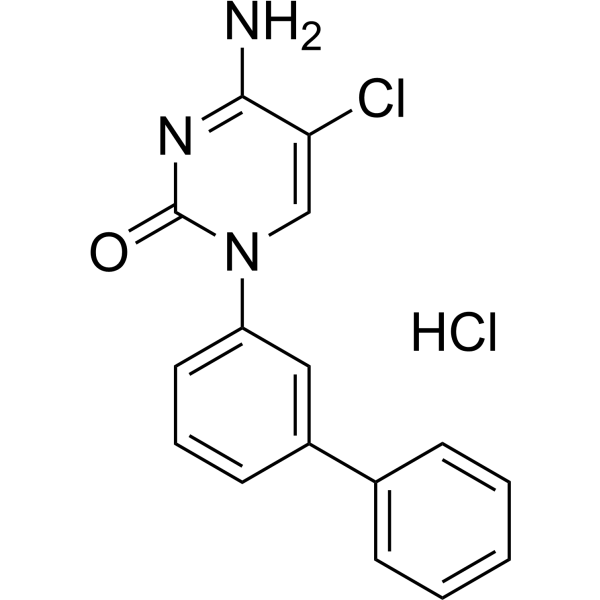
Bobcat339 hydrochloride is a potent and selective cytosine-based inhibitor of TET enzyme, with the IC50s of 33 μM and 73 μM for TET1 and TET2, respectively. Bobcat339 hydrochloride is useful to the field of epigenetics and serves as a starting point for new therapeutics that target DNA methylation and gene transcription .
loading...
    loading...
2
2 Cited Publications
Cat. No.: HY-129079A
CAS No.: 1445703-64-9
Purity:  99.79%
Research Areas:  

Endocrinology Cancer

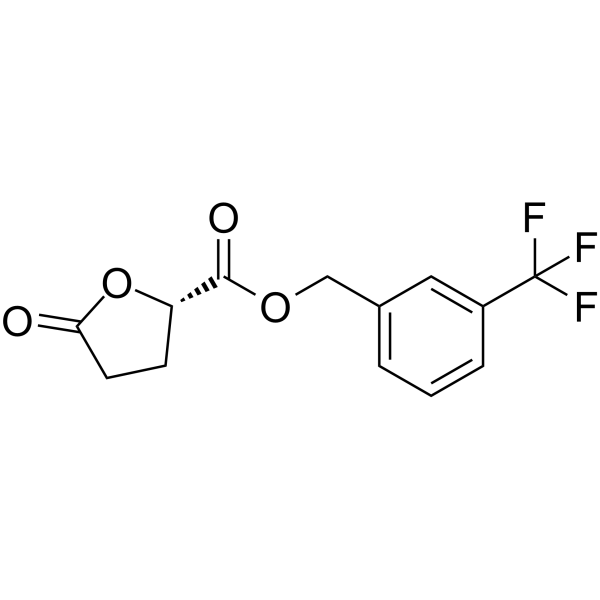
TFMB-(S)-2-HG is a potent TET2 inhibitor. TFMB-(S)-2-HG also inhibits the EglN prolyl hydroxylases. TFMB-(S)-2-HG downregulates Wnt3a, β-catenin (intranuclear) protein expression. TFMB-(S)-2-HG inhibits osteogenic differentiation of cells. TFMB-(S)-2-HG has the potential for the research of acute myeloid leukemia (AML) [2].
loading...
    loading...
1
1 Cited Publications
Cat. No.: HY-402410
CAS No.: 1451750-73-4
Target:  

TET Protein

Research Areas:  

Cancer

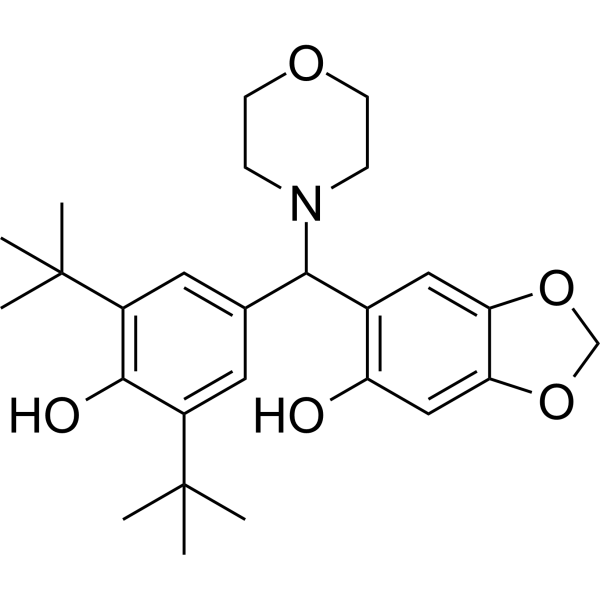
TETi76 is an orally active TET family inhibitor with IC50 values ??of 1.5, 9.4 and 8.8 μM for TET1, TET2 and TET3, respectively. TETi76 competitively binds to the active site of TET enzymes, reduces cytosine hydroxymethylation and restricts clonal growth of TET2 mutants in vitro and in vivo, but does not affect the growth of normal hematopoietic precursor cells. TETi76 can be used for leukemia research .
loading...
    loading...
1
1 Cited Publications
Cat. No.: HY-120395
CAS No.: 299420-83-0
Purity:  ≥98.0%
Target:  

STAT Apoptosis TET Protein

Research Areas:  

Inflammation/Immunology Cancer

UC-514321, a structural analog of NSC370284 with higher activity, directly targets STAT3/5 and represses TET1 expression, but not TET2 or TET3. UC-514321 has the potential to treat acute myeloid leukemia (AML) both in vitro and in vivo, with low toxicity .
loading...
    loading...
Cat. No.: HY-W018324
CAS No.: 1123-95-1
Synonyms: 5hmC
5-Hydroxymethylcytosine (5hmC) is an oxidized forms of 5-methylcytosine (5mC) in mammalian DNA. 5-Hydroxymethylcytosine is produced from 5mC in an enzymatic pathway involving three 5mC oxidases, Ten-eleven translocation (TET)1, TET2, and TET3. The conversion of 5mC into 5hmC can be the first step in a pathway leading towards DNA demethylation. 5-Hydroxymethylcytosine is associated with gene transcription and frequently used as a mark to investigate dynamic DNA methylation conversion during mammalian development. 5-Hydroxymethylcytosine can be used for the study of non-small cell lung cancer (NSCLC), neurodegenerative diseases (Alzheimer’s, Parkinson’s) and hematological malignancies (acute myeloid leukemia, myelodysplastic syndromes) [2].
loading...
    loading...
Cat. No.: HY-RS14385
Research Areas:  

Others

TET2 Human Pre-designed siRNA Set A contains three designed siRNAs for TET2 gene (Human), as well as a negative control, a positive control, and a FAM-labeled negative control.

loading...
    loading...
Cat. No.: HY-RS23091
Research Areas:  

Others

Tet2 Rat Pre-designed siRNA Set A contains three designed siRNAs for Tet2 gene (Rat), as well as a negative control, a positive control, and a FAM-labeled negative control.

loading...
    loading...
Cat. No.: HY-RS16656
Research Areas:  

Others

Tet2 Mouse Pre-designed siRNA Set A contains three designed siRNAs for Tet2 gene (Mouse), as well as a negative control, a positive control, and a FAM-labeled negative control.

loading...
    loading...
Cat. No.: HY-W018324S
Synonyms: 5hmC-13C,d2
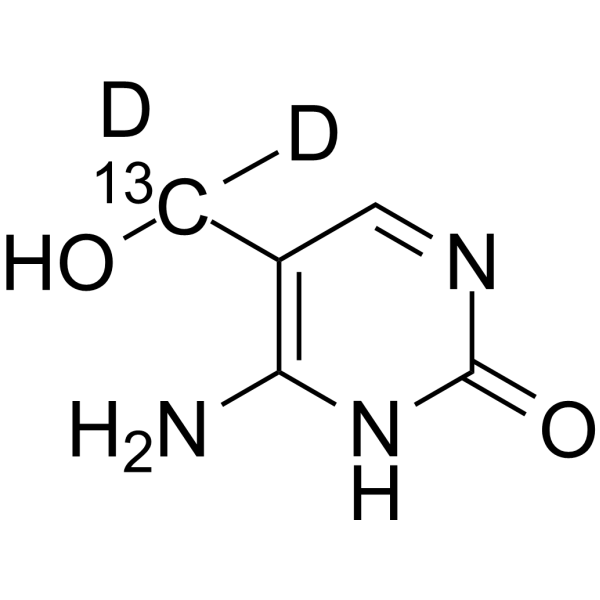
5-Hydroxymethylcytosine- 13C,d2 is the 13C and deuterium labeled 5-Hydroxymethylcytosine (HY-W018324). 5-Hydroxymethylcytosine (5hmC) is an oxidized forms of 5-methylcytosine (5mC) in mammalian DNA. 5-Hydroxymethylcytosine is produced from 5mC in an enzymatic pathway involving three 5mC oxidases, Ten-eleven translocation (TET)1, TET2, and TET3. The conversion of 5mC into 5hmC can be the first step in a pathway leading towards DNA demethylation. 5-Hydroxymethylcytosine is associated with gene transcription and frequently used as a mark to investigate dynamic DNA methylation conversion during mammalian development. 5-Hydroxymethylcytosine can be used for the study of non-small cell lung cancer (NSCLC), neurodegenerative diseases (Alzheimer’s, Parkinson’s) and hematological malignancies (acute myeloid leukemia, myelodysplastic syndromes) [2] .
loading...
    loading...
Cat. No.: HY-P84639
Synonyms: MDS; KIAA1546

Host:  

Mouse

Application:  

WB, IHC-P, ICC/IF, FC, ELISA

Reactivity:  

Human

loading...
    loading...
Cat. No.: HY-P84639A
Synonyms: MDS; KIAA1546

Host:  

Mouse

Application:  

WB, IHC-P, ICC/IF, FC, ELISA

Reactivity:  

Human

loading...
    loading...
Cat. No.: HY-13689G
CAS No.: 133053-19-7
Go 6983 GMP is Go 6983 (HY-13689) produced by using GMP guidelines. GMP small molecules works appropriately as an auxiliary reagent for cell therapy manufacture. Go 6983 is a dual inhibitor targeting Suv39h1/2 (KMT1A/KMT1B) and PKC, as well as a transcriptional activator capable of inducing DNA hypomethylation. Go 6983 stimulates the transcription of Prdm14 by reducing Suv39h1/2 protein levels, decreasing histone modifications in the Prdm14 promoter region, and increasing the recruitment of RNA polymerase II. Go 6983 induces genome-wide DNA hypomethylation by inhibiting de novo methyltransferase expression and increasing Tet1/Tet2 levels, thereby promoting self-renewal and pluripotency maintenance of stem cells. Meanwhile, Go 6983 can block PKC-mediated signaling pathways to reduce the expression of EMT-related genes and eliminate the upregulation of antioxidant genes downstream of NRF2. Go 6983 is mainly used in mechanism studies related to myocardial ischemia/reperfusion injury [2] .
loading...
    loading...
  • 1

