


1. Search Result
Search Result
Results for "

Thioacetamide

" in MedChemExpress (MCE) Product Catalog:

20

Inhibitors & Agonists

8

Peptides

3

Natural
Products

3

Isotope-Labeled Compounds

Cat. No. Product Name Target Research Areas Chemical Structure
  • HY-Y0698
    Thioacetamide
    4 Publications Verification

    Acetothioamide; TAA; Thiacetamide

    Necroptosis Neurological Disease Inflammation/Immunology Cancer
    Thioacetamide (TAA) is an indirect hepatotoxin and causes parenchymal cell necrosis. Thioacetamide requires metabolic activation by microsomal CYP2E1 to thioacetamide-S-oxide initially and then to thioacetamide-S-dioxide, which is a highly reactive metabolite, and its reactive metabolites covalently bind to proteins and lipids thereby causing oxidative stress and centrilobular necrosis. Thioacetamide can induce chronic liver fibrosis, encephalopathy and other events model .
    Thioacetamide
  • HY-109509
    Enoxaparin
    1 Publications Verification

    PK 10169; Enoxaparin sodium

    Factor Xa Thrombin SARS-CoV Infection Cardiovascular Disease Neurological Disease Inflammation/Immunology Cancer
    Enoxaparin (PK 10169), a low-molecular-weight heparin (LMWH) derivative. Enoxaparin exerts anticoagulant activity through antithrombin III, an endogenous inhibitor of factor Xa and thrombin IIa. Enoxaparin protect the rat hippocampus against TBI (traumatic brain injury) via antioxidant and anti-inflammatory properties. Enoxaparin can be used for the research of deep vein thrombosis (DVT), pulmonary embolism, TBI and COVID-19 .
    Enoxaparin
  • HY-P4070

    Insulin Receptor Metabolic Disease
    Insulin icodec is an Insulin (HY-P0035) analog that strongly but reversibly binds to albumin. Insulin icodec has long plasma half-life. Insulin icodec modulates insulin receptor activity, controls blood glucose levels, reduces HbA1c levels, and binds reversibly to human serum albumin. Insulin icodec can be used for the research of type 2 diabetes mellitus .
    Insulin icodec
  • HY-Y0946

    Environmental Pollutants Inflammation/Immunology Cancer
    Acetamide is used as an intermediate in the synthesis of methylamine, thioacetamide, and insecticides, and as a plasticizer in leather, cloth and coatings. Acetamide has carcinogenicity. Acetamide derivatives may has antioxidant activity and potential anti-inflammatory activity. Acetamide holds promise for research in the fields of anti-inflammatory and cancer studies .
    Acetamide
  • HY-P1103
    CTCE-9908
    1 Publications Verification

    CXCR Cancer
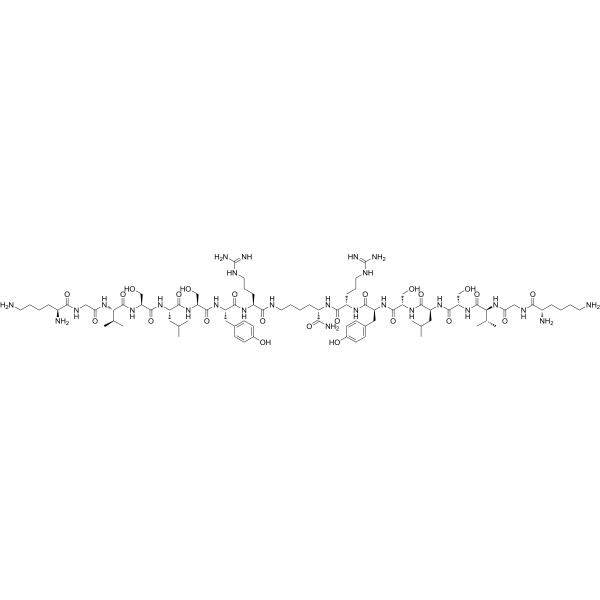
    CTCE-9908 is a potent and selective CXCR4 antagonist. CTCE-9908 induces mitotic catastrophe, cytotoxicity and inhibits migration in CXCR4-expressing ovarian cancer cells .
    CTCE-9908
  • HY-N2358

    Others Inflammation/Immunology
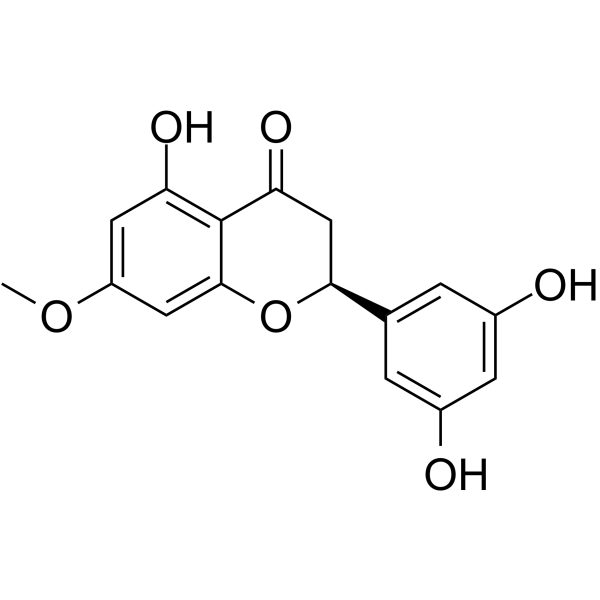
    Blumeatin, isolated from Blumea balsamifera DC, could protect liver against injury induced by CCl4 and thioacetamide (TAA) .
    Blumeatin
  • HY-W013411A
    Locostatin
    3 Publications Verification

    UIC-1005

    Raf G Protein-coupled Receptor Kinase (GRK) Cancer
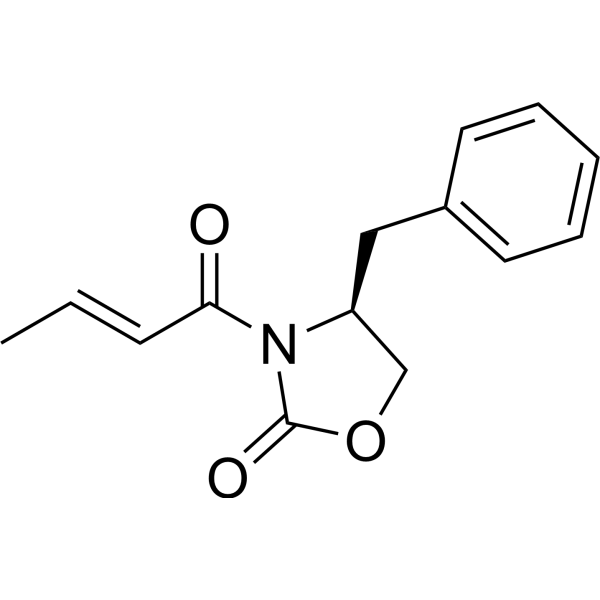
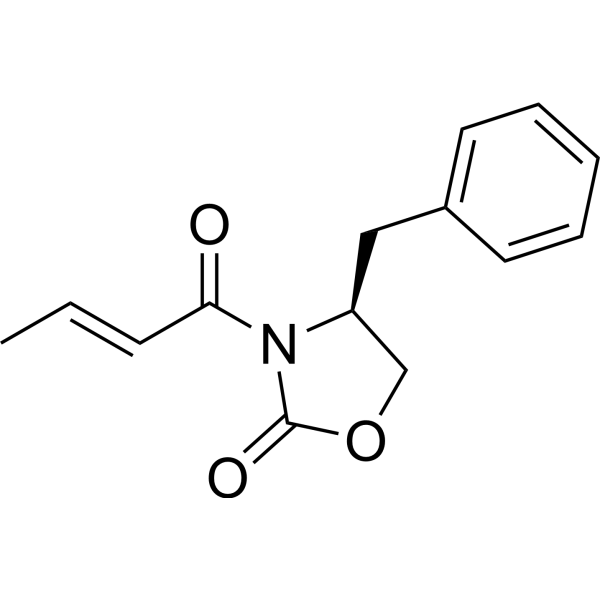
    Locostatin (UIC-1005) is a potent RKIP inhibitor. Locostatin binds Raf kinase inhibitor RKIP protein and disrupts the interaction of RKIP with Raf-1 kinase and G protein-coupled receptor kinase 2. Locostatin inhibits cell proliferation and migration. Locostatin can be used to synthesize chemical probes toward PEBP-proteins. Locostatin aggravates thioacetamide (HY-Y0698)-induced acute liver failure in mice .
    Locostatin
  • HY-Y0946S2

    Isotope-Labeled Compounds Cancer
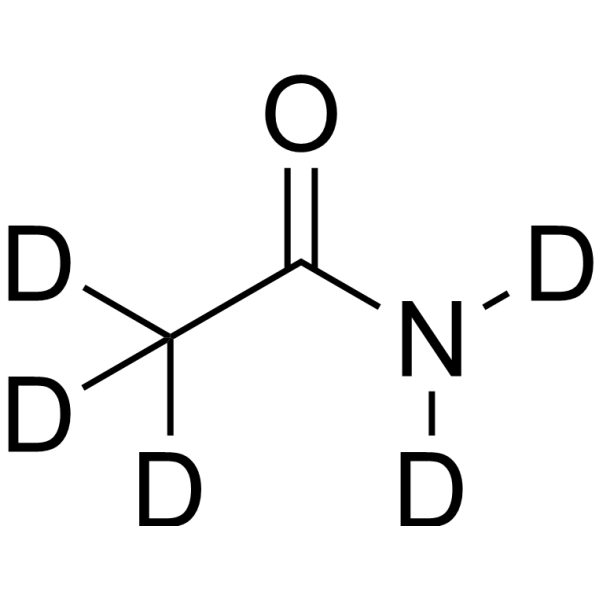
    Acetamide-d5 is the deuterium labeled Acetamide . Acetamide is used as an intermediate in the synthesis of methylamine, thioacetamide, and insecticides, and as a plasticizer in leather, cloth and coatings. Acetamide has carcinogenicity .
    Acetamide-d5
  • HY-Y0698R

    Acetothioamide (Standard); TAA (Standard); Thiacetamide (Standard)

    Necroptosis Reference Standards Inflammation/Immunology
    Thioacetamide (Standard) is the analytical standard of Thioacetamide (HY-Y0698). This product is intended for research and analytical applications. Thioacetamide (TAA) is an indirect hepatotoxin and causes parenchymal cell necrosis. Thioacetamide requires metabolic activation by microsomal CYP2E1 to thioacetamide-S-oxide initially and then to thioacetamide-S-dioxide, which is a highly reactive metabolite, and its reactive metabolites covalently bind to proteins and lipids thereby causing oxidative stress and centrilobular necrosis. Thioacetamide can induce chronic liver fibrosis, encephalopathy and other events model .
    Thioacetamide (Standard)
  • HY-W013411

    (E/Z)-UIC-1005

    Raf Cancer
    (E/Z)-Locostatin ((E/Z)-UIC-1005) is a racemic of Locostatin. Locostatin (UIC-1005) is a potent RKIP inhibitor. Locostatin binds Raf kinase inhibitor RKIP protein and disrupts the interaction of RKIP with Raf-1 kinase and G protein-coupled receptor kinase 2. Locostatin inhibits cell proliferation and migration. Locostatin aggravates thioacetamide (HY-Y0698)-induced acute liver failure in mice .
    (E/Z)-Locostatin
  • HY-P1103A

    CXCR Cancer
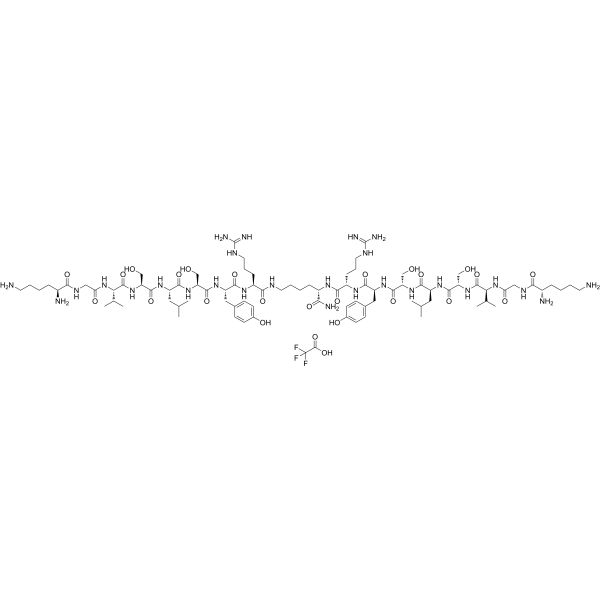
    CTCE-9908 TFA is a potent and selective CXCR4 antagonist. CTCE-9908 TFA induces mitotic catastrophe, cytotoxicity and inhibits migration in CXCR4-expressing ovarian cancer cells .
    CTCE-9908 TFA
  • HY-P11293

    Melanocortin Receptor Cancer
    DOTA-GGNle-CycMSHhex is a melanocortin-1 receptor (MC1R)-targeting peptide that can be radionuclide-labeled for melanoma imaging .
    DOTA-GGNle-CycMSHhex
  • HY-P4757

    Parasite Others
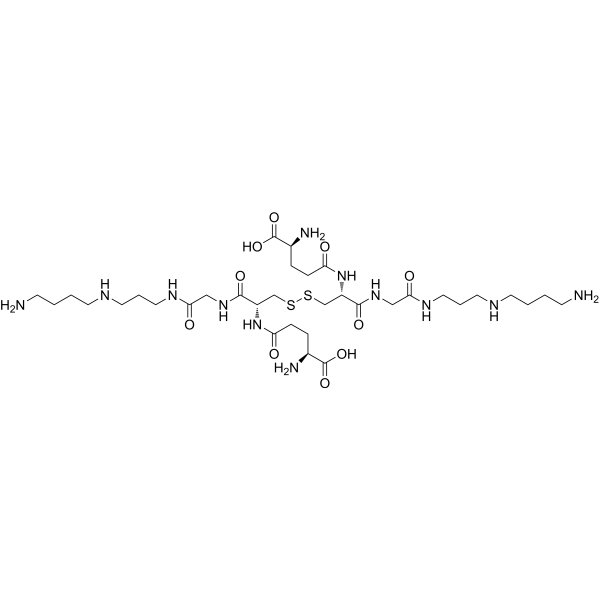
    N1-Glutathionyl-spermidine disulfide is a substrate of trypanothione reductase .
    N1-Glutathionyl-spermidine disulfide
  • HY-P1321

    1229U91; GW1229

    Neuropeptide Y Receptor Neurological Disease
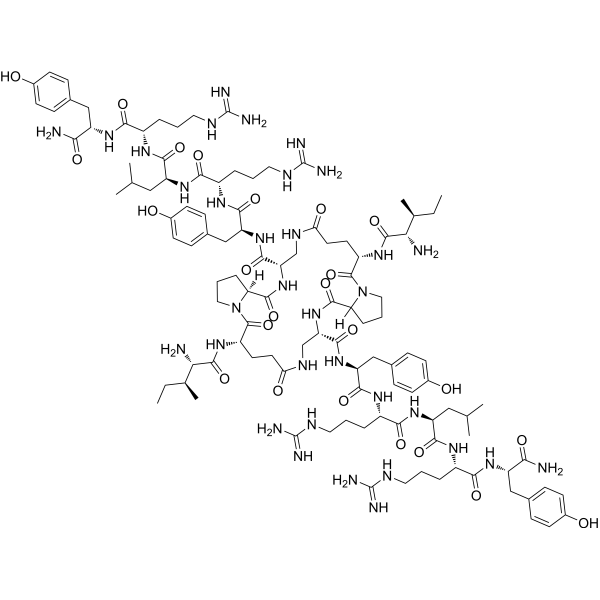
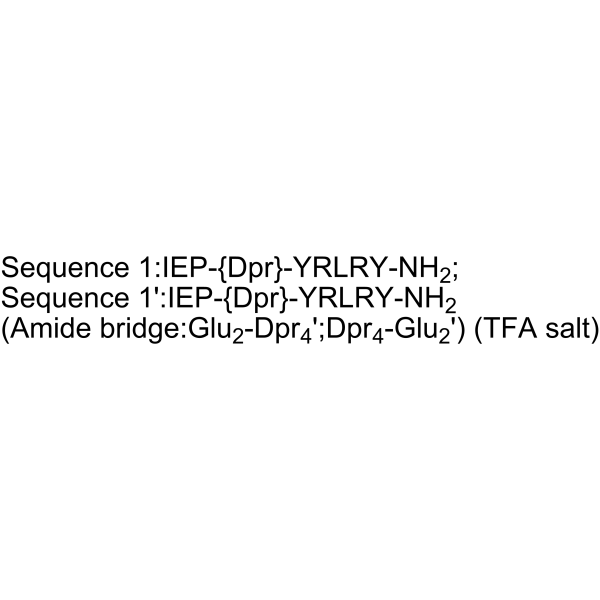
    GR231118, an analogue of the C-terminus of neuropeptide Y, is a potent , competitive and relative seletive antagonist at human neuropeptide Y Y receptor with a pKi of 10.4. GR231118 a potent agonist at the human neuropeptide Y Y4 receptor (pEC50=8.6; pKi=9.6) and a weak agonist at the human and rat neuropeptide YY2 and Y5 receptors. GR231118 also has high affinity for the mouse neuropeptide Y Y6 receptor (pKi= 8.8) .
    GR231118
  • HY-Y0946S

    Isotope-Labeled Compounds Cancer
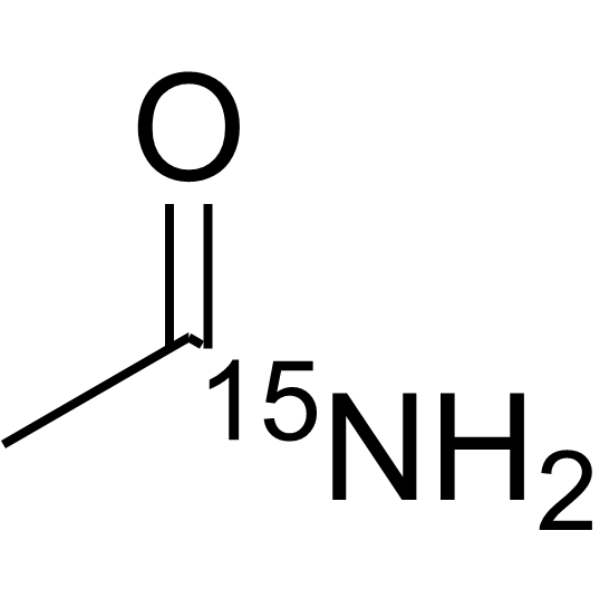
    Acetamide- 15N is the 15N-labeled Acetamide. Acetamide is used as an intermediate in the synthesis of methylamine, thioacetamide, and insecticides, and as a plasticizer in leather, cloth and coatings. Acetamide has carcinogenicity .
    Acetamide-15N
  • HY-Y0946R

    Biochemical Assay Reagents Reference Standards Inflammation/Immunology Cancer
    Acetamide (Standard) is the analytical standard of Acetamide. This product is intended for research and analytical applications. Acetamide is used as an intermediate in the synthesis of methylamine, thioacetamide, and insecticides, and as a plasticizer in leather, cloth and coatings. Acetamide has carcinogenicity. Acetamide derivatives may has antioxidant activity and potential anti-inflammatory activity. Acetamide holds promise for research in the fields of anti-inflammatory and cancer studies .
    Acetamide (Standard)
  • HY-W768057

    Isotope-Labeled Compounds Biochemical Assay Reagents Cancer
    Acetamide- 13C2, 15N is the 13C- and 15N-labeled Acetamide (HY-Y0946). Acetamide is used as an intermediate in the synthesis of methylamine, thioacetamide, and insecticides, and as a plasticizer in leather, cloth and coatings. Acetamide has carcinogenicity. Acetamide derivatives may has antioxidant activity and potential anti-inflammatory activity. Acetamide holds promise for research in the fields of anti-inflammatory and cancer studies .
    Acetamide-13C2,15N
  • HY-P1321A

    1229U91 TFA; GW1229 TFA

    Neuropeptide Y Receptor Neurological Disease
    GR231118 TFA, an analogue of the C-terminus of neuropeptide Y, is a potent , competitive and relative seletive antagonist at human neuropeptide YY receptor with a pKi of 10.4. GR231118 a potent agonist at the human neuropeptide YY4 receptor (pEC50=8.6; pKi=9.6) and a weak agonist at the human and rat neuropeptide Y Y2 and Y5 receptors. GR231118 also has high affinity for the mouse neuropeptide YY6 receptor (pKi= 8.8) .
    GR231118 TFA
  • HY-155726

    Others Others
    Cy-FBP/SBPase-IN-1 (compound S5) is a Cy-FBP/SBPase inhibitor, which is an important regulatory enzyme in cyanobacterial photosynthesis. Thus Cy-FBP/SBPase-IN-1 inhibits Calvin cycle and photosystem, and decreases photosynthetic efficiency in cyanobacterial photosynthesis. Cy-FBP/SBPase-IN-1 potently inhibits the growth of cyanobacteria, as well as Synechocystis sp.PCC6803. Cy-FBP/SBPase-IN-1 shows safety profile in human-derived cells and zebrafish models .
    Cy-FBP/SBPase-IN-1
  • HY-P11480

    Trk Receptor Neurological Disease
    TrkA/NGF-IN-1 (Peptide 19) is an inhibitor of protein-protein interactions between TrkA and NGF (IC50: 21 nM for human TrkA in PathHunter assay). TrkA/NGF-IN-1 shows an analgesic effect in a rat incisional pain model .
    TrkA/NGF-IN-1

Inquiry Online

Your information is safe with us. * Required Fields.

Salutation


Country or Region *

Applicant Name *


Organization Name *

Department *


Email Address *


Product Name *

Cat. No.


Requested quantity *

Phone Number *


Remarks

Inquiry Online

Inquiry Information

Product Name:
Cat. No.:
Quantity:
MCE Japan Authorized Agent:

