1. Search Result
Search Result
Results for "

Transketolase

" in MedChemExpress (MCE) Product Catalog:

19

Inhibitors & Agonists

3

Natural
Products

2

Recombinant Proteins

1

Antibodies

Targets Recommended:
Cat. No. Product Name Target Research Areas Chemical Structure
  • HY-107430
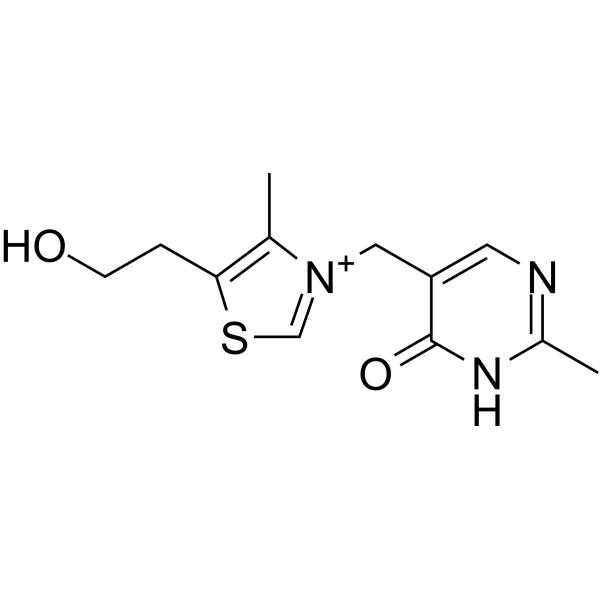
    Oxythiamine
    3 Publications Verification

    Hydroxythiamin

    Apoptosis Endogenous Metabolite Cancer
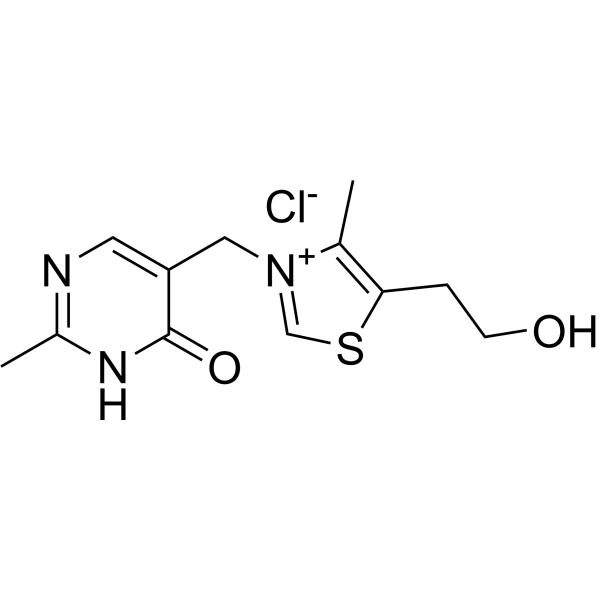
    Oxythiamine (Hydroxythiamin), an analogue of anti-metabolite, can suppress the non-oxidative synthesis of ribose and induce cell apoptosis. Oxythiamine is a thiamine antagonist and inhibits transketolase (TK). Oxythiamine inhibits cancer cell apoptosis and inhibits cell proliferation .
    Oxythiamine
  • HY-W712327

    Biochemical Assay Reagents Others
    D-Xylulose 5-phosphate sodium is a pentose phosphate ester and an essential intermediate metabolite in the pentose phosphate pathway (PPP) and the non-oxidative phase of the pentose phosphate pathway. D-xylulose-5-phosphate sodium can be efficiently synthesized through the phosphorylation of D-xylulose catalyzed by D-xylulokinase (XKS1 from Saccharomyces cerevisiae), with ATP regeneration facilitated by the phosphoenolpyruvate (PEP)/pyruvate kinase (PK) system .
    D-Xylulose 5-phosphate sodium
  • HY-16339
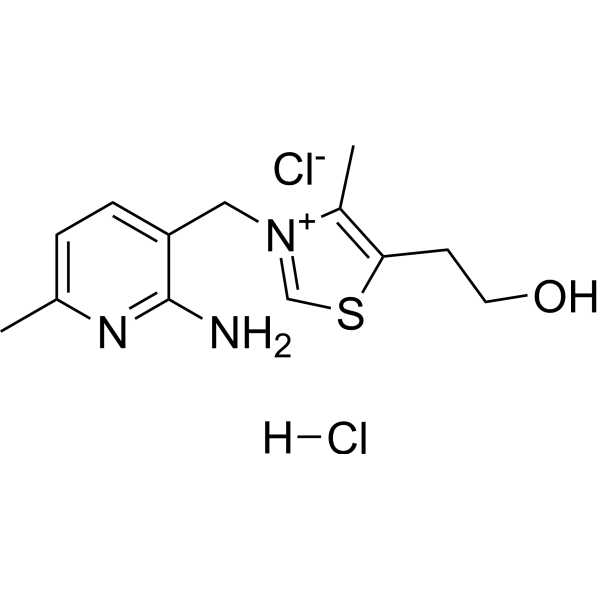
    N3PT
    2 Publications Verification

    N3-pyridyl thiamine

    Transketolase Cancer
    N3PT (N3-pyridyl thiamine) is a potent and selective transketolase inhibitor. N3PT is pyrophosphorylated and then binds to transketolase with an Kd value of 22 nM (Apo-TK, transketolase lacking bound thiamine) .
    N3PT
  • HY-112889B
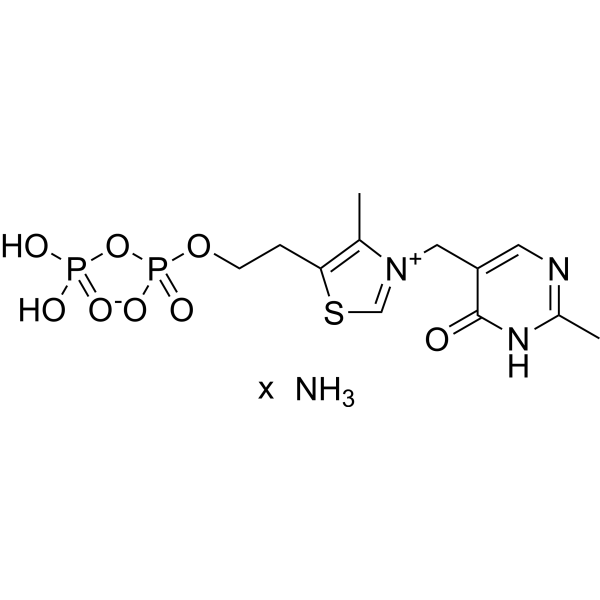
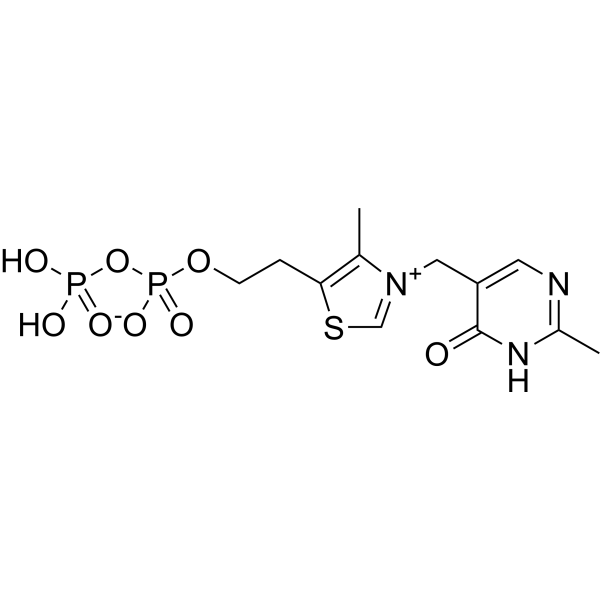
    Oxythiamine diphosphate ammonium
    1 Publications Verification

    Transketolase Metabolic Disease
    Oxythiamin diphosphate ammonium is a potent transketolase (TK) inhibitor .
    Oxythiamine diphosphate ammonium
  • HY-107430A
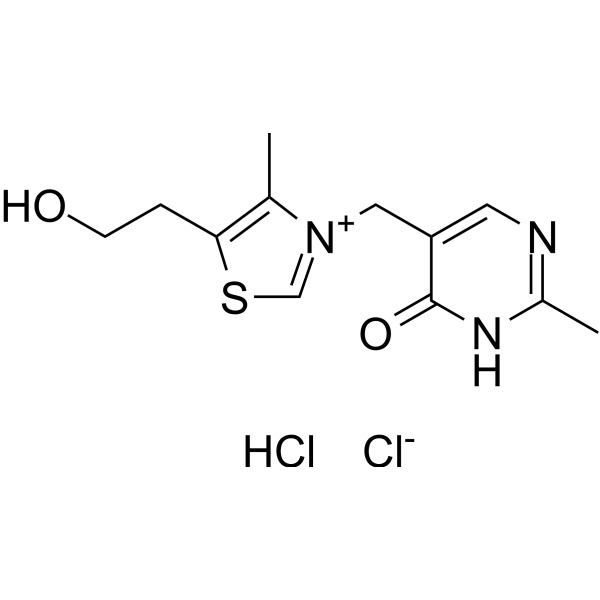
    Oxythiamine chloride hydrochloride
    3 Publications Verification

    Hydroxythiamine chloride hydrochloride

    Apoptosis Endogenous Metabolite Cancer
    Oxythiamine (Hydroxythiamine) chloride hydrochloride, an analogue of anti-metabolite, can suppress the non-oxidative synthesis of ribose and induce cell apoptosis. Oxythiamine chloride hydrochloride is a thiamine antagonist and inhibits transketolase (TK). Oxythiamine chloride hydrochloride inhibits cancer cell apoptosis and inhibits cell proliferation .
    Oxythiamine chloride hydrochloride
  • HY-112889

    Transketolase Metabolic Disease
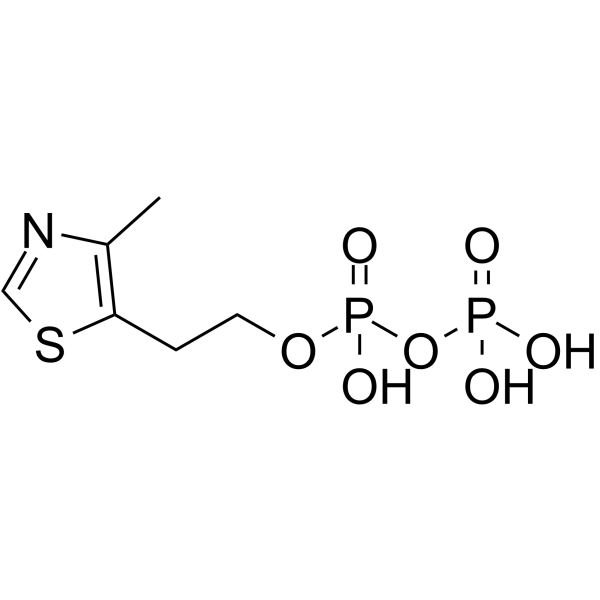
    Oxythiamin diphosphate is a potent transketolase (TK) inhibitor .
    Oxythiamine diphosphate
  • HY-153090

    Transketolase Infection Cancer
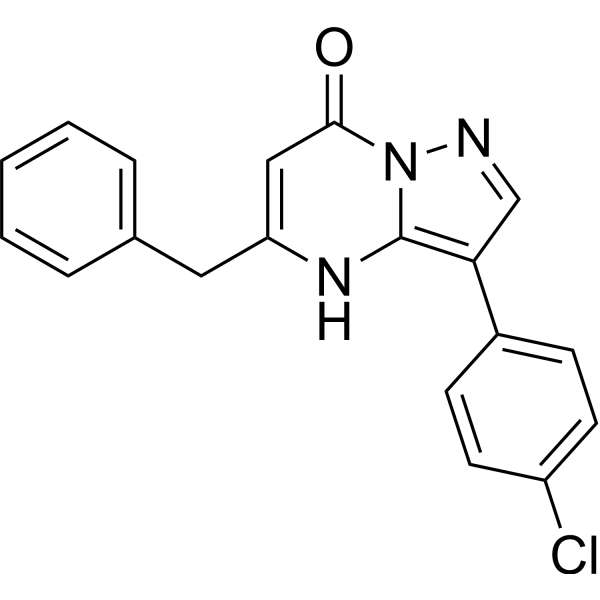
    Transketolase-IN-4 is a potent inhibitor of transketolase with an IC50 value of 3.9 μM. Transketolase-IN-4 inhibits the proliferation of tumor cells including SW620, LS174T and MIA PaCa-2. Transketolase-IN-4 can be used for tumor research .
    Transketolase-IN-4
  • HY-151604

    Transketolase Others
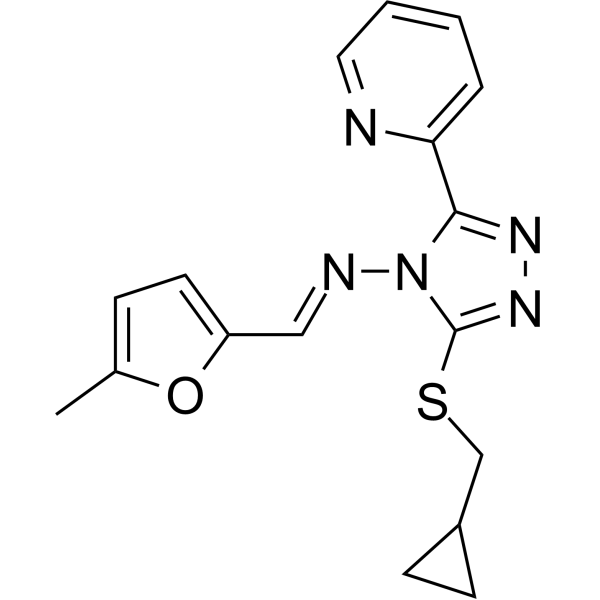
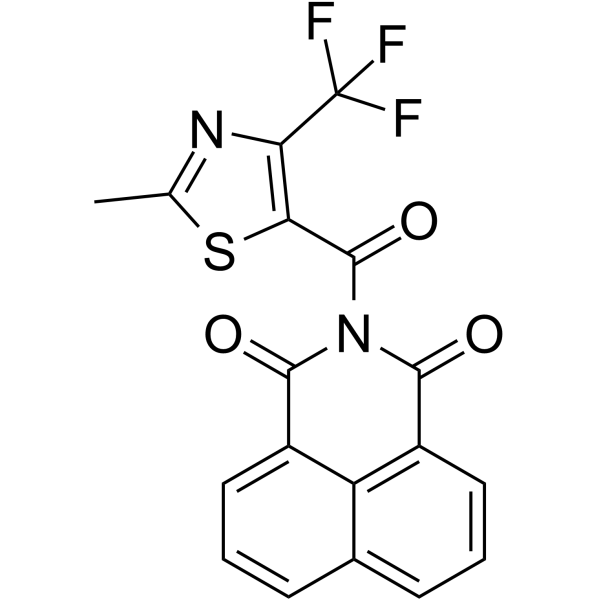
    Transketolase-IN-3 is a potent transketolase (TK) inhibitor. Transketolase-IN-3 has herbicidal activity and has inhibitory effects against Digitaria sanguinalis (DS) and Amaranthus retroflexus (AR). Transketolase-IN-3 can be used for the research of herbicides .
    Transketolase-IN-3
  • HY-139731

    Transketolase Herbicide Others
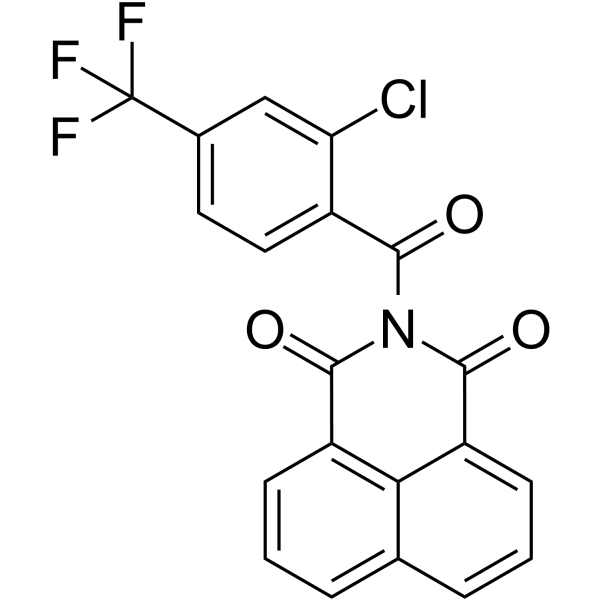
    Transketolase-IN-1 is a transketolase inhibitor and a herbicide. Transketolase-IN-1 inhibits weed growth and exhibits safety for maize and wheat at specified application rates. Transketolase-IN-1 can be used for the research of weed control in wheat and maize fields .
    Transketolase-IN-1
  • HY-151600

    Transketolase Others
    Transketolase-IN-2 (compound 4w) is a potent Transketolase inhibitor. Transketolase-IN-2 shows strong inhibition of Digitaria sanguinalis and Amaranthus retroflexus (over 90% at 200 mg/L and about 80% at 100 mg/L). Transketolase-IN-2 can be used in studies of weed control .
    Transketolase-IN-2
  • HY-163310

    Transketolase Herbicide Others
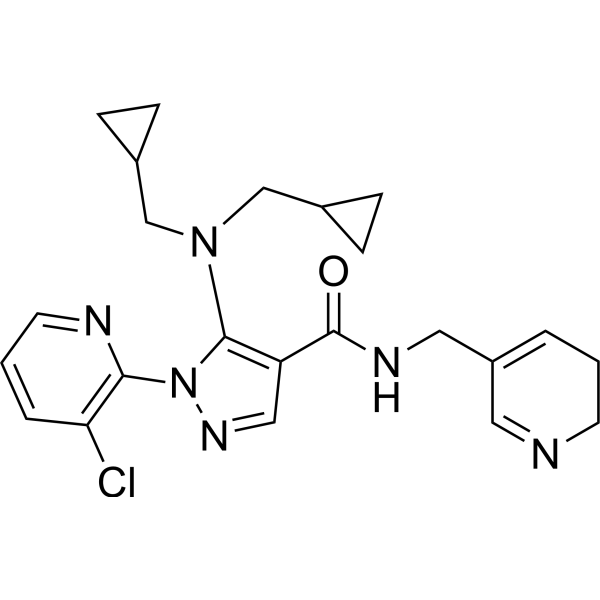
    Transketolase-IN-5 is a transketolase inhibitor and a herbicide. Transketolase-IN-5 inhibits growth of Digitaria sanguinalis, Amaranthus retroflexus, and Setaria viridis .
    Transketolase-IN-5
  • HY-163311

    Transketolase Herbicide Others
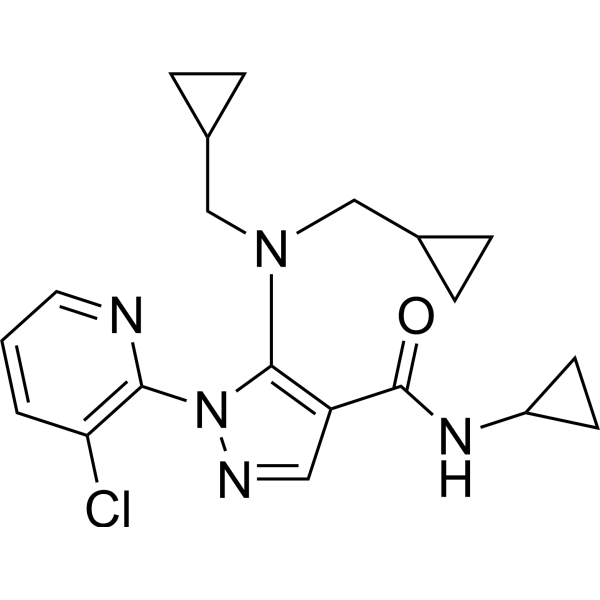
    Transketolase-IN-6 is a potent transketolase inhibitor and a herbicide. Transketolase-IN-6 inhibits root growth of Digitaria sanguinalis, Amaranthus retroflexus, and Setaria viridis. Transketolase-IN-6 shows low phytotoxicity to wheat, maize, soybean, and cotton. Transketolase-IN-6 can be used for the research of herbicidal agent development .
    Transketolase-IN-6
  • HY-E70075

    GDH-TIM; GDH-TPI

    Transketolase Metabolic Disease
    α-Glycerophosphate Dehydrogenase-Triosephosphate (GDH-TIM) is an enzyme mixture composed of glycerol phosphate dehydrogenase (GDH) and triphosphate isomerase (TIM). α-Glycerophosphate Dehydrogenase-Triosephosphate can be used to determine the activity of transketolase (TK) in hemolytic substances of red blood cells to evaluate vitamin B deficiency .
    α-Glycerophosphate Dehydrogenase-Triosephosphate
  • HY-169168

    Transketolase Others
    Herbicidal agent 6 (D15) is a Transketolase (TKL) inhibitor with herbicidal activity .
    Herbicidal agent 6
  • HY-128606

    Endogenous Metabolite Transketolase Neurological Disease Metabolic Disease
    Thiamine diphosphate analog 1 is an analog of thiamine diphosphate. Thiamine diphosphate is the active metabolite of vitamin B1 in organisms. Thiamine diphosphate targets ThDP-dependent enzymes such as transketolase and pyruvate dehydrogenase complex, acting as an essential coenzyme to exert an activating effect. Thiamine diphosphate assists in catalytic reactions in free form and initiates the catalytic cycles of various glucose-metabolizing enzymes. Thiamine diphosphate serves as a diagnostic biomarker and protective factor for Alzheimer's disease. Thiamine diphosphate can be used in research related to metabolism and Alzheimer's disease .
    Thiamine diphosphate analog 1
  • HY-170784

    Transketolase Herbicide Others
    TKL-IN-1 (compound 7r) is a transketolase inhibitor and can be used as a herbicide. TKL-IN-1 can inhibit the growth of Digitaria sanguinalis (Ds) and Amaranthus retroflexus (Ar) .
    TKL-IN-1
  • HY-107430B

    Hydroxythiamine chloride

    Apoptosis Cancer
    Oxythiamine (Hydroxythiamine) chloride, an analogue of anti-metabolite, can suppress the non-oxidative synthesis of ribose and induce cell apoptosis. Oxythiamine is a thiamine antagonist and inhibits transketolase (TK). Oxythiamine chloride inhibits cancer cell apoptosis and inhibits cell proliferation .
    Oxythiamine chloride
  • HY-107430AR

    Hydroxythiamine chloride hydrochloride (Standard)

    Apoptosis Reference Standards Endogenous Metabolite Cancer
    Oxythiamine chloride hydrochloride (Standard) is the analytical standard of Oxythiamine chloride hydrochloride (HY-107430A). This product is intended for research and analytical applications. Oxythiamine (Hydroxythiamine) chloride hydrochloride, an analogue of anti-metabolite, can suppress the non-oxidative synthesis of ribose and induce cell apoptosis. Oxythiamine chloride hydrochloride is a thiamine antagonist and inhibits transketolase (TK). Oxythiamine chloride hydrochloride inhibits cancer cell apoptosis and inhibits cell proliferation .
    Oxythiamine chloride hydrochloride (Standard)
  • HY-180202

    Herbicide Transketolase Others
    Transketolase-IN-7 (compound 4m) is a potent herbicide that exhibits inhibitory activity against C. rotundus with an IC50 of 6.66 mg/L. Transketolase-IN-7 is a transketolase (TK) inhibitor that interacts with the TK enzyme by forming hydrogen bonds. Transketolase-IN-7 can be used for research of plant herbicides .
    Transketolase-IN-7

Inquiry Online

Your information is safe with us. * Required Fields.

Salutation


Country or Region *

Applicant Name *


Organization Name *

Department *


Email Address *


Product Name *

Cat. No.


Requested quantity *

Phone Number *


Remarks

Inquiry Online

Inquiry Information

Product Name:
Cat. No.:
Quantity:
MCE Japan Authorized Agent:

