



1. Search Result
Search Result
Results for "

aggregates

" in MedChemExpress (MCE) Product Catalog:

201

Inhibitors & Agonists

3

Screening Libraries

15

Fluorescent Dye

56

Biochemical Assay Reagents

22

Peptides

2

MCE Kits

11

Inhibitory Antibodies

14

Natural
Products

2

Isotope-Labeled Compounds

4

Oligonucleotides

Cat. No. Product Name Target Research Areas Chemical Structure
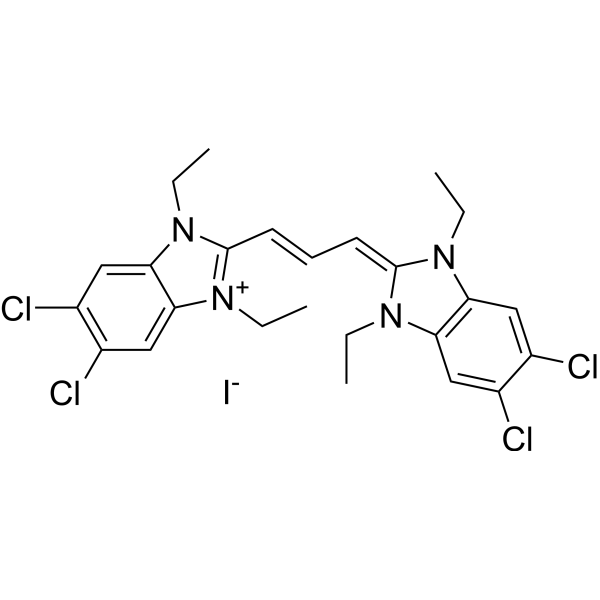
  • HY-15534
    JC-1
    Maximum Cited Publications
    212 Publications Verification

    CBIC2

    Fluorescent Dye Others
    JC-1 (CBIC2) is an ideal fluorescent probe widely used to detect mitochondrial membrane potential. JC-1 accumulates in mitochondria in a potential dependent manner and can be used to detect the membrane potential of cells, tissues or purified mitochondria. In normal mitochondria, JC-1 aggregates in the mitochondrial matrix to form a polymer, which emits strong red fluorescence (Ex=585 nm, Em=590 nm); When the mitochondrial membrane potential is low, JC-1 cannot aggregate in the matrix of mitochondria and produce green fluorescence (ex=510 nm, em= 527 nm) .
    JC-1
  • HY-101855

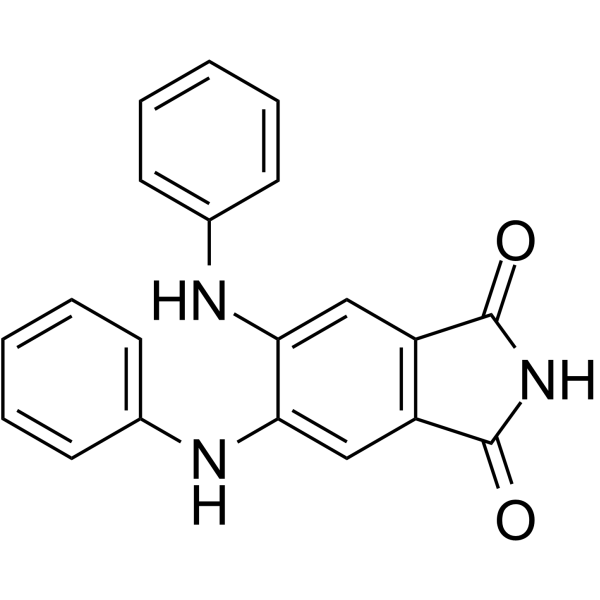
    Anle138b

    Amyloid-β Neurological Disease
    Emrusolmin (Anle138b), an oligomeric aggregation inhibitor, blocks the formation of pathological aggregates of prion protein (PrPSc) and of α-synuclein (α-syn). Emrusolmin strongly inhibits oligomer accumulation, neuronal degeneration, and disease progression in vivo. Emrusolmin has low toxicity and an excellent oral bioavailability and blood-brain-barrier penetration. Emrusolmin blocks Aβ channels and rescues disease phenotypes in a mouse model for amyloid pathology .
    Emrusolmin
  • HY-P99405

    PRX 002; RG 7935; RO 7046015

    α-synuclein Neurological Disease
    Prasinezumab (PRX 002) is a humanized IgG1 monoclonal antibody directed against aggregated α-synuclein. Prasinezumab has the potential for Parkinson's disease research .
    Prasinezumab
  • HY-P9967

    BIIB037

    Amyloid-β Neurological Disease
    Aducanumab (BIIB037) is a human monoclonal antibody that selectively targets aggregated amyloid-beta (Aβ). Aducanumab shows blood-brain-barrier penetration, and can be used for Alzheimer's disease (AD) research .
    Aducanumab
  • HY-160116

    Radionuclide-Drug Conjugates (RDCs) Fluorescent Dye α-synuclein Neurological Disease
    α-Synuclein aggregate binder 1 (Compound C05-05) is a specific binder for α-synuclein aggregates and can inhibit α-synuclein aggregation. α-Synuclein aggregate binder 1 can be used as a fluorescent probe (excitation wavelength 900 nm, detection wavelength 500-550 nm) for optical imaging, and can also inhibit α-synuclein fibril formation by blocking the aggregation process. α-Synuclein aggregate binder 1 can be used for positron emission tomography (PET) imaging after being labeled with 18F. α-Synuclein aggregate binder 1 can be used for visual diagnosis of brain lesions and mechanism research of neurodegenerative diseases such as Parkinson's disease and Lewy body dementia .
    α-Synuclein aggregate binder 1
  • HY-W127703
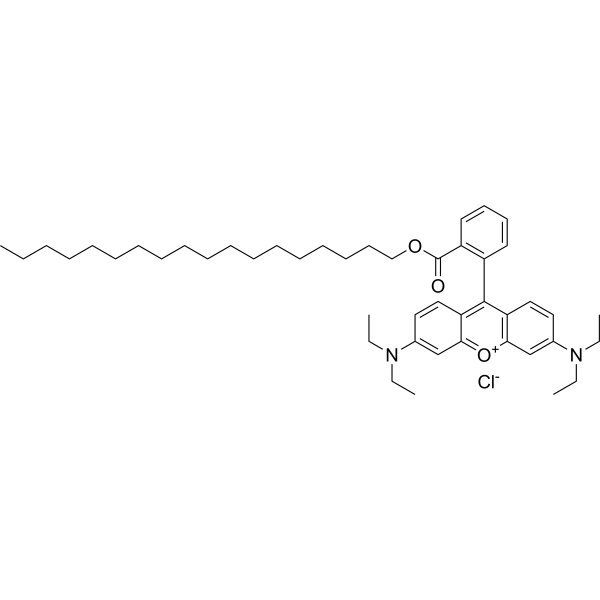
    Octadecyl Rhodamine B chloride
    1 Publications Verification

    Fluorescent Dye Biochemical Assay Reagents Others
    Octadecyl Rhodamine B chloride is an amphiphilic fluorescent probe with both membrane-binding ability and fluorescent properties, which easily forms aggregates in aqueous phase leading to self-quenching. Octadecyl Rhodamine B chloride can be used for cell membrane staining and further applied in membrane biology research. The maximum absorption/emission wavelengths of Octadecyl Rhodamine B chloride monomer in Triton X-100 are 565 nm/585 nm; the absorption peaks of aggregates in water are blue-shifted to 524 nm and 574 nm, with significantly quenched fluorescence .
    Octadecyl Rhodamine B chloride
  • HY-P990109

    Amyloid-β Neurological Disease
    Aducanumab (Mouse IGG2a) is a monoclonal antibody that selectively targets aggregated amyloid-beta (Aβ). The variable region of Aducanumab (Mouse IGG2a) is consistent with that of Aducanumab (HY-P9967), while the constant region is of Mouse IGG2a sequence. Aducanumab (Mouse IGG2a) has strong selectivity for Aβ fibrils with EC50s of >1 μM and 0.2 nM for monomeric Aβ1-40 and fibrillar Aβ1-42, respectively. Aducanumab (Mouse IGG2a) can be used for Alzheimer's disease (AD) research .
    Aducanumab (Mouse IGG2a)
  • HY-W143216

    Monomethylthionine

    Amyloid-β Tau Protein Neurological Disease
    Azure C acts as a tau oligomer modulator and Aβ42 oligomerization inhibitor. It regulates hsp70 ATPase activity, thereby mediating the clearance of tau protein. Azure C reduces the levels of toxic tau oligomers by promoting the formation of non-toxic tau aggregates, rescues neuroblastoma cells from tau oligomer-induced toxicity, and binds to and inhibits Aβ42 oligomerization without suppressing its fibrillization. Azure C is generated via sequential oxidation of methylene blue or Azure B through a horseradish peroxidase-mediated reaction, and accumulates in HRP reaction media. Azure C can be used in studies related to tauopathies, including Alzheimer's disease .
    Azure C
  • HY-122958

    α-synuclein Neurological Disease
    Peucedanocoumarin III is an α-synuclein fiber depolymerizer with blood-brain barrier permeability. Peucedanocoumarin III depolymerizes β-sheet aggregate structures, promotes aggregate clearance, inhibits β23-induced cytotoxicity, blocks the formation of Lewy body-like inclusions, and prevents dopaminergic neuron loss. Peucedanocoumarin III can be used in studies related to Parkinson's disease .
    Peucedanocoumarin III
  • HY-P991480

    Transmembrane Glycoprotein Tau Protein Amyloid-β Neurological Disease Cancer
    ONC-841 is a blood-brain barrier-permeable, humanized monoclonal antibody targeting SIGLEC10. As an immune checkpoint inhibitor, ONC-841 restores the functions of immune effector cells such as T cells and enhances anti-tumor immune responses by blocking inhibitory signals mediated by SIGLEC10. ONC-841 restores the phagocytic and migratory activities of microglia, and promotes the phagocytosis of Amyloid-β and Tau protein aggregates by microglia. ONC-841 is applicable to research related to solid tumors and Alzheimer's disease .
    ONC-841
  • HY-50001
    Nucleozin
    5+ Cited Publications

    Influenza Virus Infection
    Nucleozin, a potent inhibitor of influenza A virus infection, induces the formation of nucleoprotein (NP) aggregates and antagonizes its nuclear accumulation, leading to cessation of viral replication. Nucleozin impedes influenza A virus replication in vitro with a nanomolar EC50 .
    Nucleozin
  • HY-P10954

    p38 MAPK Others
    Link N peptide is a proteoglycan aggregates activator in the extracellular matrix. Link N peptide can selectively activate the p38 mitogen-activated protein kinase (MAPK) pathway to promote the expression of type I and II collagens in human intervertebral disc cells. Link N peptide is promising for research of intervertebral disc degeneration-related diseases .
    Link N peptide
  • HY-161746

    AUTOTACs Autophagy Neurological Disease
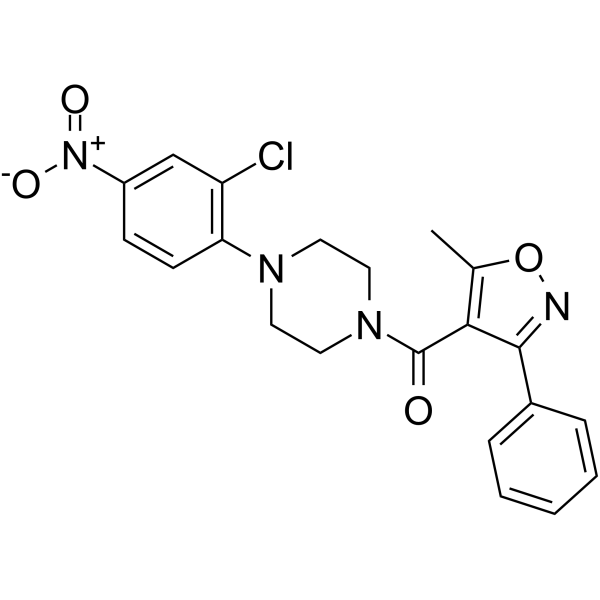
    Anle138b-F105 is an autophagy-targeting chimera (AUTOTAC) that targets p62/Sequestosome-1/SQSTM1. Anle138b-F105 binds to the ZZ domain of p62, induces conformational activation, self-oligomerization, interaction with LC3, and formation of autophagosomes. Anle138b-F105 induces autophagic flux of ubiquitin-conjugated aggregated proteins, leading to their lysosomal degradation. Anle138b-F105 is applicable for the research of neurodegenerative proteinopathies .
    Anle138b-F105
  • HY-W750960

    Antibiotic Others
    Biotinylated isoxazole is a biotinylated derivative of Isoxazole (HY-W010649). Biotinylated isoxazole is capable of triggering the formation of aggregates related to RNA granules .
    Biotinylated isoxazole
  • HY-N6806

    Others Neurological Disease Inflammation/Immunology
    Timosaponin B III is a major bioactive steroidal saponin isolated from Anemarrhena asphodeloides Bge, and exhibits anti-inflammatory, anti-platelet aggregative and anti-depressive effects .
    Timosaponin B III
  • HY-P99720A

    RAP-536

    TGF-beta/Smad Metabolic Disease
    Luspatercept (mIgG2a) (RAP-536) is a fusion protein, consisting of a modified extracellular domain of human ActRIIB linked to the murine IgG2a Fc domain. Luspatercept (mIgG2a) inhibits Smad2/3 signaling, promotes differentiation of late-stage erythroid precursors and mitigates ineffective erythropoiesis (IE) in murine β-thalassemia. Luspatercept (mIgG2a) reduces anemia, α-globin aggregates, hemolysis, and disease complications of IE such as iron overload, splenomegaly, and bone defects .
    Luspatercept (mIgG2a)
  • HY-D2864

    Fluorescent Dye Others
    Aza-CyBz is a selective NaCl-responsive fluorescent probe. Aza-CyBz visualizes plant salt stress by forming ordered aggregates with NaCl, leading to near-infrared fluorescence quenching. Aza-CyBz acts via electrostatic interaction between the cationic cyanine dye and NaCl to form J-aggregates, causing fluorescence quenching with a detection limit of 170 μM .
    Aza-CyBz
  • HY-134880

    PI-2620

    Microtubule/Tubulin Neurological Disease
    Tau tracer 2 (PI-2620) is a Tau tracer used for imaging Tau protein aggregates. Tau tracer 2 can be used to diagnose neurodegenerative diseases .
    Tau tracer 2
  • HY-113434B

    (±)-5-HETE

    Endogenous Metabolite Inflammation/Immunology
    5-HETE ((±)-5-HETE), a fatty acid, is a oxidative derivative of Arachidonic acid. 5-HETE is a mixture of 5(S)-HETE and 5(R)-HETE. 5-HETE is a potent aggregating agent that induces the aggregation of neutrophils with an IC50 value of 200 nM .
    5-HETE
  • HY-138643

    Amyloid-β Neurological Disease
    Cl-NQTrp signifcantly disrupts the preformed fbrillar aggregates of Tau-derived PHF6 (VQIVYK) peptide and full-length tau protein .
    Cl-NQTrp
  • HY-168323

    p97 Others
    UP163 enhances the activity of ATPase, and activates valosin-containing protein (VCP) with an EC50 of 9.0 μM. UP163 reduces MG-132 (HY-13259)-induced TDP-43 aggregates .
    UP163
  • HY-150049

    Amyloid-β Neurological Disease
    γ-Secretase modulator 13 (compound 4) is a gamma-secretase modulator (GSMs) that inhibits the production of the aggregated amyloid β-peptide Aβ42 with an IC50 value of 163 nM. γ-Secretase modulator 13 can be used in the study of Alzheimer's disease .
    γ-Secretase modulator 13
  • HY-176499
    PLGA38000-PEG10000
    1 Publications Verification

    Biochemical Assay Reagents Others
    PLGA38000-PEG10000 is an amphiphilic polymer. Amphiphilic polymers can be used in drug delivery studies due to their ability to self-assemble into discrete aggregates .
    PLGA38000-PEG10000
  • HY-176130

    ATTECs Tau Protein Autophagy Neurological Disease
    MRL828 combines a Tau pathology-binding ligand and modified guanine moiety based on the ATTEC technology to selectively designate aggregated tau proteins for clearance via the ALP. MRL828 decreases intracellular Tau aggregates and promotes the secretion of Tau .
    MRL828
  • HY-148495

    Amyloid-β Neurological Disease
    Carnosine conjugated hyalyronate is a hyaluronic acid derivative functionalized with the dipeptide carnosine (Carnosine, Car) and has the ability to resist amyloid aggregation. Carnosine conjugated hyalyronate dissolves amyloid fibrils and reduces Aβ-induced toxicity in vitro. The effectiveness of Carnosine conjugated hyalyronate against amyloid aggregation is directly proportional to the Carnosine loading .
    Carnosine conjugated hyalyronate
  • HY-177906

    Fluorescent Dye Amyloid-β Neurological Disease
    h-FTAA is a luminescent conjugated oligothiophene (LCO) probe. h-FTAA can selectively bind to amyloid protein aggregates (such as plaques) and distinguish different conformations of the protein aggregates through changes in fluorescence signals. h-FTAA significantly reduces the neurotoxicity of Aβ1-42 and the Arctic mutant Aβ (AβArc), thereby protecting SH-SY5Y neuroblastoma cells. h-FTAA can be used to dynamically track the formation and maturation process of Aβ plaques .
    h-FTAA
  • HY-N2092

    Bacterial Infection Cancer
    Atractylodinol, an antimicrobial, is a PRRSV (porcine reproductive and respiratory syndrome virus) inhibitor. Atractylodinol inhibits TGF-β receptor I recycling by binding to vimentin (KD of 454 nM) and inducing the formation of filamentous aggregates .
    Atractylodinol
  • HY-167006

    PLGA10000-PEG3000-Vinylsulfone

    Biochemical Assay Reagents Others
    PLGA10000-PEG3000-VS (PLGA10000-PEG3000-Vinylsulfone) is an amphiphilic polymer. Amphiphilic polymers can be used in drug delivery studies due to their ability to self-assemble into discrete aggregates .
    PLGA10000-PEG3000-VS
  • HY-112636

    Amyloid-β Others
    Astrophloxine is a fluorescent imaging probe capable of targeting antiparallel dimers. Astrophloxine can be used to detect aggregated Aβ in brain tissue and cerebrospinal fluid samples of Alzheimer's disease (AD) mice .
    Astrophloxine
  • HY-176925

    α-synuclein Amyloid-β Neurological Disease
    α-Synuclein aggregate binder 2 (Compound 1) is a specific alpha-synuclein binder with a Ki of 1.6 nM. α-Synuclein aggregate binder 2 has a weak binding affinity for β-amyloid aggregates with a Ki of 295 nM. α-Synuclein aggregate binder 2 can be used as a tracer in Parkinson's disease .
    α-Synuclein aggregate binder 2
  • HY-156842

    Amyloid-β Neurological Disease
    MCAAD-3 is a near-infrared Aβ imaging probe with blood-brain barrier penetrability. MCAAD-3 has a strong affinity for Aβ polymers (Ki >106 nM) and can label Aβ plaques in the brains of transgenic mice .
    MCAAD-3
  • HY-161744

    AUTOTACs Autophagy Cancer
    PBA-1106 is an autophagy-targeting chimera (AUTOTAC) that induces p62 self-oligomerization. PBA-1106 increases the autophagic flux of Ub-conjugated aggregates .
    PBA-1106
  • HY-N10306

    α-synuclein Neurological Disease
    Sycosterol A is a sterol-based α-synuclein (α-syn) inhibitor that targets α-synuclein aggregates and inhibits α-synuclein aggregation. Sycosterol A can be used in the study of anti-neurodegenerative diseases .
    Sycosterol A
  • HY-113950

    Transthyretin (TTR) Neurological Disease
    Dichlorophenyl-ABA is an inhibitor of transthyretin (TTR) amyloid fibril formation, inhibiting aggregate formation in more than 80% in TTR L55P-expressing cells .
    Dichlorophenyl-ABA
  • HY-167055

    PLLA4000-PEG2000-Vinylsulfone

    Biochemical Assay Reagents Others
    PLLA4000-PEG2000-VS (PLLA4000-PEG2000-Vinylsulfone) is an amphiphilic polymer. Amphiphilic polymers can be used in drug delivery studies due to their ability to self-assemble into discrete aggregates .
    PLLA4000-PEG2000-VS
  • HY-167033

    PLGA4000-PEG5000-Vinylsulfone

    Biochemical Assay Reagents Others
    PLGA4000-PEG5000-VS (PLGA4000-PEG5000-Vinylsulfone) is an amphiphilic polymer. Amphiphilic polymers can be used in drug delivery studies due to their ability to self-assemble into discrete aggregates .
    PLGA4000-PEG5000-VS
  • HY-167047

    PLLA5000-PEG1000-Vinylsulfone

    Biochemical Assay Reagents Others
    PLLA5000-PEG1000-VS (PLLA5000-PEG1000-Vinylsulfone) is an amphiphilic polymer. Amphiphilic polymers can be used in drug delivery studies due to their ability to self-assemble into discrete aggregates .
    PLLA5000-PEG1000-VS
  • HY-167035

    PLGA5000-PEG2000-Vinylsulfone

    Biochemical Assay Reagents Others
    PLGA5000-PEG2000-VS (PLGA5000-PEG2000-Vinylsulfone) is an amphiphilic polymer. Amphiphilic polymers can be used in drug delivery studies due to their ability to self-assemble into discrete aggregates .
    PLGA5000-PEG2000-VS
  • HY-161743A

    AUTOTACs Autophagy Neurological Disease Cancer
    PBA-1105 TFA is an autophagy-targeting chimera (AUTOTAC) that induces p62 self-oligomerization. PBA-1105 TFA selectively binds to exposed hydrophobic regions of misfolded proteins, facilitating their degradation via the autophagic pathway. PBA-1105 TFA increases the autophagic flux of Ub-conjugated aggregates .
    PBA-1105 TFA
  • HY-120156

    Dopamine Receptor α-synuclein Amyloid-β Neurological Disease
    D-520 is a potent and brain-penetrant dopamine D2/D3 agonist (D2 EC50 = 4.73 nM, Ki = 41.8 nM; D3 EC50 = 2.18 nM, Ki = 0.35 nM). D-520 inhibits the formation of aggregates in vitro and promotes the disaggregation of both alpha-synuclein (α-syn) and Aβ aggregates. D-520 exhibits efficacious activity in animal models of Parkinson’s disease (PD). D-520 can be used for PD and PD with dementia (PDD) research [1][2].
    D-520
  • HY-161458

    GSK-3 Tau Protein Neurological Disease
    GSK-3β inhibitor 16 (compound 7c) is a GSK-3β inhibitor with the IC50 of 4.68 nM. GSK-3β inhibitor 16 decreases Tau hyperphosphorylated aggregate and alleviates cognitive impairments in the Scopolamin (HY-N0296)-induced model in mice .
    GSK-3β inhibitor 16
  • HY-P1474

    Amyloid β-Protein (22-35)

    Amyloid-β Neurological Disease
    β-Amyloid 22-35 (Amyloid β-Protein 22-35), the residues 22-35 fragment ofβ-amyloid protein, has a cytotoxic effect on cultured neurons from the rat hippocampus in serum-free medium. β-Amyloid 22-35 forms aggregates and typical amyloid fibrils resembling those of the β-amyloid protein in neutral buffer solution) .
    β-Amyloid (22-35)
  • HY-P1474A

    Amyloid β-Protein (22-35) TFA

    Amyloid-β Neurological Disease
    β-Amyloid 22-35 (Amyloid β-Protein 22-35) TFA, the residues 22-35 fragment ofβ-amyloid protein, has a cytotoxic effect on cultured neurons from the rat hippocampus in serum-free medium. β-Amyloid 22-35 TFA forms aggregates and typical amyloid fibrils resembling those of the β-amyloid protein in neutral buffer solution) .
    β-Amyloid (22-35) TFA
  • HY-W721681

    Amyloid-β Neurological Disease
    Dehydro nicardipine is a dihydropyridine metabolite of Nicardipine (HY-12515) and belongs to the dihydropyridine class of compounds. Dehydro nicardipine can selectively inhibit the aggregation of Aβ monomers, specifically regulate the extension and binding of Aβ soluble aggregates, change the morphology of Aβ aggregates, and inhibit the growth of aggregate length. Dehydro nicardipine can be used in the study of Alzheimer's disease (AD) .
    Dehydro nicardipine
  • HY-P10674

    Biochemical Assay Reagents Neurological Disease
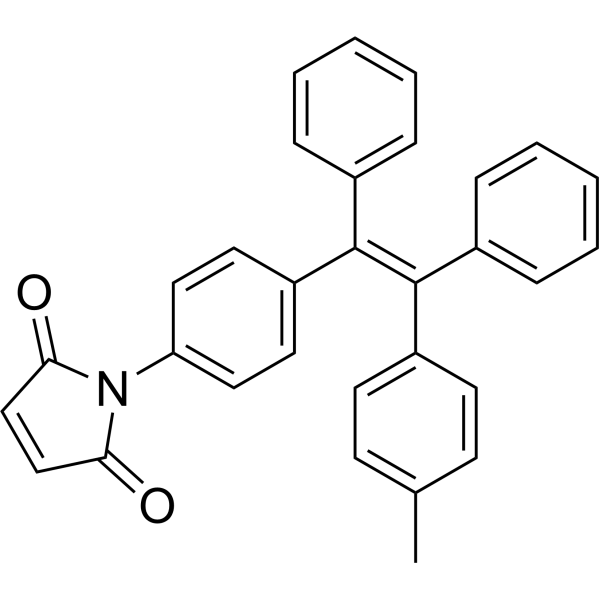
    QMT-CBT is a near-infrared aggregation-induced luminescent photon. After activation of caspase1 (Cas1), QMT-CBT undergoes a CBT-Cys click reaction to form a cyclic dimer QMT-Dimer (the first aggregate) and assembles into nanoparticles (the second aggregate), turning the AIE signal "on" to enhance imaging of Alzheimer's disease (AD) .
    QMT-CBT
  • HY-139166

    N-Palmitoyl aspartic acid

    Biochemical Assay Reagents Others
    N-Palmitoyl-L-aspartate (N-Palmitoyl aspartic acid) is a chiral compound with properties of the aggregates formed in aqueous solution .
    N-Palmitoyl-L-aspartate
  • HY-151554

    Amyloid-β Others
    SQ-3 is a quinoline analogue, displays moderate selectivity for α-syn aggregates (Ki=39.3 nM) over β-amyloid (Aβ) aggregates (Ki=230 nM). [ 18F]SQ3 has basic properties as a lead compound for the development of a useful α-syn imaging probe .
    SQ-3
  • HY-134879

    Microtubule/Tubulin Neurological Disease
    Tau tracer 1 is a Tau tracer used for imaging Tau protein aggregates. Tau tracer 1 can be used to diagnose neurodegenerative diseases .
    Tau tracer 1
  • HY-N3380

    PGE synthase Interleukin Related Inflammation/Immunology
    Linderaspirone A is a natural compound that can be isolated from the roots of Lindera aggregate. Linderaspirone A shows significant inhibitory effects on the production of prostaglandin E2 (PGE2),TNF-α, and IL-6 .
    Linderaspirone A
  • HY-134939

    Drug Derivative Others
    thio-Miltefosine is a modulator of rafts in membrane tissue. Rafts are nanoscale aggregates of different lipids and proteins that profoundly affect cellular function. Thio-Miltefosine modulates membrane phase behavior on cell-derived giant plasma membrane vesicles .
    thio-Miltefosine

Inquiry Online

Your information is safe with us. * Required Fields.

Salutation


Country or Region *

Applicant Name *


Organization Name *

Department *


Email Address *


Product Name *

Cat. No.


Requested quantity *

Phone Number *


Remarks

Inquiry Online

Inquiry Information

Product Name:
Cat. No.:
Quantity:
MCE Japan Authorized Agent:

