87 Results for "

amphetamine

" in MedChemExpress (MCE) Product Catalog:
Products (87)

87 Results for "amphetamine" in MCE Product Catalog:

25
25 Publications Verification
Cat. No.: HY-B1302
CAS No.: 6151-40-2
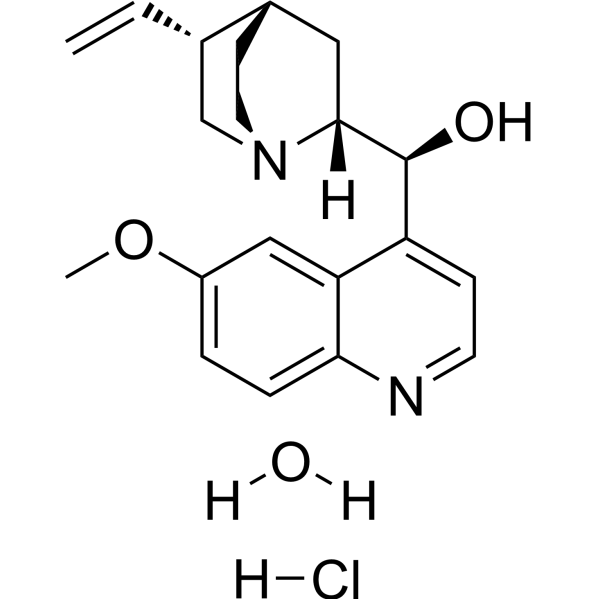
Quinidine hydrochloride monohydrate is an orally active antiarrhythmic agent. Quinidine hydrochloride monohydrate reduces the expression level of P-gp, inhibits P-gp-mediated efflux, increases the intracellular accumulation of P-gp substrates, induces PARP cleavage and Caspase-3 activation, and elevates the proportion of Apoptotic cells at the sub-G1 phase. Quinidine hydrochloride monohydrate exerts sustained block and open-channel block effects on IK(f). Quinidine hydrochloride monohydrate alters the urinary metabolic ratio of Amphetamine, modulates the Pentylenetetrazol-induced seizure threshold, and regulates the anticonvulsant effect of Dextromethorphan. Quinidine hydrochloride monohydrate can be used in studies related to uterine sarcoma and seizures .
loading...
    loading...
24
24 Cited Publications
Cat. No.: HY-B1751
CAS No.: 56-54-2
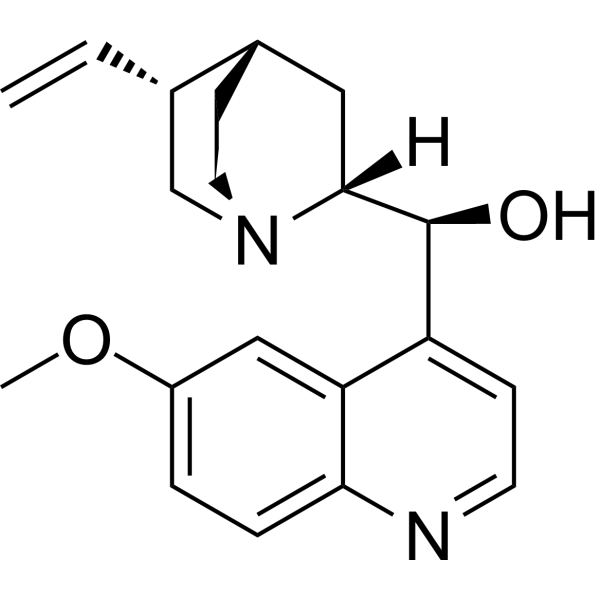
Quinidine (15% dihydroquinidine) is an orally active antiarrhythmic agent. Quinidine (15% dihydroquinidine) reduces the expression level of P-gp, inhibits P-gp-mediated efflux, increases the intracellular accumulation of P-gp substrates, induces PARP cleavage and Caspase-3 activation, and elevates the proportion of Apoptotic cells at the sub-G1 phase. Quinidine (15% dihydroquinidine) exerts sustained block and open-channel block effects on IK(f). Quinidine (15% dihydroquinidine) alters the urinary metabolic ratio of Amphetamine, modulates the Pentylenetetrazol-induced seizure threshold, and regulates the anticonvulsant effect of Dextromethorphan. Quinidine (15% dihydroquinidine) can be used in studies related to uterine sarcoma and seizures .
loading...
    loading...
2
2 Cited Publications
Cat. No.: HY-15543A
CAS No.: 1215721-40-6
Purity:  99.37%
Target:  

5-HT Receptor

Research Areas:  

Neurological Disease

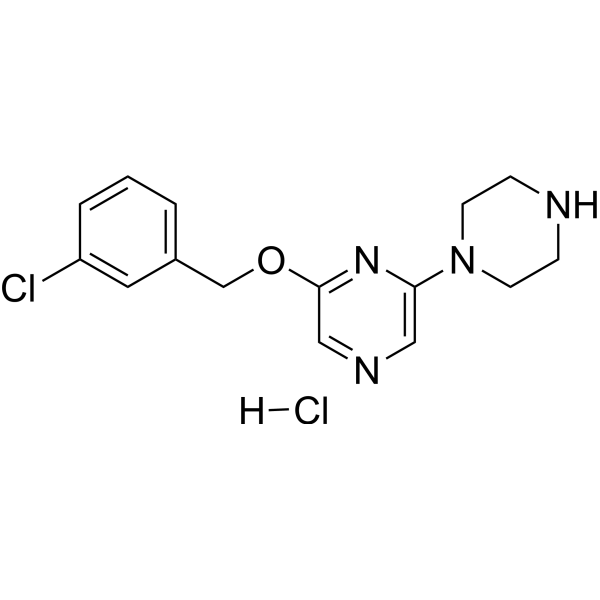
CP-809101 hydrochloride is a potent and highly selective 5-HT2C receptor agonist, with pEC50s of 9.96, 7.19 and 6.81 M for human 5HT2C, 5HT2B and 5HT2A receptor. CP-809101 hydrochloride inhibits conditioned avoidance responding in rats and antagonizes both PCP (phencyclidine hydrochloride)- and d-amphetamine-induced hyperactivity. CP-809101 hydrochloride also reduces food and nicotine dependence in rats, can be used in studies of antipsychotic and nicotine dependence .
loading...
    loading...
2
2 Cited Publications
Cat. No.: HY-P2259
CAS No.: 1404188-93-7
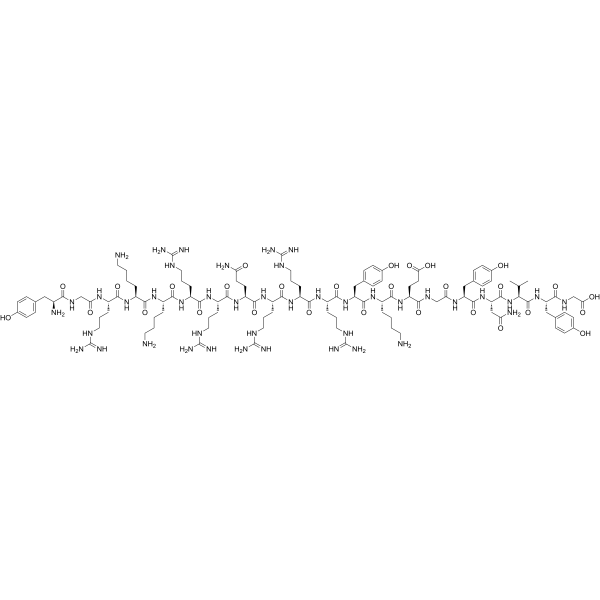
TAT-GluA2 3Y is a blood-brain barrier-permeable AMPA receptor inhibitory peptide that crosses cell membranes via the HIV-1 TAT protein domain. TAT-GluA2 3Y blocks the endocytosis of AMPA receptors, including the internalization of GluA1/GluA2 subunits, by disrupting interactions with the AP2, Brag2 and Syt3-GluA2 complexes, while also inhibiting long-term depression. TAT-GluA2 3Y blocks hypoxia-mediated AMPAR internalization, alleviates A1R-induced persistent synaptic inhibition, and reduces cerebral ischemic volume, neurological deficits and spatial memory deficits. TAT-GluA2 3Y blocks the effect of NLRP3 deficiency on fear generalization, inhibits amphetamine-induced behavioral/neurochemical sensitization, weakens the unconditioned stimulus-conditioned stimulus association of morphine, and promotes the extinction of morphine CPP. TAT-GluA2 3Y can be used in studies related to fear generalization, ischemic stroke, hypoxia, drug addiction and opioid addiction .
loading...
    loading...
1
1 Cited Publications
Cat. No.: HY-13340
CAS No.: 409351-28-6
Purity:  98.98%
Synonyms: VU152100
Target:  

mAChR

Research Areas:  

Neurological Disease

VU0152100 (VU152100) is a highly selective mAChR positive allosteric modulator (permeable to the blood-brain barrier). VU0152100 reverses Amphetamine-induced hypermotility in rats and increased levels of extracellular dopamine in nucleus accumbens and caudate-putamen. VU0152100 has good research potential in psychosis and cognitive impairment associated with mental disorders such as schizophrenia .
loading...
    loading...
Cat. No.: HY-154980
CAS No.: 2642079-89-6
Purity:  99.97%
Target:  

GPR52

Research Areas:  

Neurological Disease

NXE0041178 is an orally active and BBB-penetrant full GPR52 agonist, with a pEC50 of 7.5 for human GPR52 and an EC50 of 27.5 nM (pEC50 = 7.55) for rat GPR52. NXE0041178 shows no significant inhibition on hERG, hNaV1.5 and cytochrome P450 isoforms. NXE0041178 can reduce d-amphetamine-induced hyperactivity in rats. NXE0041178 can be used for research of Neurological disease .
loading...
    loading...
Cat. No.: HY-171844
CAS No.: 1086377-48-1
Target:  

iGluR

CX1739 is an orally active, blood-brain barrier permeable, low-efficacy AMPA-glutamate receptor (AMPAR) potentiator. CX1739 enhances excitatory neurotransmission by potentiating glutamate-induced excitatory currents and promoting in vivo long-term potentiation. CX1739 eliminates amphetamine-induced locomotor activity, reverses opioid-, pentobarbital- and ethanol-induced respiratory depression, and exerts pro-cognitive effects in animals. CX1739 impairs motor function recovery and increases the risk of post-injury complications. CX1739 can be used in research related to attention-deficit/hyperactivity disorder, dementia, respiratory depression and spinal cord injury .
loading...
    loading...
Cat. No.: HY-16639
CAS No.: 1448895-09-7
ML314 is a potent, BBB-penetrant and β-arrestin biased molecule agonist of NTR1 (EC50 = 1.9 μM). ML314 shows good selectivity against NTR2 and GPR35, but does not stimulate Ca2+ mobilization. ML314 can attenuate amphetamine-like hyperlocomotion in dopamine transporter knockout mice. ML314 attenuates methamphetamine-associated hyperlocomotion and potentiates the psychostimulant inhibitory effects of a ghrelin antagonist in wild type mouse model. ML314 also acts as an allosteric enhancer of endogenous neurotensin. ML314 antagonizes G protein signaling. ML314 can be studied in research for methamphetamine abuse conditions .
loading...
    loading...
Cat. No.: HY-100822
CAS No.: 123931-04-4
Purity:  98.85%
Synonyms: (+)-HA-966
Target:  

iGluR

Research Areas:  

Neurological Disease

(R)-(+)-HA-966 ((+)-HA-966) is a partial agonist/antagonist of glycine site of the N-methyl-D-aspartate (NMDA) receptor complex. (R)-(+)-HA-966 selectively blocks the activation of the mesolimbic dopamine system by amphetamine . (R)-(+)-HA-966 can cross the blood-brain barrier and has the potential for neuropathic and acute pain .
loading...
    loading...
Cat. No.: HY-A0257
CAS No.: 390-64-7
Target:  

Calcium Channel

Research Areas:  

Cardiovascular Disease

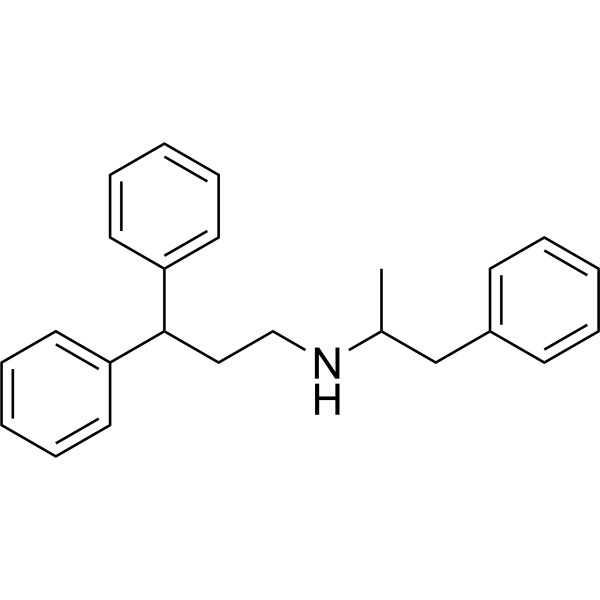
Prenylamine is a calcium channel blocker of the amphetamine chemical class. Prenylamine can be used as a vasodilator and can be used for the research of angina pectoris .
loading...
    loading...
Cat. No.: HY-B1751S
CAS No.: 1267657-68-0
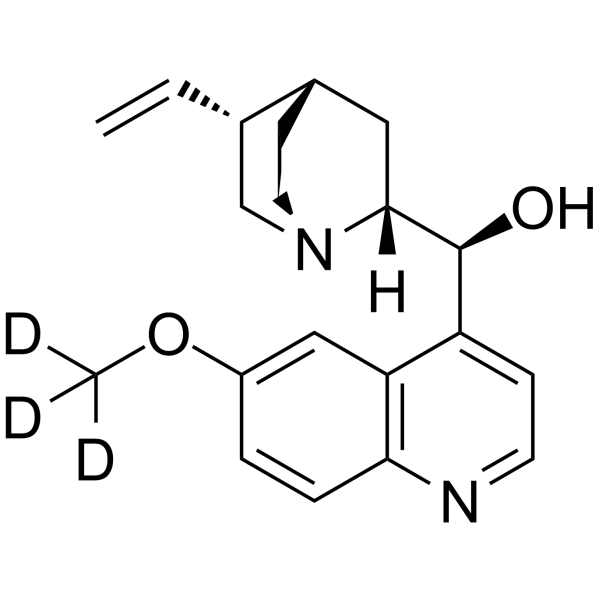
Quinidine-d3 is the d3-labeled Quinidine (15% dihydroquinidine) (HY-B1751). Quinidine (15% dihydroquinidine) is an orally active antiarrhythmic agent. Quinidine (15% dihydroquinidine) reduces the expression level of P-gp, inhibits P-gp-mediated efflux, increases the intracellular accumulation of P-gp substrates, induces PARP cleavage and Caspase-3 activation, and elevates the proportion of Apoptotic cells at the sub-G1 phase. Quinidine (15% dihydroquinidine) exerts sustained block and open-channel block effects on IK(f). Quinidine (15% dihydroquinidine) alters the urinary metabolic ratio of Amphetamine, modulates the Pentylenetetrazol-induced seizure threshold, and regulates the anticonvulsant effect of Dextromethorphan. Quinidine (15% dihydroquinidine) can be used in studies related to uterine sarcoma and seizures .
loading...
    loading...
Cat. No.: HY-W072385
CAS No.: 5279-32-3
Target:  

Drug Derivative

Research Areas:  

Neurological Disease

1,2-Dibromo-4,5-methylenedioxybenzene is an impurity in the synthesis of amphetamines .
loading...
    loading...
Cat. No.: HY-B1751D
CAS No.: 6591-63-5
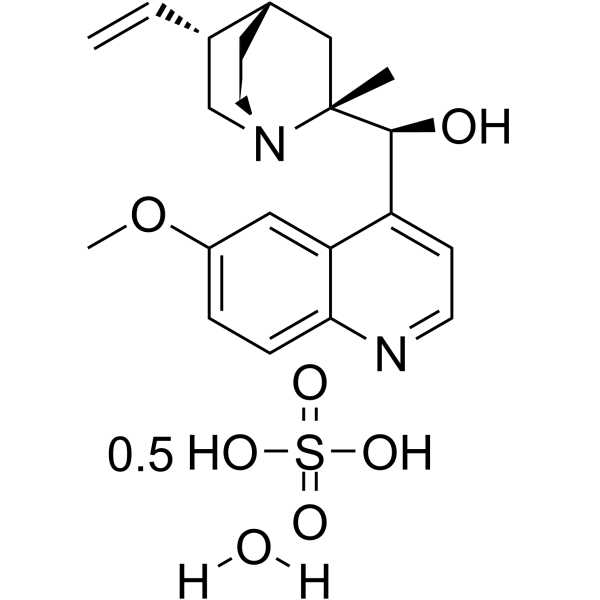
Quinidine sulfate dihydrate is an orally active antiarrhythmic agent. Quinidine sulfate dihydrate reduces the expression level of P-gp, inhibits P-gp-mediated efflux, increases the intracellular accumulation of P-gp substrates, induces PARP cleavage and Caspase-3 activation, and elevates the proportion of Apoptotic cells at the sub-G1 phase. Quinidine sulfate dihydrate exerts sustained block and open-channel block effects on IK(f). Quinidine sulfate dihydrate alters the urinary metabolic ratio of Amphetamine, modulates the Pentylenetetrazol-induced seizure threshold, and regulates the anticonvulsant effect of Dextromethorphan. Quinidine sulfate dihydrate can be used in studies related to uterine sarcoma and seizures .
loading...
    loading...
Cat. No.: HY-118825
CAS No.: 35892-11-6
Target:  

Drug Derivative

Research Areas:  

Neurological Disease

N-butyl Amphetamine hydrochloride is an Amphetamine analog, which can be used in forensic applications .
loading...
    loading...
Cat. No.: HY-156532
CAS No.: 2104810-18-4
Purity:  99.86%
Target:  

5-HT Receptor

Research Areas:  

Neurological Disease

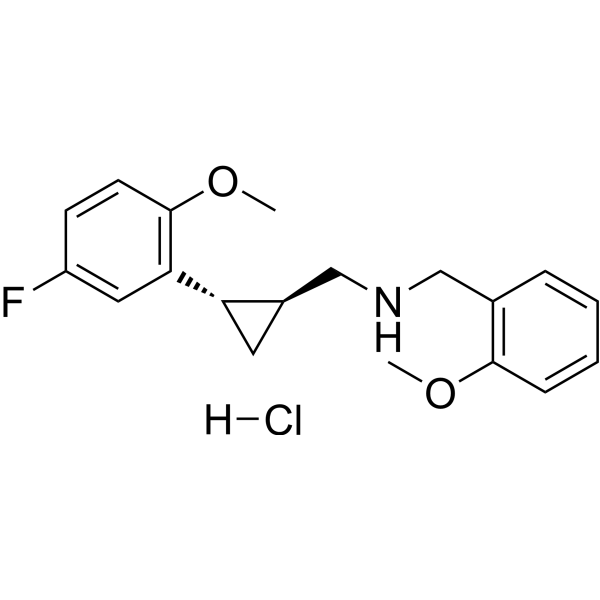
5-HT2C agonist-3 ((+)-19) is a selective 5-HT2C agonist (EC50: 24 nM, Ki: 78 nM). 5-HT2C agonist-3 has antipsychotic drug-like activity. 5-HT2C agonist-3 blocks Amphetamine-induced hyperactivity .
loading...
    loading...
Cat. No.: HY-172028
CAS No.: 21005-63-0
Target:  

Drug Derivative

Research Areas:  

Neurological Disease

6-(2-Aminopropyl)indole is structurally categorized as an amphetamine.
loading...
    loading...
Cat. No.: HY-162663
CAS No.: 1417616-42-2
Synonyms: ML253
Target:  

mAChR

Research Areas:  

Neurological Disease

VU0448088 (ML253) is a potent and cross the blood-brain barrier tricyclic muscarinic acetylcholine receptor subtype 4 (M4) positive allosteric modulator with EC50 values of 56, 176 nM for human and rat, respectively. VU0448088 has the potential for the research of psychotic .
loading...
    loading...
Cat. No.: HY-116443
CAS No.: 20735-15-3
Target:  

Drug Derivative

Research Areas:  

Neurological Disease

2-Amino-1-phenylbutane hydrochloride is an Amphetamine characterized by having an ethyl group in the alpha position .
loading...
    loading...
Cat. No.: HY-W725213
CAS No.: 54690-19-6
Synonyms: BL-3912; alpha-EH DOM
Research Areas:  

Others

α-ethyl 2C-D (BL-3912) hydrochloride is a phenethylamine and amphetamine compound. In drug discrimination studies, α-ethyl 2C-D hydrochloride can serve as a reference standard for MDMA .
loading...
    loading...
Cat. No.: HY-P10405A
Target:  

Dopamine Receptor

Research Areas:  

Neurological Disease

TAT-D1 peptide acetate is a dopamine D1-D2 receptor heterodimer inhibitor. TAT-D1 peptide acetate disrupts the function of dopamine D1-D2 receptor heteromers, enhances subchronic amphetamine-induced locomotor activity, and exacerbates the expression of amphetamine-induced locomotor sensitization. TAT-D1 peptide acetate produces rapid anxiolytic and antidepressant-like effects in rat models of depression and anxiety, and inhibits c-fos expression in the nucleus accumbens of rats. TAT-D1 peptide acetate can be used in the research of psychostimulant addiction, depression and anxiety disorders .
loading...
    loading...

