Search Result
Results for "
bromide
" in MedChemExpress (MCE) Product Catalog:
78
Biochemical Assay Reagents
108
Isotope-Labeled Compounds
| Cat. No. |
Product Name |
Target |
Research Areas |
Chemical Structure |
-
- HY-B1188
-
|
|
mAChR
|
Neurological Disease
|
|
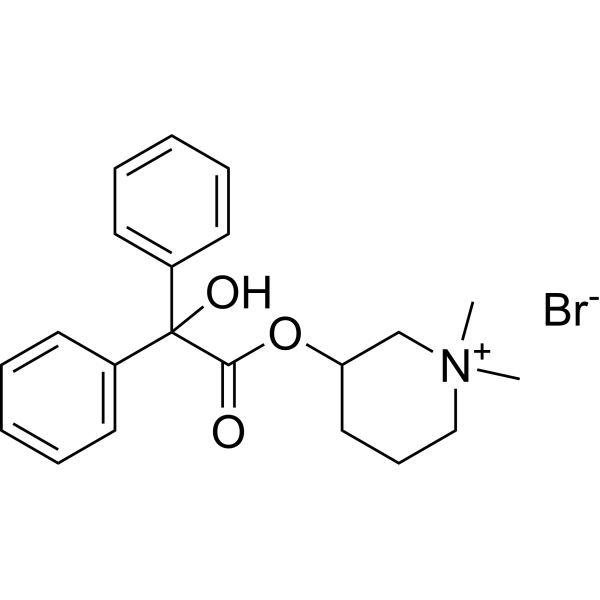
Propantheline bromide is an orally active mAChR antagonist. Propantheline bromide can be used in the research of smooth muscle dysfunction, excessive sweating, cramps or spasms of the stomach, intestines or bladder, and involuntary urination. Propantheline bromide can hardly cross the blood-brain barrier .
|
-
-
- HY-17585
-
|
|
mAChR
GPR109A
|
Others
Inflammation/Immunology
|
|
Mepenzolate bromide is an orally administered muscarinic receptor antagonist with Kis of 0.68 and 2.6 nM for hM2R and hM3R, respectively. Mepenzolate bromide can be used to suppress the gastrointestinal hypermotility associated with irritable bowel syndrome .Mepenzolate bromide is a GPR109A inhibitor .
|
-
-
- HY-D0838
-
|
|
Biochemical Assay Reagents
|
Others
|
|
Dodecyltrimethylammonium bromide (DTAB) is a surfactant. Dodecyltrimethylammonium bromide interacts with DNA and changes the mechanical properties of DNA on binding and the specific binding parameters of the interaction .
|
-
-
- HY-B1260
-
|
CTAB; Cetyltrimethylammonium bromide; Hexadecyltrimethylammonium bromide
|
Environmental Pollutants
Biochemical Assay Reagents
Apoptosis
TGF-β Receptor
MMP
|
Cancer
|
|
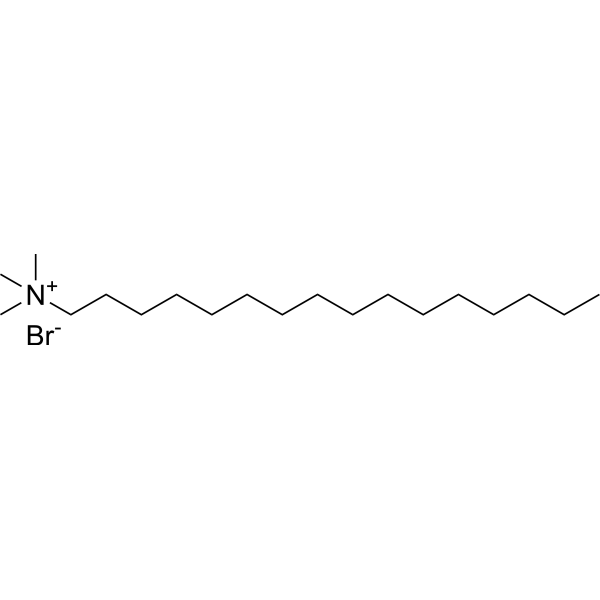
Cetrimonium bromide (CTAB), a quaternary ammonium, is an orally active cationic surfaetant. Cetrimonium bromide has toxicity and anticancer effect. Cetrimonium bromide inhibits cell migration and invasion through modulating the canonical and non-canonical TGF-β signaling pathways. Cetrimonium bromide can be used for DNA extraction .
|
-
-
- HY-17440
-
|
ORG 9426 bromide
|
nAChR
|
Neurological Disease
Inflammation/Immunology
Cancer
|
|
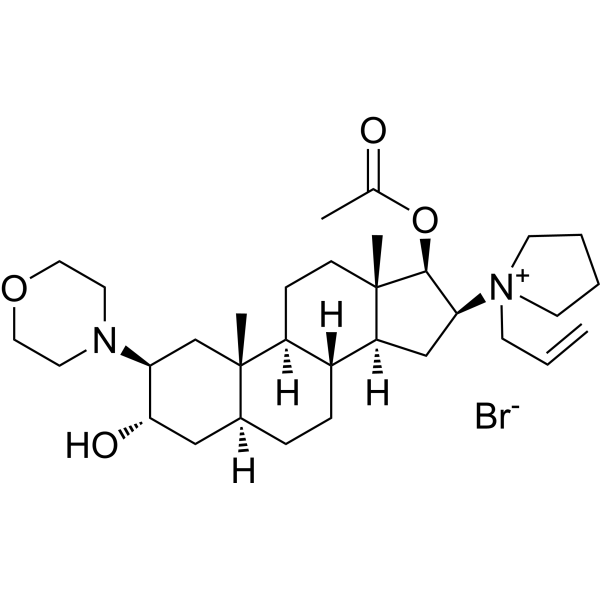
Rocuronium Bromide (ORG 9426 Bromide) is an aminosteroid non-depolarizing neuromuscular blocker or muscle relaxant used in modern anaesthesia, to facilitate endotracheal intubation and to provide skeletal musclerelaxation during surgery or mechanical ventilation.
|
-
-
- HY-B0423
-
|
Eustigmin bromide; Neoserine bromide
|
Cholinesterase (ChE)
|
Neurological Disease
|
|
Neostigmine (Eustigmin) Bromide is an orally active and reversible cholinesterase inhibitor that acts on myasthenia gravis to prolong and intensify the muscarinic and nicotinic effects of acetylcholine. Neostigmine Bromide can be used in anesthesia to reverse the neuromuscular blockade produced by competitive neuromuscular blockers .
|
-
-
- HY-Y1673
-
-
-
- HY-B0344
-
|
(-)-Scopolamine methyl bromide; Hyoscine methyl bromide
|
mAChR
|
Neurological Disease
|
|
Methscopolamine bromide ((-)-Scopolamine methyl bromide; Hyoscine methyl bromide) is a peripherally acting muscarinic receptor (mAChR) antagonist that cannot cross the blood-brain barrier. Methscopolamine bromide blocks the muscarinic negative feedback regulation of acetylcholine release from striatal cholinergic terminals, thereby increasing acetylcholine release in the striatum of freely moving rats. Methscopolamine bromide does not induce motor excitation in freely moving rats, nor does it alter the duration of ethanol-induced loss of righting reflex in mice. Methscopolamine bromide fails to antagonize the arecoline-mediated reduction in the duration of ethanol-induced loss of righting reflex in mice .
|
-
-
- HY-B0569
-
|
|
nAChR
Apoptosis
|
Cardiovascular Disease
Neurological Disease
|
|
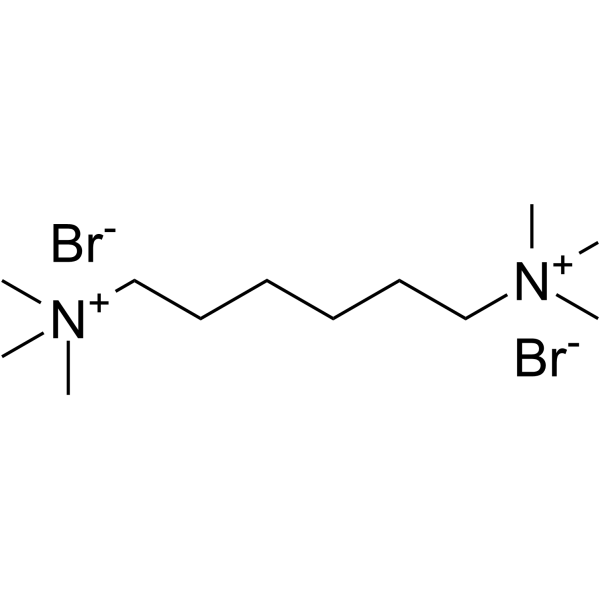
Hexamethonium Bromide is a non-selective ganglionic nicotinic-receptor antagonist (nAChR) antagonist, with mixed competitive and noncompetitive activity. Hexamethonium Bromide has anti-hypertensive activity. Hexamethonium Bromide attenuates sympathetic activity and blood pressure in spontaneously hypertensive animal models .
|
-
-
- HY-B0282A
-
|
ACh bromide
|
Biochemical Assay Reagents
|
Others
Cancer
|
|
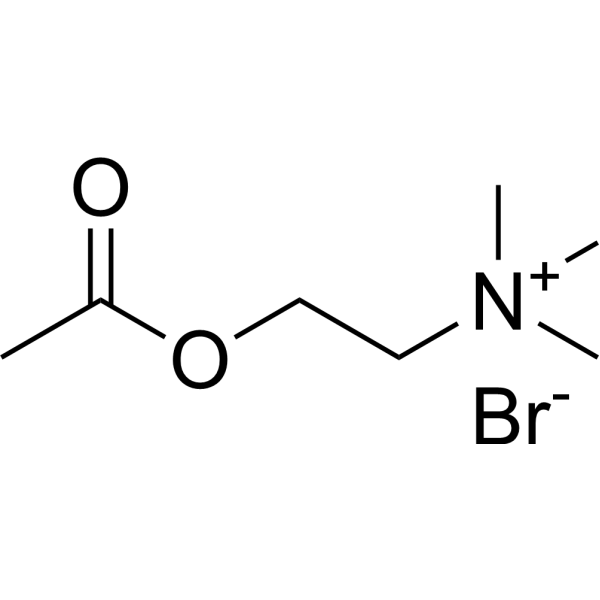
Acetylcholine bromide is an organic choline salt compound commonly used in neurophysiology and pharmacology experiments. It plays an important role in the nervous system, acting as a neurotransmitter that transmits signals and regulates many important physiological functions. Due to its special biological activity, Acetylcholine bromide is widely used in the study of neurotransmitters, nerve damage and muscle movement.
|
-
-
- HY-Y1100
-
|
|
Drug Intermediate
|
Inflammation/Immunology
|
|
Cyclopropylmethyl bromide is an intermediate. Cyclopropylmethyl bromide can be used in the preparation of Firocoxib (HY-14670). Firocoxib (ML 1785713) is a potent, selective, orally active COX-2 inhibitor .
|
-
-
- HY-W096164
-
|
|
PROTAC Linkers
|
Cancer
|
|
Propargyl-PEG2-bromide is a PEG-based PROTAC linker that can be used in the synthesis of PROTACs . Propargyl-PEG2-bromide is a click chemistry reagent, it contains an Alkyne group and can undergo copper-catalyzed azide-alkyne cycloaddition (CuAAc) with molecules containing Azide groups.
|
-
-
- HY-B1475
-
|
Octatropine bromide
|
mAChR
|
Neurological Disease
Metabolic Disease
|
|
Anisotropine (Octatropine) bromide is an orally active anticholinergic muscarinic antagonist. Anisotropine bromide can inhibit gastric acid secretion and is used as an adjunct to peptic ulcers .
|
-
-
- HY-B2112
-
|
|
mAChR
|
Neurological Disease
|
|
Valethamate bromide is an ester, serving as an effective rapidly acting anticholinergic antispasmodic and muscle relaxant. Valethamate bromide accelerates labor by improving cervical dilation. Valethamate bromide can significantly shorten the labor process and have fewer side effects .
|
-
-
- HY-140036
-
|
|
PROTAC Linkers
|
Cancer
|
|
Propargyl-PEG3-bromide is a PEG-based PROTAC linker that can be used in the synthesis of PROTACs . Propargyl-PEG3-bromide is a click chemistry reagent, it contains an Alkyne group and can undergo copper-catalyzed azide-alkyne cycloaddition (CuAAc) with molecules containing Azide groups.
|
-
-
- HY-B1719A
-
|
|
mAChR
|
Inflammation/Immunology
|
|
Oxyphenonium bromide is an antiacetylcholine compound. Oxyphenonium bromide is an antagonist of mAChR. Oxyphenonium bromide protects against the bronchial obstructive effects .
|
-
-
- HY-B0282AS1
-
-
-
- HY-B0282AS
-
-
-
- HY-W013158
-
|
|
Dynamin
|
Infection
|
|
Trimethyloctadecylammonium bromide is an inhibitor of dynamin, with an IC50 value of 1.9 μM for dynamin I. Trimethyloctadecylammonium bromide exhibits antibacterial activity against Staphylococcus aureus .
|
-
-
- HY-W010731
-
|
Dimethyldipalmitylammonium bromide
|
Biochemical Assay Reagents
|
Others
|
|
Dicetyldimonium bromide is a biochemical reagent that can be used as a biological material or organic compound for life science related research.
|
-
-
- HY-Y0238
-
|
Bromodimethylacetyl bromide; α-Bromoisobutyryl bromide
|
Biochemical Assay Reagents
|
Others
|
|
2-Bromoisobutyryl bromide (Bromodimethylacetyl bromide; α-Bromoisobutyryl bromide; 2-Bromoisobutylyl bromide) is a biochemical reagent that can be used as a biological material or organic compound for life science related research .
|
-
-
- HY-B0282AS3
-
-
-
- HY-101974
-
|
|
Biochemical Assay Reagents
|
Others
|
|
Biotin-PEG3-Bromide is a short PEG linker featuring a biotin group and a bromide. The bromide is a halogen which is easily displaced by nucleophiles such as alcohols or amines. Alternatively, bromide can be applied in a number of cross-coupling reactions such as in a Suzuki reaction. Biotin is useful for affinity-based applications such as pull-down assays or for ligating with streptavidin proteins.
|
-
-
- HY-W127399
-
|
Valeroyl bromide
|
Biochemical Assay Reagents
|
Others
|
|
Valeryl Bromide is a biochemical reagent that can be used as a biological material or organic compound for life science related research.
|
-
-
- HY-B1260S
-
-
-
- HY-D1596A
-
|
Cy3.5 NHS ester bromide; Cy 3.5 bromide
|
Fluorescent Dye
|
Others
|
|
Cyanine 3.5 bromide (Cy3.5 NHS ester bromide) is an analog of the Cy3.5 fluorophore. Cyanine 3.5 bromide is a red reactive fluorescent dye. Cyanine 3.5 bromide is used to label amino groups in peptides, proteins, and oligonucleotides. (λex=591 nm, λem=604 nm) .
|
-
-
- HY-B1260S3
-
|
CTAB-d9; Cetyltrimethylammonium-d9 bromide; Hexadecyltrimethylammonium-d9 bromide
|
Isotope-Labeled Compounds
|
Others
|
|
Cetrimonium-d9 (bromide) is the deuterium labeled Cetrimonium bromide . Cetrimonium bromide (CTAB) is an amine based cationic quaternary surfactant, is one of the components of the topical antiseptic Cetrimide.
|
-
-
- HY-B1260S1
-
|
CTAB-d33; Cetyltrimethylammonium-d33 bromide; Hexadecyltrimethylammonium-d33 bromide
|
Isotope-Labeled Compounds
|
Others
|
|
Cetrimonium-d33 bromide is the deuterium labeled Cetrimonium bromide . Cetrimonium bromide (CTAB) is an amine based cationic quaternary surfactant, is one of the components of the topical antiseptic Cetrimide.
|
-
-
- HY-105771
-
|
|
mAChR
|
Neurological Disease
|
|
Parapenzolate bromide, an antispasmodic, is an orally active mAChR antagonist. Parapenzolate bromide is an anticholinergic agent .
|
-
-
- HY-W099576
-
|
EHDA bromide
|
Environmental Pollutants
Biochemical Assay Reagents
|
Others
|
|
Ethylhexadecyldimethylammonium (EHDA) bromide, a surfactant, has been used in a number of adsorptive separational methods, such as the removal of nickel, zinc and chromium ions. Ethylhexadecyldimethylammonium (EHDA) bromide also can be used to prepare dye of staining intracellular ions .
|
-
-
- HY-Y1100S
-
|
|
Isotope-Labeled Compounds
Biochemical Assay Reagents
Drug Intermediate
|
Others
|
|
Cyclopropylmethyl bromide-d4 is the deuterium labeled Cyclopropylmethyl bromide (HY-Y1100). Cyclopropylmethyl bromide is an intermediate. Cyclopropylmethyl bromide can be used in the preparation of Firocoxib (HY-14670). Firocoxib (ML 1785713) is a potent, selective, orally active COX-2 inhibitor .
|
-
-
- HY-122520
-
|
|
mAChR
|
Neurological Disease
|
|
Fentonium bromide is an anti-ulcerogenic, anticholinergic and antispasmodic agent. Fentonium bromide can be used in the research of neurological conditions, such as unstable bladder .
|
-
-
- HY-B1188S
-
|
|
mAChR
|
Neurological Disease
|
|
Propantheline-d3 (bromide) is the deuterium labeled Propantheline bromide. Propantheline bromide is an antimuscarinic agent, used for the treatment of hyperhidrosis, cramps or spasms of the stomach, intestines or bladder, and enuresis.
|
-
-
- HY-W127650
-
|
Dimethylhexyloctylammonium bromide
|
Biochemical Assay Reagents
|
Others
|
|
Hexyldimethyloctylammonium Bromide is a biochemical reagent that can be used as a biological material or organic compound for life science related research.
|
-
-
- HY-B1689A
-
|
|
Drug Derivative
mAChR
|
Metabolic Disease
Inflammation/Immunology
|
|
Methantheline bromide is a quaternary Ammonium derivate with anticholinergic activity. Methantheline bromide results in a significant greater reduction of axillary sweat production. Methyl bromide can be used in the research of intractable peptic ulcers .
|
-
-
- HY-A0083B
-
|
Acetyl-β-methylcholine bromide
|
mAChR
|
Cardiovascular Disease
|
|
Methacholine (Acetyl-β-methylcholine) bromide is a potent muscarinic-3 (M3) agonist. Methacholine bromide acts directly on acetylcholine receptors on smooth muscle causing bronchoconstriction and airway narrowing. Methacholine bromide shows a high sensitivity to identify bronchial hyperresponsiveness (BHR). Methacholine bromide can be used to measure airway hyperresponsiveness (AHR) as a diagnostic aid in the assessment of individuals with asthma-like symptoms and normal resting expiratory flow rates .
|
-
-
- HY-122548
-
|
|
mAChR
|
Endocrinology
|
|
Butropium bromide is a competitive mAChR antagonist. Butropium bromide blocks acetylcholine-mediated glandular secretion and muscle contraction signals, suppressing salivary gland secretion and respiratory smooth muscle spasms. Butropium bromide is promising for research of excessive salivation .
|
-
-
- HY-B0761
-
|
(R,R)-Glycopyrronium bromide; (R,R)-Glycopyrrolate bromide
|
mAChR
|
Neurological Disease
|
|
(R,R)-Glycopyrrolate ((R,R)-Glycopyrronium (bromide); (R,R)-Glycopyrrolate (bromide)) is an anticholinergic agent. (R,R)-Glycopyrrolate ((R,R)-Glycopyrronium (bromide); (R,R)-Glycopyrrolate (bromide)) has the ability to reduce the frequency of drooling in vivo with developmental disabilities .
|
-
-
- HY-133153S
-
-
-
- HY-111613S
-
|
|
Isotope-Labeled Compounds
Calcium Channel
|
Others
|
|
Pinaverium bromide-d4 is deuterium labeled Pinaverium bromide. Pinaverium bromide is an L-type calcium channel blocker with selectivity for the gastrointestinal tract, effectively relieves pain, diarrhea and intestinal discomfort, provides good therapeutic efficacies without significant adverse effects on Irritable bowel syndrome (IBS) patients .
|
-
-
- HY-B0499AR
-
|
Octylonium bromide (Standard); SP63 (Standard)
|
Reference Standards
mAChR
|
Neurological Disease
|
|
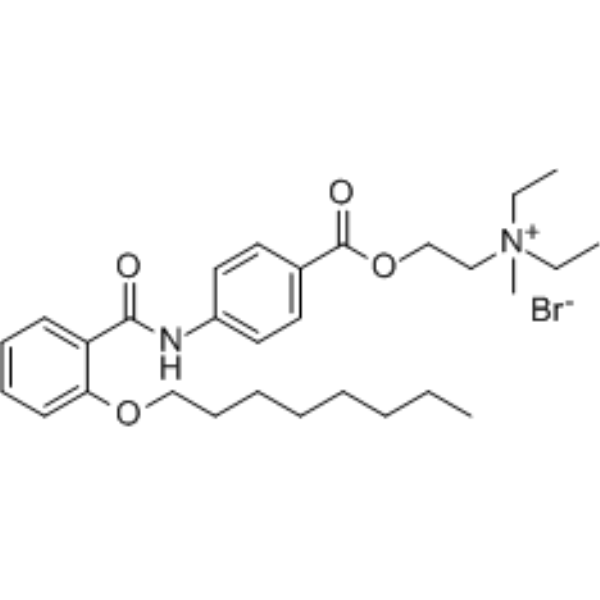
Otilonium (bromide) (Standard) is the analytical standard of Otilonium (bromide). This product is intended for research and analytical applications. Otilonium bromide (OB) is an orally active mAChR inhibitor and smooth muscle relaxant which can interfere with the mobilization of calcium in intestinal smooth muscle, OB can be used for research of irritable bowel syndrome .
|
-
-
- HY-W096993S
-
|
Tetrapropylammonium bromide-d28
|
Isotope-Labeled Compounds
|
Others
|
|
TPABr (Tetrapropylammonium bromide)-d28 (bromide) is the deuterium labeled TPABr bromide (Tetrapropylammonium bromide) .
|
-
-
- HY-W341713
-
|
|
Drug Intermediate
|
Others
|
|
Hepta-O-acetyl-α-D-lactosyl bromide (Compound 4) is a brominated lactoside. Hepta-O-acetyl-α-D-lactosyl bromide is a synthetic substrate for perfluoroalkyl-labeled lactose lipids .
|
-
-
- HY-B0423R
-
|
Eustigmin bromide (Standard); Neoserine bromide (Standard)
|
Reference Standards
Cholinesterase (ChE)
|
Metabolic Disease
Cancer
|
|
Neostigmine (Bromide) (Standard) is the analytical standard of Neostigmine (Bromide). This product is intended for research and analytical applications. Neostigmine Bromide is a cholinesterase inhibitor that acts on myasthenia gravis.
|
-
-
- HY-W700922
-
|
Triphenylethylphosphonium bromide-d5
|
Isotope-Labeled Compounds
|
Others
|
|
Ethyltriphenylphosphonium bromide-d5 (Triphenylethylphosphonium bromide-d5) is the deuterium labeled Ethyltriphenylphosphonium bromide (HY-Y0356).
|
-
-
- HY-A0280
-
|
Benzylhexamethylenetetramine bromide
|
MDM-2/p53
FAK
|
Cancer
|
|
Roslin 2 bromide (Benzylhexamethylenetetramine bromide) is a p53 reactivator with anticancer effects. Roslin 2 bromide binds FAK, disrupts the binding of FAK and p53 .
|
-
-
- HY-127147
-
|
AH 8165 bromide
|
Drug Intermediate
|
Others
|
|
Fazadinium bromide (AH 8165 bromide) is a neuromuscular blocking agent, that can prevent the muscle contraction. Fazadinium bromide can be used as a muscle relaxant during anesthesia .
|
-
-
- HY-W724370
-
|
TEA bromide-d20
|
Isotope-Labeled Compounds
Biochemical Assay Reagents
|
Others
|
|
Tetraethylammonium bromide-d20 (TEA bromide-d20) is the deuterium labeled Tetraethylammonium bromide (HY-W014408). Tetraethylammonium bromide is a quaternary ammonium salt consisting of a positively charged tetraethylammonium cation and a negatively charged bromide anion. This compound is commonly used as a phase transfer catalyst in organic chemical reactions, facilitating the transfer of reactants between immiscible phases. It can also be used as a reagent for the synthesis of various organic compounds, an electrolyte in electrochemical experiments, and a source of tetraethylammonium ions in biochemical and pharmacological research.
|
-
-
- HY-B0499AS1
-
-
-
- HY-B1719AR
-
|
|
mAChR
Reference Standards
|
Inflammation/Immunology
|
|
Oxyphenonium (bromide) (Standard) is the analytical standard of Oxyphenonium (bromide). This product is intended for research and analytical applications. Oxyphenonium bromide is an antiacetylcholine compound. Oxyphenonium bromide is an antagonist of mAChR. Oxyphenonium bromide protects against the bronchial obstructive effects .
|
-
- HY-W127651
-
|
Dioctyldimethylammonium bromide
|
Biochemical Assay Reagents
|
Others
|
|
Dimethyldioctylammonium bromide is an organic compound containing ammonium and bromide ions. It is commonly used in the production of detergents, emulsifiers and surfactants for various industrial applications. Dimethyldioctylammonium bromide is highly surface active and reduces the surface tension of aqueous solutions, so it can be used to clean and wet surfaces. In addition, it can also be used as an intermediate in the synthesis of other quaternary ammonium compounds.
|
-
- HY-131119S
-
|
Dimethyldistearylammonium-d74 bromide
|
Isotope-Labeled Compounds
|
Others
|
|
Dimethyldioctadecylammonium-d74 (bromide) is the deuterium labeled Dimethyldioctadecylammonium bromide .
|
-
- HY-B0282AS2
-
-
- HY-W099594S
-
|
Benzyldimethyldodecylammonium-d5 bromide
|
Isotope-Labeled Compounds
|
Others
|
|
Benzyldodecyldimethylammonium-d5 (bromide) is the deuterium labeled Benzyldodecyldimethylammonium bromide .
|
-
- HY-Y0306S
-
-
- HY-B1260S2
-
|
CTAB-d3; Cetyltrimethylammonium bromide-d3; Hexadecyltrimethylammonium-d3 bromide
|
Isotope-Labeled Compounds
|
Others
|
|
Cetrimonium-d3 (bromide) is the deuterium labeled Cetrimonium bromide .
|
-
- HY-W004392S
-
-
- HY-B0207AR
-
-
- HY-17440R
-
|
ORG 9426 bromide (Standard)
|
Reference Standards
nAChR
|
Neurological Disease
Cancer
|
|
Rocuronium (Bromide) (Standard) is the analytical standard of Rocuronium (Bromide). This product is intended for research and analytical applications. Rocuronium Bromide (ORG 9426 Bromide) is an aminosteroid non-depolarizing neuromuscular blocker or muscle relaxant used in modern anaesthesia, to facilitate endotracheal intubation and to provide skeletal musclerelaxation during surgery or mechanical ventilation.
|
-
- HY-23127
-
-
- HY-B0207AS1
-
-
- HY-D0838S1
-
|
|
Isotope-Labeled Compounds
|
Others
|
|
Dodecyltrimethylammonium-d34 (bromide) is the deuterium labeled Dodecyltrimethylammonium (bromide) . Dodecyltrimethylammonium bromide (DTAB) is a surfactant. Dodecyltrimethylammonium bromide interacts with DNA and changes the mechanical properties of DNA on binding and the specific binding parameters of the interaction .
|
-
- HY-D0838S
-
|
|
Isotope-Labeled Compounds
|
Others
|
|
Dodecyltrimethylammonium-d25 (bromide) is the deuterium labeled Dodecyltrimethylammonium (bromide) . Dodecyltrimethylammonium bromide (DTAB) is a surfactant. Dodecyltrimethylammonium bromide interacts with DNA and changes the mechanical properties of DNA on binding and the specific binding parameters of the interaction .
|
-
- HY-B1188R
-
|
|
Reference Standards
mAChR
|
Neurological Disease
|
|
Propantheline (bromide) (Standard) is the analytical standard of Propantheline (bromide). This product is intended for research and analytical applications. Propantheline bromide is an orally active mAChR antagonist. Propantheline bromide can be used in the research of smooth muscle dysfunction, excessive sweating, cramps or spasms of the stomach, intestines or bladder, and involuntary urination .
|
-
- HY-B0547AR
-
|
|
Reference Standards
mAChR
|
Neurological Disease
|
|
Homatropine (Bromide) (Standard) is the analytical standard of Homatropine (Bromide). This product is intended for research and analytical applications. Homatropine Bromide is an orally active muscarinic acetylcholine receptor antagonist and can be used as an anticholinergic agent .
|
-
- HY-B0241S1
-
|
Sch 1000-d7 bromide
|
Isotope-Labeled Compounds
mAChR
|
Neurological Disease
Inflammation/Immunology
|
|
Ipratropium-d7 (bromide)eis the deuterium labeled Ipratropium bromide. Ipratropium bromide (Sch 1000) is a muscarinic receptor antagonist, with binding IC50 values of 2.9 nM, 2 nM, and 1.7 nM for M1, M2, and M3 receptors, respectively. Ipratropium bromide can be used in the research for COPD (chronic obstructive pulmonary disease) and asthma .
|
-
- HY-130377
-
|
|
ADC Linker
PROTAC Linkers
|
Cancer
|
|
Propargyl-PEG8-bromide is a PEG-based PROTAC linker can be used in the synthesis of PROTACs. Propargyl-PEG8-bromide is a non-cleavable ADC linker used in the synthesis of antibody-drug conjugates (ADCs) . Propargyl-PEG8-bromide is a click chemistry reagent, it contains an Alkyne group and can undergo copper-catalyzed azide-alkyne cycloaddition (CuAAc) with molecules containing Azide groups.
|
-
- HY-130372
-
|
|
ADC Linker
PROTAC Linkers
|
Cancer
|
|
Propargyl-PEG9-bromide is a PEG-based PROTAC linker can be used in the synthesis of PROTACs. Propargyl-PEG9-bromide is a non-cleavable ADC linker used in the synthesis of antibody-drug conjugates (ADCs) . Propargyl-PEG9-bromide is a click chemistry reagent, it contains an Alkyne group and can undergo copper-catalyzed azide-alkyne cycloaddition (CuAAc) with molecules containing Azide groups.
|
-
- HY-111613S1
-
-
- HY-D0021S
-
|
EtBr-d5; Homidium-d5 bromide
|
Isotope-Labeled Compounds
DNA Stain
|
Others
|
|
EthD-d5 bromide is the deuterium labeled Ethidium bromide. EthD bromide is an intercalating agent commonly used as a fluorescent tag (nucleic acid stain) in molecular biology laboratories for techniques such as agarose gel electrophoresis.
|
-
- HY-130691S
-
-
- HY-B1689AS
-
-
- HY-W127656S2
-
-
- HY-D1289
-
-
- HY-W127656S1
-
-
- HY-108030
-
-
- HY-126474S
-
-
- HY-B1246R
-
|
|
Reference Standards
Bacterial
Proton Pump
|
Infection
|
|
Thonzonium (bromide) (Standard) is the analytical standard of Thonzonium (bromide). This product is intended for research and analytical applications. Thonzonium bromide is an antibacterial agent that is structurally similar to Farnesol (HY-Y0248A). Thonzonium bromide is also a monocationic surface-active agent, which inhibits RANKL-induced osteoclast formation and bone resorption in vitro and prevents LPS-induced bone loss in vivo. Thonzonium bromide inhibits proton transport in a dose-dependent manner (EC50=69 μM) .
|
-
- HY-172342
-
|
|
Fluorescent Dye
|
Cardiovascular Disease
|
|
MitoA (bromide) is a mitochondria-targeted H2S probe, which can be used to assess relative changes in mitochondrial levels of H2S in vivo. MitoA (bromide) can accumulate inside mitochondria within tissues in vivo due to tryphenylphosphonium (TPP) cation. MitoA (bromide) can be studied in research on myocardial ischemia .
|
-
- HY-B1332R
-
|
Sch 1000 bromide hydrate (Standard)
|
Reference Standards
mAChR
|
Neurological Disease
Inflammation/Immunology
|
|
Ipratropium (bromide hydrate) (Standard) is the analytical standard of Ipratropium (bromide hydrate). This product is intended for research and analytical applications. Ipratropium bromide (Sch 1000) hydrate is a muscarinic receptor antagonist, with IC50s of 2.9 nM, 2 nM, and 1.7 nM for M1, M2, and M3 receptors, respectively. Ipratropium bromide hydrate relaxes smooth muscle, can be used in the research for COPD (chronic obstructive pulmonary disease) and asthma .
|
-
- HY-112076R
-
|
Methylatropine bromide (Standard)
|
Reference Standards
mAChR
|
Neurological Disease
|
|
Atropine methyl (bromide) (Standard) is the analytical standard of Atropine methyl (bromide). This product is intended for research and analytical applications. Atropine methyl bromide, a muscarinic receptor (mAChR) antagonist, is a quaternary ammonium salt of atropine and a mydriatic for dilation of the pupil during ophthalmic examination. It is introduced for relieving pyloric spasm in infants for its highly polar nature. It penetrates less readily into the central nervous system than atropine .
|
-
- HY-135823
-
|
|
PROTAC Linkers
|
Cancer
|
|
Propargyl-PEG12-bromide is a PEG-based PROTAC linker that can be used in the synthesis of PROTACs . Propargyl-PEG12-bromide is a click chemistry reagent, it contains an Alkyne group and can undergo copper-catalyzed azide-alkyne cycloaddition (CuAAc) with molecules containing Azide groups.
|
-
- HY-B1509B
-
|
|
Parasite
|
Infection
Endocrinology
|
|
Trypaflavin bromide is an orally active acridine compound and antimalarial agent. Trypaflavin bromide invades germ cells. Trypaflavin bromide induces aberrations in unfertilized oocytes. Trypaflavin bromide increases the frequency of chromosomal aberrations. Trypaflavin bromide shows weak mutagenicity. Trypaflavin bromide is highly toxic to Leishmania, causing immediate lysis of the leptomonads .
|
-
- HY-W614527S
-
|
Tri-n-butylallylphosphonium bromide-d5
|
Isotope-Labeled Compounds
|
Others
|
|
Allyltributylphosphonium bromide-d5 (Tri-n-butylallylphosphonium Bromide-d5) is the deuterium labeled Allyltributylphosphonium bromide (HY-W614527).
|
-
- HY-W415746S
-
-
- HY-19685A
-
|
|
mAChR
|
Neurological Disease
|
|
Sintropium bromide is a mAChR antagonist with anticholinergic effects. Sintropium bromide can be used for pain and spasm research .
|
-
- HY-23127S
-
-
- HY-Y1100S1
-
|
|
Isotope-Labeled Compounds
Drug Intermediate
Biochemical Assay Reagents
|
Others
|
|
Cyclopropylmethyl bromide-d3 is the deuterium labeled Cyclopropylmethyl bromide (HY-Y1100). Cyclopropylmethyl bromide is an intermediate. Cyclopropylmethyl bromide can be used in the preparation of Firocoxib (HY-14670). Firocoxib (ML 1785713) is a potent, selective, orally active COX-2 inhibitor .
|
-
- HY-W743263
-
-
- HY-W142313
-
|
Dimethyldodecylethylammonium bromide, 98%(T)
|
Biochemical Assay Reagents
|
Others
|
|
Dodecylethyldimethylammonium bromide (EDDAB), 98%(T) (Dimethyldodecylethylammonium bromide, 98%(T)) is a cationic surfactant .
|
-
- HY-182480
-
|
|
Biochemical Assay Reagents
|
Others
|
|
Trantheline bromide is a quaternary ammonium compound. Trantheline bromide represents its intrinsic lipophilicity independent of Galvani potential difference and counter-ion effects. Trantheline bromide is used as a model compound to study the lipophilicity of quaternary ammonium ions via cyclic voltammetry .
|
-
- HY-131507
-
|
|
mAChR
|
Metabolic Disease
|
|
Emepronium bromide is an antispasmodic agent for the bladder and a muscarinic receptor ligand, with an IC50 of 236 nM. Emepronium bromide is applicable to research related to bladder diseases .
|
-
- HY-D0788R
-
|
|
Biochemical Assay Reagents
Reference Standards
|
Others
|
|
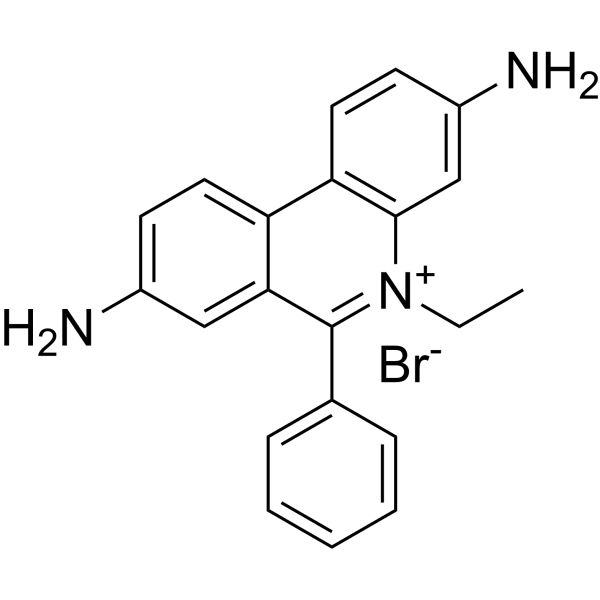
Dimidium bromide (Standard) is the analytical standard of Dimidium bromide. This product is intended for research and analytical applications. Dimidium bromide is a biochemical reagent that can be used as a biological material or organic compound for life science related research.
|
-
- HY-178411S
-
|
|
Isotope-Labeled Compounds
Biochemical Assay Reagents
|
Others
|
|
Dodecyltrimethylammonium-d9 bromide is the deuterium labeled Dodecyltrimethylammonium bromide (HY-D0838). Dodecyltrimethylammonium bromide (DTAB) is a surfactant. Dodecyltrimethylammonium bromide interacts with DNA and changes the mechanical properties of DNA on binding and the specific binding parameters of the interaction .
|
-
- HY-W099680S
-
-
- HY-106962
-
|
|
Drug Derivative
|
Others
|
|
Org-9453 bromide is a 17β-butyrate analogue of Vecuronium bromide (HY-B0118A), short-acting non-depolarizing neuromuscular blocking agent. Org-9453 bromide relaxes muscles .
|
-
- HY-Y0356S
-
-
- HY-W190871
-
-
- HY-W724290
-
|
AP 6G-d36 bromide; Actiron 43-65-d36 bromide; Aliquat 100-d36 bromide
|
Isotope-Labeled Compounds
Biochemical Assay Reagents
|
Others
|
|
Tetrabutylammonium-d36 bromide (AP 6G-d36 bromide) is the deuterium labeled Tetrabutylammonium bromide (HY-D0172). Tetrabutylammonium bromide is an organic ammonium compound, which is often used in catalytic reactions and separation and purification processes. It has a significant catalytic effect in some organic synthesis reactions, and can be used as a surfactant, stabilizer and antibacterial agent, etc. In addition, in some laboratory studies, this compound has also been used as an ion exchanger, solvent extractant, etc.
|
-
- HY-W699398
-
-
- HY-B0570
-
|
|
nAChR
|
Neurological Disease
|
Decamethonium Bromide is an acetylcholine receptor inhibitor and muscle relaxant. Decamethonium Bromide first induces depolarization of skeletal muscles, and then binds to postsynaptic acetylcholine receptors to induce persistent paralysis .\n
|
-
- HY-175755
-
|
|
Amyloid-β
|
Neurological Disease
|
|
Ac-BIM-acid bromide is a derivative of Acridine. Ac-BIM-acid bromide significantly inhibits amyloid fibrillation. Ac-BIM-acid bromide modulates the structure of N-terminal region of Saccharomyces cerevisiae Stm1 protein (Stm1_N 1-113) and the amyloid morphology of human Aβ42 protein, inhibiting theirs growth. Ac-BIM-acid bromide can be used for Alzheimer’s disease research .
|
-
- HY-120702
-
|
|
ADC Linker
PROTAC Linkers
|
Cancer
|
|
N-Boc-PEG5-bromide is a PEG/Alkyl/ether-based PROTAC linker can be used in the synthesis of PROTACs. N-Boc-PEG5-bromide is a cleavable ADC linker used in the synthesis of antibody-drug conjugates (ADCs) .
|
-
- HY-W006445
-
|
|
ADC Linker
PROTAC Linkers
|
Cancer
|
|
N-Boc-PEG2-bromide is a PEG/Alkyl/ether-based PROTAC linker can be used in the synthesis of PROTACs. N-Boc-PEG2-bromide is a cleavable ADC linker used in the synthesis of antibody-drug conjugates (ADCs) .
|
-
- HY-W046471
-
|
|
ADC Linker
PROTAC Linkers
|
Cancer
|
|
N-Boc-PEG4-bromide is a PEG/Alkyl/ether-based PROTAC linker can be used in the synthesis of PROTACs. N-Boc-PEG4-bromide is a cleavable ADC linker used in the synthesis of antibody-drug conjugates (ADCs) .
|
-
- HY-130503
-
|
|
ADC Linker
PROTAC Linkers
|
Cancer
|
|
N-Boc-PEG1-bromide is a PEG/Alkyl/ether-based PROTAC linker can be used in the synthesis of PROTACs. N-Boc-PEG1-bromide is a cleavable ADC linker used in the synthesis of antibody-drug conjugates (ADCs) .
|
-
- HY-Y0658S
-
-
- HY-122086
-
|
|
mAChR
|
Neurological Disease
|
Prifinium bromide is an anticholinergic drug with anticholinergic and antispasmodic activities, and it exhibits oral activity. Prifinium bromide competitively antagonizes cholinergic receptors and relieves symptoms of spasm or hypermotility in the digestive and urinary tracts, with its anticholinergic activity representing the core mechanism underlying the inhibition of bladder smooth muscle contraction. Prifinium bromide can be used in research related to spasms and diverticular disease .
|
-
- HY-W014408
-
|
TEA bromide
|
Biochemical Assay Reagents
|
Others
|
|
Tetraethylammonium bromide is a quaternary ammonium salt consisting of a positively charged tetraethylammonium cation and a negatively charged bromide anion. This compound is commonly used as a phase transfer catalyst in organic chemical reactions, facilitating the transfer of reactants between immiscible phases. It can also be used as a reagent for the synthesis of various organic compounds, an electrolyte in electrochemical experiments, and a source of tetraethylammonium ions in biochemical and pharmacological research.
|
-
- HY-W012450
-
|
Phenyltrimethylammonium bromide
|
Biochemical Assay Reagents
|
Others
|
|
Trimethylphenylammonium bromide is a quaternary ammonium salt consisting of a positively charged N,N,N-trimethylanilinium cation and a negatively charged bromide anion. This compound is commonly used as a phase transfer catalyst in organic chemical reactions, facilitating the transfer of reactants between immiscible phases. It can also be used as a reagent in the synthesis of various organic compounds and in some applications as a surfactant or corrosion inhibitor.
|
-
- HY-126474
-
|
|
Reactive Oxygen Species (ROS)
|
Inflammation/Immunology
|
|
MitoB bromide is an exomarker of mitochondrial hydrogen peroxide. MitoB bromide is a mitochondria-targeted ratiometric probe, and can be used to measure levels of one major ROS, hydrogen peroxide, within living animals .
|
-
- HY-W778069
-
|
|
Isotope-Labeled Compounds
|
Others
|
|
β-Cyclogeranyltriphenylphosphonium bromide-d5 is the deuterium labeled β-Cyclogeranyltriphenylphosphonium Bromide (HY-W741376).
|
-
- HY-B1467R
-
|
|
Reference Standards
Potassium Channel
Bacterial
Parasite
Phosphorylase
|
Infection
Inflammation/Immunology
|
|
Domiphen bromide (Standard) is the analytical standard of Domiphen bromide (HY-B1467). This product is intended for research and analytical applications. Domiphen bromide is a cationic active quaternary ammonium salt and also an inhibitor of HERG channels (IC50: 9 nM), aminopeptidase-like enzymes, Escherichia coli alkaline phosphatase, and α-chymotrypsin. Domiphen bromide has multiple activities such as antibacterial, antimalarial, and disinfectant properties, and it is also a synergist of Colistin (HY-113678). Domiphen bromide can be used as a chemical preservative and a cationic surfactant, and it can also be used in the research of bacterial infectious diseases such as pharyngitis, thrush, and oral ulcers.
|
-
- HY-140396
-
|
|
PROTAC Linkers
|
Cancer
|
|
Aminooxy-PEG3-bromide is a PEG-based PROTAC linker that can be used in the synthesis of PROTACs .
|
-
- HY-141373
-
|
|
PROTAC Linkers
|
Cancer
|
|
Bromo-PEG3-bromide is a PEG-based PROTAC linker that can be used in the synthesis of PROTACs .
|
-
- HY-W040527
-
|
|
PROTAC Linkers
|
Cancer
|
|
Bromo-PEG4-bromide is a PEG-based PROTAC linker can be used in the synthesis of PROTACs .
|
-
- HY-W190805
-
-
- HY-140989
-
|
|
PROTAC Linkers
|
Cancer
|
|
Mal-PEG1-bromide is a PEG-based PROTAC linker that can be used in the synthesis of PROTACs .
|
-
- HY-130589
-
|
|
PROTAC Linkers
|
Cancer
|
|
Bromo-PEG2-bromide is a PEG-based PROTAC linker can be used in the synthesis of PROTACs .
|
-
- HY-135049
-
|
|
PROTAC Linkers
|
Cancer
|
|
Bromo-PEG6-bromide is a PEG-based PROTAC linker can be used in the synthesis of PROTACs .
|
-
- HY-132009
-
|
|
PROTAC Linkers
|
Cancer
|
|
Benzyl-PEG7-bromide is a PEG-based PROTAC linker that can be used in the synthesis of PROTACs .
|
-
- HY-140396A
-
|
|
PROTAC Linkers
|
Cancer
|
|
Aminooxy-PEG3-bromide hydrochloride is a PEG-based PROTAC linker that can be used in the synthesis of PROTACs .
|
-
- HY-132028
-
|
|
PROTAC Linkers
|
Cancer
|
|
Benzyl-PEG6-bromide is a PEG-based PROTAC linker that can be used in the synthesis of PROTACs .
|
-
- HY-W190968
-
|
|
PROTAC Linkers
|
Cancer
|
|
Cbz-PEG2-bromide is a PEG-based PROTAC linker that can be used in the synthesis of PROTACs .
|
-
- HY-W094307
-
|
|
PROTAC Linkers
|
Cancer
|
|
Methyl-PEG3-bromide is a PEG-based PROTAC linker that can be used in the synthesis of PROTACs .
|
-
- HY-141374
-
|
|
PROTAC Linkers
|
Cancer
|
|
Bromo-PEG5-bromide is a PEG-based PROTAC linker that can be used in the synthesis of PROTACs .
|
-
- HY-129084
-
|
|
Biochemical Assay Reagents
|
Others
|
|
Propargylcholine bromide is a choline analogue containing terminal propargyl that can be incorporated into all classes of Choline-containing phospholipids such as phosphatidylcholine and sphingomyelin, labeling Choline-containing phospholipids. Propargylcholine bromide-labeled phospholipid molecules can be visualized in cells with high sensitivity and spatial resolution. Propargylcholine bromide can be used as a molecular tool to study the biochemical and metabolic processes of Choline-containing phospholipids in cells . Propargylcholine (bromide) is a click chemistry reagent, it contains an Alkyne group and can undergo copper-catalyzed azide-alkyne cycloaddition (CuAAc) with molecules containing Azide groups.
|
-
- HY-101350R
-
|
|
Sodium Channel
Reference Standards
|
Neurological Disease
|
|
QX-314 (bromide) (Standard) is the analytical standard of QX-314 (bromide) (HY-101350). This product is intended for research and analytical applications. QX-314 bromide is a membrane-impermeable permanently charged sodium channel blocker .
|
-
- HY-W705757
-
-
- HY-Z1454
-
-
- HY-B1246
-
|
|
Bacterial
Proton Pump
|
Infection
|
|
Thonzonium bromide is an antibacterial agent that is structurally similar to Farnesol (HY-Y0248A). Thonzonium bromide is also a monocationic surface-active agent, which inhibits RANKL-induced osteoclast formation and bone resorption in vitro and prevents LPS-induced bone loss in vivo. Thonzonium bromide inhibits proton transport in a dose-dependent manner (EC50=69 μM) .
|
-
- HY-106564A
-
|
Ba 598Br; Flubron
|
mAChR
|
Inflammation/Immunology
|
|
Flutropium bromide (Ba 598Br) is a organic bromide salt of flutropium. Flutropium bromide shows an anticholinergic effect. Flutropium bromide effectively suppresses spasms and it can be used for the research of asthma and chronic obstructive pulmonary disease .
|
-
- HY-B0743A
-
|
|
nAChR
|
Neurological Disease
|
|
Pipecuronium bromide is a potent long-acting nondepolarizing steroidal neuromuscular blocking agent (NMBA), and a bisquaternary ammonium compound. Pipecuronium bromide is a powerful competitive nAChR antagonist with a Kd of 3.06 μM .
|
-
- HY-B2070
-
-
- HY-17465S
-
-
- HY-111613R
-
|
|
Reference Standards
Calcium Channel
|
Cancer
|
|
Pinaverium bromide (Standard) is the analytical standard of Pinaverium bromide. This product is intended for research and analytical applications. Pinaverium bromide is an L-type calcium channel blocker with selectivity for the gastrointestinal tract, effectively relieves pain, diarrhea and intestinal discomfort, provides good therapeutic efficacies without significant adverse effects on Irritable bowel syndrome (IBS) patients .
|
-
- HY-W752885
-
|
|
Isotope-Labeled Compounds
Biochemical Assay Reagents
|
Others
|
|
Decyltrimethylammonium-d30 bromide is the deuterium labeled Decyltrimethylammonium bromide (HY-W008630). N,N,N-Trimethyldecan-1-aminium bromide is a biochemical reagent that can be used as a biological material or organic compound for life science related research.
|
-
- HY-135754
-
|
HSR-902
|
mAChR
|
Neurological Disease
Inflammation/Immunology
|
|
Tiquizium bromide is an orally active, atropine-type, nonselective muscarinic antagonist and novel spasmolytic agent. Tiquizium bromide inhibits the developments of gastric lesions and duodenal lesions. Tiquizium bromide induces the mydoriasis and inhibits the Pilocarpine (HY-B0726A)-induced salivation .
|
-
- HY-W123029
-
-
- HY-W004415
-
-
- HY-Y0306
-
|
|
Environmental Pollutants
Biochemical Assay Reagents
|
Others
|
|
Ammonium bromide is an inorganic electrolyte additive used in halogen-free magnesium-sulfur battery electrolytes, which serves dual functions as a regulator and a resistance-reducing agent. Ammonium bromide effectively optimizes the interfacial reaction kinetics of batteries by guiding the uniform deposition of magnesium, reducing the activation energy for magnesium ion transport, and decreasing the stripping/deposition overpotential. Ammonium bromide significantly enhances the cycle life and initial discharge capacity of magnesium-sulfur batteries .
|
-
- HY-W018574
-
|
|
Biochemical Assay Reagents
|
Others
|
|
Tetraoctylammonium bromide (TOAB) is a quaternary ammonium salt consisting of a positively charged tetraoctylammonium cation and a negatively charged bromide anion. This compound is commonly used as a phase transfer catalyst in organic chemical reactions, facilitating the transfer of reactants between immiscible phases. It is also used as a surfactant and dispersant in various industrial applications, for example in the production of coatings, adhesives and polymers. Additionally, Tetraoctylammonium bromide has been investigated for potential applications in energy storage devices and as an antimicrobial agent.
|
-
- HY-W127654
-
|
|
Biochemical Assay Reagents
|
Others
|
|
(Ferrocenylmethyl)trimethylammonium bromide is an organic compound containing ammonium and bromide ions. It is commonly used as a phase transfer catalyst in organic synthesis, especially in the production of pharmaceuticals and agrochemicals. (Ferrocenylmethyl)trimethylammonium Bromide has a strong base that facilitates the transfer of reactants between immiscible solvents for more efficient chemical reactions. In addition, it can also be used as an intermediate in the synthesis of other organic compounds.
|
-
- HY-126222
-
|
|
Apoptosis
Mitochondrial Metabolism
|
Cancer
|
|
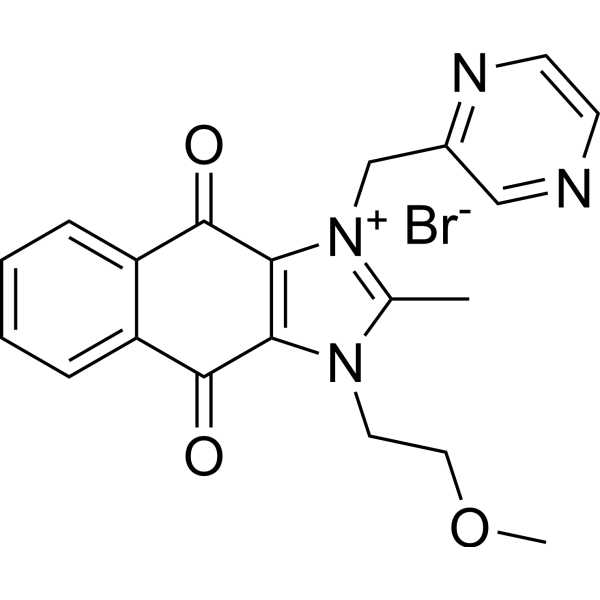
MitoTam bromide, hydrobromide, a Tamoxifen derivative , is an electron transport chain (ETC) inhibitor. MitoTam bromide, hydrobromide reduces mitochondrial membrane potential in senescent cells and affects mitochondrial morphology . MitoTam bromide, hydrobromide is an effective anticancer agent, suppresses respiratory complexes (CI-respiration) and disrupts respiratory supercomplexes (SCs) formation in breast cancer cells .
|
-
- HY-W783443
-
|
|
Biochemical Assay Reagents
|
Others
|
|
Azidotris(diethylamino)phosphonium bromide is a self-catalyzing diazo transfer agent. Azidotris(diethylamino)phosphonium bromide can be used in the synthesis of diazo compounds .
|
-
- HY-D1246
-
|
|
DNA Stain
|
Others
|
|
Ethidium monoazide bromide is a DNA intercalating fluorescent dye that enters bacteria with damaged membranes. Ethidium monoazide bromide can be covalently linked to DNA by photoactivation. Ethidium monoazide bromide stains only dead cells . Ethidium monoazide (bromide) is a click chemistry reagent, it contains an Azide group and can undergo copper-catalyzed azide-alkyne cycloaddition reaction (CuAAc) with molecules containing Alkyne groups. It can also undergo strain-promoted alkyne-azide cycloaddition (SPAAC) reactions with molecules containing DBCO or BCN groups.
|
-
- HY-119554
-
|
PFDB
|
Biochemical Assay Reagents
|
Others
|
|
Perfluorodecyl bromide (PFDB), a Perflubron (PFOB, HY-B1724) analogue, is a high molecular weight lipophilic fluorocarbon. Perfluorodecyl bromide can be used to prepare phospholipid-stabilized fluorocarbon emulsions .
|
-
- HY-168988
-
-
- HY-105749
-
-
- HY-B1626AR
-
|
BC-48 (Standard)
|
Reference Standards
Cholinesterase (ChE)
|
Neurological Disease
|
|
Demecarium Bromide (Standard) is the analytical standard of Demecarium Bromide. This product is intended for research and analytical applications. Demecarium Bromide (BC-48) is a potent cholinesterase inhibitor, with an apparent affinity (Kiapp) of 0.15 μM . Demecarium Bromide (BC-48) is used as a glaucoma agent .
|
-
- HY-122426
-
|
n-Undecyl bromide
|
Biochemical Assay Reagents
|
Others
|
|
1-Bromoundecane (n-Undecyl bromide) is a chemical reagent featuring a bromide along a saturated C11 chain. Bromide is easily displaced by nucleophiles such as alcohols or amines. Compounds such as this may be used as intermediates in building lipids for use in lipid nanoparticles.
|
-
- HY-113692
-
|
|
mAChR
|
Others
|
|
AZD-9164 (bromide) is a long-acting muscarinic M3 antagonist. AZD-9164 (bromide) is promising for research of airways diseases, such as chronic obstructive pulmonary disease (COPD) or asthma .
|
-
- HY-W011038
-
-
- HY-141197
-
|
|
PROTAC Linkers
|
Cancer
|
|
N-Boc-PEG23-bromide is a PEG-based PROTAC linker that can be used in the synthesis of PROTACs .
|
-
- HY-140435
-
|
|
PROTAC Linkers
|
Cancer
|
|
Boc-Aminooxy-PEG3-bromide is a PEG-based PROTAC linker that can be used in the synthesis of PROTACs .
|
-
- HY-140396C
-
|
|
PROTAC Linkers
|
Cancer
|
|
Aminooxy-PEG3-bromide hydrobromide is a PEG-based PROTAC linker that can be used in the synthesis of PROTACs .
|
-
- HY-D0021
-
|
EtBr; Homidium bromide
|
DNA Stain
|
Others
|
|
EthD bromide is an intercalating agent commonly used as a fluorescent tag (nucleic acid stain) in molecular biology laboratories for techniques such as agarose gel electrophoresis.
|
-
- HY-Y0234S
-
|
3-Butenyl bromide-d7; 4-Bromo-1-butene-d7; 4-Bromobut-1-ene-d7
|
Isotope-Labeled Compounds
|
Others
|
|
Homoallyl bromide-d7 (3-Butenyl bromide-d7) is the deuterium labeled Homoallyl bromide,98% (stabilized with MEHQ).
|
-
- HY-164183
-
-
- HY-W011038S
-
|
HDPB-d5
|
Isotope-Labeled Compounds
Biochemical Assay Reagents
|
Others
|
|
Hexadecylpyridinium bromide-d5 (HDPB-d5) is the deuterated form of Hexadecylpyridinium bromide. Hexadecylpyridinium bromide (HDPB) is a cationic surfactant. Hexadecylpyridinium bromide can act as a sensitizer and solubilizer, and is a key component in spectrophotometric determination of metal ion reaction systems. Hexadecylpyridinium bromide can be used as a new passivating ligand for the synthesis and stabilization of cesium lead bromide calcium phosphate nanocrystals.
|
-
- HY-10194R
-
|
YM-155 (Standard)
|
Reference Standards
Survivin
Autophagy
|
Cancer
|
|
Sepantronium bromide (Standard) is the analytical standard of Sepantronium bromide (HY-10194). This product is intended for research and analytical applications. Sepantronium bromide (YM-155) is a survivin inhibitor with an IC50 of 0.54 nM .
|
-
- HY-D1673
-
|
|
Fluorescent Dye
|
Cancer
|
|
Tetrabromorhodamine 123 (TBR) bromide is a photosensitizer. Tetrabromorhodamine 123 bromide can be used for the research of photo dynamic therapy (PDT) and cancer .
|
-
- HY-W011052
-
|
|
Biochemical Assay Reagents
|
Others
|
|
Tetrapentylammonium bromide is a quaternary ammonium salt consisting of a positively charged tetrapentylammonium cation and a negatively charged bromide anion. This compound is commonly used as a phase transfer catalyst in organic synthesis reactions to facilitate the transfer of reactants between immiscible phases. It is also used in the production of surfactants, detergents and the synthesis of pharmaceuticals.
|
-
- HY-B1467
-
|
|
Potassium Channel
Bacterial
Parasite
Phosphatase
|
Infection
Inflammation/Immunology
|
|
Domiphen bromide is a cationic active quaternary ammonium salt and also an inhibitor of HERG channels (IC50: 9 nM), aminopeptidase-like enzymes, Escherichia coli alkaline phosphatase, and α-chymotrypsin. Domiphen bromide has multiple activities such as antibacterial, antimalarial, and disinfectant properties, and it is also a synergist of Colistin (HY-113678). Domiphen bromide can be used as a chemical preservative and a cationic surfactant, and it can also be used in the research of bacterial infectious diseases such as pharyngitis, thrush, and oral ulcers .
|
-
- HY-B1132R
-
|
Ro 2-3773 (Standard)
|
Reference Standards
mAChR
|
Neurological Disease
|
|
Clidinium (bromide) (Standard) is the analytical standard of Clidinium (bromide). This product is intended for research and analytical applications. Clidinium bromide is a quaternary amine antimuscarinic agent. Clidinium bromide may help symptoms of cramping and abdominal/stomach pain by decreasing stomach acid, and slowing the intestines in vivo .
|
-
- HY-U00067
-
-
- HY-W654210
-
|
Glycopyrronium-d3 bromide
|
Isotope-Labeled Compounds
mAChR
|
Cancer
|
|
Glycopyrrolate-d3 (bromide) is deuterium labeled Glycopyrrolate. Glycopyrrolate (Glycopyrronium bromide), a quaternary ammonium derivative, is a muscarinic receptor antagonist. Glycopyrrolate has bronchoprotective effect and produces a beneficial effect on blood pressure. Glycopyrrolate can be used for the research of bronchial diseases .
|
-
- HY-B0953A
-
-
- HY-U00080
-
-
- HY-156981
-
-
- HY-W008678S
-
-
- HY-B1332
-
|
Sch 1000 bromide hydrate
|
mAChR
|
Neurological Disease
Inflammation/Immunology
|
|
Ipratropium bromide (Sch 1000) hydrate is a muscarinic receptor antagonist, with IC50s of 2.9 nM, 2 nM, and 1.7 nM for M1, M2, and M3 receptors, respectively. Ipratropium bromide hydrate relaxes smooth muscle, can be used in the research for COPD (chronic obstructive pulmonary disease) and asthma .
|
-
- HY-W008630S
-
-
- HY-B1626A
-
|
BC-48
|
Cholinesterase (ChE)
|
Neurological Disease
|
|
Demecarium Bromide (BC-48) is a potent cholinesterase inhibitor, with an apparent affinity (Kiapp) of 0.15 μM . Demecarium Bromide (BC-48) is used as a glaucoma agent .
|
-
- HY-12100R
-
|
GSK573719A (Standard)
|
Reference Standards
mAChR
|
Inflammation/Immunology
Cancer
|
|
Umeclidinium (bromide) (Standard) is the analytical standard of Umeclidinium (bromide). This product is intended for research and analytical applications. Umeclidinium bromide is a novel mAChR antagonist. The affinity (Ki) of Umeclidinium bromide for the cloned human M1-M5 mAChRs ranges from 0.05 to 0.16 nM.
|
-
- HY-Y1033S
-
|
Phosphonium, methyltriphenyl-, bromide (8CI,9CI)-d3; M 0779-d3; MTPPB-d3; Phosphonium,methyltriphenyl-,bromide-d3; Methyltriphenylphosphonium bromide-d3
|
Isotope-Labeled Compounds
|
Others
|
|
Methyl-triphenylphosphonium-d3 (bromide) is the deuterium labeled Methyl-triphenylphosphonium bromide .
|
-
- HY-135962
-
|
|
ADC Linker
|
Cancer
|
|
Boc-Aminooxy-PEG2-bromide is a cleavable 2 unit PEG ADC linker used in the synthesis of antibody-drug conjugates (ADCs) .
|
-
- HY-W127655
-
|
Dodecyl(ferrocenylmethyl)dimethylammonium bromide
|
Biochemical Assay Reagents
|
Others
|
|
(Ferrocenylmethyl)dodecyldimethylammonium Bromide is a biochemical reagent that can be used as a biological material or organic compound for life science related research.
|
-
- HY-W715341
-
|
|
Cholinesterase (ChE)
|
Others
|
|
RO-1-5237 is a metabolite of Pyridostigmine Bromide, which is a cholinergic and can be used for myasthenia gravis research .
|
-
- HY-17360R
-
|
BA679 BR (Standard)
|
Reference Standards
mAChR
|
Neurological Disease
|
|
Tiotropium (Bromide) (Standard) is the analytical standard of Tiotropium (Bromide). This product is intended for research and analytical applications.
Tiotropium bromide (BA-679 BR) is a long-acting anticholinergic bronchodilator. Tiotropium bromide blocks the action of acetylcholine at muscarinic M1, M2, and M3 receptors, prevents bronchoconstriction, and dilates bronchial airways. Tiotropium bromide is applicable to research related to chronic obstructive pulmonary disease and asthma .
|
-
- HY-W749742
-
|
Triphenyl(propan-2-yl)phosphonium bromide-13C3
|
Isotope-Labeled Compounds
|
Others
|
|
Isopropyltriphenylphosphonium bromide- 13C3 (Triphenyl(propan-2-yl)phosphonium bromide- 13C3) is the 13C-labeled Isopropyltriphenylphosphonium bromide (HY-W013757).
|
-
- HY-B1132
-
|
Ro 2-3773
|
mAChR
|
Neurological Disease
|
|
Clidinium bromide is a quaternary amine antimuscarinic agent. Clidinium bromide may help symptoms of cramping and abdominal/stomach pain by decreasing stomach acid, and slowing the intestines in vivo .
|
-
- HY-182537
-
|
|
Drug Derivative
|
Neurological Disease
|
|
Org 9616 bromide is a non-depolarizing neuromuscular blocker with a structure similar to Pancuroniam. Org 9616 bromide induces rapid-onset, short-duration neuromuscular blockade .
|
-
- HY-B0547A
-
|
|
mAChR
|
Neurological Disease
|
|
Homatropine Bromide is an orally active muscarinic acetylcholine receptor antagonist and can be used as an anticholinergic agent .
|
-
- HY-140436
-
|
|
PROTAC Linkers
|
Cancer
|
|
t-Boc-Aminooxy-PEG7-bromide is a PEG-based PROTAC linker that can be used in the synthesis of PROTACs .
|
-
- HY-W010882S
-
-
- HY-W753108
-
|
Glycopyrrolate impurity 2
|
Drug Intermediate
|
Others
|
|
Dehydro glycopyrrolate bromide (Glycopyrrolate impurity 2) is an impurity of Dehydro glycopyrrolate bromide.
|
-
- HY-B0460
-
|
BA-679 BR monohydrate
|
mAChR
|
Inflammation/Immunology
|
|
Tiotropium bromide monohydrate (BA-679 BR monohydrate) is a long-acting anticholinergic bronchodilator. Tiotropium bromide monohydrate blocks the action of acetylcholine at muscarinic M1, M2, and M3 receptors, prevents bronchoconstriction, and dilates bronchial airways. Tiotropium bromide monohydrate is applicable to research related to chronic obstructive pulmonary disease and asthma .
|
-
- HY-17360
-
|
BA679 BR
|
mAChR
|
Inflammation/Immunology
|
|
Tiotropium bromide (BA-679 BR) is a long-acting anticholinergic bronchodilator. Tiotropium bromide blocks the action of acetylcholine at muscarinic M1, M2, and M3 receptors, prevents bronchoconstriction, and dilates bronchial airways. Tiotropium bromide is applicable to research related to chronic obstructive pulmonary disease and asthma .
|
-
- HY-N16300
-
|
|
Fluorescent Dye
|
Others
|
|
Mito-laurdan bromide, a derivative of Laurdan (HY-D0080), is a fluorescent probe. Mito-laurdan bromide contains a cationic triphenylphosphonium moiety, which accumulates at the inner mitochondrial membrane due to its negative membrane potential, connected via a 3 carbon linker .
|
-
- HY-W010900
-
|
|
Biochemical Assay Reagents
|
Others
|
|
Tetrahexylammonium bromide is a compound that belongs to the class of quaternary ammonium compounds. It is a salt with cationic properties and thus useful in various industrial and biomedical applications. Tetrahexylammonium bromide is commonly used as a phase transfer catalyst to facilitate the movement of reactants between immiscible phases in various organic synthesis reactions. It is also used as a surfactant and emulsifier in the formulation of detergents, personal care products and pharmaceuticals.
|
-
- HY-D0788
-
|
|
Biochemical Assay Reagents
|
Others
|
|
Dimidium bromide is a biochemical reagent that can be used as a biological material or organic compound for life science related research.
|
-
- HY-W127656
-
|
|
Biochemical Assay Reagents
|
Others
|
|
Choline Bromide is a biochemical reagent that can be used as a biological material or organic compound for life science related research.
|
-
- HY-W127657
-
|
|
Biochemical Assay Reagents
|
Others
|
|
Benzoylcholine Bromide is a biochemical reagent that can be used as a biological material or organic compound for life science related research.
|
-
- HY-W127652
-
|
|
Biochemical Assay Reagents
|
Others
|
|
Didecyldimethylammonium bromide is a biochemical reagent that can be used as a biological material or organic compound for life science related research.
|
-
- HY-W127648
-
|
|
Biochemical Assay Reagents
|
Others
|
|
Heptadecyltrimethylammonium Bromide is a biochemical reagent that can be used as a biological material or organic compound for life science related research.
|
-
- HY-U00105
-
|
|
mAChR
|
Inflammation/Immunology
|
|
Oxitropium bromide is an mAChR antagonist used as an anticholinergic bronchodilator agent for the treatment of asthma and chronic obstructive pulmonary disease.
|
-
- HY-W127647
-
|
|
Biochemical Assay Reagents
|
Others
|
|
Nonyltrimethylammonium Bromide is a biochemical reagent that can be used as a biological material or organic compound for life science related research.
|
-
- HY-135414A
-
|
|
Fluorescent Dye
|
Others
|
|
Cyanine5 NHS ester bromide is a active compound, can be used to label amino groups in peptides, proteins, and oligonucleotides. Cyanine5 NHS ester bromide is a cyanine dye, fluorescence-labeling neurotensin (8-13) via arginine residues .
|
-
- HY-144221S
-
-
- HY-W011122
-
|
|
Biochemical Assay Reagents
|
Others
|
|
Tributylbenzylammonium bromide is a quaternary ammonium salt composed of a positively charged N-benzyl-N,N-dibutylbutan-1-amine cation and a negatively charged bromide anion composition. The compound is commonly used as a surfactant and emulsifier in a variety of applications including detergents, fabric softeners and personal care products. It also has antimicrobial properties and is used as a disinfectant or antiseptic in some products.
|
-
- HY-12100
-
|
GSK573719A
|
mAChR
|
Inflammation/Immunology
Cancer
|
|
Umeclidinium bromide is a novel mAChR antagonist. The affinity (Ki) of Umeclidinium bromide for the cloned human M1-M5 mAChRs ranges from 0.05 to 0.16 nM.
|
-
- HY-155166
-
-
- HY-101350
-
-
- HY-W543731
-
|
|
MOFs
|
Others
|
|
Benzo[b]quinolizinium,bromide is a metal-organic framework (MOF).
|
-
- HY-W013076
-
|
tetra(decyl)ammonium bromide
|
Biochemical Assay Reagents
|
Others
|
|
Tetrakis(decyl)ammonium bromide is a compound belonging to the class of quaternary ammonium compounds. It is a salt with cationic properties and is used in various industrial and biomedical applications. Tetrakis(decyl)ammonium bromide is commonly used as an emulsifier, solubilizer and antimicrobial agent in personal care products, cleansers and pharmaceutical formulations. It is also used as a phase transfer catalyst in organic synthesis reactions, facilitating the movement of reactants between immiscible phases.
|
-
- HY-D2422C
-
|
|
Fluorescent Dye
Microtubule/Tubulin
Autophagy
|
Cancer
|
|
Cy5-Paclitaxel bromide is the bromide of Cy5-Paclitaxel (HY-D2422B). Cy5-Paclitaxel is a Cyanine5 carboxylic acid bromide (HY-D1319) labeled Paclitaxel (HY-B0015) conjugate. Cyanine5 carboxylic acid bromide is a fluorescent dye containing a non-activated carboxylic acid (Ex=646 nm, Em=662 nm) that can be used for molecular labeling and microscopy imaging. Paclitaxel stabilizes tubulin polymerization. Paclitaxel can cause both mitotic arrest and apoptotic cell death. Paclitaxel also induces autophagy .
|
-
- HY-W099682
-
|
n-Hexyl trimethylammonium bromide
|
Biochemical Assay Reagents
|
Others
|
|
Hexyltrimethylammonium bromide is a cationic surfactant, quaternary ammonium compound, detergent, emulsifier, phase transfer catalyst, antibacterial agent, electrochemical device, corrosion inhibitor, micelle former, industrial chemical.
|
-
- HY-109013R
-
|
BBI 4000 (Standard)
|
Reference Standards
mAChR
|
Neurological Disease
|
|
Sofpironium bromide (Standard) is the analytical standard of Sofpironium (bromide) (HY-109013). This product is intended for research and analytical applications. Sofpironium bromide (BBI 4000) is an anticholinergic agent used in the study of primary axillary hyperhidrosis (PAH). Sofpironium bromide reduces sweating by inhibiting M3 muscarinic receptors in eccrine glands at the application site. Sofpironium bromide also has a high afnity for the M1, M2, M4 and M5 subtypes .
|
-
- HY-W758392
-
-
- HY-109013
-
|
BBI 4000
|
mAChR
|
Neurological Disease
|
|
Sofpironium bromide (BBI 4000) is an anticholinergic agent used in the study of primary axillary hyperhidrosis (PAH). Sofpironium bromide reduces sweating by inhibiting M3 muscarinic receptors in eccrine glands at the application site. Sofpironium bromide also has a high afnity for the M1, M2, M4 and M5 subtypes .
|
-
- HY-W011972
-
|
|
Biochemical Assay Reagents
|
Others
|
|
2-Bromo-N,N,N-trimethylethanaminium bromide is a quaternary ammonium salt consisting of a positively charged 2-bromo-N,N,N-trimethylethylamine cation and a negatively charged bromide anion. This compound is commonly used as a phase transfer catalyst in organic chemical reactions, facilitating the transfer of reactants between immiscible phases. It can also be used as a halogenating agent, for example in the bromination of olefins.
|
-
- HY-B0207A
-
-
- HY-B1132S
-
-
- HY-W096993S1
-
|
Tetrapropylammonium bromide-15N
|
Isotope-Labeled Compounds
|
Others
|
|
TPABr (Tetrapropylammonium bromide)- 15N is the 15N labeled TPABr (Tetrapropylammonium bromide) .
|
-
- HY-U00184
-
-
- HY-17465
-
|
Glycopyrronium bromide; Glycopyrrolate bromide
|
mAChR
|
Cardiovascular Disease
Neurological Disease
Cancer
|
|
Glycopyrrolate (Glycopyrronium bromide), a quaternary ammonium derivative, is a muscarinic receptor antagonist. Glycopyrrolate has bronchoprotective effect and produces a beneficial effect on blood pressure. Glycopyrrolate can be used for the research of bronchial diseases .
|
-
- HY-W588725A
-
|
Azido-choline bromide
|
Biochemical Assay Reagents
|
Others
|
|
N3-Cho (Azido-choline) bromide is a click chemistry reagent containing an azide group that can be used in the synthesis of cell membrane structures .
|
-
- HY-17632
-
|
TH-4000
|
EGFR
|
Cancer
|
|
Tarloxotinib bromide (TH-4000) is an irreversible EGFR/HER2 inhibitor.
|
-
- HY-10194
-
-
- HY-119810B
-
-
- HY-W335735
-
|
Benzyldimethyltetradecylammonium bromide
|
Isotope-Labeled Compounds
|
Others
|
|
N,N-dimethyl-N-((phenyl-dd5)methyl)tetradecan-1-aminium bromide is the deuterium labeled N,N-dimethyl-N-((phenyl)methyl)tetradecan-1-aminium bromide .
|
-
- HY-W128417S1
-
-
- HY-B0937S
-
|
|
Parasite
|
Infection
|
|
Amprolium-d7 (bromide hydrobromide) is a deuterium-labeled of Amprolium (HY-B0937). Amprolium-d7 (bromide hydrobromide) is a coccidiostat used in poultry, is a thiamine analog, and blocks the thiamine transporter of Eimeria species .
|
-
- HY-W112722
-
|
3-Ethyl-1-vinyl-1H-imidazol-3-ium bromide
|
MOFs
|
Others
|
|
1-Ethyl-3-vinylimidazolium bromide (3-Ethyl-1-vinyl-1H-imidazol-3-ium bromide) is a metal-organic framework (MOF).
|
-
- HY-W090078
-
|
1-Benzyl-3-methylimidazolium bromide
|
MOFs
|
Others
|
|
3-Benzyl-1-methyl-1H-imidazol-3-ium bromide (1-Benzyl-3-methylimidazolium bromide) is a metal-organic framework (MOF).
|
-
- HY-12100S
-
|
GSK573719A-d5
|
Isotope-Labeled Compounds
mAChR
|
Inflammation/Immunology
|
|
Umeclidinium-d5 (bromide) is the deuterium labeled Umeclidinium bromide. Umeclidinium bromide is a novel mAChR antagonist. The affinity (Ki) of Umeclidinium bromide for the cloned human M1-M5 mAChRs ranges from 0.05 to 0.16 nM.
|
-
- HY-12100S1
-
|
GSK573719A-d10
|
mAChR
|
Inflammation/Immunology
|
|
Umeclidinium-d10 (bromide) is the deuterium labeled Umeclidinium bromide. Umeclidinium bromide is a novel mAChR antagonist. The affinity (Ki) of Umeclidinium bromide for the cloned human M1-M5 mAChRs ranges from 0.05 to 0.16 nM.
|
-
- HY-D1514A
-
-
- HY-W019627
-
|
|
Biochemical Assay Reagents
|
Others
|
|
3-Phenoxypropyl bromide is a biochemical reagent that can be used as a biological material or organic compound for life science related research.
|
-
- HY-112125A
-
-
- HY-166887S
-
|
|
Isotope-Labeled Compounds
|
Others
|
|
Tiotropium bromide impurity-d3 is deuterium labeled (2S,3aR,5S,6S,6aS)-6-Hydroxy-4,4-dimethylhexahydro-2H-2,5-methanofuro[3,2-b]pyrrol-4-ium bromide (Tiotropium Bromide Impurity) .
|
-
- HY-W099680S1
-
|
hexyl(triphenyl)phosphonium-d5
|
Isotope-Labeled Compounds
|
Others
|
|
Hexyltriphenylphosphonium-dd5 bromide is the deuterium labeled Hexyltriphenylphosphonium bromide .
|
-
- HY-W008630
-
|
|
Biochemical Assay Reagents
|
Others
|
|
N,N,N-Trimethyldecan-1-aminium bromide is a biochemical reagent that can be used as a biological material or organic compound for life science related research.
|
-
- HY-U00106
-
-
- HY-B0207AS
-
|
|
Cholinesterase (ChE)
|
Others
|
|
Pyridostigmine-d6 (bromide) is the deuterium labeled Pyridostigmine, which is a parasympathomimetic and a reversible cholinesterase inhibitor.
|
-
- HY-167991S
-
-
- HY-17360S
-
|
BA679 BR-d3
|
Isotope-Labeled Compounds
mAChR
|
Neurological Disease
|
|
Tiotropium-d3 (bromide) is the deuterium labeled Tiotropium (Bromide). Tiotropium bromide (BA-679 BR) is a long-acting anticholinergic bronchodilator. Tiotropium bromide blocks the action of acetylcholine at muscarinic M1, M2, and M3 receptors, prevents bronchoconstriction, and dilates bronchial airways. Tiotropium bromide is applicable to research related to chronic obstructive pulmonary disease and asthma .
|
-
- HY-17360S1
-
|
BA679 BR-d6
|
Isotope-Labeled Compounds
mAChR
|
Neurological Disease
|
|
Tiotropium-d6 (bromide) is deuterium labeled Tiotropium (Bromide). Tiotropium bromide (BA-679 BR) is a long-acting anticholinergic bronchodilator. Tiotropium bromide blocks the action of acetylcholine at muscarinic M1, M2, and M3 receptors, prevents bronchoconstriction, and dilates bronchial airways. Tiotropium bromide is applicable to research related to chronic obstructive pulmonary disease and asthma .
|
-
- HY-B0499A
-
|
Octylonium bromide; SP63
|
mAChR
|
Neurological Disease
|
|
Otilonium bromide (OB) is an orally active mAChR inhibitor and smooth muscle relaxant which can interfere with the mobilization of calcium in intestinal smooth muscle, OB can be used for research of irritable bowel syndrome .
|
-
- HY-W127656S
-
-
- HY-W724291
-
|
Dioctadecyldimethylammonium-d3 bromide; DODAB-d3
|
Isotope-Labeled Compounds
Liposome
|
Others
|
|
Dimethyldioctadecylammonium-d3 bromide (Dioctadecyldimethylammonium-d3 bromide) is the deuterium labeled Dimethyldioctadecylammonium bromide (HY-131119). Dimethyldioctadecylammonium bromide is a synthetic cationic lipid commonly used in gene delivery and vaccine development. Also known as DODAB or DDAB, it consists of a positively charged ammonium head group and two long hydrophobic tails. These properties make it useful for forming liposomes and other lipid-based nanoparticles that can efficiently deliver genetic material into cells. In addition to its applications in biotechnology, DDAB is also used in surfactants, emulsifiers and fabric softeners. However, due to its potential toxicity and irritation, extreme care should be taken when handling DDAB.
|
-
- HY-Z19657
-
|
rel-(R,R)-Glycopyrronium bromide; rel-(R,R)-Glycopyrrolate bromide
|
Drug Intermediate
|
Others
|
|
rel-R,R-Glycopyrrolate (rel-(R,R)-Glycopyrronium bromide) is a drug impurity.
|
-
- HY-W099930
-
|
Trimethylpropylammonium bromide
|
Biochemical Assay Reagents
|
Others
|
|
N,N,N-Trimethylpropan-1-aminium bromide is a quaternary ammonium compound belonging to the class of alkylammonium salts. This compound is widely used as a phase transfer catalyst in organic synthesis, facilitating the transfer of reactants between immiscible phases. It can also be used as a surfactant, corrosion inhibitor or antimicrobial. Due to its unique chemical properties, N,N,N-Trimethylpropan-1-aminium bromide has applications in various industries such as pharmaceuticals, agrochemicals, and materials science.
|
-
- HY-D1883B
-
|
|
Fluorescent Dye
|
Others
|
|
Cy7.5-COOH bromide, a cyanine dye, is a highly fluorescent compound (Abs/Em = 781/808 nm). Cy7.5-COOH bromide can be used as a fluorescent probe in a wide-range of applications such as DNA sequencing, flow cytometry and in vivo imaging .
|
-
- HY-D1319A
-
|
Cy5 acid bromide
|
Fluorescent Dye
|
Others
|
|
Cyanine5 carboxylic acid (bromide) is a fluorescent dye containing a non-activated carboxylic acid (Ex=646 nm, Em=662 nm). Cyanine5 carboxylic acid chloride is an non-reactive dye that can be used in control samples .
|
-
- HY-B0241S
-
|
Sch 1000-d3
|
mAChR
|
Neurological Disease
Inflammation/Immunology
|
|
Ipratropium-d3 (bromide) is the deuterium labeled Ipratropium bromide. Ipratropium bromide (Sch 1000) is a muscarinic receptor antagonist, with binding IC50 values of 2.9 nM, 2 nM, and 1.7 nM for M1, M2, and M3 receptors, respectively. Ipratropium bromide can be used in the research for COPD (chronic obstructive pulmonary disease) and asthma .
|
-
- HY-W014559S4
-
-
- HY-W724384
-
-
- HY-W723937
-
-
- HY-112076
-
|
Methylatropine bromide
|
mAChR
|
Neurological Disease
|
|
Atropine methyl bromide, a muscarinic receptor (mAChR) antagonist, is a quaternary ammonium salt of atropine and a mydriatic for dilation of the pupil during ophthalmic examination. It is introduced for relieving pyloric spasm in infants for its highly polar nature. It penetrates less readily into the central nervous system than atropine .
|
-
- HY-130691
-
-
- HY-Y0400S
-
|
N,N-diprop-2-en-1-ylethane-1,2-diamine
|
Isotope-Labeled Compounds
|
Others
|
|
2-Bromoethylammonium-d4 bromide is the deuterium labeled 2-Bromoethylammonium bromide[1].
|
-
- HY-106024A
-
|
ALT711 bromide
|
DNA Alkylator/Crosslinker
|
Cardiovascular Disease
|
|
Alagebrium bromide is an analog of Alagebrium Chloride (HY-106024B), a glucose cross-link blocker. Alagebrium Chloride disrupts glucose cross-links and may improve ventricular and arterial compliance. Alagebrium Chloride improves left ventricular diastolic filling and has the potential to inhibit diastolic heart failure (DHF).
|
-
- HY-B0118AR
-
|
ORG NC 45 (Standard)
|
Reference Standards
nAChR
|
Neurological Disease
Cancer
|
|
Vecuronium (bromide) (Standard) is the analytical standard of Vecuronium (bromide). This product is intended for research and analytical applications. Vecuronium (ORG NC 45) bromide is a non-depolarizing neuromuscular blocking agent that also acts as a nicotinic acetylcholine receptor (nAChR) inhibitor, a muscle relaxant, and can be used for pre-surgical anesthesia .
|
-
- HY-W752879
-
-
- HY-183219
-
|
|
Biochemical Assay Reagents
|
Others
|
|
(S,S)-3,5-Bistrifluoromethylphenyl-NAS bromide is a Maruoka catalyst. (S,S)-3,5-Bistrifluoromethylphenyl-NAS bromide promotes the asymmetric phase-transfer alkylation of aminoethyl ester Schiff bases .
|
-
- HY-Y0282
-
|
NSC 77384; Sanibrom 40
|
Environmental Pollutants
|
Neurological Disease
|
|
Sodium bromide (NSC 77384; Sanibrom 40) is a GABA-ergic system modulator that crosses the blood-brain barrier, and it effectively reduces and blocks epileptiform discharges. Sodium bromide exerts significant anticonvulsant effects by enhancing GABA-ergic inhibitory functions, such as increasing the amplitude of inhibitory postsynaptic currents and paired-pulse inhibition. Sodium bromide specifically enhances stimulation-induced extracellular alkalosis without affecting baseline pH or subsequent acidosis processes. Sodium bromide exhibits species-specific pharmacokinetic characteristics, competes with chloride ions for renal tubular reabsorption sites, and serves as a marker for extracellular fluid volume. Sodium bromide can be used in the research of epilepsy and related neurological diseases .
|
-
- HY-W127649
-
|
|
Biochemical Assay Reagents
|
Others
|
|
3-(Trifluoromethyl)phenyltrimethylammonium Bromide is a biochemical reagent that can be used as a biological material or organic compound for life science related research.
|
-
- HY-W099790
-
|
1-Butyl-1-methylpiperidinium bromide
|
Biochemical Assay Reagents
|
Others
|
|
N-butyl-N-methyl-piperidinium bromide is a quaternary ammonium compound belonging to the class of piperidinium salts. N-butyl-N-methyl-piperidinium bromide is commonly used as a phase transfer catalyst in organic synthesis to transfer reactants between immiscible phases. It can also be used as a surfactant, corrosion inhibitor and antibacterial agent. Its unique chemical properties make it an important reagent in many different industries, including pharmaceuticals, agrochemicals, and materials science.
|
-
- HY-167636
-
|
SK&F 89124 bromide
|
Dopamine Receptor
|
Cardiovascular Disease
Neurological Disease
|
|
7-Hydroxy ropinirole (SK&F 89124) bromide is a potent and highly selective DA2 receptor agonist, and a derivative of N,N-di-n-propyldopamine (DPDA). In isolated perfused rabbit ear artery models, 7-Hydroxy ropinirole (bromide) exerts its DA2 agonist effects by inhibiting neurotransmitter release or sympathetic nerve-induced responses. It shows potential for research in the fields of cardiovascular and neurological diseases .
|
-
- HY-D0839
-
-
- HY-W543733
-
|
|
MOFs
|
Others
|
|
Pyrido(1,2-a)quinolinylium,bromide is a metal-organic framework (MOF).
|
-
- HY-W715341R
-
|
|
Drug Derivative
Reference Standards
|
Others
|
|
RO-1-5237 (Standard) is the analytical standard of RO-1-5237. This product is intended for research and analytical applications. RO-1-5237 is a metabolite of Pyridostigmine Bromide, which is a cholinergic and can be used for myasthenia gravis research .
|
-
- HY-W127653
-
|
Dimethylditetradecylammonium bromide
|
Biochemical Assay Reagents
|
Others
|
|
Dimethyldimyristylammonium bromide is a quaternary ammonium compound commonly used as a surfactant or emulsifier in a variety of industrial applications, including the production of detergents, fabric softeners and hair conditioners. In addition, it can also be used as an intermediate in the synthesis of various organic compounds. Its unique chemical properties make it an important ingredient in a variety of industrial processes, especially in the manufacture of personal care products and pharmaceuticals.
|
-
- HY-W723927
-
-
- HY-103232
-
|
|
mGluR
|
Neurological Disease
|
IEM-1925 bromide is an orally active glutamate receptor antagonist, increases the latent period and decreases the duration of status epilepticus in rats in a lithium-pilocarpine model of epilepsy .
|
-
- HY-W543732
-
|
|
MOFs
|
Others
|
|
Naphtho[2,1-b]quinolizinium,bromide is a metal-organic framework (MOF).
|
-
- HY-D3013
-
|
|
Fluorescent Dye
|
Others
|
|
Cy5.5 bis-COOH bromide is a derivative of Cy5.5 (HY-D0924) dye. Sulfo Cy5.5 bis-COOH bromide contains carboxyl groups, which can condense ammonia to form covalent bonds (Ex/Em = 680/710 nm).
|
-
- HY-DY1050
-
|
|
DNA Stain
|
Others
|
Ethidium bromide (solution) is an intercalating agent commonly used as a fluorescent tag (nucleic acid stain) in molecular biology laboratories for techniques such as agarose gel electrophoresis. Solvent and Concentration: Sterile water: 10 mg/Ml
|
-
- HY-111613
-
|
|
Calcium Channel
|
Cancer
|
|
Pinaverium bromide is an L-type calcium channel blocker with selectivity for the gastrointestinal tract, effectively relieves pain, diarrhea and intestinal discomfort, provides good therapeutic efficacies without significant adverse effects on Irritable bowel syndrome (IBS) patients .
|
-
- HY-N11962A
-
|
|
Cholinesterase (ChE)
|
Neurological Disease
|
|
2,3,9,10-Tetrahydroxyberberine bromide is an acetylcholinesterase AChE inhibitor (IC50=7.8 μM). 2,3,9,10-Tetrahydroxyberberine bromide exhibits DPPH free radical scavenging activity (IC50=43 μM) and is applicable to research related to Alzheimer's disease .
|
-
- HY-14786
-
|
GSK233705
|
mAChR
|
Neurological Disease
Inflammation/Immunology
|
|
Darotropium bromide (GSK233705), a long-acting muscarinic antagonist and an inhaled anticholinergic, can be used for the research of chronic obstructive pulmonary disease (COPD) .
|
-
- HY-W345169
-
|
Donepezil benzyl bromide
|
Drug Intermediate
|
Others
|
|
Donepezil impurity 2 (Donepezil benzyl bromide) is an impurity of Donepezil.
|
-
- HY-W032015
-
|
n-Octyl bromide
|
Biochemical Assay Reagents
|
Others
|
|
1-Bromooctane (n-Octyl Bromide) posesses a terminal bromine. The bromine is a very good leaving group for nucleophilic substitution reactions.
|
-
- HY-B0241
-
|
Sch 1000
|
mAChR
|
Neurological Disease
Inflammation/Immunology
|
|
Ipratropium bromide (Sch 1000) is a muscarinic receptor antagonist, with IC50s of 2.9 nM, 2 nM, and 1.7 nM for M1, M2, and M3 receptors, respectively. Ipratropium bromide relaxes smooth muscle, can be used in the research for COPD (chronic obstructive pulmonary disease) and asthma .
|
-
- HY-W099642
-
|
Trimethyl-n-octylammonium bromide
|
Biochemical Assay Reagents
|
Others
|
|
Trimethyloctylammonium bromide (TOAB) is used as a surfactant and phase transfer catalyst in various chemical reactions. TOAB can be used in the synthesis of nanomaterials due to its ability to selectively transfer ions across interfaces and as a surfactant in the production of emulsions and foams. It is valued for its amphiphilic properties, which allow it to interact with water and oils, stabilizing and dispersing mixtures.
|
-
- HY-155327B
-
|
|
Fluorescent Dye
|
Others
|
|
Cy3-PEG2-endo-BCN bromide is the bromide salt form of Cy3-PEG2-endo-BCN (HY-155327). Cy3-PEG2-endo-BCN bromide is a dye derivative of Cyanine 3 (Cy3) (HY-D0822) containing 2 PEG units. Cy3-PEG2-endo-BCN bromide contains the lyophilic bidentate macrocyclic ligand endo-BCN, which can further synthesize macrocyclic complexes. In click chemistry, endo-BCN can react with molecules containing azide groups to form stable triazoles in the absence of catalysts .
|
-
- HY-14144R
-
|
LAS 34273 (Standard); LAS-W 330 (Standard)
|
Reference Standards
mAChR
|
Inflammation/Immunology
|
|
Aclidinium (Bromide) (Standard) is the analytical standard of Aclidinium (Bromide). This product is intended for research and analytical applications. Aclidinium Bromide (LAS 34273; LAS-W 330) is a long-acting, inhaled muscarinic antagonist. Aclidinium Bromide has the potential for chronic obstructive pulmonary disease (COPD) research .
|
-
- HY-16423
-
|
Org 9487
|
mAChR
|
Neurological Disease
|
|
Rapacuronium bromide (Org 9487), a non-depolarizing neuromuscular blocker, is an allosteric modulator of muscarinic acetylcholine receptor (mAChR) .
|
-
- HY-W008608S1
-
|
|
Isotope-Labeled Compounds
|
Others
|
|
N-Dodecyl-N,N-dimethyldodecan-1-aminium-d5 (bromide) is the deuterium labeled N-Dodecyl-N,N-dimethyldodecan-1-aminium bromide .
|
-
- HY-W008608S
-
|
|
Isotope-Labeled Compounds
|
Others
|
|
N-Dodecyl-N,N-dimethyldodecan-1-aminium-d25 (bromide) is the deuterium labeled N-Dodecyl-N,N-dimethyldodecan-1-aminium bromide .
|
-
- HY-D0993
-
|
Nonylacridine orange
|
Fluorescent Dye
|
Others
|
|
Acridine Orange 10-Nonyl Bromide is a fluorescent probe for cardiolipin (λex: 489 nm, λem: 525 nm).
|
-
- HY-W099926
-
|
|
Biochemical Assay Reagents
|
Others
|
|
1-Methyl-1-propylpiperidinium Bromide is a biochemical reagent that can be used as a biological material or organic compound for life science related research.
|
-
- HY-17465R
-
|
Glycopyrronium bromide (Standard); Glycopyrrolate bromide (Standard)
|
Reference Standards
mAChR
|
Neurological Disease
Cancer
|
|
Glycopyrrolate (Standard) is the analytical standard of Glycopyrrolate. This product is intended for research and analytical applications. Glycopyrrolate (Glycopyrronium bromide), a quaternary ammonium derivative, is a muscarinic receptor antagonist. Glycopyrrolate has bronchoprotective effect and produces a beneficial effect on blood pressure. Glycopyrrolate can be used for the research of bronchial diseases .
|
-
- HY-W130025
-
|
|
Cholinesterase (ChE)
|
Neurological Disease
|
|
p-Xylene bis(pyridinium bromide) (compound 21), a cationic charged quencher, is a week bisquaternary AChE and BChE inhibitor with IC50s of 1540 μM and 529 μM, respectively .
|
-
- HY-W754370
-
|
Phosphonium, methyltriphenyl-, bromide (8CI,9CI)-13C,d3; M 0779-13C,d3; MTPPB-13C,d3; Phosphonium,methyltriphenyl-,bromide-13C,d3
|
Isotope-Labeled Compounds
|
Others
|
|
Methyltriphenylphosphonium bromide- 13C,d3 (Phosphonium, methyltriphenyl-, bromide (8CI,9CI)- 13C,d3) is the deuterium and 13C labeled Methyltriphenylphosphonium bromide (HY-Y1033).
|
-
- HY-DY1078
-
|
|
Fluorescent Dye
|
Others
|
Acridine Orange 10-Nonyl Bromide (solution) is a fluorescent probe for cardiolipin (λex: 489 nm, λem: 525 nm). Solvent and concentration: DMSO: 10 mM
|
-
- HY-D0839S1
-
|
TTAB-d29; TTABr-d29; MiTMAB-d29
|
Isotope-Labeled Compounds
|
Others
|
|
Tetradecyltrimethylammonium-d29 (bromide) is the deuterium labeled Tetradecyltrimethylammonium (bromide) . Tetradecyltrimethylammonium bromide, an organic building block, is a cationic surfactant with asymmetrical structure .
|
-
- HY-D0839S2
-
|
TTAB-d38 ; TTABr-d38 ; MiTMAB-d38
|
Isotope-Labeled Compounds
|
Others
|
|
Tetradecyltrimethylammonium-d38 (bromide) is the deuterium labeled Tetradecyltrimethylammonium (bromide) . Tetradecyltrimethylammonium bromide, an organic building block, is a cationic surfactant with asymmetrical structure .
|
-
- HY-I0607A
-
|
|
Biochemical Assay Reagents
|
Others
|
|
(1-Ethoxy-1-oxopropan-2-yl)triphenylphosphonium bromide is an important raw material and intermediate in organic synthesis, pharmaceuticals, agrochemicals, and dyes. (1-Ethoxy-1-oxopropan-2-yl)triphenylphosphonium bromide is widely used as an organophosphorus catalyst .
|
-
- HY-14144
-
|
LAS 34273; LAS-W 330
|
mAChR
|
Inflammation/Immunology
|
|
Aclidinium Bromide (LAS 34273; LAS-W 330) is a long-acting, inhaled muscarinic antagonist. Aclidinium Bromide has the potential for chronic obstructive pulmonary disease (COPD) research .
|
-
- HY-W012247
-
|
1-Butyl-4-methylpyridinium bromide
|
Biochemical Assay Reagents
|
Others
|
|
1-Butyl-4-methylpyridin-1-ium (1-Butyl-4-methylpyridinium) bromide is a drug synthesis intermediate that can be used to synthesize phthalocyanines (Pcs) complexes .
|
-
- HY-146772S
-
|
|
Isotope-Labeled Compounds
|
Others
|
|
1-(2-Hydrazinyl-2-oxoethyl)pyridin-1-ium-d5 (bromide) is deuterium labeled 1-(2-Hydrazinyl-2-oxoethyl)pyridin-1-ium (bromide).
|
-
- HY-131119
-
|
Dioctadecyldimethylammonium bromide; DODAB
|
Liposome
|
Others
|
|
Dimethyldioctadecylammonium bromide is a synthetic cationic lipid commonly used in gene delivery and vaccine development. Also known as DODAB or DDAB, it consists of a positively charged ammonium head group and two long hydrophobic tails. These properties make it useful for forming liposomes and other lipid-based nanoparticles that can efficiently deliver genetic material into cells. In addition to its applications in biotechnology, DDAB is also used in surfactants, emulsifiers and fabric softeners. However, due to its potential toxicity and irritation, extreme care should be taken when handling DDAB.
|
-
- HY-W759724
-
|
DmPABr-13C2
|
Isotope-Labeled Compounds
|
Others
|
|
4-(Dimethylamino)phenacyl bromide- 13C2 (DmPABr- 13C2)- 13C is the 13C-labeled 4-(Dimethylamino)phenacyl bromide.
|
-
- HY-76667
-
-
- HY-W456565
-
|
(E)-2-(4-((4-Butylphenyl)diazenyl)phenoxy)-N,N,N-trimethylethan-1-aminium,bromide
|
MOFs
|
Others
|
|
(E)-2-(4-((4-Butylphenyl)diazenyl)phenoxy)-N,N,N-trimethylethanaminium bromide ((E)-2-(4-((4-Butylphenyl)diazenyl)phenoxy)-N,N,N-trimethylethan-1-aminium,bromide) is a metal-organic framework (MOF).
|
-
- HY-N16309
-
|
|
Fluorescent Dye
|
Others
|
|
Cyanine 7 free acid bromide is a near-infrared fluorescent probe for labelling amine groups such as those on antibodies, nucleic acids, and proteins and can be detected using a variety of fluorescence detection techniques such as microscopy and flow cytometry.
|
-
- HY-B0570A
-
|
|
Biochemical Assay Reagents
|
Others
|
|
Decamethonium bromide(Reagent for Ion-Pair Chromatography,99%) is a biochemical reagent that can be used as a biological material or organic compound for life science related research.
|
-
- HY-W456563
-
|
|
MOFs
|
Others
|
|
4-Carboxy-1-(4-carboxybenzyl)pyridin-1-ium bromide is a metal-organic framework (MOF).
|
-
- HY-W724365
-
|
2-Methoxyethyl bromide-d3
|
Isotope-Labeled Compounds
|
Others
|
|
1-Bromo-2-methoxyethane-d3 (2-Methoxyethyl Bromide-d3) is the deuterium labeled 1-Bromo-2-methoxyethane,98%(stabilized with Na2CO3).
|
-
- HY-W411837
-
|
|
Biochemical Assay Reagents
|
Others
|
|
4-(4-Diethylaminophenylazo)-1-(4-nitrobenzyl)pyridinium bromide is a very stable compound that can be used in the determination of anionic surfactants .
|
-
- HY-186012
-
|
|
Drug Intermediate
|
Others
|
|
TPP@CUR is the product formed by the esterification reaction between Curcumin (HY-N0005) and (5-hydroxy-5-oxopentyl)triphenylphosphonium bromide (TPP). TPP@CUR can be used to synthesize Ser@TPP@CUR (HY-151342), which can then be used in studies of acute kidney injury .
|
-
- HY-112735
-
|
Polybrene; 1,5-Dimethyl-1,5-diazaundecamethylene polymethobromide
|
Biochemical Assay Reagents
|
Cancer
|
|
Hexadimethrine bromide (Polybrene) is a cationic polymer used routinely to enhance the efficiency of retrovirus vector-mediated gene transfer .
|
-
- HY-79638
-
|
4-Cyanophenacyl bromide
|
Biochemical Assay Reagents
|
Others
|
|
4-(2-Bromoacetyl)benzonitrile (4-Cyanophenacyl bromide) can be used to the synthesis of STA-5312. STA-5312 is a potent and orally active microtubule inhibitor .
|
-
- HY-W008608
-
|
|
Biochemical Assay Reagents
|
Others
|
|
N-Dodecyl-N,N-dimethyldodecan-1-aminium bromide is a biochemical reagent that can be used as a biological material or organic compound for life science related research.
|
-
- HY-21496
-
|
4-Carboxybenzyl bromide
|
Parasite
|
Infection
|
|
4-(Bromomethyl)benzoic acid (4-Carboxybenzyl bromide) is an antiparasitic agent with low activity against Leishmania amazonensis and Trypanosoma cruzi. 4-(Bromomethyl)benzoic acid has certain cytotoxicity to PBMCs, with an IC50 of 88.8 μM .
|
-
- HY-B0118A
-
|
ORG NC 45
|
nAChR
|
Neurological Disease
Cancer
|
|
Vecuronium (ORG NC 45) bromide is a non-depolarizing neuromuscular blocking agent that also acts as a nicotinic acetylcholine receptor (nAChR) inhibitor, a muscle relaxant, and can be used for pre-surgical anesthesia .
|
-
- HY-W103952R
-
|
|
Reference Standards
|
|
|
((2-Cyclopropyl-4-(4-fluorophenyl)quinolin-3-yl)methyl)triphenylphosphonium bromide (Standard) is the analytical standard of ((2-Cyclopropyl-4-(4-fluorophenyl)quinolin-3-yl)methyl)triphenylphosphonium bromide. This product is intended for research and analytical applications.
|
-
- HY-W743804
-
-
- HY-141137
-
|
|
PROTAC Linkers
|
Cancer
|
|
2,3,4,6-Tetra-o-acetyl-alpha-galactosylpyranosyl bromide is an alkyl chain-based PROTAC linker that can be used in the synthesis of PROTACs .
|
-
- HY-W099594
-
|
Benzyldimethyldodecylammonium bromide
|
Environmental Pollutants
Biochemical Assay Reagents
|
Others
|
|
N-Benzyl-N, N-dimethyldodecan-1-aminium bromide, also known as Benzalkonium Chloride (BAC), is a quaternary ammonium compound widely used as an antimicrobial and surfactant in various industries. BAC is commonly used as a disinfectant and antiseptic in a variety of products including hand sanitizers, disinfectant wipes and eye drops. Its ability to kill bacteria, viruses and fungi makes it an effective tool in preventing the spread of infection. BAC is also used as a preservative and disinfectant in the food industry. It is added to food packaging and processing equipment to prevent the growth of microorganisms and increase the shelf life of foods. Additionally, BACs are found in many household products such as cleaning solutions, fabric softeners and personal care products. Its surfactant properties allow it to be used to reduce surface tension and increase the effectiveness of cleaning agents. Although BAC has many uses, ingestion or exposure to high concentrations of BAC can cause skin irritation and other adverse effects.
|
-
- HY-14830
-
|
Albitiazolium bromide
|
Parasite
|
Infection
|
|
SAR 97276 (Albitiazolium bromide) is an antimalarial agent. SAR 97276 interfers with the phospholipid metabolism of malarial parasites, especially the biosynthesis of phosphatidylcholine (PC). SAR 97276 enters erythrocytes through the new permeability pathways (NPP) of infected erythrocytes, and is transported into the malarial parasite by a poly-specific cation carrier .
|
-
- HY-W011238
-
|
(Z)-1-Bromooctadec-9-ene
|
Biochemical Assay Reagents
|
Others
|
|
Oleyl bromide ((Z)-1-Bromooctadec-9-ene) is a hydrophobic compound that can carry out ring-opening reaction through a process called "encapsulation". Oleyl bromine can also be used as the starting material in the synthesis of oleylphosphonates.
|
-
- HY-W402597
-
|
Acetobromofucose
|
Biochemical Assay Reagents
|
Others
|
|
α-L-Galactopyranosyl bromide,6-deoxy,2,3,4-triacetate (Acetobromofucose) is a class of biochemical reagents used in glycobiology research. Glycobiology studies the structure, synthesis, biology, and evolution of sugars. It involves carbohydrate chemistry, enzymology of glycan formation and degradation, protein-glycan recognition, and the role of glycans in biological systems. This field is closely related to basic research, biomedicine, and biotechnology .
|
-
- HY-112498A
-
|
Cyanine3 NHS ester bromide
|
Fluorescent Dye
|
Others
|
|
Cy3 NHS ester bromide is a CY dye. CY, short for Cyanine, is a compound consisting of two nitrogen atoms connected by an odd number of methyl units. Cyanine compounds have the characteristics of long wavelength, adjustable absorption and emission, high extinction coefficient, good water solubility and relatively simple synthesis . CY dyes are of en used for the labeling of proteins, antibodies and small molecular compounds. For the labeling of protein antibodies, the combination can be completed through a simple mixing reaction. Below, we introduce the labeling method of protein antibody labeling, which has certain reference significance .
|
-
- HY-B1724
-
|
Perfluorooctyl bromide; 1-Bromoperfluorooctane; PFOB
|
RSV
NF-κB
|
Infection
Inflammation/Immunology
|
|
Perflubron (Perfluorooctyl bromide) is a contrast medium for magnetic resonance imaging and sonography. Perflubron inhibits chemokine expression and NF-κB activation. Perflubron can be emulsified with egg phospholipids (EYP) and shows exceptionally fast excretion characteristics. Perflubron has anti-inflammatory, antiviral and cytoprotective effects .
|
-
- HY-W112773
-
|
|
MOFs
|
Others
|
|
1,3-Bis(4-bromophenyl)-1H-imidazol-3-ium bromide is a metal-organic framework (MOF).
|
-
- HY-W011069
-
|
Ethylviologen dibromide
|
MOFs
|
Others
|
|
1,1'-Diethyl-[4,4'-bipyridine]-1,1'-diium bromide(Ethylviologen dibromide) is a metal-organic framework (MOF).
|
-
- HY-W543294
-
|
|
MOFs
|
Others
|
|
4,?4'-?Bipyridinium,1,?1'-?bis[(4-?carboxyphenyl)?methyl]?-?,bromide(1:2) is a metal-organic framework (MOF).
|
-
- HY-W586865
-
|
|
MOFs
|
Others
|
|
Pyridinium, 1,1′-[1,4-phenylenebis(methylene)]bis[4-carboxy-, bromide (1:2) is a metal-organic framework (MOF).
|
-
- HY-W543735
-
|
|
MOFs
|
Others
|
|
1,3-Bis-(4-iodo-phenyl)-3H-imidazol-1-ium;bromide is a metal-organic framework (MOF).
|
-
- HY-W249814
-
|
|
MOFs
|
Others
|
|
3-(2,5-Dicarboxyphenyl)-1-ethyl-1H-imidazol-3-ium bromide is a metal-organic framework (MOF).
|
-
- HY-W612372
-
|
Fluorosulfonylbenzyl bromide
|
Biochemical Assay Reagents
Endogenous Metabolite
|
|
|
4-(Bromomethyl)benzenesulfonyl fluoride (Fluorosulfonylbenzyl bromide) is an important chemical reagent with good biological activity. 4-(Bromomethyl)benzenesulfonyl fluoride can be used to prepare various bioactive molecules, especially in the process of compound discovery and synthesis, showing excellent reactivity. 4-(Bromomethyl)benzenesulfonyl fluoride is often used in the development of new biological agents, promoting the research progress of organic chemistry and biochemistry.
|
-
- HY-W010795
-
|
|
Biochemical Assay Reagents
|
Others
|
|
Tetraheptylammonium bromide (>98%,BC) (THAB) is a quaternary ammonium compound commonly used as a phase transfer catalyst in organic synthesis reactions, especially those involving charged species or polar reagents. It can facilitate the transfer of reactants between two immiscible phases, such as water and organic solvents, by forming stable ion pairs. In addition, THAB is used as a surfactant, and as an additive in various products such as cosmetics, pharmaceuticals, and detergents. Due to THAB's ability to form complexes with these ions, its potential use in the removal of heavy metal ions from wastewater was also investigated.
|
-
- HY-D0790
-
|
|
Fluorescent Dye
|
Others
|
|
10-Octadecylacridine orange (bromide) is a multifunctional dye. Dyes are important tools in biological experiments. They can help researchers observe and analyze cell structures, track biomolecules, evaluate cell functions, distinguish cell types, detect biomolecules, study tissue pathology and monitor microorganisms. Their applications range from basic scientific research to clinical A wide range of diagnostics. Dyes are also widely used in traditional fields such as textile dyeing, as well as in emerging fields such as functional textile processing, food pigments and dye-sensitized solar cells.
|
-
- HY-D1211
-
|
|
Fluorescent Dye
|
Others
|
|
10-Dodecylacridine Orange Bromide is a multifunctional dye. Dyes are important tools in biological experiments. They can help researchers observe and analyze cell structures, track biomolecules, evaluate cell functions, distinguish cell types, detect biomolecules, study tissue pathology and monitor microorganisms. Their applications range from basic scientific research to clinical A wide range of diagnostics. Dyes are also widely used in traditional fields such as textile dyeing, as well as in emerging fields such as functional textile processing, food pigments and dye-sensitized solar cells.
|
-
- HY-B1724R
-
|
Perfluorooctyl bromide (Standard); 1-Bromoperfluorooctane (Standard); PFOB (Standard)
|
RSV
NF-κB
Reference Standards
|
Metabolic Disease
Cancer
|
|
Perflubron (Standard) is the analytical standard of Perflubron. This product is intended for research and analytical applications. Perflubron (Perfluorooctyl bromide) is a contrast medium for magnetic resonance imaging and sonography. Perflubron can be emulsified with egg phospholipids (EYP) and shows exceptionally fast excretion characteristics .
|
-
- HY-W128417S
-
|
DmPABr-13C2,d6
|
Isotope-Labeled Compounds
|
Others
|
|
4-(Dimethylamino)phenacyl bromide- 13C2,d6 (DmPABr- 13C2,d6) is 13C-labeled 4-(Dimethylamino)phenacyl bromide (HY-W128417) .
|
-
- HY-W1049926
-
|
|
MOFs
|
Others
|
|
1,1',1''-(Benzene-1,3,5-triyltris(methylene))tris(4-carboxypyridin-1-ium) (bromide) is a metal-organic framework (MOF).
|
-
- HY-P11652
-
|
|
Biochemical Assay Reagents
|
Others
|
|
Cardiogen is a short biologically active peptide (Ala-Glu-Asp-Arg) that does not bind single-stranded deoxyribooligonucleotides, slightly quenches fluorescence of some double-stranded deoxyribooligonucleotides, strongly quenches fluorescence of methylated and unmethylated λ phage DNA-ethidium bromide complexes .
|
-
- HY-D1614
-
|
|
Fluorescent Dye
|
Others
|
|
BODIPY493/503 methyl bromide is a BODIPY dye. BODIPY dye is a small molecule dye with strong ultraviolet absorption ability, its fluorescence peak is relatively sharp, and the quantum yield is high. They are relatively insensitive to the polarity and pH of the environment and are relatively stable under different physiological conditions. Due to its structural asymmetry, BODIPY derives a variety of structural products. BODIPY lipid droplet dyes can well pass through the cell membrane into the cell, and localize the neutral lipids in the cell to specifically stain the lipid droplets, which can be used for labeling of live cells and fixed cells . Maximum excitation/emission wavelength: 493/503 nm .
|
-
- HY-W039934
-
|
|
Biochemical Assay Reagents
|
Others
|
|
2,3,5-Tri-O-benzoyl-α-D-arabinofuranosyl bromide is a class of biochemical reagents used in glycobiology research. Glycobiology studies the structure, synthesis, biology, and evolution of sugars. It involves carbohydrate chemistry, enzymology of glycan formation and degradation, protein-glycan recognition, and the role of glycans in biological systems. This field is closely related to basic research, biomedicine, and biotechnology .
|
-
- HY-W008598
-
|
p-Fluorophenacyl bromide
|
DNA/RNA Synthesis
|
Cancer
|
|
2-Bromo-4'-fluoroacetophenone (p-Fluorophenacyl bromide) is a photoinducible DNA cleavage inducer.2-Bromo-4'-fluoroacetophenone generates fluorine-substituted phenyl radicals upon excitation and irradiation to cleave DNA, converting circular supercoiled DNA to circular relaxed and linear DNA forms.2-Bromo-4'-fluoroacetophenone exhibits concentration-dependent DNA cleaving activity.2-Bromo-4'-fluoroacetophenone can be used for the research of cancer .
|
-
- HY-D0172
-
|
AP 6G; Actiron 43-65; Aliquat 100
|
Biochemical Assay Reagents
|
Others
|
|
Tetrabutylammonium bromide is an organic ammonium compound, which is often used in catalytic reactions and separation and purification processes. It has a significant catalytic effect in some organic synthesis reactions, and can be used as a surfactant, stabilizer and antibacterial agent, etc. In addition, in some laboratory studies, this compound has also been used as an ion exchanger, solvent extractant, etc.
|
-
- HY-W002805
-
|
|
Drug Intermediate
|
Others
|
|
2-Bromoisonicotinic acid is a (hetero)aryl bromide building block and DNA-conjugated headpiece for photochemical C-H heteroarylation in DNA-encoded library synthesis. 2-Bromoisonicotinic acid generates a nucleophilic pyridyl radical intermediate. 2-Bromoisonicotinic acid, when conjugated to DNA, leaves electrophilic handles intact for subsequent library diversification .
|
-
- HY-DY1090
-
|
|
Fluorescent Dye
|
Others
|
BODIPY 493/503 methyl bromide (solution) is a BODIPY dye. BODIPY dye is a small molecule dye with strong ultraviolet absorption ability, its fluorescence peak is relatively sharp, and the quantum yield is high. They are relatively insensitive to the polarity and pH of the environment and are relatively stable under different physiological conditions. Due to its structural asymmetry, BODIPY derives a variety of structural products. BODIPY lipid droplet dyes can well pass through the cell membrane into the cell, and localize the neutral lipids in the cell to specifically stain the lipid droplets, which can be used for labeling of live cells and fixed cells . Maximum excitation/emission wavelength: 493/503 nm . Solvent and concentration: DMSO: 5 mM
|
-
- HY-W456603
-
|
|
MOFs
|
Others
|
|
1,1',1''-((2,4,6-Trimethylbenzene-1,3,5-triyl)tris(methylene))tris(4-carboxypyridin-1-ium) bromide is a metal-organic framework (MOF).
|
-
- HY-W719234
-
|
Indolul-3-ethyl-b-bromide-d4
|
Isotope-Labeled Compounds
|
Others
|
|
3-(2-Bromoethyl)-1H-indole-d4 (Indolul-3-ethyl-b-bromide-d4) is the deuterium labeled 3-(2-Bromoethyl)-1H-indole (HY-W012359).
|
-
- HY-D1507
-
|
|
Fluorescent Dye
|
Others
|
|
1-[3-(Succinimidyloxycarbonyl)benzyl]-4-[2-(3,4-dihydro-2H-1-benzopyran-6-yl)-5-oxazolyl]pyridinium bromide is a fluorescence dye .
|
-
- HY-W099535
-
|
|
Biochemical Assay Reagents
|
Others
|
|
Lithium dodecyl sulfate is an anionic hydrocarbon surfactant with both surface tension reduction and interfacial adsorption capabilities. Lithium dodecyl sulfate induces low surface viscosity; it forms micelles in aqueous solutions through entropy-driven (low temperature) and enthalpy-driven (high temperature) mechanisms. When acting synergistically with tetrabutylammonium bromide, Lithium dodecyl sulfate exhibits cloud point behavior due to micelle aggregation and phase separation. Lithium dodecyl sulfate can form an adsorption layer at the air-water interface with quantifiable surface excess and minimum area per molecule, and it has higher equilibrium surface tension and foamability compared to other dodecyl sulfate counterion variants. The foam stability of Lithium dodecyl sulfate above its critical micelle concentration is low, and its dynamic surface tension pattern changes dynamically with bubble frequency .
|
-
- HY-W456397
-
|
|
MOFs
|
Others
|
|
4-(4-(2,2-Bis(4-methoxyphenyl)-1-phenylvinyl)phenyl)-1-(but-3-yn-1-yl)pyridin-1-ium bromide is a metal-organic framework (MOF).
|
-
- HY-17647R
-
|
ETX0914 (Standard); AZD0914 (Standard)
|
Reference Standards
DNA/RNA Synthesis
Bacterial
Antibiotic
|
Infection
|
|
Oxyphenonium (bromide) (Standard) is the analytical standard of Oxyphenonium (bromide). This product is intended for research and analytical applications. Oxyphenonium bromide is an antiacetylcholine compound. Oxyphenonium bromide is an antagonist of mAChR. Oxyphenonium bromide protects against the bronchial obstructive effects .
|
-
- HY-W054259
-
|
N,N'-Difurfuryloxamide; N1,N2-Bis(furan-2-ylmethyl)oxalamide
|
Biochemical Assay Reagents
|
Others
|
|
BFMO (N,N'-Difurfuryloxamide) is an oxamide derivative and a bidentate ligand. BFMO exhibits plant growth regulatory activity and root growth inhibitory activity. BFMO can promote the copper-catalyzed N-arylation reaction between aniline compounds and cyclic secondary amines, realizing the coupling of (hetero) aryl bromides with (hetero) aryl amines and cyclic secondary amines .
|
-
- HY-NP0243
-
|
Mouse cyanogen bromide digested peptide 8
|
Biochemical Assay Reagents
|
Inflammation/Immunology
|
|
Mouse CB8 of type II collagen (Mouse cyanogen bromide digested peptide 8) is a cyanobromide digested peptide (CB-peptide) fragment of type II collagen, which can be used to study B cell and T cell epitopes of type II collagen. This product is pepsin-free, making it ideal for studying T cell epitope specificity through proliferation assays. Mouse CB8 of type II collagen can also be used as an antigen for analyzing antibody epitope specificity via ELISA .
|
-
- HY-NP0241D
-
|
Chick cyanogen bromide digested peptide 12
|
Biochemical Assay Reagents
|
Inflammation/Immunology
|
|
Chick CB12 of type II collagen (Chick cyanogen bromide digested peptide 12) is a cyanobromide digested peptide (CB-peptide) fragment of type II collagen, which can be used to study B cell and T cell epitopes of type II collagen. This product is pepsin-free, making it ideal for studying T cell epitope specificity through proliferation assays. Chick CB12 of type II collagen can also be used as an antigen for analyzing antibody epitope specificity via ELISA .
|
-
- HY-NP0241
-
|
Chick cyanogen bromide digested peptide 8
|
Biochemical Assay Reagents
|
Inflammation/Immunology
|
|
Chick CB8 of type II collagen (Chick cyanogen bromide digested peptide 8) is a cyanobromide digested peptide (CB-peptide) fragment of type II collagen, which can be used to study B cell and T cell epitopes of type II collagen. This product is pepsin-free, making it ideal for studying T cell epitope specificity through proliferation assays. Chick CB8 of type II collagen can also be used as an antigen for analyzing antibody epitope specificity via ELISA .
|
-
- HY-NP0240B
-
|
Bovine cyanogen bromide digested peptide 10
|
Biochemical Assay Reagents
|
Inflammation/Immunology
|
|
Bovine CB10 of type II collagen (Bovine cyanogen bromide digested peptide 10) is a cyanobromide digested peptide (CB-peptide) fragment of type II collagen, which can be used to study B cell and T cell epitopes of type II collagen. This product is pepsin-free, making it ideal for studying T cell epitope specificity through proliferation assays. Bovine CB10 of type II collagen can also be used as an antigen for analyzing antibody epitope specificity via ELISA .
|
-
- HY-NP0243B
-
|
Mouse cyanogen bromide digested peptide 11
|
Biochemical Assay Reagents
|
Inflammation/Immunology
|
|
Mouse CB11 of type II collagen (Mouse cyanogen bromide digested peptide 11) is a cyanobromide digested peptide (CB-peptide) fragment of type II collagen, which can be used to study B cell and T cell epitopes of type II collagen. This product is pepsin-free, making it ideal for studying T cell epitope specificity through proliferation assays. Mouse CB11 of type II collagen can also be used as an antigen for analyzing antibody epitope specificity via ELISA .
|
-
- HY-NP0241B
-
|
Chick cyanogen bromide digested peptide 10
|
Biochemical Assay Reagents
|
Inflammation/Immunology
|
|
Chick CB10 of type II collagen (Chick cyanogen bromide digested peptide 10) is a cyanobromide digested peptide (CB-peptide) fragment of type II collagen, which can be used to study B cell and T cell epitopes of type II collagen. This product is pepsin-free, making it ideal for studying T cell epitope specificity through proliferation assays. Chick CB10 of type II collagen can also be used as an antigen for analyzing antibody epitope specificity via ELISA .
|
-
- HY-NP0240
-
|
Bovine cyanogen bromide digested peptide 8
|
Biochemical Assay Reagents
|
Inflammation/Immunology
|
|
Bovine CB8 of type II collagen (Bovine cyanogen bromide digested peptide 8) is a cyanobromide digested peptide (CB-peptide) fragment of type II collagen, which can be used to study B cell and T cell epitopes of type II collagen. This product is pepsin-free, making it ideal for studying T cell epitope specificity through proliferation assays. Bovine CB8 of type II collagen can also be used as an antigen for analyzing antibody epitope specificity via ELISA .
|
-
- HY-NP0240D
-
|
Bovine cyanogen bromide digested peptide 12
|
Biochemical Assay Reagents
|
Inflammation/Immunology
|
|
Bovine CB12 of type II collagen (Bovine cyanogen bromide digested peptide 12) is a cyanobromide digested peptide (CB-peptide) fragment of type II collagen, which can be used to study B cell and T cell epitopes of type II collagen. This product is pepsin-free, making it ideal for studying T cell epitope specificity through proliferation assays. Bovine CB12 of type II collagen can also be used as an antigen for analyzing antibody epitope specificity via ELISA .
|
-
- HY-NP0241C
-
|
Chick Cyanogen bromide digested peptide 11
|
Biochemical Assay Reagents
|
Inflammation/Immunology
|
|
Chick CB11 of type II collagen (Chick cyanogen bromide digested peptide 11) is a cyanobromide digested peptide (CB-peptide) fragment of type II collagen, which can be used to study B cell and T cell epitopes of type II collagen. This product is pepsin-free, making it ideal for studying T cell epitope specificity through proliferation assays. Chick CB11 of type II collagen can also be used as an antigen for analyzing antibody epitope specificity via ELISA .
|
-
- HY-NP0243A
-
|
Mouse cyanogen bromide digested peptide 10
|
Biochemical Assay Reagents
|
Inflammation/Immunology
|
|
Mouse CB10 of type II collagen (Mouse cyanogen bromide digested peptide 10) is a cyanobromide digested peptide (CB-peptide) fragment of type II collagen, which can be used to study B cell and T cell epitopes of type II collagen. This product is pepsin-free, making it ideal for studying T cell epitope specificity through proliferation assays. Mouse CB10 of type II collagen can also be used as an antigen for analyzing antibody epitope specificity via ELISA .
|
-
- HY-NP0241A
-
|
Chick cyanogen bromide digested peptide 9
|
Biochemical Assay Reagents
|
Inflammation/Immunology
|
|
Chick CB9 of type II collagen (Chick cyanogen bromide digested peptide 9) is a cyanobromide digested peptide (CB-peptide) fragment of type II collagen, which can be used to study B cell and T cell epitopes of type II collagen. This product is pepsin-free, making it ideal for studying T cell epitope specificity through proliferation assays. Chick CB9 of type II collagen can also be used as an antigen for analyzing antibody epitope specificity via ELISA .
|
-
- HY-NP0240C
-
|
Bovine cyanogen bromide digested peptide 11
|
Biochemical Assay Reagents
|
Inflammation/Immunology
|
|
Bovine CB11 of type II collagen (Bovine cyanogen bromide digested peptide 11) is a cyanobromide digested peptide (CB-peptide) fragment of type II collagen, which can be used to study B cell and T cell epitopes of type II collagen. This product is pepsin-free, making it ideal for studying T cell epitope specificity through proliferation assays. Bovine CB11 of type II collagen can also be used as an antigen for analyzing antibody epitope specificity via ELISA .
|
-
- HY-NP0240A
-
|
Bovine cyanogen bromide digested peptide 9.7
|
Biochemical Assay Reagents
|
Inflammation/Immunology
|
|
Bovine CB9.7 of type II collagen (Bovine cyanogen bromide digested peptide 9.7) is a cyanobromide digested peptide (CB-peptide) fragment of type II collagen, which can be used to study B cell and T cell epitopes of type II collagen. This product is pepsin-free, making it ideal for studying T cell epitope specificity through proliferation assays. Bovine CB9.7 of type II collagen can also be used as an antigen for analyzing antibody epitope specificity via ELISA .
|
-
- HY-W404362
-
|
|
Drug Intermediate
|
Others
|
|
2,4,6-Trihydroxy-3-prenylacetophenone (compound 13) is a prenylated acetophenone derivative that can be used as a synthetic intermediate .
|
-
- HY-W800740
-
-
- HY-W106467
-
|
|
Biochemical Assay Reagents
|
Others
|
|
TrimethylvinylammoniumBromide is a biochemical reagent that can be used as a biological material or organic compound for life science related research.
|
-
- HY-Y0658
-
|
|
Biochemical Assay Reagents
|
Others
|
|
TMAB is a biochemical reagent that can be used as a biological material or organic compound for life science related research.
|
-
- HY-W800842
-
|
|
Biochemical Assay Reagents
|
Others
|
|
1-Ethylnonyl 8-bromooctanoate is a lipid featuring a bromide along an octanoate chain linking to a C11 chain. 1-Ethylnonyl 8-bromooctanoate can be derivatized via substitution at the bromide leaving group.
|
-
- HY-W393115
-
|
|
Biochemical Assay Reagents
|
Others
|
|
Diethyl 6-bromohexylphosphonate is a short linker featuring a bromide and a diethyl phosphonate. The bromide is a good leaving group which can be easily displaced by nucleophiles like alcohols, amines or thiols, while the diethyl phosphonate may be hydrolyzed to allow for esterification.
|
-
- HY-15924
-
Thiazolyl Blue
Maximum Cited Publications
182 Publications Verification
MTT; Thiazolyl Blue Tetrazolium bromide; Methylthiazolyldiphenyl-tetrazolium bromide
|
Fluorescent Dye
|
Others
|
|
Thiazolyl Blue (MTT) is a cell-permeable and positively charged tetrazolium dye that is used to detect reductive metabolism in cells. Thiazolyl Blue is taken up by cells through the plasma membrane and then reduced to formazan by intracellular NAD (P) H-oxidoreductases. Thiazolyl Blue is frequently used in colorimetric assays to measure cell proliferation, cytotoxicity, and apoptosis .
|
-
- HY-W800743
-
|
|
Biochemical Assay Reagents
|
Others
|
|
Heptyl 6-bromohexanoate is a chemical reagent featuring a bromide linked to a larger ester chain consisting of a C6 ester coupled to a C7 alcohol. Bromide is easily displaced by nucleophiles in substitution reactions. Compounds such as this may be used as intermediates in building lipids for use in lipid nanoparticles.
|
-
- HY-U00405
-
-
- HY-W800662
-
|
|
Biochemical Assay Reagents
|
Others
|
|
Bromo-PEG2-methyl ester is a PEG linker containing a bromide moiety and a methyl ester. The bromide (Br) is a very good leaving group for nucleophilic substitution reactions. The hydrophilic PEG spacer increases solubility in aqueous media. Methyl ester can be hydrolyzed under strong basic condition.
|
-
- HY-W440809
-
|
|
Biochemical Assay Reagents
|
Others
|
|
Nonyl 8-bromooctanoate is a chemical reagent featuring a bromide linked to a larger ester chain consisting of a C8 ester coupled to a C9 chain. Bromide is easily displaced by nucleophiles in substitution reactions.Nonyl 8-bromooctanoate can be used as an intermediate in building lipids for use in lipid nanoparticles.
|
-
- HY-W419140
-
-
- HY-W008629
-
|
|
Biochemical Assay Reagents
|
Others
|
|
(E,E)-Farnesyl bromine is a synthetic substrate that is used to study the enzyme guanine nucleotide-binding protein (G protein) in vitro.
|
-
- HY-W800742
-
|
|
Biochemical Assay Reagents
|
Others
|
|
Heptadecan-9-yl 6-bromohexanoate is a chemical reagent featuring a bromide linked to a larger ester chain consisting of a C6 ester coupled to the central position of a C17 chain. Bromide is easily displaced by nucleophiles in substitution reactions. Compounds such as this may be used as intermediates in building lipids for use in lipid nanoparticles.
|
-
- HY-W800753
-
|
|
Biochemical Assay Reagents
|
Others
|
|
2,5-Dioxopyrrolidin-1-yl 6-bromohexanoate is an alkane linker with a terminal bromide and an NHS ester. The bromide is a very good leaving group for nucleophilic substitution reactions. The NHS ester can be used to label the primary amines (-NH2) of proteins, amine-modified oligonucleotides, and other amine-containing molecules.
|
-
- HY-W800764
-
-
- HY-W454678
-
|
|
Ligands for E3 Ligase
|
Cancer
|
|
5-Bromomethylthalidomide is an E3 ligase activator which may be further derivatized by substitution at bromide.
|
-
- HY-W800754
-
|
|
Biochemical Assay Reagents
|
Others
|
|
8-Bromo-octanoic acid 2,5-dioxo-pyrrolidin-1-yl ester is an alkane linker with a terminal bromide and an NHS ester. The bromide is a very good leaving group for nucleophilic substitution reactions. The NHS ester can be used to label the primary amines (-NH2) of proteins, amine-modified oligonucleotides, and other amine-containing molecules.
|
-
- HY-Y0199S
-
-
- HY-DY1086
-
|
MTT (solution); Thiazolyl Blue Tetrazolium bromide (solution); Methylthiazolyldiphenyl-tetrazolium bromide (solution)
|
Fluorescent Dye
|
Others
|
Thiazolyl Blue (solution) (MTT (solution)) is a cell-permeable and positively charged tetrazolium dye that is used to detect reductive metabolism in cells. Thiazolyl Blue is taken up by cells through the plasma membrane and then reduced to formazan by intracellular NAD (P) H-oxidoreductases. Thiazolyl Blue is frequently used in colorimetric assays to measure cell proliferation, cytotoxicity, and apoptosis . Solvent and concentration: PBS: 5 mg/mL
|
-
- HY-W110772
-
|
Coumarin 540A
|
Fluorescent Dye
|
Others
|
|
Coumarin153 is a coumarin. Coumarin153 can used as a fluorescence probe of Na dodecyl sulfate and cetyltrimethylammonium bromide .
|
-
- HY-W096993A
-
|
Tetrapropylammonium bromide, 98%
|
Biochemical Assay Reagents
|
Others
|
|
TPABr, 98% is a biochemical reagent that can be used as a biological material or organic compound for life science related research.
|
-
- HY-W001222
-
|
|
Biochemical Assay Reagents
|
Others
|
|
3-Furanboronic acid is a biochemical reagent. 3-Furanboronic acid can be smoothly coupled with a variety of active and inactive 2-chloropyridines, 2-chloroquinolines, and 2-chloropyrimidine .
|
-
- HY-W460227
-
|
|
Ligands for E3 Ligase
|
Cancer
|
|
Lenalidomide-4-Br-7-fluoro is a derivative of Lenalidomide with a flouride and bromide groups on the benzyl ring.
|
-
- HY-Y0199
-
|
|
Biochemical Assay Reagents
|
Others
|
|
β-Phenethyl bromide is a biochemical reagent that can be used as a biological material or organic compound for life science related research.
|
-
- HY-W800763
-
-
- HY-W800829
-
|
|
Biochemical Assay Reagents
|
Others
|
|
S-Undecyl 6-bromohexanethioate is an aliphatic linker featuring a bromide, a C6 spacer, and a thioester linked to a C11 chain.
|
-
- HY-W856110
-
|
|
MOFs
|
Others
|
|
3-(4-Carboxybenzyl)-2-(2-(3-(2-(3-(4-carboxybenzyl)-1,1-dimethyl-1,3-dihydro-2H-benzo[e]indol-2-ylidene)ethylidene)-2-chlorocyclohex-1-en-1-yl)vinyl)-1,1-dimethyl-1H-benzo[e]indol-3-ium bromide is a metal-organic framework (MOF).
|
-
- HY-141059
-
|
|
PROTAC Linkers
|
Cancer
|
|
Cy5-PEG5-azide is a PEG-based PROTAC linker that can be used in the synthesis of PROTACs . Cy5-PEG5-azide is a click chemistry reagent, it contains an Azide group and can undergo copper-catalyzed azide-alkyne cycloaddition reaction (CuAAc) with molecules containing Alkyne groups. It can also undergo strain-promoted alkyne-azide cycloaddition (SPAAC) reactions with molecules containing DBCO or BCN groups.
|
-
- HY-W007489
-
|
|
Biochemical Assay Reagents
|
Others
|
|
5-Methylthiazole can be used to generate mobile ionic liquids through alkylation with n-butyl bromide and anion exchange of Br - for BF4 - .
|
-
- HY-D2247
-
|
|
Fluorescent Dye
|
Others
|
|
ICG-CBT is a mixture of Indocyanine Green (ICG) and Cetyltrimethylammonium Bromide (CBT). ICG-CBT can be applied to both in vivo and in vitro to observe the structure and function of cells or tissues.
|
-
- HY-W004415R
-
|
|
Reference Standards
|
|
|
1-Azabicyclo[2.2.2]octane-4-carboxylic acid (Standard) is the analytical standard of 1-Azabicyclo[2.2.2]octane-4-carboxylic acid. This product is intended for research and analytical applications.
|
-
- HY-W145677
-
|
alpha-D-Cellobiosyl bromide heptaacetate
|
Biochemical Assay Reagents
|
Others
|
|
Acetobromocellobiose is a biochemical reagent that can be used as a biological material or organic compound for life science related research.
|
-
- HY-D2422B
-
|
|
Fluorescent Dye
Microtubule/Tubulin
|
Cancer
|
|
Cy5-Paclitaxel is a Cyanine5 carboxylic acid bromide (HY-D1319) labeled Paclitaxel (HY-B0015) conjugate. Cyanine5 carboxylic acid bromide is a fluorescent dye containing a non-activated carboxylic acid (Ex=646 nm, Em=662 nm) that can be used for molecular labeling and microscopy imaging. Paclitaxel stabilizes tubulin polymerization. Paclitaxel can cause both mitotic arrest and apoptotic cell death. Paclitaxel also induces autophagy .
|
-
- HY-133629
-
|
|
Drug Intermediate
|
Others
|
|
1,1,1,3-Tetrachloroacetone is a halogenated ozone-chlorine and ozone chloramine disinfection byproducts (DBPs) at elevated bromide levels when chlorine or chloramine is used as a secondary disinfectant .
|
-
- HY-W800776
-
|
1,2-Dioleoyl-3-dimethyl-hydroxyethylammonium bromide
|
Liposome
|
Others
|
|
DORI is a cationic lipid that can deliver plasmid DNA in vitro. DORI has lower cytotoxicity and high transfection efficiency .
|
-
- HY-N0340
-
|
Hyoscine butylbromide; (-)-Scopolamine butylbromide; Butylscopolamine bromide
|
mAChR
|
Neurological Disease
Inflammation/Immunology
|
|
Scopolamine butylbromide (Hyoscine butylbromide) is an orally active anticholinergic agent and spasmolytic. Scopolamine butylbromide binds with high affinity to rat cardiac M2 (Ki 83 nmol/L), hM2 (Ki 233 nmol/L), rat intestinal M3 (Ki 290 nmol/L) and hM3 (Ki 643 nmol/L) muscarinic receptors. Scopolamine butylbromide exerts a dose-dependent antagonistic effect on Carbachol-induced gastrointestinal smooth muscle spasm. Scopolamine butylbromide can be used for the research of abdominal colic and pain associated with gastrointestinal spasm, functional abdominal pain, chronic gastropathy and gastric ulcer .
|
-
- HY-133625
-
|
|
Biochemical Assay Reagents
|
Others
|
|
1,1-Dibromo-3-chloroacetone is a halogenated ozone-chlorine and ozone chloramine disinfection byproducts (DBPs) at elevated bromide levels when chlorine or chloramine is used as a secondary disinfectant .
|
-
- HY-133628
-
|
|
Biochemical Assay Reagents
|
Others
|
|
1,1,3-Tribromo-3-chloroacetone is a halogenated ozone-chlorine and ozone chloramine disinfection byproducts (DBPs) at elevated bromide levels when chlorine or chloramine is used as a secondary disinfectant .
|
-
- HY-133626
-
|
|
Drug Derivative
|
Others
|
|
1,1-Dibromo-3,3-dichloroacetone is a halogenated ozone-chlorine and ozone chloramine disinfection byproducts (DBPs) at elevated bromide levels when chlorine or chloramine is used as a secondary disinfectant .
|
-
- HY-133627
-
|
|
Drug Derivative
|
Others
|
|
1,3-Dibromo-1,3-dichloroacetone is a halogenated ozone-chlorine and ozone chloramine disinfection byproducts (DBPs) at elevated bromide levels when chlorine or chloramine is used as a secondary disinfectant .
|
-
- HY-W800678
-
|
|
Biochemical Assay Reagents
|
Others
|
|
Bromoacetamido-PEG2-AZD is a PEG linker containing an AZD group and a bromide group which is a very good leaving group for nucleophilic substitution reactions. The hydrophilic PEG spacer increases solubility in aqueous media.
|
-
- HY-138515
-
|
N-Boc-PEG7-bromide
|
PROTAC Linkers
|
Cancer
|
|
Br-PEG7-NHBoc is a PEG-based PROTAC linker that can be used in the synthesis of PROTACs .
|
-
- HY-W591970
-
|
|
Biochemical Assay Reagents
|
Others
|
|
8-Bromooct-1-yne is a six carbon reagent containing an alkyne group and a bromide group. The alkyne group can react with azide-bearing compounds or biomolecules in Click Chemistry reactions under the catalyzation of copper.
|
-
- HY-122426S1
-
-
- HY-W106724S
-
-
- HY-W110702S1
-
-
- HY-W111467S
-
-
- HY-116011
-
|
|
Drug Intermediate
|
Cancer
|
|
N,N'-bis-Cbz-β-Alethine is an active ester used in the synthesis of β-alethine, which induces cell differentiation and has potential anti-tumor applications. β-Alethine is synthesized by removing the carbobenzoxy (CBZ) groups with hydrogen bromide in glacial acetic acid.
|
-
- HY-16398
-
|
|
DNA Alkylator/Crosslinker
DNA/RNA Synthesis
|
Cancer
|
|
Pipobroman is a bromide derivative of piperazine and acts as an alkylating agent. Pipobroman plays its role by inhibiting DNA and RNA polymerase or by reducing pyrimidine nucleotide incorporation into DNA. Pipobroman can be used for the cancer research, including polycythemia vera, myeloproliferative neoplasm, and AML et.al .
|
-
- HY-112076A
-
|
Methylatropine nitrate; Atropine methyl nitrate
|
mAChR
|
Neurological Disease
|
|
Atropine methyl bromide, a muscarinic receptor (mAChR) antagonist, is a quaternary ammonium salt of atropine and a mydriatic for dilation of the pupil during ophthalmic examination. It is introduced for relieving pyloric spasm in infants for its highly polar nature. It penetrates less readily into the central nervous system than atropine .
|
-
- HY-W032015S3
-
-
- HY-W112109
-
-
- HY-W016577S3
-
-
- HY-W016577S4
-
-
- HY-W008625S1
-
-
- HY-W110705S
-
-
- HY-W014559S3
-
-
- HY-N0340R
-
|
Hyoscine butylbromide (Standard); (-)-Scopolamine butylbromide (Standard); Butylscopolamine bromide (Standard)
|
Reference Standards
mAChR
|
Neurological Disease
Inflammation/Immunology
|
|
Scopolamine butylbromide (Standard) is the analytical standard of Scopolamine butylbromide (HY-N0340). This product is intended for research and analytical applications. Scopolamine butylbromide (Hyoscine butylbromide) is an orally active anticholinergic agent and spasmolytic. Scopolamine butylbromide binds with high affinity to rat cardiac M2 (Ki 83 nmol/L), hM2 (Ki 233 nmol/L), rat intestinal M3 (Ki 290 nmol/L) and hM3 (Ki 643 nmol/L) muscarinic receptors. Scopolamine butylbromide exerts a dose-dependent antagonistic effect on Carbachol-induced gastrointestinal smooth muscle spasm. Scopolamine butylbromide can be used for the research of abdominal colic and pain associated with gastrointestinal spasm, functional abdominal pain, chronic gastropathy and gastric ulcer .
|
-
- HY-W243914S
-
-
- HY-W242724
-
-
- HY-W018454
-
|
|
Biochemical Assay Reagents
|
Others
|
|
Benzyl trimethyl ammonium tribromide is an organic ammonium tribromide. Benzyl trimethyl ammonium tribromide provides controlled bromide ions, enabling efficient cyclization and oxidation while minimizing side reactions caused by excess bromine. Benzyl trimethyl ammonium tribromide can be used in the synthesis of 2-aminobenzothiazole compounds .
|
-
- HY-W016152S
-
-
- HY-D1895A
-
|
|
Biochemical Assay Reagents
|
Others
|
|
3,5-DiBr-PAESA sodium is a water-soluble pyridylazo-based highly sensitive chromogenic reagent. With the assistance of EDTA for masking copper and bromide ions for dissociating silver chelates, 3,5-DiBr-PAESA sodium enables accurate determination of sub-milligram level silver ions in strongly acidic high-copper systems via flow injection spectrophotometry .
|
-
- HY-16398R
-
|
|
DNA Alkylator/Crosslinker
DNA/RNA Synthesis
Reference Standards
|
Cancer
|
|
Pipobroman (Standard) is the analytical standard of Pipobroman. This product is intended for research and analytical applications. Pipobroman is a bromide derivative of piperazine and acts as an alkylating agent. Pipobroman plays its role by inhibiting DNA and RNA polymerase or by reducing pyrimidine nucleotide incorporation into DNA. Pipobroman can be used for the cancer research, including polycythemia vera, myeloproliferative neoplasm, and AML et.al .
|
-
- HY-D1895
-
|
|
Biochemical Assay Reagents
|
Others
|
|
3,5-DiBr-PAESA is a water-soluble pyridylazo-based highly sensitive chromogenic reagent. With the assistance of EDTA for masking copper and bromide ions for dissociating silver chelates, 3,5-DiBr-PAESA enables accurate determination of sub-milligram level silver ions in strongly acidic high-copper systems via flow injection spectrophotometry .
|
-
- HY-W127681
-
|
Tetra-n-butylammonium dichlorobromide
|
Biochemical Assay Reagents
|
Others
|
|
Tetrabutylammonium dichlorobromide is an organic compound containing ammonium, chloride, and bromide ions. It is commonly used as a phase transfer catalyst in organic synthesis, especially in the production of pharmaceuticals and agrochemicals. Tetrabutylammonium Dichlorobromide has a strong base that facilitates the transfer of reactants between immiscible solvents, resulting in more efficient chemical reactions. In addition, it can also be used as an intermediate in the synthesis of other quaternary ammonium compounds.
|
-
- HY-109006
-
|
|
mAChR
|
Neurological Disease
|
|
Ilmetropium iodide is an anticholinergic agent. Ilmetropium iodide selectively blocks M-cholinergic receptors of bronchial muscle, reduces or prevents bronchoconstrictor response associated with both cholinergic stimulation, as well as the impact of the factors that provoke bronchospasm. Strength and selectivity of ilmetropium iodide action substantially exceeds Atropine sulfate (HY-B1205A) and Ipratropium bromide (HY-B0241) .
|
-
- HY-W013726
-
|
|
Biochemical Assay Reagents
Amino Acid Derivatives
|
Others
|
|
Fmoc-Phe(4-Br)-OH is a widely used amino acid derivative. Fmoc-Phe(4-Br)-OH can be used in the synthesis of compounds and for the study of protein-protein interactions and the development of biomaterials. Fmoc-Phe(4-Br)-OH can be used in peptide synthesis to incorporate phenylalanine bromide into the peptide chain .
|
-
- HY-W017092
-
|
|
Drug Intermediate
|
Others
|
|
1,2,3-Trimethoxybenzene is a model compound of lignin. 1,2,3-Trimethoxybenzene can potentially serve as a biomarker for certain foods due to its presence in tea. 1,2,3-Trimethoxybenzene can be used as a drug intermediate for synthesizing 2,6-dimethoxy-1,4-benzoquinone (HY-N1677) .
|
-
- HY-W008598S
-
|
P-FLUOROPHENACYL bromide-d4
|
Isotope-Labeled Compounds
|
Others
|
|
2-Bromo-1-(4-fluorophenyl)ethanone-d4 is the deuterium labeled 2-Bromo-1-(4-fluorophenyl)ethanone .
|
-
- HY-13766A
-
|
VX-853-2
|
Bacterial
|
Others
|
|
Timcodar mesylate (VX-853-2) and its analog VX-710 are mammalian multidrug-resistant bacterial efflux pump inhibitors that directly inhibit ethidium bromide efflux in Staphylococcus aureus. Timcodar mesylate has the potential to enhance antibiotic activity by inhibiting bacterial efflux pumps, effectively reducing the minimum inhibitory concentration of some antibiotics against Gram-positive pathogens such as Staphylococcus aureus, Enterococcus and Streptococcus pneumoniae .
|
-
- HY-122426S2
-
-
- HY-167689
-
|
|
Adrenergic Receptor
|
Neurological Disease
|
|
Parethoxycaine hydrochloride is an anesthetic with nerve conduction blocking activity. Parethoxycaine hydrochloride exhibits non-selective inhibitory effects on responses to various stimulants in rat vas deferens and guinea pig ileum muscles. Parethoxycaine hydrochloride has an enhanced effect on the action of norepinephrine, and its methyl bromide derivative also exhibits the same properties on the action of norepinephrine and potassium ions. Derivatives of parethoxycaine hydrochloride have significant effects on calcium dose-response curves, displaying different tissue and stimulant selectivities. The mechanism of action of Parethoxycaine hydrochloride involves the regulation of calcium transport processes .
|
-
- HY-B0010
-
|
(±)Formoterol fumarate
|
Adrenergic Receptor
|
Inflammation/Immunology
|
|
Formoterol fumarate ((±)Formoterol fumarate) is a selective β2-adrenoceptor agonist. Formoterol fumarate is at least as β2-adrenoceptor selective as Salbutamol (HY-B1037) and Terbutaline (HY-B0802A). Formoterol fumarate abolishs the contraction induced by Acetylcholine in bronchioles. Formoterol fumarate can be used for the research of chronic obstructive pulmonary disease and bronchial asthma .
|
-
- HY-D0815
-
|
|
Fluorescent Dye
DNA/RNA Synthesis
|
Others
|
|
Propidium Iodide (PI) is a nuclear staining agent that stains DNA. Propidium Iodide is an analogue of ethidine bromide that emits red fluorescence upon embedding in double-stranded DNA. Propidium Iodide cannot pass through living cell membranes, but it can pass through damaged cell membranes to stain the nucleus. Propidium Iodide has a fluorescence wavelength of 493/617 nm and a wavelength of 536/635 nm after Mosaic with DNA. Propidium Iodide is commonly used in the detection of apoptosis (apoptosis) or necrosis (necrosis), and is often used in flow cytometry analysis.
|
-
- HY-W011696
-
|
cis-1-Amino-9-octadecene, 80-90%
|
Environmental Pollutants
Biochemical Assay Reagents
|
Cancer
|
|
Oleylamine, 80-90% (cis-1-Amino-9-octadecene, 80-90%) is a multifunctional reagent used for metal ion coordination and nanoparticle surface modification, and acts as a solvent, surfactant and reducing agent in the synthesis of metal oxide nanoparticles. Oleylamine, 80-90% regulates nanoparticle morphology, magnetization intensity and water proton relaxation rate via thiol-ene "click" reaction, and enhances the colloidal stability of nanoparticles in organic reagents. Oleylamine, 80-90% is mainly used in research and applications in fields such as nanomaterial synthesis, biomedical imaging (MRI contrast agents, fluorescent probes), cancer cell targeting and drug delivery .
|
-
- HY-W250187
-
|
|
Biochemical Assay Reagents
|
Others
|
|
DDMAB, or didodecyldimethylammonium bromide, is a cationic surfactant commonly used in a variety of industrial and research applications. It belongs to the family of quaternary ammonium compounds and has a positively charged head and a hydrophobic tail, which allows it to be used as a detergent, emulsifier and antimicrobial. Known for its ability to disrupt cell membranes, DDMAB is commonly used in microbiology to selectively isolate and identify bacteria. It is also used in nanotechnology to synthesize metal nanoparticles and other materials. In addition, DDMAB has the ability to interact with and penetrate cell membranes, which has potential applications in drug delivery, gene therapy, and other medical fields.
|
-
- HY-W093433
-
|
|
Environmental Pollutants
Bacterial
|
Infection
|
|
2,2-Dibromo-2-cyanoacetamide is a non-oxidizing bactericide. 2,2-Dibromo-2-cyanoacetamide enhances bactericidal activity by reacting with sulfhydryl groups on the cell walls of microorganisms in aquatic environments to release bromide ions. 2,2-Dibromo-2-cyanoacetamide effectively inactivates Legionella pneumophila, rendering it non-culturable, and exhibits significantly higher killing efficacy against this bacterium in reservoir biofilms than in aerosol biofilms. 2,2-Dibromo-2-cyanoacetamide is suitable for legionellosis prevention and control as well as related research .
|
-
- HY-Y0727S
-
|
1,5-Pentanedibromide-d4; Pentamethylene bromide-d4; Pentamethylene dibromide-d4
|
Isotope-Labeled Compounds
|
Others
|
|
1,5-Dibromopentane-d4 is the deuterium labeled 1,5-Dibromopentane .
|
-
- HY-Y0727S1
-
|
1,5-Pentanedibromide-d10; Pentamethylene bromide-d10; Pentamethylene dibromide-d10
|
Isotope-Labeled Compounds
|
Others
|
|
1,5-Dibromopentane-d10 is the deuterium labeled 1,5-Dibromopentane .
|
-
- HY-181935
-
|
|
Bacterial
|
Infection
|
|
Antibiotic adjuvant 4 (Compound 13) is an Antibiotic adjuvant and efflux pump inhibitor. Antibiotic adjuvant 4 exhibits potent efflux pump inhibitory activity. Antibiotic adjuvant 4 significantly downregulates virulence-related genes of Staphylococcus aureus when used alone or in combination with antibiotics. Antibiotic adjuvant 4 enhances the efficacy of Ciprofloxacin (HY-B0356) against multiagent-resistant Staphylococcus aureus strains .
|
-
- HY-DY1006
-
|
|
Fluorescent Dye
DNA/RNA Synthesis
|
Others
|
Propidium Iodide (PI) (solution) is a nuclear staining agent that stains DNA. Propidium Iodide is an analogue of ethidine bromide that emits red fluorescence upon embedding in double-stranded DNA. Propidium Iodide cannot pass through living cell membranes, but it can pass through damaged cell membranes to stain the nucleus. Propidium Iodide has a fluorescence wavelength of 493/617 nm and a wavelength of 536/635 nm after Mosaic with DNA. Propidium Iodide is commonly used in the detection of apoptosis (apoptosis) or necrosis (necrosis) , and is often used in flow cytometry analysis. Solvent and Concentration: Sterile water: 1 mg/mL The 1 mL volume is defined as the base specification. All larger sizes correspond to incremental volumes of this base.
|
-
- HY-Y0721S
-
|
m-Bromofluorobenzene-13C6; m-Fluorobromobenzene-13C6; m-Fluorophenyl bromide-13C6
|
Isotope-Labeled Compounds
|
Others
|
|
3-Bromofluorobenzene- 13C6 is the 13C labeled 3-Bromofluorobenzene .
|
-
- HY-141919S
-
|
4-Iodobromobenzene-13C6; 4-Iodophenyl bromide-13C6; NSC 8033-13C6
|
Isotope-Labeled Compounds
|
Others
|
|
1-Bromo-4-iodobenzene- 13C6 is the 13C labeled 1-Bromo-4-iodobenzene .
|
-
- HY-34123S
-
|
2-(2-Bromoethyl)-1H-isoindole-1,3(2H)-dione-d4; 1-Bromo-2-phthalimidoethane-d4; 2-(1,3-Dioxo-1,3-dihydro-isoindol-2-yl)-ethyl bromide-d4; 2-(2-Bromoethyl)-2,3-dihydro-1H-isoindole-1,3-dione
|
Isotope-Labeled Compounds
|
Others
|
|
N-(2-Bromoethyl)phthalimide-d4 is the deuterium labeled N-(2-Bromoethyl)phthalimide[1].
|
-
| Cat. No. |
Product Name |
Type |
-
- HY-D0815
-
|
|
Fluorescent Dyes
|
|
Propidium Iodide (PI) is a nuclear staining agent that stains DNA. Propidium Iodide is an analogue of ethidine bromide that emits red fluorescence upon embedding in double-stranded DNA. Propidium Iodide cannot pass through living cell membranes, but it can pass through damaged cell membranes to stain the nucleus. Propidium Iodide has a fluorescence wavelength of 493/617 nm and a wavelength of 536/635 nm after Mosaic with DNA. Propidium Iodide is commonly used in the detection of apoptosis (apoptosis) or necrosis (necrosis), and is often used in flow cytometry analysis.
|
-
- HY-15924
-
Thiazolyl Blue
Maximum Cited Publications
182 Publications Verification
MTT; Thiazolyl Blue Tetrazolium bromide; Methylthiazolyldiphenyl-tetrazolium bromide
|
Fluorescent Dyes
|
|
Thiazolyl Blue (MTT) is a cell-permeable and positively charged tetrazolium dye that is used to detect reductive metabolism in cells. Thiazolyl Blue is taken up by cells through the plasma membrane and then reduced to formazan by intracellular NAD (P) H-oxidoreductases. Thiazolyl Blue is frequently used in colorimetric assays to measure cell proliferation, cytotoxicity, and apoptosis .
|
-
- HY-D0021
-
|
EtBr; Homidium bromide
|
Fluorescent Dyes
|
|
EthD bromide is an intercalating agent commonly used as a fluorescent tag (nucleic acid stain) in molecular biology laboratories for techniques such as agarose gel electrophoresis.
|
-
- HY-D0993
-
|
Nonylacridine orange
|
Fluorescent Dyes
|
|
Acridine Orange 10-Nonyl Bromide is a fluorescent probe for cardiolipin (λex: 489 nm, λem: 525 nm).
|
-
- HY-DY1050
-
|
|
Fluorescent Dyes
|
Ethidium bromide (solution) is an intercalating agent commonly used as a fluorescent tag (nucleic acid stain) in molecular biology laboratories for techniques such as agarose gel electrophoresis. Solvent and Concentration: Sterile water: 10 mg/Ml
|
-
- HY-DY1006
-
|
|
Fluorescent Dyes
|
Propidium Iodide (PI) (solution) is a nuclear staining agent that stains DNA. Propidium Iodide is an analogue of ethidine bromide that emits red fluorescence upon embedding in double-stranded DNA. Propidium Iodide cannot pass through living cell membranes, but it can pass through damaged cell membranes to stain the nucleus. Propidium Iodide has a fluorescence wavelength of 493/617 nm and a wavelength of 536/635 nm after Mosaic with DNA. Propidium Iodide is commonly used in the detection of apoptosis (apoptosis) or necrosis (necrosis) , and is often used in flow cytometry analysis. Solvent and Concentration: Sterile water: 1 mg/mL The 1 mL volume is defined as the base specification. All larger sizes correspond to incremental volumes of this base.
|
-
- HY-D1895A
-
|
|
Fluorescent Dyes
|
|
3,5-DiBr-PAESA sodium is a water-soluble pyridylazo-based highly sensitive chromogenic reagent. With the assistance of EDTA for masking copper and bromide ions for dissociating silver chelates, 3,5-DiBr-PAESA sodium enables accurate determination of sub-milligram level silver ions in strongly acidic high-copper systems via flow injection spectrophotometry .
|
-
- HY-D1895
-
|
|
Fluorescent Dyes
|
|
3,5-DiBr-PAESA is a water-soluble pyridylazo-based highly sensitive chromogenic reagent. With the assistance of EDTA for masking copper and bromide ions for dissociating silver chelates, 3,5-DiBr-PAESA enables accurate determination of sub-milligram level silver ions in strongly acidic high-copper systems via flow injection spectrophotometry .
|
-
- HY-D1319A
-
|
Cy5 acid bromide
|
Fluorescent Dyes
|
|
Cyanine5 carboxylic acid (bromide) is a fluorescent dye containing a non-activated carboxylic acid (Ex=646 nm, Em=662 nm). Cyanine5 carboxylic acid chloride is an non-reactive dye that can be used in control samples .
|
-
- HY-DY1078
-
|
|
Fluorescent Dyes
|
Acridine Orange 10-Nonyl Bromide (solution) is a fluorescent probe for cardiolipin (λex: 489 nm, λem: 525 nm). Solvent and concentration: DMSO: 10 mM
|
-
- HY-101974
-
|
|
Fluorescent Dyes
|
|
Biotin-PEG3-Bromide is a short PEG linker featuring a biotin group and a bromide. The bromide is a halogen which is easily displaced by nucleophiles such as alcohols or amines. Alternatively, bromide can be applied in a number of cross-coupling reactions such as in a Suzuki reaction. Biotin is useful for affinity-based applications such as pull-down assays or for ligating with streptavidin proteins.
|
-
- HY-D1596A
-
|
Cy3.5 NHS ester bromide; Cy 3.5 bromide
|
Fluorescent Dyes
|
|
Cyanine 3.5 bromide (Cy3.5 NHS ester bromide) is an analog of the Cy3.5 fluorophore. Cyanine 3.5 bromide is a red reactive fluorescent dye. Cyanine 3.5 bromide is used to label amino groups in peptides, proteins, and oligonucleotides. (λex=591 nm, λem=604 nm) .
|
-
- HY-D1883B
-
|
|
Fluorescent Dyes
|
|
Cy7.5-COOH bromide, a cyanine dye, is a highly fluorescent compound (Abs/Em = 781/808 nm). Cy7.5-COOH bromide can be used as a fluorescent probe in a wide-range of applications such as DNA sequencing, flow cytometry and in vivo imaging .
|
-
- HY-D1246
-
|
|
Fluorescent Dyes
|
|
Ethidium monoazide bromide is a DNA intercalating fluorescent dye that enters bacteria with damaged membranes. Ethidium monoazide bromide can be covalently linked to DNA by photoactivation. Ethidium monoazide bromide stains only dead cells . Ethidium monoazide (bromide) is a click chemistry reagent, it contains an Azide group and can undergo copper-catalyzed azide-alkyne cycloaddition reaction (CuAAc) with molecules containing Alkyne groups. It can also undergo strain-promoted alkyne-azide cycloaddition (SPAAC) reactions with molecules containing DBCO or BCN groups.
|
-
- HY-D2422B
-
|
|
Fluorescent Dyes
|
|
Cy5-Paclitaxel is a Cyanine5 carboxylic acid bromide (HY-D1319) labeled Paclitaxel (HY-B0015) conjugate. Cyanine5 carboxylic acid bromide is a fluorescent dye containing a non-activated carboxylic acid (Ex=646 nm, Em=662 nm) that can be used for molecular labeling and microscopy imaging. Paclitaxel stabilizes tubulin polymerization. Paclitaxel can cause both mitotic arrest and apoptotic cell death. Paclitaxel also induces autophagy .
|
-
- HY-135414A
-
|
|
Fluorescent Dyes
|
|
Cyanine5 NHS ester bromide is a active compound, can be used to label amino groups in peptides, proteins, and oligonucleotides. Cyanine5 NHS ester bromide is a cyanine dye, fluorescence-labeling neurotensin (8-13) via arginine residues .
|
-
- HY-D2422C
-
|
|
Fluorescent Dyes
|
|
Cy5-Paclitaxel bromide is the bromide of Cy5-Paclitaxel (HY-D2422B). Cy5-Paclitaxel is a Cyanine5 carboxylic acid bromide (HY-D1319) labeled Paclitaxel (HY-B0015) conjugate. Cyanine5 carboxylic acid bromide is a fluorescent dye containing a non-activated carboxylic acid (Ex=646 nm, Em=662 nm) that can be used for molecular labeling and microscopy imaging. Paclitaxel stabilizes tubulin polymerization. Paclitaxel can cause both mitotic arrest and apoptotic cell death. Paclitaxel also induces autophagy .
|
-
- HY-D0790
-
|
|
Fluorescent Dyes
|
|
10-Octadecylacridine orange (bromide) is a multifunctional dye. Dyes are important tools in biological experiments. They can help researchers observe and analyze cell structures, track biomolecules, evaluate cell functions, distinguish cell types, detect biomolecules, study tissue pathology and monitor microorganisms. Their applications range from basic scientific research to clinical A wide range of diagnostics. Dyes are also widely used in traditional fields such as textile dyeing, as well as in emerging fields such as functional textile processing, food pigments and dye-sensitized solar cells.
|
-
- HY-D1211
-
|
|
Fluorescent Dyes
|
|
10-Dodecylacridine Orange Bromide is a multifunctional dye. Dyes are important tools in biological experiments. They can help researchers observe and analyze cell structures, track biomolecules, evaluate cell functions, distinguish cell types, detect biomolecules, study tissue pathology and monitor microorganisms. Their applications range from basic scientific research to clinical A wide range of diagnostics. Dyes are also widely used in traditional fields such as textile dyeing, as well as in emerging fields such as functional textile processing, food pigments and dye-sensitized solar cells.
|
-
- HY-D2247
-
|
|
Fluorescent Dyes
|
|
ICG-CBT is a mixture of Indocyanine Green (ICG) and Cetyltrimethylammonium Bromide (CBT). ICG-CBT can be applied to both in vivo and in vitro to observe the structure and function of cells or tissues.
|
-
- HY-D1514A
-
-
- HY-D3013
-
|
|
Fluorescent Dyes
|
|
Cy5.5 bis-COOH bromide is a derivative of Cy5.5 (HY-D0924) dye. Sulfo Cy5.5 bis-COOH bromide contains carboxyl groups, which can condense ammonia to form covalent bonds (Ex/Em = 680/710 nm).
|
-
- HY-DY1090
-
|
|
Fluorescent Dyes
|
BODIPY 493/503 methyl bromide (solution) is a BODIPY dye. BODIPY dye is a small molecule dye with strong ultraviolet absorption ability, its fluorescence peak is relatively sharp, and the quantum yield is high. They are relatively insensitive to the polarity and pH of the environment and are relatively stable under different physiological conditions. Due to its structural asymmetry, BODIPY derives a variety of structural products. BODIPY lipid droplet dyes can well pass through the cell membrane into the cell, and localize the neutral lipids in the cell to specifically stain the lipid droplets, which can be used for labeling of live cells and fixed cells . Maximum excitation/emission wavelength: 493/503 nm . Solvent and concentration: DMSO: 5 mM
|
-
- HY-DY1086
-
|
MTT (solution); Thiazolyl Blue Tetrazolium bromide (solution); Methylthiazolyldiphenyl-tetrazolium bromide (solution)
|
Fluorescent Dyes
|
Thiazolyl Blue (solution) (MTT (solution)) is a cell-permeable and positively charged tetrazolium dye that is used to detect reductive metabolism in cells. Thiazolyl Blue is taken up by cells through the plasma membrane and then reduced to formazan by intracellular NAD (P) H-oxidoreductases. Thiazolyl Blue is frequently used in colorimetric assays to measure cell proliferation, cytotoxicity, and apoptosis . Solvent and concentration: PBS: 5 mg/mL
|
| Cat. No. |
Product Name |
Type |
-
- HY-112735
-
|
Polybrene; 1,5-Dimethyl-1,5-diazaundecamethylene polymethobromide
|
Biochemical Assay Reagents
|
|
Hexadimethrine bromide (Polybrene) is a cationic polymer used routinely to enhance the efficiency of retrovirus vector-mediated gene transfer .
|
-
- HY-D0838
-
|
|
Biochemical Assay Reagents
|
|
Dodecyltrimethylammonium bromide (DTAB) is a surfactant. Dodecyltrimethylammonium bromide interacts with DNA and changes the mechanical properties of DNA on binding and the specific binding parameters of the interaction .
|
-
- HY-131119
-
|
Dioctadecyldimethylammonium bromide; DODAB
|
Biochemical Assay Reagents
|
|
Dimethyldioctadecylammonium bromide is a synthetic cationic lipid commonly used in gene delivery and vaccine development. Also known as DODAB or DDAB, it consists of a positively charged ammonium head group and two long hydrophobic tails. These properties make it useful for forming liposomes and other lipid-based nanoparticles that can efficiently deliver genetic material into cells. In addition to its applications in biotechnology, DDAB is also used in surfactants, emulsifiers and fabric softeners. However, due to its potential toxicity and irritation, extreme care should be taken when handling DDAB.
|
-
- HY-W099535
-
|
|
Biochemical Assay Reagents
|
|
Lithium dodecyl sulfate is an anionic hydrocarbon surfactant with both surface tension reduction and interfacial adsorption capabilities. Lithium dodecyl sulfate induces low surface viscosity; it forms micelles in aqueous solutions through entropy-driven (low temperature) and enthalpy-driven (high temperature) mechanisms. When acting synergistically with tetrabutylammonium bromide, Lithium dodecyl sulfate exhibits cloud point behavior due to micelle aggregation and phase separation. Lithium dodecyl sulfate can form an adsorption layer at the air-water interface with quantifiable surface excess and minimum area per molecule, and it has higher equilibrium surface tension and foamability compared to other dodecyl sulfate counterion variants. The foam stability of Lithium dodecyl sulfate above its critical micelle concentration is low, and its dynamic surface tension pattern changes dynamically with bubble frequency .
|
-
- HY-Y1673
-
|
|
Biochemical Assay Reagents
|
|
Potassium bromide, 99% is a salt, widely used as an anticonvulsant and a sedative. Potassium bromide is a redox reagent that can be used to remove peripheral membrane proteins in molecular biology .
|
-
- HY-W011696
-
|
cis-1-Amino-9-octadecene, 80-90%
|
Biochemical Assay Reagents
|
|
Oleylamine, 80-90% (cis-1-Amino-9-octadecene, 80-90%) is a multifunctional reagent used for metal ion coordination and nanoparticle surface modification, and acts as a solvent, surfactant and reducing agent in the synthesis of metal oxide nanoparticles. Oleylamine, 80-90% regulates nanoparticle morphology, magnetization intensity and water proton relaxation rate via thiol-ene "click" reaction, and enhances the colloidal stability of nanoparticles in organic reagents. Oleylamine, 80-90% is mainly used in research and applications in fields such as nanomaterial synthesis, biomedical imaging (MRI contrast agents, fluorescent probes), cancer cell targeting and drug delivery .
|
-
- HY-W099594
-
|
Benzyldimethyldodecylammonium bromide
|
Biochemical Assay Reagents
|
|
N-Benzyl-N, N-dimethyldodecan-1-aminium bromide, also known as Benzalkonium Chloride (BAC), is a quaternary ammonium compound widely used as an antimicrobial and surfactant in various industries. BAC is commonly used as a disinfectant and antiseptic in a variety of products including hand sanitizers, disinfectant wipes and eye drops. Its ability to kill bacteria, viruses and fungi makes it an effective tool in preventing the spread of infection. BAC is also used as a preservative and disinfectant in the food industry. It is added to food packaging and processing equipment to prevent the growth of microorganisms and increase the shelf life of foods. Additionally, BACs are found in many household products such as cleaning solutions, fabric softeners and personal care products. Its surfactant properties allow it to be used to reduce surface tension and increase the effectiveness of cleaning agents. Although BAC has many uses, ingestion or exposure to high concentrations of BAC can cause skin irritation and other adverse effects.
|
-
- HY-B0282A
-
|
ACh bromide
|
Biochemical Assay Reagents
|
|
Acetylcholine bromide is an organic choline salt compound commonly used in neurophysiology and pharmacology experiments. It plays an important role in the nervous system, acting as a neurotransmitter that transmits signals and regulates many important physiological functions. Due to its special biological activity, Acetylcholine bromide is widely used in the study of neurotransmitters, nerve damage and muscle movement.
|
-
- HY-Y1100
-
|
|
Biochemical Assay Reagents
|
|
Cyclopropylmethyl bromide is an intermediate. Cyclopropylmethyl bromide can be used in the preparation of Firocoxib (HY-14670). Firocoxib (ML 1785713) is a potent, selective, orally active COX-2 inhibitor .
|
-
- HY-W018574
-
|
|
Biochemical Assay Reagents
|
|
Tetraoctylammonium bromide (TOAB) is a quaternary ammonium salt consisting of a positively charged tetraoctylammonium cation and a negatively charged bromide anion. This compound is commonly used as a phase transfer catalyst in organic chemical reactions, facilitating the transfer of reactants between immiscible phases. It is also used as a surfactant and dispersant in various industrial applications, for example in the production of coatings, adhesives and polymers. Additionally, Tetraoctylammonium bromide has been investigated for potential applications in energy storage devices and as an antimicrobial agent.
|
-
- HY-W010795
-
|
|
Biochemical Assay Reagents
|
|
Tetraheptylammonium bromide (>98%,BC) (THAB) is a quaternary ammonium compound commonly used as a phase transfer catalyst in organic synthesis reactions, especially those involving charged species or polar reagents. It can facilitate the transfer of reactants between two immiscible phases, such as water and organic solvents, by forming stable ion pairs. In addition, THAB is used as a surfactant, and as an additive in various products such as cosmetics, pharmaceuticals, and detergents. Due to THAB's ability to form complexes with these ions, its potential use in the removal of heavy metal ions from wastewater was also investigated.
|
-
- HY-D0172
-
|
AP 6G; Actiron 43-65; Aliquat 100
|
Biochemical Assay Reagents
|
|
Tetrabutylammonium bromide is an organic ammonium compound, which is often used in catalytic reactions and separation and purification processes. It has a significant catalytic effect in some organic synthesis reactions, and can be used as a surfactant, stabilizer and antibacterial agent, etc. In addition, in some laboratory studies, this compound has also been used as an ion exchanger, solvent extractant, etc.
|
-
- HY-W014408
-
|
TEA bromide
|
Biochemical Assay Reagents
|
|
Tetraethylammonium bromide is a quaternary ammonium salt consisting of a positively charged tetraethylammonium cation and a negatively charged bromide anion. This compound is commonly used as a phase transfer catalyst in organic chemical reactions, facilitating the transfer of reactants between immiscible phases. It can also be used as a reagent for the synthesis of various organic compounds, an electrolyte in electrochemical experiments, and a source of tetraethylammonium ions in biochemical and pharmacological research.
|
-
- HY-W127652
-
|
|
Biochemical Assay Reagents
|
|
Didecyldimethylammonium bromide is a biochemical reagent that can be used as a biological material or organic compound for life science related research.
|
-
- HY-W096993A
-
|
Tetrapropylammonium bromide, 98%
|
Biochemical Assay Reagents
|
|
TPABr, 98% is a biochemical reagent that can be used as a biological material or organic compound for life science related research.
|
-
- HY-Y0199
-
|
|
Biochemical Assay Reagents
|
|
β-Phenethyl bromide is a biochemical reagent that can be used as a biological material or organic compound for life science related research.
|
-
- HY-W010731
-
|
Dimethyldipalmitylammonium bromide
|
Biochemical Assay Reagents
|
|
Dicetyldimonium bromide is a biochemical reagent that can be used as a biological material or organic compound for life science related research.
|
-
- HY-W012450
-
|
Phenyltrimethylammonium bromide
|
Biochemical Assay Reagents
|
|
Trimethylphenylammonium bromide is a quaternary ammonium salt consisting of a positively charged N,N,N-trimethylanilinium cation and a negatively charged bromide anion. This compound is commonly used as a phase transfer catalyst in organic chemical reactions, facilitating the transfer of reactants between immiscible phases. It can also be used as a reagent in the synthesis of various organic compounds and in some applications as a surfactant or corrosion inhibitor.
|
-
- HY-D0788
-
|
|
Biochemical Assay Reagents
|
|
Dimidium bromide is a biochemical reagent that can be used as a biological material or organic compound for life science related research.
|
-
- HY-W127656
-
|
|
Biochemical Assay Reagents
|
|
Choline Bromide is a biochemical reagent that can be used as a biological material or organic compound for life science related research.
|
-
- HY-W013076
-
|
tetra(decyl)ammonium bromide
|
Biochemical Assay Reagents
|
|
Tetrakis(decyl)ammonium bromide is a compound belonging to the class of quaternary ammonium compounds. It is a salt with cationic properties and is used in various industrial and biomedical applications. Tetrakis(decyl)ammonium bromide is commonly used as an emulsifier, solubilizer and antimicrobial agent in personal care products, cleansers and pharmaceutical formulations. It is also used as a phase transfer catalyst in organic synthesis reactions, facilitating the movement of reactants between immiscible phases.
|
-
- HY-W099682
-
|
n-Hexyl trimethylammonium bromide
|
Biochemical Assay Reagents
|
|
Hexyltrimethylammonium bromide is a cationic surfactant, quaternary ammonium compound, detergent, emulsifier, phase transfer catalyst, antibacterial agent, electrochemical device, corrosion inhibitor, micelle former, industrial chemical.
|
-
- HY-W008630
-
|
|
Biochemical Assay Reagents
|
|
N,N,N-Trimethyldecan-1-aminium bromide is a biochemical reagent that can be used as a biological material or organic compound for life science related research.
|
-
- HY-W099930
-
|
Trimethylpropylammonium bromide
|
Biochemical Assay Reagents
|
|
N,N,N-Trimethylpropan-1-aminium bromide is a quaternary ammonium compound belonging to the class of alkylammonium salts. This compound is widely used as a phase transfer catalyst in organic synthesis, facilitating the transfer of reactants between immiscible phases. It can also be used as a surfactant, corrosion inhibitor or antimicrobial. Due to its unique chemical properties, N,N,N-Trimethylpropan-1-aminium bromide has applications in various industries such as pharmaceuticals, agrochemicals, and materials science.
|
-
- HY-W127653
-
|
Dimethylditetradecylammonium bromide
|
Biochemical Assay Reagents
|
|
Dimethyldimyristylammonium bromide is a quaternary ammonium compound commonly used as a surfactant or emulsifier in a variety of industrial applications, including the production of detergents, fabric softeners and hair conditioners. In addition, it can also be used as an intermediate in the synthesis of various organic compounds. Its unique chemical properties make it an important ingredient in a variety of industrial processes, especially in the manufacture of personal care products and pharmaceuticals.
|
-
- HY-W002805
-
|
|
Biochemical Assay Reagents
|
|
2-Bromoisonicotinic acid is a (hetero)aryl bromide building block and DNA-conjugated headpiece for photochemical C-H heteroarylation in DNA-encoded library synthesis. 2-Bromoisonicotinic acid generates a nucleophilic pyridyl radical intermediate. 2-Bromoisonicotinic acid, when conjugated to DNA, leaves electrophilic handles intact for subsequent library diversification .
|
-
- HY-W054259
-
|
N,N'-Difurfuryloxamide; N1,N2-Bis(furan-2-ylmethyl)oxalamide
|
Biochemical Assay Reagents
|
|
BFMO (N,N'-Difurfuryloxamide) is an oxamide derivative and a bidentate ligand. BFMO exhibits plant growth regulatory activity and root growth inhibitory activity. BFMO can promote the copper-catalyzed N-arylation reaction between aniline compounds and cyclic secondary amines, realizing the coupling of (hetero) aryl bromides with (hetero) aryl amines and cyclic secondary amines .
|
-
- HY-Y0238
-
|
Bromodimethylacetyl bromide; α-Bromoisobutyryl bromide
|
Biochemical Assay Reagents
|
|
2-Bromoisobutyryl bromide (Bromodimethylacetyl bromide; α-Bromoisobutyryl bromide; 2-Bromoisobutylyl bromide) is a biochemical reagent that can be used as a biological material or organic compound for life science related research .
|
-
- HY-W127399
-
|
Valeroyl bromide
|
Biochemical Assay Reagents
|
|
Valeryl Bromide is a biochemical reagent that can be used as a biological material or organic compound for life science related research.
|
-
- HY-W011052
-
|
|
Biochemical Assay Reagents
|
|
Tetrapentylammonium bromide is a quaternary ammonium salt consisting of a positively charged tetrapentylammonium cation and a negatively charged bromide anion. This compound is commonly used as a phase transfer catalyst in organic synthesis reactions to facilitate the transfer of reactants between immiscible phases. It is also used in the production of surfactants, detergents and the synthesis of pharmaceuticals.
|
-
- HY-W127657
-
|
|
Biochemical Assay Reagents
|
|
Benzoylcholine Bromide is a biochemical reagent that can be used as a biological material or organic compound for life science related research.
|
-
- HY-W011972
-
|
|
Biochemical Assay Reagents
|
|
2-Bromo-N,N,N-trimethylethanaminium bromide is a quaternary ammonium salt consisting of a positively charged 2-bromo-N,N,N-trimethylethylamine cation and a negatively charged bromide anion. This compound is commonly used as a phase transfer catalyst in organic chemical reactions, facilitating the transfer of reactants between immiscible phases. It can also be used as a halogenating agent, for example in the bromination of olefins.
|
-
- HY-W099642
-
|
Trimethyl-n-octylammonium bromide
|
Biochemical Assay Reagents
|
|
Trimethyloctylammonium bromide (TOAB) is used as a surfactant and phase transfer catalyst in various chemical reactions. TOAB can be used in the synthesis of nanomaterials due to its ability to selectively transfer ions across interfaces and as a surfactant in the production of emulsions and foams. It is valued for its amphiphilic properties, which allow it to interact with water and oils, stabilizing and dispersing mixtures.
|
-
- HY-Y0658
-
|
|
Biochemical Assay Reagents
|
|
TMAB is a biochemical reagent that can be used as a biological material or organic compound for life science related research.
|
-
- HY-W127650
-
|
Dimethylhexyloctylammonium bromide
|
Biochemical Assay Reagents
|
|
Hexyldimethyloctylammonium Bromide is a biochemical reagent that can be used as a biological material or organic compound for life science related research.
|
-
- HY-W127654
-
|
|
Biochemical Assay Reagents
|
|
(Ferrocenylmethyl)trimethylammonium bromide is an organic compound containing ammonium and bromide ions. It is commonly used as a phase transfer catalyst in organic synthesis, especially in the production of pharmaceuticals and agrochemicals. (Ferrocenylmethyl)trimethylammonium Bromide has a strong base that facilitates the transfer of reactants between immiscible solvents for more efficient chemical reactions. In addition, it can also be used as an intermediate in the synthesis of other organic compounds.
|
-
- HY-W127647
-
|
|
Biochemical Assay Reagents
|
|
Nonyltrimethylammonium Bromide is a biochemical reagent that can be used as a biological material or organic compound for life science related research.
|
-
- HY-W127648
-
|
|
Biochemical Assay Reagents
|
|
Heptadecyltrimethylammonium Bromide is a biochemical reagent that can be used as a biological material or organic compound for life science related research.
|
-
- HY-W127649
-
|
|
Biochemical Assay Reagents
|
|
3-(Trifluoromethyl)phenyltrimethylammonium Bromide is a biochemical reagent that can be used as a biological material or organic compound for life science related research.
|
-
- HY-I0607A
-
|
|
Biochemical Assay Reagents
|
|
(1-Ethoxy-1-oxopropan-2-yl)triphenylphosphonium bromide is an important raw material and intermediate in organic synthesis, pharmaceuticals, agrochemicals, and dyes. (1-Ethoxy-1-oxopropan-2-yl)triphenylphosphonium bromide is widely used as an organophosphorus catalyst .
|
-
- HY-W008608
-
|
|
Biochemical Assay Reagents
|
|
N-Dodecyl-N,N-dimethyldodecan-1-aminium bromide is a biochemical reagent that can be used as a biological material or organic compound for life science related research.
|
-
- HY-W145677
-
|
alpha-D-Cellobiosyl bromide heptaacetate
|
Biochemical Assay Reagents
|
|
Acetobromocellobiose is a biochemical reagent that can be used as a biological material or organic compound for life science related research.
|
-
- HY-W190805
-
-
- HY-W011038
-
-
- HY-W127655
-
|
Dodecyl(ferrocenylmethyl)dimethylammonium bromide
|
Biochemical Assay Reagents
|
|
(Ferrocenylmethyl)dodecyldimethylammonium Bromide is a biochemical reagent that can be used as a biological material or organic compound for life science related research.
|
-
- HY-W010900
-
|
|
Biochemical Assay Reagents
|
|
Tetrahexylammonium bromide is a compound that belongs to the class of quaternary ammonium compounds. It is a salt with cationic properties and thus useful in various industrial and biomedical applications. Tetrahexylammonium bromide is commonly used as a phase transfer catalyst to facilitate the movement of reactants between immiscible phases in various organic synthesis reactions. It is also used as a surfactant and emulsifier in the formulation of detergents, personal care products and pharmaceuticals.
|
-
- HY-W011122
-
|
|
Biochemical Assay Reagents
|
|
Tributylbenzylammonium bromide is a quaternary ammonium salt composed of a positively charged N-benzyl-N,N-dibutylbutan-1-amine cation and a negatively charged bromide anion composition. The compound is commonly used as a surfactant and emulsifier in a variety of applications including detergents, fabric softeners and personal care products. It also has antimicrobial properties and is used as a disinfectant or antiseptic in some products.
|
-
- HY-W019627
-
|
|
Biochemical Assay Reagents
|
|
3-Phenoxypropyl bromide is a biochemical reagent that can be used as a biological material or organic compound for life science related research.
|
-
- HY-W099790
-
|
1-Butyl-1-methylpiperidinium bromide
|
Biochemical Assay Reagents
|
|
N-butyl-N-methyl-piperidinium bromide is a quaternary ammonium compound belonging to the class of piperidinium salts. N-butyl-N-methyl-piperidinium bromide is commonly used as a phase transfer catalyst in organic synthesis to transfer reactants between immiscible phases. It can also be used as a surfactant, corrosion inhibitor and antibacterial agent. Its unique chemical properties make it an important reagent in many different industries, including pharmaceuticals, agrochemicals, and materials science.
|
-
- HY-W099926
-
|
|
Biochemical Assay Reagents
|
|
1-Methyl-1-propylpiperidinium Bromide is a biochemical reagent that can be used as a biological material or organic compound for life science related research.
|
- HY-W012247
-
|
1-Butyl-4-methylpyridinium bromide
|
Biochemical Assay Reagents
|
|
1-Butyl-4-methylpyridin-1-ium (1-Butyl-4-methylpyridinium) bromide is a drug synthesis intermediate that can be used to synthesize phthalocyanines (Pcs) complexes .
|
- HY-B0570A
-
|
|
Biochemical Assay Reagents
|
|
Decamethonium bromide(Reagent for Ion-Pair Chromatography,99%) is a biochemical reagent that can be used as a biological material or organic compound for life science related research.
|
- HY-W106467
-
|
|
Biochemical Assay Reagents
|
|
TrimethylvinylammoniumBromide is a biochemical reagent that can be used as a biological material or organic compound for life science related research.
|
- HY-W001222
-
|
|
Biochemical Assay Reagents
|
|
3-Furanboronic acid is a biochemical reagent. 3-Furanboronic acid can be smoothly coupled with a variety of active and inactive 2-chloropyridines, 2-chloroquinolines, and 2-chloropyrimidine .
|
- HY-W018454
-
|
|
Biochemical Assay Reagents
|
|
Benzyl trimethyl ammonium tribromide is an organic ammonium tribromide. Benzyl trimethyl ammonium tribromide provides controlled bromide ions, enabling efficient cyclization and oxidation while minimizing side reactions caused by excess bromine. Benzyl trimethyl ammonium tribromide can be used in the synthesis of 2-aminobenzothiazole compounds .
|
- HY-W127681
-
|
Tetra-n-butylammonium dichlorobromide
|
Biochemical Assay Reagents
|
|
Tetrabutylammonium dichlorobromide is an organic compound containing ammonium, chloride, and bromide ions. It is commonly used as a phase transfer catalyst in organic synthesis, especially in the production of pharmaceuticals and agrochemicals. Tetrabutylammonium Dichlorobromide has a strong base that facilitates the transfer of reactants between immiscible solvents, resulting in more efficient chemical reactions. In addition, it can also be used as an intermediate in the synthesis of other quaternary ammonium compounds.
|
- HY-W127651
-
|
Dioctyldimethylammonium bromide
|
Biochemical Assay Reagents
|
|
Dimethyldioctylammonium bromide is an organic compound containing ammonium and bromide ions. It is commonly used in the production of detergents, emulsifiers and surfactants for various industrial applications. Dimethyldioctylammonium bromide is highly surface active and reduces the surface tension of aqueous solutions, so it can be used to clean and wet surfaces. In addition, it can also be used as an intermediate in the synthesis of other quaternary ammonium compounds.
|
- HY-W402597
-
|
Acetobromofucose
|
Biochemical Assay Reagents
|
|
α-L-Galactopyranosyl bromide,6-deoxy,2,3,4-triacetate (Acetobromofucose) is a class of biochemical reagents used in glycobiology research. Glycobiology studies the structure, synthesis, biology, and evolution of sugars. It involves carbohydrate chemistry, enzymology of glycan formation and degradation, protein-glycan recognition, and the role of glycans in biological systems. This field is closely related to basic research, biomedicine, and biotechnology .
|
- HY-W039934
-
|
|
Biochemical Assay Reagents
|
|
2,3,5-Tri-O-benzoyl-α-D-arabinofuranosyl bromide is a class of biochemical reagents used in glycobiology research. Glycobiology studies the structure, synthesis, biology, and evolution of sugars. It involves carbohydrate chemistry, enzymology of glycan formation and degradation, protein-glycan recognition, and the role of glycans in biological systems. This field is closely related to basic research, biomedicine, and biotechnology .
|
- HY-NP0241D
-
|
Chick cyanogen bromide digested peptide 12
|
Biochemical Assay Reagents
|
|
Chick CB12 of type II collagen (Chick cyanogen bromide digested peptide 12) is a cyanobromide digested peptide (CB-peptide) fragment of type II collagen, which can be used to study B cell and T cell epitopes of type II collagen. This product is pepsin-free, making it ideal for studying T cell epitope specificity through proliferation assays. Chick CB12 of type II collagen can also be used as an antigen for analyzing antibody epitope specificity via ELISA .
|
- HY-W250187
-
|
|
Biochemical Assay Reagents
|
|
DDMAB, or didodecyldimethylammonium bromide, is a cationic surfactant commonly used in a variety of industrial and research applications. It belongs to the family of quaternary ammonium compounds and has a positively charged head and a hydrophobic tail, which allows it to be used as a detergent, emulsifier and antimicrobial. Known for its ability to disrupt cell membranes, DDMAB is commonly used in microbiology to selectively isolate and identify bacteria. It is also used in nanotechnology to synthesize metal nanoparticles and other materials. In addition, DDMAB has the ability to interact with and penetrate cell membranes, which has potential applications in drug delivery, gene therapy, and other medical fields.
|
- HY-W142313
-
|
Dimethyldodecylethylammonium bromide, 98%(T)
|
Biochemical Assay Reagents
|
|
Dodecylethyldimethylammonium bromide (EDDAB), 98%(T) (Dimethyldodecylethylammonium bromide, 98%(T)) is a cationic surfactant .
|
- HY-D0788R
-
|
|
Biochemical Assay Reagents
|
|
Dimidium bromide (Standard) is the analytical standard of Dimidium bromide. This product is intended for research and analytical applications. Dimidium bromide is a biochemical reagent that can be used as a biological material or organic compound for life science related research.
|
- HY-W190871
-
- HY-W699398
-
- HY-W123029
-
- HY-NP0243
-
|
Mouse cyanogen bromide digested peptide 8
|
Biochemical Assay Reagents
|
|
Mouse CB8 of type II collagen (Mouse cyanogen bromide digested peptide 8) is a cyanobromide digested peptide (CB-peptide) fragment of type II collagen, which can be used to study B cell and T cell epitopes of type II collagen. This product is pepsin-free, making it ideal for studying T cell epitope specificity through proliferation assays. Mouse CB8 of type II collagen can also be used as an antigen for analyzing antibody epitope specificity via ELISA .
|
- HY-NP0241
-
|
Chick cyanogen bromide digested peptide 8
|
Biochemical Assay Reagents
|
|
Chick CB8 of type II collagen (Chick cyanogen bromide digested peptide 8) is a cyanobromide digested peptide (CB-peptide) fragment of type II collagen, which can be used to study B cell and T cell epitopes of type II collagen. This product is pepsin-free, making it ideal for studying T cell epitope specificity through proliferation assays. Chick CB8 of type II collagen can also be used as an antigen for analyzing antibody epitope specificity via ELISA .
|
- HY-NP0240B
-
|
Bovine cyanogen bromide digested peptide 10
|
Biochemical Assay Reagents
|
|
Bovine CB10 of type II collagen (Bovine cyanogen bromide digested peptide 10) is a cyanobromide digested peptide (CB-peptide) fragment of type II collagen, which can be used to study B cell and T cell epitopes of type II collagen. This product is pepsin-free, making it ideal for studying T cell epitope specificity through proliferation assays. Bovine CB10 of type II collagen can also be used as an antigen for analyzing antibody epitope specificity via ELISA .
|
- HY-NP0243B
-
|
Mouse cyanogen bromide digested peptide 11
|
Biochemical Assay Reagents
|
|
Mouse CB11 of type II collagen (Mouse cyanogen bromide digested peptide 11) is a cyanobromide digested peptide (CB-peptide) fragment of type II collagen, which can be used to study B cell and T cell epitopes of type II collagen. This product is pepsin-free, making it ideal for studying T cell epitope specificity through proliferation assays. Mouse CB11 of type II collagen can also be used as an antigen for analyzing antibody epitope specificity via ELISA .
|
- HY-NP0241B
-
|
Chick cyanogen bromide digested peptide 10
|
Biochemical Assay Reagents
|
|
Chick CB10 of type II collagen (Chick cyanogen bromide digested peptide 10) is a cyanobromide digested peptide (CB-peptide) fragment of type II collagen, which can be used to study B cell and T cell epitopes of type II collagen. This product is pepsin-free, making it ideal for studying T cell epitope specificity through proliferation assays. Chick CB10 of type II collagen can also be used as an antigen for analyzing antibody epitope specificity via ELISA .
|
- HY-NP0240
-
|
Bovine cyanogen bromide digested peptide 8
|
Biochemical Assay Reagents
|
|
Bovine CB8 of type II collagen (Bovine cyanogen bromide digested peptide 8) is a cyanobromide digested peptide (CB-peptide) fragment of type II collagen, which can be used to study B cell and T cell epitopes of type II collagen. This product is pepsin-free, making it ideal for studying T cell epitope specificity through proliferation assays. Bovine CB8 of type II collagen can also be used as an antigen for analyzing antibody epitope specificity via ELISA .
|
- HY-NP0240D
-
|
Bovine cyanogen bromide digested peptide 12
|
Biochemical Assay Reagents
|
|
Bovine CB12 of type II collagen (Bovine cyanogen bromide digested peptide 12) is a cyanobromide digested peptide (CB-peptide) fragment of type II collagen, which can be used to study B cell and T cell epitopes of type II collagen. This product is pepsin-free, making it ideal for studying T cell epitope specificity through proliferation assays. Bovine CB12 of type II collagen can also be used as an antigen for analyzing antibody epitope specificity via ELISA .
|
- HY-NP0241C
-
|
Chick Cyanogen bromide digested peptide 11
|
Biochemical Assay Reagents
|
|
Chick CB11 of type II collagen (Chick cyanogen bromide digested peptide 11) is a cyanobromide digested peptide (CB-peptide) fragment of type II collagen, which can be used to study B cell and T cell epitopes of type II collagen. This product is pepsin-free, making it ideal for studying T cell epitope specificity through proliferation assays. Chick CB11 of type II collagen can also be used as an antigen for analyzing antibody epitope specificity via ELISA .
|
- HY-NP0243A
-
|
Mouse cyanogen bromide digested peptide 10
|
Biochemical Assay Reagents
|
|
Mouse CB10 of type II collagen (Mouse cyanogen bromide digested peptide 10) is a cyanobromide digested peptide (CB-peptide) fragment of type II collagen, which can be used to study B cell and T cell epitopes of type II collagen. This product is pepsin-free, making it ideal for studying T cell epitope specificity through proliferation assays. Mouse CB10 of type II collagen can also be used as an antigen for analyzing antibody epitope specificity via ELISA .
|
- HY-NP0241A
-
|
Chick cyanogen bromide digested peptide 9
|
Biochemical Assay Reagents
|
|
Chick CB9 of type II collagen (Chick cyanogen bromide digested peptide 9) is a cyanobromide digested peptide (CB-peptide) fragment of type II collagen, which can be used to study B cell and T cell epitopes of type II collagen. This product is pepsin-free, making it ideal for studying T cell epitope specificity through proliferation assays. Chick CB9 of type II collagen can also be used as an antigen for analyzing antibody epitope specificity via ELISA .
|
- HY-NP0240C
-
|
Bovine cyanogen bromide digested peptide 11
|
Biochemical Assay Reagents
|
|
Bovine CB11 of type II collagen (Bovine cyanogen bromide digested peptide 11) is a cyanobromide digested peptide (CB-peptide) fragment of type II collagen, which can be used to study B cell and T cell epitopes of type II collagen. This product is pepsin-free, making it ideal for studying T cell epitope specificity through proliferation assays. Bovine CB11 of type II collagen can also be used as an antigen for analyzing antibody epitope specificity via ELISA .
|
- HY-NP0240A
-
|
Bovine cyanogen bromide digested peptide 9.7
|
Biochemical Assay Reagents
|
|
Bovine CB9.7 of type II collagen (Bovine cyanogen bromide digested peptide 9.7) is a cyanobromide digested peptide (CB-peptide) fragment of type II collagen, which can be used to study B cell and T cell epitopes of type II collagen. This product is pepsin-free, making it ideal for studying T cell epitope specificity through proliferation assays. Bovine CB9.7 of type II collagen can also be used as an antigen for analyzing antibody epitope specificity via ELISA .
|
| Cat. No. |
Product Name |
Target |
Research Area |
-
- HY-W013726
-
|
|
Biochemical Assay Reagents
Amino Acid Derivatives
|
Others
|
|
Fmoc-Phe(4-Br)-OH is a widely used amino acid derivative. Fmoc-Phe(4-Br)-OH can be used in the synthesis of compounds and for the study of protein-protein interactions and the development of biomaterials. Fmoc-Phe(4-Br)-OH can be used in peptide synthesis to incorporate phenylalanine bromide into the peptide chain .
|
-
- HY-P11652
-
|
|
Biochemical Assay Reagents
|
Others
|
|
Cardiogen is a short biologically active peptide (Ala-Glu-Asp-Arg) that does not bind single-stranded deoxyribooligonucleotides, slightly quenches fluorescence of some double-stranded deoxyribooligonucleotides, strongly quenches fluorescence of methylated and unmethylated λ phage DNA-ethidium bromide complexes .
|
-
- HY-K1007
-
4 Publications Verification
|
|
MCE Red Nucleic Acid Gel Stain (10,000×) is a nucleic acid stain that can be used as a safer alternative to the traditional ethidium bromide (EB) stain for detecting nucleic acids in agarose gels or polyacrylamide gels.
|
| Cat. No. |
Product Name |
Category |
Target |
Chemical Structure |
-
- HY-N0340
-
|
Hyoscine butylbromide; (-)-Scopolamine butylbromide; Butylscopolamine bromide
|
Alkaloids
Structural Classification
Other Alkaloids
Datura metel L.
Solanaceae
Plants
Source Classification
|
mAChR
|
|
Scopolamine butylbromide (Hyoscine butylbromide) is an orally active anticholinergic agent and spasmolytic. Scopolamine butylbromide binds with high affinity to rat cardiac M2 (Ki 83 nmol/L), hM2 (Ki 233 nmol/L), rat intestinal M3 (Ki 290 nmol/L) and hM3 (Ki 643 nmol/L) muscarinic receptors. Scopolamine butylbromide exerts a dose-dependent antagonistic effect on Carbachol-induced gastrointestinal smooth muscle spasm. Scopolamine butylbromide can be used for the research of abdominal colic and pain associated with gastrointestinal spasm, functional abdominal pain, chronic gastropathy and gastric ulcer .
|
-
-
- HY-N16309
-
|
|
Lipid
|
Fluorescent Dye
|
|
Cyanine 7 free acid bromide is a near-infrared fluorescent probe for labelling amine groups such as those on antibodies, nucleic acids, and proteins and can be detected using a variety of fluorescence detection techniques such as microscopy and flow cytometry.
|
-
-
- HY-N16300
-
|
|
Lipid
|
Fluorescent Dye
|
|
Mito-laurdan bromide, a derivative of Laurdan (HY-D0080), is a fluorescent probe. Mito-laurdan bromide contains a cationic triphenylphosphonium moiety, which accumulates at the inner mitochondrial membrane due to its negative membrane potential, connected via a 3 carbon linker .
|
-
-
- HY-N0340R
-
|
Hyoscine butylbromide (Standard); (-)-Scopolamine butylbromide (Standard); Butylscopolamine bromide (Standard)
|
Alkaloids
Structural Classification
Other Alkaloids
Datura metel L.
Solanaceae
Plants
Source Classification
|
Reference Standards
mAChR
|
|
Scopolamine butylbromide (Standard) is the analytical standard of Scopolamine butylbromide (HY-N0340). This product is intended for research and analytical applications. Scopolamine butylbromide (Hyoscine butylbromide) is an orally active anticholinergic agent and spasmolytic. Scopolamine butylbromide binds with high affinity to rat cardiac M2 (Ki 83 nmol/L), hM2 (Ki 233 nmol/L), rat intestinal M3 (Ki 290 nmol/L) and hM3 (Ki 643 nmol/L) muscarinic receptors. Scopolamine butylbromide exerts a dose-dependent antagonistic effect on Carbachol-induced gastrointestinal smooth muscle spasm. Scopolamine butylbromide can be used for the research of abdominal colic and pain associated with gastrointestinal spasm, functional abdominal pain, chronic gastropathy and gastric ulcer .
|
-
-
- HY-W404362
-
-
| Cat. No. |
Product Name |
Chemical Structure |
-
- HY-W654210
-
|
|
|
Glycopyrrolate-d3 (bromide) is deuterium labeled Glycopyrrolate. Glycopyrrolate (Glycopyrronium bromide), a quaternary ammonium derivative, is a muscarinic receptor antagonist. Glycopyrrolate has bronchoprotective effect and produces a beneficial effect on blood pressure. Glycopyrrolate can be used for the research of bronchial diseases .
|
-
-
- HY-17360S1
-
|
|
|
Tiotropium-d6 (bromide) is deuterium labeled Tiotropium (Bromide). Tiotropium bromide (BA-679 BR) is a long-acting anticholinergic bronchodilator. Tiotropium bromide blocks the action of acetylcholine at muscarinic M1, M2, and M3 receptors, prevents bronchoconstriction, and dilates bronchial airways. Tiotropium bromide is applicable to research related to chronic obstructive pulmonary disease and asthma .
|
-
-
- HY-B0207AS
-
|
|
|
Pyridostigmine-d6 (bromide) is the deuterium labeled Pyridostigmine, which is a parasympathomimetic and a reversible cholinesterase inhibitor.
|
-
-
- HY-B0282AS1
-
|
|
|
Acetylcholine-d4 (bromide) is the deuterium labeled Acetylcholine bromide .
|
-
-
- HY-B0282AS
-
|
|
|
Acetylcholine-d9 (bromide) is the deuterium labeled Acetylcholine bromide .
|
-
-
- HY-B0282AS3
-
|
|
|
Acetylcholine-d16 (bromide) is the deuterium labeled Acetylcholine bromide .
|
-
-
- HY-17465S
-
|
|
|
Glycopyrrolate-d5 (bromide) is deuterium labeled Glycopyrrolate.
|
-
-
- HY-B1260S
-
|
|
|
Cetrimonium (bromide)-d42 is the deuterium labeled Cetrimonium bromide .
|
-
-
- HY-B1260S3
-
|
|
|
Cetrimonium-d9 (bromide) is the deuterium labeled Cetrimonium bromide . Cetrimonium bromide (CTAB) is an amine based cationic quaternary surfactant, is one of the components of the topical antiseptic Cetrimide.
|
-
-
- HY-B1260S1
-
|
|
|
Cetrimonium-d33 bromide is the deuterium labeled Cetrimonium bromide . Cetrimonium bromide (CTAB) is an amine based cationic quaternary surfactant, is one of the components of the topical antiseptic Cetrimide.
|
-
-
- HY-Y1100S
-
|
|
|
Cyclopropylmethyl bromide-d4 is the deuterium labeled Cyclopropylmethyl bromide (HY-Y1100). Cyclopropylmethyl bromide is an intermediate. Cyclopropylmethyl bromide can be used in the preparation of Firocoxib (HY-14670). Firocoxib (ML 1785713) is a potent, selective, orally active COX-2 inhibitor .
|
-
-
- HY-B1188S
-
|
|
|
Propantheline-d3 (bromide) is the deuterium labeled Propantheline bromide. Propantheline bromide is an antimuscarinic agent, used for the treatment of hyperhidrosis, cramps or spasms of the stomach, intestines or bladder, and enuresis.
|
-
-
- HY-W008678S
-
|
|
|
Triphenyl(propyl)phosphonium-d5 (bromide) is the deuterium labeled Triphenyl(propyl)phosphonium bromide .
|
-
-
- HY-W096993S1
-
|
|
|
TPABr (Tetrapropylammonium bromide)- 15N is the 15N labeled TPABr (Tetrapropylammonium bromide) .
|
-
-
- HY-W128417S1
-
|
|
|
4-(Dimethylamino)phenacyl bromide-d6 is deuterated labeled 4-(Dimethylamino)phenacyl bromide (HY-W128417) .
|
-
-
- HY-D0839S2
-
|
|
|
Tetradecyltrimethylammonium-d38 (bromide) is the deuterium labeled Tetradecyltrimethylammonium (bromide) . Tetradecyltrimethylammonium bromide, an organic building block, is a cationic surfactant with asymmetrical structure .
|
-
-
- HY-W128417S
-
|
|
|
4-(Dimethylamino)phenacyl bromide- 13C2,d6 (DmPABr- 13C2,d6) is 13C-labeled 4-(Dimethylamino)phenacyl bromide (HY-W128417) .
|
-
-
- HY-Y0199S
-
|
|
|
(2-Bromoethyl)benzene-d5 is the deuterium labeled β-Phenethyl bromide .
|
-
-
- HY-W016577S4
-
|
|
|
1-Bromoheptane-d1 is the deuterium labeled 1-Bromoheptane .
|
-
-
- HY-133153S
-
|
|
|
Fenpiverinium-d3 (bromide) is a deuterium labeled Fenpiverinium bromide. Fenpiverinium bromide has anti-cholinergic and anti-spasmodic effects .
|
-
-
- HY-111613S
-
|
|
|
Pinaverium bromide-d4 is deuterium labeled Pinaverium bromide. Pinaverium bromide is an L-type calcium channel blocker with selectivity for the gastrointestinal tract, effectively relieves pain, diarrhea and intestinal discomfort, provides good therapeutic efficacies without significant adverse effects on Irritable bowel syndrome (IBS) patients .
|
-
-
- HY-W096993S
-
|
|
|
TPABr (Tetrapropylammonium bromide)-d28 (bromide) is the deuterium labeled TPABr bromide (Tetrapropylammonium bromide) .
|
-
-
- HY-W011038S
-
|
|
|
Hexadecylpyridinium bromide-d5 (HDPB-d5) is the deuterated form of Hexadecylpyridinium bromide. Hexadecylpyridinium bromide (HDPB) is a cationic surfactant. Hexadecylpyridinium bromide can act as a sensitizer and solubilizer, and is a key component in spectrophotometric determination of metal ion reaction systems. Hexadecylpyridinium bromide can be used as a new passivating ligand for the synthesis and stabilization of cesium lead bromide calcium phosphate nanocrystals.
|
-
-
- HY-17360S
-
|
|
|
Tiotropium-d3 (bromide) is the deuterium labeled Tiotropium (Bromide). Tiotropium bromide (BA-679 BR) is a long-acting anticholinergic bronchodilator. Tiotropium bromide blocks the action of acetylcholine at muscarinic M1, M2, and M3 receptors, prevents bronchoconstriction, and dilates bronchial airways. Tiotropium bromide is applicable to research related to chronic obstructive pulmonary disease and asthma .
|
-
-
- HY-B0241S
-
|
|
|
Ipratropium-d3 (bromide) is the deuterium labeled Ipratropium bromide. Ipratropium bromide (Sch 1000) is a muscarinic receptor antagonist, with binding IC50 values of 2.9 nM, 2 nM, and 1.7 nM for M1, M2, and M3 receptors, respectively. Ipratropium bromide can be used in the research for COPD (chronic obstructive pulmonary disease) and asthma .
|
-
-
- HY-W106724S
-
|
|
|
Diethylamine-d10 hydrobromide is the deuterium labeled Diethylamine hydrobromide .
|
-
-
- HY-W110702S1
-
|
|
|
1-Bromotridecane-d4 is the deuterium labeled 1-Bromotridecane .
|
-
-
- HY-W111467S
-
|
|
|
1-Bromoeicosane-d41 is the deuterium labeled 1-Bromoicosane .
|
-
-
- HY-W032015S3
-
|
|
|
1-Bromooctane-d4 is the deuterium labeled 1-Bromooctane .
|
-
-
- HY-W016577S3
-
|
|
|
1-Bromoheptane-d7 is the deuterium labeled 1-Bromoheptane .
|
-
-
- HY-W700922
-
|
|
|
Ethyltriphenylphosphonium bromide-d5 (Triphenylethylphosphonium bromide-d5) is the deuterium labeled Ethyltriphenylphosphonium bromide (HY-Y0356).
|
-
-
- HY-W724370
-
|
|
|
Tetraethylammonium bromide-d20 (TEA bromide-d20) is the deuterium labeled Tetraethylammonium bromide (HY-W014408). Tetraethylammonium bromide is a quaternary ammonium salt consisting of a positively charged tetraethylammonium cation and a negatively charged bromide anion. This compound is commonly used as a phase transfer catalyst in organic chemical reactions, facilitating the transfer of reactants between immiscible phases. It can also be used as a reagent for the synthesis of various organic compounds, an electrolyte in electrochemical experiments, and a source of tetraethylammonium ions in biochemical and pharmacological research.
|
-
-
- HY-B0499AS1
-
|
|
|
Otilonium-d4 (bromide) is deuterium labeled Otilonium (bromide).
|
-
-
- HY-131119S
-
|
|
|
Dimethyldioctadecylammonium-d74 (bromide) is the deuterium labeled Dimethyldioctadecylammonium bromide .
|
-
-
- HY-B0282AS2
-
|
|
|
Acetylcholine-d13 (bromide) is the deuterium labeled Acetylcholine bromide .
|
-
-
- HY-W099594S
-
|
|
|
Benzyldodecyldimethylammonium-d5 (bromide) is the deuterium labeled Benzyldodecyldimethylammonium bromide .
|
-
-
- HY-Y0306S
-
|
|
|
Ammonium bromide-d4 is the deuterium labeled Ammonium bromide .
|
-
-
- HY-B1260S2
-
|
|
|
Cetrimonium-d3 (bromide) is the deuterium labeled Cetrimonium bromide .
|
-
-
- HY-W004392S
-
|
|
|
2-Ethylhexyl bromide-d17 is the deuterium labeled 2-Ethylhexyl bromide .
|
-
-
- HY-B0207AS1
-
|
|
|
Pyridostigmine-d3 (bromide) is the deuterium labeled Pyridostigmine bromide. Pyridostigmine bromide is a parasympathomimetic and a reversible cholinesterase inhibitor.
|
-
-
- HY-D0838S1
-
|
|
|
Dodecyltrimethylammonium-d34 (bromide) is the deuterium labeled Dodecyltrimethylammonium (bromide) . Dodecyltrimethylammonium bromide (DTAB) is a surfactant. Dodecyltrimethylammonium bromide interacts with DNA and changes the mechanical properties of DNA on binding and the specific binding parameters of the interaction .
|
-
-
- HY-D0838S
-
|
|
|
Dodecyltrimethylammonium-d25 (bromide) is the deuterium labeled Dodecyltrimethylammonium (bromide) . Dodecyltrimethylammonium bromide (DTAB) is a surfactant. Dodecyltrimethylammonium bromide interacts with DNA and changes the mechanical properties of DNA on binding and the specific binding parameters of the interaction .
|
-
-
- HY-B0241S1
-
|
|
|
Ipratropium-d7 (bromide)eis the deuterium labeled Ipratropium bromide. Ipratropium bromide (Sch 1000) is a muscarinic receptor antagonist, with binding IC50 values of 2.9 nM, 2 nM, and 1.7 nM for M1, M2, and M3 receptors, respectively. Ipratropium bromide can be used in the research for COPD (chronic obstructive pulmonary disease) and asthma .
|
-
-
- HY-111613S1
-
|
|
|
Pinaverium bromide-d4-1 is deuterium-labeled Pinaverium bromide (HY-111613) .
|
-
-
- HY-D0021S
-
|
|
|
EthD-d5 bromide is the deuterium labeled Ethidium bromide. EthD bromide is an intercalating agent commonly used as a fluorescent tag (nucleic acid stain) in molecular biology laboratories for techniques such as agarose gel electrophoresis.
|
-
-
- HY-130691S
-
|
|
|
MitoP-d15 (bromide) is the deuterium labeled MitoP bromide .
|
-
-
- HY-B1689AS
-
|
|
|
Methantheline-d3 (bromide) is the deuterium labeled Methantheline bromide .
|
-
-
- HY-W127656S2
-
|
|
|
Choline-d9 (bromide) is the deuterium labeled Choline bromide .
|
-
-
- HY-W127656S1
-
|
|
|
Choline-d13 (bromide) is the deuterium labeled Choline bromide .
|
-
-
- HY-126474S
-
|
|
|
MitoB-d15 (bromide) is deuterium labeled MitoB (bromide). MitoB bromide is an exomarker of mitochondrial hydrogen peroxide. MitoB bromide is a mitochondria-targeted ratiometric probe, and can be used to measure levels of one major ROS, hydrogen peroxide, within living animals .
|
-
- HY-W008630S
-
|
|
|
N,N,N-Trimethyldecan-1-aminium-d21 bromide is the deuterium labeled N,N,N-Trimethyldecan-1-aminium bromide .
|
-
- HY-Y1033S
-
|
|
|
Methyl-triphenylphosphonium-d3 (bromide) is the deuterium labeled Methyl-triphenylphosphonium bromide .
|
-
- HY-W749742
-
|
|
|
Isopropyltriphenylphosphonium bromide- 13C3 (Triphenyl(propan-2-yl)phosphonium bromide- 13C3) is the 13C-labeled Isopropyltriphenylphosphonium bromide (HY-W013757).
|
-
- HY-W010882S
-
|
|
|
(4-Carboxybutyl-d4)triphenylphosphonium (bromide) is the deuterium labeled (4-Carboxybutyl)triphenylphosphonium bromide .
|
-
- HY-144221S
-
|
|
|
Tiotropium bromide EP impurity A-d6 is the deuterium labeled Tiotropium bromide EP impurity A .
|
-
- HY-W758392
-
|
|
|
(±)-Ipratropium-d3 Bromide (N-methyl-d3) is the deuterium labeled (±)-Ipratropium Bromide.
|
-
- HY-B1132S
-
|
|
|
Clidinium-d5 (bromide) is the deuterium labeled Clidinium bromide. Clidinium bromide is a quaternary amine antimuscarinic agent .
|
-
- HY-W335735
-
|
|
|
N,N-dimethyl-N-((phenyl-dd5)methyl)tetradecan-1-aminium bromide is the deuterium labeled N,N-dimethyl-N-((phenyl)methyl)tetradecan-1-aminium bromide .
|
-
- HY-B0937S
-
|
|
|
Amprolium-d7 (bromide hydrobromide) is a deuterium-labeled of Amprolium (HY-B0937). Amprolium-d7 (bromide hydrobromide) is a coccidiostat used in poultry, is a thiamine analog, and blocks the thiamine transporter of Eimeria species .
|
-
- HY-12100S1
-
|
|
|
Umeclidinium-d10 (bromide) is the deuterium labeled Umeclidinium bromide. Umeclidinium bromide is a novel mAChR antagonist. The affinity (Ki) of Umeclidinium bromide for the cloned human M1-M5 mAChRs ranges from 0.05 to 0.16 nM.
|
-
- HY-12100S
-
|
|
|
Umeclidinium-d5 (bromide) is the deuterium labeled Umeclidinium bromide. Umeclidinium bromide is a novel mAChR antagonist. The affinity (Ki) of Umeclidinium bromide for the cloned human M1-M5 mAChRs ranges from 0.05 to 0.16 nM.
|
-
- HY-W752879
-
|
|
|
Succinyl(choline-1,1,1',1',2,2,2',2') Bromide-d8 is the deuterium labeled Succinylcholine bromide (HY-B1778B).
|
-
- HY-W008608S
-
|
|
|
N-Dodecyl-N,N-dimethyldodecan-1-aminium-d25 (bromide) is the deuterium labeled N-Dodecyl-N,N-dimethyldodecan-1-aminium bromide .
|
-
- HY-W754370
-
|
|
|
Methyltriphenylphosphonium bromide- 13C,d3 (Phosphonium, methyltriphenyl-, bromide (8CI,9CI)- 13C,d3) is the deuterium and 13C labeled Methyltriphenylphosphonium bromide (HY-Y1033).
|
-
- HY-146772S
-
|
|
|
1-(2-Hydrazinyl-2-oxoethyl)pyridin-1-ium-d5 (bromide) is deuterium labeled 1-(2-Hydrazinyl-2-oxoethyl)pyridin-1-ium (bromide).
|
-
- HY-W743804
-
|
|
|
Aclidinium-d5 (LAS 34273-d5; LAS-W 330-d5) bromide is deuterium-labeled Aclidinium Bromide (HY-14144) .
|
-
- HY-W719234
-
|
|
|
3-(2-Bromoethyl)-1H-indole-d4 (Indolul-3-ethyl-b-bromide-d4) is the deuterium labeled 3-(2-Bromoethyl)-1H-indole (HY-W012359).
|
-
- HY-W110705S
-
|
|
|
1-Bromopentadecane-1- 13C is the 13C labeled 1-Bromopentadecane .
|
-
- HY-W008625S1
-
|
|
|
1-Bromohexadecane-d33 is the deuterium labeled 1-Bromohexadecane .
|
-
- HY-W242724
-
|
|
|
1,4-Dibromo-butane-1,1,2,2,3,3,4,4-d8 is the deuterium labeled 1,4-Dibromo-butane .
|
-
- HY-W243914S
-
|
|
|
tert-Butylamine-d9 Hydrobromide is the deuterium labeled tert-Butylamine Hydrobromide .
|
-
- HY-W614527S
-
|
|
|
Allyltributylphosphonium bromide-d5 (Tri-n-butylallylphosphonium Bromide-d5) is the deuterium labeled Allyltributylphosphonium bromide (HY-W614527).
|
-
- HY-W415746S
-
|
|
|
Nonyltriphenylphosphonium bromide-d5 is the deuterium labeled Nonyltriphenylphosphonium bromide.
|
-
- HY-23127S
-
|
|
|
Decyltriphenylphosphonium-d5 bromide is the deuterium labeled Decyltriphenylphosphonium bromide (HY-23127). Decyltriphenylphosphonium bromide is a mitochondrial antioxidant with oral activity. Decyltriphenylphosphonium bromide can be used in the research of autoimmune arthritis .
|
-
- HY-Y1100S1
-
|
|
|
Cyclopropylmethyl bromide-d3 is the deuterium labeled Cyclopropylmethyl bromide (HY-Y1100). Cyclopropylmethyl bromide is an intermediate. Cyclopropylmethyl bromide can be used in the preparation of Firocoxib (HY-14670). Firocoxib (ML 1785713) is a potent, selective, orally active COX-2 inhibitor .
|
-
- HY-W743263
-
|
|
|
N-Butylscopolammonium Bromide-d9 is the deuterium labeled N-Butylscopolammonium Bromide.
|
-
- HY-178411S
-
|
|
|
Dodecyltrimethylammonium-d9 bromide is the deuterium labeled Dodecyltrimethylammonium bromide (HY-D0838). Dodecyltrimethylammonium bromide (DTAB) is a surfactant. Dodecyltrimethylammonium bromide interacts with DNA and changes the mechanical properties of DNA on binding and the specific binding parameters of the interaction .
|
-
- HY-W099680S
-
|
|
|
Hexyltriphenylphosphonium-d11 bromide is the deuterium labeled Hexyltriphenylphosphonium (bromide).
|
-
- HY-Y0356S
-
|
|
|
Ethyltriphenylphosphonium-d3 (bromide) is the deuterium labeled Ethyltriphenylphosphonium bromide .
|
-
- HY-W724290
-
|
|
|
Tetrabutylammonium-d36 bromide (AP 6G-d36 bromide) is the deuterium labeled Tetrabutylammonium bromide (HY-D0172). Tetrabutylammonium bromide is an organic ammonium compound, which is often used in catalytic reactions and separation and purification processes. It has a significant catalytic effect in some organic synthesis reactions, and can be used as a surfactant, stabilizer and antibacterial agent, etc. In addition, in some laboratory studies, this compound has also been used as an ion exchanger, solvent extractant, etc.
|
-
- HY-Y0658S
-
|
|
|
Tetramethyl-ammonium Bromide-d12 is the deuterium labeled TMAB .
|
-
- HY-W778069
-
|
|
|
β-Cyclogeranyltriphenylphosphonium bromide-d5 is the deuterium labeled β-Cyclogeranyltriphenylphosphonium Bromide (HY-W741376).
|
-
- HY-W752885
-
|
|
|
Decyltrimethylammonium-d30 bromide is the deuterium labeled Decyltrimethylammonium bromide (HY-W008630). N,N,N-Trimethyldecan-1-aminium bromide is a biochemical reagent that can be used as a biological material or organic compound for life science related research.
|
-
- HY-Y0234S
-
|
|
|
Homoallyl bromide-d7 (3-Butenyl bromide-d7) is the deuterium labeled Homoallyl bromide,98% (stabilized with MEHQ).
|
-
- HY-166887S
-
|
|
|
Tiotropium bromide impurity-d3 is deuterium labeled (2S,3aR,5S,6S,6aS)-6-Hydroxy-4,4-dimethylhexahydro-2H-2,5-methanofuro[3,2-b]pyrrol-4-ium bromide (Tiotropium Bromide Impurity) .
|
-
- HY-W099680S1
-
|
|
|
Hexyltriphenylphosphonium-dd5 bromide is the deuterium labeled Hexyltriphenylphosphonium bromide .
|
-
- HY-167991S
-
|
|
|
Octylonium-d3 Bromide is the deuterium labeled AH 111-501 [sodium] (HY-167991).
|
-
- HY-W127656S
-
|
|
|
Choline-1,1,2,2-d4 (bromide) is the deuterium labeled Choline-1,1,2,2 bromide .
|
-
- HY-W724291
-
|
|
|
Dimethyldioctadecylammonium-d3 bromide (Dioctadecyldimethylammonium-d3 bromide) is the deuterium labeled Dimethyldioctadecylammonium bromide (HY-131119). Dimethyldioctadecylammonium bromide is a synthetic cationic lipid commonly used in gene delivery and vaccine development. Also known as DODAB or DDAB, it consists of a positively charged ammonium head group and two long hydrophobic tails. These properties make it useful for forming liposomes and other lipid-based nanoparticles that can efficiently deliver genetic material into cells. In addition to its applications in biotechnology, DDAB is also used in surfactants, emulsifiers and fabric softeners. However, due to its potential toxicity and irritation, extreme care should be taken when handling DDAB.
|
-
- HY-W014559S4
-
|
|
|
1-Bromononane-d5 (Nonyl bromide-d5) is the deuterium labeled 1-Bromononane.
|
-
- HY-W724384
-
|
|
|
1-Bromotridecane-d9 (Tridecyl Bromide-d9) is the deuterium labeled 1-Bromotridecane.
|
-
- HY-W723937
-
|
|
|
1-Bromopentadecane-d4 (Pentadecyl bromide-d4) is the deuterium labeled 1-Bromopentadecane.
|
-
- HY-Y0400S
-
|
|
|
2-Bromoethylammonium-d4 bromide is the deuterium labeled 2-Bromoethylammonium bromide[1].
|
-
- HY-W723927
-
|
|
|
1-Bromohexadecane-d4 (n-Hexadecyl bromide-d4) is the deuterium labeled 1-Bromohexadecane.
|
-
- HY-W008608S1
-
|
|
|
N-Dodecyl-N,N-dimethyldodecan-1-aminium-d5 (bromide) is the deuterium labeled N-Dodecyl-N,N-dimethyldodecan-1-aminium bromide .
|
-
- HY-D0839S1
-
|
|
|
Tetradecyltrimethylammonium-d29 (bromide) is the deuterium labeled Tetradecyltrimethylammonium (bromide) . Tetradecyltrimethylammonium bromide, an organic building block, is a cationic surfactant with asymmetrical structure .
|
-
- HY-W759724
-
|
|
|
4-(Dimethylamino)phenacyl bromide- 13C2 (DmPABr- 13C2)- 13C is the 13C-labeled 4-(Dimethylamino)phenacyl bromide.
|
-
- HY-W724365
-
|
|
|
1-Bromo-2-methoxyethane-d3 (2-Methoxyethyl Bromide-d3) is the deuterium labeled 1-Bromo-2-methoxyethane,98%(stabilized with Na2CO3).
|
-
- HY-122426S1
-
|
|
|
1-Bromoundecane-d3 is the deuterium labeled 1-Bromoundecane .
|
-
- HY-W014559S3
-
|
|
|
1-Bromononane-d4-1 is the deuterium labeled 1-Bromononane .
|
-
- HY-W016152S
-
|
|
|
1-Bromo-3-methoxybenzene-d3 is the deuterium labeled 1-Bromo-3-methoxybenzene.
|
-
- HY-W008598S
-
|
|
|
2-Bromo-1-(4-fluorophenyl)ethanone-d4 is the deuterium labeled 2-Bromo-1-(4-fluorophenyl)ethanone .
|
-
- HY-122426S2
-
|
|
|
1-Bromoundecane-d4 is the deuterium labeled 1-Bromoundecane .
|
-
- HY-Y0727S
-
|
|
|
1,5-Dibromopentane-d4 is the deuterium labeled 1,5-Dibromopentane .
|
-
- HY-Y0727S1
-
|
|
|
1,5-Dibromopentane-d10 is the deuterium labeled 1,5-Dibromopentane .
|
-
- HY-Y0721S
-
|
|
|
3-Bromofluorobenzene- 13C6 is the 13C labeled 3-Bromofluorobenzene .
|
-
- HY-141919S
-
|
|
|
1-Bromo-4-iodobenzene- 13C6 is the 13C labeled 1-Bromo-4-iodobenzene .
|
-
- HY-34123S
-
|
|
|
N-(2-Bromoethyl)phthalimide-d4 is the deuterium labeled N-(2-Bromoethyl)phthalimide[1].
|
-
| Cat. No. |
Product Name |
|
Classification |
-
- HY-W588725A
-
|
Azido-choline bromide
|
|
Azide
|
|
N3-Cho (Azido-choline) bromide is a click chemistry reagent containing an azide group that can be used in the synthesis of cell membrane structures .
|
-
- HY-129084
-
|
|
|
Alkynes
|
|
Propargylcholine bromide is a choline analogue containing terminal propargyl that can be incorporated into all classes of Choline-containing phospholipids such as phosphatidylcholine and sphingomyelin, labeling Choline-containing phospholipids. Propargylcholine bromide-labeled phospholipid molecules can be visualized in cells with high sensitivity and spatial resolution. Propargylcholine bromide can be used as a molecular tool to study the biochemical and metabolic processes of Choline-containing phospholipids in cells . Propargylcholine (bromide) is a click chemistry reagent, it contains an Alkyne group and can undergo copper-catalyzed azide-alkyne cycloaddition (CuAAc) with molecules containing Azide groups.
|
-
- HY-W096164
-
|
|
|
Alkynes
PROTAC Synthesis
|
|
Propargyl-PEG2-bromide is a PEG-based PROTAC linker that can be used in the synthesis of PROTACs . Propargyl-PEG2-bromide is a click chemistry reagent, it contains an Alkyne group and can undergo copper-catalyzed azide-alkyne cycloaddition (CuAAc) with molecules containing Azide groups.
|
-
- HY-140036
-
|
|
|
PROTAC Synthesis
Alkynes
|
|
Propargyl-PEG3-bromide is a PEG-based PROTAC linker that can be used in the synthesis of PROTACs . Propargyl-PEG3-bromide is a click chemistry reagent, it contains an Alkyne group and can undergo copper-catalyzed azide-alkyne cycloaddition (CuAAc) with molecules containing Azide groups.
|
-
- HY-141059
-
|
|
|
PROTAC Synthesis
Azide
|
|
Cy5-PEG5-azide is a PEG-based PROTAC linker that can be used in the synthesis of PROTACs . Cy5-PEG5-azide is a click chemistry reagent, it contains an Azide group and can undergo copper-catalyzed azide-alkyne cycloaddition reaction (CuAAc) with molecules containing Alkyne groups. It can also undergo strain-promoted alkyne-azide cycloaddition (SPAAC) reactions with molecules containing DBCO or BCN groups.
|
-
- HY-D1246
-
|
|
|
Azide
|
|
Ethidium monoazide bromide is a DNA intercalating fluorescent dye that enters bacteria with damaged membranes. Ethidium monoazide bromide can be covalently linked to DNA by photoactivation. Ethidium monoazide bromide stains only dead cells . Ethidium monoazide (bromide) is a click chemistry reagent, it contains an Azide group and can undergo copper-catalyzed azide-alkyne cycloaddition reaction (CuAAc) with molecules containing Alkyne groups. It can also undergo strain-promoted alkyne-azide cycloaddition (SPAAC) reactions with molecules containing DBCO or BCN groups.
|
-
- HY-130377
-
|
|
|
Alkynes
PROTAC Synthesis
ADC Synthesis
|
|
Propargyl-PEG8-bromide is a PEG-based PROTAC linker can be used in the synthesis of PROTACs. Propargyl-PEG8-bromide is a non-cleavable ADC linker used in the synthesis of antibody-drug conjugates (ADCs) . Propargyl-PEG8-bromide is a click chemistry reagent, it contains an Alkyne group and can undergo copper-catalyzed azide-alkyne cycloaddition (CuAAc) with molecules containing Azide groups.
|
-
- HY-130372
-
|
|
|
Alkynes
ADC Synthesis
PROTAC Synthesis
|
|
Propargyl-PEG9-bromide is a PEG-based PROTAC linker can be used in the synthesis of PROTACs. Propargyl-PEG9-bromide is a non-cleavable ADC linker used in the synthesis of antibody-drug conjugates (ADCs) . Propargyl-PEG9-bromide is a click chemistry reagent, it contains an Alkyne group and can undergo copper-catalyzed azide-alkyne cycloaddition (CuAAc) with molecules containing Azide groups.
|
-
- HY-135823
-
|
|
|
Alkynes
PROTAC Synthesis
|
|
Propargyl-PEG12-bromide is a PEG-based PROTAC linker that can be used in the synthesis of PROTACs . Propargyl-PEG12-bromide is a click chemistry reagent, it contains an Alkyne group and can undergo copper-catalyzed azide-alkyne cycloaddition (CuAAc) with molecules containing Azide groups.
|
-
- HY-W783443
-
|
|
|
Azide
|
|
Azidotris(diethylamino)phosphonium bromide is a self-catalyzing diazo transfer agent. Azidotris(diethylamino)phosphonium bromide can be used in the synthesis of diazo compounds .
|
| Cat. No. |
Product Name |
|
Classification |
-
- HY-112735
-
|
Polybrene; 1,5-Dimethyl-1,5-diazaundecamethylene polymethobromide
|
|
Polymers
|
|
Hexadimethrine bromide (Polybrene) is a cationic polymer used routinely to enhance the efficiency of retrovirus vector-mediated gene transfer .
|
-
- HY-131119
-
|
Dioctadecyldimethylammonium bromide; DODAB
|
|
Cationic Lipids
|
|
Dimethyldioctadecylammonium bromide is a synthetic cationic lipid commonly used in gene delivery and vaccine development. Also known as DODAB or DDAB, it consists of a positively charged ammonium head group and two long hydrophobic tails. These properties make it useful for forming liposomes and other lipid-based nanoparticles that can efficiently deliver genetic material into cells. In addition to its applications in biotechnology, DDAB is also used in surfactants, emulsifiers and fabric softeners. However, due to its potential toxicity and irritation, extreme care should be taken when handling DDAB.
|
-
- HY-W010731
-
|
Dimethyldipalmitylammonium bromide
|
|
Cationic Lipids
|
|
Dicetyldimonium bromide is a biochemical reagent that can be used as a biological material or organic compound for life science related research.
|
-
- HY-W127653
-
|
Dimethylditetradecylammonium bromide
|
|
Cationic Lipids
|
|
Dimethyldimyristylammonium bromide is a quaternary ammonium compound commonly used as a surfactant or emulsifier in a variety of industrial applications, including the production of detergents, fabric softeners and hair conditioners. In addition, it can also be used as an intermediate in the synthesis of various organic compounds. Its unique chemical properties make it an important ingredient in a variety of industrial processes, especially in the manufacture of personal care products and pharmaceuticals.
|
-
- HY-W800776
-
|
1,2-Dioleoyl-3-dimethyl-hydroxyethylammonium bromide
|
|
Cationic Lipids
|
|
DORI is a cationic lipid that can deliver plasmid DNA in vitro. DORI has lower cytotoxicity and high transfection efficiency .
|
Your information is safe with us. * Required Fields.
Inquiry Information
- Product Name:
- Cat. No.:
- Quantity:
- MCE Japan Authorized Agent:

