1. Search Result
Search Result
Results for "

catechins

" in MedChemExpress (MCE) Product Catalog:

35

Inhibitors & Agonists

1

Screening Libraries

32

Natural
Products

2

Isotope-Labeled Compounds

Cat. No. Product Name Target Research Areas Chemical Structure
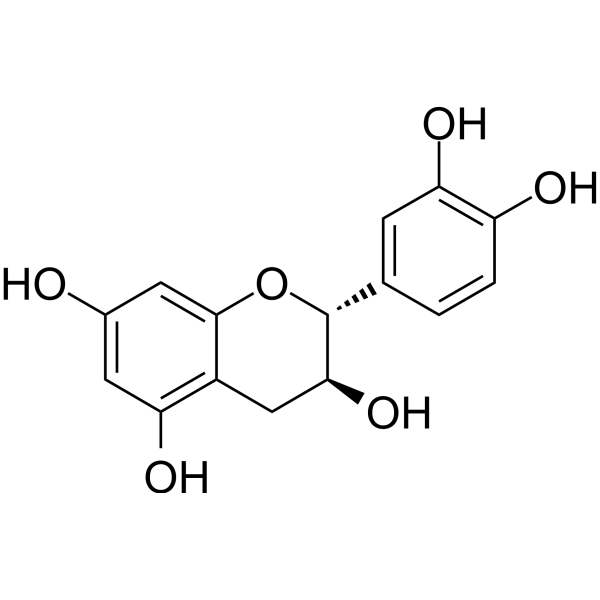
  • HY-N0898
    Catechin
    Maximum Cited Publications
    20 Publications Verification

    (+)-Catechin; Cianidanol; Catechuic acid

    COX Apoptosis Influenza Virus Endogenous Metabolite Cancer
    Catechin ((+)-Catechin) inhibits cyclooxygenase-1 (COX-1) with an IC50 of 1.4 μM.
    Catechin
  • HY-N0356
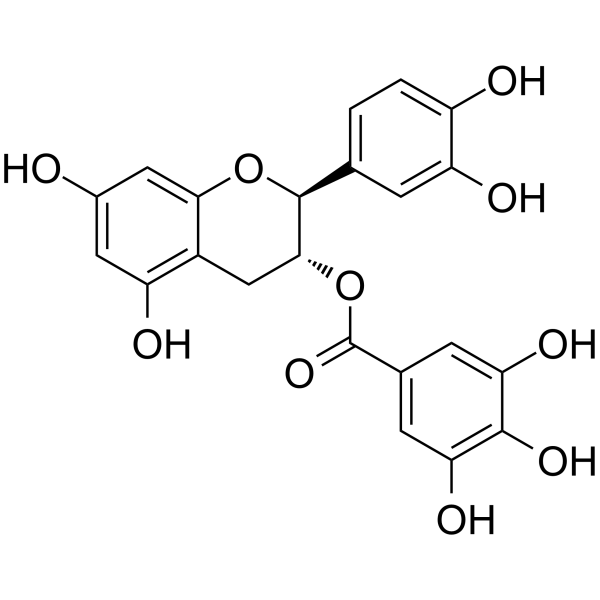
    (-)-Catechin gallate
    4 Publications Verification

    (-)-Catechin 3-gallate; (-)-Catechin 3-O-gallate

    COX Cancer
    (-)-Catechin gallate is a minor constituent in green tea catechins. (-)-Catechin gallate inhibits the activity of COX-1 and COX-2 enzymes.
    (-)-Catechin gallate
  • HY-B1890
    (±)-Catechin
    1 Publications Verification

    rel-Cianidanol; rel-Catechuic acid

    COX Infection Cardiovascular Disease Neurological Disease Inflammation/Immunology Cancer
    (±)-Catechin (rel-Cianidanol) is the racemate of the green tea polyphenol Catechin. Catechin has anticancer activity and induces apoptosis. (±)-Catechin has two forms, (+)-Catechin and its enantiomer (-)-Catechin. (+)-Catechin inhibits cyclooxygenase-1 (COX-1) with an IC50 of 1.4 μM. (-)-Catechin can effectively promote hBM-MSC adipocyte differentiation and increase adiponectin and PPARγ levels. (±)-Catechin has anti-tumor, anti-obesity, anti-diabetic, anti-cardiovascular, anti-infectious, hepatoprotective and neuroprotective effects .
    (±)-Catechin
  • HY-N0898A
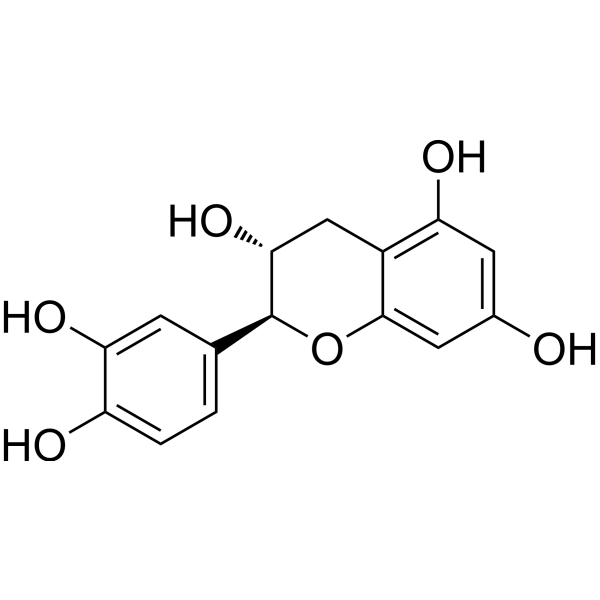
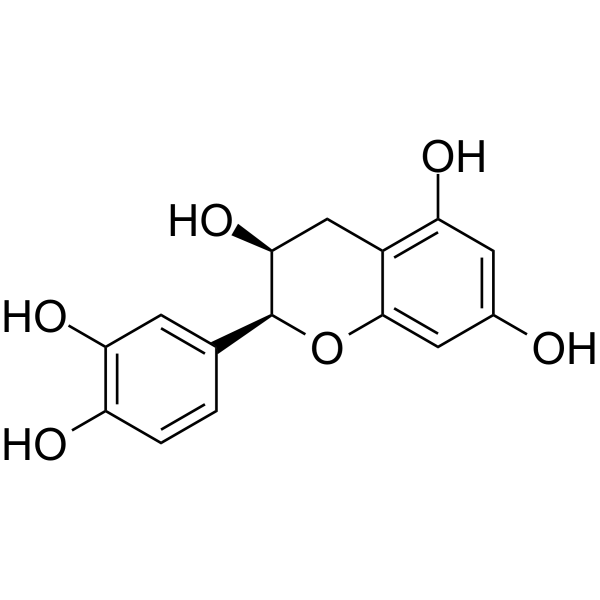
    (-)-Catechin
    4 Publications Verification

    (-)-Cianidanol; (-)-Catechuic acid

    COX Cancer
    (-)-Catechin is Catechin's one kind of different structure. Catechin inhibitory enzyme-1 (COX-1), IC50 of 1.4 μM. (-)-Catechin promotes hBM-MSC adipose cell differentiation, increases fat cell differentiation, and PPARγ level .
    (-)-Catechin
  • HY-N0355
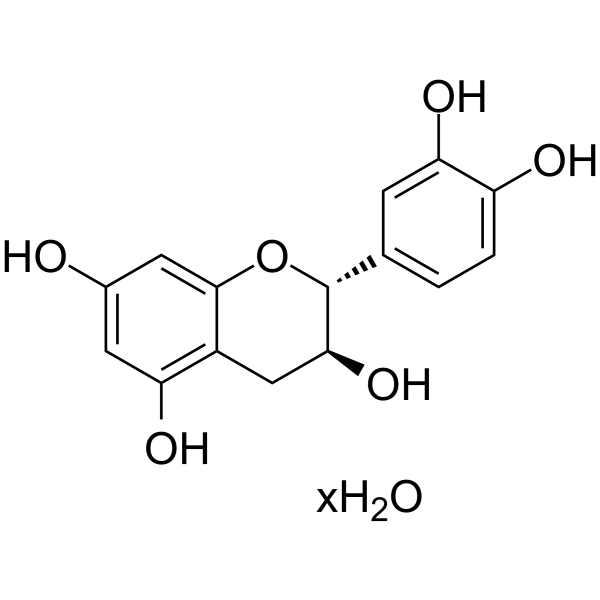
    (+)-Catechin hydrate
    Maximum Cited Publications
    20 Publications Verification

    COX Cancer
    (+)-Catechin hydrate inhibits cyclooxygenase-1 (COX-1) with an IC50 of 1.4 μM.
    (+)-Catechin hydrate
  • HY-N0001A
    (+)-Epicatechin
    1 Publications Verification

    Dexepicatechin; (+)-Epicatechol

    Others Others
    (+)-Epicatechin (Dexepicatechin) is a catechin and a polyphenol, with antioxidant activities .
    (+)-Epicatechin
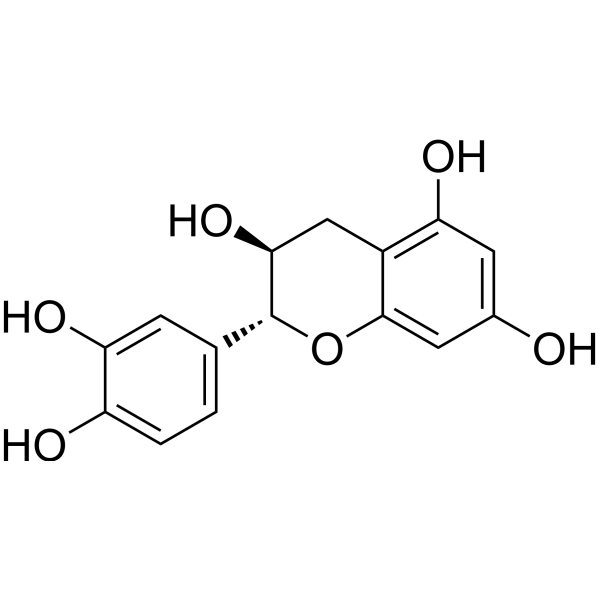
  • HY-N1925
    Tea polyphenol
    2 Publications Verification

    Apoptosis Autophagy Neurological Disease Inflammation/Immunology Cancer
    Tea polyphenol is the floorboard of phenolic compounds in tea. Tea polyphenol exhibits biological activity including antioxidant and anti-cancer activities, inhibition of cell proliferation, induction of apoptosis, cell cycle arrest and modulation of carcinogen metabolism .
    Tea polyphenol
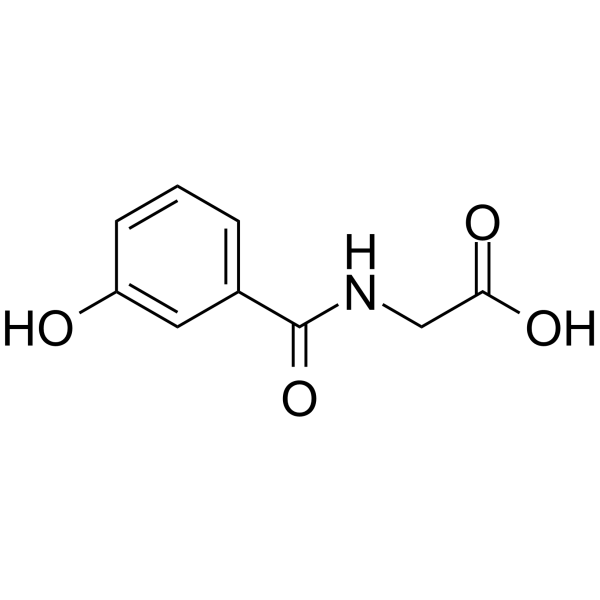
  • HY-113085
    3-Hydroxyhippuric acid
    1 Publications Verification

    Endogenous Metabolite Others
    3-Hydroxyhippuric acid is an acyl glycine. 3-Hydroxyhippuric acid inhibits kynureninase (Ki = 60 μM). 3-Hydroxyhippuric acid is found in higher concentrations in autistic group than in the controls. 3-Hydroxyhippuric acid is a marker of Clostridium species, and has a positive correlation with the level of Clostridia. 3-Hydroxyhippuric acid is one of the main metabolites formed from the catechin diet and wine polyphenol diets .
    3-Hydroxyhippuric acid
  • HY-N0898R

    (+)-Catechin (Standard); Cianidanol (Standard); Catechuic acid (Standard)

    Reference Standards COX Apoptosis Influenza Virus Endogenous Metabolite Cancer
    Catechin (Standard) is the analytical standard of Catechin. This product is intended for research and analytical applications. Catechin ((+)-Catechin) inhibits cyclooxygenase-1 (COX-1) with an IC50 of 1.4 μM.
    Catechin (Standard)
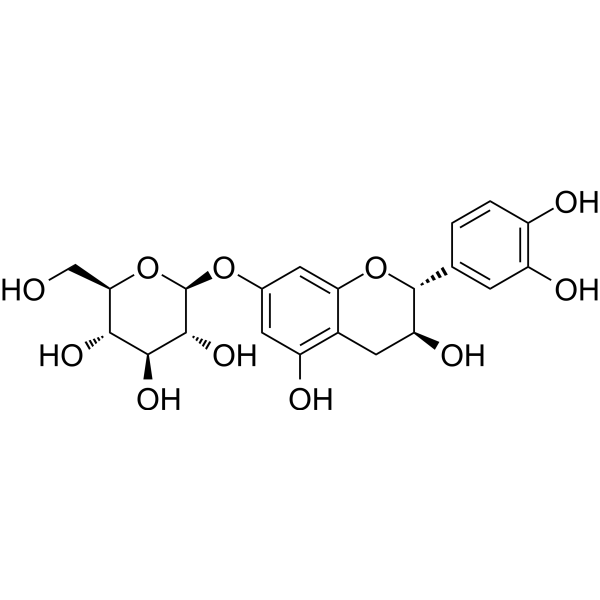
  • HY-N10587

    Others Inflammation/Immunology
    Catechin 7-O-beta-D-glucopyranoside is an orally active natural product found in Ulmus davidiana and Paeonia obovata. Catechin 7-O-β-D-glucopyranoside shows antioxidant and anti-inflammatory activities, and attenuates mitochondrial dysfunction. Catechin 7-O-beta-D-glucopyranoside can be used in intestinal inflammatory disease research .
    Catechin 7-O-β-D-glucopyranoside
  • HY-B1890R

    rel-Cianidanol (Standard); rel-Catechuic acid (Standard)

    Reference Standards COX Infection Cardiovascular Disease Neurological Disease Inflammation/Immunology Cancer
    (±)-Catechin (Standard) is the analytical standard of (±)-Catechin. This product is intended for research and analytical applications. (±)-Catechin (rel-Cianidanol) is the racemate of the green tea polyphenol Catechin. Catechin has anticancer activity and induces apoptosis. (±)-Catechin has two forms, (+)-Catechin and its enantiomer (-)-Catechin. (+)-Catechin inhibits cyclooxygenase-1 (COX-1) with an IC50 of 1.4 μM. (-)-Catechin can effectively promote hBM-MSC adipocyte differentiation and increase adiponectin and PPARγ levels. (±)-Catechin has anti-tumor, anti-obesity, anti-diabetic, anti-cardiovascular, anti-infectious, hepatoprotective and neuroprotective effects .
    (±)-Catechin (Standard)
  • HY-N15663

    EGCG4′′Me

    Drug Derivative Inflammation/Immunology
    (-)-Epigallocatechin-3-O-(4-O-methyl)gallate is an orally active catechin derivative found in Taiwanese oolong tea. (-)-Epigallocatechin-3-O-(4-O-methyl)gallate can inhibit histamine release and exhibits anti-inflammation and anti-allergic effect. (-)-Epigallocatechin-3-O-(4-O-methyl)gallate can be used for the researches of immunology and inflammation, such as type I allergic .
    (-)-Epigallocatechin-3-O-(4-O-methyl)gallate
  • HY-N16579

    Others Inflammation/Immunology
    (+)-Catechin 3-O-β-D-glucopyranoside (Compound 13) is an anti-allergic agent found in Edulis Superba. (+)-Catechin 3-O-β-D-glucopyranoside can be used for the research of inflammation and immunology .
    (+)-Catechin 3-O-β-D-glucopyranoside
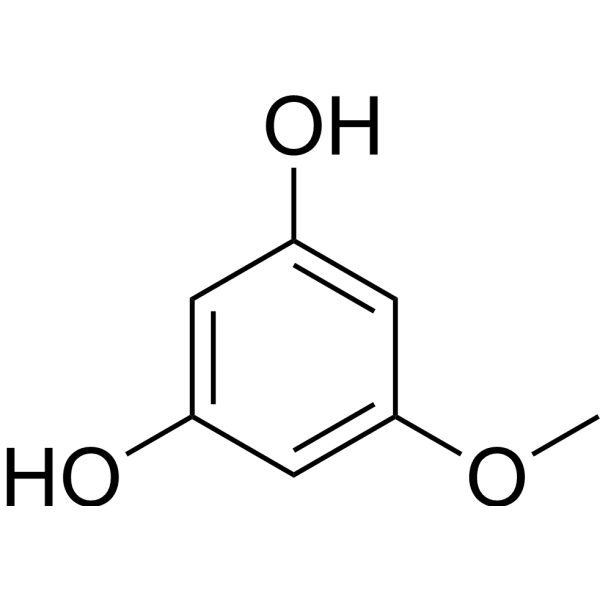
  • HY-W015752

    Drug Intermediate Others
    5-Methoxyresorcinol is a model molecule of the A ring of flavonoids, specifically simulating the chemical behavior of the resorcinol-type A ring found in catechins. 5-Methoxyresorcinol exhibits extremely low reactivity of tocopherol. 5-Methoxyresorcinol hardly inhibits cholesteryl ester transfer protein (CETP) .
    5-Methoxyresorcinol
  • HY-N16639

    Drug Derivative Inflammation/Immunology
    (+)-Catechin-3’-O-β-D-glucoside is a mono glucoside derivative of (+)-catechin (HY-N0898) after biotransformation. (+)-Catechin-3’-O-β-D-glucoside is a potential antioxidant .
    (+)-Catechin-3′-O-β-D-glucoside
  • HY-N16453

    Proteasome Neurological Disease Cancer
    (+)-Catechin 3-gallate is an orally active polyphenolic compound that acts as a non-selective proteasome inhibitor. (+)-Catechin 3-gallate exerts antitumor effects by inducing apoptosis and suppressing inflammatory cytokines. (+)-Catechin 3-gallate is promising for research of cancers (e.g., breast, prostate) and neurodegenerative diseases (e.g., Alzheimer’s) .
    (+)-Catechin 3-gallate
  • HY-113085R

    Reference Standards Endogenous Metabolite Others
    3-Hydroxyhippuric acid (Standard) is the analytical standard of 3-Hydroxyhippuric acid. This product is intended for research and analytical applications. 3-Hydroxyhippuric acid is an acyl glycine. 3-Hydroxyhippuric acid inhibits kynureninase (Ki = 60 μM). 3-Hydroxyhippuric acid is found in higher concentrations in autistic group than in the controls. 3-Hydroxyhippuric acid is a marker of Clostridium species, and has a positive correlation with the level of Clostridia. 3-Hydroxyhippuric acid is one of the main metabolites formed from the catechin diet and wine polyphenol diets .
    3-Hydroxyhippuric acid (Standard)
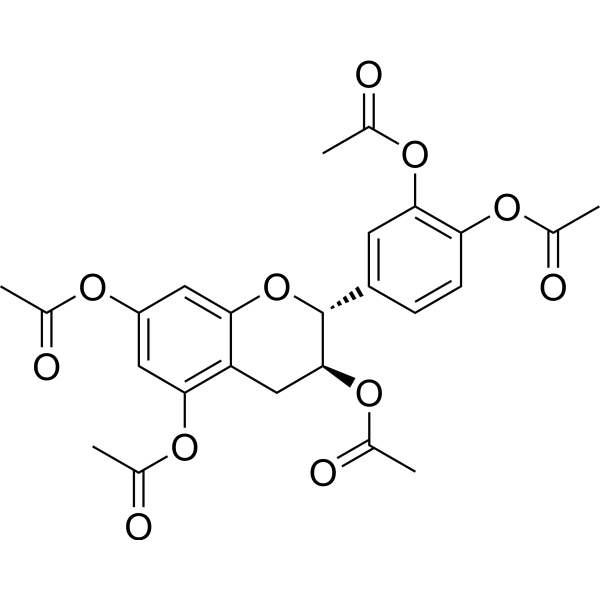
  • HY-N3555

    COX Cancer
    (+)-Catechin pentaacetate is a precursor for the production of (+) catechin (HY-N0898 ). (+) catechin is a useful natural herbicide and antimicrobial. (+)-Catechin inhibits cyclooxygenase-1 (COX-1) with an IC50 of 1.4 μM .
    (+)-Catechin pentaacetate
  • HY-N0356R

    (-)-Catechin 3-gallate (Standard); (-)-Catechin 3-O-gallate (Standard)

    Reference Standards COX Cancer
    (-)-Catechin gallate (Standard) is the analytical standard of (-)-Catechin gallate. This product is intended for research and analytical applications. (-)-Catechin gallate is a minor constituent in green tea catechins. (-)-Catechin gallate inhibits the activity of COX-1 and COX-2 enzymes.
    (-)-Catechin gallate (Standard)
  • HY-N0898S
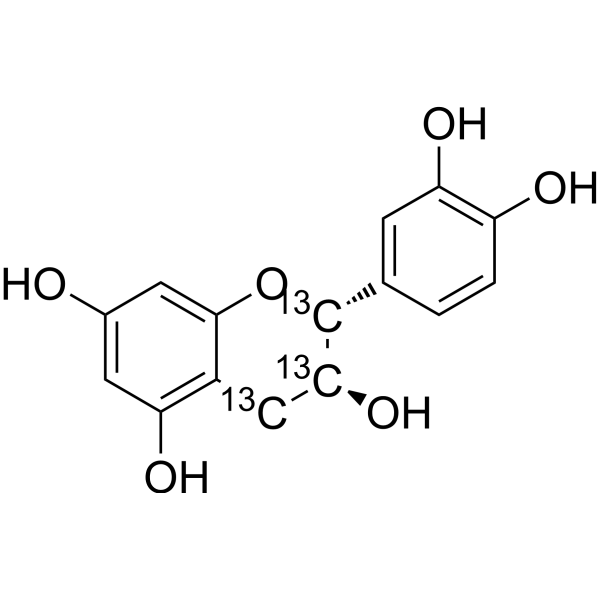
    Catechin-13C3
    1 Publications Verification

    (+)-Catechin-13C3; Cianidanol-13C3; Catechuic acid-13C3

    COX Apoptosis Influenza Virus Endogenous Metabolite Cancer
    Catechin- 13C3 is the 13C-labeled Catechin. Catechin ((+)-Catechin) inhibits cyclooxygenase-1 (COX-1) with an IC50 of 1.4 μM.
    Catechin-13C3
  • HY-N0898AR

    (-)-Cianidanol (Standard); (-)-Catechuic acid (Standard)

    Reference Standards COX Cancer
    (-)-Catechin (Standard) is the analytical standard of (-)-Catechin. This product is intended for research and analytical applications. (-)-Catechin is Catechin's one kind of different structure. Catechin inhibitory enzyme-1 (COX-1), IC50 of 1.4 μM. (-)-Catechin promotes hBM-MSC adipose cell differentiation, increases fat cell differentiation, and PPARγ level .
    (-)-Catechin (Standard)
  • HY-N3554

    (+)-Catechol 7-β-D-xylopyranoside

    Others Others
    Catechin-7-O-β-D-xylopyranoside is an antioxidant compound with strong DPPH free radical scavenging ability. Catechin-7-O-β-D-xylopyranoside can be extracted from birch inner bark and nepeta stem bark .
    Catechin-7-O-β-D-xylopyranoside
  • HY-N0932

    (+)-Catechin hydrate; Cianidanol hydrate; Catechuic acid hydrate

    COX Cancer
    Catechin hydrate inhibits cyclooxygenase-1 (COX-1) with an IC50 of 1.4 μM.
    Catechin hydrate
  • HY-N3553

    Others Others
    Catechin 3-O-α-L-rhamnopyranoside is a natural product that can be isolated from the twigs of Artocarpus lakoocha .
    Catechin 3-O-α-L-rhamnopyranoside
  • HY-N8802

    Others Inflammation/Immunology
    (-)-Epicatechin 3-(3-O-methylgallate) is a catechin, that can be isolated from tea leaf. (-)-Epicatechin 3-(3-O-methylgallate) shows anti-inflammatory activity .
    (-)-Epicatechin 3-(3-O-methylgallate)
  • HY-W015752R

    Reference Standards Drug Intermediate Others
    5-Methoxyresorcinol (Standard) is an analytical standard for 5-Methoxyresorcinol (HY-W015752). This product is intended for research and analytical applications. 5-Methoxyresorcinol is a model molecule for the A ring of flavonoids, specifically mimicking the chemical behavior of the resorcinol-type A ring in catechins. 5-Methoxyresorcinol exhibits very low tocopherol regeneration activity. 5-Methoxyresorcinol shows little inhibition of cholesteryl ester transfer protein (CETP).
    5-Methoxyresorcinol (Standard)
  • HY-171338

    GCG3″Me

    Histamine Receptor Inflammation/Immunology
    Gallocatechin-3-O-(3''-O-methyl)-gallate (GCG3''Me) is a catechin polyphenol. Gallocatechin-3-O-(3''-O-methyl)-gallate inhibits histamine release. Gallocatechin-3-O-(3''-O-methyl)-gallate can be used in allergy-related studies .
    Gallocatechin-3-O-(3″-O-methyl)-gallate
  • HY-183746

    P-glycoprotein SARS-CoV Virus Protease Infection
    Catechin-5-O-gallate is a bioactive substance. Catechin-5-O-gallate can be isolated from bioactive Himalayan plants. Catechin-5-O-gallate is predicted to be a P-glycoprotein inhibitor, and binds to SARS-CoV-2 3CLpro, PLpro and RdRp. Catechin-5-O-gallate can be used in studies related to COVID-19 .
    Catechin-5-O-gallate
  • HY-N17745

    Others
    (-)-EGCG-3'-O-Me is a catechin derivative (HY-N0898). (-)-EGCG-3'-O-Me inhibits lipid oxidation in rapeseed oil by reducing oxygen consumption and protecting linoleic acid and α-linolenic acid from degradation during heating. The antioxidant activity of (-)-EGCG-3'-O-Me in heated rapeseed oil is lower than that of its non-methylated precursor, (-)-epigallocatechin (EGCG) (HY-N0225) .
    (-)-EGCG-3'-O-Me
  • HY-N19050

    Bacterial Infection Inflammation/Immunology
    Acacia catechu extract is rich in bioactive components such as catechins, tannins, and flavonoids, and has astringent, anti-inflammatory, antioxidant, and antibacterial properties.
    Acacia catechu extract
  • HY-N18782

    Others Inflammation/Immunology
    Quercus infectoria extract is an extract from the fruit of the oak tree (Quercus infectoria) known for its powerful astringent, anti-inflammatory, and antioxidant properties. The active ingredients in Quercus infectoria extract include tannins (such as ellagic acid and gallic acid), flavonoids, and catechins.
    Quercus infectoria extract
  • HY-N18712

    Others Inflammation/Immunology
    The active ingredients in Morinda citrifolia extract include scopolamine, danacanaldehyde, vitamins C and E, minerals (potassium, calcium), polysaccharides, fatty acids, catechins, and flavonoids. Morinda citrifolia extract possesses antioxidant, anti-inflammatory, and immune-boosting properties, helping to reduce inflammation and combat oxidative stress.
    Morinda citrifolia extract
  • HY-N19627

    3′-M-ECG

    Drug Derivative Inflammation/Immunology
    3'-O-Methyl-(-)-epicatechin gallate (3′-M-ECG) is a methylated Catechin (HY-N0898) derivative and is an antioxidant agent. 3'-O-Methyl-(-)-epicatechin gallate reduces oxygen consumption and prevents decreases in linoleic and α-linolenic acids to protect canola oil from lipid oxidation when heated .
    3'-O-Methyl-(-)-epicatechin gallate
  • HY-178381S

    Isotope-Labeled Compounds Endogenous Metabolite Others
    3-Hydroxyhippuric acid-d4 is the deuterium labeled 3-Hydroxyhippuric acid (HY-113085). 3-Hydroxyhippuric acid is an acyl glycine. 3-Hydroxyhippuric acid inhibits kynureninase (Ki = 60 μM). 3-Hydroxyhippuric acid is found in higher concentrations in autistic group than in the controls. 3-Hydroxyhippuric acid is a marker of Clostridium species, and has a positive correlation with the level of Clostridia. 3-Hydroxyhippuric acid is one of the main metabolites formed from the catechin diet and wine polyphenol diets .
    3-Hydroxyhippuric acid-d4
  • HY-N13285

    (-)-EGC-4'-O-ME

    Drug Derivative Metabolic Disease Inflammation/Immunology
    (-)-Epigallocatechin-4'-O-methylether ((-)-EGC-4'-O-ME) is an orally active natural phenolic catechin with antioxidant, free radical-scavenging and hepatoprotective activities. (-)-Epigallocatechin-4'-O-methylether interferes with radiation-induced free radical formation, scavenges DPPH free radicals, inhibits carbon tetrachloride-induced increases in serum GOT and GPT, suppresses carbon tetrachloride-induced TBA-RS formation, and counteracts carbon tetrachloride-induced hepatocyte toxicity. (-)-Epigallocatechin-4'-O-methylether binds specifically to human serum albumin. (-)-Epigallocatechin-4'-O-methylether can be used in studies related to liver injury .
    (-)-Epigallocatechin-4'-O-methylether

Inquiry Online

Your information is safe with us. * Required Fields.

Salutation


Country or Region *

Applicant Name *


Organization Name *

Department *


Email Address *


Product Name *

Cat. No.


Requested quantity *

Phone Number *


Remarks

Inquiry Online

Inquiry Information

Product Name:
Cat. No.:
Quantity:
MCE Japan Authorized Agent:

