
21 Results for "

cell-selective

" in MedChemExpress (MCE) Product Catalog:
Products (21)

21 Results for "cell-selective" in MCE Product Catalog:

4
4 Cited Publications
Cat. No.: HY-121087
CAS No.: 1245792-67-9
Purity:  99.86%
Target:  

Phosphatase

Research Areas:  

Cancer

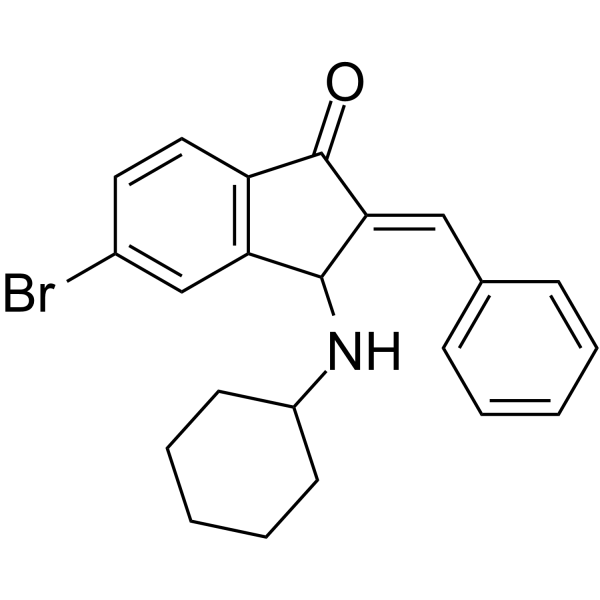
BCI-215 is a potent and tumor cell-selective dual specificity MAPK phosphatase (DUSP-MKP) inhibitor. BCI-215 has cytotoxicity for tumor cells but not normal cells .
loading...
    loading...
4
4 Cited Publications
Cat. No.: HY-15694
CAS No.: 143360-00-3
Purity:  99.79%
Research Areas:  

Cancer

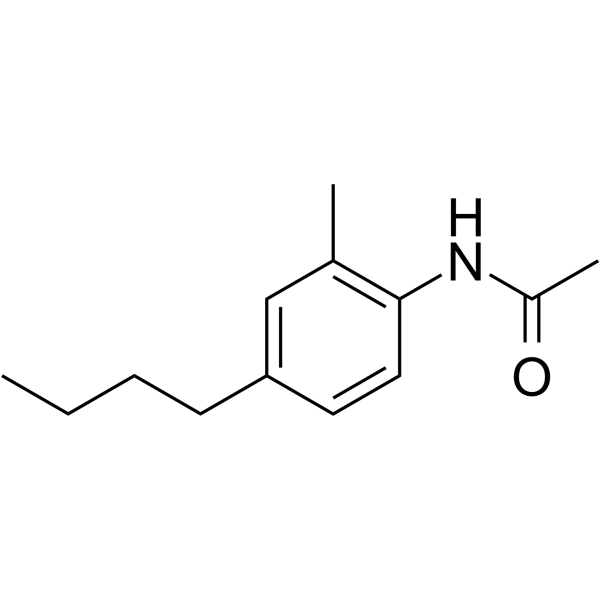
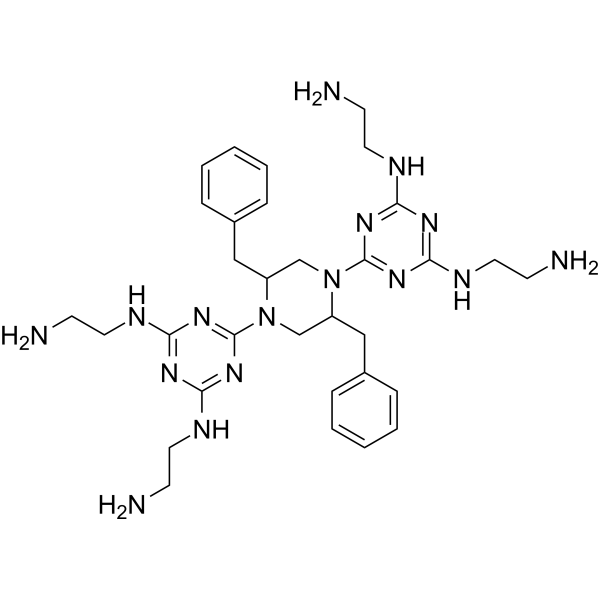
SMIP004 is a SKP2 E3 ligase inhibitor, which downregulates SKP2 and to stabilise p27. SMIP004 is a cancer cell selective apoptosis inducer of human prostate cancer cells .
loading...
    loading...
4
4 Cited Publications
Cat. No.: HY-W028690
CAS No.: 328104-79-6
Research Areas:  

Cancer

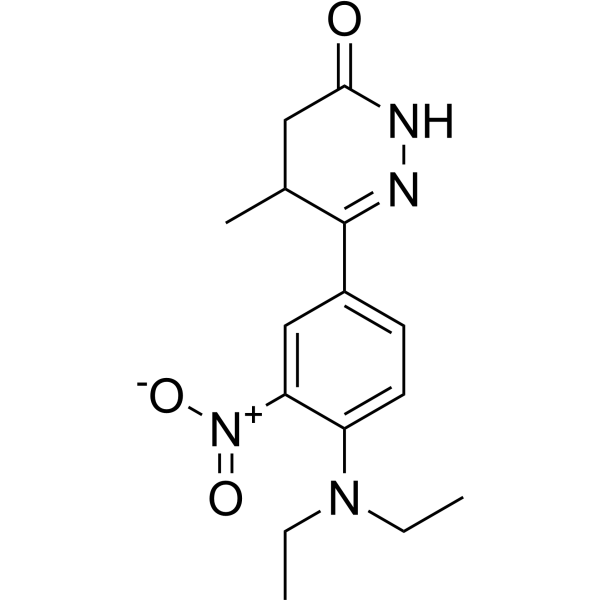
DNMDP, a phosphodiesterase 3A (PDE3A) inhibitor, is a potent and selective cancer cell cytotoxic agent. DNMDP binding to PDE3A promotes an interaction between PDE3A and Schlafen 12 (SLFN12). DNMDP shows clear cell-selective cytotoxicity .
loading...
    loading...
Cat. No.: HY-P99728
CAS No.: 2056881-92-4
Synonyms: RG7835; RO7049665
Melredableukin alfa (RG7835) is a bivalent conjugate composed of a human IL-2 mutant (T3A, N88D, C125A) and human IgG1. Melredableukin alfa exhibits enhanced Treg cell selectivity in cynomolgus monkey and humanized mouse models. Melredableukin alfa can be used in research related to ulcerative colitis and autoimmune hepatitis .
loading...
    loading...
Cat. No.: HY-119493
CAS No.: 135980-66-4
Purity:  98.39%
Target:  

Fluorescent Dye

Research Areas:  

Others

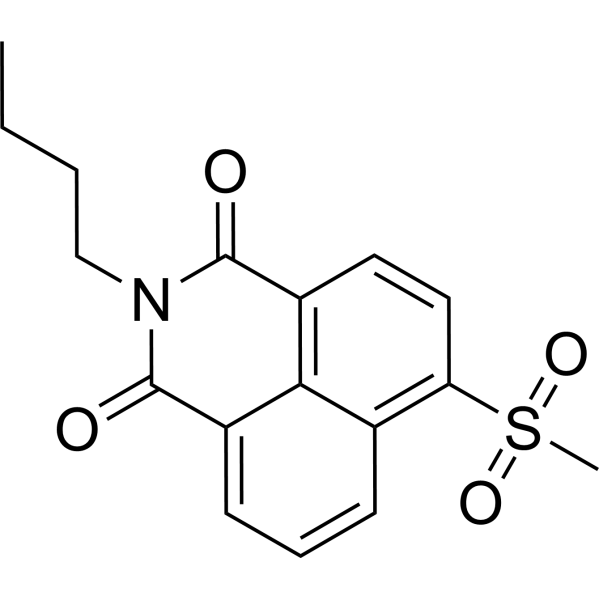
MSBN is a highly selective fluorogenic probe for thiols. MSBN can be used to image thiols in live cells selectively and specifically label protein thiols with a signal to determine various reversible protein thiol modifications .
loading...
    loading...
Cat. No.: HY-122751
CAS No.: 1630760-60-9
Purity:  99.59%
Research Areas:  

Cancer

(R)-DNMDP is a potent and selective cancer cell cytotoxic agent. (R)-DNMDP, the R-form of DNMDP, binds PDE3A directly. (R)-DNMDP has a 500-fold lower EC50 compared to the (S)-enantiomer in HeLa cell line .
loading...
    loading...
Cat. No.: HY-110393
CAS No.: 1250963-36-0
Purity:  98.62%
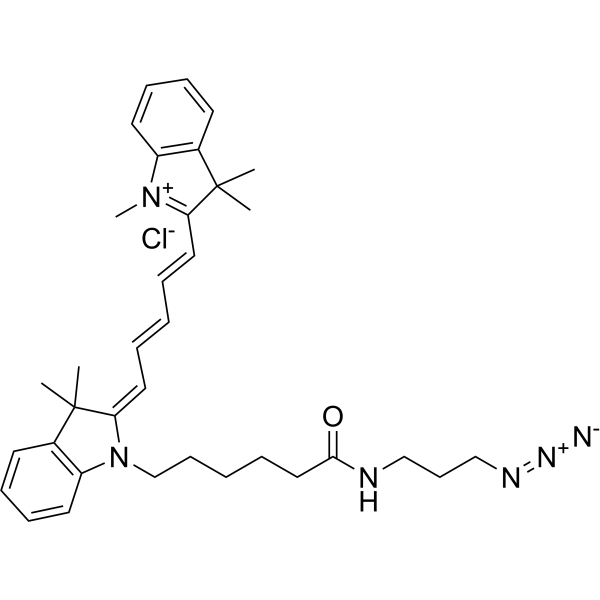
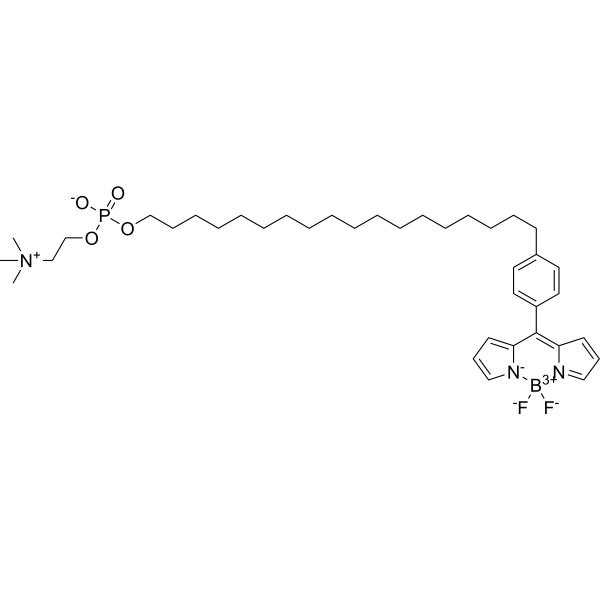
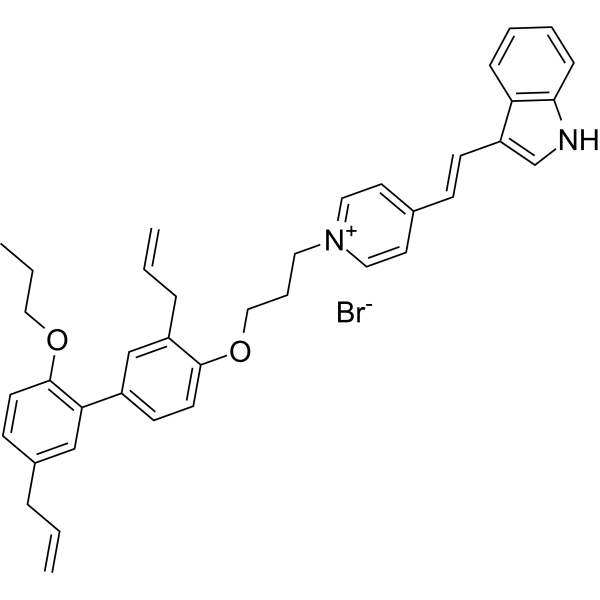
CLR1501, a fluorescently labeled CLR1404 analog, is a cancer cell-selective fluorescence compound .
loading...
    loading...
Cat. No.: HY-118047
CAS No.: 115787-68-3
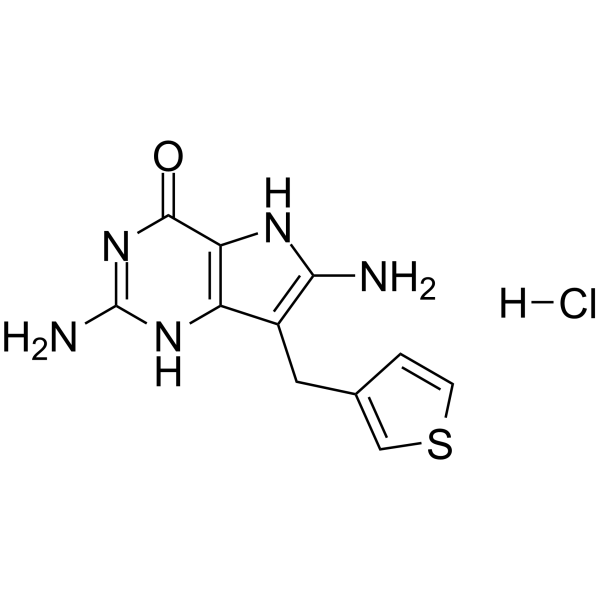
CI 972 anhydrous is a potent, orally active, and competitive inhibitor of purine nucleoside phosphorylase (PNP) (Ki=0.83 μM) under development as a T cell-selective immunosuppressive agent .
loading...
    loading...
Cat. No.: HY-P5446
CAS No.: 184870-32-4
Target:  

Bacterial

Research Areas:  

Others

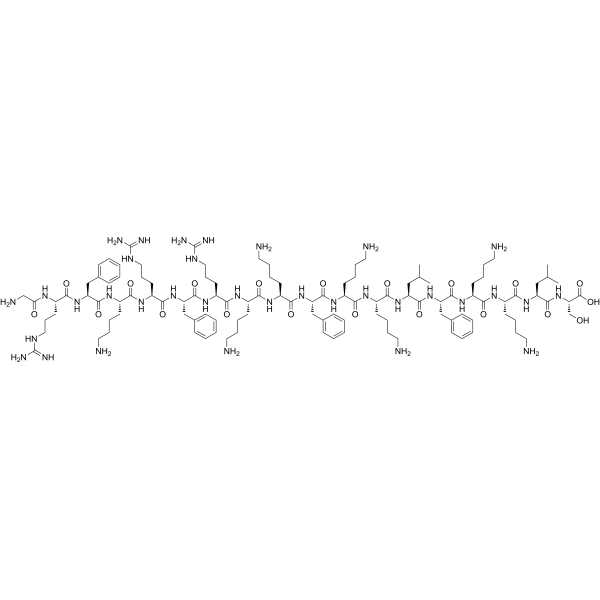
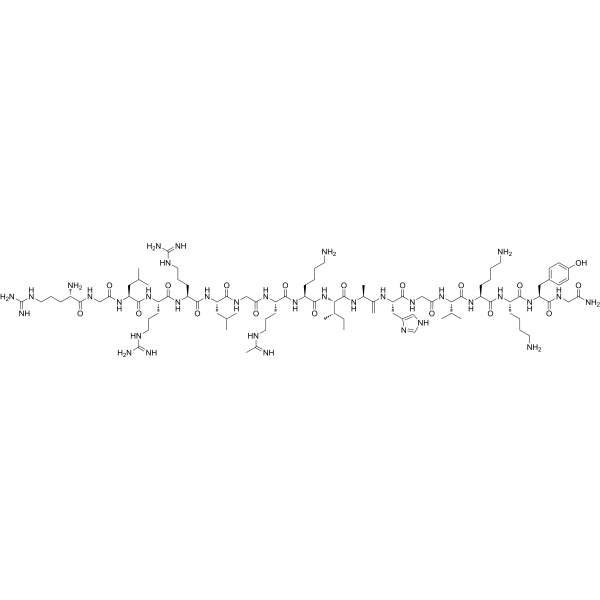
BMAP-18 is a biological active peptide. (BMAP-18 is a truncated form of the antimicrobial peptide BMAP-27. Bovine myeloid antimicrobial peptide-27 (BMAP-27) belongs to the Cathelicidin family of peptides which displays rapid bactericidal activity against Staphylococcus aureus, Streptococcus uberis, and Escherichia coli. BMAP-27 is cytotoxic to human erythrocytes and neutrophils, although at higher than microbicidal concentrations. BMAP-18 displays much higher cell selectivity as compared to parental BMAP-27 because of its decreased hemolytic activity and retained antimicrobial activity.)
loading...
    loading...
Cat. No.: HY-151738
CAS No.: 1935981-35-3
Target:  

ADC Linkers

Research Areas:  

Others

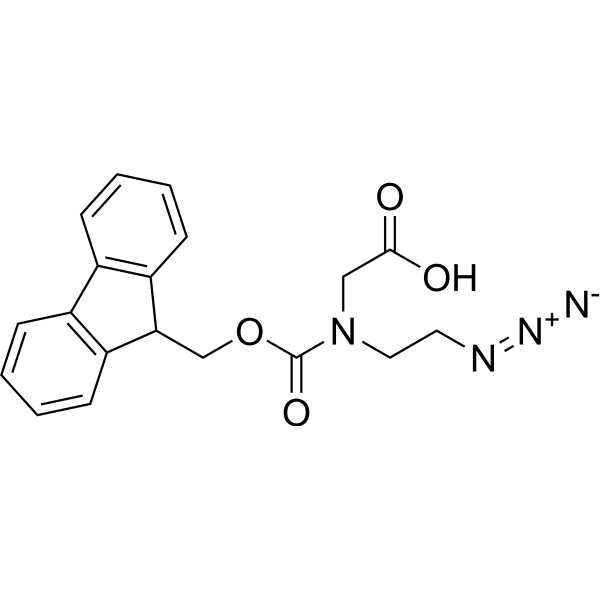
Fmoc-Aeg(N3)-OH is a click chemistry reagent containing an Azide. Alkylating the Nitrogen of an amide bond results in peptoid structures, which leads to conformational restrains, like N-methylation and allows backbone derivatisation. Altering cytotoxicity, bacterial cell selectivity and receptor pharmacology through formation of peptoid derivatives have been published for Cilengitide, Piscidin 1, and MC3, MC4 and MC5 receptor agonist. This building block enables design of macrocycles through intermolecular crosslinking or backbone stabilization through intermolecular ring-closure. This compound is a potential building block for the construction of (customized) peptide nucleic acids (PNAs) and for peptoid synthesis . Fmoc-Aeg(N3)-OH is a click chemistry reagent, it contains an Azide group and can undergo copper-catalyzed azide-alkyne cycloaddition reaction (CuAAc) with molecules containing Alkyne groups. It can also undergo strain-promoted alkyne-azide cycloaddition (SPAAC) reactions with molecules containing DBCO or BCN groups.
loading...
    loading...
Cat. No.: HY-P70889
Purity:  ≥ 95%, as determined by reducing SDS-PAGE.
Synonyms: Endothelial cell-selective Adhesion Molecule; ESAM
Species:  
Source:  
loading...
    loading...
Cat. No.: HY-P74165
Purity:  ≥ 95%, as determined by reducing SDS-PAGE.
Synonyms: Endothelial cell-selective Adhesion Molecule; ESAM
Species:  
Rat
Source:  
loading...
    loading...
Cat. No.: HY-P74166
Purity:  ≥ 95%, as determined by reducing SDS-PAGE.
Synonyms: Endothelial cell-selective Adhesion Molecule; ESAM
Species:  
Source:  
loading...
    loading...
Cat. No.: HY-151399
CAS No.: 2978694-04-9
Target:  

Bacterial

Research Areas:  

Infection

Antimicrobial agent-5 is an potent antimicrobial agent, and displays excellent cell selectivity against Gram-negative bacteria and Gram-positive bacteria. Antimicrobial agent-5 blocks the interaction between LPS and CD14/TLR4 receptor, and shows anti-inflammatory activity against LPS-induced inflammation .
loading...
    loading...
Cat. No.: HY-157292
CAS No.: 3002962-69-5
Research Areas:  

Cancer

2E-3-F16 is a anticancer agent. 2E-3-F16 exhibits tumor cell selectivity between NCI-H446 cancer cells and HBE cells. 2E-3-F16 enhances the sensitivity of A549 cells to Cisplatin (HY-17394) .
loading...
    loading...
Cat. No.: HY-P5484
CAS No.: 1629248-30-1
Target:  

Bacterial

Research Areas:  

Others

SMAP-18 is a biological active peptide. (SMAP-18 is a 18-amino acid residue peptide amide which is a truncated form of SMAP-29. Sheep myeloid antimicrobial peptide-29 (SMAP-29) displays extremely high antimicrobial activity against Pseudomonas strains, other Gram-negative bacteria, and multidrug-resistant pathogens. SMAP-18 displays much higher cell selectivity as compared to parental SMAP-29 because of its decreased hemolytic activity and retained antimicrobial activity.)
loading...
    loading...
Cat. No.: HY-101349
CAS No.: 156337-32-5
L 741742 is a highly selective and brain-penetrant D4 dopamine receptor antagonist, with Ki values of 3.5 nM, 770 nM and >1700 nM for human D4, D3 and D2 receptors, respectively. L 741742 suppresses PDGFRβ, ERK1/2, and mTOR signaling pathways, and impairs autophagic flux while disrupting lysosomal function.L 741742 induces G0/G1 cell-cycle arrest and apoptosis, promotes neuronal differentiation of normal human neural stem cells, selectively inhibits growth and clonogenic potential of glioblastoma neural stem cells and primary glioblastoma tumor cells, exerts synergistic effects with Temozolomide (TMZ) (HY-17364) against glioblastoma neural stem cells in vitro, and inhibits glioblastoma neural stem cell xenograft growth in immunocompromised mice. L 741742 can be used for the research of schizophrenia and glioblastoma .
loading...
    loading...
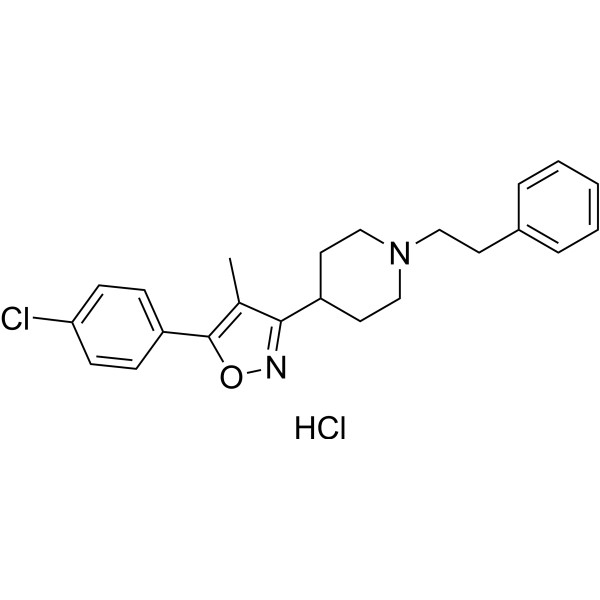
Cat. No.: HY-101349A
CAS No.: 874882-93-6
L 741742 hydrochloride is a highly selective and brain-penetrant D4 dopamine receptor antagonist, with Ki values of 3.5 nM, 770 nM and >1700 nM for human D4, D3 and D2 receptors, respectively. L 741742 hydrochloride suppresses PDGFRβ, ERK1/2, and mTOR signaling pathways, and impairs autophagic flux while disrupting lysosomal function.L 741742 hydrochloride induces G0/G1 cell-cycle arrest and apoptosis, promotes neuronal differentiation of normal human neural stem cells, selectively inhibits growth and clonogenic potential of glioblastoma neural stem cells and primary glioblastoma tumor cells, exerts synergistic effects with Temozolomide (TMZ) (HY-17364) against glioblastoma neural stem cells in vitro, and inhibits glioblastoma neural stem cell xenograft growth in immunocompromised mice. L 741742 hydrochloride can be used for the research of schizophrenia and glioblastoma .
loading...
    loading...
Cat. No.: HY-181166
Target:  

EGFR Apoptosis

Research Areas:  

Cancer

EGFR-IN-194 is a potent EGFR tyrosine kinase inhibitor with an IC50 of 54.3 nM against human EGFR. EGFR-IN-194 induces apoptosis, inhibits migration in cancer cells, selectively promotes invasion in cancer cells, and exhibits antiproliferative effects across multiple cancer cell lines. EGFR-IN-194 can be used for the research of prostate adenocarcinoma, non-small cell lung carcinoma, breast carcinoma, chronic myeloid leukemia .
loading...
    loading...
Cat. No.: HY-183618
Research Areas:  

Cancer

DW-229 is a PROTAC degrader derived from Deferiprone (HY-B0568), targeting Fe(II)/α‑ketoglutarate‑dependent histone lysine demethylases (KDMs). DW-229 degrades KDM2A, KDM3A, KDM5B, KDM4A‑C, KDM5C, KDM6B in breast cancer cells. DW-229 shows IC50 < 0.5 μM against MCF‑7 cells and IC50 of 8.87 μM against MDA‑MB‑231 cells, with high cancer cell selectivity. DW-229 can be used for the research of breast cancer, liver cancer, prostate cancer, lung cancer .
loading...
    loading...

