9243 Results for "

cellular cholesterol

" in MedChemExpress (MCE) Product Catalog:
Products (9243)

9243 Results for "cellular cholesterol" in MCE Product Catalog:

29
29 Publications Verification
Cat. No.: HY-107433
CAS No.: 3039-71-2
Purity:  99.77%
Research Areas:  

Infection Neurological Disease

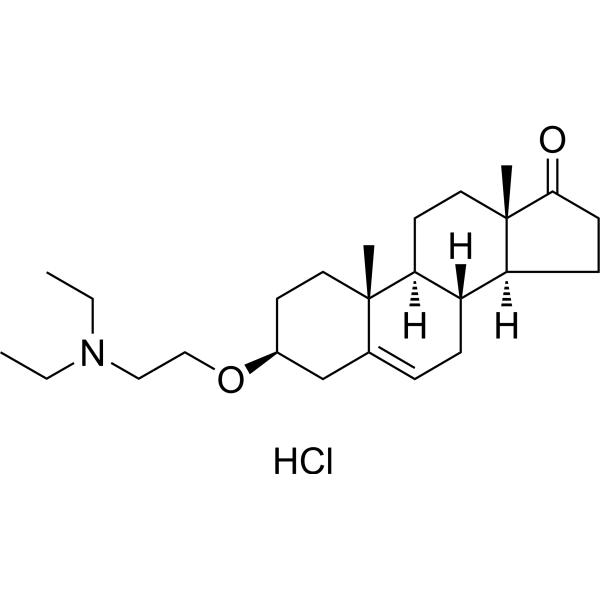
U18666A, an intra-cellular cholesterol transport inhibitor, inhibits replication of Ebola virus, dengue virus, and human hepatitis C virus .
loading...
    loading...
3
3 Cited Publications
Cat. No.: HY-RI00449A
Target:  

MicroRNA

Research Areas:  

Cancer

hsa-miR-21-5p antagomirs are chemically-modified oligonucleotides that hybridize with mature miRNAs. The miRNA antagomirs have 2 phosphorothioates at the 5' end, 4 phosphorothioates at the 3' end, 1 cholesterol group at the 3' end, and full-length nucleotide 2'-methoxy modification. The miRNA antagomirs strongly compete with mature miRNAs to prevent the complementary pairing of miRNAs and their target genes, thereby inhibiting miRNAs from functioning. Stability of miRNA antagomirs appears to be significantly higher than miRNA inhibitors, they exhibits enhanced cellular uptake, stability and regulatory activity in vivo.
loading...
    loading...
2
2 Cited Publications
Cat. No.: HY-113341
CAS No.: 566-27-8
Purity:  99.98%
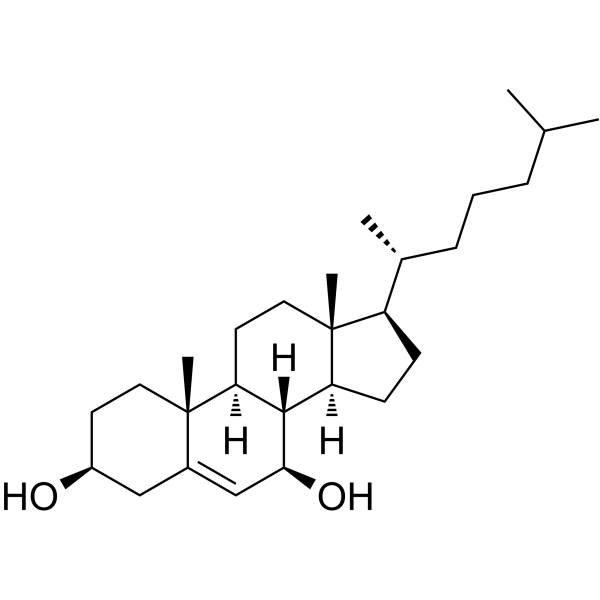
7β-Hydroxycholesterol is an oxysterol that derived by the oxidation of cholesterol. 7β-hydroxycholesterol can induce cellular oxidative stress, apoptosis, and necrosis, resulting in cytotoxicity. 7β-hydroxycholesterol has antitumor activity .
loading...
    loading...
2
2 Cited Publications
Cat. No.: HY-P6306
CAS No.: 1627911-44-7
CS-6253 is an agonist of ABCA1. CS-6253 can regulate lipoprotein metabolism, promote high-density lipoprotein biogenesis, and cellular cholesterol efflux. CS-6253 also has certain neuroprotective effects and can clear from the brain. CS-6253 can be used for research on cholesterol metabolism and diseases such as Alzheimer’s disease .
loading...
    loading...
2
2 Cited Publications
Cat. No.: HY-151705
CAS No.: 1631985-09-5
Purity:  ≥95.0%
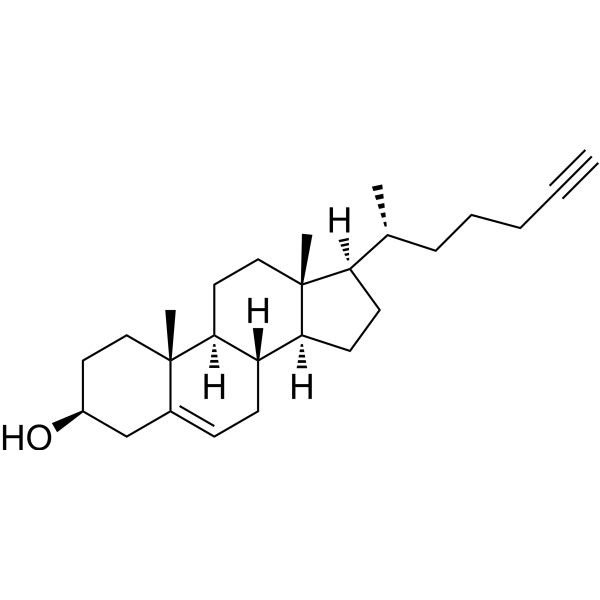
Alkyne Cholesterol, a modified lipid, is a click chemistry reagent containing an alkyne group. The terminal alkyne group can be used in a highly specific linking reaction with azide-containing reagents in the presence of a copper (Cu)-containing catalyst. Alkyne Cholesterol can be used for tracking cellular cholesterol metabolism and localization .
loading...
    loading...
2
2 Cited Publications
Cat. No.: HY-18593
CAS No.: 104723-60-6
Synonyms: 6-O-alpha-D-Maltosyl-beta-cyclodextrin
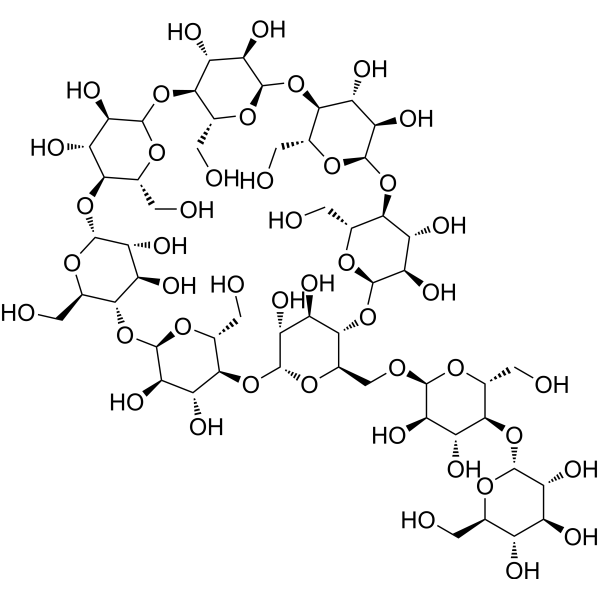
Mal-β-CD is a cellular cholesterol modifier which can form soluble inclusion complex with cholesterol.
loading...
    loading...
2
2 Cited Publications
Cat. No.: HY-123402
CAS No.: 264206-85-1
Purity:  99.19%
Target:  

LXR

Research Areas:  

Metabolic Disease

GSK3987 is a pan LXRα/β agonist with EC50s of 50 nM, 40 nM for LXRα-SRC1 and LXRβ-SRC1, respectively. GSK3987 increases the expression of ABCA1 and SREBP-1c. GSK3987 induces cellular cholesterol efflux and triglyceride accumulation .
loading...
    loading...
2
2 Cited Publications
Cat. No.: HY-P6306A
CS-6253 TFA is an agonist of ABCA1. CS-6253 TFA can regulate lipoprotein metabolism, promote high-density lipoprotein biogenesis, and cellular cholesterol efflux. CS-6253 TFA also has certain neuroprotective effects and can clear from the brain. CS-6253 TFA can be used for research on cholesterol metabolism and diseases such as Alzheimer’s disease .
loading...
    loading...
Cat. No.: HY-111355B
CAS No.: 2864-50-8
Purity:  98.22%
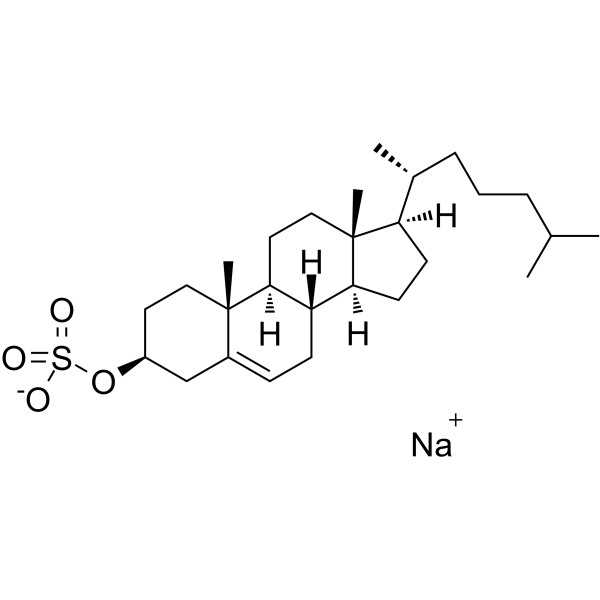
Cholesterol sulfate sodium is a naturally occurring, orally active cholesterol derivative that is widely distributed in various tissues and body fluids. Cholesterol sulfate sodium acts as a DOCK2 inhibitor, with IC50 values of 2 μM and 2.9 μM against mouse and human targets, respectively. Cholesterol sulfate sodium restricts excessive neutrophil infiltration and alleviates intestinal inflammation and damage. Cholesterol sulfate sodium serves as an activator of protein kinase C (PKC), which promotes squamous cell differentiation and inhibits skin carcinogenesis. Cholesterol sulfate sodium regulates cholesterol homeostasis and cellular metabolism by activating the AMPK-Sirt1 pathway. Cholesterol sulfate sodium can be used in research related to actinic keratitis, ulcerative colitis, skin cancer, and other conditions .
loading...
    loading...
Cat. No.: HY-111355
CAS No.: 1256-86-6
Cholesterol sulfate is a naturally occurring, orally active cholesterol derivative that is widely distributed in various tissues and body fluids. Cholesterol sulfate acts as a DOCK2 inhibitor, with IC50 values of 2 μM and 2.9 μM against mouse and human targets, respectively. Cholesterol sulfate restricts excessive neutrophil infiltration and alleviates intestinal inflammation and damage. Cholesterol sulfate serves as an activator of protein kinase C (PKC), which promotes squamous cell differentiation and inhibits skin carcinogenesis. Cholesterol sulfate regulates cholesterol homeostasis and cellular metabolism by activating the AMPK-Sirt1 pathway. Cholesterol sulfate can be used in research related to actinic keratitis, ulcerative colitis, skin cancer, and other conditions .
loading...
    loading...
Cat. No.: HY-112487
CAS No.: 78934-83-5
Purity:  99.35%
Target:  

Acyltransferase

Research Areas:  

Metabolic Disease

Sandoz 58-035 is a selective acyl-CoA:cholesterol acyltransferase (ACAT) inhibitor. Sandoz 58-035 inhibits this enzyme in intact cells and isolated microsomal fractions. Sandoz 58-035 blocks the esterification of exogenous vesicle-derived cholesterol and the incorporation of oleic acid into cellular cholesterol esters, reducing the formation and accumulation of cholesterol esters. Sandoz 58-035 causes a slight increase in cellular free cholesterol, and at high concentrations, it also causes a slight reduction in overall cellular protein synthesis. Sandoz 58-035 can be used in studies related to cellular cholesterol regulation .
loading...
    loading...
Cat. No.: HY-111355S
CAS No.: 2687961-01-7
Purity:  ≥98.0%
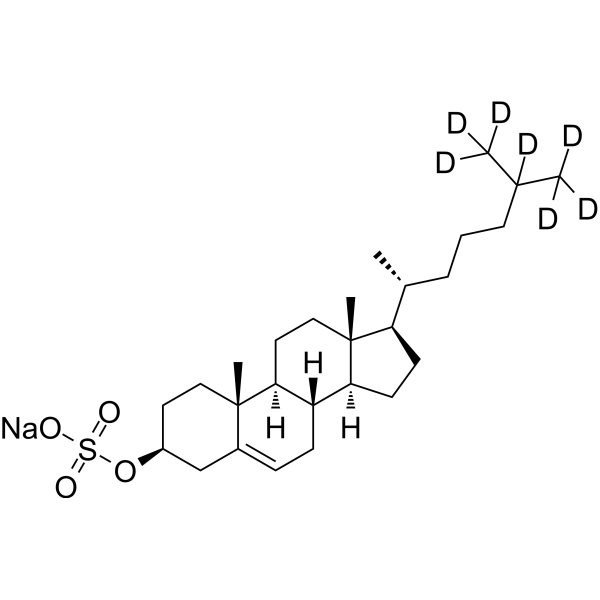
Cholesterol sulfate sodium-d7 is the deuterium labeled Cholesterol sulfate sodium. Cholesterol sulfate sodium is a naturally occurring, orally active cholesterol derivative that is widely distributed in various tissues and body fluids. Cholesterol sulfate sodium acts as a DOCK2 inhibitor, with IC50 values of 2 μM and 2.9 μM against mouse and human targets, respectively. Cholesterol sulfate sodium restricts excessive neutrophil infiltration and alleviates intestinal inflammation and damage. Cholesterol sulfate sodium serves as an activator of protein kinase C (PKC), which promotes squamous cell differentiation and inhibits skin carcinogenesis. Cholesterol sulfate sodium regulates cholesterol homeostasis and cellular metabolism by activating the AMPK-Sirt1 pathway. Cholesterol sulfate sodium can be used in research related to actinic keratitis, ulcerative colitis, skin cancer, and other conditions.
loading...
    loading...
Cat. No.: HY-R00057A
Target:  

MicroRNA

Research Areas:  

Cancer

hsa-miR-107 agomirs are chemically-modified double-strand miRNA mimics with modified mature miRNA strand: 2 phosphorothioates at the 5' end, 4 phosphorothioates at the 3' end, 3' end cholesterol group, and full-length nucleotide 2'-methoxy modification. They are designed to mimic endogenous miRNAs and recommended for miRNA functional studies. Compared with miRNA mimics, they exhibits enhanced cellular uptake, stability and regulatory activity in vivo.
loading...
    loading...
Cat. No.: HY-113341S
CAS No.: 349553-97-5
Purity:  96.73%
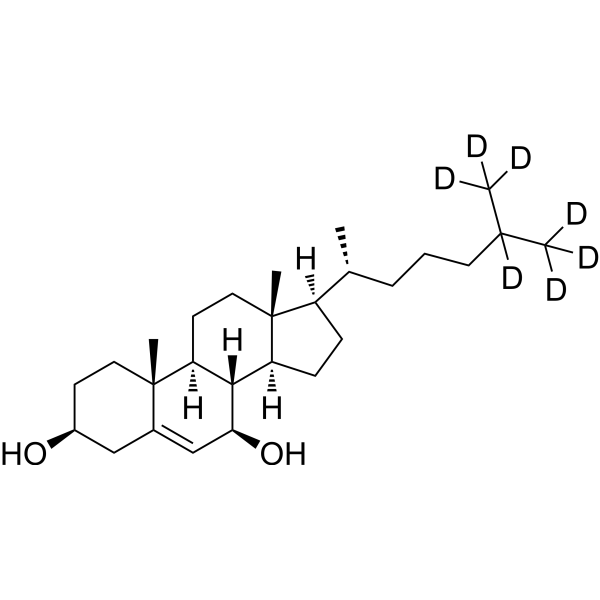
7ß-Hydroxycholesterol-d7 is the deuterium labeled 7α-Hydroxycholesterol. 7β-Hydroxycholesterol is an oxysterol that derived by the oxidation of cholesterol. 7β-hydroxycholesterol can induce cellular oxidative stress, apoptosis, and necrosis, resulting in cytotoxicity. 7β-hydroxycholesterol has antitumor activity .
loading...
    loading...
Cat. No.: HY-161941
CAS No.: 2043947-71-1
Target:  

LDLR PCSK9

Research Areas:  

Cardiovascular Disease

MeIm (compound 7) is a high-affinity PCSK9 targeting peptide mimetic with cholesterol-lowering activity. MeIm increases cellular uptake of LDL (EC50=6.04 μM) by inhibiting the binding of PCSK9 to LDLR (IC50=11.2 μM). MeIm can be used in the study of cardiovascular diseases .
loading...
    loading...
Cat. No.: HY-105086
CAS No.: 150332-35-7
Synonyms: CP148623
Target:  

SARS-CoV

Research Areas:  

Infection Metabolic Disease

Pamaqueside (CP148623) is a cholesterol absorption inhibitor and a potent binder of the SARS-CoV-2 receptor-binding domain (RBD), which may inhibit viral cellular entry. Pamaqueside can be utilized in metabolic and antiviral research .
loading...
    loading...
Cat. No.: HY-136869
CAS No.: 1027801-74-6
Target:  

Liposome

Research Areas:  

Others

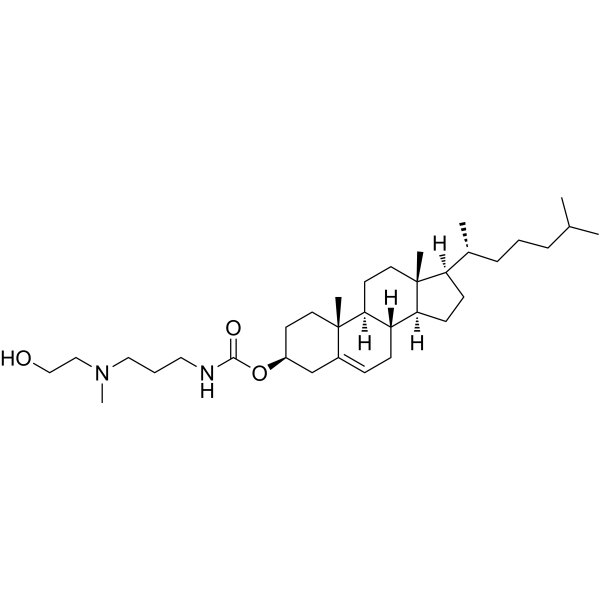
MHAPC-Chol, a cationic cholesterol, results in a high gene silencing effect via high cellular association. MHAPC-Chol delivers siRNA to the liver .
loading...
    loading...
Cat. No.: HY-113341R
CAS No.: 566-27-8
7β-Hydroxycholesterol (Standard) is the analytical standard of 7β-Hydroxycholesterol. This product is intended for research and analytical applications. 7β-Hydroxycholesterol is an oxysterol that derived by the oxidation of cholesterol. 7β-hydroxycholesterol can induce cellular oxidative stress, apoptosis, and necrosis, resulting in cytotoxicity. 7β-hydroxycholesterol has antitumor activity .
loading...
    loading...
Cat. No.: HY-R00137A
Target:  

MicroRNA

Research Areas:  

Cancer

hsa-miR-1243 agomirs are chemically-modified double-strand miRNA mimics with modified mature miRNA strand: 2 phosphorothioates at the 5' end, 4 phosphorothioates at the 3' end, 3' end cholesterol group, and full-length nucleotide 2'-methoxy modification. They are designed to mimic endogenous miRNAs and recommended for miRNA functional studies. Compared with miRNA mimics, they exhibits enhanced cellular uptake, stability and regulatory activity in vivo.
loading...
    loading...
Cat. No.: HY-R00065A
Target:  

MicroRNA

Research Areas:  

Cancer

hsa-miR-11400 agomirs are chemically-modified double-strand miRNA mimics with modified mature miRNA strand: 2 phosphorothioates at the 5' end, 4 phosphorothioates at the 3' end, 3' end cholesterol group, and full-length nucleotide 2'-methoxy modification. They are designed to mimic endogenous miRNAs and recommended for miRNA functional studies. Compared with miRNA mimics, they exhibits enhanced cellular uptake, stability and regulatory activity in vivo.
loading...
    loading...

