

1. Search Result
Search Result
Results for "

correlation

" in MedChemExpress (MCE) Product Catalog:

27

Inhibitors & Agonists

3

Fluorescent Dye

1

Biochemical Assay Reagents

3

Peptides

8

Natural
Products

1

Isotope-Labeled Compounds

1

Oligonucleotides

Cat. No. Product Name Target Research Areas Chemical Structure
  • HY-113085
    3-Hydroxyhippuric acid
    1 Publications Verification

    Endogenous Metabolite Others
    3-Hydroxyhippuric acid is an acyl glycine. 3-Hydroxyhippuric acid inhibits kynureninase (Ki = 60 μM). 3-Hydroxyhippuric acid is found in higher concentrations in autistic group than in the controls. 3-Hydroxyhippuric acid is a marker of Clostridium species, and has a positive correlation with the level of Clostridia. 3-Hydroxyhippuric acid is one of the main metabolites formed from the catechin diet and wine polyphenol diets .
    3-Hydroxyhippuric acid
  • HY-142980

    Dioleoylphosphatidylglycerol

    Liposome Inflammation/Immunology
    DOPG (Dioleoylphosphatidylglycerol) is a negatively charged phosphatidylglycerol phospholipid. DOPG is abundant in prokaryotic cell membranes and mitochondria, and has a low phase transition temperature and a tendency to form stable vesicles. DOPG inhibits the production of inflammatory mediators in macrophages in response to heat shock protein B4 (HSPB4)-activated toll-like receptor 2 (TLR2). DOPG is applicable to studies of membrane biology, drug-membrane interactions (especially in systems targeting negatively charged membranes), construction of drug delivery carriers, as well as research on sterile corneal inflammation and wound healing promotion .
    DOPG
  • HY-P1378A

    Amyloid-β Neurological Disease
    β-Amyloid (1-43)(human) TFA is more prone to aggregation and has higher toxic properties than the long-known Aβ1-42. β-Amyloid (1-43)(human) TFA shows a correlation with both sAPPα and sAPPβ. β-Amyloid (1-43)(human) TFA could be considered an added Alzheimer's disease (AD) biomarker together with the others already in use .
    β-Amyloid (1-43)(human) TFA
  • HY-14196
    Toloxatone
    1 Publications Verification

    MD 69276

    Monoamine Oxidase Neurological Disease
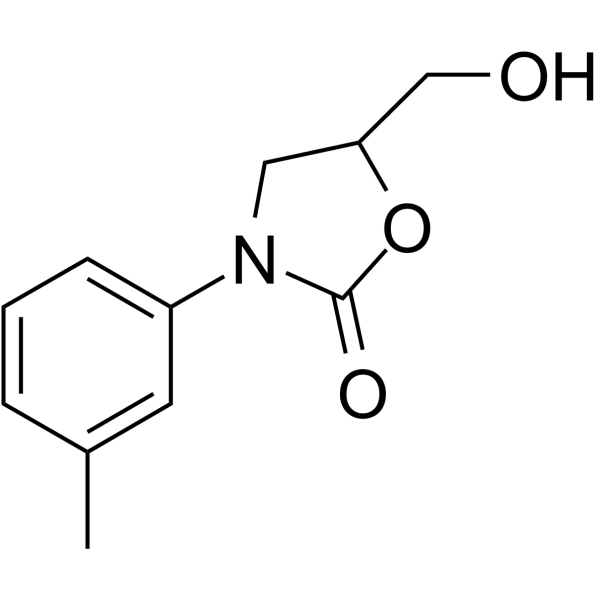
    Toloxatone (MD 69276) is a reversible, selective MAO-A inhibitor that can cross the blood-brain barrier. Toloxatone increases the levels of serotonin (5-HT) and norepinephrine in the brain. Toloxatone reduces the immobility time in the forced swimming test in mice, inhibits killing behavior in rats without causing sedation, and shows a correlation between its free plasma concentration and cerebrospinal fluid concentration. Toloxatone is widely used in research related to depression, depressive disorders and Parkinson's disease .
    Toloxatone
  • HY-121935

    Environmental Pollutants Fungal Infection
    Tecnazene is a dinitroaromatic fungicide and plant growth regulator. Tecnazene binds irreversibly to human skin tissues and exhibits acute toxicity in Rattus norvegicus (brown rat). Tecnazene exerts sprouting-inhibiting and antifungal activities by inhibiting the sprouting of potato tuber buds and blocking the growth and reproduction of fungi that cause dry rot. Tecnazene has significant antifungal and sprouting-inhibiting activities, and shows high toxicity to aquatic organisms such as freshwater fish and crustaceans. Tecnazene is used for sprouting inhibition and dry rot control during potato storage .
    Tecnazene
  • HY-131682

    3-Hexanoyl-NBD-cholesterol

    Fluorescent Dye Others
    3-C6-NBD-cholesterol is a fluorescent analog of Chol that can be used to measure the kinetics of membrane and intracellular trafficking .
    3-C6-NBD-cholesterol
  • HY-D1240

    Biochemical Assay Reagents Others
    Rhodamine 101 inner salt is a bright fluorescent dye with excitation and emission maxima at 565 and 595 nm, respectively. It can be used in various biological applications such as fluorescence microscopy, flow cytometry, fluorescence correlation spectroscopy, and ELISA.
    Rhodamine 101 inner salt
  • HY-W008820R

    Reference Standards Endogenous Metabolite Metabolic Disease
    Glutaric acid (Standard) is the analytical standard of Glutaric acid. This product is intended for research and analytical applications. Glutaric acid, C5 dicarboxylic acid, is an intermediate during the catabolic pathways of lysine and tryptophan. Glutaric acid affects pericyte contractility and migration. Glutaric acid is an indicator of glutaric aciduria type I . In Vitro: Glutaric acid (GA) at concentrations of 1 and 2 mM is able to reduce TRAP measurement by up to 28% in a dose-dependent manner (β=0.77; P<0.001). Furthermore, a significantly inverse correlation is also verified between chemiluminescence and TRAP (β=0.81; P<0.001). Glutaric acid does not alter the activities of Cat and SOD, but strongly inhibits (up to 46%) the activity of GPx even at the lower concentration used (0.5 mM). It is observed that the metabolite inhibits this activity in a dose-dependent manner at concentrations as low as 0.05 mM .
    Glutaric acid (Standard)
  • HY-W099859

    Fungal Infection
    2-Ethylnaphthalene is an alkyl-substituted polyaromatic. 2-Ethylnaphthalene has a negative correlation with Glomus relative abundance in arbuscular mycorrhizal fungi community .
    2-Ethylnaphthalene
  • HY-16984

    Itk Inflammation/Immunology
    GNE-4997 is a potent and selective interleukin-2-inducible T-cell kinase (ITK) inhibitor with a Ki of 0.09 nM, and the correlation between the basicity of solubilizing elements in GNE-4997 and off-target antiproliferative effects reduces cytotoxicity .
    GNE-4997
  • HY-124237

    Bacterial Others
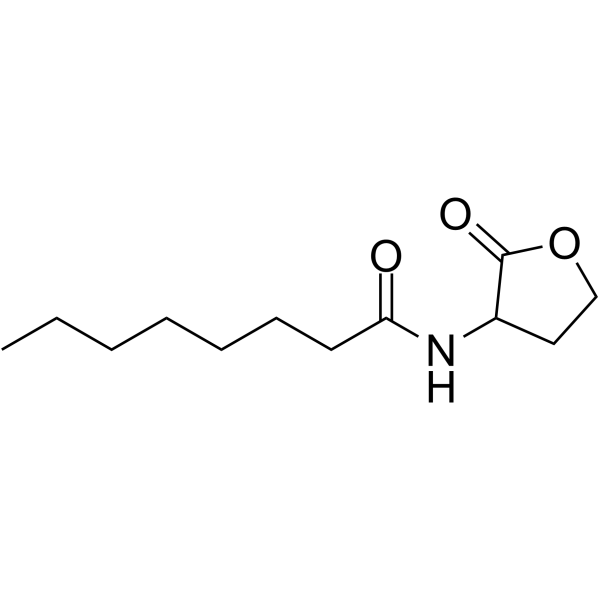
    N-Octanoyl-DL-homoserine lactone is a member of N-acyl homoserine lactones (AHLs) family, also one of the signal molecule of quorum-sensing (QS) signals. N-Octanoyl-DL-homoserine lactone can regulate the production of siderophores and present positive correlation in Aeromonas sobria strain AS7. N-Octanoyl-DL-homoserine lactone can also regulate the secretion of proteases and stimulate the production of total volatile basic nitrogen (TVB-N) .
    N-Octanoyl-DL-homoserine lactone
  • HY-P1378

    Amyloid-β Neurological Disease
    β-Amyloid (1-43)(human) is more prone to aggregation and has higher toxic properties than the long-known Aβ1-42. β-Amyloid (1-43)(human) shows a correlation with both sAPPα and sAPPβ. β-Amyloid (1-43)(human) could be considered an added Alzheimer's disease (AD) biomarker together with the others already in use .
    β-Amyloid (1-43)(human)
  • HY-113085R

    Reference Standards Endogenous Metabolite Others
    3-Hydroxyhippuric acid (Standard) is the analytical standard of 3-Hydroxyhippuric acid. This product is intended for research and analytical applications. 3-Hydroxyhippuric acid is an acyl glycine. 3-Hydroxyhippuric acid inhibits kynureninase (Ki = 60 μM). 3-Hydroxyhippuric acid is found in higher concentrations in autistic group than in the controls. 3-Hydroxyhippuric acid is a marker of Clostridium species, and has a positive correlation with the level of Clostridia. 3-Hydroxyhippuric acid is one of the main metabolites formed from the catechin diet and wine polyphenol diets .
    3-Hydroxyhippuric acid (Standard)
  • HY-N7937

    Others Inflammation/Immunology
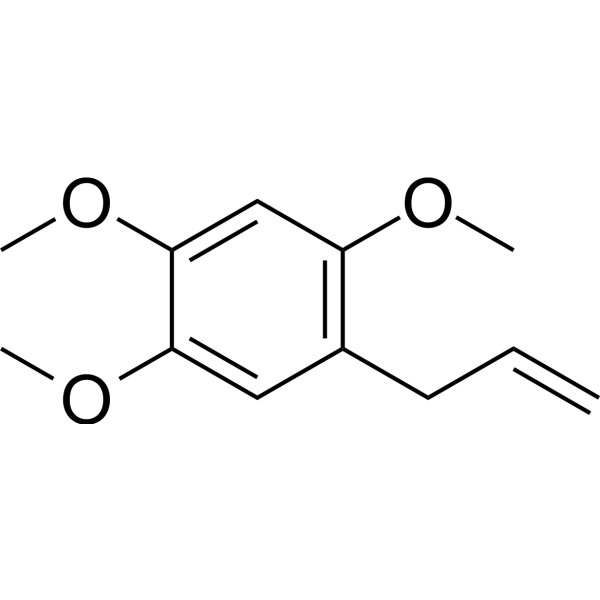
    γ-Asarone, a phenylpropene, shows strong correlation with the biological activities (anti-oxidative, anti-inflammatory and neurotrophic effects) .
    γ-Asarone
  • HY-N15784

    Biochemical Assay Reagents Metabolic Disease
    Tauro-12-oxolithocholanoic acid sodium is a bile acid (BA) suitable to investigate BAs and their relatives’ behavior and correlation with liver, gallbladder, and bile ducts diseases.
    Tauro-12-oxolithocholanoic acid sodium
  • HY-D2757

    Fluorescent Dye Others
    5(6)-Carboxyrhodamine 110 NHS Ester is the nonsulfonated analog of the BP Fluor 488 dye. The amine-reactive 5(6)-Carboxyrhodamine 110 NHS ester can be used to create bright and photostable green-fluorescent bioconjugates with excitation/emission maxima ~502/527 nm. The conjugates of this dye often used for Fluorescence Correlation Spectroscopy (FCS).
    5(6)-Carboxyrhodamine 110 NHS ester
  • HY-147915

    Carboxylesterase (CES) Reactive Oxygen Species (ROS) Cancer
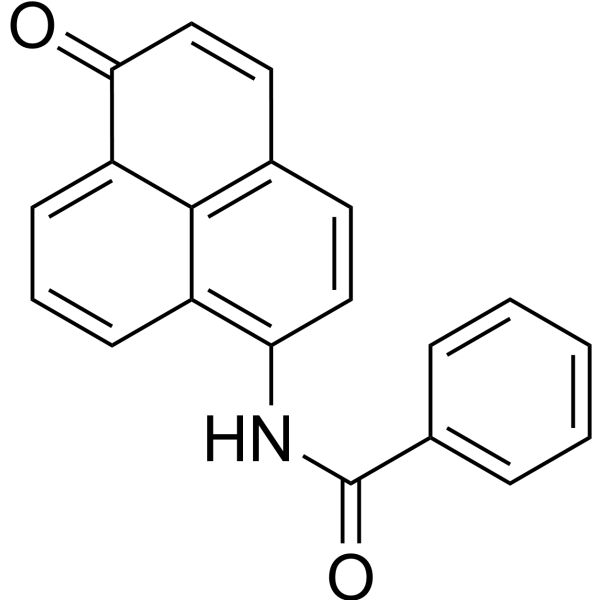
    Benz-AP is a potent photosensitizer. Benz-AP produces singlet oxygen, with a negative correlation with hCES2 (Human carboxylesterase 2) activity. Benz-AP displays a higher photocytotoxicity potency in cancer cells under low hCES2 environments. Upon TPE (Two-photon excitation), Benz-AP produces ROS and kills cancer cells and tumor spheroids .
    Benz-AP
  • HY-116240

    ddEtUrd

    HIV Infection
    2′,3′-Dideoxy-5-ethyluridine (ddEtUrd) is an antiretroviral compound with weak anti-HIV activity. The 3'-substituted derivatives of 2′,3′-Dideoxy-5-ethyluridine did not show significant antiviral effects. 2′,3′-Dideoxy-5-ethyluridine was less potent in inhibiting HIV replication in human MT4 lymphocytes. Although phosphorylation induced by 2′,3′-Dideoxy-5-ethyluridine is essential for antiviral activity, there is no strong correlation between its affinity for human dThd kinase or dCyd kinase .
    2′,3′-Dideoxy-5-ethyluridine
  • HY-104080

    EGFR Cancer
    HG-5-88-01 is an EGFR inhibitor. HG-5-88-01 exhibits no significant correlation in its anti-cancer sensitivity with the expression level of EGFR .
    HG-5-88-01
  • HY-N15768

    Biochemical Assay Reagents Metabolic Disease
    Tauro-3β,5α,6β-trihydroxycholanoic acid sodium is a bile acid (BA) suitable to investigate BAs and their relatives’ behavior and correlation with liver, gallbladder, and bile ducts diseases.
    Tauro-3β,5α,6β-trihydroxycholanoic acid sodium
  • HY-W014610

    Ethyl methylphenylglycidate

    Biochemical Assay Reagents Inflammation/Immunology
    Strawberry aldehyde is an orally active synthetic flavor compound widely used in the food and cosmetics industries. Its presence in small cigar smoke shows a significant positive correlation with free radical levels, thereby increasing the toxicity of the smoke. Strawberry aldehyde has demonstrated long-term safety in rats .
    Strawberry aldehyde
  • HY-124396

    Potassium Channel Metabolic Disease
    Lanceotoxin A is a potent potassium channel inhibitor with activity in regulating cell membrane potential. Lanceotoxin A showed a significant negative correlation with extracellular metabolites in patients after metabolic surgery. The presence of lanceotoxin A may affect the composition of intestinal microorganisms and its association with insulin resistance. Lanceotoxin A may play an important role in the improvement of metabolic syndrome and diabetes .
    Lanceotoxin A
  • HY-N17922

    Others Others
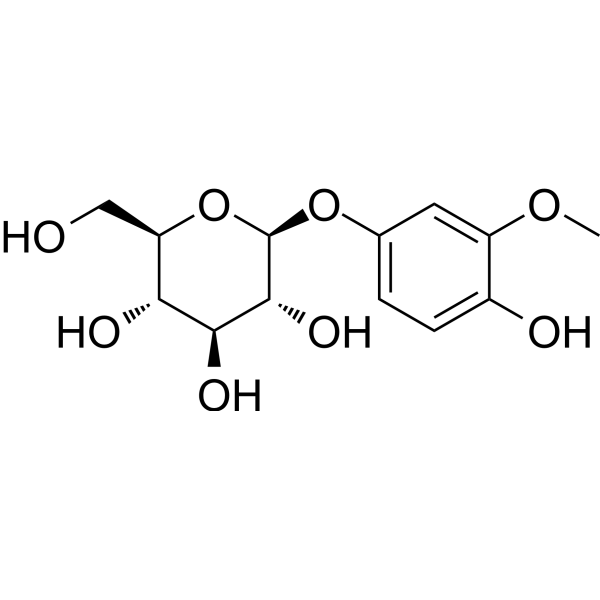
    Genameside A is an iridoid glucoside found in the fruit of Genipa americana L .
    Genameside A
  • HY-D3225

    Fluorescent Dye Neurological Disease
    MD-B is a •OH Fluorescent probe with blood-brain barrier permeability. MD-B undergoes single-electron oxidation by hydroxyl radicals (•OH), which triggers fluorescence enhancement and enables in-situ imaging of •OH. MD-B allows imaging analysis of hydroxyl radicals (•OH) in the mouse brain, revealing a positive correlation between elevated •OH levels and the severity of depressive phenotypes. MD-B can be used in depression-related research .
    MD-B
  • HY-178381S

    Isotope-Labeled Compounds Endogenous Metabolite Others
    3-Hydroxyhippuric acid-d4 is the deuterium labeled 3-Hydroxyhippuric acid (HY-113085). 3-Hydroxyhippuric acid is an acyl glycine. 3-Hydroxyhippuric acid inhibits kynureninase (Ki = 60 μM). 3-Hydroxyhippuric acid is found in higher concentrations in autistic group than in the controls. 3-Hydroxyhippuric acid is a marker of Clostridium species, and has a positive correlation with the level of Clostridia. 3-Hydroxyhippuric acid is one of the main metabolites formed from the catechin diet and wine polyphenol diets .
    3-Hydroxyhippuric acid-d4
  • HY-156184

    Endogenous Metabolite Neurological Disease Metabolic Disease Cancer
    Octanoylcarnitine is an orally active medium-chain acylcarnitine transport intermediate in fatty acid β-oxidation. Octanoylcarnitine is converted to octanoyl-CoA by carnitine acetyltransferase (CrAT), which then generates energy via β-oxidation in mitochondria of the heart and skeletal muscle. Octanoylcarnitine enhances grip strength and treadmill endurance, alleviates lactic acidosis, distributes in muscle and heart tissues, increases free carnitine levels, and mitigates mitochondrial stress. Octanoylcarnitine is associated with long-chain fatty acid metabolism, shows a positive correlation with subcutaneous fat area in patients with metastatic pancreatic ductal adenocarcinoma, and is closely related to central retinal artery occlusion (CRAO) .
    Octanoylcarnitine
  • HY-48813

    Endogenous Metabolite NF-κB Interleukin Related Metabolic Disease
    Glycoursodeoxycholic acid 3-sulfate is a glycine-conjugated sulfated bile acid 3-sulfate, which is produced by SULT2A1-mediated sulfation of glycoursodeoxycholic acid (HY-N1424) in the liver. Glycoursodeoxycholic acid 3-sulfate attenuates the anti-inflammatory effect of glycoursodeoxycholic acid and impairs the inhibitory effect on the IL-17 and NF-κB signaling pathways. Glycoursodeoxycholic acid 3-sulfate shows a significant correlation with aortic flow velocity and BNP in patients with aortic stenosis. Glycoursodeoxycholic acid 3-sulfate is mainly used in related studies such as quantitative analysis, quality control and biochemical experiments; it often serves as a reagent for metabolomics analysis and can also be applied to research related to aortic stenosis .
    Glycoursodeoxycholic acid 3-sulfate

Inquiry Online

Your information is safe with us. * Required Fields.

Salutation


Country or Region *

Applicant Name *


Organization Name *

Department *


Email Address *


Product Name *

Cat. No.


Requested quantity *

Phone Number *


Remarks

Inquiry Online

Inquiry Information

Product Name:
Cat. No.:
Quantity:
MCE Japan Authorized Agent:

