1. Search Result
Search Result
Results for "

epileptiform

" in MedChemExpress (MCE) Product Catalog:

20

Inhibitors & Agonists

3

Peptides

2

Natural
Products

1

Isotope-Labeled Compounds

Cat. No. Product Name Target Research Areas Chemical Structure
  • HY-19545A
    SCH-23390 hydrochloride
    Maximum Cited Publications
    31 Publications Verification

    R-(+)-SCH-23390 hydrochloride

    Dopamine Receptor 5-HT Receptor Potassium Channel Neurological Disease
    SCH-23390 hydrochloride (R-(+)-SCH-23390 hydrochloride) is a potent and selective dopamine D1-like receptor antagonist with Kis of 0.2 nM and 0.3 nM for the D1 and D5 receptor, respectively. SCH-23390 hydrochloride is a potent and high efficacy human 5-HT2C receptor agonist with a Ki of 9.3 nM. SCH-23390 hydrochloride also binds with high affinity to the 5-HT2 and 5-HT1C receptors. SCH-23390 hydrochloride inhibits G protein-coupled inwardly rectifying potassium (GIRK) channels with an IC50 of 268 nM .
    SCH-23390 hydrochloride
  • HY-101165
    Cyclothiazide
    2 Publications Verification

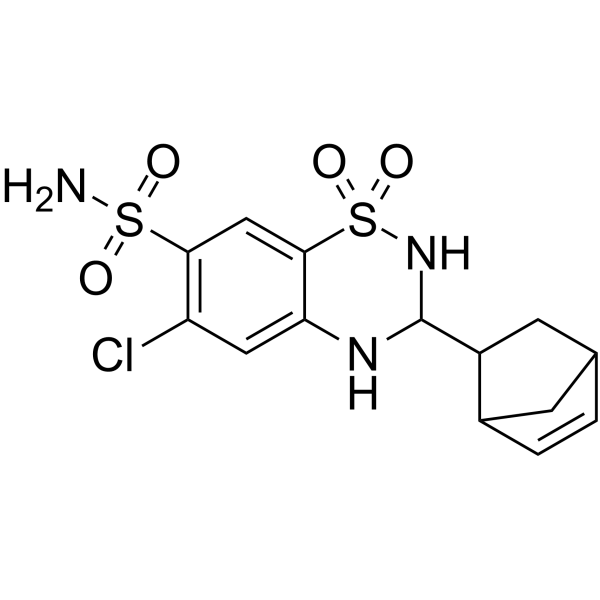
    iGluR GABA Receptor Neurological Disease
    Cyclothiazide is a positive allosteric modulator of ionotropic AMPA-type glutamate receptors. Cyclothiazide inhibits GABAA receptors. Cyclothiazide is frequently used to produce a fast inhibition of AMPA receptor desensitization and a much slower potentiation of the AMPA current. Cyclothiazide can potentiate responses to kainate in hippocampal neurons. Cyclothiazide has effects on glutamatergic neurotransmission. Cyclothiazide also induces epileptiform EEG activity accompanying behavioral seizures .
    Cyclothiazide
  • HY-157786

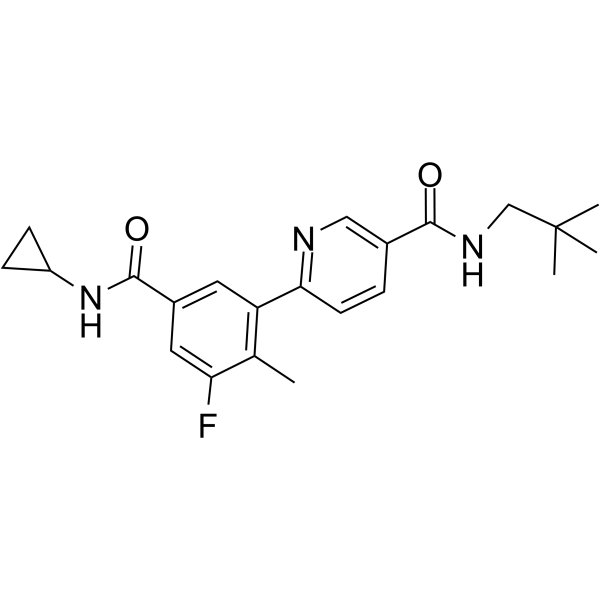
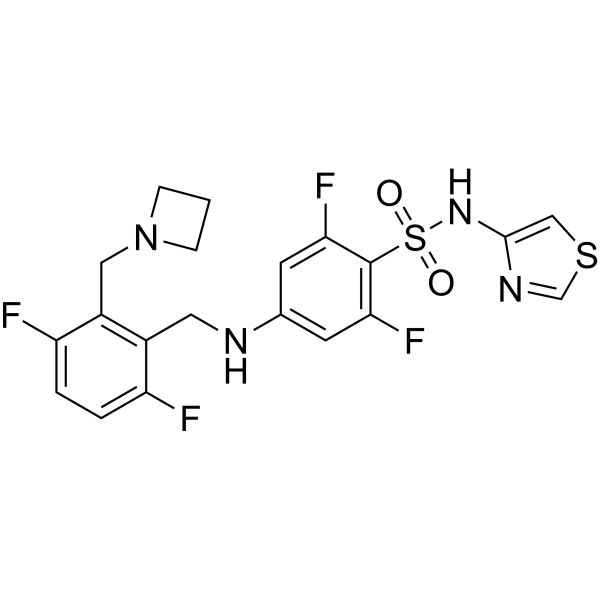
    Sodium Channel Neurological Disease
    XPC-5462 is a selective NaV1.6/1.2 inhibitor, with an IC50 of 0.0103 μM against hNaV1.6, 0.0137 μM against mNaV1.6, and 0.0109 μM against hNaV1.2. XPC-5462 significantly reduces epileptiform discharges. XPC-5462 is applicable for epilepsy-related research .
    XPC-5462
  • HY-N9404

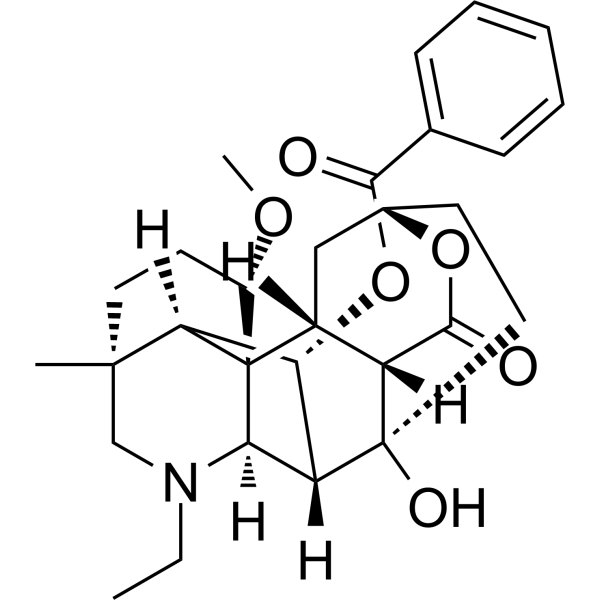
    Sodium Channel Neurological Disease
    6-Benzoylheteratisine is an Aconitum alkaloid with potential neuroprotective activity. 6-Benzoylheteratisine can antagonize tetrodotoxin, inhibit the increase of [Na +]i, [Ca 2+]i and glutamate release, and block sodium channels. 6-Benzoylheteratisine has an inhibitory effect on the neuronal activity underlying epileptiform burst discharge .
    6-Benzoylheteratisine
  • HY-P5183

    Sodium Channel Neurological Disease
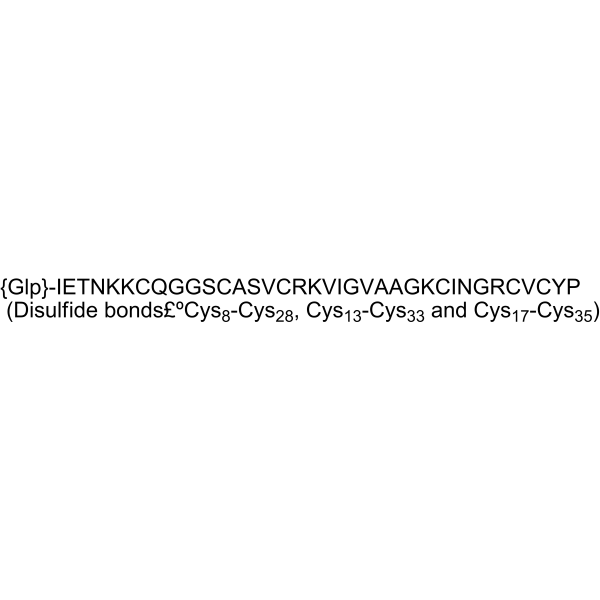
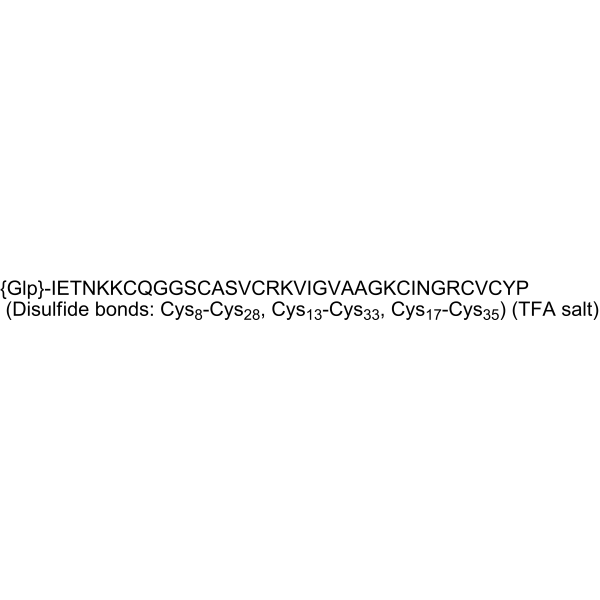
    Hm1a is a venom peptide and a selective hNaV1.1 activator with an EC50 of 7.5 nM. Hm1a enhances hNaV1.1 and hNaV1.3 channel currents via delayed inactivation. Hm1a restores action potential firing in Dravet syndrome GABAergic inhibitory interneurons, reduces interictal epileptiform discharges and whole-brain hyperexcitability, lowers seizure frequency, and rescues premature death in Dravet syndrome mice. Hm1a can be used for the research of neurological disease, such as Dravet syndrome .
    Hm1a
  • HY-106822

    AO-33; (±)-Losigamone; LSG

    Sodium Channel Chloride Channel Neurological Disease
    Losigamone (AO-33) is an orally active antiepileptic compound. Losigamone blocks sodium channel. Losigamone stimulates the neuronal chloride channel and enhance chloride influx. Losigamone potentiates GABA-mediated responses and reduces epileptiform activity induced by chloride channel antagonists. Losigamone can be used for epilepsy research .
    Losigamone
  • HY-108400

    R-(+)-SCH-23390 maleate

    Dopamine Receptor 5-HT Receptor Potassium Channel Neurological Disease
    SCH-23390 maleate (R-(+)-SCH-23390 maleate) is a potent and selective dopamine D1-like receptor antagonist with Kis of 0.2 nM and 0.3 nM for the D1 and D5 receptor, respectively. SCH-23390 maleate is a potent and high efficacy human 5-HT2C receptor agonist with a Ki of 9.3 nM. SCH-23390 maleate also binds with high affinity to the 5-HT2 and 5-HT1C receptors. SCH-23390 maleate inhibits G protein-coupled inwardly rectifying potassium (GIRK) channels with an IC50 of 268 nM .
    SCH-23390 maleate
  • HY-19130

    Adenosine Receptor Neurological Disease
    BW-534U87 is an orally active adenosine A1 receptor agonist and competitive adenosine deaminase (ADA) inhibitor (Ki=7 μM). BW-534U87 elevates brain adenosine levels and suppresses epileptiform activity. BW-534U87 demonstrate anticonvulsant efficacy in animal seizure models. BW-534U87 is promising for research of epilepsy and adenosine-related neuropsychiatric disorders .
    BW-534U87
  • HY-P1426

    Potassium Channel Neurological Disease
    AmmTX3 is a peptide toxin identified from the venom of the scorpion Androctonus mauretanicus. AmmTX3 is a highly specific blocker of Kv4 channels, which selectively and almost completely blocks transient A-type K + currents with a Ki of 131 nM. AmmTX3 induces epileptiform behaviors and causes death in mice receiving intracerebroventricular injection. AmmTX3 increases the excitability of dentate gyrus granule cells, reduces GABAergic inhibition, enhances and stabilizes the EPSP-spike component of long-term potentiation, and impairs reference memory. AmmTX3 can be used in research related to pain, epilepsy, and autism spectrum disorder .
    AmmTX3
  • HY-139145

    Trimethylopropane phosphate

    GABA Receptor Neurological Disease
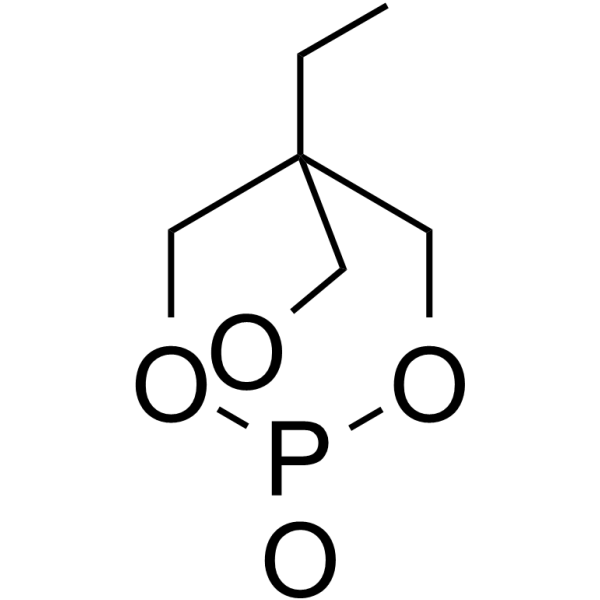
    Etbicyphat (Trimethylopropane phosphate) is a potent GABA(A) receptors competitive antagonist. Etbicyphat induces epileptiform activities in hippocampal CA1 neurons, and binds to the GABA(A)-benzodiazepine receptors .
    Etbicyphat
  • HY-103563

    mGluR Neurological Disease
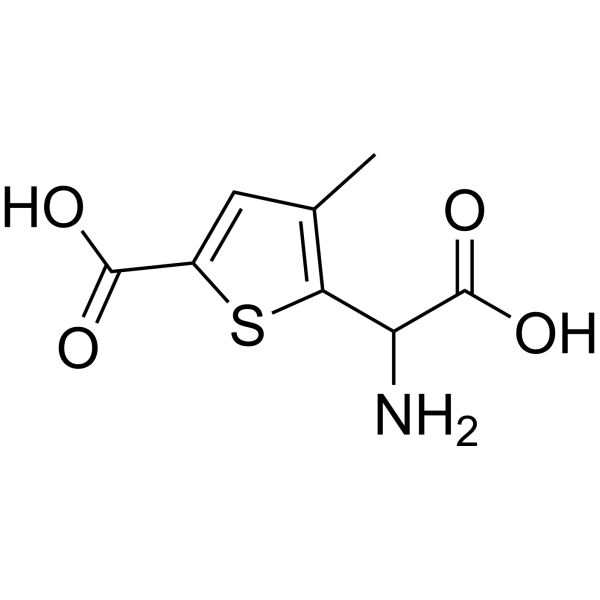
    3-MATIDA is a metabolic glutamate 1 (mGlu1) receptor antagonist. 3-MATIDA alleviates neuronal death in cerebral ischemia models. 3-MATIDA can be used in the study of neuronal injury and epileptiform activity after ischemia .
    3-MATIDA
  • HY-107719

    iGluR Neurological Disease
    D-AP7 is a specific NMDA receptor antagonist with inhibitory activity against epileptiform activity. D-AP7 attenuated neuronal activation in spot activity by reducing the duration and number of exogenously induced bursts. D-AP7 also increased the amplitude of secondary action potentials, which may restore neuronal activity in some epileptiform bursts. D-AP7 showed anxiogenic effects and impaired memory consolidation in passive avoidance learning .
    D-AP7
  • HY-139145S

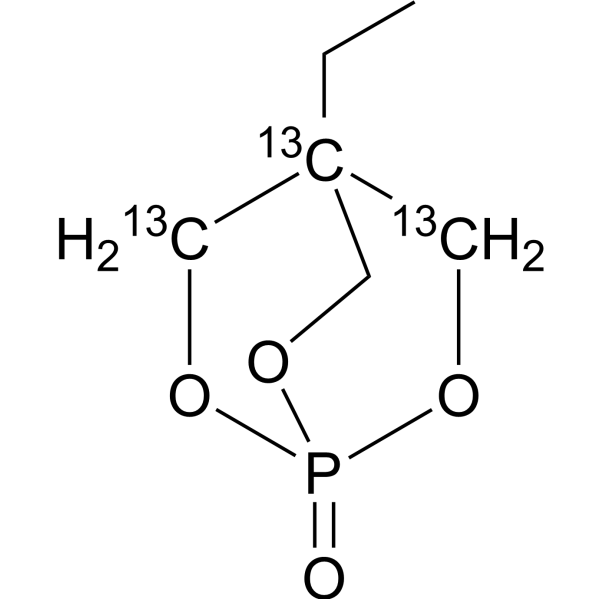
    Trimethylopropane phosphate-13C3

    GABA Receptor Neurological Disease
    Etbicyphat- 13C3 is the 13C labeled Etbicyphat (HY-139145). Etbicyphat is a potent GABA(A) receptors competitive antagonist. Etbicyphat induces epileptiform activities in hippocampal CA1 neurons, and binds to the GABA(A)-benzodiazepine receptors .
    Etbicyphat-13C3
  • HY-132246

    MAGL Neurological Disease
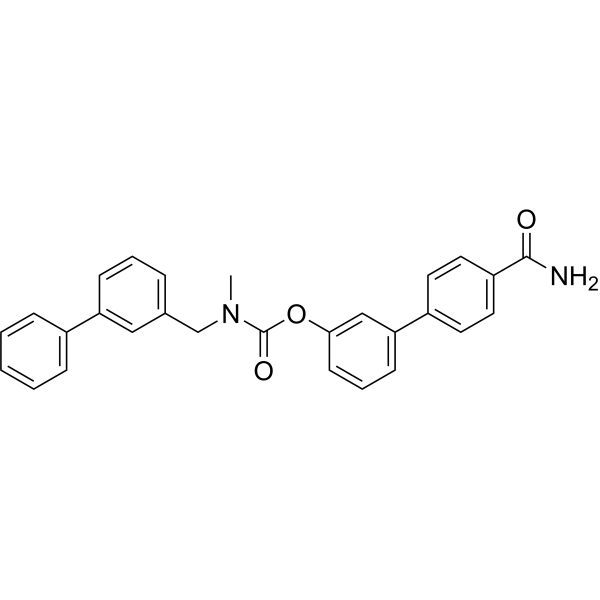
    WWL123 analogue-1 is an analogue of WWL123. WWL123 is a potent and selective ABHD6 inhibitor with an IC50 of 430 nM . WWL123 crosses the blood-brain-barrier and inhibits ABHD6 in brain parenchyma. ABHD6 blockade by WWL123 exerts an antiepileptic effect in Pentylenetetrazole (PTZ)-induced epileptiform seizures and spontaneous seizures in R6/2 mice .
    WWL123 analogue-1
  • HY-101165R

    Reference Standards iGluR GABA Receptor Neurological Disease
    Cyclothiazide (Standard) is the analytical standard of Cyclothiazide. This product is intended for research and analytical applications. Cyclothiazide is a positive allosteric modulator of ionotropic AMPA-type glutamate receptors. Cyclothiazide inhibits GABAA receptors. Cyclothiazide is frequently used to produce a fast inhibition of AMPA receptor desensitization and a much slower potentiation of the AMPA current. Cyclothiazide can potentiate responses to kainate in hippocampal neurons. Cyclothiazide has effects on glutamatergic neurotransmission. Cyclothiazide also induces epileptiform EEG activity accompanying behavioral seizures .
    Cyclothiazide (Standard)
  • HY-P1426A

    Potassium Channel Neurological Disease
    AmmTX3 TFA is a peptide toxin identified from the venom of the scorpion Androctonus mauretanicus. AmmTX3 TFA is a highly specific blocker of Kv4 channels, which selectively and almost completely blocks transient A-type K + currents with a Ki of 131 nM. AmmTX3 TFA induces epileptiform behaviors and causes death in mice receiving intracerebroventricular injection. AmmTX3 TFA increases the excitability of dentate gyrus granule cells, reduces GABAergic inhibition, enhances and stabilizes the EPSP-spike component of long-term potentiation, and impairs reference memory. AmmTX3 TFA can be used in research related to pain, epilepsy, and autism spectrum disorder .
    AmmTX3 TFA
  • HY-105353

    iGluR Neurological Disease
    CEB-1604 is an NMDA receptor antagonist. CEB-1604 inhibits NMDA-induced currents in oocytes transfected with NMDA receptor isoforms (NR1/NR2A, NR1/NR2B, NR1/NR2C, NR1/NR2D) with IC50 values ranging from 5 to 12 μM. CEB-1604 abolishes NMDA-dependent epileptiform discharges in rat cortical wedge preparations and reduces the depolarizing effects of NMDA. CEB-1604 can be used in the research field of neurological damage diseases .
    CEB-1604
  • HY-Y0282

    NSC 77384; Sanibrom 40

    Environmental Pollutants Neurological Disease
    Sodium bromide (NSC 77384; Sanibrom 40) is a GABA-ergic system modulator that crosses the blood-brain barrier, and it effectively reduces and blocks epileptiform discharges. Sodium bromide exerts significant anticonvulsant effects by enhancing GABA-ergic inhibitory functions, such as increasing the amplitude of inhibitory postsynaptic currents and paired-pulse inhibition. Sodium bromide specifically enhances stimulation-induced extracellular alkalosis without affecting baseline pH or subsequent acidosis processes. Sodium bromide exhibits species-specific pharmacokinetic characteristics, competes with chloride ions for renal tubular reabsorption sites, and serves as a marker for extracellular fluid volume. Sodium bromide can be used in the research of epilepsy and related neurological diseases .
    Sodium bromide
  • HY-101360R

    1-Ethyl-2-benzimidazolinone (Standard)

    Potassium Channel Reference Standards Cardiovascular Disease Neurological Disease Cancer
    1-EBIO (1-Ethyl-2-benzimidazolinone) (Standard) is the analytical standard of 1-EBIO (HY-101360). This product is intended for research and analytical applications. 1-EBIO is an activator of Ca 2+ sensitive K + channels wirh an EC50 of 136 μM for KCa3.1. 1-EBIO induces Cl - secretion, K + conductance, membrane hyperpolarization, and afterhyperpolarisation currents. 1-EBIO reduces epileptiform activity, seizure incidence, and rescues cells from Ionomycin (HY-13434)-induced death .
    1-EBIO (Standard)
  • HY-N18014

    Drug Derivative Neurological Disease
    Naringenin 4',7-dimethyl ether, Naringenin (HY-N0100) derivative is an anti-seizure agent. Naringenin 4',7-dimethyl ether attenuates pentylenetetrazole-induced seizures in larval zebrafish and reduces seizures in the mouse 6-Hz psychomotor seizure model. Naringenin 4',7-dimethyl ether can be used for the research of epilepsy .
    Naringenin 4',7-dimethyl ether

Inquiry Online

Your information is safe with us. * Required Fields.

Salutation


Country or Region *

Applicant Name *


Organization Name *

Department *


Email Address *


Product Name *

Cat. No.


Requested quantity *

Phone Number *


Remarks

Inquiry Online

Inquiry Information

Product Name:
Cat. No.:
Quantity:
MCE Japan Authorized Agent:

