



1. Search Result
Search Result
Results for "

extraction

" in MedChemExpress (MCE) Product Catalog:

69

Inhibitors & Agonists

3

Fluorescent Dye

22

Biochemical Assay Reagents

12

MCE Kits

24

Natural
Products

1

Isotope-Labeled Compounds

Cat. No. Product Name Target Research Areas Chemical Structure
  • HY-108717
    Proteinase K
    Maximum Cited Publications
    23 Publications Verification

    Protease K

    Ser/Thr Protease Others
    Proteinase K (Protease K) is a nonspecific serine protease that is useful for general digestion of proteins. Proteinase K is active in the presence of SDS or urea and over a wide range of pH (4-12), salt concentrations, and temperatures. Proteinase K can be use for promoting methods of viral nucleic acid extraction, and detection .
    Proteinase K
  • HY-N0159
    Paeonol
    10+ Cited Publications

    Monoamine Oxidase Autophagy Neurological Disease Cancer
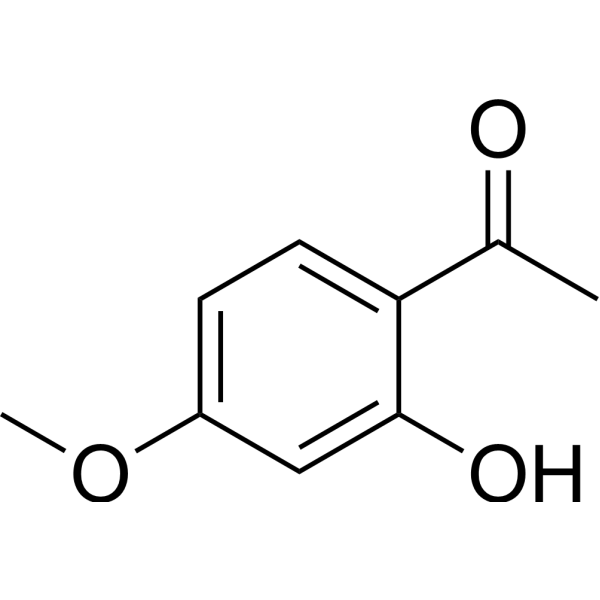
    Paeonol is an active extraction from the root of Paeonia suffruticosa, Paeonol inhibits MAO-A and MAO-B with IC50 of 54.6 μM and 42.5 μM, respectively.
    Paeonol
  • HY-138941
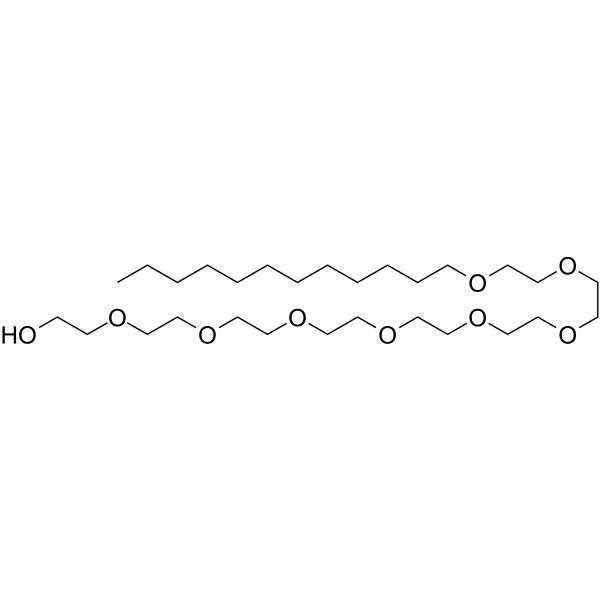
    Octaethylene glycol monododecyl ether
    1 Publications Verification

    C12E8

    Influenza Virus Infection
    Octaethylene glycol monododecyl ether (C12E8) is an non-ionic detergent that can be used for membrane protein extraction. Octaethylene glycol monododecyl ether can solubilize the viral membrane of intact influenza virus .
    Octaethylene glycol monododecyl ether
  • HY-D0914

    FD&C Green No. 3; Food green 3; C.I. 42053

    Environmental Pollutants α-synuclein Neurological Disease
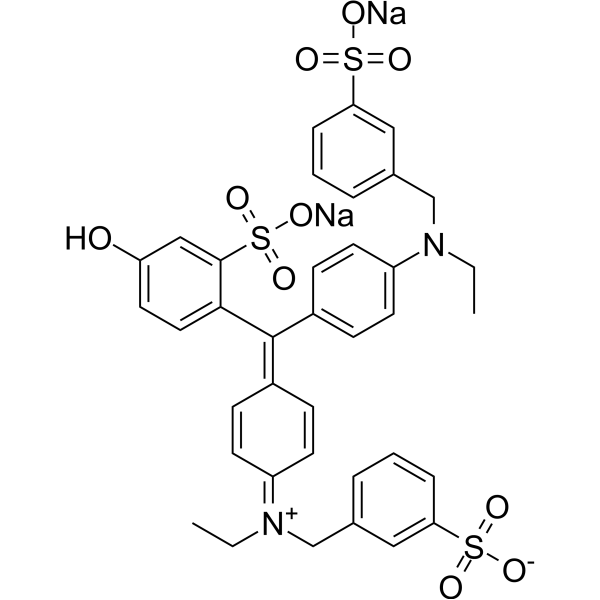
    Fast Green FCF is a sea green triarylmethane food dye, with absorption maximum ranging from 622 to 626 nm. Fast Green FCF inhibits α-synuclein aggregation, as well as and P2X4 receptor, and TLR4/Myd88/NF-κB. Fast Green FCF is widely used as a staining agent like quantitative stain for histones at alkaline pH after acid extraction of DNA, and as a protein stain in electrophoresis. Fast Green FCF improves cognitive impairment, depression, relieves pain allergies, and promotes reproductive function .
    Fast Green FCF
  • HY-B1260
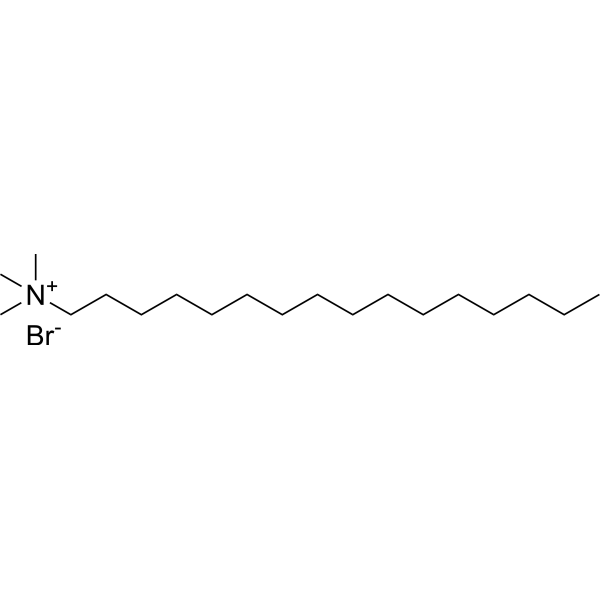
    Cetrimonium bromide
    2 Publications Verification

    CTAB; Cetyltrimethylammonium bromide; Hexadecyltrimethylammonium bromide

    Environmental Pollutants Biochemical Assay Reagents Apoptosis TGF-β Receptor MMP Cancer
    Cetrimonium bromide (CTAB), a quaternary ammonium, is an orally active cationic surfaetant. Cetrimonium bromide has toxicity and anticancer effect. Cetrimonium bromide inhibits cell migration and invasion through modulating the canonical and non-canonical TGF-β signaling pathways. Cetrimonium bromide can be used for DNA extraction .
    Cetrimonium bromide
  • HY-NP155
    Histone (calf thymus)
    1 Publications Verification

    Endogenous Metabolite Others
    Histone (calf thymus) is a histone found in the deoxyribonucleoprotein of calf thymus and can be obtained by acid extraction technique .
    Histone (calf thymus)
  • HY-Y0537C

    Potassium chloride, suitable for the extraction and solubilization of proteins

    Environmental Pollutants Biochemical Assay Reagents Others
    Potassium chloride, ≥99.99% trace metals basis (Potassium chloride, suitable for the extraction and solubilization of proteins), is an inorganic salt used in the preparation of phosphate buffers. With very low metal impurity content, it is suitable for protein extraction and dissolution.
    Potassium chloride, ≥99.99% trace metals basis
  • HY-108717B

    Protease K (NGS grade)

    Ser/Thr Protease Others
    Proteinase K (Protease K) (NGS grade) is a nonspecific serine protease that is useful for general digestion of proteins. Proteinase K (NGS grade) is active in the presence of SDS or urea and over a wide range of pH (4-12), salt concentrations, and temperatures. Proteinase K (NGS grade) can be use for promoting methods of viral nucleic acid extraction, and detection. This product is NGS grade, no Nickase residue, and nucleic acid residue ≤5 pg/mg .
    Proteinase K (NGS grade)
  • HY-P2963
    Nuclease P1
    1 Publications Verification

    Endogenous Metabolite Others
    Nuclease P1 is a single-stranded specific endonuclease, it hydrolyzes nucleic acids into 5'-mononucleotides and cleaves the single-stranded region of a double-stranded nucleic acid. Nuclease P1 is one of the most well-known single stranded specific nucleases in the field of molecular biology, it is widely used in the pharmaceutical and food industries . Nuclease P1 can be obtained by fermentation of Penicillium citrinum: through extraction process, ultrafiltration concentration, drying and purification, etc.
    Nuclease P1
  • HY-E70529

    DNA/RNA Synthesis Bacterial Infection
    Ribonucleoside vanadyl complexes are a class of potent RNase and Taq polymerase inhibitors. Ribonucleoside vanadyl complexes protect RNA during RNA isolation by inhibiting ribonucleases, and also reduce the viability of bacteria and eukaryotic cells by interfering with ribosomal subunit assembly. Ribonucleoside vanadyl complexes block PCR and reverse transcription reactions templated by viral nucleic acids and enhance the effects of antibiotics against Staphylococcus aureus, but do not directly inhibit protein synthesis. Ribonucleoside vanadyl complexes can be effectively removed by phenol-chloroform extraction, thus enabling subsequent PCR analysis. Ribonucleoside vanadyl complexes can be applied in research related to chronic hepatitis C (HCV) and Staphylococcus aureus infection .
    Ribonucleoside vanadyl complexes
  • HY-W047709

    THEED; THEEN

    Biochemical Assay Reagents Bacterial Fungal Infection Cancer
    N,N,N',N'-Tetrakis(2-hydroxyethyl)ethylenediamine (THEED; THEEN) is a tetrapodal pentadentate chelating ligand that functions as a chelator to form stable complexes with metal ions. N,N,N',N'-Tetrakis(2-hydroxyethyl)ethylenediamine serves as a versatile building block for organic synthesis, a reagent for metal extraction, and an auxiliary for catalytic reactions. N,N,N',N'-Tetrakis(2-hydroxyethyl)ethylenediamine-derived metal complexes exhibit antibacterial, antifungal, and anticancer activities. N,N,N',N'-Tetrakis(2-hydroxyethyl)ethylenediamine and its metal complexes can be used for research related to breast cancer, leukemia, various bacterial and fungal infections .
    N,N,N',N'-Tetrakis(2-hydroxyethyl)ethylenediamine
  • HY-Y0537B

    Environmental Pollutants Biochemical Assay Reagents Mitochondrial Metabolism Metabolic Disease
    Potassium chloride, for molecular biology is potassium chloride that can be used in molecular biology. Potassium chloride, for molecular biology affects the stability of biological membranes by disrupting the electrostatic interactions between proteins and lipids. Potassium chloride, for molecular biology affects the solubility of myofibrillar proteins and the integrity of mitochondria. Potassium chloride, for molecular biology is commonly used in homogenization buffers and protein extraction procedures .
    Potassium chloride, for molecular biology
  • HY-Y1219H

    Biochemical Assay Reagents Others
    Silica gel, high-purity grade, 200-400 mesh is a biologically inert matrix and desiccant with high water retention capacity and low regeneration temperature. Silica gel, high-purity grade, 200-400 mesh prevents DNA degradation by absorbing water from plant leaves, and is suitable for preserving field-collected samples for subsequent DNA extraction, restriction endonuclease digestion, PCR amplification and gene sequencing. Silica gel, high-purity grade, 200-400 mesh can be regenerated and reused after water absorption saturation. Silica gel, high-purity grade, 200-400 mesh provides a non-toxic, inert aqueous environment for embedded cells, allows free diffusion of nutrients, oxygen and metabolic wastes, blocks external contamination, and thus maintains the viability of fibroblasts and epithelial cells. Silica gel, high-purity grade, 200-400 mesh serves as an ideal candidate material for tissue culture scaffolds and implantable bioreactors .
    Silica gel, high-purity grade, 200-400 mesh
  • HY-108717A

    Recombinant Protease K (DNase & RNase free, animal free)

    Ser/Thr Protease Others
    Recombinant Proteinase K (Protease K) (DNase & RNase free, animal free) is a nonspecific serine protease that is useful for general digestion of proteins. Proteinase K (DNase & RNase free, animal free) is active in the presence of SDS or urea and over a wide range of pH (4-12), salt concentrations, and temperatures. Proteinase K (DNase & RNase free, animal free) can be use for promoting methods of viral nucleic acid extraction, and detection. This product is of molecular biology grade, free of animal-derived ingredients, and is recombinantly purified from yeast .
    Recombinant Proteinase K (DNase & RNase free, animal free)
  • HY-D0841
    Guanidine thiocyanate
    3 Publications Verification

    Endogenous Metabolite Infection Cancer
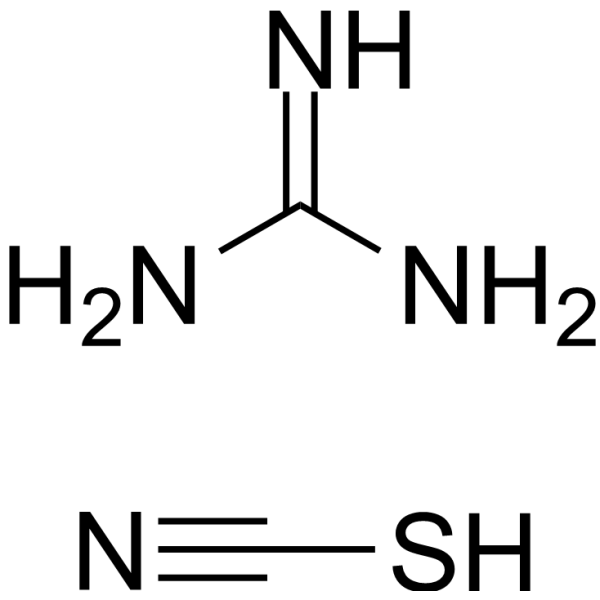
    Guanidine thiocyanate is a strong protein denaturant and potent inhibitor of nucleases. Guanidinium thiocyanate is a nucleic acid protector in the extraction of DNA and RNA from cells. Guanidine thiocyanate is a common component of buffers used for nucleic acid extraction .
    Guanidine thiocyanate
  • HY-ER010

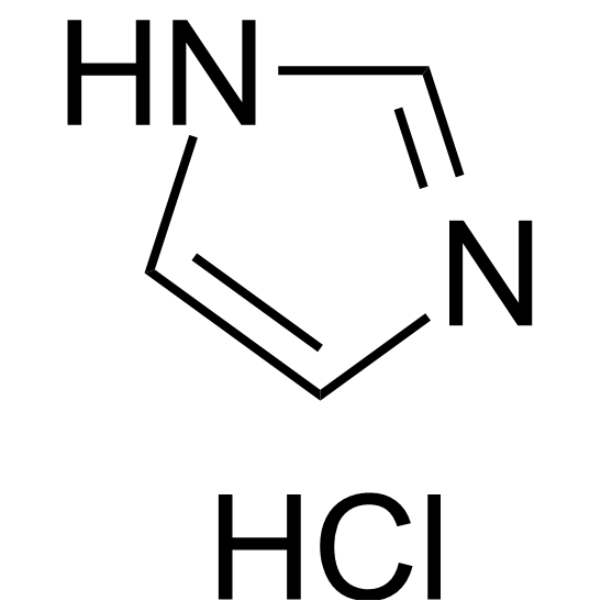
    Imidazole hydrochloride

    Biochemical Assay Reagents Others
    1H-Imidazole hydrochloride can be used as ligand, buffer and catalyst, etc., and also plays an important role in the process of drug synthesis and extraction of natural products. In addition, the compound is widely used in certain industrial fields, such as in the manufacturing process of plastics, coatings, textiles and electronic materials. Although the compound has no direct medical applications, it plays an important role in chemical research and laboratory studies.
    1H-Imidazole hydrochloride
  • HY-W110793

    Diphenylthiocarbazone

    Biochemical Assay Reagents Metabolic Disease
    Dithizone can be toxic to pancreatic islet cells and cause experimental diabetes. Dithizone can be used for in vitro in vivo staining of transplanted islets and cytoplasmic granules of bone marrow cells. Dithizone can be used as a chelating agent and colorimetric indicator for the detection and extraction of various heavy metals, including lead and mercury, in analytical and biochemical applications. Dithizone forms stable colored complexes with metal ions and can be quantitatively analyzed by methods such as spectrophotometry .
    Dithizone
  • HY-W017167

    Drug Intermediate Neurological Disease
    Pyrrolidin-2-yl-acetic acid hydrochloride is the precursor for the biosynthesis of Tussilagine (HY-N1388) and Isotussilagine. Pyrrolidin-2-yl-acetic acid hydrochloride can be used in neurological research .
    Pyrrolidin-2-yl-acetic acid hydrochloride
  • HY-W460471

    Biochemical Assay Reagents Others
    Tris Buffered Saline is a common buffer reagent in molecular biology, consisting of Tris and NaCl. Tris Buffered Saline can adjust pH and ionic strength and is widely used in DNA/RNA extraction, PCR and protein electrophoresis. Tris Buffered Saline can purify and protect nucleic acid materials and improve reaction efficiency and concentration. In protein electrophoresis, Tris Buffered Saline stabilizes gels and maintains pH. Overall, Tris Buffered Saline offers versatility, good solubility, and low toxicity in molecular biology applications.
    Tris Buffered Saline
  • HY-Y0537K

    Biochemical Assay Reagents Cardiovascular Disease
    Potassium chloride, ACS, 99.0% is a metal halide salt composed of potassium and chlorine. Potassium chloride, ACS, 99.0% replenishes electrolytes, corrects water-electrolyte imbalance, and is used in hypokalemia research. Potassium chloride, ACS, 99.0% is also used to prepare buffer solutions and produce fertilizers, with applications in the fields of medicine, scientific research and food processing. Potassium chloride, ACS, 99.0% plays a key role in protein extraction and dissolution .
    Potassium chloride, ACS, 99.0%
  • HY-W127790

    Biochemical Assay Reagents Others
    Bathophenanthrolinedisulfonic acid disodium salt (BPS) is a colorimetric reagent for iron detection, with a wavelength of 535 nm for iron complex. It can be used for iron determination in aqueous solution systems without the need for extraction solvents. BPS can serve as a precursor to prepare Europium(III) tris(dibenzoylmethanate) bis(bathophenanthrolinedisulfonate) complex and ruthenium(II) tris(bathophenanthrolinedisulfonate), or participate in the catalytic oxidation of 2-hexanol by forming water-soluble complexes with palladium .
    Bathophenanthrolinedisulfonic acid disodium
  • HY-123622

    Biochemical Assay Reagents Others
    CYMAL-5, 98% (TLC) is a cycloalkyl aliphatic saccharide. CYMAL-5, 98% (TLC) is a glycosidic surfactant (GS) with a chiral maltose polar head group and a cyclohexyl-pentyl hydrophobic tail. CYMAL-5, 98% (TLC) is a non-ionic detergent that has a tenfold lower critical micelle concentration (CMC) in comparison with OG, and has previously been used for membrane protein extraction or crystallization of membrane proteins for X-ray crystallographic studies .
    CYMAL-5, 98% (TLC)
  • HY-B1684

    SQ 26962

    Biochemical Assay Reagents Others
    Mebrofenin (SQ 26962) is a type of iminodiacetic acid (IDA). Mebrofenin is available as a ready to use the kit for radio-labeling with Tc-99m. Tc-99m Mebrofenin, a diagnostic agent, is used for hepatobiliary imaging. Tc-99m Mebrofenin is the radiopharmaceutical of choice for the evaluation of hepatic function .
    Mebrofenin
  • HY-106281

    PPD 10558

    HMG-CoA Reductase (HMGCR) Metabolic Disease
    Bemfivastatin (PPD 10558) is an orally active HMG-CoA Reductase (HMGCR) inhibitor. Bemfivastatin enhances the activity of liver extraction and reduces blood lipid levels. Bemfivastatin can be used for research of metabolic disease, such as hypercholesterolemia .
    Bemfivastatin
  • HY-N0159R

    Reference Standards Monoamine Oxidase Autophagy Neurological Disease Cancer
    Paeonol (Standard) is the analytical standard of Paeonol. This product is intended for research and analytical applications. Paeonol is an active extraction from the root of Paeonia suffruticosa, Paeonol inhibits MAO-A and MAO-B with IC50 of 54.6 μM and 42.5 μM, respectively.
    Paeonol (Standard)
  • HY-W018582

    Fungal Infection
    N-Phenylacrylamide is a special polymer showing high affinity with Ochratoxin A, a colorless and crystalline mycotoxin compound. N-Phenylacrylamide can be applied in the field of mycotoxin extraction, and be used for the security research of agricultural commodities and foods made from cereals and grapes .
    N-Phenylacrylamide
  • HY-E70231

    Others Cardiovascular Disease
    Thrombin-like enzyme is a proteolytic enzyme extraction of Agkistrodon halys venom. Thrombin-like enzyme can be used for degradation of fibrinogen. Thrombin-like enzyme can exacerbate myosin-induced EAM (experimental autoimmune myositis). Thrombin-like enzyme can be used for degradation of fibrinogen. Thrombin-like enzyme is commonly used for research of acute ischemic cerebrovascular disease, thromboangiitis obliterans, deep phlebitis and sudden deafness .
    Thrombin-like enzyme
  • HY-W009048

    DCH18C6; Perhydrodibenzo-18-crown-6

    Biochemical Assay Reagents Others
    Dicyclohexano-18-crown-6-ether (DCH18C6) is an excellent strontium chelating agent. Dicyclohexano-18-crown-6-ether exhibits favorable extraction capacity and selectivity toward Sr (II). After chemical modification, Dicyclohexano-18-crown-6-ether is covalently bonded to an organosilicon matrix via co-condensation. DCH18C6-functionalized organosilicon materials are expected to be applied to the extraction and separation of strontium from radioactive waste liquid .
    Dicyclohexano-18-crown-6-ether
  • HY-W099641

    Biochemical Assay Reagents Others
    Methyltrioctylammonium hydrogen sulfate is a quaternary ammonium salt that is mainly used as an extraction solvent and a phase transfer catalyst in various chemical reactions. It is also used as an electrolyte in electrochemical devices such as batteries and fuel cells, and as a building block for the synthesis of pharmaceuticals and agrochemicals. MTOAHS are multifunctional compounds with many potential industrial applications due to their reactivity, stability, and ability to selectively extract certain compounds from mixtures.
    Methyltrioctylammonium hydrogen sulfate
  • HY-60252

    2-Pyrrolidineacetic acid

    Others Neurological Disease
    (±)-Homoproline (2-Pyrrolidineacetic acid) is the precursor for the biosynthesis of Tussilagine (HY-N1388) and Isotussilagine. (±)-Homoproline can be used in neurological research .
    (±)-Homoproline
  • HY-W612975

    Parasite Others
    4-Dodecylmorpholine (DMP) is a surfactant with antimalarial activity. It can be used as a hydrophilic enzyme detergent and is commonly used as an extraction collector in reverse foam preparation processes .
    4-Dodecylmorpholine
  • HY-D0841R

    Endogenous Metabolite Reference Standards Infection Cancer
    Guanidine thiocyanate (Standard) is the analytical standard of Guanidine thiocyanate. This product is intended for research and analytical applications. Guanidine thiocyanate is a strong protein denaturant and potent inhibitor of nucleases. Guanidinium thiocyanate is a nucleic acid protector in the extraction of DNA and RNA from cells. Guanidine thiocyanate is a common component of buffers used for nucleic acid extraction .
    Guanidine thiocyanate (Standard)
  • HY-106281A

    PPD 10558 hemicalcium

    HMG-CoA Reductase (HMGCR) Metabolic Disease
    Bemfivastatin (PPD 10558) hemicalcium is an orally active HMG-CoA Reductase (HMGCR) inhibitor. Bemfivastatin hemicalcium enhances the activity of liver extraction and reduces blood lipid levels. Bemfivastatin hemicalcium can be used for research of metabolic disease, such as hypercholesterolemia .
    Bemfivastatin hemicalcium
  • HY-W040218

    N-Octanoyl-N-methylglucamine

    Biochemical Assay Reagents Others
    MEGA-8 (N-Octanoyl-N-methylglucamine) is a nonionic sugar-based surfactant. MEGA-8 can gently solubilize membrane proteins without easily causing their denaturation. MEGA-8 is a commonly used reagent for the extraction and study of membrane proteins in biochemistry .
    MEGA-8
  • HY-W127628

    Biochemical Assay Reagents Others
    Decyl β-D-glucopyranoside is a nonionic surfactant commonly used in biochemical and molecular biology research. It can be used for the extraction, purification and structural analysis of cell membranes, and is widely used in the fields of proteomics and genetic engineering. In addition, this compound is also used as an auxiliary reagent and dehydrating agent in some biochemical experiments.
    Decyl β-D-glucopyranoside
  • HY-W009022

    Biochemical Assay Reagents Others
    Diantipyrylmethane is a chromogenic reagent commonly used for the determination of the contents of metals such as Au (III), Ti (IV), Ir, Fe (III), molybdenum, neodymium, U (IV), iridium, platinum and rhenium via spectrophotometry and extraction photometry. Diantipyrylmethane can also form a fluorescent complex with Er (III) ions, which is applied to the determination of erbium .
    Diantipyrylmethane
  • HY-157883

    Dimethyl-2-hydroxyethylampropanepropanesulfonate

    Bacterial Others
    C7BzO (Dimethyl-2-hydroxyethylampropanepropanesulfonate) is a potent solubilizing detergent that can be used for samples such as bacteria, mammals, and plants. C7BzO can be used for the extraction of proteins and the preparation of two-dimensional gel electrophoresis samples .
    C7BzO
  • HY-N7680

    Others Metabolic Disease
    Neopuerarin A is an isoflavones isolated from the water extraction of the dried roots of Pueraria lobata (Willd.). Neopuerarin A shows significant hepatoprotective effect .
    Neopuerarin A
  • HY-179666A

    Biochemical Assay Reagents Others
    5 M Ammonium acetate Buffer, Sterile is a sterile molecular biology reagent, free of RNase and DNase, and can be used directly for RNA extraction experiments.
    5M Ammonium acetate Buffer,RNase and DNase-free
  • HY-N7680A

    Others Metabolic Disease
    Neopuerarin B is an isoflavones isolated from the water extraction of the dried roots of Pueraria lobata (Willd.). Neopuerarin B shows significant hepatoprotective effect .
    Neopuerarin B
  • HY-N3268

    Apoptosis Cancer
    Methyl pseudolarate A is a diterpenoid compound that exerts its antitumor activity by inhibiting cell proliferation and inducing apoptosis .
    Methyl pseudolarate A
  • HY-N12471

    Others Cancer
    Gossypetin 3′-O-glucoside is a gossypetin derivative. Gossypetin 3′-O-glucoside can be isolated from ethanolic extracts after Soxhlet extraction .
    Gossypetin 3′-O-glucoside
  • HY-136962

    Amidosulfobetaine-14

    Biochemical Assay Reagents Others
    ASB-14 (Amidosulfobetaine-14) is a zwitterionic amidosulfobetaine surfactant with membrane protein solubilizing. ASB-14 can be used for the preparative extraction and solubilization of proteins .
    ASB-14
  • HY-124192

    Prostaglandin Receptor Cancer
    Amogastrin is a tetrapeptide that stimulates gastric extraction of 99mTc pertechnetate. Amogastrin can be used for the research of gastric mucosal disease imaging. Amogastrin stimulates the production of prostate hormones .
    Amogastrin
  • HY-131589

    Atenolol acid

    Endogenous Metabolite Others
    Metoprolol acid (Atenolol acid) is a urinary metabolite with no pharmacological activity. Metoprolol acid does not exert its pharmacological effects in vivo. Metoprolol acid can be detected by solid phase extraction and reversed phase high performance liquid chromatography. The analysis of metoprolol acid requires specific conditions, such as the use of fluorescence detection and specific eluents .
    Metoprolol acid
  • HY-138941R

    C12E8 (Standard)

    Influenza Virus Reference Standards Infection
    Octaethylene glycol monododecyl ether (Standard) is the analytical standard of Octaethylene glycol monododecyl ether. This product is intended for research and analytical applications. Octaethylene glycol monododecyl ether (C12E8) is an non-ionic detergent that can be used for membrane protein extraction. Octaethylene glycol monododecyl ether can solubilize the viral membrane of intact influenza virus .
    Octaethylene glycol monododecyl ether (Standard)
  • HY-131589R

    Atenolol acid (Standard)

    Endogenous Metabolite Reference Standards Others
    Metoprolol acid (Standard) is the analytical standard of Metoprolol acid. This product is intended for research and analytical applications. Metoprolol acid (Atenolol acid) is a urinary metabolite with no pharmacological activity. Metoprolol acid does not exert its pharmacological effects in vivo. Metoprolol acid can be detected by solid phase extraction and reversed phase high performance liquid chromatography. The analysis of metoprolol acid requires specific conditions, such as the use of fluorescence detection and specific eluents .
    Metoprolol acid (Standard)
  • HY-W040821R

    Reference Standards Endogenous Metabolite Neurological Disease
    Metoprolol acid (Standard) is the analytical standard of Metoprolol acid. This product is intended for research and analytical applications. Metoprolol acid (Atenolol acid) is a urinary metabolite with no pharmacological activity. Metoprolol acid does not exert its pharmacological effects in vivo. Metoprolol acid can be detected by solid phase extraction and reversed phase high performance liquid chromatography. The analysis of metoprolol acid requires specific conditions, such as the use of fluorescence detection and specific eluents .
    DL-Homocysteine (Standard)
  • HY-W130303

    N-Acetylacetamide; Diacetylamine; Diacetimide

    Biochemical Assay Reagents Others
    Diacetamide is shown to form a variety of new compounds with a general formula [M(C4H7O2N) 3](ClO4)2, where M = Mn(II), Fe(II), Co(II), Ni(II), or Zn(II). Diacetamide ligands can be used in uranium extraction from wastewater. Diacetamide can be used for amidase synthesis .
    Diacetamide
  • HY-B1684R

    SQ 26962 (Standard)

    Biochemical Assay Reagents Reference Standards Others
    Mebrofenin (Standard) is the analytical standard of Mebrofenin. This product is intended for research and analytical applications. Mebrofenin (SQ 26962) is a type of iminodiacetic acid (IDA). Mebrofenin is available as a ready to use the kit for radio-labeling with Tc-99m. Tc-99m Mebrofenin, a diagnostic agent, is used for hepatobiliary imaging. Tc-99m Mebrofenin is the radiopharmaceutical of choice for the evaluation of hepatic function .
    Mebrofenin (Standard)

Inquiry Online

Your information is safe with us. * Required Fields.

Salutation


Country or Region *

Applicant Name *


Organization Name *

Department *


Email Address *


Product Name *

Cat. No.


Requested quantity *

Phone Number *


Remarks

Inquiry Online

Inquiry Information

Product Name:
Cat. No.:
Quantity:
MCE Japan Authorized Agent:

