Search Result
Results for "
glucuronic acid
" in MedChemExpress (MCE) Product Catalog:
12
Biochemical Assay Reagents
8
Isotope-Labeled Compounds
| Cat. No. |
Product Name |
Target |
Research Areas |
Chemical Structure |
-
- HY-N7033
-
|
Uridine 5'-diphosphoglucuronic acid trisodium salt
|
Drug Intermediate
|
Metabolic Disease
|
|
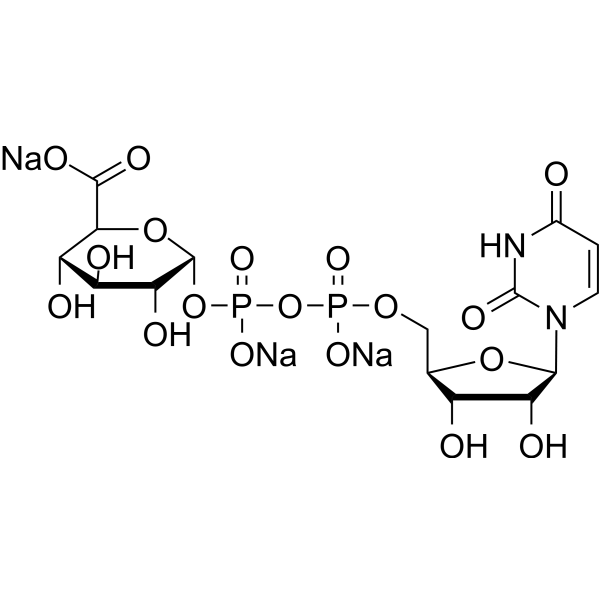
UDP-glucuronic acid trisodium (Uridine-5'-diphosphoglucuronic acid trisodium salt) is a critical precursor for essential glycoconjugates across biological kingdoms, ranging from mammalian glycosaminoglycans and plant cell wall polysaccharides to bacterial capsule glycoglycerolipids.
|
-
-
- HY-153179
-
|
|
Drug-Linker Conjugates for ADC
Topoisomerase
|
Cancer
|
|
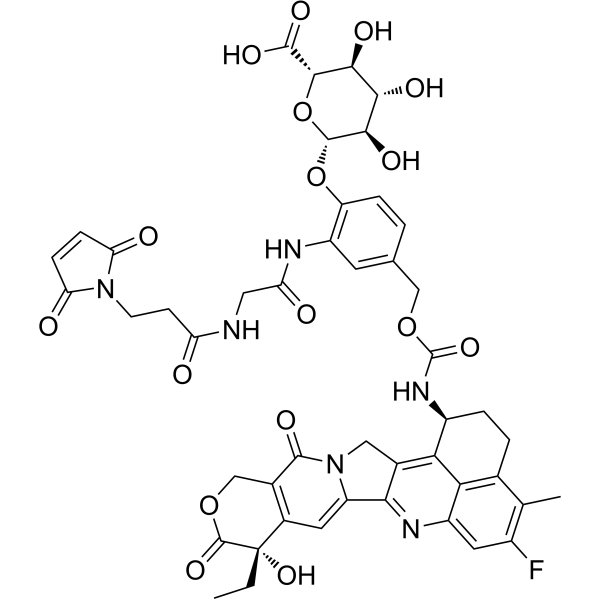
Mal-Gly-PAB-Exatecan-D-glucuronic acid can be used for Antibody-Drug Conjugates (ADCs) synthesis. Mal-Gly-PAB-Exatecan-D-glucuronic acid can be used for research of tumor research and diagnosis .
|
-
-
- HY-N6612
-
-
-
- HY-P2803
-
|
|
β-glucuronidase
|
Metabolic Disease
|
|
Beta-glucuronidase is a glycosyl hydrolase that hydrolyzes β-glucuronic acid and sulfate esters in urine and other biological fluids, and then releases β-glucuronate .
|
-
-
- HY-W008125
-
|
Acetobromo-alpha-D-glucuronic acid methyl ester, 98%
|
Biochemical Assay Reagents
Drug Intermediate
|
Others
|
|
Acetobromo-α-D-glucuronic acid methyl ester, 98% is a glucuronosyl donor. Acetobromo-α-D-glucuronic acid methyl ester, 98% is applicable to the synthesis of other compounds .
|
-
-
- HY-177434
-
|
Precem-TcT; M 9140
|
Antibody-Drug Conjugates (ADCs)
Transmembrane Glycoprotein
Topoisomerase
|
Cancer
|
|
Precemtabart tocentecan (Precem-TcT; M 9140) is an anti-CEACAM5 (carcinoembryonic antigen-related cell adhesion molecule 5) antibody-drug conjugate (ADC). Precemtabart tocentecan consists of a tumor-specific anti-CEACAM5 monoclonal antibody Precemtabart (HY-P990940), a highly hydrophilic and stable cleavable β-glucuronide linker, and a topoisomerase 1 inhibitor payload Exatecan (HY-13631), and the drug-linker conjugate for ADC is Mal-Gly-PAB-Exatecan-D-glucuronic acid (HY-153179). Precemtabart tocentecan inhibits the growth of CEACAM5-positive cancer cells. Precemtabart tocentecan exhibits significant antitumor activity in CEACAM5-expressing xenograft models. Precemtabart tocentecan can be used for the study of CEACAM5-expressing advanced solid tumors, especially mCRC .
|
-
-
- HY-41982
-
|
D-Glucurono-6,3-lactone; D-Glucurono-γ-lactone; D-Glucuronolactone; Dicurone; Glucoxy; Glucurolactone; Glucurone
|
Environmental Pollutants
Endogenous Metabolite
Drug Derivative
|
Cardiovascular Disease
Metabolic Disease
|
|
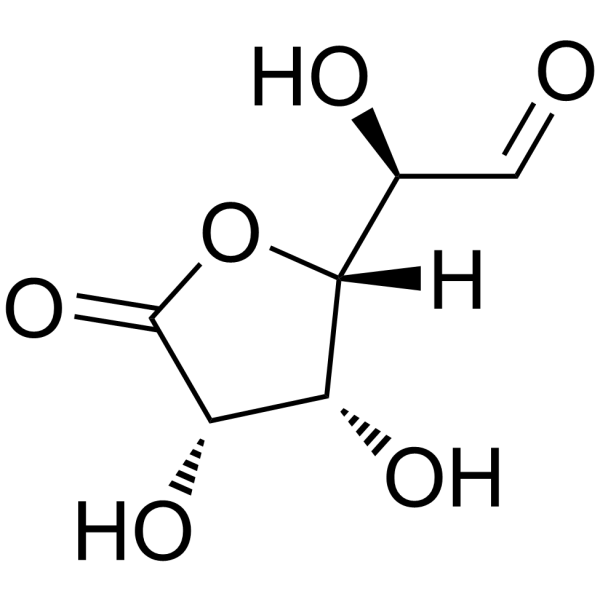
D-Glucuronic acid lactone (D-Glucurono-6,3-lactone; D-Glucurono-γ-lactone; D-Glucuronolactone; Dicurone; Glucoxy; Glucurolactone; Glucurone) is an endogenous metabolite and a glucuronic acid derivative. D-Glucuronic acid lactone serves as a starting reagent for the synthesis of 2,3,4-tris (tert-butyldimethylsilyl) glucuronic acid trichloroethyl ester, which is used to prepare 1-O-acyl glucuronic acids for the anti-inflammatory agent mL-3000 (HY-B1452), synthesize optically active glucuronic acids, and produce long-chain alkyl glucuronides. D-Glucuronic acid lactone shows potential for use in studies of reversible cerebral vasoconstriction syndrome (RCVS) .
|
-
-
- HY-P2803A
-
|
|
β-glucuronidase
|
Metabolic Disease
|
|
Beta-glucuronidase (bovine liver) is a glycosyl hydrolase that hydrolyzes β-glucuronic acid and sulfate esters in urine and other biological fluids, and then releases β-glucuronate .
|
-
-
- HY-P2803B
-
|
|
β-glucuronidase
|
Metabolic Disease
|
|
Beta-glucuronidase (helix pomatia) is a glycosyl hydrolase that hydrolyzes β-glucuronic acid and sulfate esters in urine and other biological fluids, and then releases β-glucuronate .
|
-
-
- HY-N6612R
-
|
|
Reference Standards
Endogenous Metabolite
Toll-like Receptor (TLR)
|
Metabolic Disease
Inflammation/Immunology
Cancer
|
|
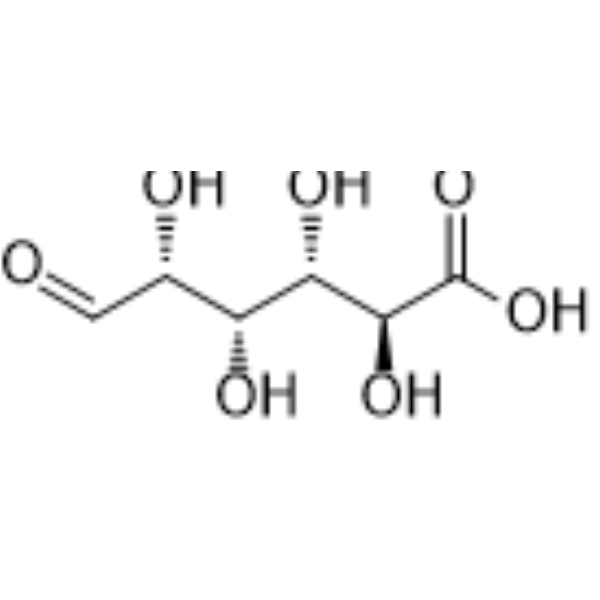
D-Glucuronic acid (Standard) is the analytical standard of D-Glucuronic acid. This product is intended for research and analytical applications. D-Glucuronic acid is a major component of many anti-inflammatory proteoglycans, which can promote embryonic development and inhibit cell aggregation. After being metabolized into ethyl glucuronide (HY-113093), D-Glucuronic acid activates Toll-like receptor 4 (TLR4), causing pain. D-Glucuronic acid and its derivative glucurono-lactone can serve as liver detoxifiers for human health prevention, and its derivatives also possess anti-tumor activity .
|
-
-
- HY-125954
-
|
UDP-α-D-glucuronic acid
|
Endogenous Metabolite
|
Metabolic Disease
|
|
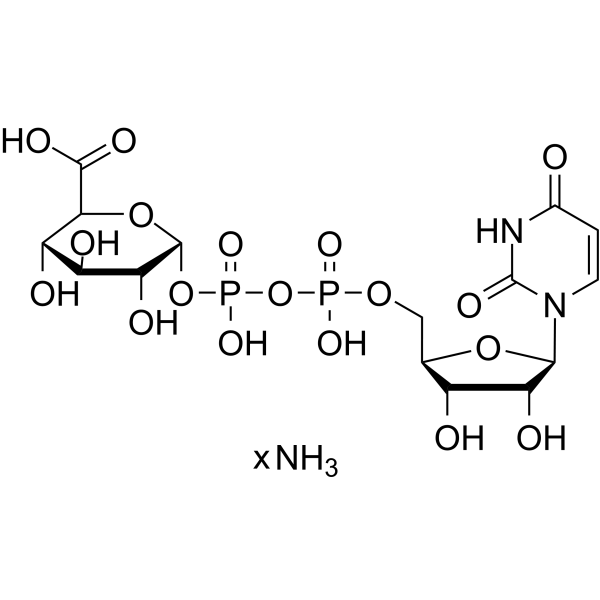
Uridine diphosphate glucuronic acid (UDP-α-D-glucuronic acid) is a glucuronic acid donor. Uridine diphosphate glucuronic acid transfers its glucuronic acid moiety to acceptor molecules, thereby forming "ether" glucuronides, while being converted into uridine 5'-pyrophosphate. Uridine diphosphate glucuronic acid serves as a substrate for Arabidopsis UDP-GlcA 4-epimerase 1, and undergoes reversible 4-epimerization to generate UDP-α-D-galacturonic acid .
|
-
-
- HY-128749
-
|
Potassium D-glucarate
|
Endogenous Metabolite
Apoptosis
|
Metabolic Disease
Inflammation/Immunology
Cancer
|
|
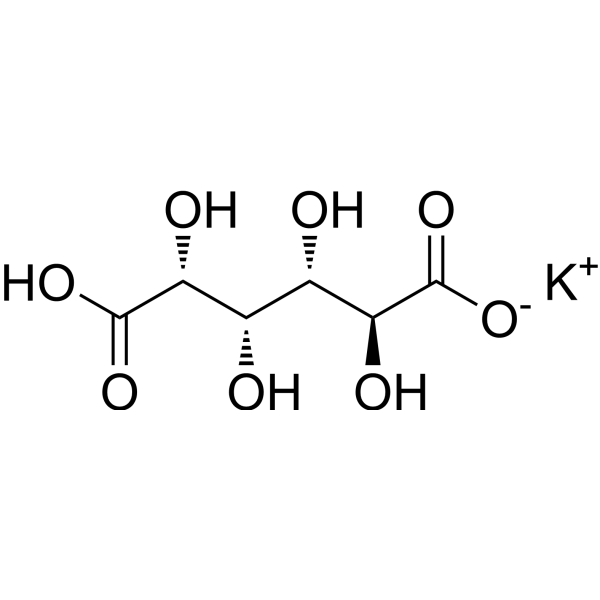
D-Glucaric acid potassium (Potassium D-glucarate) is an orally active end product of the D-glucuronic acid pathway in mammals. D-Glucaric acid potassium is present in a variety of fruits and vegetables. D-Glucaric acid potassium has cholesterol-lowering and anti-tumor activities. D-Glucaric acid potassium can inhibit tumor cell proliferation and inflammation, and induce apoptosis .
|
-
-
- HY-W041019
-
|
|
Endogenous Metabolite
|
Metabolic Disease
|
|
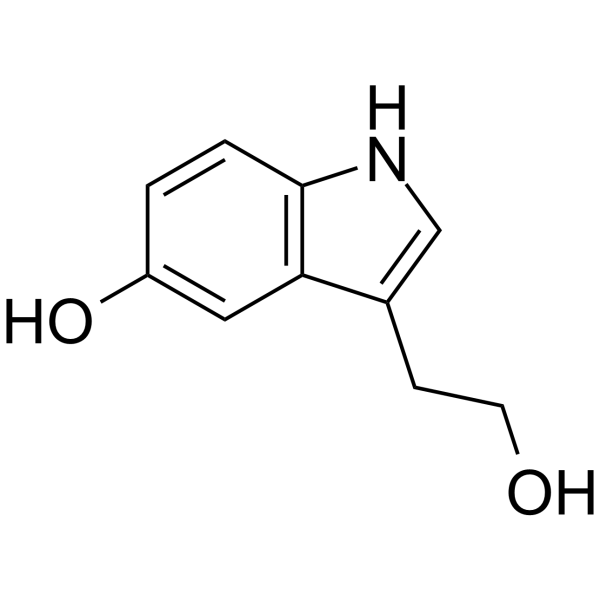
5-Hydroxytryptophol is a mammalian serotonin metabolite that can be used as a sensitive biomarker for recent alcohol intake. 5-Hydroxytryptophol is formed by alcohol-induced changes in the serotonin metabolic pathway and is excreted in the urine as a glucuronic acid conjugate. 5-Hydroxytryptophol is elevated in urine excretion and can be used clinically to monitor alcohol intake in scenarios such as alcohol relapse .
|
-
-
- HY-160885A
-
|
|
ADC Payload
|
Cancer
|
|
NH2-Gly-PAB-Exatecan-D-glucuronic acid formic (Compound 8) is the formic salt form of H2N-Gly-PAB-Exatecan-D-glucuronic acid. H2N-Gly-PAB-Exatecan-D-glucuronic acid formic is an intermediate, which reacts with NHS group to form drug-linker conjugate for ADC, Mal-Gly-PAB-Exatecan-D-glucuronic acid (HY-153179) .
|
-
-
- HY-128747A
-
|
|
Drug Derivative
Drug Intermediate
Antibiotic
|
Cardiovascular Disease
Inflammation/Immunology
|
|
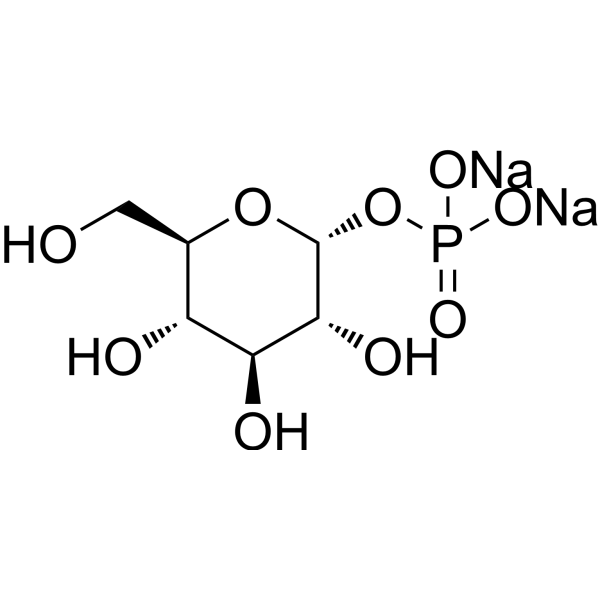
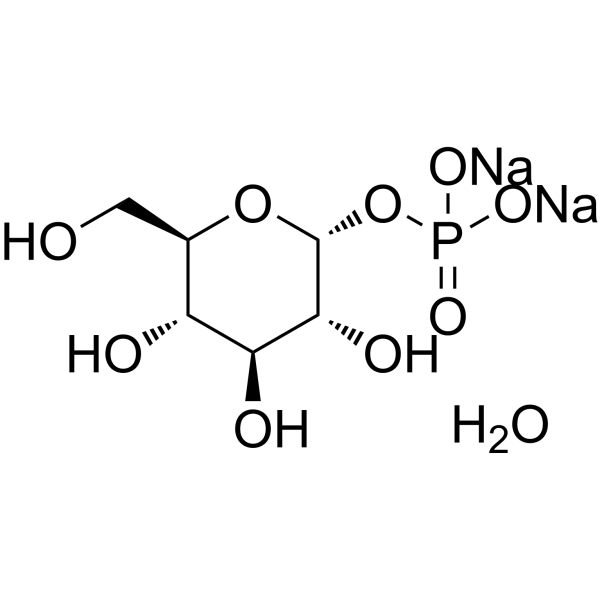
α-D-Glucose-1-phosphate disodium hydrate is a derivative of D-glucose (HY-B0389). α-D-Glucose-1-phosphate disodium hydrate serves as a starting material for glucuronic acid synthesis. Glucuronic acid acts as a Ca 2+ chelator and also functions as a biosynthetic substrate for the production of linear maltooligosaccharides or α,α-trehalose. α-D-Glucose-1-phosphate disodium hydrate can be used as a cytostatic compound, Antibiotic, and immunosuppressant essential for heart disease management. α-D-Glucose-1-phosphate disodium hydrate is applicable to the research of heart disease .
|
-
-
- HY-125954A
-
|
UDP-α-D-glucuronic acid ammonium
|
Endogenous Metabolite
|
Metabolic Disease
|
|
Uridine diphosphate glucuronic acid ammonium (UDP-α-D-glucuronic acid ammonium) is a glucuronic acid donor. Uridine diphosphate glucuronic acid ammonium transfers its glucuronic acid moiety to acceptor molecules, thereby forming "ether" glucuronides, while being converted into uridine 5'-pyrophosphate. Uridine diphosphate glucuronic acid ammonium serves as a substrate for Arabidopsis UDP-GlcA 4-epimerase 1, and undergoes reversible 4-epimerization to generate UDP-α-D-galacturonic acid .
|
-
-
- HY-N11424
-
|
|
Drug Metabolite
Glycosyltransferase
|
Metabolic Disease
|
|
Bilirubin diglucuronide is a bilirubin glycoside conjugate with a 1-O-acyl β-D-glucuronide structure. Bilirubin diglucuronide is the major conjugated bilirubin (HY-N0323) and predominant pigment excreted in the bile of adult humans, rats, dogs and cats. Bilirubin diglucuronide is mainly synthesized via UDP-glucuronosyltransferase-mediated transfer of glucuronic acid from UDP-glucuronic acid to bilirubin monoglucuronide, or via enzymatic disproportionation of two moles of bilirubin monoglucuronide (predominantly producing the IXα configuration). In addition, Bilirubin diglucuronide can also be synthesized from bilirubin or its monoglucuronide in a UDP-glucuronic acid-dependent manner. Pretreatment with phenobarbital significantly enhances the formation process of Bilirubin diglucuronide .
|
-
-
- HY-128747
-
-
-
- HY-N9412
-
|
|
Others
|
Others
|
|
4-O-Methyl-D-glucuronic acid is a kind of hemicellulose that can be isolated from the holocellulose of the Ganpi bast fibers .
|
-
-
- HY-E70020
-
|
|
Others
|
Others
|
|
UDP-Glc dehydrogenase (UGDH) catalyzes is a NAD+-dependent enzyme that catalyzes the two-fold oxidation of UDP-glucose (UDP-Glc) to produce UDP-glucuronic acid. UDP-Glc dehydrogenase (UGDH) is a key enzyme in the nucleotide-sugar interconversion pathway necessary for biosynthesis of many cell-wall polysaccharides .
|
-
-
- HY-N6740S
-
|
|
Isotope-Labeled Compounds
Apoptosis
|
Metabolic Disease
|
|
β-Zearalanol-d4 is a deuterium labeled Beta-Zearalanol (HY-N6740) . Beta-Zearalenol is an mycotoxin produced by Fusarium spp, which causes apoptosis and oxidative stress in mammalian reproductive cells . Beta-Zearalenol is the derivative of zearalenone (ZEA) which can conjugate with glucuronic acid .
|
-
-
- HY-N6612B
-
|
|
Bacterial
|
Inflammation/Immunology
|
|
Glucuronic acid sodium is a polysaccharide that exhibits anti-inflammatory activity, supporting the healing of ulcerative colitis. Glucuronic acid sodium also enhances the intestinal barrier by upregulating tight junction proteins like ZO-1 and Occludin. Furthermore, Glucuronic acid sodium plays a role in modulating gut microbiota by increasing beneficial bacterial populations while suppressing harmful ones.
|
-
-
- HY-N7033R
-
|
Uridine 5'-diphosphoglucuronic acid trisodium salt (Standard)
|
Reference Standards
Drug Intermediate
|
Metabolic Disease
|
|
UDP-glucuronic acid (trisodium) (Standard) is the analytical standard of UDP-glucuronic acid (trisodium). This product is intended for research and analytical applications. UDP-?glucuronic acid trisodium (Uridine-5'-diphosphoglucuronic acid trisodium salt) is a critical precursor for essential glycoconjugates across biological kingdoms, ranging from mammalian glycosaminoglycans and plant cell wall polysaccharides to bacterial capsule glycoglycerolipids.
|
-
-
- HY-N6740
-
|
|
Apoptosis
|
Metabolic Disease
|
|
Beta-Zearalenol is an mycotoxin produced by Fusarium spp, which causes apoptosis and oxidative stress in mammalian reproductive cells . Beta-Zearalenol is the derivative of zearalenone (ZEA) which can conjugate with glucuronic acid .
|
-
-
- HY-128747R
-
|
|
Reference Standards
Endogenous Metabolite
|
Cardiovascular Disease
Metabolic Disease
Inflammation/Immunology
|
|
α-D-Glucose-1-phosphate disodium (Standard) is the analytical standard of α-D-Glucose-1-phosphate disodium (HY-128747). This product is intended for research and analytical applications.
α-D-Glucose-1-phosphate disodium is used as a starting material for synthesis of glucuronic acid. α-D-Glucose-1-phosphate disodium can be used as a cytostatic compound essential for cardiopathic therapy, as an antibiotic, as an immunosuppressive agent, and as a circulatory system therapy element.
|
-
-
- HY-N6612S
-
-
-
- HY-N6612A
-
|
|
Endogenous Metabolite
Toll-like Receptor (TLR)
|
Neurological Disease
Metabolic Disease
Inflammation/Immunology
Cancer
|
|
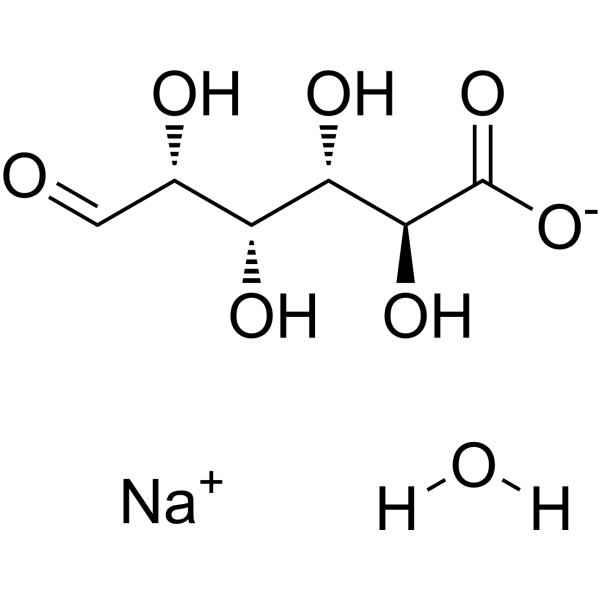
D-Glucuronic acid sodium salt monohydrate is a major component of many anti-inflammatory proteoglycans, which can promote embryonic development and inhibit cell aggregation. After being metabolized into ethyl glucuronide (HY-113093), D-Glucuronic acid sodium salt monohydrate activates Toll-like receptor 4 (TLR4), causing pain. D-Glucuronic acid sodium salt monohydrate and its derivative glucurono-lactone can serve as liver detoxifiers, and its derivatives also possess anti-tumor activity .
|
-
-
- HY-125954S
-
|
UDP-α-D-glucuronic acid-13C,15N2
|
Isotope-Labeled Compounds
Endogenous Metabolite
|
Metabolic Disease
|
|
Uridine diphosphate glucuronic acid- 13C, 15N2 (UDP-α-D-glucuronic acid- 13C, 15N2) is the 13C- and 15N-labeled Uridine diphosphate glucuronic acid (HY-125954). Uridine diphosphate glucuronic acid ammonium (UDP-α-D-glucuronic acid ammonium) is a glucuronic acid donor. Uridine diphosphate glucuronic acid ammonium transfers its glucuronic acid moiety to acceptor molecules, thereby forming "ether" glucuronides, while being converted into uridine 5'-pyrophosphate. Uridine diphosphate glucuronic acid ammonium serves as a substrate for Arabidopsis UDP-GlcA 4-epimerase 1, and undergoes reversible 4-epimerization to generate UDP-α-D-galacturonic acid .
|
-
-
- HY-N9522
-
|
|
Endogenous Metabolite
|
Others
|
|
β-D-glucopyranosyl-[α-L-rhamnopyranosyl-(1→3)-βD-glucuronopyranosyl-(1→3)]-3β-hydroxyolean-12-ene28-oate, as a saponin, has a glucuronic acid attached to carbon C-3 and is isolated from S. simplex .
|
-
-
- HY-160885
-
|
|
ADC Payload
|
Others
|
|
NH2-Gly-PAB-Exatecan-D-glucuronic acid (Compound 8) is an intermediate, which reacts with NHS group to form drug-linker conjugate for ADC, Mal-Gly-PAB-Exatecan-D-glucuronic acid (HY-153179) .
|
-
-
- HY-132031
-
|
|
Drug-Linker Conjugates for ADC
|
Cancer
|
|
Mal-Val-Ala-PAB(C2-glucuronic acid)-DMEA-PNU-159682 is an active molecule-conjugate for ADCs, composed of a cleavable Val-Ala linker and the potent ADC cytotoxic payload PNU-159682 (HY-16700) .
|
-
-
- HY-E70035
-
|
|
Endogenous Metabolite
|
Metabolic Disease
|
|
Glucuronokinase (AtGlcAK) is a member of the GHMP-kinase. Glucuronokinase (AtGlcAK) shows unique substrate specificity for D-glucuronic acid with a Km value of 0.7 mM. Glucuronokinase (AtGlcAK) catalyzes D-glucuronic acid and ATP to produce D-glucuronic acid-1-phosphate and ADP .
|
-
-
- HY-W145597
-
-
-
- HY-143421
-
|
CMG
|
Drug Metabolite
|
Cancer
|
|
Curcumin monoglucuronide is known as a glucuronic acid conjugate, which is one of the in vivo metabolites of curcumin. Curcumin monoglucuronide is used for research on the metabolism of curcumin and examination of its development as a pharmaceutical. Curcumin monoglucuronide has the potential for the research of cancer disease (extracted from patent WO2022004873A1) .
|
-
-
- HY-E70423
-
|
|
Biochemical Assay Reagents
|
Others
|
|
UDP-glucuronic acid decarboxylase is a decarboxylase. Enzymes have high catalytic efficiency, high specificity, and mild operating conditions. It can be applied in industries such as pharmaceuticals, industrial production, food manufacturing, and aquaculture .
|
-
-
- HY-137134
-
-
-
- HY-41982R
-
|
D-Glucurono-6,3-lactone (Standard); D-Glucurono-γ-lactone (Standard); D-Glucuronolactone (Standard); Dicurone (Standard); Glucoxy (Standard); Glucurolactone (Standard); Glucurone (Standard)
|
Reference Standards
Endogenous Metabolite
|
Metabolic Disease
|
|
D-Glucuronic acid lactone (Standard) is the analytical standard of D-Glucuronic acid lactone. This product is intended for research and analytical applications. D-Glucuronic acid lactone is an endogenous metabolite.
|
-
-
- HY-W008125S
-
|
Methyl acetobromo-α-D-glucuronate-13C6 methyl ester
|
Isotope-Labeled Compounds
Biochemical Assay Reagents
Drug Intermediate
|
Cardiovascular Disease
|
|
Acetobromo-a-D-glucuronic acid- 13C6 methyl ester (Methyl acetobromo-α-D-glucuronate- 13C6 methyl ester) is 13C labeled Acetobromo-α-D-glucuronic acid methyl ester, 98% (HY-W008125). Acetobromo-α-D-glucuronic acid methyl ester, 98% is an intermediate. Acetobromo-α-D-glucuronic acid methyl ester, 98% can be used to synthesize HMR1098-S-Glucuronide Methyl Ester. HMR1098 is a novel KATP blocker that is metabolized to S-glucuronide in rat and dog bile. Acetobromo-α-D-glucuronic acid methyl ester, 98% can be used in the research of sudden cardiac death .
|
-
-
- HY-W048546
-
|
Methyl-(2,3,4-tri-O-acetyl-a-D-glucopyranosyl)uronate
|
Biochemical Assay Reagents
|
|
|
2,3,4-Tri-O-acetyl-α-D-glucuronic acid methyl ester is a Biochemical Assay Reagent, and can be used for chemical synthesis .
|
-
-
- HY-W403047
-
|
|
Biochemical Assay Reagents
|
Others
|
|
Methyl 2,3,4-Tri-O-benzyl-α-D-glucuronic Acid, Benzyl Ester is a class of biochemical reagents used in glycobiology research. Glycobiology studies the structure, synthesis, biology, and evolution of sugars. It involves carbohydrate chemistry, enzymology of glycan formation and degradation, protein-glycan recognition, and the role of glycans in biological systems. This field is closely related to basic research, biomedicine, and biotechnology .
|
-
-
- HY-W794390
-
|
|
Biochemical Assay Reagents
|
Others
|
|
2,3,4-Tri-O-benzoyl-α-D-glucuronic acid methyl ester,trichloroacetimidate is a class of biochemical reagents used in glycobiology research. Glycobiology studies the structure, synthesis, biology, and evolution of sugars. It involves carbohydrate chemistry, enzymology of glycan formation and degradation, protein-glycan recognition, and the role of glycans in biological systems. This field is closely related to basic research, biomedicine, and biotechnology .
|
-
-
- HY-W714797
-
|
|
Isotope-Labeled Compounds
|
Others
|
|
Nintedanib demethyl-O-glucuronic acid-d3 is the deuterium labeled (2R,3R,4R,5S,6S)-3,4,5-Trihydroxy-6-(((Z)-3-(((4-(N-methyl-2-(4-methylpiperazin-1-yl)acetamido)phenyl)amino)(phenyl)methylene)-2-oxoindoline-6-carbonyl)oxy)tetrahydro-2H-pyran-2-carboxylic acid (HY-W712456).
|
-
-
- HY-W412723
-
|
β-D-Glucopyranuronic acid tetraacetate
|
Biochemical Assay Reagents
|
|
|
1,2,3, 4-tetra-o-acetyl-β-d-glucuronic acid (β-D-Glucopyranuronic acid tetraacetate) is a class of biochemical reagents used in the study of glycobiology. Glycobiology studies the structure, synthesis, biology, and evolution of sugars. It deals with carbohydrate chemistry, glycan formation and degradation enzymology, protein-glycan recognition, and the role of glycans in biological systems. The field is closely related to basic research, biomedicine and biotechnology .
|
-
-
- HY-155944
-
|
|
Phosphodiesterase (PDE)
|
Inflammation/Immunology
|
|
Isbufylline is a Phosphodiesterase inhibitor. Isbufylline is orally available. Isbufylline can be used in the research of respiratory diseases and inflammation such as asthma and pneumonia.
|
-
-
- HY-E70179
-
|
EC 2.4.1.149; B4GAT1; β3GNTI
|
Glucosylceramide Synthase (GCS)
|
Others
|
|
beta-1,4-Glucuronyltransferase 1 is a glucosyltransferase. beta-1,4-Glucuronyltransferase 1 transfers glucuronic acid towards both α and β anomers of xylose .
|
-
-
- HY-N11976
-
|
|
Others
|
Others
|
|
Glycyrrhizin-6′′-methylester (compound 22) is a glycyrrhizin that can be isolated from licorice root. Glycyrrhizin-6′′-methylester can participate as an aglycone in the formation of methyl glucuronate, producing a sweet and licorice taste, but no bitterness. This reveals the importance of the free carboxyl group on the glycoside cone-bound glucuronic acid for natural sweetness and licorice taste .
|
-
-
- HY-N6740S2
-
|
|
Isotope-Labeled Compounds
Apoptosis
|
Metabolic Disease
|
|
Beta-Zearalanol-d5 is the deuterium labeled Beta-Zearalanol (HY-N6740). Beta-Zearalenol is an mycotoxin produced by Fusarium spp, which causes apoptosis and oxidative stress in mammalian reproductive cells . Beta-Zearalenol is the derivative of Zearalenone (HY-103447) which can conjugate with glucuronic acid .
|
-
-
- HY-W041019R
-
|
|
Reference Standards
Endogenous Metabolite
|
Metabolic Disease
|
|
5-Hydroxytryptophol is a mammalian serotonin metabolite that can be used as a sensitive biomarker for recent alcohol intake. 5-Hydroxytryptophol is formed by alcohol-induced changes in the serotonin metabolic pathway and is excreted in the urine as a glucuronic acid conjugate. 5-Hydroxytryptophol is elevated in urine excretion and can be used clinically to monitor alcohol intake in scenarios such as alcohol relapse .
|
-
-
- HY-D1578
-
|
|
Fluorescent Dye
β-glucuronidase
|
Others
|
|
C12FDGlcU is a lipophilic analog of fluorescein di-β-D-glucuronic acid. C12FDGlcU can be useful for the detection of β-glucuronidase (GUS) gene expression. C12FDGlcU can enter the cells and then be cleaved by β-glucuronidase, generating the yellow-colored, green-fluorescent fluorescein (Abs/Em of the reaction product: 495/518 nm) .
|
-
-
- HY-N15717
-
|
|
Drug Metabolite
|
Others
|
|
(erythro) 1′,2′-Dihydroxyasarone is a metabolite of Beta-asarone (HY-N1501) and can also be isolated from the roots of Acorus tatarinowii. (erythro) 1′,2′-Dihydroxyasarone can form glucuronic acid conjugates in vivo and be excreted in urine. (erythro) 1′,2′-Dihydroxyasarone can serve as a marker for the metabolism and toxic risk assessment of Beta-asarone .
|
-
- HY-W752886
-
|
|
Isotope-Labeled Compounds
Estrogen Receptor/ERR
|
Cancer
|
|
Estradiol 3-d3 (β-D-Glucuronide) sodium is the deuterium labeled Estradiol 3-(β-D-Glucuronide) sodium (HY-N7755). Estradiol 3-(β-D-Glucuronide) sodium is the glucuronic acid derivative of estradiol (HY-B0141). Estradiol 3-(β-D-Glucuronide) sodium is radiolabeled for use in tumor imaging and biodistribution studies .
|
-
- HY-W357152
-
-
- HY-W699702
-
|
|
Biochemical Assay Reagents
|
Others
|
|
D-Glucuronic acid,methyl ester,2,3,4-tribenzoate is a class of biochemical reagents used in glycobiology research. Glycobiology studies the structure, synthesis, biology, and evolution of sugars. It involves carbohydrate chemistry, enzymology of glycan formation and degradation, protein-glycan recognition, and the role of glycans in biological systems. This field is closely related to basic research, biomedicine, and biotechnology .
|
-
- HY-W039890
-
|
|
Biochemical Assay Reagents
|
Others
|
|
1-(2,2,2-Trifluoro-N-phenylacetimidate)-2,3,4-tri-?O-acetyl-D-glucuronic acid methyl ester is a class of biochemical reagents used in glycobiology research. Glycobiology studies the structure, synthesis, biology, and evolution of sugars. It involves carbohydrate chemistry, enzymology of glycan formation and degradation, protein-glycan recognition, and the role of glycans in biological systems. This field is closely related to basic research, biomedicine, and biotechnology .
|
-
- HY-N18965
-
|
|
Biochemical Assay Reagents
|
Others
|
|
Formyline (Compound 8) is a Maillard reaction product (glycated compound). Formyline is an advanced glycation end product formed by the reaction of lysine with 3-deoxypentosone, pentose, disaccharide degradation products or glucuronic acid. Formyline is commonly found in heat-processed foods such as milk, baked goods and beer, and can serve as a characteristic marker for food processing .
|
-
- HY-186081
-
|
|
Drug Metabolite
|
Metabolic Disease
|
|
Ramiprilat acyl-β-D-glucuronide is an acyl glucuronide metabolite of Ramiprilat (HY-B0279). Ramiprilat acyl-β-D-glucuronide undergoes methylation on its glucuronic acid moiety during solid phase extraction with strong cation exchanger cartridges, forming a methylated derivative. Ramiprilat acyl-β-D-glucuronide undergoes in-source conversion to Ramiprilat in mass spectrometry, with conversion extent proportional to declustering potential voltage .
|
-
- HY-E71243
-
|
|
Biochemical Assay Reagents
|
Others
|
|
α-Methyl-glucuronidase 115A, Bacteroides ovatus (EC 3.2.1.-) is a hydrolase whose substrates are glucuronic acid xylan or glucuronic acid xylooligosaccharide.
|
-
- HY-N19887
-
|
|
Biochemical Assay Reagents
|
Others
|
|
Periandrin I is a triterpenoid glycoside. Periandrin I can be isolated from the roots of Periandra dulcis. Periandrin I acts as a sweetener, with a sweetness intensity comparable to that of Periandrin II, Periandrin IV and Glycyrrhizin (HY-N0184) .
|
-
- HY-N19831
-
|
|
TMV
|
Infection
|
|
Hylonoside I is a TMV inhibitor that inhibits the proliferation of TMV. Hylonoside I can be isolated from the leaves of Ilex hylonoma. Hylonoside I is applicable to the research of TMV infection .
|
-
- HY-P2803D
-
|
|
β-glucuronidase
|
Metabolic Disease
|
|
β-Glucuronidase, Abalone is a glycosyl hydrolase that hydrolyzes β-glucuronic acid and sulfate esters in urine and other biological fluids, and then releases β-glucuronate .
|
-
- HY-W121884
-
|
|
Drug Metabolite
Drug Intermediate
|
Others
|
|
Fenclofenac glucuronide is the major urinary metabolite of Fenclofenac (HY-114806) in horses. Fenclofenac glucuronide undergoes intramolecular structural rearrangement to form a β-glucuronidase-resistant isomer, and releases Fenclofenac via complete alkaline hydrolysis .
|
-
- HY-E70101B
-
|
|
Endogenous Metabolite
|
Metabolic Disease
|
|
α-Glucuronidase, Cellvibrio japonicus (EC 3.2.1.139), is a glycosidase that hydrolyzes O- and S-glycosides. Its two substrates are α-D-glucuronide and water, and its two products are an alcohol and D-glucuronic acid.
|
-
- HY-150162
-
|
T4-Glc
|
Drug Metabolite
|
Others
|
|
Thyroxine 4'-O-β-D-glucuronide (T4-Glc) is a conjugate of Thyroxine (T4) and Glucuronic acid. Thyroxine 4'-O-β-D-glucuronide is a major metabolite of Thyroxine (HY-18341) .
|
-
- HY-E70101A
-
|
|
Endogenous Metabolite
|
Metabolic Disease
|
|
α-Glucuronidase, Opitutus terrae PB90-1 (EC 3.2.1.139), is a glycosidase that hydrolyzes O- and S-glycosides. Its two substrates are α-D-glucuronide and water, and its two products are an alcohol and D-glucuronic acid.
|
-
- HY-W711011
-
|
|
Drug Derivative
|
Metabolic Disease
|
|
Flufenamic acid glucuronide is an acyl-linked glucuronide of Flufenamic acid (HY-B1221). Flufenamic acid glucuronide can be used for the research of acyl glucuronide rearrangement and drug metabolism .
|
-
- HY-145536
-
-
- HY-N6740S1
-
|
|
Isotope-Labeled Compounds
|
Metabolic Disease
|
|
β-Zearalanol- 13C18 is the 13C-labeled β-Zearalanol. Beta-Zearalenol is an mycotoxin produced by Fusarium spp, which causes apoptosis and oxidative stress in mammalian reproductive cells . Beta-Zearalenol is the derivative of zearalenone (ZEA) which can conjugate with glucuronic acid .
|
-
| Cat. No. |
Product Name |
Type |
-
- HY-177434
-
|
Precem-TcT; M 9140
|
Fluorescent Dyes
|
|
Precemtabart tocentecan (Precem-TcT; M 9140) is an anti-CEACAM5 (carcinoembryonic antigen-related cell adhesion molecule 5) antibody-drug conjugate (ADC). Precemtabart tocentecan consists of a tumor-specific anti-CEACAM5 monoclonal antibody Precemtabart (HY-P990940), a highly hydrophilic and stable cleavable β-glucuronide linker, and a topoisomerase 1 inhibitor payload Exatecan (HY-13631), and the drug-linker conjugate for ADC is Mal-Gly-PAB-Exatecan-D-glucuronic acid (HY-153179). Precemtabart tocentecan inhibits the growth of CEACAM5-positive cancer cells. Precemtabart tocentecan exhibits significant antitumor activity in CEACAM5-expressing xenograft models. Precemtabart tocentecan can be used for the study of CEACAM5-expressing advanced solid tumors, especially mCRC .
|
-
- HY-D1578
-
|
|
Fluorescent Dyes
|
|
C12FDGlcU is a lipophilic analog of fluorescein di-β-D-glucuronic acid. C12FDGlcU can be useful for the detection of β-glucuronidase (GUS) gene expression. C12FDGlcU can enter the cells and then be cleaved by β-glucuronidase, generating the yellow-colored, green-fluorescent fluorescein (Abs/Em of the reaction product: 495/518 nm) .
|
| Cat. No. |
Product Name |
Type |
-
- HY-W008125
-
|
Acetobromo-alpha-D-glucuronic acid methyl ester, 98%
|
Biochemical Assay Reagents
|
|
Acetobromo-α-D-glucuronic acid methyl ester, 98% is a glucuronosyl donor. Acetobromo-α-D-glucuronic acid methyl ester, 98% is applicable to the synthesis of other compounds .
|
-
- HY-125954A
-
|
UDP-α-D-glucuronic acid ammonium
|
Biochemical Assay Reagents
|
|
Uridine diphosphate glucuronic acid ammonium (UDP-α-D-glucuronic acid ammonium) is a glucuronic acid donor. Uridine diphosphate glucuronic acid ammonium transfers its glucuronic acid moiety to acceptor molecules, thereby forming "ether" glucuronides, while being converted into uridine 5'-pyrophosphate. Uridine diphosphate glucuronic acid ammonium serves as a substrate for Arabidopsis UDP-GlcA 4-epimerase 1, and undergoes reversible 4-epimerization to generate UDP-α-D-galacturonic acid .
|
-
- HY-137134
-
-
- HY-W048546
-
|
Methyl-(2,3,4-tri-O-acetyl-a-D-glucopyranosyl)uronate
|
Biochemical Assay Reagents
|
|
2,3,4-Tri-O-acetyl-α-D-glucuronic acid methyl ester is a Biochemical Assay Reagent, and can be used for chemical synthesis .
|
-
- HY-W403047
-
|
|
Biochemical Assay Reagents
|
|
Methyl 2,3,4-Tri-O-benzyl-α-D-glucuronic Acid, Benzyl Ester is a class of biochemical reagents used in glycobiology research. Glycobiology studies the structure, synthesis, biology, and evolution of sugars. It involves carbohydrate chemistry, enzymology of glycan formation and degradation, protein-glycan recognition, and the role of glycans in biological systems. This field is closely related to basic research, biomedicine, and biotechnology .
|
-
- HY-W794390
-
|
|
Biochemical Assay Reagents
|
|
2,3,4-Tri-O-benzoyl-α-D-glucuronic acid methyl ester,trichloroacetimidate is a class of biochemical reagents used in glycobiology research. Glycobiology studies the structure, synthesis, biology, and evolution of sugars. It involves carbohydrate chemistry, enzymology of glycan formation and degradation, protein-glycan recognition, and the role of glycans in biological systems. This field is closely related to basic research, biomedicine, and biotechnology .
|
-
- HY-W412723
-
|
β-D-Glucopyranuronic acid tetraacetate
|
Biochemical Assay Reagents
|
|
1,2,3, 4-tetra-o-acetyl-β-d-glucuronic acid (β-D-Glucopyranuronic acid tetraacetate) is a class of biochemical reagents used in the study of glycobiology. Glycobiology studies the structure, synthesis, biology, and evolution of sugars. It deals with carbohydrate chemistry, glycan formation and degradation enzymology, protein-glycan recognition, and the role of glycans in biological systems. The field is closely related to basic research, biomedicine and biotechnology .
|
-
- HY-E70168
-
|
EC:2.8.2.-; CHST10; huHNK-1ST
|
Biochemical Assay Reagents
|
|
Carbohydrate Sulfotransferase 10 (EC:2.8.2.-) can catalyze sulphate transfer to position 3 of terminal glucuronic acid of both protein- and lipid-linked oligosaccharides .
|
-
- HY-E70179
-
|
EC 2.4.1.149; B4GAT1; β3GNTI
|
Biochemical Assay Reagents
|
|
beta-1,4-Glucuronyltransferase 1 is a glucosyltransferase. beta-1,4-Glucuronyltransferase 1 transfers glucuronic acid towards both α and β anomers of xylose .
|
-
- HY-W357152
-
-
- HY-W699702
-
|
|
Biochemical Assay Reagents
|
|
D-Glucuronic acid,methyl ester,2,3,4-tribenzoate is a class of biochemical reagents used in glycobiology research. Glycobiology studies the structure, synthesis, biology, and evolution of sugars. It involves carbohydrate chemistry, enzymology of glycan formation and degradation, protein-glycan recognition, and the role of glycans in biological systems. This field is closely related to basic research, biomedicine, and biotechnology .
|
-
- HY-W039890
-
|
|
Biochemical Assay Reagents
|
|
1-(2,2,2-Trifluoro-N-phenylacetimidate)-2,3,4-tri-?O-acetyl-D-glucuronic acid methyl ester is a class of biochemical reagents used in glycobiology research. Glycobiology studies the structure, synthesis, biology, and evolution of sugars. It involves carbohydrate chemistry, enzymology of glycan formation and degradation, protein-glycan recognition, and the role of glycans in biological systems. This field is closely related to basic research, biomedicine, and biotechnology .
|
| Cat. No. |
Product Name |
Category |
Target |
Chemical Structure |
-
- HY-N6612
-
-
-
- HY-41982
-
-
-
- HY-N6612R
-
-
-
- HY-125954
-
|
UDP-α-D-glucuronic acid
|
Human Gut Microbiota Metabolites
Microorganisms
Endogenous metabolite
Source Classification
|
Endogenous Metabolite
|
|
Uridine diphosphate glucuronic acid (UDP-α-D-glucuronic acid) is a glucuronic acid donor. Uridine diphosphate glucuronic acid transfers its glucuronic acid moiety to acceptor molecules, thereby forming "ether" glucuronides, while being converted into uridine 5'-pyrophosphate. Uridine diphosphate glucuronic acid serves as a substrate for Arabidopsis UDP-GlcA 4-epimerase 1, and undergoes reversible 4-epimerization to generate UDP-α-D-galacturonic acid .
|
-
-
- HY-128749
-
-
-
- HY-W041019
-
-
-
- HY-128747A
-
-
-
- HY-125954A
-
-
-
- HY-N11424
-
|
|
Structural Classification
Natural Products
Endogenous metabolite
Source Classification
|
Drug Metabolite
Glycosyltransferase
|
|
Bilirubin diglucuronide is a bilirubin glycoside conjugate with a 1-O-acyl β-D-glucuronide structure. Bilirubin diglucuronide is the major conjugated bilirubin (HY-N0323) and predominant pigment excreted in the bile of adult humans, rats, dogs and cats. Bilirubin diglucuronide is mainly synthesized via UDP-glucuronosyltransferase-mediated transfer of glucuronic acid from UDP-glucuronic acid to bilirubin monoglucuronide, or via enzymatic disproportionation of two moles of bilirubin monoglucuronide (predominantly producing the IXα configuration). In addition, Bilirubin diglucuronide can also be synthesized from bilirubin or its monoglucuronide in a UDP-glucuronic acid-dependent manner. Pretreatment with phenobarbital significantly enhances the formation process of Bilirubin diglucuronide .
|
-
-
- HY-128747
-
-
-
- HY-N9412
-
-
-
- HY-N6740
-
-
-
- HY-N6612A
-
-
-
- HY-N9522
-
-
-
- HY-41982R
-
-
-
- HY-N11976
-
|
|
Glycyrrhiza glabra Linn.
Leguminosae
Ketones, Aldehydes, Acids
Plants
Source Classification
|
Others
|
|
Glycyrrhizin-6′′-methylester (compound 22) is a glycyrrhizin that can be isolated from licorice root. Glycyrrhizin-6′′-methylester can participate as an aglycone in the formation of methyl glucuronate, producing a sweet and licorice taste, but no bitterness. This reveals the importance of the free carboxyl group on the glycoside cone-bound glucuronic acid for natural sweetness and licorice taste .
|
-
-
- HY-W041019R
-
-
-
- HY-N15717
-
|
|
Natural Products
Araceae
Acorus gramineus Soland.
Plants
Source Classification
|
Drug Metabolite
|
|
(erythro) 1′,2′-Dihydroxyasarone is a metabolite of Beta-asarone (HY-N1501) and can also be isolated from the roots of Acorus tatarinowii. (erythro) 1′,2′-Dihydroxyasarone can form glucuronic acid conjugates in vivo and be excreted in urine. (erythro) 1′,2′-Dihydroxyasarone can serve as a marker for the metabolism and toxic risk assessment of Beta-asarone .
|
-
-
- HY-N18965
-
-
-
- HY-N19887
-
-
-
- HY-N19831
-
-
| Cat. No. |
Product Name |
Chemical Structure |
-
- HY-N6740S
-
|
|
|
β-Zearalanol-d4 is a deuterium labeled Beta-Zearalanol (HY-N6740) . Beta-Zearalenol is an mycotoxin produced by Fusarium spp, which causes apoptosis and oxidative stress in mammalian reproductive cells . Beta-Zearalenol is the derivative of zearalenone (ZEA) which can conjugate with glucuronic acid .
|
-
-
- HY-N6612S
-
|
|
|
D-Glucuronic acid sodium monohydrate- 13C6 is the 13C-labeled D-Glucuronic acid sodium salt monohydrate (HY-N6612A). D-Glucuronic acid sodium salt monohydrate is an endogenous metabolite.
|
-
-
- HY-125954S
-
|
|
|
Uridine diphosphate glucuronic acid- 13C, 15N2 (UDP-α-D-glucuronic acid- 13C, 15N2) is the 13C- and 15N-labeled Uridine diphosphate glucuronic acid (HY-125954). Uridine diphosphate glucuronic acid ammonium (UDP-α-D-glucuronic acid ammonium) is a glucuronic acid donor. Uridine diphosphate glucuronic acid ammonium transfers its glucuronic acid moiety to acceptor molecules, thereby forming "ether" glucuronides, while being converted into uridine 5'-pyrophosphate. Uridine diphosphate glucuronic acid ammonium serves as a substrate for Arabidopsis UDP-GlcA 4-epimerase 1, and undergoes reversible 4-epimerization to generate UDP-α-D-galacturonic acid .
|
-
-
- HY-W008125S
-
|
|
|
Acetobromo-a-D-glucuronic acid- 13C6 methyl ester (Methyl acetobromo-α-D-glucuronate- 13C6 methyl ester) is 13C labeled Acetobromo-α-D-glucuronic acid methyl ester, 98% (HY-W008125). Acetobromo-α-D-glucuronic acid methyl ester, 98% is an intermediate. Acetobromo-α-D-glucuronic acid methyl ester, 98% can be used to synthesize HMR1098-S-Glucuronide Methyl Ester. HMR1098 is a novel KATP blocker that is metabolized to S-glucuronide in rat and dog bile. Acetobromo-α-D-glucuronic acid methyl ester, 98% can be used in the research of sudden cardiac death .
|
-
-
- HY-W714797
-
|
|
|
Nintedanib demethyl-O-glucuronic acid-d3 is the deuterium labeled (2R,3R,4R,5S,6S)-3,4,5-Trihydroxy-6-(((Z)-3-(((4-(N-methyl-2-(4-methylpiperazin-1-yl)acetamido)phenyl)amino)(phenyl)methylene)-2-oxoindoline-6-carbonyl)oxy)tetrahydro-2H-pyran-2-carboxylic acid (HY-W712456).
|
-
-
- HY-N6740S2
-
|
|
|
Beta-Zearalanol-d5 is the deuterium labeled Beta-Zearalanol (HY-N6740). Beta-Zearalenol is an mycotoxin produced by Fusarium spp, which causes apoptosis and oxidative stress in mammalian reproductive cells . Beta-Zearalenol is the derivative of Zearalenone (HY-103447) which can conjugate with glucuronic acid .
|
-
-
- HY-W752886
-
|
|
|
Estradiol 3-d3 (β-D-Glucuronide) sodium is the deuterium labeled Estradiol 3-(β-D-Glucuronide) sodium (HY-N7755). Estradiol 3-(β-D-Glucuronide) sodium is the glucuronic acid derivative of estradiol (HY-B0141). Estradiol 3-(β-D-Glucuronide) sodium is radiolabeled for use in tumor imaging and biodistribution studies .
|
-
-
- HY-N6740S1
-
|
|
|
β-Zearalanol- 13C18 is the 13C-labeled β-Zearalanol. Beta-Zearalenol is an mycotoxin produced by Fusarium spp, which causes apoptosis and oxidative stress in mammalian reproductive cells . Beta-Zearalenol is the derivative of zearalenone (ZEA) which can conjugate with glucuronic acid .
|
-
Your information is safe with us. * Required Fields.
Inquiry Information
- Product Name:
- Cat. No.:
- Quantity:
- MCE Japan Authorized Agent:

