Search Result
Results for "
gold
" in MedChemExpress (MCE) Product Catalog:
38
Biochemical Assay Reagents
1
Isotope-Labeled Compounds
| Cat. No. |
Product Name |
Target |
Research Areas |
Chemical Structure |
-
- HY-W094581
-
|
Chloroauric acid trihydrate
|
Biochemical Assay Reagents
|
Others
|
|
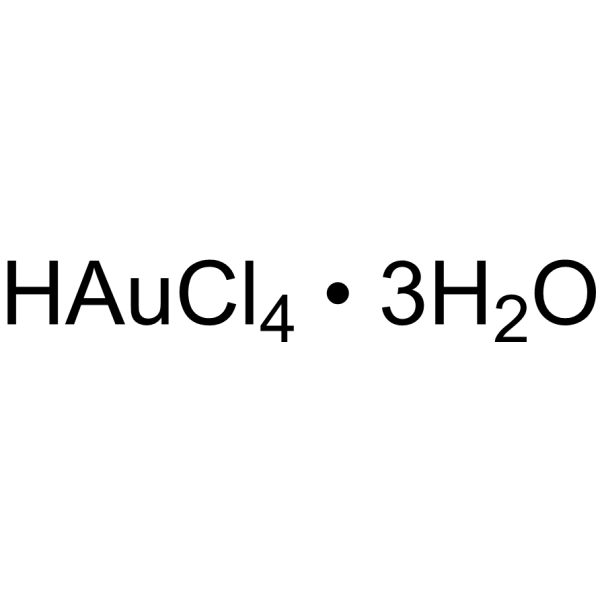
Gold (III) chloride trihydrate is a reducing agent. Gold (III) chromium trihydrate can be used for chemical synthesis of gold nanoparticles (NP) and spirochromene derivatives .
|
-
-
- HY-B1285
-
|
2,3-Dimercapto-1-propanol; Dithioglycerol
|
HIV
|
Infection
|
|
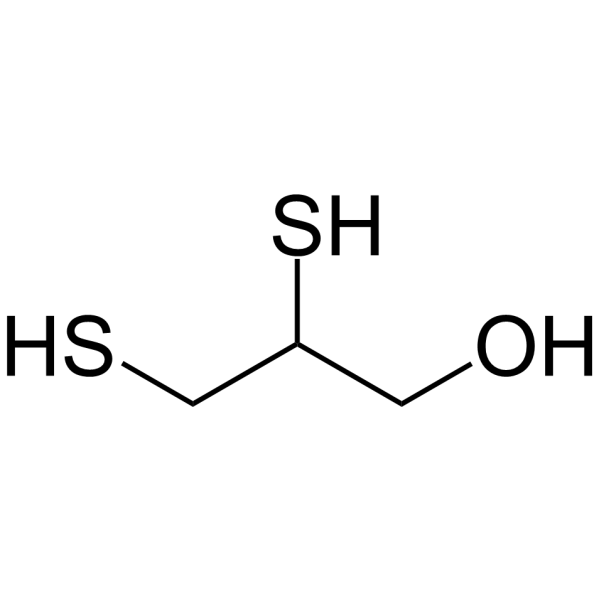
Dimercaprol (2,3-Dimercapto-1-propanol) is an anti-heavy metal-poisoning agent, which exhibits anti-HIV activity. Dimercaprol can be used for the study for arsenic, mercury, gold, lead, antimony, and other toxic metal poisoning .
|
-
-
- HY-134797
-
|
|
Radionuclide-Drug Conjugates (RDCs)
|
Cancer
|
|
P-SCN-Bn-deferoxamine is a bifunctional chelating agent that can link radioactive metal nuclides (such as Zr-89) and biological targeting molecules (such as antibodies). P-SCN-Bn-deferoxamine can be used for the research of immune PET imaging .
|
-
-
- HY-B1306
-
|
p-Aminohippuric acid
|
Others
|
Neurological Disease
Metabolic Disease
|
|
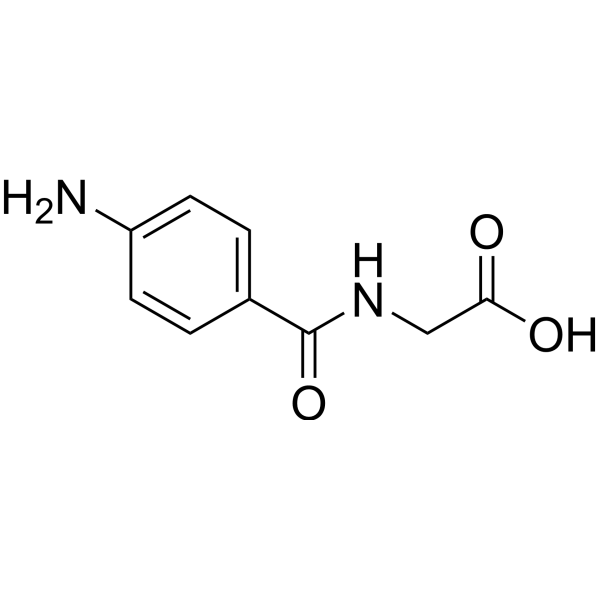
4-Aminohippuric acid (p-Aminohippuric acid) is a coordination ligand for metal ions (such as Cu 2+, Fe 3+, Hg 2+) and a functionalization reagent for nanomaterials. 4-Aminohippuric acid can coordinate with metal ions or modify the surface of materials such as carbon nanotubes and gold nanoparticles through amino and carboxyl groups. 4-Aminohippuric acid can form stable complexes with metal ions or participate in the synthesis of nanomaterials as a reducing agent/stabilizer, enriching metal ions or giving nanoparticles peroxidase-mimicking activity. 4-Aminohippuric acid can be used to construct highly sensitive electrochemical sensors or colorimetric sensors to detect and quantitatively analyze heavy metal ions such as copper, iron, and mercury in environmental water samples and biological samples. 4-Aminohippuric acid may also be a biomarker for attention-deficit/hyperactivity disorder (ADHD) .
|
-
-
- HY-W019831
-
|
Silica; Colloidal anhydrous silica
|
Biochemical Assay Reagents
|
Others
|
|
Silicon dioxide (Silica) is the core of gold-coated silica nanoparticles. Silicon dioxide has the characteristic of a spherical structure, with a layer of gold nanoparticles covering its surface. Silicon dioxide can be used as a coating material for quantum dots, enhancing their stability, reducing toxicity and improving hydrophilicity .
|
-
-
- HY-W591424
-
|
mPEG2000-SC; mPEG2000-Succinimidyl ester
|
Biochemical Assay Reagents
MMP
|
Cancer
|
|
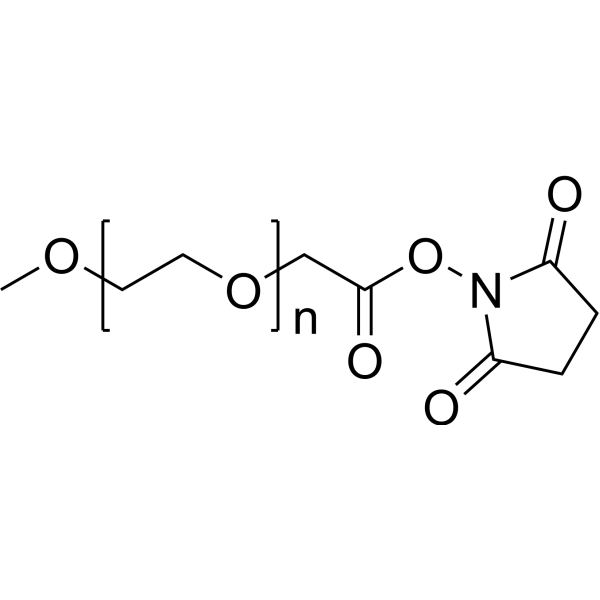
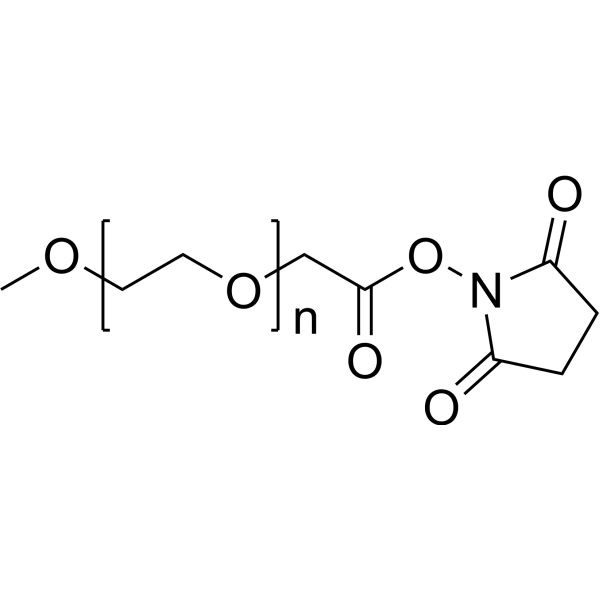
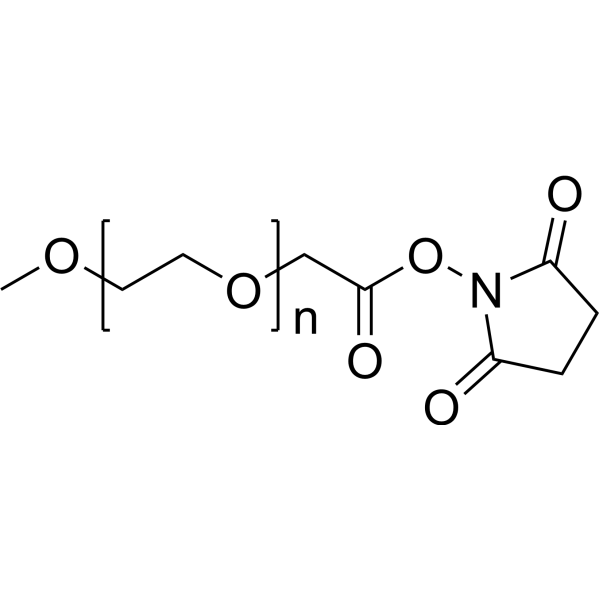
m-PEG2000-NHS ester (mPEG2000-SC) is a reagent with both cell adhesion inhibition and peptide conjugation functions. The NHS ester group of m-PEG2000-NHS ester forms stable amide bonds with primary amine-containing molecules (e.g., the N-terminus of MMP-2-cleavable octapeptide) to generate mPEG-peptide intermediates for liposome surface modification. When m-PEG2000-NHS ester is immobilized on a cystamine-modified gold surface, it can construct an in vitro model for cell adhesion kinetic studies, and higher PEG density and thicker layers correlate with lower cell adhesion rates. m-PEG2000-NHS ester can synthesize MMP-2-responsive PEGylated lipid conjugates to achieve MMP-triggered dePEGylation in the tumor microenvironment. m-PEG2000-NHS ester can be used in studies related to colon cancer and other conditions .
|
-
-
- HY-A0068
-
|
gold thioglucose
|
NF-κB
HIV
Reactive Oxygen Species (ROS)
|
Infection
Inflammation/Immunology
Cancer
|
|
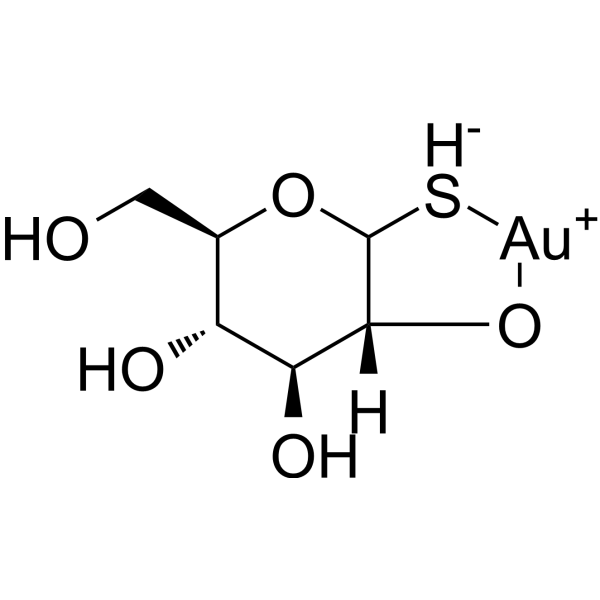
Aurothioglucose (Gold thioglucose), containing monovalent gold ion, is a potent active-site inhibitor of TrxR1 (thioredoxin reductase 1), with an IC50 of 65 nM. Aurothioglucose inhibits the DNA binding of NF-κB in vitro. Aurothioglucose shows anti-HIV and anti-rheumatic activities .
|
-
-
- HY-34614
-
|
Tricyclohexylphosphane
|
Drug Intermediate
Reactive Oxygen Species (ROS)
|
Cancer
|
|
Tricyclohexylphosphine (Tricyclohexylphosphane) is a chemical intermediate. The Tricyclohexylphosphine gold (I) n-mercaptobenzoate complex synthesized from Tricyclohexylphosphine induces ROS production and exhibits antiproliferative activity against breast cancer cells .
|
-
-
- HY-W591476
-
|
mPEG1000-SH
|
Biochemical Assay Reagents
|
Others
|
|
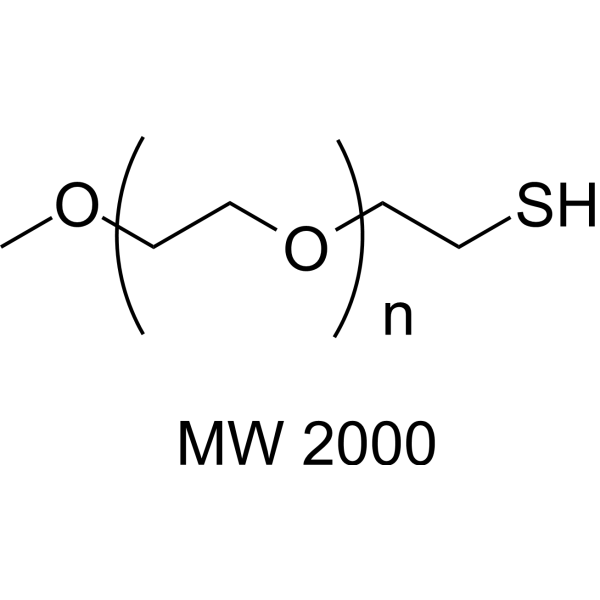
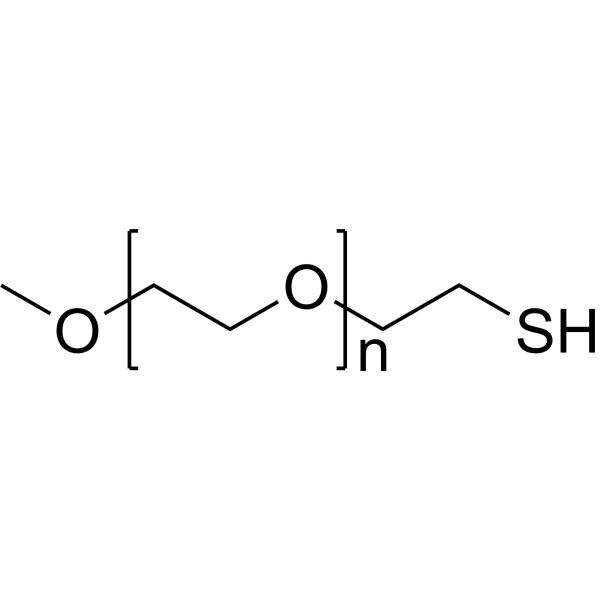
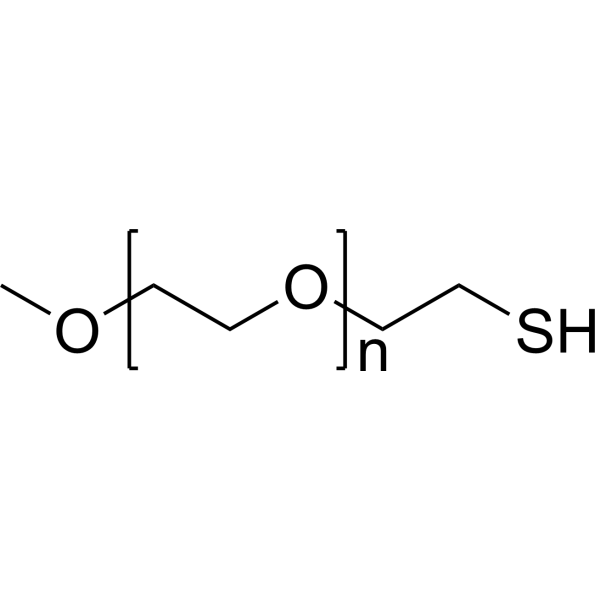
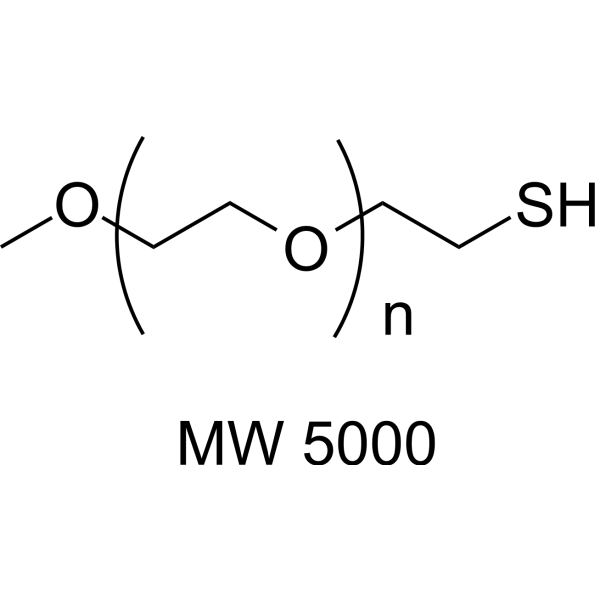
m-PEG1000-thiol is a surface modifier that can modify DNA thiolation and is used in the synthesis of gold nanorods (AuNR). m-PEG1000-thiol can load thiolated DNA onto AuNR, form a covalent bond with the surface of gold nanoparticles through the thiol group, and stabilize the nanoparticles by the steric hindrance effect of the polyethylene glycol chain, preventing aggregation and enhancing its biocompatibility. m-PEG1000-thiol can also provide a platform for the subsequent coupling of biomolecules (such as DNA, antibodies) by replacing surfactants (such as CTAB) on the surface of nanoparticles, thereby exerting its activity in promoting the functionalization of nanomaterials [2].
|
-
-
- HY-W020955
-
|
Chloro(triphenylphosphine)gold(I)
|
Biochemical Assay Reagents
Apoptosis
DNA Alkylator/Crosslinker
Lipoxygenase
|
Cancer
|
|
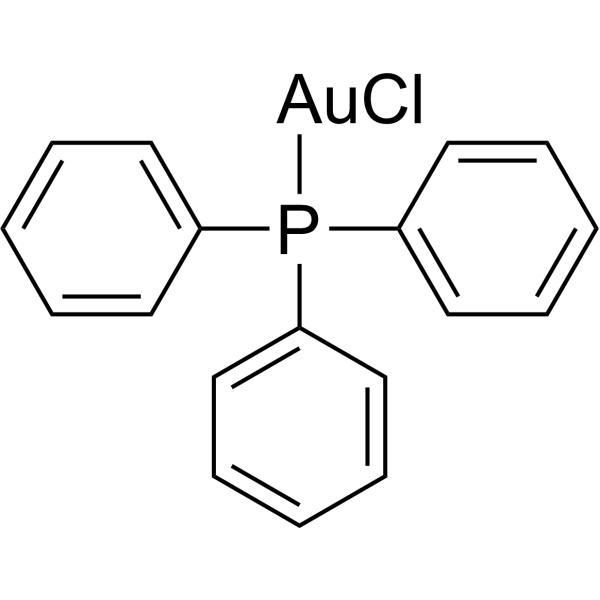
Triphenylphosphinechlorogold (Chloro(triphenylphosphine)gold(I)) is a gold complex, Apoptosis inducer, and catalyst. Triphenylphosphinechlorogold exhibits high LOX inhibitory activity. Triphenylphosphinechlorogold induces cell cycle arrest and apoptosis. Triphenylphosphinechlorogold catalyzes the peroxidation of linoleic acid. A weak interaction exists between Triphenylphosphinechlorogold and DNA. Triphenylphosphinechlorogold displays antiproliferative activity against breast cancer cells .
|
-
-
- HY-172445
-
|
SS-DNA
|
Biochemical Assay Reagents
|
Others
|
|
Deoxyribonucleic acid sodium salt from salmon testes (ssstDNA) can be used to make anti-adhesion layers (AALs) for passivating gold plasmonic sensor surfaces .
|
-
-
- HY-126437I
-
-
-
- HY-D0980
-
|
Biotinyl-3,6-dioxaoctanediamine; EZ-Link Amine-PEO2-Biotin
|
Biochemical Assay Reagents
|
Infection
|
|
Biotin-DADOO (Biotinyl-3,6-dioxaoctanediamine; EZ-Link Amine-PEO2-Biotin) is a biotin-containing amine compound and a biotinylation reagent. As an amino component, Biotin-DADOO participates in the nucleophilic ring-opening reaction of epoxidized ω-double bonds during the synthesis of biotinylated inhibitor derivatives. Biotin-DADOO can be conjugated with carboxymethyl cellulose derivatives. Biotin-DADOO is involved in the synthesis of biotin-estradiol conjugates for enzyme immunoassays. Biotin-DADOO can be used in the research of influenza A .
|
-
-
- HY-W073196
-
|
Tetrachloroauric(Ⅲ) acid hydrate (48% Au basis)
|
Biochemical Assay Reagents
|
Others
|
|
Gold(Ⅲ) chloride hydrate (Tetrachloroauric(Ⅲ) acid hydrate) (48% Au basis) is an organic intermediate that can be used to prepare gold nanoparticles .
|
-
-
- HY-W073196A
-
|
Tetrachloroauric(Ⅲ) acid hydrate (50% Au basis)
|
Biochemical Assay Reagents
|
Others
|
|
Gold(Ⅲ) chloride hydrate (Tetrachloroauric(Ⅲ) acid hydrate) (50% Au basis) is an organic intermediate that can be used to prepare gold nanoparticles .
|
-
-
- HY-W591476B
-
|
mPEG750-SH
|
Biochemical Assay Reagents
|
Others
|
|
m-PEG750-thiol modifies DNA thiolation for the synthesis of gold nanorods (AuNRs). Thiolated DNA can be loaded onto AuNR by the mPEG-SH/Tween 20 assisted method (Tween 20 and mPEG-SH repeatedly displace CTAB on the AuNR surface). DNA AuNRs have been widely used in nanostructure assembly, gene therapy, biosensing, and drug delivery.
|
-
-
- HY-106381A
-
|
|
PKC
|
Inflammation/Immunology
|
|
Aurothiomalate tetramer sodium, an Aurothiomalate sodium (HY-106381) tetrameric form, is antiarthritic gold agent. Aurothiomalate sodium is a potent and selective oncogenic PKCι signaling inhibitor .
|
-
-
- HY-W094511
-
|
gold chloride sodium dihydrate
|
Biochemical Assay Reagents
|
Others
|
|
Tetrachloroaurate III sodium dihydrate (Gold chloride sodium dihydrate) is utilized as catalyst in reactions like nucleophilic addition to multiple bonds, nucleophilic substitution of propargylic alcohols, and nonsymmetrical etherization .
|
-
-
- HY-W1048849B
-
|
4-Arm PEG-thiol (MW 10000)
|
Biochemical Assay Reagents
|
Others
|
|
4-Arm PEG-SH (MW 10000) (4-Arm PEG-thiol (MW 10000)) is a multi-arm PEG derivative with thiol groups at each end of the four arms. The reactive free thiol, SH or sulfhydryl groups react selectively with maleimide and transition metal surfaces including gold and silver .
|
-
-
- HY-W1048849A
-
|
4-Arm PEG5000-thiol
|
Biochemical Assay Reagents
|
Others
|
|
4-Arm PEG5000-SH (4-Arm PEG5000-thiol) is a multi-arm PEG derivative with thiol groups at each end of the four arms. The reactive free thiol, SH or sulfhydryl groups react selectively with maleimide and transition metal surfaces including gold and silver .
|
-
-
- HY-W591476C
-
|
mPEG550-SH
|
Biochemical Assay Reagents
|
Others
|
|
m-PEG550-thiol modifies DNA thiolation for the synthesis of gold nanorods (AuNRs). Thiolated DNA can be loaded onto AuNR by the mPEG-SH/Tween 20 assisted method (Tween 20 and mPEG-SH repeatedly displace CTAB on the AuNR surface). DNA AuNRs have been widely used in nanostructure assembly, gene therapy, biosensing, and drug delivery.
|
-
-
- HY-W033573
-
|
|
Biochemical Assay Reagents
|
Others
|
|
Hexaammineruthenium(II) chloride is a non-corrosive redox probe. Hexaammineruthenium(II) chloride avoids gold electrode corrosion and degradation to enable stable electrochemical impedance spectroscopy measurements. Hexaammineruthenium(II) chloride supports detection of human-IgG with a defined diagnostic concentration range .
|
-
-
- HY-160052
-
|
|
Interleukin Related
|
Inflammation/Immunology
Cancer
|
|
IL-6 aptamer sodium is an aptamer that specifically binds to IL-6, and can serve as a biological recognition receptor for high-sensitivity detection. IL-6 aptamer sodium enables label-free specific detection through changes in electrical signals of carbon nanotube microarrays or alterations in capacitive impedance on the surface of gold sensors. IL-6 aptamer sodium still maintains high selectivity even below the gray zone threshold for cancer diagnosis, and shows no significant non-specific binding to bovine serum albumin. IL-6 aptamer sodium can form an ordered self-assembled monolayer with 6-mercapto-1-hexanol on gold surfaces, making it suitable for reagent-free capacitive impedance biosensing platforms. IL-6 aptamer sodium is widely used in research related to fields such as cancer, inflammatory diseases, myeloma, liver cancer and glioma .
|
-
-
- HY-W011607
-
|
|
Amino Acid Derivatives
|
Others
|
|
L-Alanyl-L-tryptophan is a dipeptide formed from L-alanyl and L-tryptophan, and is also a metabolite. L-Alanyl-L-tryptophan can be adsorbated on the surface of gold nanoparticles, and the Raman signal can be enhanced by SERS technology to obtain the enhanced Raman spectroscopy .
|
-
-
- HY-W1048849C
-
|
4-Arm PEG20000-thiol
|
Biochemical Assay Reagents
|
Others
|
|
4-Arm PEG20000-SH (4-Arm PEG20000-thiol) is a multi-arm PEG derivative with thiol groups at each end of the four arms. The reactive free thiol, SH or sulfhydryl groups react selectively with maleimide and transition metal surfaces including gold and silver .
|
-
-
- HY-B1306R
-
|
p-Aminohippuric acid (Standard)
|
Reference Standards
Biochemical Assay Reagents
|
Neurological Disease
Metabolic Disease
|
|
4-Aminohippuric acid (p-Aminohippuric acid) (Standard) is the analytical standard of 4-Aminohippuric acid (HY-B1306). This product is intended for research and analytical applications. 4-Aminohippuric acid (p-Aminohippuric acid) is a coordination ligand for metal ions (such as Cu 2+, Fe 3+, Hg 2+) and a functionalization reagent for nanomaterials. 4-Aminohippuric acid can coordinate with metal ions or modify the surface of materials such as carbon nanotubes and gold nanoparticles through amino and carboxyl groups. 4-Aminohippuric acid can form stable complexes with metal ions or participate in the synthesis of nanomaterials as a reducing agent/stabilizer, enriching metal ions or giving nanoparticles peroxidase-mimicking activity. 4-Aminohippuric acid can be used to construct highly sensitive electrochemical sensors or colorimetric sensors to detect and quantitatively analyze heavy metal ions such as copper, iron, and mercury in environmental water samples and biological samples. 4-Aminohippuric acid may also be a biomarker for attention-deficit/hyperactivity disorder (ADHD) .
|
-
-
- HY-W073196B
-
|
Tetrachloroauric(Ⅲ) acid hydrate (52% Au basis)
|
Biochemical Assay Reagents
|
Others
|
|
Gold(Ⅲ) chloride hydrate (Tetrachloroauric(Ⅲ) acid hydrate) (52% Au basis) is an organic intermediate that can be used to prepare gold nanoparticles .
|
-
-
- HY-W010710
-
-
-
- HY-W012232
-
|
|
Biochemical Assay Reagents
Drug Intermediate
|
Others
|
|
2,6-Diphenylpyridine is a proton acceptor (log(P) = 5) and a tridentate [C^N^C] dianionic ligand. 2,6-Diphenylpyridine efficiently transfers protons through a direct pathway at the interface of two immiscible electrolyte solutions. 2,6-Diphenylpyridine as a tridentate ligand and can form mononuclear and binuclear complexes with gold(III). 2,6-Diphenylpyridin is applicable to research in electrochemical ion transfer kinetics and organometallic chemistry .
|
-
-
- HY-B1306S
-
|
p-Aminohippuric acid-d4
|
Biochemical Assay Reagents
|
Neurological Disease
Metabolic Disease
|
|
4-Aminohippuric acid-d4 (p-Aminohippuric acid-d4) is the deuterium labeled 4-Aminohippuric acid (HY-B1306). 4-Aminohippuric acid (p-Aminohippuric acid) is a coordination ligand for metal ions (such as Cu 2+, Fe 3+, Hg 2+) and a functionalization reagent for nanomaterials. 4-Aminohippuric acid can coordinate with metal ions or modify the surface of materials such as carbon nanotubes and gold nanoparticles through amino and carboxyl groups. 4-Aminohippuric acid can form stable complexes with metal ions or participate in the synthesis of nanomaterials as a reducing agent/stabilizer, enriching metal ions or giving nanoparticles peroxidase-mimicking activity. 4-Aminohippuric acid can be used to construct highly sensitive electrochemical sensors or colorimetric sensors to detect and quantitatively analyze heavy metal ions such as copper, iron, and mercury in environmental water samples and biological samples. 4-Aminohippuric acid may also be a biomarker for attention-deficit/hyperactivity disorder (ADHD) .
|
-
-
- HY-B1285R
-
|
2,3-Dimercapto-1-propanol (Standard); Dithioglycerol (Standard)
|
Reference Standards
HIV
|
Infection
|
|
Dimercaprol (Standard) is the analytical standard of Dimercaprol. This product is intended for research and analytical applications. Dimercaprol (2,3-Dimercapto-1-propanol) is an anti-heavy metal-poisoning agent, which exhibits anti-HIV activity. Dimercaprol can be used for the study for arsenic, mercury, gold, lead, antimony, and other toxic metal poisoning .
|
-
-
- HY-W590555
-
|
|
Liposome
|
Cancer
|
|
Thiol-PEG2000-DMG is a phospholipid polyPEG which can be used to prepare liposomes or nanoparticles. The terminal thiol group reacts with maleimide, OPSS, vinylsulfone and transition metal surfaces including gold, silver, etc.
|
-
-
- HY-W1048849D
-
|
4-Arm PEG40000-thiol
|
Biochemical Assay Reagents
|
Others
|
|
4-Arm PEG40000-SH (4-Arm PEG40000-thiol) is a multi-arm PEG derivative with thiol groups at each end of the four arms. The reactive free thiol, SH or sulfhydryl groups react selectively with maleimide and transition metal surfaces including gold and silver .
|
-
-
- HY-W591476A
-
|
mPEG3400-SH
|
Biochemical Assay Reagents
|
Others
|
|
m-PEG3400-thiol modifies DNA thiolation for the synthesis of gold nanorods (AuNRs). Thiolated DNA can be loaded onto AuNR by the mPEG-SH/Tween 20 assisted method (Tween 20 and mPEG-SH repeatedly displace CTAB on the AuNR surface). DNA AuNRs have been widely used in nanostructure assembly, gene therapy, biosensing, and drug delivery.
|
-
-
- HY-W591476D
-
|
mPEG350-SH
|
Biochemical Assay Reagents
|
Others
|
|
m-PEG350-thiol modifies DNA thiolation for the synthesis of gold nanorods (AuNRs). Thiolated DNA can be loaded onto AuNR by the mPEG-SH/Tween 20 assisted method (Tween 20 and mPEG-SH repeatedly displace CTAB on the AuNR surface). DNA AuNRs have been widely used in nanostructure assembly, gene therapy, biosensing, and drug delivery.
|
-
-
- HY-W1048545H
-
|
Amine-PEG1000-Thiol hydrochloride
|
Biochemical Assay Reagents
|
Others
|
|
H2N-PEG1000-SH (Amine-PEG1000-Thiol) hydrochloride is a linear heterobifunctional PEGylated product containing thiol and amine. H2N-PEG1000-SH hydrochloride is an important cross-linking or bioconjugation reagent with PEG chains. Thiol or SH, sulfhydryl or thiol selectively reacts with maleimide, OPSS, vinyl sulfone and transition metal surfaces (including gold, silver, etc.) .
|
-
-
- HY-W035090
-
|
(Trimethylphosphine)gold(I) chloride
|
Biochemical Assay Reagents
Endogenous Metabolite
|
|
|
Chloro(trimethylphosphine)gold(I) ((Trimethylphosphine)gold(I) chloride) is a metal complex with antitumor activity. Chloro(trimethylphosphine)gold(I) has been studied as a potential chemotherapeutic compound in cancer inhibition. Chloro(trimethylphosphine)gold(I) can also be used in organic synthesis reactions as a catalyst to improve reaction efficiency. The biocompatibility of Chloro(trimethylphosphine)gold(I) makes it promising for application in medicine and materials science.
|
-
-
- HY-133883
-
|
|
Fluorescent Dye
|
Others
|
|
Cyanine7.5 amine is a near-infrared Cy7.5-based dye and also a substrate for amide bond coupling (Ex/Em = 788 nm/808 nm). Cyanine7.5 amine contains a free amino group and can be used for coupling with activated carboxylic acid derivatives .
|
-
-
- HY-D1547
-
|
|
Fluorescent Dye
|
Others
|
|
1-(3',6'-Bis(ethylamino)-2',7'-dimethyl-3-oxospiro[isoindoline-1,9'-xanthen]-2-yl)-3-phenylurea (compound 1a) can be used as a fast-responsive fluorescent gold ion probe for detection of gold ions in water and synthetic products .
|
-
-
- HY-139671
-
-
-
- HY-171457
-
|
RC-12
|
Parasite
Drug Derivative
|
Infection
|
|
WR-27653 (RC-12) is a derivative of Catechol with good activity against hypnozoites in the gold-standard Plasmodium cynomolgi-rhesus monkey (Macaca mulatta) model. WR-27653 has antimalarial activity .
|
-
-
- HY-163301
-
|
|
Reactive Oxygen Species (ROS)
|
Cancer
|
|
Antitumor agent-139 (compound 9b) is a liver - and mitochondria-targeting gold(I) complexe, and produces reactive oxygen species (ROS) and facilitates DNA excretion. Antitumor agent-139 inhibits tumor growth in a patient-derived xenograft model of hepatocellular carcinoma .
|
-
-
- HY-W751932
-
|
|
Biochemical Assay Reagents
|
Others
|
|
Carboxy-EG6-undecanethiol is an alkanethiol that suitable for self-assembly a gold thin-film substrate. Carboxy-EG6-undecanethiol can selectively capture HbA1c in sample by covalent coupling of 3-aminophenyl boronic acid (3-APBA) .
|
-
-
- HY-172115
-
|
|
TrxR
Apoptosis
|
Cancer
|
|
BGC4 is a biphenyl-based gold(III) complex. BGC4 inhibits human recombinant thioredoxin reductase (TrxR) with an IC50 of 10.7 μM, exhibits cytotoxicity (IC50 for MDA-MB-231 is 5.4 μM), and induces apoptosis. BGC4 exhibits antitumor efficacy in mouse models .
|
-
-
- HY-P10804
-
|
|
SARS-CoV
|
Infection
|
|
PIH is an antiviral peptide that effectively inhibits the HR1/HR2-mediated membrane fusion between MERS-CoV and host cells, with an IC50 of 1.171 μM. By forming a complex with gold nanorods (AuNRs), the antiviral efficacy of PIH can be further enhanced by 10-fold .
|
-
-
- HY-130407
-
|
|
PROTAC Linkers
|
Cancer
|
|
Lipoamido-PEG3-OH is a PEG-based PROTAC linker can be used in the synthesis of PROTACs. Lipoamido-PEG3-OH (compound TA-TEG-G2CN) can be used in the formation of a highly stable, dendronized gold nanoparticle (AuNP)-based drug delivery platform .
|
-
-
- HY-162958
-
|
|
Apoptosis
TrxR
|
Cancer
|
|
Photosensitizer-6 (Compound 4) is a gold (I) complex and exhibits inhibitory activity against TrxR. Photosensitizer-6 induces apoptosis in 4T1 cell, targets and eradicates tumors through chemo-phototherapy and immunogenic cell death under light exposure. Photosensitizer-6 can be used for tumor imaging .
|
-
-
- HY-P3805
-
-
-
- HY-169083
-
|
|
Apoptosis
Bcl-2 Family
|
Cancer
|
|
Bcl-2-IN-22 (compound 1) is a gold(I) NHC complex with anticancer activity. Bcl-2-IN-22 induces apoptosis via the mitochondrial pathway with an IC50 value of 0.014 μM. In addition, Bcl-2-IN-22 targets BCL-2 family members and exhibits pro-apoptosis and resensitization properties in multidrug-resistant leukemia cells that overexpress BCL-2 .
|
-
-
- HY-W1048545D
-
|
Amine-PEG10000-Thiol hydrochloride
|
Biochemical Assay Reagents
|
Others
|
|
H2N-PEG10000-SH (Amine-PEG10000-Thiol) hydrochloride is a linear heterobifunctional PEGylated product containing thiol and amine. H2N-PEG10000-SH hydrochloride is an important cross-linking or bioconjugation reagent with PEG chains. Thiol or SH, sulfhydryl or thiol selectively reacts with maleimide, OPSS, vinyl sulfone and transition metal surfaces (including gold, silver, etc.) .
|
-
- HY-W1048545A
-
|
Amine-PEG2000-Thiol hydrochloride
|
Biochemical Assay Reagents
|
Others
|
|
H2N-PEG2000-SH (Amine-PEG2000-Thiol) hydrochloride is a linear heterobifunctional PEGylated product containing thiol and amine. H2N-PEG2000-SH hydrochloride is an important cross-linking or bioconjugation reagent with PEG chains. Thiol or SH, sulfhydryl or thiol selectively reacts with maleimide, OPSS, vinyl sulfone and transition metal surfaces (including gold, silver, etc.) .
|
-
- HY-W075815
-
|
|
Biochemical Assay Reagents
|
Others
|
|
Chloro(tetrahydrothiophene)gold(I) is a kind of biological materials or organic compounds that are widely used in life science research.
|
-
- HY-P11188
-
-
- HY-140706A
-
|
mPEG40000-SH
|
Biochemical Assay Reagents
|
Others
|
|
m-PEG40000-thiol (mPEG40000-SH) can modify DNA thiolation and is used in the synthesis of gold nanorods (AuNRs) .
|
-
- HY-D3410
-
|
|
Fluorescent Dye
GLUT
|
Others
|
|
CDr17 is a GLUT1 substrate and selective fluorescent dye staining M1 microphages. CDr17 utilizes the Gating-Oriented Live-cell Distinction (GOLD) mechanism to enter M1 macrophages (Ex/Em = 646/662 nm) .
|
-
- HY-W1051944H
-
|
|
Biochemical Assay Reagents
|
Others
|
|
4-arm PEG1000-LA is a multifunctional drug delivery system composed of lipoic acid (HY-18733) and polyethylene glycol (PEG). The lipoic acid group has a high affinity for metal surfaces and is widely used in gold nanoparticles and quantum dot surfaces.
|
-
- HY-W1051944A
-
|
|
Biochemical Assay Reagents
|
Others
|
|
4-arm PEG5000-LA is a multifunctional drug delivery system composed of lipoic acid (HY-18733) and polyethylene glycol (PEG). The lipoic acid group has a high affinity for metal surfaces and is widely used in gold nanoparticles and quantum dot surfaces.
|
-
- HY-W1051944I
-
|
|
Biochemical Assay Reagents
|
Others
|
|
4-arm PEG3400-LA is a multifunctional drug delivery system composed of lipoic acid (HY-18733) and polyethylene glycol (PEG). The lipoic acid group has a high affinity for metal surfaces and is widely used in gold nanoparticles and quantum dot surfaces.
|
-
- HY-W1051944E
-
|
|
Biochemical Assay Reagents
|
Others
|
|
4-arm PEG600-LA is a multifunctional drug delivery system composed of lipoic acid (HY-18733) and polyethylene glycol (PEG). The lipoic acid group has a high affinity for metal surfaces and is widely used in gold nanoparticles and quantum dot surfaces.
|
-
- HY-W1051944
-
|
|
Biochemical Assay Reagents
|
Others
|
|
4-arm PEG2000-LA is a multifunctional drug delivery system composed of lipoic acid (HY-18733) and polyethylene glycol (PEG). The lipoic acid group has a high affinity for metal surfaces and is widely used in gold nanoparticles and quantum dot surfaces.
|
-
- HY-W1051944B
-
|
|
Biochemical Assay Reagents
|
Others
|
|
4-arm PEG10000-LA is a multifunctional drug delivery system composed of lipoic acid (HY-18733) and polyethylene glycol (PEG). The lipoic acid group has a high affinity for metal surfaces and is widely used in gold nanoparticles and quantum dot surfaces.
|
-
- HY-W1051944D
-
|
|
Biochemical Assay Reagents
|
Others
|
|
4-arm PEG400-LA is a multifunctional drug delivery system composed of lipoic acid (HY-18733) and polyethylene glycol (PEG). The lipoic acid group has a high affinity for metal surfaces and is widely used in gold nanoparticles and quantum dot surfaces.
|
-
- HY-W1048545I
-
|
Amine-PEG3400-Thiol hydrochloride
|
Biochemical Assay Reagents
|
Others
|
|
H2N-PEG3400-SH (Amine-PEG3400-Thiol) hydrochloride is a linear heterobifunctional PEGylated product containing thiol and amine. H2N-PEG3400-SH hydrochloride is an important cross-linking or bioconjugation reagent with PEG chains. Thiol or SH, sulfhydryl or thiol selectively reacts with maleimide, OPSS, vinyl sulfone and transition metal surfaces (including gold, silver, etc.) .
|
-
- HY-W1048545E
-
|
Amine-PEG20000-Thiol hydrochloride
|
Biochemical Assay Reagents
|
Others
|
|
H2N-PEG20000-SH (Amine-PEG20000-Thiol) hydrochloride is a linear heterobifunctional PEGylated product containing thiol and amine. H2N-PEG20000-SH hydrochloride is an important cross-linking or bioconjugation reagent with PEG chains. Thiol or SH, sulfhydryl or thiol selectively reacts with maleimide, OPSS, vinyl sulfone and transition metal surfaces (including gold, silver, etc.) .
|
-
- HY-W1048545J
-
|
Amine-PEG40000-Thiol hydrochloride
|
Biochemical Assay Reagents
|
Others
|
|
H2N-PEG40000-SH (Amine-PEG40000-Thiol) hydrochloride is a linear heterobifunctional PEGylated product containing thiol and amine. H2N-PEG40000-SH hydrochloride is an important cross-linking or bioconjugation reagent with PEG chains. Thiol or SH, sulfhydryl or thiol selectively reacts with maleimide, OPSS, vinyl sulfone and transition metal surfaces (including gold, silver, etc.) .
|
-
- HY-W1048545C
-
|
Amine-PEG5000-Thiol hydrochloride
|
Biochemical Assay Reagents
|
Others
|
|
H2N-PEG5000-SH (Amine-PEG5000-Thiol) hydrochloride is a linear heterobifunctional PEGylated product containing thiol and amine. H2N-PEG5000-SH hydrochloride is an important cross-linking or bioconjugation reagent with PEG chains. Thiol or SH, sulfhydryl or thiol selectively reacts with maleimide, OPSS, vinyl sulfone and transition metal surfaces (including gold, silver, etc.) .
|
-
- HY-W1048549H
-
|
HOOC-PEG1000-Thiol
|
Biochemical Assay Reagents
|
Others
|
|
HOOC-PEG1000-SH (HOOC-PEG1000-Thiol) is a reactive thiol PEG derivative with a terminal carboxyl group. The carboxyl group can react with amine or hydroxyl groups to form a stable amide bond or an unstable ester bond. The reaction of the carboxyl group allows the amine or hydroxyl group to be converted into a free thiol with a linear PEG linkage. The generated thiol group can be used to modify the surface of gold nanoparticles or participate in other PEGylation reactions. The PEG linkage between the thiol and carboxyl groups has good water solubility, flexible linker distance and higher stability .
|
-
- HY-W1048549J
-
|
HOOC-PEG40000-Thiol
|
Biochemical Assay Reagents
|
Others
|
|
HOOC-PEG40000-SH (HOOC-PEG40000-Thiol) is a reactive thiol PEG derivative with a terminal carboxyl group. The carboxyl group can react with amine or hydroxyl groups to form a stable amide bond or an unstable ester bond. The reaction of the carboxyl group allows the amine or hydroxyl group to be converted into a free thiol with a linear PEG linkage. The generated thiol group can be used to modify the surface of gold nanoparticles or participate in other PEGylation reactions. The PEG linkage between the thiol and carboxyl groups has good water solubility, flexible linker distance and higher stability .
|
-
- HY-P11490
-
|
|
MDM-2/p53
|
Inflammation/Immunology
Cancer
|
|
DPMI-ω is a dual-specificity d-peptide antagonist of oncogenic proteins MDM2 and MDMX. DPMI-ω, upon fabrication on gold nanoparticles, efficiently traverses tumor cells and kills them by reactivating the p53 signaling pathway. DPMI-ω can disrupte the p53-MDM2/MDMX complex. DPMI-ω can inhibit B16 melanoma growth and induce cells G0/G1 phase arrest. DPMI-ω can augment the efficacy of immunotherapy by expanding CD3 +/CD8 + cytotoxic T cells and suppressing CD4 +/CD25 + regulatory T cells companied with anti-PD1 antibody. DPMI-ω can be used for research of melanoma .
|
-
| Cat. No. |
Product Name |
Type |
-
- HY-133883
-
|
|
Fluorescent Dyes
|
|
Cyanine7.5 amine is a near-infrared Cy7.5-based dye and also a substrate for amide bond coupling (Ex/Em = 788 nm/808 nm). Cyanine7.5 amine contains a free amino group and can be used for coupling with activated carboxylic acid derivatives .
|
-
- HY-D1547
-
|
|
Fluorescent Dyes
|
|
1-(3',6'-Bis(ethylamino)-2',7'-dimethyl-3-oxospiro[isoindoline-1,9'-xanthen]-2-yl)-3-phenylurea (compound 1a) can be used as a fast-responsive fluorescent gold ion probe for detection of gold ions in water and synthetic products .
|
-
- HY-D3410
-
|
|
Fluorescent Dyes
|
|
CDr17 is a GLUT1 substrate and selective fluorescent dye staining M1 microphages. CDr17 utilizes the Gating-Oriented Live-cell Distinction (GOLD) mechanism to enter M1 macrophages (Ex/Em = 646/662 nm) .
|
| Cat. No. |
Product Name |
Type |
-
- HY-W094581
-
|
Chloroauric acid trihydrate
|
Biochemical Assay Reagents
|
|
Gold (III) chloride trihydrate is a reducing agent. Gold (III) chromium trihydrate can be used for chemical synthesis of gold nanoparticles (NP) and spirochromene derivatives .
|
-
- HY-W591424
-
|
mPEG2000-SC; mPEG2000-Succinimidyl ester
|
Biochemical Assay Reagents
|
|
m-PEG2000-NHS ester (mPEG2000-SC) is a reagent with both cell adhesion inhibition and peptide conjugation functions. The NHS ester group of m-PEG2000-NHS ester forms stable amide bonds with primary amine-containing molecules (e.g., the N-terminus of MMP-2-cleavable octapeptide) to generate mPEG-peptide intermediates for liposome surface modification. When m-PEG2000-NHS ester is immobilized on a cystamine-modified gold surface, it can construct an in vitro model for cell adhesion kinetic studies, and higher PEG density and thicker layers correlate with lower cell adhesion rates. m-PEG2000-NHS ester can synthesize MMP-2-responsive PEGylated lipid conjugates to achieve MMP-triggered dePEGylation in the tumor microenvironment. m-PEG2000-NHS ester can be used in studies related to colon cancer and other conditions .
|
-
- HY-W591476
-
|
mPEG1000-SH
|
Biochemical Assay Reagents
|
|
m-PEG1000-thiol is a surface modifier that can modify DNA thiolation and is used in the synthesis of gold nanorods (AuNR). m-PEG1000-thiol can load thiolated DNA onto AuNR, form a covalent bond with the surface of gold nanoparticles through the thiol group, and stabilize the nanoparticles by the steric hindrance effect of the polyethylene glycol chain, preventing aggregation and enhancing its biocompatibility. m-PEG1000-thiol can also provide a platform for the subsequent coupling of biomolecules (such as DNA, antibodies) by replacing surfactants (such as CTAB) on the surface of nanoparticles, thereby exerting its activity in promoting the functionalization of nanomaterials [2].
|
-
- HY-W020955
-
|
Chloro(triphenylphosphine)gold(I)
|
Biochemical Assay Reagents
|
|
Triphenylphosphinechlorogold (Chloro(triphenylphosphine)gold(I)) is a gold complex, Apoptosis inducer, and catalyst. Triphenylphosphinechlorogold exhibits high LOX inhibitory activity. Triphenylphosphinechlorogold induces cell cycle arrest and apoptosis. Triphenylphosphinechlorogold catalyzes the peroxidation of linoleic acid. A weak interaction exists between Triphenylphosphinechlorogold and DNA. Triphenylphosphinechlorogold displays antiproliferative activity against breast cancer cells .
|
-
- HY-172445
-
|
SS-DNA
|
Biochemical Assay Reagents
|
|
Deoxyribonucleic acid sodium salt from salmon testes (ssstDNA) can be used to make anti-adhesion layers (AALs) for passivating gold plasmonic sensor surfaces .
|
-
- HY-126437I
-
|
|
Biochemical Assay Reagents
|
|
Poly-L-lysine hydrobromide (MW 1000-5000) is a homopolymer of L-lysine and a polycationic non-viral gene delivery vector. Poly-L-lysine hydrobromide (MW 1000-5000) forms complexes with plasmid DNA. Poly-L-lysine hydrobromide (MW 1000-5000) is applicable to relevant research on lung cancer .
|
-
- HY-D0980
-
|
Biotinyl-3,6-dioxaoctanediamine; EZ-Link Amine-PEO2-Biotin
|
Biochemical Assay Reagents
|
|
Biotin-DADOO (Biotinyl-3,6-dioxaoctanediamine; EZ-Link Amine-PEO2-Biotin) is a biotin-containing amine compound and a biotinylation reagent. As an amino component, Biotin-DADOO participates in the nucleophilic ring-opening reaction of epoxidized ω-double bonds during the synthesis of biotinylated inhibitor derivatives. Biotin-DADOO can be conjugated with carboxymethyl cellulose derivatives. Biotin-DADOO is involved in the synthesis of biotin-estradiol conjugates for enzyme immunoassays. Biotin-DADOO can be used in the research of influenza A .
|
-
- HY-W073196
-
|
Tetrachloroauric(Ⅲ) acid hydrate (48% Au basis)
|
Biochemical Assay Reagents
|
|
Gold(Ⅲ) chloride hydrate (Tetrachloroauric(Ⅲ) acid hydrate) (48% Au basis) is an organic intermediate that can be used to prepare gold nanoparticles .
|
-
- HY-W073196A
-
|
Tetrachloroauric(Ⅲ) acid hydrate (50% Au basis)
|
Biochemical Assay Reagents
|
|
Gold(Ⅲ) chloride hydrate (Tetrachloroauric(Ⅲ) acid hydrate) (50% Au basis) is an organic intermediate that can be used to prepare gold nanoparticles .
|
-
- HY-W591476B
-
|
mPEG750-SH
|
Biochemical Assay Reagents
|
|
m-PEG750-thiol modifies DNA thiolation for the synthesis of gold nanorods (AuNRs). Thiolated DNA can be loaded onto AuNR by the mPEG-SH/Tween 20 assisted method (Tween 20 and mPEG-SH repeatedly displace CTAB on the AuNR surface). DNA AuNRs have been widely used in nanostructure assembly, gene therapy, biosensing, and drug delivery.
|
-
- HY-W094511
-
|
gold chloride sodium dihydrate
|
Biochemical Assay Reagents
|
|
Tetrachloroaurate III sodium dihydrate (Gold chloride sodium dihydrate) is utilized as catalyst in reactions like nucleophilic addition to multiple bonds, nucleophilic substitution of propargylic alcohols, and nonsymmetrical etherization .
|
-
- HY-W1048849B
-
|
4-Arm PEG-thiol (MW 10000)
|
Biochemical Assay Reagents
|
|
4-Arm PEG-SH (MW 10000) (4-Arm PEG-thiol (MW 10000)) is a multi-arm PEG derivative with thiol groups at each end of the four arms. The reactive free thiol, SH or sulfhydryl groups react selectively with maleimide and transition metal surfaces including gold and silver .
|
-
- HY-W1048849A
-
|
4-Arm PEG5000-thiol
|
Biochemical Assay Reagents
|
|
4-Arm PEG5000-SH (4-Arm PEG5000-thiol) is a multi-arm PEG derivative with thiol groups at each end of the four arms. The reactive free thiol, SH or sulfhydryl groups react selectively with maleimide and transition metal surfaces including gold and silver .
|
-
- HY-W591476C
-
|
mPEG550-SH
|
Biochemical Assay Reagents
|
|
m-PEG550-thiol modifies DNA thiolation for the synthesis of gold nanorods (AuNRs). Thiolated DNA can be loaded onto AuNR by the mPEG-SH/Tween 20 assisted method (Tween 20 and mPEG-SH repeatedly displace CTAB on the AuNR surface). DNA AuNRs have been widely used in nanostructure assembly, gene therapy, biosensing, and drug delivery.
|
-
- HY-W1048849C
-
|
4-Arm PEG20000-thiol
|
Biochemical Assay Reagents
|
|
4-Arm PEG20000-SH (4-Arm PEG20000-thiol) is a multi-arm PEG derivative with thiol groups at each end of the four arms. The reactive free thiol, SH or sulfhydryl groups react selectively with maleimide and transition metal surfaces including gold and silver .
|
-
- HY-W073196B
-
|
Tetrachloroauric(Ⅲ) acid hydrate (52% Au basis)
|
Biochemical Assay Reagents
|
|
Gold(Ⅲ) chloride hydrate (Tetrachloroauric(Ⅲ) acid hydrate) (52% Au basis) is an organic intermediate that can be used to prepare gold nanoparticles .
|
-
- HY-W1048849D
-
|
4-Arm PEG40000-thiol
|
Biochemical Assay Reagents
|
|
4-Arm PEG40000-SH (4-Arm PEG40000-thiol) is a multi-arm PEG derivative with thiol groups at each end of the four arms. The reactive free thiol, SH or sulfhydryl groups react selectively with maleimide and transition metal surfaces including gold and silver .
|
-
- HY-W591476A
-
|
mPEG3400-SH
|
Biochemical Assay Reagents
|
|
m-PEG3400-thiol modifies DNA thiolation for the synthesis of gold nanorods (AuNRs). Thiolated DNA can be loaded onto AuNR by the mPEG-SH/Tween 20 assisted method (Tween 20 and mPEG-SH repeatedly displace CTAB on the AuNR surface). DNA AuNRs have been widely used in nanostructure assembly, gene therapy, biosensing, and drug delivery.
|
-
- HY-W591476D
-
|
mPEG350-SH
|
Biochemical Assay Reagents
|
|
m-PEG350-thiol modifies DNA thiolation for the synthesis of gold nanorods (AuNRs). Thiolated DNA can be loaded onto AuNR by the mPEG-SH/Tween 20 assisted method (Tween 20 and mPEG-SH repeatedly displace CTAB on the AuNR surface). DNA AuNRs have been widely used in nanostructure assembly, gene therapy, biosensing, and drug delivery.
|
-
- HY-W1048545H
-
|
Amine-PEG1000-Thiol hydrochloride
|
Biochemical Assay Reagents
|
|
H2N-PEG1000-SH (Amine-PEG1000-Thiol) hydrochloride is a linear heterobifunctional PEGylated product containing thiol and amine. H2N-PEG1000-SH hydrochloride is an important cross-linking or bioconjugation reagent with PEG chains. Thiol or SH, sulfhydryl or thiol selectively reacts with maleimide, OPSS, vinyl sulfone and transition metal surfaces (including gold, silver, etc.) .
|
-
- HY-W751932
-
|
|
Biochemical Assay Reagents
|
|
Carboxy-EG6-undecanethiol is an alkanethiol that suitable for self-assembly a gold thin-film substrate. Carboxy-EG6-undecanethiol can selectively capture HbA1c in sample by covalent coupling of 3-aminophenyl boronic acid (3-APBA) .
|
-
- HY-W1048545D
-
|
Amine-PEG10000-Thiol hydrochloride
|
Biochemical Assay Reagents
|
|
H2N-PEG10000-SH (Amine-PEG10000-Thiol) hydrochloride is a linear heterobifunctional PEGylated product containing thiol and amine. H2N-PEG10000-SH hydrochloride is an important cross-linking or bioconjugation reagent with PEG chains. Thiol or SH, sulfhydryl or thiol selectively reacts with maleimide, OPSS, vinyl sulfone and transition metal surfaces (including gold, silver, etc.) .
|
-
- HY-W1048545A
-
|
Amine-PEG2000-Thiol hydrochloride
|
Biochemical Assay Reagents
|
|
H2N-PEG2000-SH (Amine-PEG2000-Thiol) hydrochloride is a linear heterobifunctional PEGylated product containing thiol and amine. H2N-PEG2000-SH hydrochloride is an important cross-linking or bioconjugation reagent with PEG chains. Thiol or SH, sulfhydryl or thiol selectively reacts with maleimide, OPSS, vinyl sulfone and transition metal surfaces (including gold, silver, etc.) .
|
-
- HY-W075815
-
|
|
Biochemical Assay Reagents
|
|
Chloro(tetrahydrothiophene)gold(I) is a kind of biological materials or organic compounds that are widely used in life science research.
|
-
- HY-140706A
-
|
mPEG40000-SH
|
Biochemical Assay Reagents
|
|
m-PEG40000-thiol (mPEG40000-SH) can modify DNA thiolation and is used in the synthesis of gold nanorods (AuNRs) .
|
-
- HY-W1051944H
-
|
|
Biochemical Assay Reagents
|
|
4-arm PEG1000-LA is a multifunctional drug delivery system composed of lipoic acid (HY-18733) and polyethylene glycol (PEG). The lipoic acid group has a high affinity for metal surfaces and is widely used in gold nanoparticles and quantum dot surfaces.
|
-
- HY-W1051944A
-
|
|
Biochemical Assay Reagents
|
|
4-arm PEG5000-LA is a multifunctional drug delivery system composed of lipoic acid (HY-18733) and polyethylene glycol (PEG). The lipoic acid group has a high affinity for metal surfaces and is widely used in gold nanoparticles and quantum dot surfaces.
|
-
- HY-W1051944I
-
|
|
Biochemical Assay Reagents
|
|
4-arm PEG3400-LA is a multifunctional drug delivery system composed of lipoic acid (HY-18733) and polyethylene glycol (PEG). The lipoic acid group has a high affinity for metal surfaces and is widely used in gold nanoparticles and quantum dot surfaces.
|
-
- HY-W1051944E
-
|
|
Biochemical Assay Reagents
|
|
4-arm PEG600-LA is a multifunctional drug delivery system composed of lipoic acid (HY-18733) and polyethylene glycol (PEG). The lipoic acid group has a high affinity for metal surfaces and is widely used in gold nanoparticles and quantum dot surfaces.
|
-
- HY-W1051944
-
|
|
Biochemical Assay Reagents
|
|
4-arm PEG2000-LA is a multifunctional drug delivery system composed of lipoic acid (HY-18733) and polyethylene glycol (PEG). The lipoic acid group has a high affinity for metal surfaces and is widely used in gold nanoparticles and quantum dot surfaces.
|
-
- HY-W1051944B
-
|
|
Biochemical Assay Reagents
|
|
4-arm PEG10000-LA is a multifunctional drug delivery system composed of lipoic acid (HY-18733) and polyethylene glycol (PEG). The lipoic acid group has a high affinity for metal surfaces and is widely used in gold nanoparticles and quantum dot surfaces.
|
-
- HY-W1051944D
-
|
|
Biochemical Assay Reagents
|
|
4-arm PEG400-LA is a multifunctional drug delivery system composed of lipoic acid (HY-18733) and polyethylene glycol (PEG). The lipoic acid group has a high affinity for metal surfaces and is widely used in gold nanoparticles and quantum dot surfaces.
|
-
- HY-W1048545I
-
|
Amine-PEG3400-Thiol hydrochloride
|
Biochemical Assay Reagents
|
|
H2N-PEG3400-SH (Amine-PEG3400-Thiol) hydrochloride is a linear heterobifunctional PEGylated product containing thiol and amine. H2N-PEG3400-SH hydrochloride is an important cross-linking or bioconjugation reagent with PEG chains. Thiol or SH, sulfhydryl or thiol selectively reacts with maleimide, OPSS, vinyl sulfone and transition metal surfaces (including gold, silver, etc.) .
|
-
- HY-W1048545E
-
|
Amine-PEG20000-Thiol hydrochloride
|
Biochemical Assay Reagents
|
|
H2N-PEG20000-SH (Amine-PEG20000-Thiol) hydrochloride is a linear heterobifunctional PEGylated product containing thiol and amine. H2N-PEG20000-SH hydrochloride is an important cross-linking or bioconjugation reagent with PEG chains. Thiol or SH, sulfhydryl or thiol selectively reacts with maleimide, OPSS, vinyl sulfone and transition metal surfaces (including gold, silver, etc.) .
|
-
- HY-W1048545J
-
|
Amine-PEG40000-Thiol hydrochloride
|
Biochemical Assay Reagents
|
|
H2N-PEG40000-SH (Amine-PEG40000-Thiol) hydrochloride is a linear heterobifunctional PEGylated product containing thiol and amine. H2N-PEG40000-SH hydrochloride is an important cross-linking or bioconjugation reagent with PEG chains. Thiol or SH, sulfhydryl or thiol selectively reacts with maleimide, OPSS, vinyl sulfone and transition metal surfaces (including gold, silver, etc.) .
|
-
- HY-W1048545C
-
|
Amine-PEG5000-Thiol hydrochloride
|
Biochemical Assay Reagents
|
|
H2N-PEG5000-SH (Amine-PEG5000-Thiol) hydrochloride is a linear heterobifunctional PEGylated product containing thiol and amine. H2N-PEG5000-SH hydrochloride is an important cross-linking or bioconjugation reagent with PEG chains. Thiol or SH, sulfhydryl or thiol selectively reacts with maleimide, OPSS, vinyl sulfone and transition metal surfaces (including gold, silver, etc.) .
|
-
- HY-W1048549H
-
|
HOOC-PEG1000-Thiol
|
Biochemical Assay Reagents
|
|
HOOC-PEG1000-SH (HOOC-PEG1000-Thiol) is a reactive thiol PEG derivative with a terminal carboxyl group. The carboxyl group can react with amine or hydroxyl groups to form a stable amide bond or an unstable ester bond. The reaction of the carboxyl group allows the amine or hydroxyl group to be converted into a free thiol with a linear PEG linkage. The generated thiol group can be used to modify the surface of gold nanoparticles or participate in other PEGylation reactions. The PEG linkage between the thiol and carboxyl groups has good water solubility, flexible linker distance and higher stability .
|
-
- HY-W1048549J
-
|
HOOC-PEG40000-Thiol
|
Biochemical Assay Reagents
|
|
HOOC-PEG40000-SH (HOOC-PEG40000-Thiol) is a reactive thiol PEG derivative with a terminal carboxyl group. The carboxyl group can react with amine or hydroxyl groups to form a stable amide bond or an unstable ester bond. The reaction of the carboxyl group allows the amine or hydroxyl group to be converted into a free thiol with a linear PEG linkage. The generated thiol group can be used to modify the surface of gold nanoparticles or participate in other PEGylation reactions. The PEG linkage between the thiol and carboxyl groups has good water solubility, flexible linker distance and higher stability .
|
| Cat. No. |
Product Name |
Target |
Research Area |
-
- HY-P10804
-
|
|
SARS-CoV
|
Infection
|
|
PIH is an antiviral peptide that effectively inhibits the HR1/HR2-mediated membrane fusion between MERS-CoV and host cells, with an IC50 of 1.171 μM. By forming a complex with gold nanorods (AuNRs), the antiviral efficacy of PIH can be further enhanced by 10-fold .
|
-
- HY-P3805
-
-
- HY-P11186
-
|
|
Peptides
|
Cancer
|
|
CALNN is a pentapeptide that can be used as a ligand to stabilise and functionalise gold nanoparticles in drug delivery systems .
|
-
- HY-P11054
-
|
|
Peptides
|
Cancer
|
|
CREKA-YpFFK(Nph) is a gold nanoparticle surface ligand composed of CREKA and YPFFK (Nph), responsible for tumor targeting and alkaline phosphatase-responsive bond cleavage, respectively. CREKA-YpFFK(Nph) can be used for tumor targeting research .
|
-
- HY-P11188
-
-
- HY-P5423C
-
|
|
Peptides
|
Others
|
|
GALA-Cys is a chemically modified GALA peptide (HY-P5423) that retains GALA functions while acquiring strong covalent conjugation capability. GALA-Cys undergoes pH-driven reversible secondary structure transition, rearranges into an amphipathic α-helix, self-oligomerizes, penetrates lipid membranes to form pores, and disrupts lipid bilayers, thereby enabling endosomal escape and cytosolic cargo delivery. GALA-Cys can be conjugated with lipid DPTE for integration into liposomes, self-assembles into a tilted monolayer on gold surfaces, and serves as a pH-responsive coating for particle surface functionalization. GALA-Cys is applicable to studies related to targeted cargo delivery .
|
-
- HY-P11490
-
|
|
MDM-2/p53
|
Inflammation/Immunology
Cancer
|
|
DPMI-ω is a dual-specificity d-peptide antagonist of oncogenic proteins MDM2 and MDMX. DPMI-ω, upon fabrication on gold nanoparticles, efficiently traverses tumor cells and kills them by reactivating the p53 signaling pathway. DPMI-ω can disrupte the p53-MDM2/MDMX complex. DPMI-ω can inhibit B16 melanoma growth and induce cells G0/G1 phase arrest. DPMI-ω can augment the efficacy of immunotherapy by expanding CD3 +/CD8 + cytotoxic T cells and suppressing CD4 +/CD25 + regulatory T cells companied with anti-PD1 antibody. DPMI-ω can be used for research of melanoma .
|
-
- HY-P11662
-
|
|
Peptides
|
Cancer
|
|
NLS peptide is a nuclear localization signal peptide, a short amino acid sequence that can be recognized by nuclear transport machinery (such as the Importin protein complex). NLS peptide can directionally transport the molecules or nanoparticles linked to it into the nucleus, and the N-terminal Cys terminus can be used for subsequent coupling. NLS peptide can be used to construct nucleus-specific imaging probes and nucleus-targeted nanoparticles
|
| Cat. No. |
Product Name |
Category |
Target |
Chemical Structure |
-
- HY-B1306
-
|
p-Aminohippuric acid
|
Classification of Application Fields
Ketones, Aldehydes, Acids
Other Diseases
Endogenous metabolite
Disease Research Fields
Source Classification
|
Others
|
|
4-Aminohippuric acid (p-Aminohippuric acid) is a coordination ligand for metal ions (such as Cu 2+, Fe 3+, Hg 2+) and a functionalization reagent for nanomaterials. 4-Aminohippuric acid can coordinate with metal ions or modify the surface of materials such as carbon nanotubes and gold nanoparticles through amino and carboxyl groups. 4-Aminohippuric acid can form stable complexes with metal ions or participate in the synthesis of nanomaterials as a reducing agent/stabilizer, enriching metal ions or giving nanoparticles peroxidase-mimicking activity. 4-Aminohippuric acid can be used to construct highly sensitive electrochemical sensors or colorimetric sensors to detect and quantitatively analyze heavy metal ions such as copper, iron, and mercury in environmental water samples and biological samples. 4-Aminohippuric acid may also be a biomarker for attention-deficit/hyperactivity disorder (ADHD) .
|
-
-
- HY-W019831
-
-
-
- HY-B1306R
-
|
p-Aminohippuric acid (Standard)
|
Structural Classification
Ketones, Aldehydes, Acids
Endogenous metabolite
Source Classification
|
Reference Standards
Biochemical Assay Reagents
|
|
4-Aminohippuric acid (p-Aminohippuric acid) (Standard) is the analytical standard of 4-Aminohippuric acid (HY-B1306). This product is intended for research and analytical applications. 4-Aminohippuric acid (p-Aminohippuric acid) is a coordination ligand for metal ions (such as Cu 2+, Fe 3+, Hg 2+) and a functionalization reagent for nanomaterials. 4-Aminohippuric acid can coordinate with metal ions or modify the surface of materials such as carbon nanotubes and gold nanoparticles through amino and carboxyl groups. 4-Aminohippuric acid can form stable complexes with metal ions or participate in the synthesis of nanomaterials as a reducing agent/stabilizer, enriching metal ions or giving nanoparticles peroxidase-mimicking activity. 4-Aminohippuric acid can be used to construct highly sensitive electrochemical sensors or colorimetric sensors to detect and quantitatively analyze heavy metal ions such as copper, iron, and mercury in environmental water samples and biological samples. 4-Aminohippuric acid may also be a biomarker for attention-deficit/hyperactivity disorder (ADHD) .
|
-
| Cat. No. |
Product Name |
Chemical Structure |
-
- HY-B1306S
-
|
|
|
4-Aminohippuric acid-d4 (p-Aminohippuric acid-d4) is the deuterium labeled 4-Aminohippuric acid (HY-B1306). 4-Aminohippuric acid (p-Aminohippuric acid) is a coordination ligand for metal ions (such as Cu 2+, Fe 3+, Hg 2+) and a functionalization reagent for nanomaterials. 4-Aminohippuric acid can coordinate with metal ions or modify the surface of materials such as carbon nanotubes and gold nanoparticles through amino and carboxyl groups. 4-Aminohippuric acid can form stable complexes with metal ions or participate in the synthesis of nanomaterials as a reducing agent/stabilizer, enriching metal ions or giving nanoparticles peroxidase-mimicking activity. 4-Aminohippuric acid can be used to construct highly sensitive electrochemical sensors or colorimetric sensors to detect and quantitatively analyze heavy metal ions such as copper, iron, and mercury in environmental water samples and biological samples. 4-Aminohippuric acid may also be a biomarker for attention-deficit/hyperactivity disorder (ADHD) .
|
-
| Cat. No. |
Product Name |
|
Classification |
-
- HY-W591424
-
|
mPEG2000-SC; mPEG2000-Succinimidyl ester
|
|
Polymers
|
|
m-PEG2000-NHS ester (mPEG2000-SC) is a reagent with both cell adhesion inhibition and peptide conjugation functions. The NHS ester group of m-PEG2000-NHS ester forms stable amide bonds with primary amine-containing molecules (e.g., the N-terminus of MMP-2-cleavable octapeptide) to generate mPEG-peptide intermediates for liposome surface modification. When m-PEG2000-NHS ester is immobilized on a cystamine-modified gold surface, it can construct an in vitro model for cell adhesion kinetic studies, and higher PEG density and thicker layers correlate with lower cell adhesion rates. m-PEG2000-NHS ester can synthesize MMP-2-responsive PEGylated lipid conjugates to achieve MMP-triggered dePEGylation in the tumor microenvironment. m-PEG2000-NHS ester can be used in studies related to colon cancer and other conditions .
|
-
- HY-W591476
-
|
mPEG1000-SH
|
|
Polymers
|
|
m-PEG1000-thiol is a surface modifier that can modify DNA thiolation and is used in the synthesis of gold nanorods (AuNR). m-PEG1000-thiol can load thiolated DNA onto AuNR, form a covalent bond with the surface of gold nanoparticles through the thiol group, and stabilize the nanoparticles by the steric hindrance effect of the polyethylene glycol chain, preventing aggregation and enhancing its biocompatibility. m-PEG1000-thiol can also provide a platform for the subsequent coupling of biomolecules (such as DNA, antibodies) by replacing surfactants (such as CTAB) on the surface of nanoparticles, thereby exerting its activity in promoting the functionalization of nanomaterials [2].
|
-
- HY-W591476B
-
|
mPEG750-SH
|
|
Polymers
|
|
m-PEG750-thiol modifies DNA thiolation for the synthesis of gold nanorods (AuNRs). Thiolated DNA can be loaded onto AuNR by the mPEG-SH/Tween 20 assisted method (Tween 20 and mPEG-SH repeatedly displace CTAB on the AuNR surface). DNA AuNRs have been widely used in nanostructure assembly, gene therapy, biosensing, and drug delivery.
|
-
- HY-W591476C
-
|
mPEG550-SH
|
|
Polymers
|
|
m-PEG550-thiol modifies DNA thiolation for the synthesis of gold nanorods (AuNRs). Thiolated DNA can be loaded onto AuNR by the mPEG-SH/Tween 20 assisted method (Tween 20 and mPEG-SH repeatedly displace CTAB on the AuNR surface). DNA AuNRs have been widely used in nanostructure assembly, gene therapy, biosensing, and drug delivery.
|
-
- HY-160052
-
|
|
|
Aptamers
|
|
IL-6 aptamer sodium is an aptamer that specifically binds to IL-6, and can serve as a biological recognition receptor for high-sensitivity detection. IL-6 aptamer sodium enables label-free specific detection through changes in electrical signals of carbon nanotube microarrays or alterations in capacitive impedance on the surface of gold sensors. IL-6 aptamer sodium still maintains high selectivity even below the gray zone threshold for cancer diagnosis, and shows no significant non-specific binding to bovine serum albumin. IL-6 aptamer sodium can form an ordered self-assembled monolayer with 6-mercapto-1-hexanol on gold surfaces, making it suitable for reagent-free capacitive impedance biosensing platforms. IL-6 aptamer sodium is widely used in research related to fields such as cancer, inflammatory diseases, myeloma, liver cancer and glioma .
|
-
- HY-W590555
-
|
|
|
Pegylated Lipids
|
|
Thiol-PEG2000-DMG is a phospholipid polyPEG which can be used to prepare liposomes or nanoparticles. The terminal thiol group reacts with maleimide, OPSS, vinylsulfone and transition metal surfaces including gold, silver, etc.
|
-
- HY-W591476A
-
|
mPEG3400-SH
|
|
Polymers
|
|
m-PEG3400-thiol modifies DNA thiolation for the synthesis of gold nanorods (AuNRs). Thiolated DNA can be loaded onto AuNR by the mPEG-SH/Tween 20 assisted method (Tween 20 and mPEG-SH repeatedly displace CTAB on the AuNR surface). DNA AuNRs have been widely used in nanostructure assembly, gene therapy, biosensing, and drug delivery.
|
-
- HY-W591476D
-
|
mPEG350-SH
|
|
Polymers
|
|
m-PEG350-thiol modifies DNA thiolation for the synthesis of gold nanorods (AuNRs). Thiolated DNA can be loaded onto AuNR by the mPEG-SH/Tween 20 assisted method (Tween 20 and mPEG-SH repeatedly displace CTAB on the AuNR surface). DNA AuNRs have been widely used in nanostructure assembly, gene therapy, biosensing, and drug delivery.
|
Your information is safe with us. * Required Fields.
Inquiry Information
- Product Name:
- Cat. No.:
- Quantity:
- MCE Japan Authorized Agent:

