
1. Search Result
Search Result
Pathways Recommended: Stem Cell/Wnt Cell Cycle/DNA Damage
Results for "

human colorectal carcinoma cells

" in MedChemExpress (MCE) Product Catalog:

35

Inhibitors & Agonists

2

Peptides

6

Inhibitory Antibodies

9

Natural
Products

Cat. No. Product Name Target Research Areas Chemical Structure
  • HY-148807

    QC8222 free base; TACH 101 free base

    Histone Demethylase Apoptosis Cancer
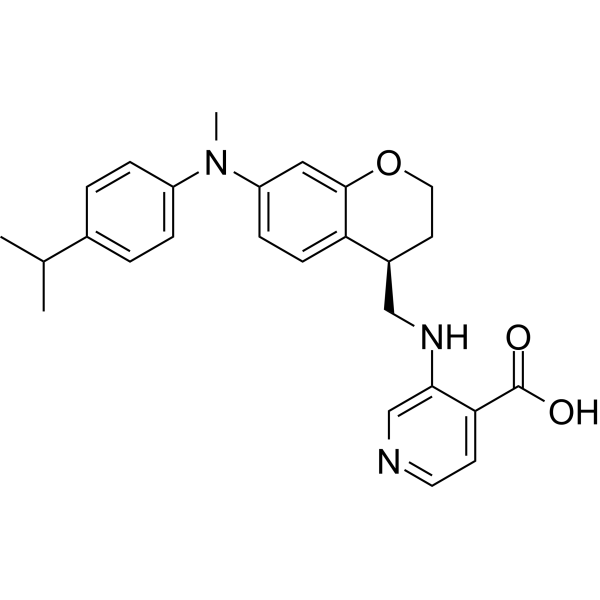
    Zavondemstat (QC8222 free base; TACH 101 free base) is an orally active pan-KDM4 inhibitor, with a IC50 ≤ 0.08 μM against human KDM4A-D and a Kᵢ of 0.52 μM against human KDM4C. Zavondemstat induces cell apoptosis, causes S-phase cell cycle arrest, reduces the population of tumor-initiating cells and inhibits cancer cell proliferation. Zavondemstat suppresses tumor growth and induces tumor regression in mouse xenograft models. Zavondemstat can be used for the research of various cancers including colorectal cancer, esophageal squamous cell carcinoma and triple-negative breast cancer .
    Zavondemstat
  • HY-150190
    F5446
    1 Publications Verification

    Histone Methyltransferase Apoptosis Cancer
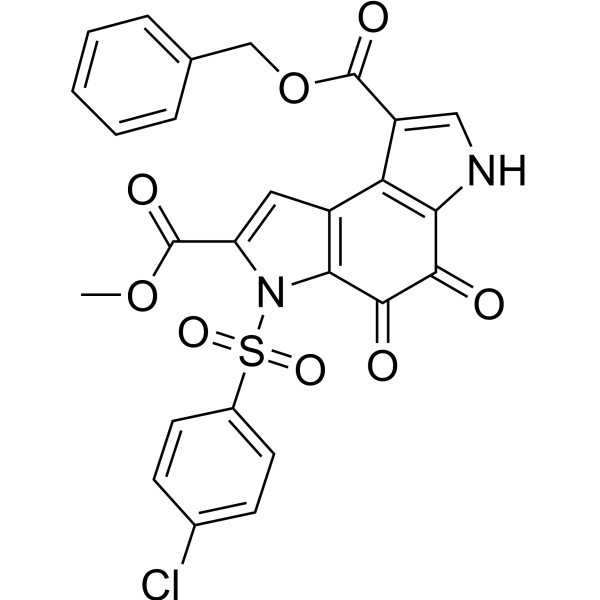
    F5446 (Compound 1) is a selective small molecule inhibitor of SUV39H1 methyltransferase. F5446 decreases H3K9me3 deposition at the FAS promoter, increases Fas expression and increases colorectal carcinoma cell sensitivity to FasL-induced apoptosis in vitro. F5446 suppresses human colon tumor xenograft growth in vivo .
    F5446
  • HY-15995
    Tubulysin A
    1 Publications Verification

    TubA

    Antibiotic Microtubule/Tubulin ADC Payload Mitosis Cancer
    Tubulysin A (TubA) is an anticancer and antiangiogenic agent with anti-microtubule, anti-mitosis and anti-proliferative activity against a variety of cancer cells with IC50 values in the pmol range. It can induce apoptosis of cancer cells and has no effect on normal cells. Tubulysins are a group of potent cytotoxins consisting of nine members (A-I). Tubulysin A can synthesize ADC as ADC Cytotoxin .
    Tubulysin A
  • HY-W075517

    2-Methylimidazole zinc salt

    Caspase Pyroptosis MOFs Cancer
    ZIF-8 (2-Methylimidazole zinc salt) is a caspase-1/Gasdermin D activator and a pH- and stimulus-responsive inducer of drug release, which serves as a highly efficient drug delivery carrier. ZIF-8 is a metal-organic framework (MOF). ZIF-8 activates the caspase-1/Gasdermin D-dependent pyroptosis pathway, induces pyroptosis, necrosis and immunogenic cell death, initiates in situ anti-tumor immunity, reprograms the immunosuppressive tumor microenvironment and inhibits tumor proliferation. ZIF-8 is applicable to related research on multiple cancers including colorectal cancer and breast cancer .
    ZIF-8
  • HY-P990033

    CC-95251; BMS-986351

    CD47 Cancer
    Anzurstobart is a CD47/SIRPα inhibitor with human SIRPα Kd of 0.0541 nM and human SIRPα IC50 of 100 nM. Anzurstobart binds SIRPα at a CD47-overlapping site, blocks CD47-SIRPα interactions, inhibits CD47-SIRPα axis signaling, and binds across 6 prevalent human SIRPα haplotypes. Anzurstobart binds SIRPγ and inhibits CD47-SIRPγ interactions. Anzurstobart can be used for the research of non-Hodgkin's lymphoma, colorectal cancer, squamous cell carcinoma of the head and neck, diffuse large B-cell lymphoma, and advanced solid and hematologic malignancies .
    Anzurstobart
  • HY-N2445
    Flavokawain C
    4 Publications Verification

    Apoptosis Akt JNK PERK Caspase PARP MDM-2/p53 IAP Reactive Oxygen Species (ROS) SOD FABP Autophagy AMPK mTOR GLUT EGFR PI3K HSP VEGFR FAK Cancer
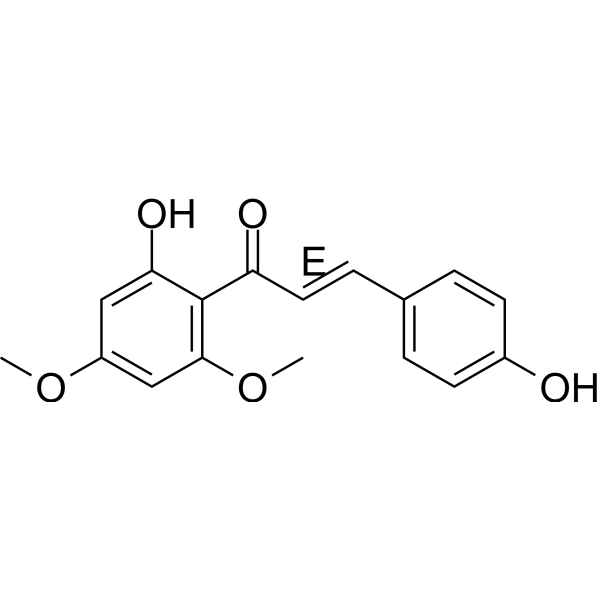
    Flavokawain C is an orally active natural chalcone. Flavokawain C inhibits the proliferation of various cancer cells. Flavokawain C upregulates GADD153 in cancer cells, inhibits the phosphorylation of Akt and JNK, suppresses early ERK phosphorylation, activates late ERK phosphorylation, activates caspase related subtypes, induces PARP-1 cleavage, causes upregulation of p21 and p27, downregulation of mutant p53 and anti-apoptotic IAP proteins, elevates intracellular ROS levels, reduces SOD activity, and induces apoptosis. Flavokawain C downregulates FABP4, induces autophagy in cancer cells, and activates the AMPK/mTOR pathway . Flavokawain C decreases the expression of glycolysis-related proteins GLUT1 and HK2, and inhibits glycolysis in nasopharyngeal carcinoma cells. Flavokawain C inhibits the activation of the EGFR/PI3K/Akt/mTOR signaling pathway and reduces the expression of HSP90B1. Flavokawain C inhibits angiogenesis by decreasing the expression of angiogenic proteins Ang-1 and VEGF in human umbilical vein endothelial cells. Flavokawain C increases γ-H2AX levels in cells, inhibits the phosphorylation of FAK, PI3K and AKT in cells, and induces DNA damage in cells. Flavokawain C exerts anti-tumor activity in multiple tumor xenograft mouse models. Flavokawain C is applicable to research related to colorectal cancer, colon adenocarcinoma, nephroblastoma, nasopharyngeal carcinoma and liver cancer .
    Flavokawain C
  • HY-N0093
    Ancitabine hydrochloride
    1 Publications Verification

    Cyclocytidine hydrochloride; Cyclo-CMP hydrochloride; Cyclo-C

    Autophagy CMV DNA/RNA Synthesis Infection Cancer
    Ancitabine hydrochloride is a cytarabine derivative that inhibits viral replication. Ancitabine hydrochloride blocks vaccinia virus DNA replication, the progression of viral protein synthesis from early to late stages, and one-step growth of vaccinia virus. Ancitabine hydrochloride is applicable to research related to vaccinia virus infection, leukemia, human cytomegalovirus infection and colorectal cancer .
    Ancitabine hydrochloride
  • HY-17026A

    dFdCTP

    Drug Metabolite DNA/RNA Synthesis Apoptosis Cancer
    Gemcitabine triphosphate (dFdCTP) is the active metabolite of Gemcitabine (HY-17026). The mechanism of Gemcitabine triphosphate cell-killing is its competition with cytidine triphosphate during DNA replication, which results in the inhibition of chain elongation. Gemcitabine triphosphate shows a Ki of 11.2 μM against DNA polymerase α and 14.4 μM against DNA polymerase ε. Gemcitabine triphosphate partially inhibits dCMP deaminase and acts as a substrate for DNA synthesis to incorporate into cellular DNA and RNA. Gemcitabine triphosphate disrupts DNA and RNA synthesis, arrests cell cycle in G0/G1 and S phases, triggers apoptosis, reduces tumor cell proliferation. Gemcitabine triphosphate can be used for the research of pancreatic cancer and non-small cell lung cancer .
    Gemcitabine triphosphate
  • HY-153863

    PROTACs MEK Raf Cancer
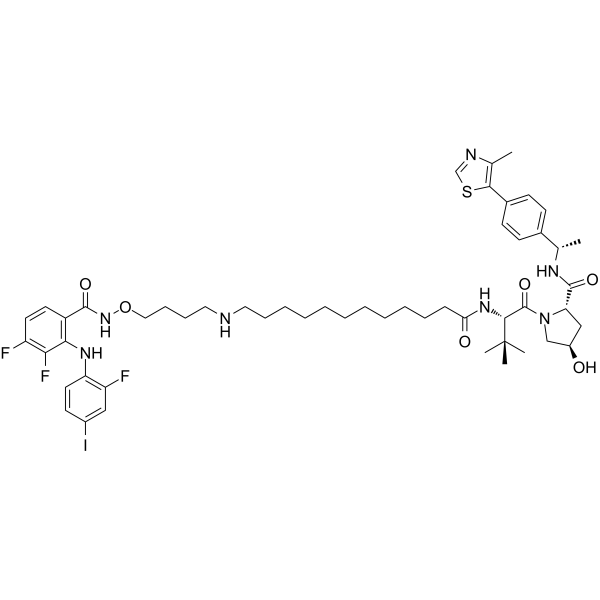
    MS934 is a novel improved VHL-recruiting MEK 1/2 PROTAC degrader. MS934 also degrades CRAF. MS934 can be used for the research of variety of human cancers, such as melanoma, nonsmall cell lung cancer (NSCLC), colorectal cancer, primary brain tumors, and hepatocellular carcinoma (Pink: Target protein ligand (HY-168288); Black: linker (HY-168289); Blue: E3 ligase ligand (HY-112078)) .
    MS934
  • HY-P1654

    Integrin Cancer
    A20FMDV2 is a highly selective αvβ6 integrin inhibitor with human IC50 values of 3 nM and binds with at least 1000-fold selectivity over other RGD-binding integrins. A20FMDV2 binds to the integrin’s RGD-binding site, induces rapid integrin internalization, and delays post-internalization integrin recycling to the cell surface. A20FMDV2 can be used for the research of pancreatic cancer, breast cancer, colorectal cancer, ovarian cancer, oral squamous cell carcinoma .
    A20FMDV2
  • HY-P1684
    Peptide P60
    1 Publications Verification

    FOXP3 inhibitor P60

    NF-κB Nuclear Factor of activated T Cells (NFAT) Infection Inflammation/Immunology Cancer
    Peptide P60 is a FOXP3 inhibitor. Peptide P60 reduces the nuclear translocation of FOXP3 and impairs FOXP3-mediated inhibition of NF-κB and NFAT activity. Peptide P60 inhibits the immunosuppressive activity of regulatory T cells and restores the proliferation and activation of effector T cells. Peptide P60 induces lymphoproliferative autoimmune syndrome in neonatal ICR mice and reduces the number of CD4 +CD25 +Foxp3 + T cells in the spleen. Peptide P60 enhances the efficacy of AH1 (HY-P4193) peptide vaccine and recombinant adenovirus-based HCV NS3 vaccine in BALB/c mice, including protective effects against CT26 tumor implantation. Peptide P60 can be used in studies related to tumor immunity, viral infection and lymphoproliferative autoimmune syndrome .
    Peptide P60
  • HY-123901

    Apoptosis Cancer
    Garcinone E is a natural xanthone found in the rind of the mangosteen fruit. Garcinone E induces apoptosis and inhibits cancer cell migration. Garcinone E has anticancer effects on different human cancer cell lines, including colorectal, breast, and hepatocellular carcinomas .
    Garcinone E
  • HY-P991196

    Transmembrane Glycoprotein Cancer
    Anti-CD24 Antibody (SWA11) is a human IgG1 monoclonal antibody targeting CD24, with high affinity and specificity for CD24-expressing tumor cells. Anti-CD24 Antibody (SWA11) triggers endocytosis, alters STAT3-dependent gene expression, regulates Src phosphorylation, and blocks CD24-mediated signaling pathways. Anti-CD24 Antibody (SWA11) is applicable to cancer-related research such as lung cancer and ovarian cancer. Recommended isotype control: Human IgG1 kappa, Isotype Control (HY-P99001) .
    Anti-CD24 Antibody (SWA11)
  • HY-N1261

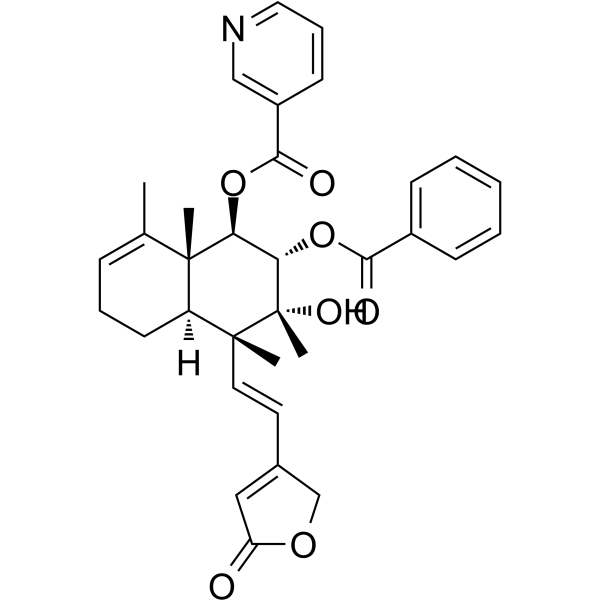
    Others Cancer
    Scutebarbatine B shows significant cytotoxic activities against three human cancer lines, namely, HONE-1 nasopharyngeal, KB oral epidermoid carcinoma, and HT29 colorectal carcinoma cells, with IC50 values in the range 3.5-8.1 mM [1]<
    Scutebarbatine B
  • HY-W854385A
    Sialyl Lewis A sodium
    1 Publications Verification

    SLeA sodium

    Biochemical Assay Reagents Cancer
    Sialyl Lewis A (SLeA) sodium is a tumor-associated carbohydrate antigen, also known as carbohydrate antigen 19-9 (CA19-9), that binds to E-selectin (ELAM-1) and selectins to mediate cell-endothelium adhesion. Sialyl Lewis A sodium promotes cancer cell-vascular endothelium adhesion, and its surface presence correlates with increased tumorigenicity and invasiveness in cancer cells. Sialyl Lewis A sodium shows elevated expression in human adenocarcinomas of the colon, pancreas, and stomach, with expression levels linked to tumor progression and poor prognosis in colorectal and gastric carcinomas. Sialyl Lewis A sodium can be used for the research of cancers, such as colon, pancreas, stomach, and squamous lung cancer .
    Sialyl Lewis A sodium
  • HY-W854385

    SLeA

    Biochemical Assay Reagents E-Selectin Cancer
    Sialyl Lewis A (SLeA) is a tumor-associated carbohydrate antigen, also known as carbohydrate antigen 19-9 (CA19-9), that binds to E-selectin (ELAM-1) and selectins to mediate cell-endothelium adhesion. Sialyl Lewis A promotes cancer cell-vascular endothelium adhesion, and its surface presence correlates with increased tumorigenicity and invasiveness in cancer cells. Sialyl Lewis A shows elevated expression in human adenocarcinomas of the colon, pancreas, and stomach, with expression levels linked to tumor progression and poor prognosis in colorectal and gastric carcinomas. Sialyl Lewis A can be used for the research of cancers, such as colon, pancreas, stomach, and squamous lung cancer .
    Sialyl Lewis A
  • HY-129247

    MDM-2/p53 Aryl Hydrocarbon Receptor Cytochrome P450 Cancer
    Versicolorin A is a biosynthetic precursor of Aflatoxin B1 (HY-N6615). Versicolorin A induces phosphorylation of p53. Versicolorin A activates the aryl hydrocarbon receptor AhR and significantly induces the expression of CYP1A1. Versicolorin A exerts genotoxic and cytotoxic effects. Versicolorin A enhances the genotoxicity of aflatoxin B1 in cells by promoting CYP450-mediated bioactivation of aflatoxin B1. Versicolorin A can be used in research related to colorectal cancer and hepatocellular carcinoma .
    Versicolorin A
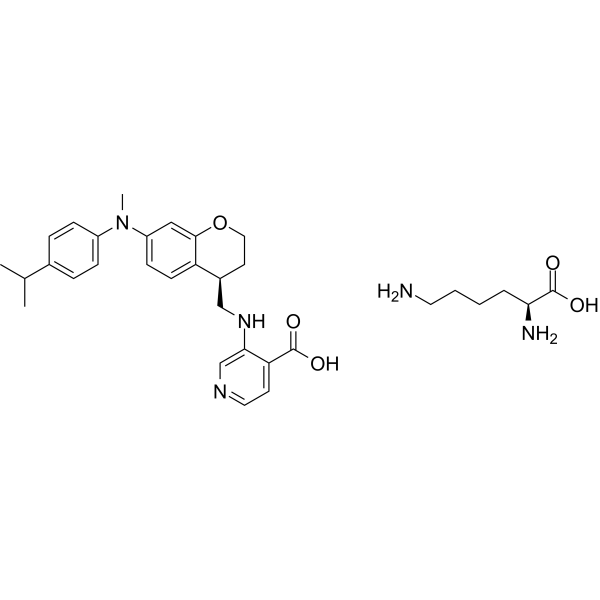
  • HY-148807A

    QC8222; TACH 101

    Apoptosis Histone Demethylase Cancer
    Zavondemstat (QC8222; TACH 101) L-lysine is an orally active pan-KDM4 inhibitor, with a IC50 ≤ 0.08 μM against human KDM4A-D and a Kᵢ of 0.52 μM against human KDM4C. Zavondemstat L-lysine induces cell apoptosis, causes S-phase cell cycle arrest, reduces the population of tumor-initiating cells and inhibits cancer cell proliferation. Zavondemstat L-lysine suppresses tumor growth and induces tumor regression in mouse xenograft models. Zavondemstat L-lysine can be used for the research of various cancers including colorectal cancer, esophageal squamous cell carcinoma and triple-negative breast cancer .
    Zavondemstat L-lysine
  • HY-N0093A

    Cyclocytidine; Cyclo-CMP

    DNA/RNA Synthesis CMV Autophagy Cancer
    Ancitabine is a cytarabine derivative that inhibits viral replication. Ancitabine blocks vaccinia virus DNA replication, the progression of viral protein synthesis from early to late stages, and one-step growth of vaccinia virus. Ancitabine is applicable to research related to vaccinia virus infection, leukemia, human cytomegalovirus infection and colorectal cancer .
    Ancitabine
  • HY-N144114

    P-glycoprotein Cancer
    P-gp inhibitor 2 is a potent P-gp inhibitor. P-gp inhibitor 2 shows reverse Doxorubicin resistance (IC50=0.22 µM) in P-gp overexpressing human colorectal carcinoma cells (SW600 Ad300) .
    P-gp inhibitor 2
  • HY-120704

    Mps1 Cancer
    Mps-BAY2b is a oral active monopolar spindle 1 (MPS1) inhibitor with the IC50 of 14 nM (human MPS1). Mps-BAY2b shows anticancer activity and can be used for study of cancer .
    Mps-BAY2b
  • HY-148807C

    QC8222 sodium; TACH 101 sodium

    Apoptosis Histone Demethylase Cancer
    Zavondemstat (QC8222; TACH 101) sodium is an orally active pan-KDM4 inhibitor, with a IC50 ≤ 0.08 μM against human KDM4A-D and a Kᵢ of 0.52 μM against human KDM4C. Zavondemstat sodium induces cell apoptosis, causes S-phase cell cycle arrest, reduces the population of tumor-initiating cells and inhibits cancer cell proliferation. Zavondemstat sodium suppresses tumor growth and induces tumor regression in mouse xenograft models. Zavondemstat sodium can be used for the research of various cancers including colorectal cancer, esophageal squamous cell carcinoma and triple-negative breast cancer .
    Zavondemstat sodium
  • HY-N0093R

    Cyclocytidine hydrochloride (Standard); Cyclo-CMP hydrochloride (Standard); Cyclo-C (Standard)

    Reference Standards Autophagy CMV DNA/RNA Synthesis Cancer
    Ancitabine hydrochloride (Standard) is the analytical standard of Ancitabine hydrochloride. This product is intended for research and analytical applications. Ancitabine hydrochloride is a cytarabine derivative that inhibits viral replication. Ancitabine hydrochloride blocks vaccinia virus DNA replication, the progression of viral protein synthesis from early to late stages, and one-step growth of vaccinia virus. Ancitabine hydrochloride is applicable to research related to vaccinia virus infection, leukemia, human cytomegalovirus infection and colorectal cancer .
    Ancitabine hydrochloride (Standard)
  • HY-P991969

    EGFR Cancer
    LR004 is an EGFR monoclonal antibody, with a Kd of 2.80×10 -9 M against human EGFR. LR004 shows extremely weak inhibitory effect on the viability of EGFR-positive tumor cells in vitro, but inhibits the growth of EGFR-positive tumor xenografts as a single agent. LR004 is applicable to research related to advanced colorectal cancer, solid tumors, esophageal squamous cell carcinoma, epidermoid carcinoma, colon cancer and breast cancer .
    LR004
  • HY-183762

    Microtubule/Tubulin Apoptosis Cancer
    Tubulin-IN-68 is a tubulin inhibitor with an IC50 of 19.3 μM. Tubulin-IN-68 exhibits antiproliferative activity against human cancer cells. Tubulin-IN-68 induces G2/M phase cell cycle arrest. Tubulin-IN-68 induces apoptosis. Tubulin-IN-68 can be used in the research of colorectal cancer, hepatocellular carcinoma, breast cancer, and T-cell leukemia .
    Tubulin-IN-68
  • HY-114178

    CDK STAT Wnt 5-HT Receptor PASK/STK37 Cancer
    CDK8-IN-2 is an orally active CDK8 inhibitor of an IC50 values of 0.010 μM. CDK8-IN-2 shows a CDK19 IC50 value of 0.026 μM. CDK8-IN-2 inhibits phospho-STAT1, a pharmacodynamic biomarker of CDK8. CDK8-IN-2 inhibits WNT pathway activity. CDK8-IN-2 can be used for the research of colorectal carcinoma .
    CDK8-IN-2
  • HY-P992395

    JNJ-711

    TNF Receptor NF-κB Cancer
    JNJ-64164711 (JNJ-711) is a bifunctional antibody that simultaneously targets human GITR/TNFRSF18 and FcγRIIIa. JNJ-64164711 binds to the GITR domain to activate the NF-κB signaling pathway, while binding to FcγRIIIa to support antibody-dependent cellular cytotoxicity (ADCC). JNJ-64164711 can specifically eliminate GITR-positive hematological tumor cells, activated T cells and intratumoral regulatory T cells through the ADCC mechanism, thereby significantly enhancing the body's anti-tumor immune response. JNJ-64164711 can be used in research related to non-small cell lung cancer, colorectal cancer, prostate cancer, renal cell carcinoma and hematological tumors .
    JNJ-64164711
  • HY-P992365

    CCR Cancer
    HFB101110 is a human-derived inhibitor and Treg depleter that specifically targets CCR8. It does not bind to the homologous CCR4 receptor and is mainly used in research on solid tumors, renal cell carcinoma and colorectal cancer. HFB101110 blocks hCCL1 binding by interacting with the N-terminal extracellular domain of hCCR8, thereby inhibiting hCCL1-induced calcium influx, chemotaxis and downstream signaling pathways. Meanwhile, HFB101110 can mediate ADCC effects to specifically deplete CCR8-positive cells, including intratumoral Tregs. HFB101110 exhibits favorable anti-tumor activity and pharmacokinetic properties .
    HFB101110
  • HY-183604

    Deubiquitinase Cancer
    T-10531 is a selective USP25/USP28 inhibitor. T-10531 exhibits an IC50 of 0.03 μM and a Kd of 0.2 μM against human USP25, as well as an IC50 of 0.12 μM and a Kd of 0.06 μM against human USP28. T-10531 inhibits USP25/USP28 activity and induces the degradation of USP25 via the proteasomal pathway, without inhibiting other deubiquitinases. T-10531 can be used in the research of squamous cell carcinoma, colorectal cancer, gastric cancer, triple-negative breast cancer and pancreatic cancer .
    T-10531
  • HY-181923

    EGFR CDK Cytochrome P450 Cancer
    IMP-Zn is a pyrazole-hydrazone Schiff base zinc (II) complex. IMP-Zn exhibits significant antiproliferative activity against human colorectal cancer cells and induces cell cycle arrest. IMP-Zn shows stronger binding affinity than its free ligand IMP towards three cancer-related protein targets: EGFR kinase 1M17, cytochrome P450 3RUK, and CDK inhibitor 6GUE. IMP-Zn can be used in studies related to colorectal cancer .
    IMP-Zn
  • HY-181807

    SOS1 Ras Apoptosis Cancer
    SOS1/KRAS-IN-2 (Compound 20) is a SOS1::KRAS G12C protein-protein interaction inhibitor with a IC50 of 4.11 nM. SOS1/KRAS-IN-2 blocks the interaction between SOS1 and KRAS G12C. SOS1/KRAS-IN-2 induces cell Apoptosis. SOS1/KRAS-IN-2 exhibits anticancer activity against colorectal cancer and tongue squamous cell carcinoma .
    SOS1/KRAS-IN-2
  • HY-N18272

    Others Cancer
    1α-Benzoyloxy-3α-acetoxyl-7α-hydroxy-12β-ethoxynimbolinin is a nimbolinin-type limonoid and cytotoxin, found in the fruits of Melia toosendan. 1α-Benzoyloxy-3α-acetoxyl-7α-hydroxy-12β-ethoxynimbolinin exhibits in vitro cytotoxicity against human hepatocellular carcinoma, human lung cancer, and human breast cancer cells. 1α-Benzoyloxy-3α-acetoxyl-7α-hydroxy-12β-ethoxynimbolinin can be used for the research of hepatocellular carcinoma, lung cancer, breast cancer .
    1α-Benzoyloxy-3α-acetoxyl-7α-hydroxy-12β-ethoxynimbolinin
  • HY-123238

    CDK Cancer
    AG-024104 is a CDK inhibitor with Ki values of 2.3 nM (CDK1/cyclinB), 1.8 nM (CDK2/cyclinA), and 0.67 nM (CDK4/cyclinD). AG-024104 functionally inhibits kinase activity of CDK1/cyclinB, CDK2/cyclinA, and CDK4/cyclinD. AG-024104 serves as a negative control for peripheral leukocyte toxicity studies in preclinical development .
    AG-024104
  • HY-N18339

    Drug Derivative Cancer
    Camaroside is a flavonoid glycoside with weak cytotoxic activity against cancer cells and fibroblasts, and no significant antimicrobial activity. Camaroside reduces metabolic activity of fibroblasts and liver cancer cells.C amaroside can be found in the vegetative stems of Calotropis procera .
    Camaroside
  • HY-181484

    STING IKK IFNAR Interleukin Related CXCR Cancer
    STING agonist-50 is an orally active STING agonist with an IC50 of 3.457 μM. STING agonist-50 activates the STING signaling pathway and promotes the phosphorylation of downstream TBK1 and IRF3. STING agonist-50 induces the expression of IFN-β, CXCL10 and IL-6. STING agonist-50 inhibits tumor growth in syngeneic mouse models. STING agonist-50 can be used for the research of colorectal cancer .
    STING agonist-50

Inquiry Online

Your information is safe with us. * Required Fields.

Salutation


Country or Region *

Applicant Name *


Organization Name *

Department *


Email Address *


Product Name *

Cat. No.


Requested quantity *

Phone Number *


Remarks

Inquiry Online

Inquiry Information

Product Name:
Cat. No.:
Quantity:
MCE Japan Authorized Agent:

