


1. Search Result
Search Result
Results for "

hydroxyl

" in MedChemExpress (MCE) Product Catalog:

447

Inhibitors & Agonists

2

Screening Libraries

28

Fluorescent Dye

147

Biochemical Assay Reagents

19

Peptides

4

MCE Kits

78

Natural
Products

17

Isotope-Labeled Compounds

4

Antibodies

13

Click Chemistry

13

Oligonucleotides

Cat. No. Product Name Target Research Areas Chemical Structure
  • HY-B2196
    Gastric mucin
    3 Publications Verification

    Antibiotic Bacterial Infection Metabolic Disease
    Gastric mucin is a glycoprotein with natural antibiotic function. Gastric mucin against Helicobacter pylori infection. Gastric mucin effectively scavenges hydroxyl radical. Gastric mucin play a major role in the protection of the gastrointestinal tract from acid, proteases, pathogenic microorganisms, and mechanical trauma .
    Gastric mucin
  • HY-B2106

    Polyoxyethylene lauryl ether; Polyoxyethyleneglycol Dodecyl Ether

    Environmental Pollutants Biochemical Assay Reagents Cardiovascular Disease Cancer
    Polidocanol is a sclerosing agent used successfully to treat extremity and esophageal varices and telangiectasias.
    Polidocanol,Hydroxyl Value 40-60 mgKOH/g
  • HY-121137
    BMPO
    1 Publications Verification

    BocMPO

    Reactive Oxygen Species (ROS) Others
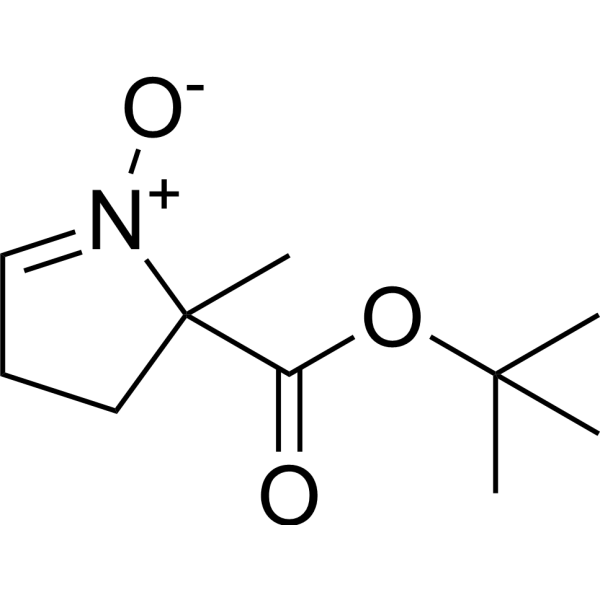
    BMPO (BocMPO) is a cell-permeable superior spin trap with favorable chemical and spectroscopic features. BMPO (BocMPO) can be used for detecting thiyl radicals, hydroxyl radicals, superoxide anions and glutathiyl radicals .
    BMPO
  • HY-Y0958
    Methoxyamine hydrochloride
    1 Publications Verification

    O-Methylhydroxylamine hydrochloride

    DNA/RNA Synthesis Apoptosis Cancer
    Methoxyamine (O-Methylhydroxylamine) hydrochloride is an orally active and potent base excision repair (BER) inhibitor. Methoxyamine hydrochloride binds to 3’ hydroxyl groups that are left behind by 3-methylpurine-DNA glycosylase (MPG) following excision of the damaged base and thus inhibits BER activity. Methoxyamine hydrochloride binds directly to the apyrimidinic (AP) sites. Methoxyamine hydrochloride synergistically enhances the therapeutic efficacy of DNA-damaging agents .
    Methoxyamine hydrochloride
  • HY-P2863
    Deoxyribonuclease II
    2 Publications Verification

    DNase II

    Endonuclease Others
    Deoxyribonuclease II (DNase II) is an endonuclease that hydrolyzes the phosphodiester bonds of deoxyribonucleotides in native and denatured DNA, producing 3' phosphate and 5'-hydroxyl termini. Deoxyribonuclease II works best at acidic pH and is commonly used in biochemical research .
    Deoxyribonuclease II
  • HY-126994

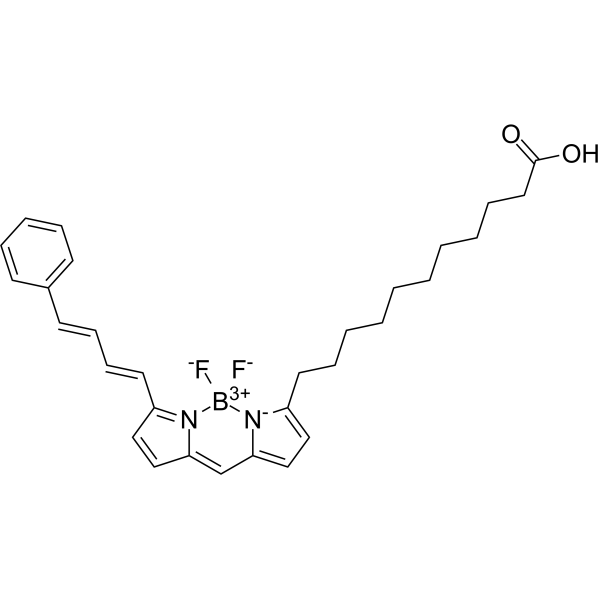
    Fluorescent Dye Others
    6’-Amino-D-luciferin is a derivative of D-luciferin (HY-12591A) with an amino group replacing the 6-hydroxyl group. 6’-Amino-D-luciferin is a natural substrate of luciferase (Luc) and can be used for IVIS imaging in cell/animal experiments[1][2][3].
    6′-Amino-D-luciferin
  • HY-135152

    Reactive Oxygen Species (ROS) Cancer
    CYPMPO is a spin-trapping reagent. CYPMPO, a cyclic DEPMPO-type nitrone, is evaluated for spin-trapping capabilities toward hydroxyl and superoxide radicals. anti-oxidant and anti-tumor?activity .
    CYPMPO
  • HY-D0913
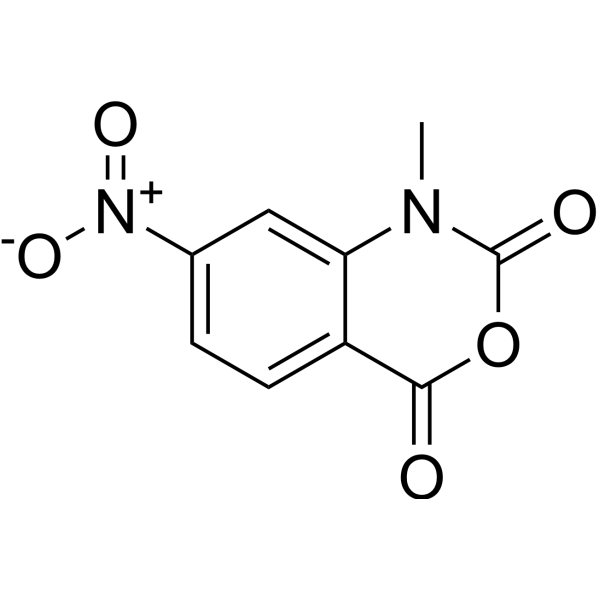
    1-Methyl-7-nitroisatoic anhydride
    3 Publications Verification

    1M7

    Fluorescent Dye Others
    1-Methyl-7-nitroisatoic anhydride (1M7) is a reagent that detects local nucleotide flexibility, for probing 2'-hydroxyl reactivity, can be used for RNA structure analysis .
    1-Methyl-7-nitroisatoic anhydride
  • HY-134222A

    N-Acetyl-L-serine

    Endogenous Metabolite Complement System Others
    N-Acetylserine (N-Acetyl-L-serine) is a complement pathway modulator targeting activated third complement protein (C3b) and an amino-terminal residue (an N-terminal acetylation modification group). N-Acetylserine reacts with the exposed thioester group of C3b via its hydroxyl group, thereby blocking the covalent binding of glycerol to this thioester group. N-Acetylserine widely exists in soluble proteins of mammalian cells (accounting for approximately 80% of such proteins). N-Acetylserine has a blocking property that prevents direct Edman sequencing of proteins; deblocking is achievable through trifluoroacetic acid-catalyzed N→O acetyl migration followed by β-elimination. N-Acetylserine is suitable for sequencing of proteins with N-terminal acetylserine modification .
    N-Acetylserine
  • HY-W034344

    Biochemical Assay Reagents Others
    Sodium methanesulfonate is a hygroscopic atmospheric aerosol, which typically forms from the reaction of methanesulfonic acid with sodium chloride or sea salt particles. Sodium methanesulfonate can serve as a substrate for oxidation reactions, undergoing heterogeneous oxidation by hydroxyl radicals at the air-aerosol interface, thereby initiating subsequent aerosol-phase chain reactions. Sodium methanesulfonate exhibits significant temperature-dependent deliquescence and efflorescence properties; particularly at lower temperatures relevant to the troposphere, its deliquescence and efflorescence relative humidity increase accordingly .
    Sodium methanesulfonate
  • HY-100592
    Nicaraven
    2 Publications Verification

    Reactive Oxygen Species (ROS) Cancer
    Nicaraven is a novel chemically synthesized hydroxyl radical-specific scavenger.
    Nicaraven
  • HY-W115721

    Sodium rhodizonate dibasic

    Reactive Oxygen Species (ROS) DNA/RNA Synthesis Others
    Rhodizonic acid disodium (Sodium rhodizonate dibasic) is a transition metal-dependent pro-oxidant and lead detection agent that induces reactive oxygen species generation, DNA damage, and inhibits Aconitase activity. Rhodizonic acid disodium generates superoxide anion radicals in an iron (II)-dependent manner, leading to aconitase inactivation. Rhodizonic acid disodium also triggers hydroxyl radical-mediated DNA strand breaks and 8-OHdG formation via copper ion reduction. Rhodizonic acid disodium reacts with lead to form a scarlet precipitate, with the color intensity proportional to lead content, enabling qualitative or quantitative analysis of lead. Rhodizonic acid disodium can also be used for real-time visualization of the dynamic process of lead sequestration in the plant rhizosphere and evaluation of the effects of environmental factors such as soil type on the stability of lead-sequestering structures .
    Rhodizonic acid disodium
  • HY-76222

    Drug Intermediate Others
    Isatoic anhydride is a single-adduct forming reagent and a monofunctional SHAPE reagent. Isatoic anhydride reacts with the 2'-hydroxyl group of RNA nucleotides via a single reactive group to form a single adduct, without forming cross-links between nucleotides. In SHAPE-JuMP experiments, Isatoic anhydride serves as a control reagent for single-adduct formation, which is used to distinguish true cross-links from single-adduct formation .
    Isatoic anhydride
  • HY-132180A

    ADC Payload DNA/RNA Synthesis Inflammation/Immunology Cancer
    Seco-DUBA hydrochloride is a DNA-targeting cytotoxic agent. Seco-DUBA hydrochloride binds to the minor groove of A-T-rich DNA regions, alkylates the adenine N3 residue, and undergoes spontaneous spirocyclization to generate active DUBA (HY-160969). Seco-DUBA hydrochloride exerts cytotoxic activity against human cancer cells. The reduced hydrophobicity of Seco-DUBA hydrochloride supports the development of antibody-drug conjugates .
    Seco-DUBA
  • HY-N6964

    Quercetin-3-O-[2-O-(6-O-p-hydroxyl-E-coumaroyl)-D-glucosyl]-(1→2)-L-rhamnoside

    Others Metabolic Disease
    Quercetin 3-O-β-D-(6''-p-coumaroyl)glucopyranosyl(1→2)-α-L-rhamnopyranoside (Quercetin-3-O-[2-O-(6-O-p-hydroxyl-E-coumaroyl)-D-glucosyl]-(1→2)-L-rhamnoside) is one of the major antioxidants of Ginkgo biloba leaves .
    Quercetin 3-O-β-D-(6''-p-coumaroyl)glucopyranosyl(1→2)-α-L-rhamnopyranoside
  • HY-130025
    HKOCl-3
    2 Publications Verification

    Fluorescent Dye Others
    HKOCl-3 is a highly sensitive and selective fluorescent probe for detecting hypochlorous acid.Ex: 490 nm; Em 527 nm .
    HKOCl-3
  • HY-W004289

    Drug Derivative Others
    Methyl pentadecanoate is a fatty acid ester that can be isolated from extracts of L. wallichi. Methyl pentadecanoate is formed by the condensation of the carboxyl group of pentadecanoic acid with the hydroxyl group of methanol .
    Methyl pentadecanoate
  • HY-15157

    1α, 24, 25-Trihydroxy VD3

    VD/VDR Metabolic Disease
    Calcitetrol(1α, 24, 25-Trihydroxy VD3) is the hormonally active form of vitamin D with three hydroxyl groups.
    Calcitetrol
  • HY-W012971

    Biochemical Assay Reagents Others
    5-Amino-1-pentanol is a linker containing a hydroxyl group and amine group. The hydroxyl group enables further derivatization or replacement with other reactive functional groups. The amine group is reactive with carboxylic acids, activated NHS esters, carbonyls (ketone, aldehyde) etc.
    5-Amino-1-pentanol
  • HY-P4280

    H-Arg-Tyr-OH

    Reactive Oxygen Species (ROS) Others
    Arg-Tyr is a dipeptide which has strong hydroxyl-radical and hydrogen-peroxide scavenging activity .
    Arg-Tyr
  • HY-W099630

    9-Heptadecanol

    Biochemical Assay Reagents Others
    Heptadecan-9-ol (9-Heptadecanol) is a lipid with a secondary hydroxyl group and two non-polar tails.
    Heptadecan-9-ol
  • HY-N0674B
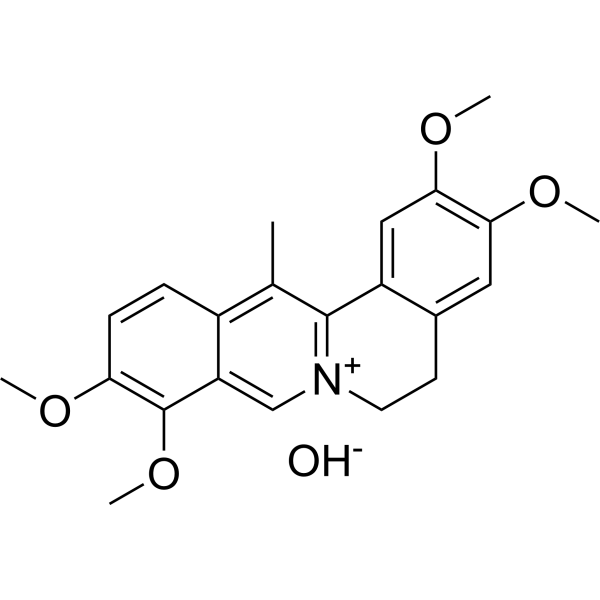
    Dehydrocorydaline (hydroxyl)
    Maximum Cited Publications
    43 Publications Verification

    13-Methylpalmatine (hydroxyl)

    Bcl-2 Family Caspase PARP p38 MAPK Parasite Autophagy Infection Inflammation/Immunology Cancer
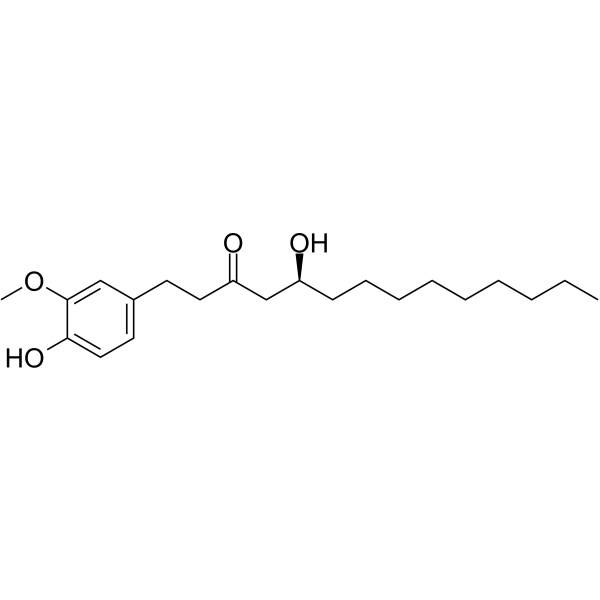
    Dehydrocorydaline (13-Methylpalmatine) hydroxyl is an alkaloid that regulates protein expression of Bax, Bcl-2; activates caspase-7, caspase-8, and inactivates PARP. Dehydrocorydaline hydroxyl elevates p38 MAPK activation. Anti-inflammatory and anti-cancer activities. Dehydrocorydaline hydroxyl shows strong anti-malarial effects (IC50=38 nM), and low cytotoxicity (cell viability > 90%) using P. falciparum 3D7 strain.
    Dehydrocorydaline (hydroxyl)
  • HY-D1159
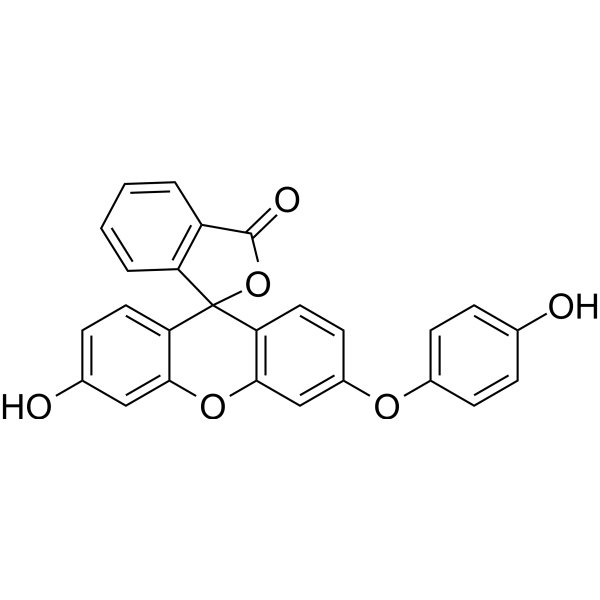
    HKOH-1r
    5+ Cited Publications

    Reactive Oxygen Species (ROS) Fluorescent Dye Others
    HKOH-1r is a highly sensitive green fluorescent probe for the specific detection of ·OH in living cells with a maximum excitation wavelength and emission wavelength of 500 nm and 520 nm, respectively .
    HKOH-1r
  • HY-132280

    U 74006F free base

    Reactive Oxygen Species (ROS) SARS-CoV Virus Protease Neurological Disease Inflammation/Immunology
    Tirilazad (U 74006F free base) is a neuroprotective agent. Tirilazad can also bind tightly to the main protease of the COVID-19 virus and exert anti-SARS-CoV-2 activity. Tirilazad scavenges hydroxyl and lipid peroxyl free radicals and maintains the levels of endogenous antioxidants. Tirilazad reduces cerebral infarct volume and improves neurobehavioral scores in animal models of focal ischemia. Tirilazad can be used in research related to ischemic stroke and subarachnoid hemorrhage .
    Tirilazad
  • HY-W460072

    Biochemical Assay Reagents Others
    tert-Butyl 7-hydroxyheptanoate is a linker with a hydroxyl group and a t-butyl ester. The hydroxyl group allows for further derivatization or replacement with many other reactive functional groups. The t-butyl protected carboxyl group can be deprotected under acidic conditions.
    tert-Butyl 7-hydroxyheptanoate
  • HY-P2844

    DNA/RNA Synthesis Metabolic Disease
    Polynucleotide Kinase is a DNA repair enzyme. Polynucleotide Kinase possesses both a 5’-kinase activity that catalyzes the transfer of phosphate from ATP to a 5’-hydroxyl (OH) terminus and also a 3’-phosphatase activity that converts 3’-phosphate termini to 3’-OH termini .
    Polynucleotide kinase
  • HY-D1151
    HKOH-1
    3 Publications Verification

    Reactive Oxygen Species (ROS) Fluorescent Dye Others
    HKOH-1 is a highly sensitive green fluorescent probe for the specific detection of ·OH in living cells with a maximum excitation wavelength and emission wavelength of 500 nm and 520 nm, respectively .
    HKOH-1
  • HY-161973

    Ligands for Target Protein for PROTAC Cancer
    Hydroxyl-ML-210 is a PROTAC target protein ligand (Ligands for Target Protein for PROTACs). Hydroxyl-ML-210 can be used for synthesis ZX782 (HY-161972) .
    Hydroxyl-ML-210
  • HY-113490

    Drug Derivative Metabolic Disease
    15-KETE (15-KETE) is produced by oxidation of the 15-hydroxyl of 15-HETE.
    15-KETE
  • HY-176513

    Fluorescent Dye Others
    Cy-OH-LP is a turn-on fluorescent and photoacoustic probe that can detect lipid-associated hydroxyl radicals. Cy-OH-LP can be oxidized to Cy7 in the presence of hydroxyl radicals, which displays weak fluorescent and photoacoustic signals in water-soluble environments and strong fluorescent and photoacoustic signals in lipid-rich environments due to its lipid solubility. Cy-OH-LP can be used for in vivo photoacoustic imaging of hydroxyl radicals .
    Cy-OH-LP
  • HY-W039729

    Biochemical Assay Reagents Others
    5-(Boc-amino)-1-pentanol is a linker containing a hydroxyl group and Boc-protected amino group. The hydroxyl group enables further derivatization or replacement with other reactive functional groups. The Boc group can be deprotected under mild acidic conditions to form the free amine.
    5-(Boc-amino)-1-pentanol
  • HY-174967C

    Biochemical Assay Reagents Others
    4-Arm-PEG20000-OH is a PEG derivative with a four-arm structure and a hydroxyl (OH) functional group. 4-Arm-PEG20000-OH reacts with functional groups on biomolecules (such as proteins, peptides, antibodies, etc.) through hydroxyl groups and can be used for drug delivery .
    4-Arm-PEG20000-OH
  • HY-W683499

    LHSB

    Biochemical Assay Reagents Others
    Lauryl hydroxysultaine (LHSB), a surfactant, is comprised of a core Sultaine structure with a sulphopropyl quaternary ammonium salt, an alkyl group and a hydroxyl group .
    Lauryl hydroxysultaine
  • HY-N16658

    NSC 85238

    Glutathione Peroxidase Inflammation/Immunology
    Asperilin (NSC 85238) is an orally active sesquiterpene lactone. Asperilin is an effective hydroxyl radical scavenger. Asperilin significantly enhance the lipid peroxidation levels of liver microsomes in various systems. Asperilin leads to a significant decrease in liver glutathione (GSH) levels and an increase in glutathione peroxidase (GPx) activity. Asperilin can be used for research on inflammatory conditions .
    Asperilin
  • HY-D1395

    Reactive Oxygen Species (ROS) Others
    RH-EDA is a rhodamine-based turn-on fluorescent probe for detecting hydroxyl radicals in living systems.
    RH-EDA
  • HY-W007345

    4-Fluoro-2-hydroxyaniline

    Biochemical Assay Reagents Others
    2-Amino-5-fluorophenol is an isomer of aminofluorophenol and also a HONO generator. 2-Amino-5-fluorophenol reacts with nitrogen dioxide (NO2) via two pathways to form nitrous acid (HONO): hydrogen abstraction from the hydroxyl group and hydrogen abstraction from the amino group, with both the amino and hydroxyl groups participating in the reaction in the transition state .
    2-Amino-5-fluorophenol
  • HY-N7014

    Others Neurological Disease
    Hydroxyl-γ-isosanshool is one of the major alkylamides in Z. bungeanum and Z. schinifolium oils. Hydroxyl-γ-isosanshoo induces a numbing sensation .
    Hydroxyl-​γ-​isosanshool
  • HY-D1067

    Fluorescent Dye Others
    NIR dye-1 (Compound 1h) is a near-infrared (NIR) fluorescent dye. NIR dye-1 has absorption and emission in the NIR region, while retaining an optically tunable hydroxyl group .
    NIR dye-1
  • HY-W190921

    Biochemical Assay Reagents Others
    t-Butyl 3-(hydroxypropoxyl)-propanoate contains reactive hydroxyl and t-butyl protected carboxyl moieties. The hydroxyl group can react to further derivatize the compound. The t-butyl carbonyl group can be deprotected under acidic conditions.
    t-Butyl 3-(hydroxypropoxyl)-propanoate
  • HY-E70241

    Endogenous Metabolite Others
    3-Hydroxypropionyl-CoA is a derivative of coenzyme A containing a hydroxyl group .
    3-Hydroxypropionyl-CoA
  • HY-N15973

    Biochemical Assay Reagents Others
    DSPE PEG2k-OH ammonium is a hydroxyl-terminated PEGylated phospholipid. The hydrophobic tail allows for the encapsulation and aggregation of other hydrophobic drugs, and the hydroxyl terminus is suitable for further reactions. DSPE PEG2k-OH ammonium can be used to prepare liposomes or lipid nanoparticles .
    DSPE PEG2k-OH ammonium
  • HY-W142194

    DNA/RNA Synthesis Cancer
    Benzyl (5-hydroxypentyl)carbamate is a linker capable of repairing damaged DNA by binding to the 5'-hydroxyl group on the sugar backbone. Benzyl (5-hydroxypentyl)carbamate can also bind to DNA ligands and can inhibit cell proliferation in resistant cell lines. However, Benzyl (5-hydroxypentyl)carbamate is toxic to cells and can also cause DNA damage and strand breakage.
    Benzyl (5-hydroxypentyl)carbamate
  • HY-144245S

    Isotope-Labeled Compounds Others
    5-Hydroxyl ZLN005-d13 is the deuterium labeled 5-Hydroxyl ZLN005 .
    5-Hydroxyl ZLN005-d13
  • HY-N9961

    Others Others
    2-Hydroxyl emodin-1-methyl ether (Compound 5) is an anthraquinone that can be isolated from the seeds of Cassia obtusifolia .
    2-Hydroxyl emodin-1-methyl ether
  • HY-N3289

    Others Others
    Methyl 3,4,5-trimethoxycinnamate (Compound III) is a natural compound with hydroxyl radical-scavenging effects .
    Methyl 3,4,5-trimethoxycinnamate
  • HY-107259

    23S-Hydroxy-3,7,11,15-tetraoxo-lanost-8,24E-diene-26-oic

    Others Others
    23S-Hydroxyl-11,15-dioxo-ganoderic acid DM is a compound isolated from the fruit bodies of Ganoderma lucidum .
    23S-Hydroxyl-11,15-dioxo-ganoderic acid DM
  • HY-D0113

    Reactive Oxygen Species (ROS) Others
    7-Hydroxy-4-methyl-2(1H)-quinolone (compound 2b) is a fluorescent hydroxylated product. 7-Hydroxy-4-methyl-2(1H)-quinolone can be used for detecting hydroxyl radicals of DNA damage .
    7-Hydroxy-4-methyl-2(1H)-quinolone
  • HY-19129

    Prostaglandin Receptor Cardiovascular Disease
    KT2-962 is a thromboxane A2 (TXA2) receptor antagonist and potent hydroxyl radical scavenger (IC50=500 nM). KT2-962 reduces myocardial infarct size and ventricular fibrillation. KT2-962 demonstrates cardioprotective effect in a canine ischemia/reperfusion model. KT2-962 is promising for research of myocardial ischemia-reperfusion injury and TXA2-mediated vascular diseases .
    KT2-962
  • HY-N9095

    Others Neurological Disease
    Curculigoside C is a phenolic glucoside with potent antioxidative and neuroprotective activities. Curculigoside C shows IC50 values of 0.25 mM and 0.88 mM for hydroxyl radicals and superoxide anion radicals, respectively .
    Curculigoside C
  • HY-Y0958R

    O-Methylhydroxylamine hydrochloride (Standard)

    Reference Standards DNA/RNA Synthesis Apoptosis Cancer
    Methoxyamine hydrochloride (Standard) is the analytical standard of Methoxyamine hydrochloride. This product is intended for research and analytical applications. Methoxyamine (O-Methylhydroxylamine) hydrochloride is an orally active and potent base excision repair (BER) inhibitor. Methoxyamine hydrochloride binds to 3’ hydroxyl groups that are left behind by 3-methylpurine-DNA glycosylase (MPG) following excision of the damaged base and thus inhibits BER activity. Methoxyamine hydrochloride binds directly to the apyrimidinic (AP) sites. Methoxyamine hydrochloride synergistically enhances the therapeutic efficacy of DNA-damaging agents .
    Methoxyamine hydrochloride (Standard)

Inquiry Online

Your information is safe with us. * Required Fields.

Salutation


Country or Region *

Applicant Name *


Organization Name *

Department *


Email Address *


Product Name *

Cat. No.


Requested quantity *

Phone Number *


Remarks

Inquiry Online

Inquiry Information

Product Name:
Cat. No.:
Quantity:
MCE Japan Authorized Agent:

