1. Search Result
Search Result
Results for "

hypertensive diseases

" in MedChemExpress (MCE) Product Catalog:

34

Inhibitors & Agonists

1

Peptides

1

Natural
Products

5

Isotope-Labeled Compounds

Cat. No. Product Name Target Research Areas Chemical Structure
  • HY-B0202
    Irbesartan
    5+ Cited Publications

    SR-47436; BMS-186295

    Angiotensin Receptor Apoptosis Cardiovascular Disease Endocrinology
    Irbesartan (SR-47436) is an orally active Ang II type 1 (AT1) receptor blocker (ARB). Irbesartan can relax the blood vessels, low blood pressure and increase the supply of blood and oxygen to the heart. Irbesartan can be used for the research of high blood pressure, heart failure, and diabetic kidney disease .
    Irbesartan
  • HY-B0331
    Enalapril
    Maximum Cited Publications
    13 Publications Verification

    MK-421

    Angiotensin-converting Enzyme (ACE) Cardiovascular Disease Cancer
    Enalapril (MK-421) is an angiotensin-converting enzyme (ACE) inhibitor, can be used for hypertensive diseases research .
    Enalapril
  • HY-12376
    BAY 41-2272
    3 Publications Verification

    Guanylate Cyclase Cardiovascular Disease Inflammation/Immunology
    BAY 41-2272 is an orally active and soluble guanylate cyclases (sGC) activator, which increases sGC activity by 400-fold in synergy with NO. BAY 41-2272 potently unloaded the heart, increased cardiac output, thus can be used for cardiovascular diseases research .
    BAY 41-2272
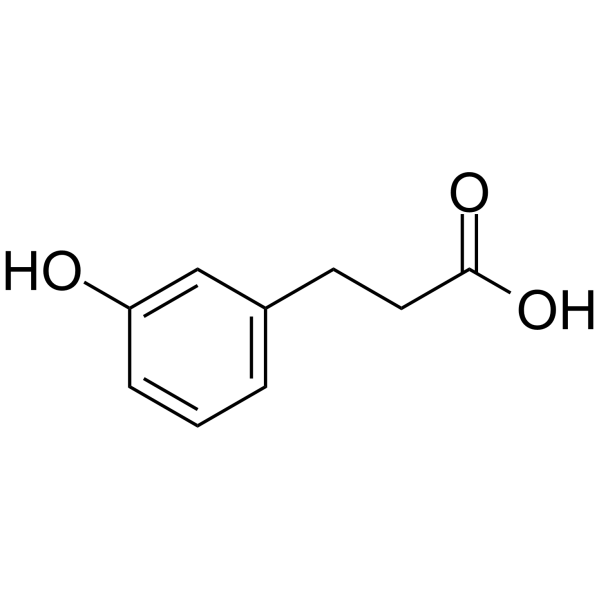
  • HY-W005255

    Endogenous Metabolite Cardiovascular Disease
    3-(3-Hydroxyphenyl)propionic acid (3HPPA) is an endothelium-dependent nitric oxide (NO) release promoter and endothelial nitric oxide synthase (eNOS) activator. 3-(3-Hydroxyphenyl)propionic acid activates eNOS to mediate vascular smooth muscle relaxation and enhances endothelial cell NO synthesis, inducing vasodilation and reducing peripheral vascular resistance. 3-(3-Hydroxyphenyl)propionic acid can dose-dependently reduce systolic and diastolic blood pressure in spontaneously hypertensive rats (SHR) without affecting cardiac contractility or heart rate. 3-(3-Hydroxyphenyl)propionic acid has antihypertensive and vascular protective effects and can be used in the prevention and treatment of cardiovascular diseases .
    3-(3-Hydroxyphenyl)propionic acid
  • HY-168894

    Ferroptosis JAK STAT p38 MAPK AMPK GSK-3 Apoptosis HSP TNF Receptor Cardiovascular Disease Neurological Disease Metabolic Disease Cancer
    CT-1 is a secreted protein belonging to the IL-6 cytokine family. Overexpression of CT-1 enhances cell proliferation, migration and angiogenesis via the ADMA/DDAH pathway. CT-1 inhibits the growth of triple-negative breast cancer cells by simultaneously inducing Ferroptosis in N2-type tumor-associated neutrophils and cancer cells. CT-1 activates the Jak/STAT-3, p42/p44 MAPK and AMPK pathways, and inhibits GSK-3β activity through phosphorylation to induce cardiomyocyte hypertrophy. CT-1 enhances the viability of cardiomyocytes and neurons, reduces cell Apoptosis, induces the expression of heat shock proteins (HSP) and BNP, and inhibits TNF levels. CT-1 exerts anti-tumor activity in mouse models of triple-negative breast cancer. CT-1 improves cognitive impairment in mice. CT-1 is applicable to the research of ischemic heart disease, triple-negative breast cancer, myocardial hypertrophy, Parkinson's disease, hypertensive heart disease, myocardial infarction, acute Chagas cardiomyopathy, high-fat diet-induced cognitive impairment and diabetes-related cognitive impairment .
    CT-1
  • HY-B1363

    Bendrofluazide

    NKCC Cardiovascular Disease
    Bendroflumethiazide (Bendrofluazide) is an orally available diuretic. Bendroflumethiazide inhibits the electroneutral sodium-chloride symporter located in the apical membrane of the early segment of the distal convoluted tubule and can effectively lower blood pressure. Bendroflumethiazide is used in the study of hypertension and edema. Bendroflumethiazide has an antidiuretic effect in diabetes insipidus .
    Bendroflumethiazide
  • HY-109592

    6366A; Imidaprilat

    Angiotensin-converting Enzyme (ACE) Cardiovascular Disease
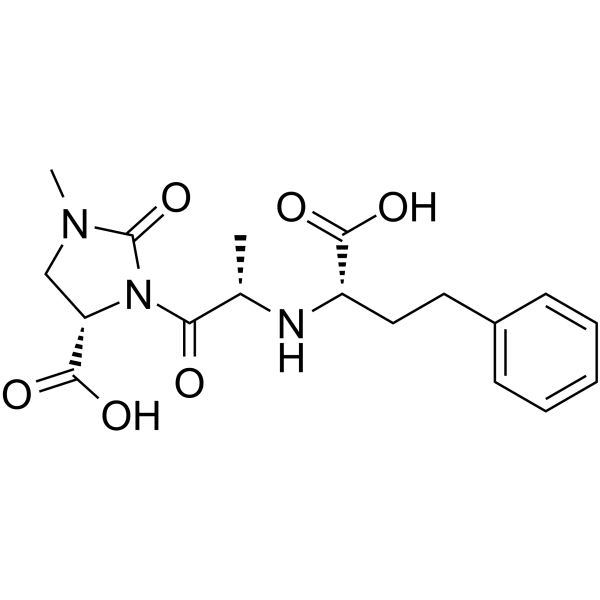
    Imidaprilate is an active metabolite of TA-6366, acts as a potent angiotensin converting enzyme (ACE) inhibitor, with an IC50 of 2.6 nM, and is used in the research of hypertensive disease.
    Imidaprilate
  • HY-106616

    BAY-g 2821; Edrul

    Sodium Channel Cardiovascular Disease
    Muzolimine (BAY-g 282) is a slow and long lasting diuresis agent. Muzolimine produces a diuresis in the loop of Henle and also shows anti-hypertensive and natriuresis effects. Muzolimine can be used for the research of cardiovascular disease .
    Muzolimine
  • HY-W414915

    CGP 48933 methyl ester

    Drug Derivative Angiotensin Receptor Cardiovascular Disease Cancer
    Valsartan (CGP 48933) methyl ester is the methyl ester derivative of Valsartan (HY-18204). Valsartan is a selective and orally active angiotensin II type 1 (AT1) receptor blocker (ARB) with potent antihypertensive and cardioprotective effects. Valsartan competitively binds to AT1 receptors, inhibiting the binding of angiotensin II to AT1 receptors, thereby blocking angiotensin II-mediated vasoconstriction, sodium retention, and myocardial hypertrophy signaling pathways. Valsartan reduces systolic blood pressure in L-NAME-induced hypertensive rats. Valsartan can be used for the study and treatment of arterial hypertension, hypertensive heart disease, and heart failure .
    Valsartan methyl ester
  • HY-B1363R

    Bendrofluazide (Standard)

    NKCC Reference Standards Cardiovascular Disease
    Bendroflumethiazide (Standard) (Bendrofluazide (Standard)) is the analytical standard of Bendroflumethiazide (HY-B1363). This product is intended for research and analytical applications. Bendroflumethiazide (Bendrofluazide) is an orally available diuretic. Bendroflumethiazide inhibits the electroneutral sodium-chloride symporter located in the apical membrane of the early segment of the distal convoluted tubule and can effectively lower blood pressure. Bendroflumethiazide is used in the study of hypertension and edema. Bendroflumethiazide has an antidiuretic effect in diabetes insipidus .
    Bendroflumethiazide (Standard)
  • HY-B0331B

    MK-421 sodium

    Angiotensin-converting Enzyme (ACE) Cardiovascular Disease Cancer
    Enalapril (MK-421) sodium is an angiotensin-converting enzyme (ACE) inhibitor, can be used for hypertensive diseases research .
    Enalapril sodium
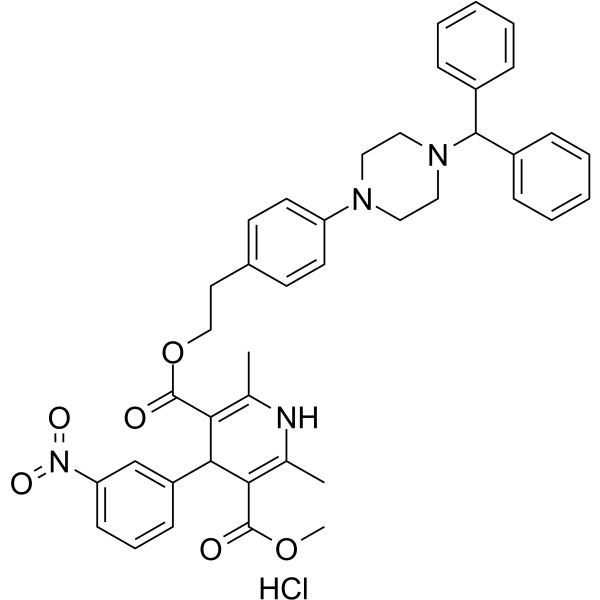
  • HY-101390D

    Calcium Channel Cardiovascular Disease
    (R)-Niguldipine, a R-epimer of Niguldipine (HY-101390B), is a calcium channel antagonist. (R)-Niguldipine exerts a vasodilatory effect by blocking calcium channels and reducing the transmembrane influx of calcium ions. (R)-Niguldipine can inhibit U-46619 (HY-108566)-induced coronary artery contraction in guinea pig Langendorff hearts (pID50 of 9.93), has high affinity for calcium channel binding sites on guinea pig skeletal muscle membranes (Ki of 8.10), and lowers blood pressure in spontaneously hypertensive rats (pED30 of 5.55). (R)-Niguldipine can improve cardiovascular diseases such as hypertension, angina pectoris, and arrhythmias .
    (R)-Niguldipine
  • HY-B0202A

    SR-47436 hydrochloride; BMS-186295 hydrochloride

    Angiotensin Receptor Apoptosis Cardiovascular Disease Neurological Disease Metabolic Disease
    Irbesartan (SR-47436) hydrochloride is an orally active Ang II type 1 (AT1) receptor blocker (ARB). Irbesartan hydrochloride can relax the blood vessels, low blood pressure and increase the supply of blood and oxygen to the heart. Irbesartan hydrochloride can be used for the research of high blood pressure, heart failure, and diabetic kidney disease .
    Irbesartan hydrochloride
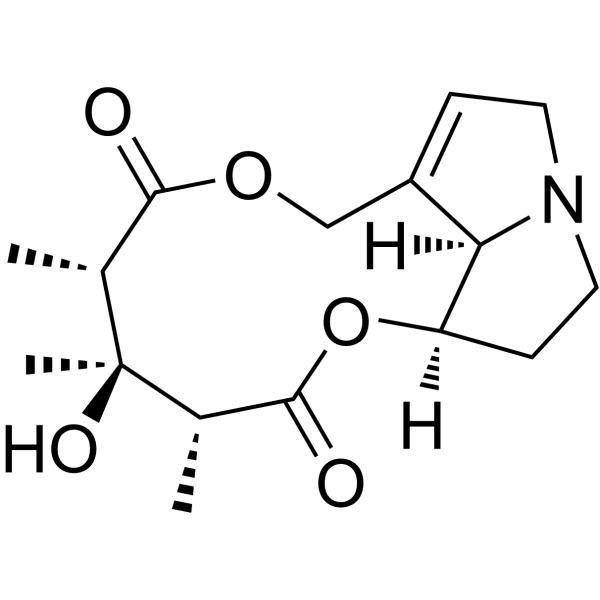
  • HY-133589

    Drug Derivative Cardiovascular Disease Metabolic Disease
    Fulvine is a pyrrolizidine alkaloid isolated from the seeds of Crotalaria fulva. Fulvine is hepatotoxic and can be used to induce hypertensive pulmonary vascular disease in vivo .
    Fulvine
  • HY-129808

    LPL Receptor Cardiovascular Disease Cancer
    VPC12249 is a competitive dual LPA1/LPA3 antagonist with Ki values of 137nM and 428 nM, respectively. VPC12249 inhibits calcium mobilization in HEK293T cells with a Ki value of ~130 nM. VPC12249 is promising for research of ovarian cancer and hypertensive diseases .
    VPC12249
  • HY-113695

    Angiotensin-converting Enzyme (ACE) Adrenergic Receptor Cardiovascular Disease
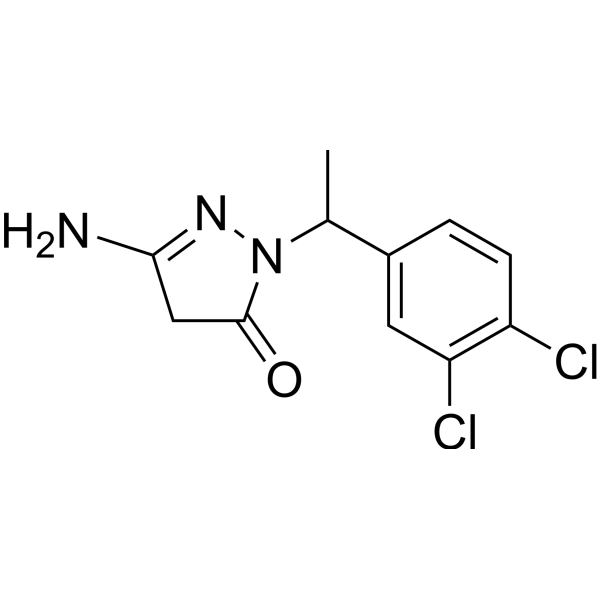
    BW A575C is a dual inhibitor against angiotensin converting enzyme (ACE) and β-adrenoceptor. BW A575C produces a competitive blockade of Isoprenaline (HY-108353)-induced tachycardia in a guinea-pig right atrial. BW A575C also inhibits Angiotensin I (HY-P1032)-induced pressor responses in rats. BW A575C is promising for research of hypertensive diseases .
    BW A575C
  • HY-U00284

    Calcium Channel Cardiovascular Disease
    AE0047 Hydrochloride is a calcium blocker, used in the research of hypertensive disease.
    AE0047 Hydrochloride
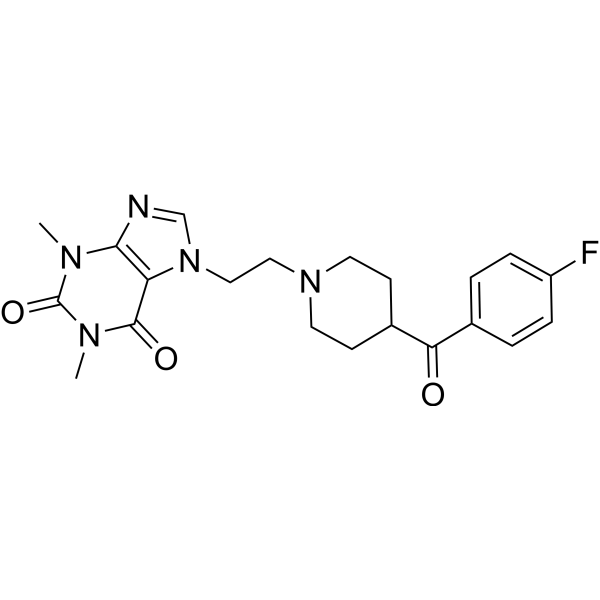
  • HY-136880

    Sgd 195/78

    5-HT Receptor Cardiovascular Disease
    Flufylline shows antihypertensive properties in spontaneously hypertensive rats and display antagonism towards 5-HT receptors in various animal models. Flufylline can be used for cardiovascular disease research .
    Flufylline
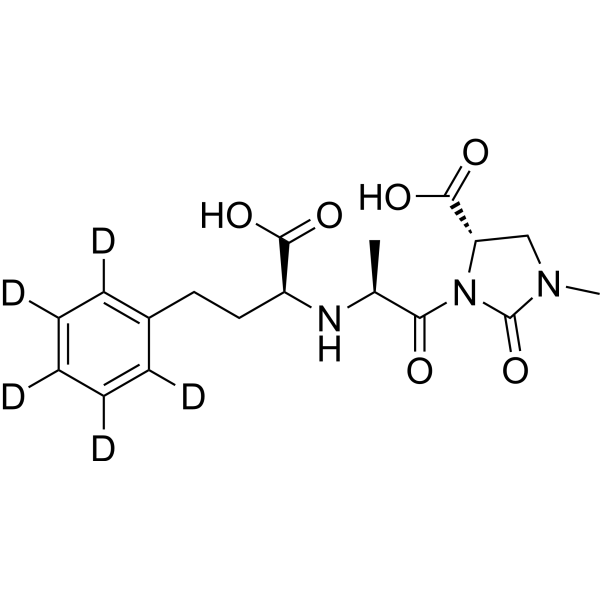
  • HY-109592S

    6366A-d5; Imidaprilat-d5

    Isotope-Labeled Compounds Angiotensin-converting Enzyme (ACE) Cardiovascular Disease
    Imidaprilate-d5 is deuterium labeled Imidaprilate. Imidaprilate is an active metabolite of TA-6366, acts as a potent angiotensin converting enzyme (ACE) inhibitor, with an IC50 of 2.6 nM, and is used in the research of hypertensive disease.
    Imidaprilate-d5
  • HY-P10791

    Angiotensin-converting Enzyme (ACE) Cardiovascular Disease
    YYLLVR is an angiotensin-converting enzyme (ACE) inhibitory peptide with an inhibitory rate of 89.10%. YYLLVR has a lower binding energy for ACE of -35.98 kcal/mol. YYLLVR can be used in the study of hypertensive diseases .
    YYLLVR
  • HY-B0331S1

    MK-421-d3

    Isotope-Labeled Compounds Angiotensin-converting Enzyme (ACE) Cardiovascular Disease Cancer
    Enalapril-d3 (MK-421-d3) is deuterium labeled Enalapril. Enalapril (MK-421) is an angiotensin-converting enzyme (ACE) inhibitor, can be used for hypertensive diseases research .
    Enalapril-d3
  • HY-W739949

    6366Ad3

    Isotope-Labeled Compounds Angiotensin-converting Enzyme (ACE) Cardiovascular Disease
    Imidaprilat-d3 (6366A-d3) is deuterium labeled Imidaprilate. Imidaprilate is an active metabolite of TA-6366, acts as a potent angiotensin converting enzyme (ACE) inhibitor, with an IC50 of 2.6 nM, and is used in the research of hypertensive disease .
    Imidaprilat-d3
  • HY-113748

    Angiotensin-converting Enzyme (ACE) Cardiovascular Disease
    Rev 6207 (free base) is a potent non-thiol angiotensin I converting enzyme inhibitor. Rev 6207 (free base) has comparable antihypertensive activity to Enalapril (HY-B0331) in awake monkeys with high renin activity and can be used in the study of hypertensive diseases .
    Rev 6207 free base
  • HY-106616R

    BAY-g 2821 (Standard); Edrul (Standard)

    Sodium Channel Reference Standards Cardiovascular Disease
    Muzolimine (Standard) is the analytical standard of Muzolimine. This product is intended for research and analytical applications. Muzolimine (BAY-g 282) is a slow and long lasting diuresis agent. Muzolimine produces a diuresis in the loop of Henle and also shows anti-hypertensive and natriuresis effects. Muzolimine can be used for the research of cardiovascular disease .
    Muzolimine (Standard)
  • HY-19078

    Prostaglandin Receptor Cardiovascular Disease
    SQ-30741 is a thromboxane A2 receptor antagonist. SQ-30741 reduces vasoconstriction in a feline pulmonary vascular bed model. SQ-30741 increases relaxation of aortic endothelium and vascular smooth muscle in adult rats in a spontaneously hypertensive rat model. SQ-30741 can be used in research on cardiovascular diseases such as hypertension .
    SQ-30741
  • HY-W414915R

    CGP 48933 methyl ester (Standard)

    Reference Standards Drug Derivative Angiotensin Receptor Cardiovascular Disease
    Valsartan (CGP 48933) methyl ester (Standard) is the analytical standard of Valsartan methyl ester (HY-W414915). This product is intended for research and analytical applications. Valsartan methyl ester is the methyl ester derivative of Valsartan (HY-18204). Valsartan is a selective angiotensin II type 1 (AT1) receptor blocker (ARB) with potent antihypertensive and cardioprotective effects. Valsartan competitively binds to AT1 receptors, inhibiting the binding of angiotensin II to AT1 receptors, thereby blocking angiotensin II-mediated vasoconstriction, sodium retention, and myocardial hypertrophy signaling pathways. Valsartan reduces systolic blood pressure in L-NAME-induced hypertensive rats. Valsartan can be used for the study and treatment of arterial hypertension, hypertensive heart disease, and heart failure .
    Valsartan methyl ester (Standard)
  • HY-12376R

    Guanylate Cyclase Cardiovascular Disease Inflammation/Immunology
    BAY 41-2272 (Standard) is the analytical standard of BAY 41-2272. This product is intended for research and analytical applications. BAY 41-2272 is an orally active and soluble guanylate cyclases (sGC) activator, which increases sGC activity by 400-fold in synergy with NO. BAY 41-2272 potently unloaded the heart, increased cardiac output, thus can be used for cardiovascular diseases research .
    BAY 41-2272 (Standard)
  • HY-12172

    ACT-077825

    Renin Cardiovascular Disease
    MK-8141 (ACT-077825) is a renin inhibitor that significantly increases levels of immunoreactive renin (ir-AR) by sevenfold but does not result in sustained reductions in blood renin activity (PRA). This study evaluated the antihypertensive efficacy of MK-8141 in hypertensive disease. Despite its effects on ir-AR, MK-8141 (ACT-077825) did not produce significant blood pressure-lowering effects in the absence of sustained PRA inhibition.
    MK-8141
  • HY-171469

    Potassium Channel Cardiovascular Disease
    SKP-451 is an ATP-sensitive potassium (K +) channel agonist. SKP-451 activates the ATP-sensitive K + channels, promotes the efflux of K +, causes membrane hyperpolarization, and inhibits the influx of Ca 2+, thereby relaxing the vascular smooth muscle. SKP-451 relaxs the canine coronary artery, rabbit basilar artery, and vertebral artery. SKP-451 also reduces the mean arterial blood pressure of conscious spontaneously hypertensive rats (SHR). SKP-451 is promising for research of cardiovascular diseases .
    SKP-451
  • HY-101390A

    (R)-Niguldipine hydrochloride

    Calcium Channel Cardiovascular Disease
    (-)-Niguldipine ((R)-Niguldipine) hydrochloride is a calcium channel antagonist. (-)-Niguldipine hydrochloride exerts a vasodilatory effect by blocking calcium channels and reducing the transmembrane influx of calcium ions. (-)-Niguldipine can inhibit U-46619 (HY-108566)-induced coronary artery contraction in guinea pig Langendorff hearts (pID50 of 9.93), has high affinity for calcium channel binding sites on guinea pig skeletal muscle membranes (Ki of 8.10), and lowers blood pressure in spontaneously hypertensive rats (pED30 of 5.55). (-)-Niguldipine hydrochloride can improve cardiovascular diseases such as hypertension, angina pectoris, and arrhythmias .
    (-)-Niguldipine hydrochloride
  • HY-B0202S3

    SR-47436-d7; BMS-186295-d7

    Apoptosis Angiotensin Receptor Isotope-Labeled Compounds Cardiovascular Disease Endocrinology
    Irbesartan-d7 is deuterated labeled Irbesartan (HY-B0202). Irbesartan (SR-47436) is an orally active Ang II type 1 (AT1) receptor blocker (ARB). Irbesartan can relax the blood vessels, low blood pressure and increase the supply of blood and oxygen to the heart. Irbesartan can be used for the research of high blood pressure, heart failure, and diabetic kidney disease .
    Irbesartan-d7
  • HY-B0202AS

    SR-47436-d7 hydrochloride; BMS-186295-d7 hydrochloride

    Apoptosis Angiotensin Receptor Isotope-Labeled Compounds Neurological Disease Metabolic Disease
    Irbesartan-d7 hydrochloride is deuterated labeled Irbesartan hydrochloride (HY-B0202A). Irbesartan (SR-47436) hydrochloride is an orally active Ang II type 1 (AT1) receptor blocker (ARB). Irbesartan hydrochloride can relax the blood vessels, low blood pressure and increase the supply of blood and oxygen to the heart. Irbesartan hydrochloride can be used for the research of high blood pressure, heart failure, and diabetic kidney disease .
    Irbesartan-d7 hydrochloride
  • HY-106621A

    Potassium Channel Metabolic Disease
    AL 0671 is a potassium channel opener. AL 0671 can inhibit nonenzymatic glycation of protein and LDL oxidation. AL 0671 can be used for the researches of cardiovascular and metabolic disease, such as hypertensive diabetes .
    AL 0671
  • HY-180322

    Glutaminase Cardiovascular Disease Metabolic Disease
    TG2-IN-3h (Compound 3h) is a transglutaminase (TG2) inhibitor (hTG2: IC50 = 6nM). TG2-IN-3h inhibits endothelial cell migration and angiogenesis. TG2-IN-3h alleviates renal fibrosis in a mouse model of hypertensive nephropathy. TG2-IN-3h can be used in research on metabolic diseases such as hypertensive nephropathy and cardiovascular and cerebrovascular diseases such as pathological angiogenesis .
    TG2-IN-3h

Inquiry Online

Your information is safe with us. * Required Fields.

Salutation


Country or Region *

Applicant Name *


Organization Name *

Department *


Email Address *


Product Name *

Cat. No.


Requested quantity *

Phone Number *


Remarks

Inquiry Online

Inquiry Information

Product Name:
Cat. No.:
Quantity:
MCE Japan Authorized Agent:

