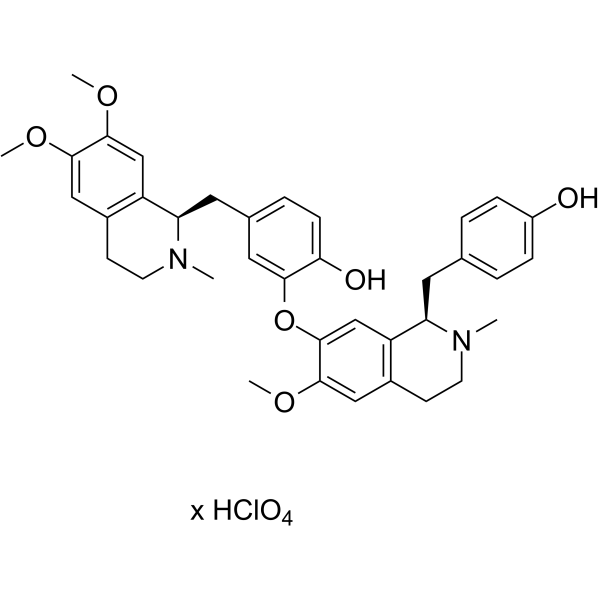
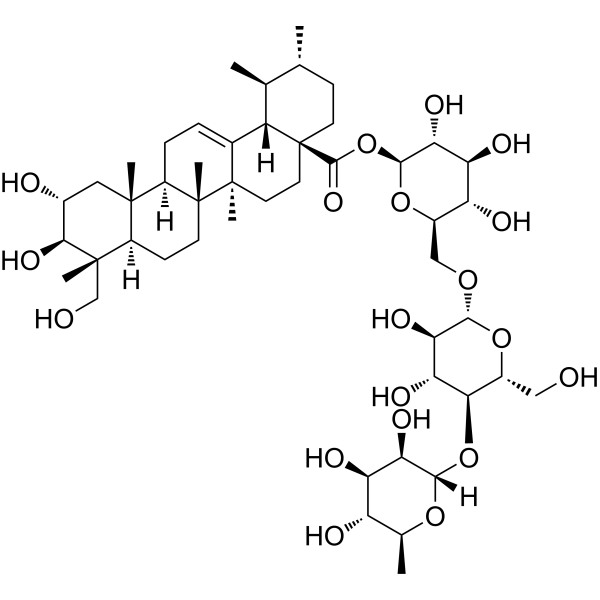
1. Search Result
Search Result
Pathways Recommended: Neuronal Signaling JAK/STAT Signaling
Results for "

inflammatory signaling

" in MedChemExpress (MCE) Product Catalog:

884

Inhibitors & Agonists

13

Screening Libraries

1

Fluorescent Dyes

15

Biochemical Assay Reagents

48

Peptides

38

Inhibitory Antibodies

375

Natural
Products

40

Isotope-Labeled Compounds

2

Click Chemistry

20

Oligonucleotides

1

GMP Molecules

Targets Recommended:
Cat. No. Product Name Target Research Areas Chemical Structure
  • HY-114180
    RU.521
    80+ Cited Publications

    RU320521

    Cyclic GMP-AMP Synthase Metabolic Disease
    RU.521 (RU320521) is a potent and selective cyclic GMP-AMP synthase (cGAS) inhibitor and inhibits cGAS-mediated interferon upregulation. RU.521 suppresses dsDNA-activated reporter activity with an IC50 of 0.7 μM. RU.521 reduces constitutive expression of interferon in macrophages from a mouse model of Aicardi-Goutières syndrome (AGS) .
    RU.521
  • HY-N2526
    Nervonic acid
    5 Publications Verification

    Selacholeic acid; cis-15-Tetracosenoic acid

    Endogenous Metabolite NF-κB Neurological Disease Inflammation/Immunology
    Nervonic acid is a monounsaturated fatty acid with oral activity. Nervonic acid exerts anti-inflammatory activity by inhibiting NF-κB signaling. Nervonic acid can be used in the study of neurodegenerative diseases .
    Nervonic acid
  • HY-N0436
    Engeletin
    5+ Cited Publications

    NF-κB Infection Inflammation/Immunology
    Engeletin is a flavanonol glycoside isolated from Smilax glabra Roxb. , inhibits NF-κB signaling-pathway activation, and possesses anti-inflammatory, analgesic, diuresis, detumescence, and antibiosis effects.
    Engeletin
  • HY-111431A
    p-Cresyl sulfate potassium
    5+ Cited Publications

    p-Tolyl sulfate potassium

    Endogenous Metabolite JNK p38 MAPK Metabolic Disease Inflammation/Immunology
    p-Cresyl sulfate potassium is a uremic toxin that binds to a prototype protein. p-Cresyl sulfate potassium activates the JNK and p38 MAPK signaling pathways. p-Cresyl sulfate potassium has pro-inflammatory activity .
    p-Cresyl sulfate potassium
  • HY-N2149
    Tomatidine
    5+ Cited Publications

    NF-κB JNK Autophagy Endogenous Metabolite Cardiovascular Disease Inflammation/Immunology
    Tomatidine acts as an anti-inflammatory agent by blocking NF-κB and JNK signaling . Tomatidine activates autophagy either in mammal cells or C elegans .
    Tomatidine
  • HY-N7088
    Raffinose
    1 Publications Verification

    Melitose

    NF-κB Autophagy Keap1-Nrf2 Toll-like Receptor (TLR) MyD88 Metabolic Disease Inflammation/Immunology
    Raffinose (Melitose) regulates intestinal flora, inhibits TLR4-MyD88-NF-κB signaling pathway, and activates Nrf2 signaling pathway. Raffinose exhibits anti-inflammatory, antioxidant, and immunomodulatory activities. Raffinose is orally active .
    Raffinose
  • HY-N0498
    Nitidine chloride
    4 Publications Verification

    Parasite Apoptosis STAT Topoisomerase ERK FAK p38 MAPK NF-κB Inflammation/Immunology Cancer
    Nitidine chloride, a potential anti-malarial lead compound derived from Zanthoxylum nitidum (Roxb) DC, exerts potent anticancer activity through diverse pathways, including inducing apoptosis, inhibiting STAT3 signaling cascade, DNA topoisomerase 1 and 2A, ERK and c-Src/FAK associated signaling pathway, also has anti-inflammatory activity. Nitidine chloride inhibits LPS-induced inflammatory cytokines production via MAPK and NF-kB pathway .
    Nitidine chloride
  • HY-N0628
    Kaempferitrin
    5 Publications Verification

    Lespedin; Lespenephryl

    Insulin Receptor Metabolic Disease Endocrinology Cancer
    Kaempferitrin is a natural flavonoid, possesses antinociceptive, anti-inflammatory, anti-diabetic, antitumoral and chemopreventive effects, and activates insulin signaling pathway.
    Kaempferitrin
  • HY-N0635
    Prim-O-glucosylcimifugin
    4 Publications Verification

    TNF Receptor NO Synthase COX Inflammation/Immunology
    Prim-O-glucosylcimifugin exerts anti-inflammatory effects through the inhibition of iNOS and COX-2 expression by through regulating JAK2/STAT3 signaling.
    Prim-O-glucosylcimifugin
  • HY-N1486
    Ursonic acid
    1 Publications Verification

    3-Ketoursolic acid

    Apoptosis Endogenous Metabolite NF-κB Inflammation/Immunology Cancer
    Ursolic acid is a naturally occurring triterpenoid that has orally active. Ursolic acid induces the apoptosis of human cancer cells through multiple signaling pathways. Ursolic acid has anti-inflammatory and anticarcinogenic activity .
    Ursonic acid
  • HY-Y0189

    Salicylic acid methyl ester

    Environmental Pollutants COX Inflammation/Immunology
    Methyl Salicylate (Wintergreen oil) is a topical analgesic and anti-inflammatory agent. Also used as a pesticide, a denaturant, a fragrance ingredient, and a flavoring agent in food and tobacco products . A systemic acquired resistance (SAR) signal in tobacco . A topical nonsteroidal anti-inflammatory agent (NSAID). Methyl salicylate lactoside is a COX inhibitor .
    Methyl Salicylate
  • HY-N11004
    Erinacine C
    1 Publications Verification

    NF-κB Keap1-Nrf2 Heme Oxygenase (HO) Neurological Disease Inflammation/Immunology
    Erinacine C is the inhibitor for NF-κB signaling pathway and the activator for Nrf2 signaling pathway. Erinacine C exhibits antioxidant, neuroprotective and anti-inflammatory effects .
    Erinacine C
  • HY-B1104

    (±)-Indoprofe

    Akt AMPK NF-κB p38 MAPK Inflammation/Immunology
    Indoprofen ((±)-Indoprofe) activates AKT-AMPK signaling pathway, inhibits NF-κB/MAPK signaling pathway. Indoprofen exhibits anti-inflammatory and immunomodulatory activities. Indoprofen is orally active .
    Indoprofen
  • HY-W355700

    Drug Metabolite Infection
    1-oleoyl-sn-glycero-3-phosphoethanolamine (LysoPE 18:1) is a lysophosphatidylethanolamine molecule involved in phospholipid metabolism, targeting cell membrane receptors (such as G protein-coupled receptors) to regulate cell signaling pathways. 1-oleoyl-sn-glycero-3-phosphoethanolamine may activate mitogen-activated protein kinase (MAPK) signaling, promote cell migration, regulate inflammatory responses and lipid metabolism, and has both pro-inflammatory and anti-inflammatory activities. 1-oleoyl-sn-glycero-3-phosphoethanolamine is mainly used in the screening of biomarkers for metabolic diseases (such as non-alcoholic fatty liver disease and obesity), as well as the study of the mechanism of lysophospholipids in cell membrane homeostasis and signal transduction .
    1-Oleoyl-2-hydroxy-sn-glycero-3-phosphoethanolamine
  • HY-105935
    Keracyanin chloride
    1 Publications Verification

    Cyanidin 3-rutinoside chloride; Cyanidin 3-O-rutinoside chloride; Sambucin chloride

    NF-κB PPAR Reactive Oxygen Species (ROS) FAK p38 MAPK ERK JNK Metabolic Disease Inflammation/Immunology
    Keracyanin chloride inhibits NF-κB/FAK/MAPK signaling pathway. Keracyanin chloride exhibits antioxidant, anti-inflammatory and hypoglycemic effects, and is orally active .
    Keracyanin chloride
  • HY-122208
    SGA360
    3 Publications Verification

    Apolipoprotein Inflammation/Immunology
    SGA360 suppress inflammatory SAA1 signaling in an AHR-dependent manner through a mechanism that does not require AHR binding to its cognate response element (partial antagonist) .
    SGA360
  • HY-N1382
    Asperuloside
    2 Publications Verification

    NO Synthase Metabolic Disease Inflammation/Immunology
    Asperuloside is an iridoid isolated from Hedyotis diffusa, with anti-inflammatory activity. Asperuloside inhibits inducible nitric oxide synthase (iNOS), suppresses NF-κB and MAPK signaling pathways .
    Asperuloside
  • HY-N0852

    p38 MAPK NF-κB Interleukin Related JNK PERK CXCR Cardiovascular Disease Inflammation/Immunology
    Benzoylpaeoniflorin is an orally active monoterpene glycoside compound. Benzoylpaeoniflorin exerts anti-inflammatory, anti-allergic, psoriasis-improving and sepsis-improving effects by inhibiting signaling pathways such as TNF/NF-κB and MAPK, as well as regulating immune homeostasis. Benzoylpaeoniflorin can be used in research related to immune, allergic and inflammatory diseases .
    Benzoylpaeoniflorin
  • HY-165428

    CXCR Arrestin Inflammation/Immunology
    SCH-900875 is an orally active, brain-penetrant and selective CXCR3 receptor inhibitor, which also shows high selectivity over CXCR1 and CXCR2 receptors. SCH-900875 binds to CXCR3, blocking the binding of ligands CXCL9, CXCL10, and CXCL11, inhibiting downstream G protein and β-arrestin signaling pathways to suppress inflammatory cell migration. SCH-900875 is promising for research of autoimmune diseases (rheumatoid arthritis, multiple sclerosis) and inflammatory disorders (psoriasis, inflammatory bowel disease) .
    SCH-900875
  • HY-70005
    CPA inhibitor
    3 Publications Verification

    Carboxypeptidase inhibitor

    Carboxypeptidase Wnt β-catenin Inflammation/Immunology
    CPA inhibitor (Compound 5) (Carboxypeptidase inhibitor) is an orally active competitive carboxypeptidase A (CPA) inhibitor with a Ki value of 0.32 μM. CPA inhibitor blocks the activity of carboxypeptidase A3 (CPA3). CPA activator activates the Wnt/Lrp6/β-catenin signaling pathway. CPA inhibitor reduces epithelial damage. CPA inhibitor is applicable to research related to inflammatory bowel disease, including ulcerative colitis and Crohn's disease .
    CPA inhibitor
  • HY-N0237
    Atractyloside A
    3 Publications Verification

    Toll-like Receptor (TLR) MyD88 NF-κB Mitochondrial Metabolism Interleukin Related Aquaporin Cardiovascular Disease Metabolic Disease Inflammation/Immunology
    Atractyloside A is an orally active inhibitor of the TLR4/MyD88/NF-κB signaling pathway and also an opener of the mitochondrial permeability transition pore (MPTP). Atractyloside A interferes with the activation of the TLR4/MyD88/NF-κB pathway, thereby inhibiting intestinal inflammatory responses. Atractyloside A reverses mucin synthesis impairment, improves intestinal barrier integrity, and restores homeostasis by altering the composition of the gut microbiota. Atractyloside A can be used in studies related to spleen deficiency diarrhea and myocardial injury .
    Atractyloside A
  • HY-N2083

    NF-κB Inflammation/Immunology
    Handelin is a guaianolide dimer from Chrysanthemum boreale that has potent anti-inflammatory activity by down-regulating NF-κB signaling and pro-inflammatory cytokine production .
    Handelin
  • HY-N2149A
    Tomatidine hydrochloride
    5+ Cited Publications

    NF-κB JNK Autophagy Endogenous Metabolite Cardiovascular Disease Inflammation/Immunology
    Tomatidine hydrochloride acts as an anti-inflammatory agent by blocking NF-κB and JNK signaling . Tomatidine hydrochloride activates autophagy either in mammal cells or C elegans .
    Tomatidine hydrochloride
  • HY-N2357

    (-)-Eudesmin; Eudesmine; (-)-Eudesmine

    Ribosomal S6 Kinase (RSK) Infection Metabolic Disease Inflammation/Immunology Cancer
    Eudesmin ((-)-Eudesmin) impairs adipogenic differentiation via inhibition of S6K1 signaling pathway. Eudesmin possesses diverse therapeutic effects, including anti-tumor, anti-inflammatory, and anti-bacterial activities .
    Eudesmin
  • HY-162405

    STAT TGF-beta/Smad Interleukin Related Inflammation/Immunology
    STAT6-IN-12 is a potent STAT6 inhibitor with an IC50 of 50 nM. STAT6-IN-12 also inhibits Smad2/3 with an IC50 of 68 nM. STAT6-IN-12 inhibits TGFβ-dependent Smad2/3 signaling pathway, IL-4-dependent STAT6 signaling pathway, and cellular inflammatory responses. STAT6-IN-12 can be used for the research of inflammation .
    STAT6-IN-12
  • HY-P99335

    Anti-Human IL17A Recombinant Antibody; SHR-1314

    Interleukin Related Inflammation/Immunology
    Vunakizumab (Anti-Human IL17A Recombinant Antibody) is a recombinant human IgGκ monoclonal antibody and an Interleukin-17A (IL-17A) inhibitor. Vunakizumab binds to IL-17A to inhibit downstream cytokines and block inflammatory signaling. Vunakizumab can be used for the research of chronic plaque psoriasis and ankylosing spondylitis .
    Vunakizumab
  • HY-N0899

    JAK STAT Wnt β-catenin Inflammation/Immunology Cancer
    Wilforine is an orally active JAK-STAT pathway inhibitor with immunomodulatory effects and the ability to inhibit osteoclast fusion. Wilforine disrupts lipid raft integrity, reprograms cholesterol and glycosphingolipid metabolic pathways, regulates NF-κB and the complement system, and modulates the expression of various interleukins. Wilforine also inhibits the Wnt11/β-catenin signaling pathway and suppresses the proliferation of fibroblast-like synoviocytes. Wilforine can serve as a quality and pharmacokinetic marker for Tripterygium glycoside tablets, and can be applied to research on related diseases such as rheumatoid arthritis, inflammatory osteolysis, and SAPHO syndrome .
    Wilforine
  • HY-168906

    Bradykinin Receptor PI3K Akt TNF Receptor ERK Neurological Disease Inflammation/Immunology
    BI-113823 is an orally active, blood-brain barrier-permeable bradykinin B1 receptor antagonist, with a Ki value of 5.3 nM for human receptors and 13.3 nM for rat receptors. BI-113823 reduces inflammation-induced mechanical hyperalgesia, as well as the mechanical sensitivity of peripheral afferent nerves and spinal nociceptive-specific neurons. BI-113823 alleviates liver fibrosis and portal hypertension, and improves survival in chronic liver disease models. BI-113823 inhibits the activities of monocytes, neutrophils and hepatic stellate cells, as well as the PI3K/Akt signaling pathway. BI-113823 can be used in research related to inflammatory pain, liver fibrosis and portal hypertension .
    BI-113823
  • HY-N2616
    Vomicine
    1 Publications Verification

    STING Inflammation/Immunology
    Vomicine modulates cGAS-STING-TBK1 signaling pathway, and exhibits anti-inflammatory activity. Vomicine is an alkaloid that can be isolated from Strychnos nux-vomica seeds .
    Vomicine
  • HY-101481

    COX Apoptosis MEK ERK PPAR AMPK NF-κB Interleukin Related TNF Receptor STAT Wnt Neurological Disease Inflammation/Immunology Cancer
    Flurbiprofen axetil is a non-selective COX inhibitor and a nonsteroidal anti-inflammatory agent with anti-inflammatory and analgesic effects. Flurbiprofen axetil inhibits basal-like breast cancer metastasis by inhibiting the MEK/ERK signaling pathway. Flurbiprofen axetil can promote neuroprotection after focal cerebral ischemia in rats by partially activating PPAR-γ. Flurbiprofen axetil alleviates cerebral ischemia/reperfusion injury by reducing inflammation in a transient global cerebral ischemia/reperfusion rat model. Flurbiprofen axetil can alleviate inflammatory responses and cognitive function in a mild cognitive impairment (MCI) SD rat model through the AMPKα/NF-κB signaling pathway .
    Flurbiprofen axetil
  • HY-W181102

    Calcineurin Cardiovascular Disease Neurological Disease Inflammation/Immunology
    NFAT Inhibitor-2 is a potent inhibitor of calcineurin NFAT signalling. Calcineurin is a serine/threonine protein phosphatase regulated by Ca2+ and calmodulin. NFAT Inhibitor-2 has the potential for the research of inflammatory disease, an autoimmune disorder, a cardiovascular disease, a neurodegenerative disease, a disease occurring with uncontrolled cell proliferation and/or differentiation, an angiogenesis-related disease, an allergy, anaphylaxis and alopecia (extracted from patent WO2016207212A1, compound 17) .
    NFAT Inhibitor-2
  • HY-131502

    P2X Receptor Inflammation/Immunology
    Taspine is a natural product with anti-inflammatory activity. Taspine suppresses P2X4 receptor activity via PI3K inhibition. Taspine inhibits pro-inflammatory signalling via inhibition of P2X4 receptors in macrophage .
    Taspine
  • HY-16125
    Carboxyamidotriazole Orotate
    4 Publications Verification

    L-651582 Orotate; CAI Orotate

    Calcium Channel Cardiovascular Disease Inflammation/Immunology Cancer
    Carboxyamidotriazole Orotate (L-651582 Orotate) is the orotate salt form of Carboxyamidotriazole (CAI), an orally bioavailable signal transduction inhibitor. Carboxyamidotriazole Orotate is a cytostatic inhibitor of nonvoltage-operated calcium channels and calcium channel-mediated signaling pathways. Carboxyamidotriazole Orotate shows anti-tumor, anti-inflammatory and antiangiogenic effects .
    Carboxyamidotriazole Orotate
  • HY-120784

    Drug Derivative Others
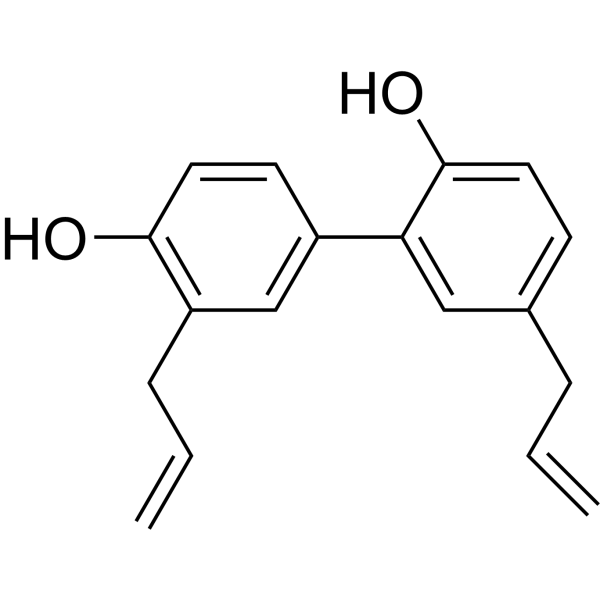
    Hexafluoro-diallylhexaflurobisphenol is a Honokiol analogue (HA). Honokiol is a bioactive, biphenolic phytochemical that possesses potent antioxidative, anti-inflammatory, antiangiogenic, and anticancer activities by targeting a variety of signaling molecules .
    Hexafluoro-diallylhexaflurobisphenol
  • HY-W001174

    ERK NF-κB Inflammation/Immunology
    2,5-Dihydroxyacetophenone, isolated from Rehmannia glutinosa, inhibits the production of inflammatory mediators in activated macrophages by blocking the ERK1/2 and NF-κB signaling pathways .
    2,5-Dihydroxyacetophenone
  • HY-174455

    PROTACs IRAK Interleukin Related Inflammation/Immunology
    APH02174 is a highly selective and orally active IRAK4 PROTAC degrader with the DC50 of 4.01 nM in THP-1 cells. APH02174 blocks inflammatory signals by inhibiting IL-6 release. APH02174 can be used for research on inflammatory conditions such as psoriasis vulgaris and rheumatoid arthritis .
    APH02174
  • HY-178041

    Epigenetic Reader Domain Interleukin Related c-Fms NF-κB TNF Receptor Inflammation/Immunology
    BRD4-BD1/2-IN-3 (Compound B6) is a selective BRD4 BD2 inhibitor with an IC50 of 0.41  nM for BRD4 BD2 over BRD4 BD1. BRD4-BD1/2-IN-3 significantly inhibits the LPS (HY-D1056)-induced expression of IL-6. BRD4-BD1/2-IN-3 shows anti-inflammatory activities by modulating the TNF and NF-κB signaling pathway. BRD4-BD1/2-IN-3 can be used for inflammatory diseases research .
    BRD4-BD1/2-IN-3
  • HY-137454
    Teplinovivint
    2 Publications Verification

    Wnt β-catenin Inflammation/Immunology
    Teplinovivint is a potent wnt/β-catenin signaling pathway inhibitor. Teplinovivint has anti-inflammatory activity and has the potential for tendinopathy research .
    Teplinovivint
  • HY-157570

    PROTACs STING Infection
    Anti-inflammatory agent 70 (N-Me-SP23) is a STING protein PROTAC degrader and inhibits the STING signaling pathway. Anti-inflammatory agent 70 has anti-inflammatory activity. (Pink: STING inhibitor (HY-47709); Black: linker (HY-W008296); Blue: CRBN Ligand (HY-W460193)) .
    Anti-inflammatory agent 70
  • HY-126390
    (E/Z)-BCI
    1 Publications Verification

    NSC 150117

    Phosphatase Apoptosis Inflammation/Immunology Cancer
    (E/Z)-BCI (NSC 150117) is a dual-specificity phosphatase 6 (DUSP6) inhibitor with anti-inflammatory activities. (E/Z)-BCI attenuates LPS-induced inflammatory mediators and ROS production in macrophage cells via activating the Nrf2 signaling axis and inhibiting the NF-κB pathway .
    (E/Z)-BCI
  • HY-N8049

    Endogenous Metabolite Cardiovascular Disease Metabolic Disease
    Urolithin M7 is an orally active metabolite, which is generated through gut microbiota metabolism. Urolithin M7 inhibits oxidative stress and modulates inflammatory signaling pathways. Urolithin M7 is promising for research of gut microbiota metabolism and cardiovascular diseases .
    Urolithin M7
  • HY-175231

    5-HT Receptor Neurological Disease
    ST171 is a bitopic 5-HT1AR agonist with an Ki of 0.41  nM. ST171 selectively activates Gi/o signaling pathway and inhibits 5-HT1AR-mediated cAMP accumulation without Gs activation and marginal β-arrestin recruitment. T171 reduces hypersensitivity in chronic neuropathic and inflammatory pain mice model. ST171 can be used for pain research .
    ST171
  • HY-125019

    JAK STAT Inflammation/Immunology
    iJak-381 is a JAK1/2 inhibitor with anti-inflammatory activity. iJak-381 blocks IL-13 signaling and also inhibits IL-4 and IL-6 signaling pathways. iJak-381 also reduced p-STAT6 levels and inhibited the influx of inflammatory cells into the lungs of mice. iJak-381 inhibits airway hyperresponsiveness (AHR) .
    iJak-381
  • HY-N2149R

    Reference Standards NF-κB JNK Autophagy Endogenous Metabolite Cardiovascular Disease Inflammation/Immunology
    Tomatidine acts as an anti-inflammatory agent by blocking NF-κB and JNK signaling . Tomatidine activates autophagy either in mammal cells or C elegans .
    Tomatidine (Standard)
  • HY-N2855
    Alphitolic acid
    1 Publications Verification

    Aophitolic acid

    Apoptosis Autophagy TNF Receptor Akt NF-κB Inflammation/Immunology Cancer
    Alphitolic acid (Aophitolic acid) is an anti-inflammatory triterpene could found in quercus aliena. Alphitolic acid blocks Akt–NF-κB signaling to induce apoptosis. Alphitolic acid induces autophagy. Alphitolic acid has anti-inflammatory activity and down-regulates the NO and TNF-α production. Alphitolic acid can be used for cancer and inflammation research .
    Alphitolic acid
  • HY-159742

    Interleukin Related Neurological Disease Inflammation/Immunology
    GP130 modulator-1 (compound A33) is a gp130 signaling pathway modulator. GP130 modulator-1 can be used in the study of inflammatory and degenerative disorders .
    GP130 modulator-1
  • HY-174142

    BMX Kinase Cardiovascular Disease Inflammation/Immunology
    IHMT-15130 is a highly potent irreversible BMX kinase inhibitor (IC50=1.47 nM). IHMT-15130 inhibits the secretion of inflammatory cytokines, blocks inflammatory signaling pathways, and alleviates Angiotensin II-induced myocardial hypertrophy in mice. IHMT-15130 is promising for research of myocardial hypertrophy .
    IHMT-15130
  • HY-178166

    Toll-like Receptor (TLR) p38 MAPK TNF Receptor ERK JNK NF-κB Interleukin Related Inflammation/Immunology
    ETI41 is an orally active, selective TLR inhibitor that targets the nucleoside-binding Site I on TLR7 (IC50 = 0.63 μM) and TLR9 (IC50 = 0.16 μM), sparing surface TLRs (including TLR1/TLR2, TLR2/TLR6, TLR4 and TLR5). ETI41 potently inhibits endosomal TLR-mediated pro-inflammatory signaling with nanomolar activity in cellular, biophysical and in vivo assays. ETI41 suppresses the expression of inflammation-associated genes and effectively ameliorates symptoms in mouse models of psoriasis, and systemic lupus erythematosus (SLE). ETI41 can be used for autoimmune and inflammatory diseases research .
    ETI41
  • HY-159504

    Pregabalin naproxencarbil

    GABA Receptor Neurological Disease
    Pregabalinum naproxencarbilum (Pregabalin naproxencarbil) is a gabamimetic (GABA) with analgesic effects. Pregabalinum naproxencarbilum is a nonopioid analgesic targeting both inflammatory and neuropathic pain signaling pathways .
    Pregabalinum naproxencarbilum
  • HY-N16499

    Interleukin Related GDNF Receptor Trk Receptor ERK Neurological Disease Inflammation/Immunology
    Hericene A is an orally active aromatic hericene derivative. Hericene A exhibits anti-inflammatory and neurotrophic activities, and can found in the fruiting bodies of Hericium erinaceus. Hericene A inhibits the secretion of pro-inflammatory mediators. Hericene A promotes axonal growth, neurite branching, neurotrophic factor expression and downstream signal transduction. Hericene A can be used for the research of inflammatory and neurological diseases .
    Hericene A

Inquiry Online

Your information is safe with us. * Required Fields.

Salutation


Country or Region *

Applicant Name *


Organization Name *

Department *


Email Address *


Product Name *

Cat. No.


Requested quantity *

Phone Number *


Remarks

Inquiry Online

Inquiry Information

Product Name:
Cat. No.:
Quantity:
MCE Japan Authorized Agent:

