25 Results for "

lewis lung cancer

" in MedChemExpress (MCE) Product Catalog:
Products (25)

25 Results for "lewis lung cancer" in MCE Product Catalog:

  • Categories Recommended:
    More
1
1 Cited Publications
Cat. No.: HY-13747
CAS No.: 13909-09-6
Purity:  ≥98.0%
Research Areas:  

Cancer

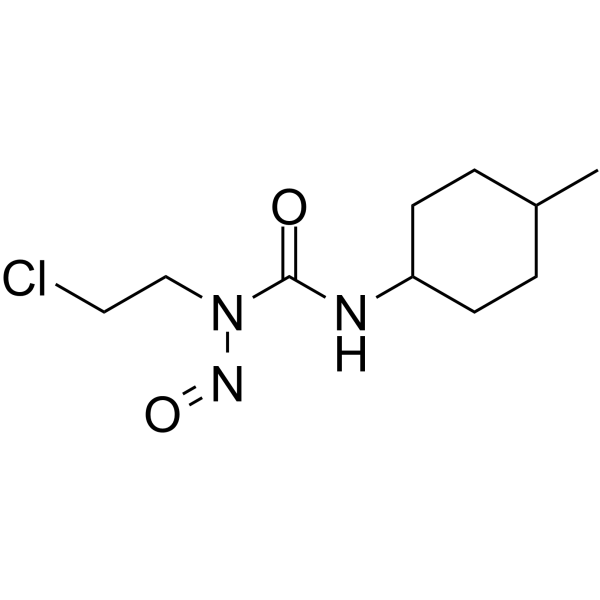
Semustine is an orally active, blood-brain barrier permeable antitumor alkylating agent with a binding affinity of 1.53 × 10 3 M -1 for guanine and thymine residues in bovine DNA. Semustine undergoes major groove-directed alkylation at guanine residues to form O6-chloroethylguanine and N1-O6-ethanoguanine adducts, and generates dG-dC interstrand crosslinks. Semustine induces partial B- to C-type transition of DNA, base stacking and helical structure distortion, mild dehydration, as well as partial DNA double-strand unwinding. Semustine can be used in research related to Lewis lung cancer, leukemia, Hodgkin's lymphoma, malignant melanoma, glioma, and diffuse large B-cell lymphoma .
loading...
    loading...
1
1 Cited Publications
Cat. No.: HY-W854385A
Synonyms: SLeA sodium
Research Areas:  

Cancer

Sialyl Lewis A (SLeA) sodium is a tumor-associated carbohydrate antigen, also known as carbohydrate antigen 19-9 (CA19-9), that binds to E-selectin (ELAM-1) and selectins to mediate cell-endothelium adhesion. Sialyl Lewis A sodium promotes cancer cell-vascular endothelium adhesion, and its surface presence correlates with increased tumorigenicity and invasiveness in cancer cells. Sialyl Lewis A sodium shows elevated expression in human adenocarcinomas of the colon, pancreas, and stomach, with expression levels linked to tumor progression and poor prognosis in colorectal and gastric carcinomas. Sialyl Lewis A sodium can be used for the research of cancers, such as colon, pancreas, stomach, and squamous lung cancer .
loading...
    loading...
Cat. No.: HY-P1189
CAS No.: 154303-05-6
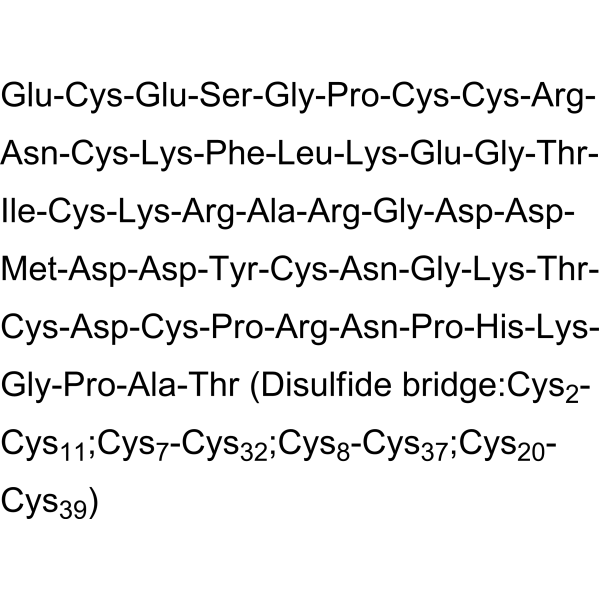
Echistatin is a naturally derived RGD-containing snake venom peptide. Echistatin exhibits an IC50 of 0.6 nM against mouse αvβ3 integrin, and acts as an antagonist against αvβ3, αIIbβ3, α5β1 integrins, pp125 FAK and paxillin. Echistatin reduces the phosphorylation of pp125 FAK and paxillin, inhibits the autophosphorylation and kinase activity of pp125 FAK, and weakens its binding to pp60src and paxillin. Echistatin disrupts the actin cytoskeleton and focal adhesions, induces melanoma cell detachment from fibronectin, and regulates cell adhesion and motility. Echistatin inhibits osteoclast maturation and migration, bone resorption, platelet aggregation, bone loss, as well as adhesion and metastasis of Lewis lung cancer cells; it also increases the number of osteoclasts and bone coverage area in mice with secondary hyperparathyroidism. Echistatin can be used in research related to melanoma, lung cancer and secondary hyperparathyroidism .
loading...
    loading...
Cat. No.: HY-P1189A
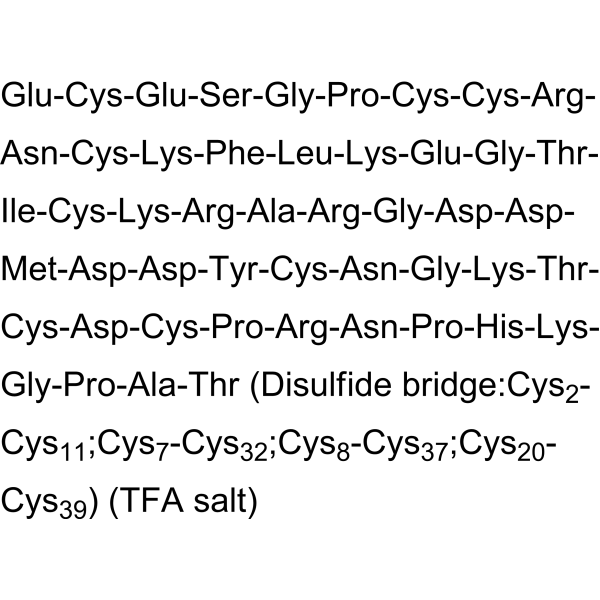
Echistatin TFA is a naturally derived RGD-containing snake venom peptide. Echistatin TFA exhibits an IC50 of 0.6 nM against mouse αvβ3 integrin, and acts as an antagonist against αvβ3, αIIbβ3, α5β1 integrins, pp125 FAK and paxillin. Echistatin TFA reduces the phosphorylation of pp125 FAK and paxillin, inhibits the autophosphorylation and kinase activity of pp125 FAK, and weakens its binding to pp60src and paxillin. Echistatin TFA disrupts the actin cytoskeleton and focal adhesions, induces melanoma cell detachment from fibronectin, and regulates cell adhesion and motility. Echistatin TFA inhibits osteoclast maturation and migration, bone resorption, platelet aggregation, bone loss, as well as adhesion and metastasis of Lewis lung cancer cells; it also increases the number of osteoclasts and bone coverage area in mice with secondary hyperparathyroidism. Echistatin TFA can be used in research related to melanoma, lung cancer and secondary hyperparathyroidism .
loading...
    loading...
Cat. No.: HY-15266
CAS No.: 112827-99-3
Synonyms: PRI 2202; Impurity D of Calcipotriol
Target:  

Drug Derivative VD/VDR

Research Areas:  

Cancer

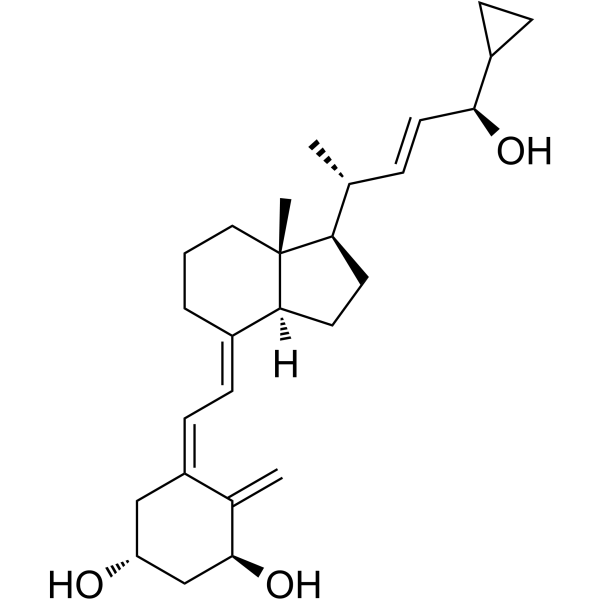
24R-Calcipotriol (PRI 2202; Impurity D of Calcipotriol), an isomer of Calcipotriol (HY-10001), is a synthetic vitamin D analog. 24R-Calcipotriol exhibits synergistic antiproliferative effects with low-dose cytostatics in in vitro. 24R-Calcipotriol produces tumor growth inhibition when combined with Cyclophosphamide (HY-17420) and Cisplatin (HY-17394) in mice models. 24R-Calcipotriol can increase serum calcium levels and reduce blood leukocyte counts . 24R-Calcipotriol can be used for the research of mammary cancer and Lewis lung cancer .
loading...
    loading...
Cat. No.: HY-W854385
CAS No.: 92448-22-1
Synonyms: SLeA
Research Areas:  

Cancer

Sialyl Lewis A (SLeA) is a tumor-associated carbohydrate antigen, also known as carbohydrate antigen 19-9 (CA19-9), that binds to E-selectin (ELAM-1) and selectins to mediate cell-endothelium adhesion. Sialyl Lewis A promotes cancer cell-vascular endothelium adhesion, and its surface presence correlates with increased tumorigenicity and invasiveness in cancer cells. Sialyl Lewis A shows elevated expression in human adenocarcinomas of the colon, pancreas, and stomach, with expression levels linked to tumor progression and poor prognosis in colorectal and gastric carcinomas. Sialyl Lewis A can be used for the research of cancers, such as colon, pancreas, stomach, and squamous lung cancer .
loading...
    loading...
Cat. No.: HY-162863
CAS No.: 2215927-89-0
Target:  

Apoptosis

Research Areas:  

Cancer

ERK-MYD88 interaction inhibitor 1 is an ERK-MYD88 interaction inhibitor. ERK-MYD88 interaction inhibitor 1 can induce an HRI-mediated integrated stress response (ISR), leading to cancer cell-specific immunogenic cell apoptosis (apoptosis). ERK-MYD88 interaction inhibitor 1 can induce anti-tumor T cell responses in Lewis lung cancer mice, exhibiting anti-tumor activity .
loading...
    loading...
Cat. No.: HY-125664
CAS No.: 480439-84-7
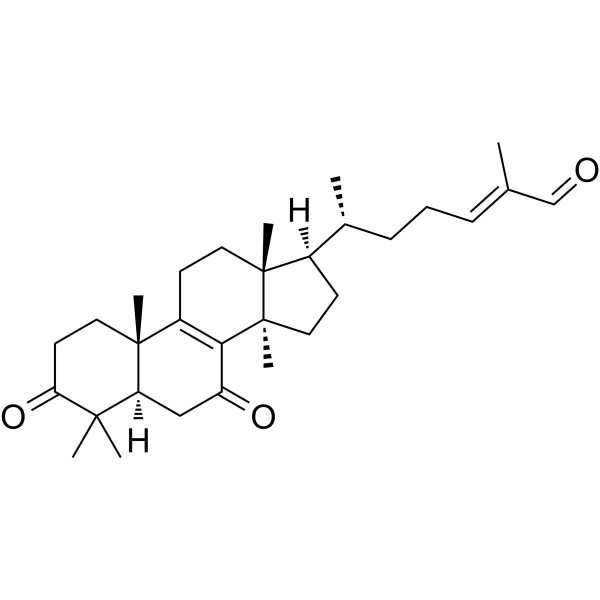
Lucialdehyde B is a tetracyclic triterpene isolated from the substrates of Ganoderma lucidum with antiviral and cytotoxic activities. Lucialdehyde B has cytotoxic effects against Lewis lung cancer (LLC), T-47D, Sarcoma 180 and Meth-A tumor cell lines .
loading...
    loading...
Cat. No.: HY-175369
PI3Kδ-IN-25 is an orally active selective PI3Kδ inhibitor (IC50 = 2.1 nM). PI3Kδ-IN-25 has IC50s of 272, 285, and 1171 nM for PI3Kα, PI3Kγ, and PI3Kβ, respectively. PI3Kδ-IN-25 inhibits AKT Ser473 phosphorylation, suppresses Treg cell proliferation, and downregulates PD-L1 expression in B16F10 cells. PI3Kδ-IN-25 exhibits anticancer effects in B16F10 melanoma and Lewis lung cancer mouse models by reducing tumor-infiltrating Treg cells and enhancing immune responses. PI3Kδ-IN-25 is potentially useful in the study of melanoma, lung cancer, and other cancers .
loading...
    loading...
Cat. No.: HY-W110138
CAS No.: 23833-97-8
Research Areas:  

Cancer

Chloroxoquinoline is an anticancer agent. Chloroxoquinoline damages the DNA templates of cancer cells, inducing DNA breaks and cell death, and inhibits cell invasion via down-regulating Rho/Rho kinase signaling pathway. Chloroxoquinoline enhances the radiation sensitivity of Lewis lung cancer cells and xenograft tumors in tumor-bearing mouse models but decreases efficacy after long term exposure in rat models by auto-induction effects on CYP1A and CYP3A. Chloroxoquinoline has a broad-spectrum anticancer activity, such as non-small-cell lung carcinoma (NSCLC), breast cancer and gastric cancer .
loading...
    loading...
Cat. No.: HY-120638
CAS No.: 406913-72-2
Target:  

Topoisomerase

Research Areas:  

Cancer

BMS-250749 is a topoisomerase I (Top I) inhibitor of the fluoroglycosyl-3,9-difluoroindolecarbazole class. BMS-250749 exhibits potent cytotoxicity and selectivity, and shows curative antitumor activity against Lewis lung cancer. BMS-250749 exhibits broad-spectrum antitumor activity superior to CPT-11 in certain preclinical xenograft models. .
loading...
    loading...
Cat. No.: HY-119110
CAS No.: 769970-91-4
Target:  

MMP

Research Areas:  

Cancer

LY52 is an MMP-2 and MMP-9 inhibitor. LY52 can significantly block the proteolytic activity of gelatinases, reducing the expression of MMP-2 and MMP-9 in SKOV3 cells, thereby inhibiting cell invasion. LY52 can also suppress the pulmonary metastasis of Lewis lung carcinoma cells in mice. LY52 may be used in cancer research .
loading...
    loading...
Cat. No.: HY-P991458

Research Areas:  

Cancer

hu3S193 is a human IgG monoclonal antibody (mAb) targeting Lewis Y. hu3S193 has excellent immune effector function (complement-dependent cytotoxicity) (IC50: 1.0 μg/ml) and antibody-dependent cellular cytotoxicity (IC50: 5.0 μg/ml). hu3S193 can be used in small cell lung cancer (SCLC) research. Recommended isotype control: Human IgG1 kappa, Isotype Control (HY-P99001) .
loading...
    loading...
Cat. No.: HY-119169
CAS No.: 84697-22-3
Synonyms: R 46846
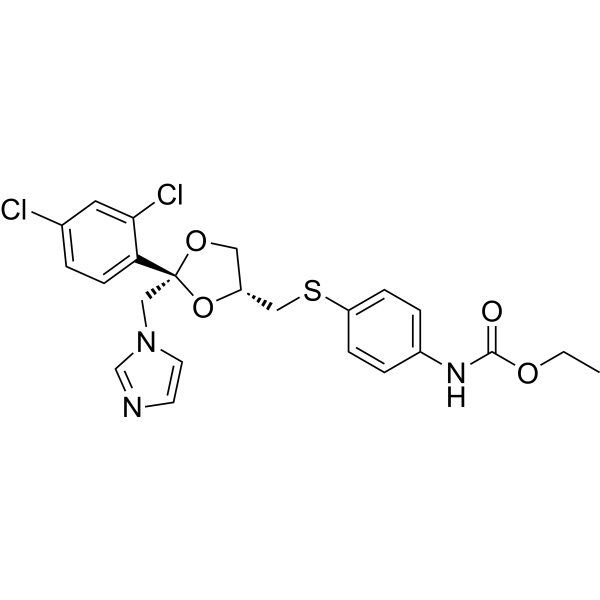
Tubulozole (R 46846) is an orally active inhibitor of tubulin polymerization with an ID50 of 0.34 μM. Tubulozole induces activation of the Chk1 kinase and phosphorylation of ERK1/2, which is required for microtubule formation. Tubulozole arrests Mitosis at the metaphase stage. Tubulozole causes cells to accumulate in the radiosensitive mitotic phase of the cell cycle. Tubulozole exerts anticancer activity against colon cancer. Tubulozole produces a radiosensitizing effect in mouse tumor models and enhances the tumor growth delay effect when combined with γ-ray irradiation. Tubulozole is used in studies related to colon cancer, fascioliasis, MO4 fibrosarcoma, and Lewis lung carcinoma .
loading...
    loading...
Cat. No.: HY-101551
CAS No.: 103461-20-7
Synonyms: SUN 4599
Target:  

Drug Derivative

Research Areas:  

Cancer

Ellipravin (SUN 4599) is a glycoside. Ellipravin has anticancer activity against Lewis lung cancer .
loading...
    loading...
Cat. No.: HY-N21762
CAS No.: 1280717-80-7
Petatewalide A is a bakkenolide-type sesquiterpene. Petatewalide A is isolated from Petasites tatewakianus. Petatewalide A inhibits NO production. Petatewalide A exhibits anticancer activity against cervical cancer, breast cancer, and Lewis lung cancer .
loading...
    loading...
Cat. No.: HY-182415
CAS No.: 77749-49-6
Research Areas:  

Cardiovascular Disease Cancer

RX-RA-69 is an orally active platelet phosphodiesterase (PDE) inhibitor with a IC50 of 1 nM. RX-RA-69 elevates cAMP levels in platelets, exerts anti-aggregatory effects, and inhibits the formation of coronary platelet thrombi. RX-RA-69 exhibits anti-metastatic activity in a mouse Lewis lung cancer model. RX-RA-69 can be used in research related to coronary platelet thrombi and Lewis lung cancer .
loading...
    loading...
Cat. No.: HY-182071
CAS No.: 2349329-01-5
Research Areas:  

Cancer

MG16 is a prodrug of 10-Methoxycamptothecin (HY-N0446). MG16 downregulates CDK6 and upregulates ASK1. MG16 induces cell cycle arrest and Apoptosis. MG16 exhibits anticancer activity against Lewis lung carcinoma, small cell lung cancer, and non-small cell lung cancer .
loading...
    loading...
Cat. No.: HY-101145
CAS No.: 1001478-90-5
Research Areas:  

Cancer

CK37 is a competitive choline kinase-α inhibitor. CK37 inhibits purified recombinant human choline kinase-α activity. CK37 suppresses MAPK and PI3K/AKT signaling, disrupts actin cytoskeletal organization. CK37 diminishs activating phosphorylations of ERK. CK37 exhibits anticancer activity against cervical cancer, melanoma, Lewis lung carcinoma, lung adenocarcinoma, breast cancer, and leukemia .
loading...
    loading...
Cat. No.: HY-106289
CAS No.: 105026-50-4
Target:  

Antibiotic

Research Areas:  

Cancer

Antibiotic MX 2 is an orally active antibiotic that can cross the blood-brain barrier. Antibiotic MX 2 inhibits the growth of drug-sensitive and multidrug-resistant tumor cells, prolongs the survival of tumor-bearing mice, induces single-strand and double-strand DNA breaks, suppresses colony formation of fresh human-derived tumor cells, and overcomes multidrug resistance mediated by P-glycoprotein. Antibiotic MX 2 can be used in research related to L1210 leukemia, Lewis lung cancer, colon adenocarcinoma type 26 and type 38, gastric adenocarcinoma, non-small cell lung cancer, mammary adenocarcinoma, drug-resistant P388 leukemia, renal cancer, melanoma, ovarian cancer, breast cancer, small cell lung cancer, and colorectal cancer .
loading...
    loading...

