1. Search Result
Search Result
Pathways Recommended: Antibody-drug Conjugate/ADC Related
Results for "

lipid conjugate

" in MedChemExpress (MCE) Product Catalog:

112

Inhibitors & Agonists

1

Bibliotecas de Screening

3

Fluorescent Dyes

63

Biochemical Assay Reagents

3

Peptides

17

Natural
Products

2

Isotope-Labeled Compounds

2

Click Chemistry

49

Oligonucleotides

1

GMP Molecules

Cat. No. Nombre del producto Target Áreas de investigación Chemical Structure
  • HY-138300
    ALC-0159
    Maximum Cited Publications
    15 Publications Verification

    Liposome Inflammation/Immunology
    ALC-0159, a polyethylene glycol (PEG) lipid conjugate, could be used as vaccine excipient .
    ALC-0159
  • HY-168374
    DSPE-PEG2000-Mannose
    1 Publications Verification

    Biochemical Assay Reagents Liposome Small Interfering RNA (siRNA) Cancer
    DSPE-PEG 2000-Mannose is a mannose-containing lipid. DSPE-PEG 2000-Mannose is used to prepare mannose-conjugated Liposome (Man-lipo) for siRNA delivery. Mannose-modified liposomes encapsulating IDO siRNA (Man-lipo-siIDO) preferentially knock down IDO expression in the draining lymph nodes and spleens of melanoma-bearing mice. Man-lipo-siIDO delays the onset time of melanoma and reduces tumor volume .
    DSPE-PEG2000-Mannose
  • HY-14532
    Brincidofovir
    5 Publications Verification

    CMX001; HDP-CDV

    CMV HSV Orthopoxvirus Infection
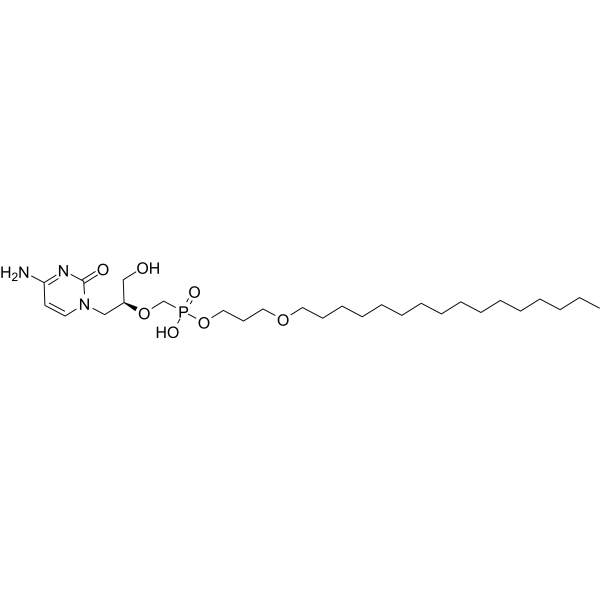
    Brincidofovir (CMX001), the lipid-conjugated prodrug of Cidofovir (HY-17438), is an orally available, long-acting antiviral. Brincidofovir shows activity against a broad spectrum of DNA viruses including cytomegalovirus (CMV), adenovirus (ADV), varicella zoster virus, herpes simplex virus, polyomaviruses, papillomaviruses, poxviruses, and mixed double-stranded DNA virus infections. Brincidofovir, an oral antiviral in late stage development, has proven effective against orthopoxviruses in vitro and in vivo .
    Brincidofovir
  • HY-144006

    14:0 PEG2000 PE ammonium; 1,2-Dimyristoyl-sn-glycero-3-phosphoethanolamine-N-[methoxy(polyethylene glycol)-2000] ammonium

    Liposome Others
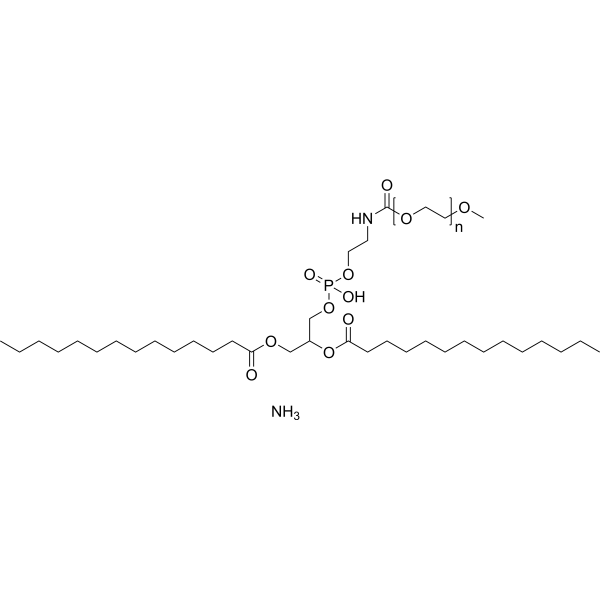
    DMPE-PEG2000 ammonium (14:0 PEG2000 PE ammonium) is a PEG-phospholipid conjugate to prepare nanostructured lipid carrier .
    DMPE-PEG2000 ammonium
  • HY-112760
    18:0 mPEG2000 PE sodium
    1 Publications Verification

    DSPE-mPEG2000 sodium; 1,2-Distearoyl-sn-glycero-3-phosphoethanolamine-N-[methoxy(polyethylene glycol)-2000] sodium

    Liposome Others
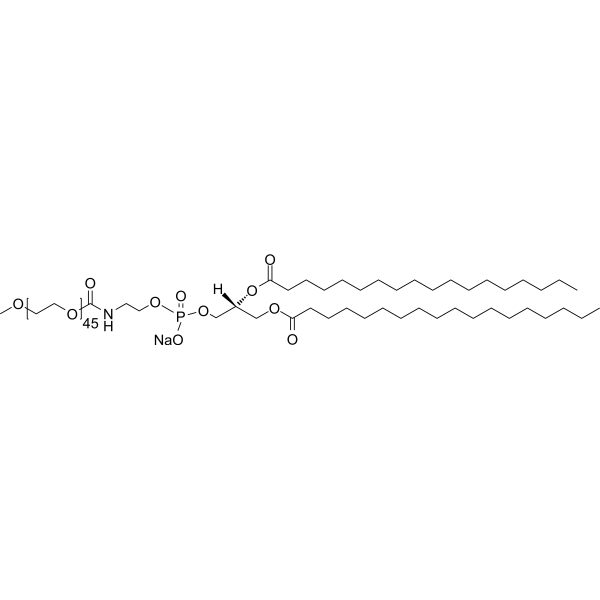
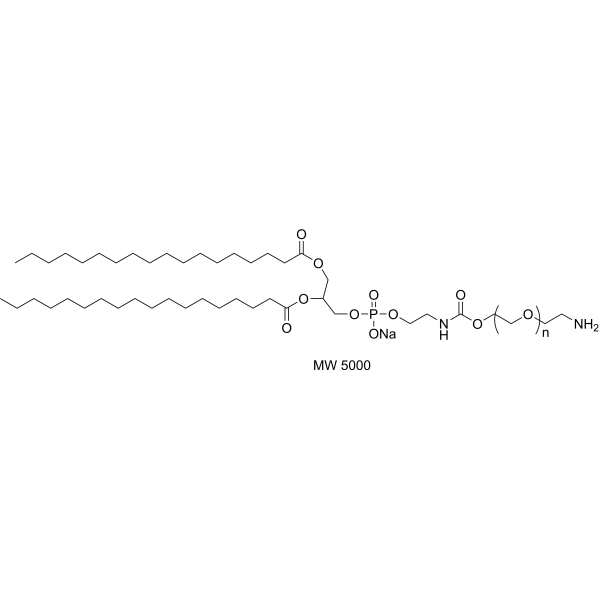
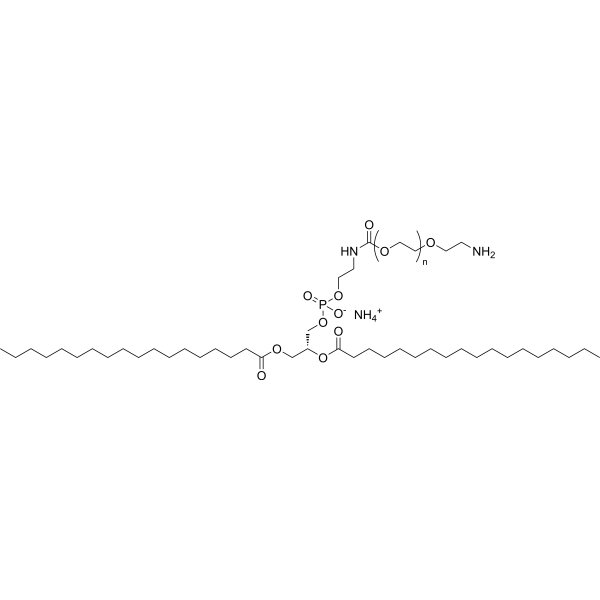
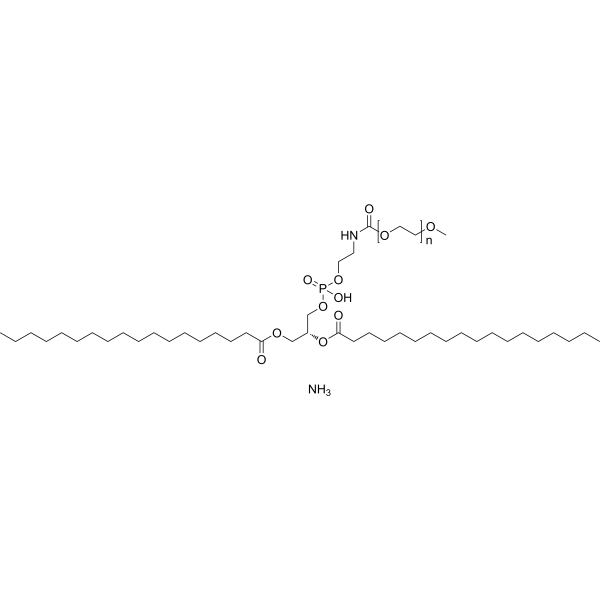
    18:0 mPEG2000 PE (DSPE-mPEG2000) sodium is a conjugate of phospholipid and polyethylene glycol, and it can serve as an important PEG lipid component in lipid nanoparticles (LNPs). 18:0 mPEG2000 PE sodium can be used in the research of gene transfection, drug carriers and drug delivery .
    18:0 mPEG2000 PE sodium
  • HY-N0729F

    Fluorescent Dye Metabolic Disease
    BODIPY-Linoleic acid is a conjugate of the BODIPY fluorophore and Linoleic acid (HY-N0729) (C18:2) and is a lipid metabolism probe.
    BODIPY-Linoleic acid
  • HY-133890
    Tauro-α-muricholic acid
    2 Publications Verification

    T-α-MCA

    Endogenous Metabolite FXR Neurological Disease Metabolic Disease
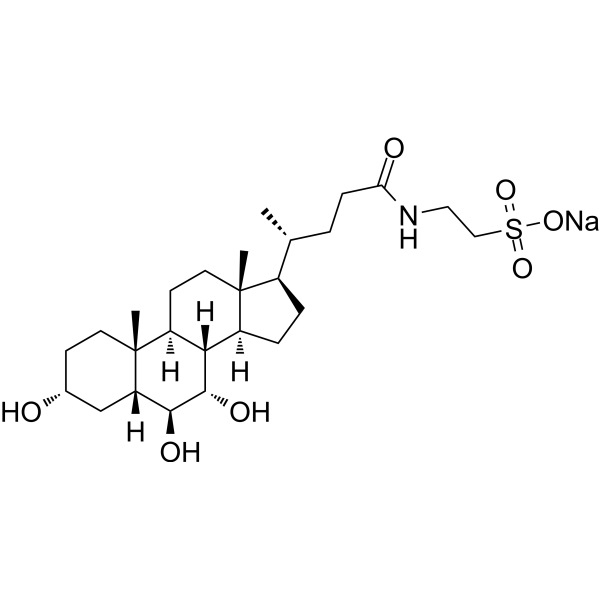
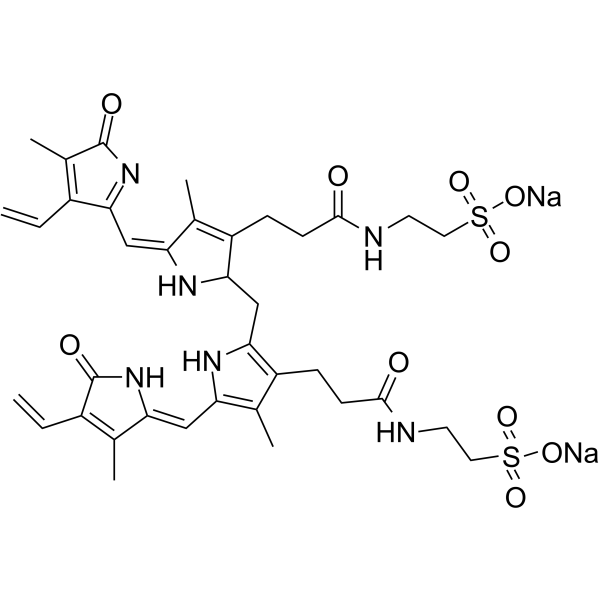
    Tauro-α-muricholic acid (T-α-MCA) is a Taurine (HY-B0351)-conjugated primary Bile acid. Tauro-α-muricholic acid is a FXR antagonist with an IC50 of  28 µM. Tauro-α-muricholic acid attenuates other bile acid-activated FXR signaling. Tauro-α-muricholic acid can be used in the research of Alzheimer's disease, glucose metabolism, and lipid metabolism .
    Tauro-α-muricholic acid
  • HY-144012

    16:0 PEG2000 PE ammonium; 1,2-Dipalmitoyl-sn-glycero-3-phosphoethanolamine-N-[methoxy(polyethylene glycol)-2000] ammonium

    Liposome Others
    DPPE-PEG2000 ammonium (16:0 PEG5000 PE) is a polymer-lipid conjugate and LipoParticle stabilizer with a PEG chain of 5,000 g/mol molecular weight attached to its polar head, and it can be internalized by biological membranes. DPPE-PEG2000 ammonium enables LipoParticle to maintain colloidal stability after 20-fold dilution in PBS or cell culture medium, and prevents aggregate formation during lyophilization and rehydration. DPPE-PEG2000 ammonium helps enhance the non-cytotoxic property of LipoParticle formulations against human osteoblasts. DPPE-PEG2000 ammonium serves as a PEG lipid functional end group for synthesizing liposomes (LPs), is used in the design of conjugated polymer nanoparticles, and applies to research related to bone and joint infections .
    DPPE-PEG2000 ammonium
  • HY-124370

    9Z,11E-CLA; Methyl 9(Z),11(E)-octadecadienoate; (9Z,11E)-SFE 19:2

    Endogenous Metabolite Cardiovascular Disease Cancer
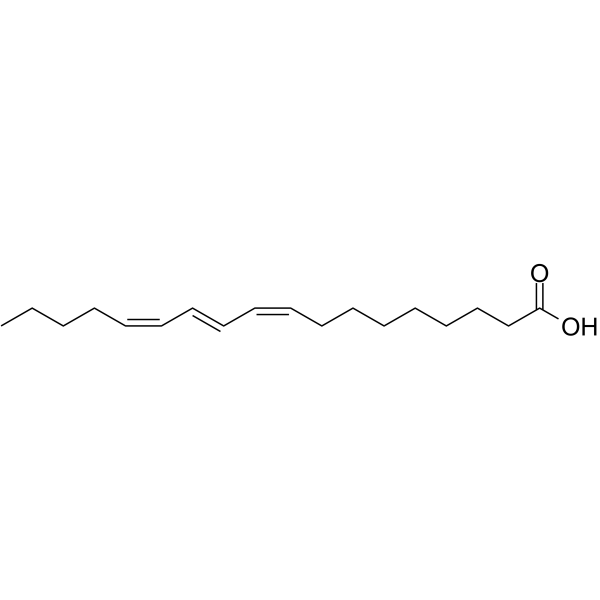
    9 (Z),11 (E)-Conjugated linoleic acid methyl ester (9Z,11E-CLA; Methyl 9 (Z),11 (E)-octadecadienoate; (9Z,11E)-SFE 19:2) is an isomer of Linoleic acid (HY-N0729), and is a conjugated linoleic acid mainly found in meat and dairy products. Conjugated linoleic acid is a bioactive fatty acid that improves body composition, enhances immune system function, and exhibits anti-cancer and anti-atherosclerotic effects .
    9(Z),11(E)-Conjugated linoleic acid methyl ester
  • HY-144012H

    16:0 PEG5000 PE; 1,2-Dipalmitoyl-sn-glycero-3-phosphoethanolamine-N-[methoxy(polyethylene glycol)-5000] ammonium

    Liposome Others
    DPPE-PEG5000 (16:0 PEG5000 PE) is a polymer-lipid conjugate and LipoParticle stabilizer with a PEG chain of 5,000 g/mol molecular weight attached to its polar head, and it can be internalized by biological membranes. DPPE-PEG5000 enables LipoParticle to maintain colloidal stability after 20-fold dilution in PBS or cell culture medium, and prevents aggregate formation during lyophilization and rehydration. DPPE-PEG5000 helps enhance the non-cytotoxic property of LipoParticle formulations against human osteoblasts. DPPE-PEG5000 serves as a PEG lipid functional end group for synthesizing liposomes (LPs), is used in the design of conjugated polymer nanoparticles, and applies to research related to bone and joint infections .
    DPPE-PEG5000
  • HY-144012A

    16:0 PEG350 PE; 1,2-Dipalmitoyl-sn-glycero-3-phosphoethanolamine-N-[methoxy(polyethylene glycol)-350] ammonium

    Liposome CD1 Others
    DPPE-PEG350 is a CD1d-dependent lipid antagonist thus blocking the ERK phosphorylation pathway in iNKT cells . DPPE-PEG350 is a PEG lipid functional end group used in the synthesis of liposomes (LPs) for the design of conjugated polymer nanoparticles.
    DPPE-PEG350
  • HY-W440915

    Liposome Inflammation/Immunology
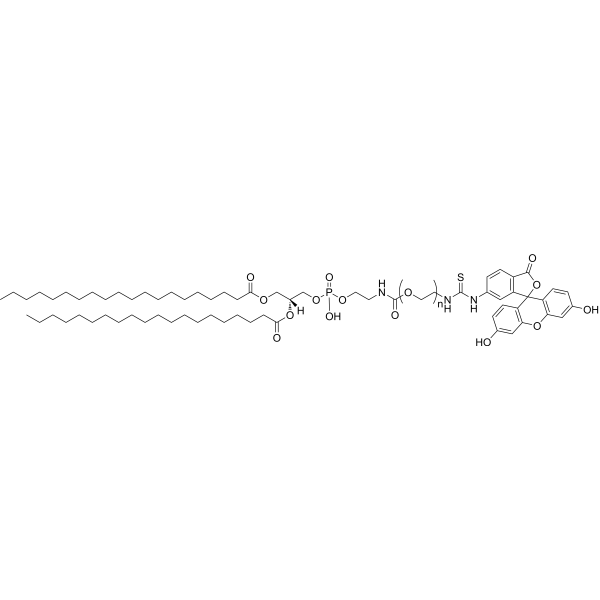
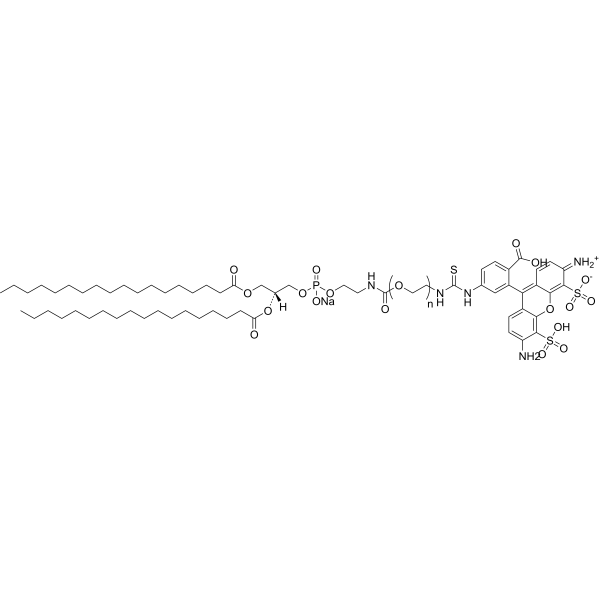
    DSPE-PEG2000-FITC is a PEG lipid conjugated with fluorescein. FITC is a green dye with a peak absorption at 494 nm and a maximum emission at 520 nm, which is used for staining biological samples or nanoparticles. DSPE-PEG2000-FITC spontaneously forms lipid bilayers or micelles in water and can be used to prepare liposomes for delivering substances such as mRNA vaccines .
    DSPE-PEG2000-FITC
  • HY-133890A
    Tauro-α-muricholic acid sodium
    2 Publications Verification

    T-α-MCA sodium

    Endogenous Metabolite FXR Neurological Disease Metabolic Disease
    Tauro-α-muricholic acid sodium (T-α-MCA sodium) is a Taurine (HY-B0351)-conjugated primary Bile acid. Tauro-α-muricholic acid sodium is a FXR antagonist with an IC50 of  28 µM. Tauro-α-muricholic acid sodium attenuates other bile acid-activated FXR signaling. Tauro-α-muricholic acid sodium can be used in the research of Alzheimer's disease, glucose metabolism, and lipid metabolism .
    Tauro-α-muricholic acid sodium
  • HY-14941
    Elacytarabine
    1 Publications Verification

    CP 4055

    Nucleoside Antimetabolite/Analog Cancer
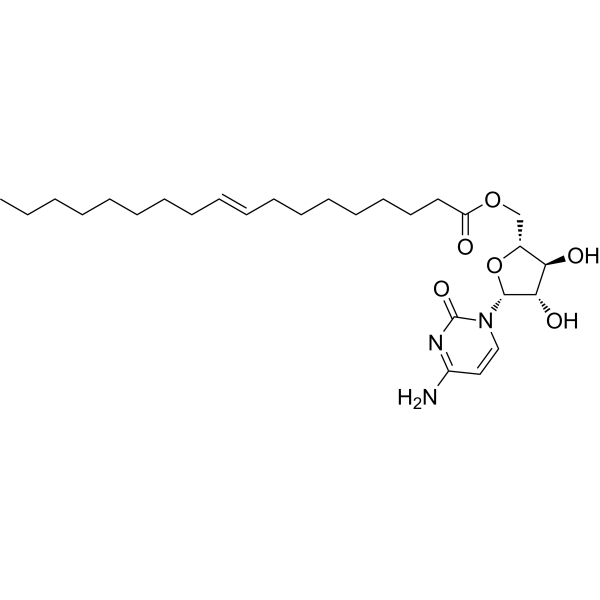
    Elacytarabine (CP 4055) is a lipid-conjugated derivative of the nucleoside analog cytarabine. Elacytarabine (CP 4055) is an antineoplastic agent with cytotoxicity in solid tumors.
    Elacytarabine
  • HY-172699

    Liposome LDLR Cancer
    DSPE-PEG2000-ANG is a conjugate of DSPE-PEG2000-MAL and Angiopep-2. Angiopep-2 is a peptide ligand that targets LRP-1. DSPE-PEG2000-ANG is used to synthesize gadolinium-boron bifunctionalized lipid nanoparticles BPA-F&DOTA-Gd@LIPO-ANG with blood-brain barrier and glioma targeting properties .
    DSPE-PEG2000-ANG
  • HY-W440908

    Liposome Others
    DSPE-PEG2000-Cy3 is a PEG lipid conjugated with a fluorophore. The Cy3 fluorophore is commonly used in applications such as immunolabeling, nucleic acid labeling, fluorescence microscopy and flow cytometry. The absorption wavelength of the Cy3 fluorophore peaks at 548-552 nm, while its emission wavelength reaches a maximum at 562-570 nm. DSPE-PEG2000-Cy3 can be used in research areas such as the preparation of nanoparticles and drug delivery .
    DSPE-PEG2000-Cy3
  • HY-138300GL

    Liposome Inflammation/Immunology
    ALC-0159 (GMP Like) is the GMP Like class ALC-0159 (HY-138300). GMP small molecules works appropriately as an auxiliary reagent for cell therapy manufacture. ALC-0159, a polyethylene glycol (PEG) lipid conjugate, could be used as vaccine excipient .
    ALC-0159 (GMP Like)
  • HY-160269

    Fluorescent Dye Others
    DSPE-PEG2000-Fluor 488 is a PEG-dye-lipid conjugate consisting of a DSPE phospholipid and a Fluor 488 dye. DSPE is a phospholipid that spontaneously forms micelles in a water medium, and Fluor 488 is a cyanine dye that is widely used in fluorescence microscopy. Fluor 488 has excitation and emission maxima at 499 nm and 520 nm. Polyethylene glycol lipids are commonly used for the stabilization of lipid nanoparticles .
    DSPE-PEG2000-Fluor 488
  • HY-N16321

    Biochemical Assay Reagents Others
    C18:0 DG-PEG2K-triGalNAc is a functionalized PEG lipid that consists of a C18:0 DG unit conjugated to a triGalNAc. C18:0 DG-PEG2K-triGalNAc can be used to prepare lipid nanoparticles for drug delivery.
    C18:0 DG-PEG2K-triGalNAc
  • HY-153137

    304O13

    Liposome Cancer
    Tri-N-tridecyl 3-(ethyl(methyl)amino)propanoate is a biodegradable lipid prepared by the conjugate addition of alkylamines to acrylates. Tri-N-tridecyl 3-(ethyl(methyl)amino)propanoate can be used in various drug delivery systems to deliver polynucleotides, siRNA for example .
    Tri-N-tridecyl 3-(ethyl(methyl)amino)propanoate
  • HY-160578

    N-Cholesteryl succinyl glucosamine

    Liposome Others
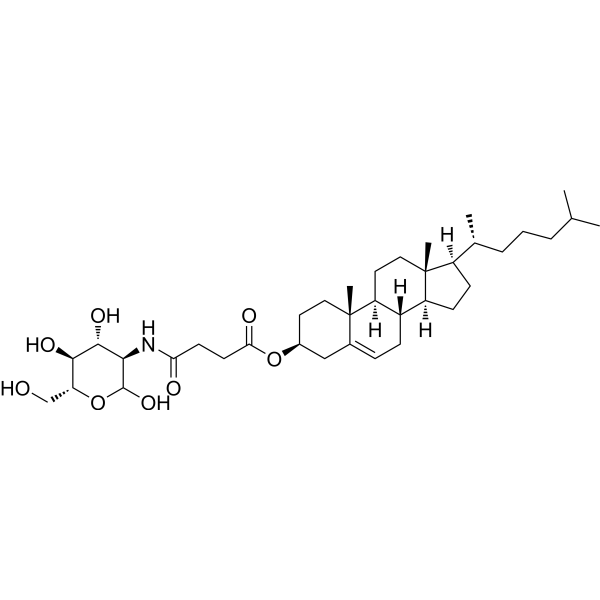
    Glucosamine Cholesterol (N-Cholesteryl succinyl glucosamine) is a glucosamine-based lipid conjugate, and can be used in the formation of lipid nanoparticles (LNPs) .
    Glucosamine Cholesterol
  • HY-N15976

    Biochemical Assay Reagents Others
    DMG-pSar25 Maleimide is a lipid conjugated to DMG, Maleimide and pSar25 polymer. DMG-pSar25 Maleimide can be used to prepare lipid nanoparticles for drug delivery.
    DMG-pSar25 Maleimide
  • HY-144013B

    DSPE-mPEG550 ammonium; 1,2-Distearoyl-sn-glycero-3-phosphoethanolamine-N-[methoxy(polyethylene glycol)-550] ammonium

    Biochemical Assay Reagents Liposome Others
    18:0 mPEG550 PE (ammonium) is a PEG lipid functional end group used in the synthesis of liposomes (LPs) for the design of conjugated polymeric nanoparticles. Through biotin modification and carboxyl terminus, lipid nanoparticles (LNPs) further coupling with other biomolecules can be achieved. Functionalized nanoparticles can be used for targeted labeling of specific cellular proteins. With streptavidin as a linker, biotinylated PEG lipid-conjugated polymer nanoparticles are able to bind to biotinylated antibodies on cell surface receptors, yielding the utility of fluorescence-based imaging and sensing.
    18:0 mPEG550 PE ammonium
  • HY-144013A

    DSPE-mPEG350 ammonium; 1,2-Distearoyl-sn-glycero-3-phosphoethanolamine-N-[methoxy(polyethylene glycol)-350] ammonium

    Liposome Others
    18:0 mPEG350 PE (ammonium) is a PEG lipid functional end group used in the synthesis of liposomes (LPs) for the design of conjugated polymer nanoparticles. Through biotin modification and carboxyl terminus, lipid nanoparticles (LNPs) further coupling with other biomolecules can be achieved. Functionalized nanoparticles can be used for targeted labeling of specific cellular proteins. With streptavidin as a linker, biotinylated PEG lipid-conjugated polymer nanoparticles are able to bind to biotinylated antibodies on cell surface receptors, yielding the utility of fluorescence-based imaging and sensing.
    18:0 mPEG350 PE ammonium
  • HY-144013D

    DSPE-mPEG1000 ammonium; 1,2-Distearoyl-sn-glycero-3-phosphoethanolamine-N-[methoxy(polyethylene glycol)-1000] ammonium

    Liposome Others
    18:0 mPEG1000 PE (ammonium) is a PEG lipid functional end group used in the synthesis of liposomes (LPs) for the design of conjugated polymeric nanoparticles. Through biotin modification and carboxyl terminus, lipid nanoparticles (LNPs) further coupling with other biomolecules can be achieved. Functionalized nanoparticles can be used for targeted labeling of specific cellular proteins. With streptavidin as a linker, biotinylated PEG lipid-conjugated polymer nanoparticles are able to bind to biotinylated antibodies on cell surface receptors, yielding the utility of fluorescence-based imaging and sensing.
    18:0 mPEG1000 PE ammonium
  • HY-144013E

    DSPE-mPEG3000 ammonium; 1,2-Distearoyl-sn-glycero-3-phosphoethanolamine-N-[methoxy(polyethylene glycol)-3000] ammonium

    Liposome Others
    18:0 mPEG3000 PE (ammonium) is a PEG lipid functional end group used in the synthesis of liposomes (LPs) for the design of conjugated polymeric nanoparticles. Through biotin modification and carboxyl terminus, lipid nanoparticles (LNPs) further coupling with other biomolecules can be achieved. Functionalized nanoparticles can be used for targeted labeling of specific cellular proteins. With streptavidin as a linker, biotinylated PEG lipid-conjugated polymer nanoparticles are able to bind to biotinylated antibodies on cell surface receptors, yielding the utility of fluorescence-based imaging and sensing.
    18:0 mPEG3000 PE ammonium
  • HY-144013C

    DSPE-mPEG750 ammonium; 1,2-Distearoyl-sn-glycero-3-phosphoethanolamine-N-[methoxy(polyethylene glycol)-750] ammonium

    Biochemical Assay Reagents Liposome Others
    18:0 mPEG750 PE (ammonium) is a PEG lipid functional end group used in the synthesis of liposomes (LPs) for the design of conjugated polymeric nanoparticles. Through biotin modification and carboxyl terminus, lipid nanoparticles (LNPs) further coupling with other biomolecules can be achieved. Functionalized nanoparticles can be used for targeted labeling of specific cellular proteins. With streptavidin as a linker, biotinylated PEG lipid-conjugated polymer nanoparticles are able to bind to biotinylated antibodies on cell surface receptors, yielding the utility of fluorescence-based imaging and sensing.
    18:0 mPEG750 PE ammonium
  • HY-160280

    Liposome Fluorescent Dye Others
    DOPE-PEG2000-Fluor 647 is a PEG-lipid-dye conjugate. composed of a DOPE phospholipid and a Fluor 647 dye .
    DOPE-PEG2000-Fluor 647
  • HY-155934

    DOPE-PEG5000 ammonium; 1,2-Dioleoyl-sn-glycero-3-phosphoethanolamine-N-[methoxy(polyethylene glycol)-5000] ammonium

    Liposome Others
    18:1 PEG5000 PE ammonium (DOPE-PEG5000 ammonium) is a PEG lipid functional end group used in the synthesis of liposomes (LPs) for the design of conjugated polymer nanoparticles. Through biotin modification and carboxyl terminus, lipid nanoparticles (LNPs) further coupling with other biomolecules can be achieved. Functionalized nanoparticles can be used for targeted labeling of specific cellular proteins. With streptavidin as a linker, biotinylated PEG lipid-conjugated polymer nanoparticles are able to bind to biotinylated antibodies on cell surface receptors, yielding the utility of fluorescence-based imaging and sensing.
    18:1 PEG5000 PE ammonium
  • HY-155926

    14:0 PEG750 PE ammonium; 1,2-Dimyristoyl-sn-glycero-3-phosphoethanolamine-N-[methoxy(polyethylene glycol)-750] ammonium

    Liposome Others
    DMPE-PEG750 ammonium (14:0 PEG750 PE ammonium) is a PEG lipid functional end group used in the synthesis of liposomes (LPs) for the design of conjugated polymeric nanoparticles. Through biotin modification and carboxyl terminus, lipid nanoparticles (LNPs) further coupling with other biomolecules can be achieved. Functionalized nanoparticles can be used for targeted labeling of specific cellular proteins. With streptavidin as a linker, biotinylated PEG lipid-conjugated polymer nanoparticles are able to bind to biotinylated antibodies on cell surface receptors, yielding the utility of fluorescence-based imaging and sensing.
    DMPE-PEG750 ammonium
  • HY-155924

    14:0 PEG350 PE ammonium; 1,2-Dimyristoyl-sn-glycero-3-phosphoethanolamine-N-[methoxy(polyethylene glycol)-350] ammonium

    Liposome Others
    DMPE-PEG350 ammonium (14:0 PEG350 PE ammonium) is a PEG lipid functional end group used in the synthesis of liposomes (LPs) for the design of conjugated polymer nanoparticles. Through biotin modification and carboxyl terminus, lipid nanoparticles (LNPs) further coupling with other biomolecules can be achieved. Functionalized nanoparticles can be used for targeted labeling of specific cellular proteins. With streptavidin as a linker, biotinylated PEG lipid-conjugated polymer nanoparticles are able to bind to biotinylated antibodies on cell surface receptors, yielding the utility of fluorescence-based imaging and sensing.
    DMPE-PEG350 ammonium
  • HY-155927

    14:0 PEG1000 PE ammonium; 1,2-Dimyristoyl-sn-glycero-3-phosphoethanolamine-N-[methoxy(polyethylene glycol)-1000] ammonium

    Liposome Others
    DMPE-PEG1000 ammonium (14:0 PEG1000 PE ammonium) is a PEG lipid functional end group used in the synthesis of liposomes (LPs) for the design of conjugated polymer nanoparticles. Through biotin modification and carboxyl terminus, lipid nanoparticles (LNPs) further coupling with other biomolecules can be achieved. Functionalized nanoparticles can be used for targeted labeling of specific cellular proteins. With streptavidin as a linker, biotinylated PEG lipid-conjugated polymer nanoparticles are able to bind to biotinylated antibodies on cell surface receptors, yielding the utility of fluorescence-based imaging and sensing.
    DMPE-PEG1000 ammonium
  • HY-155925

    14:0 PEG550 PE ammonium; 1,2-Dimyristoyl-sn-glycero-3-phosphoethanolamine-N-[methoxy(polyethylene glycol)-550] ammonium

    Liposome Others
    DMPE-PEG550 ammonium (14:0 PEG550 PE ammonium) is a PEG lipid functional end group used in the synthesis of liposomes (LPs) for the design of conjugated polymeric nanoparticles. Through biotin modification and carboxyl terminus, lipid nanoparticles (LNPs) further coupling with other biomolecules can be achieved. Functionalized nanoparticles can be used for targeted labeling of specific cellular proteins. With streptavidin as a linker, biotinylated PEG lipid-conjugated polymer nanoparticles are able to bind to biotinylated antibodies on cell surface receptors, yielding the utility of fluorescence-based imaging and sensing.
    DMPE-PEG550 ammonium
  • HY-155929

    14:0 PEG5000 PE ammonium; 1,2-Dimyristoyl-sn-glycero-3-phosphoethanolamine-N-[methoxy(polyethylene glycol)-5000] ammonium

    Liposome Others
    DMPE-PEG5000 ammonium (14:0 PEG5000 PE ammonium) is a PEG lipid functional end group used in the synthesis of liposomes (LPs) for the design of conjugated polymer nanoparticles. Through biotin modification and carboxyl terminus, lipid nanoparticles (LNPs) further coupling with other biomolecules can be achieved. Functionalized nanoparticles can be used for targeted labeling of specific cellular proteins. With streptavidin as a linker, biotinylated PEG lipid-conjugated polymer nanoparticles are able to bind to biotinylated antibodies on cell surface receptors, yielding the utility of fluorescence-based imaging and sensing.
    DMPE-PEG5000 ammonium
  • HY-155928

    14:0 PEG3000 PE ammonium; 1,2-Dimyristoyl-sn-glycero-3-phosphoethanolamine-N-[methoxy(polyethylene glycol)-3000] ammonium

    Liposome Others
    DMPE-PEG3000 ammonium (14:0 PEG3000 PE ammonium) is a PEG lipid functional end group used in the synthesis of liposomes (LPs) for the design of conjugated polymer nanoparticles. Through biotin modification and carboxyl terminus, lipid nanoparticles (LNPs) further coupling with other biomolecules can be achieved. Functionalized nanoparticles can be used for targeted labeling of specific cellular proteins. With streptavidin as a linker, biotinylated PEG lipid-conjugated polymer nanoparticles are able to bind to biotinylated antibodies on cell surface receptors, yielding the utility of fluorescence-based imaging and sensing.
    DMPE-PEG3000 ammonium
  • HY-D2440

    Fluorescent Dye Others
    cRGD-PEG-Cy3 is a Cy3 (HY-D0822) labeled cRGD-PEG conjugate. The Cy3 fluorophore is commonly used in applications such as immunolabeling, nucleic acid labeling, fluorescence microscopy, and flow cytometry. Cy3 has an emission maximum around 562-570 nm. cRGD can be used to modify lipid for improved stability .
    cRGD-PEG-Cy3
  • HY-N16291

    Biochemical Assay Reagents Others
    DSG-pSar25-Maleimide is a lipid that is composed of a DSG unit conjugated to a pSar25 polymer. DSG-pSar25-Maleimide can be used to prepare lipid nanoparticles for drug delivery.
    DSG-pSar25-Maleimide
  • HY-144012B

    16:0 PEG550 PE; 1,2-Dipalmitoyl-sn-glycero-3-phosphoethanolamine-N-[methoxy(polyethylene glycol)-550] ammonium

    Biochemical Assay Reagents Liposome Others
    DPPE-PEG550 is a PEG lipid functional end group used in the synthesis of liposomes (LPs) for the design of conjugated polymer nanoparticles. Through biotin modification and carboxyl terminus, lipid nanoparticles (LNPs) further coupling with other biomolecules can be achieved. Functionalized nanoparticles can be used for targeted labeling of specific cellular proteins. With streptavidin as a linker, biotinylated PEG lipid-conjugated polymer nanoparticles are able to bind to biotinylated antibodies on cell surface receptors, yielding the utility of fluorescence-based imaging and sensing.
    DPPE-PEG550
  • HY-144012C

    16:0 PEG750 PE; 1,2-Dipalmitoyl-sn-glycero-3-phosphoethanolamine-N-[methoxy(polyethylene glycol)-750] ammonium

    Biochemical Assay Reagents Liposome Others
    DPPE-PEG750 is a PEG lipid functional end group used in the synthesis of liposomes (LPs) for the design of conjugated polymer nanoparticles. Through biotin modification and carboxyl terminus, lipid nanoparticles (LNPs) further coupling with other biomolecules can be achieved. Functionalized nanoparticles can be used for targeted labeling of specific cellular proteins. With streptavidin as a linker, biotinylated PEG lipid-conjugated polymer nanoparticles are able to bind to biotinylated antibodies on cell surface receptors, yielding the utility of fluorescence-based imaging and sensing.
    DPPE-PEG750
  • HY-144012E

    16:0 PEG3000 PE; 1,2-Dipalmitoyl-sn-glycero-3-phosphoethanolamine-N-[methoxy(polyethylene glycol)-3000] ammonium

    Liposome Others
    DPPE-PEG3000 is a PEG lipid functional end group used in the synthesis of liposomes (LPs) for the design of conjugated polymer nanoparticles. Through biotin modification and carboxyl terminus, lipid nanoparticles (LNPs) further coupling with other biomolecules can be achieved. Functionalized nanoparticles can be used for targeted labeling of specific cellular proteins. With streptavidin as a linker, biotinylated PEG lipid-conjugated polymer nanoparticles are able to bind to biotinylated antibodies on cell surface receptors, yielding the utility of fluorescence-based imaging and sensing.
    DPPE-PEG3000
  • HY-144012D

    16:0 PEG1000 PE; 1,2-Dipalmitoyl-sn-glycero-3-phosphoethanolamine-N-[methoxy(polyethylene glycol)-1000] ammonium

    Liposome Others
    DPPE-PEG1000 is a PEG lipid functional end group used in the synthesis of liposomes (LPs) for the design of conjugated polymer nanoparticles. Through biotin modification and carboxyl terminus, lipid nanoparticles (LNPs) further coupling with other biomolecules can be achieved. Functionalized nanoparticles can be used for targeted labeling of specific cellular proteins. With streptavidin as a linker, biotinylated PEG lipid-conjugated polymer nanoparticles are able to bind to biotinylated antibodies on cell surface receptors, yielding the utility of fluorescence-based imaging and sensing.
    DPPE-PEG1000
  • HY-W091636

    3,3'-Iminodipropionic acid

    Biochemical Assay Reagents Others
    3,3'-Azanediyldipropanoic acid (3,3'-Iminodipropionic acid) can be used in preparation of linkers, lipids, and conjugates of cytotoxic agents.
    3,3'-Azanediyldipropanoic acid
  • HY-155931

    DOPE-PEG550 ammonium; 1,2-Dioleoyl-sn-glycero-3-phosphoethanolamine-N-[methoxy(polyethylene glycol)-550] ammonium

    Liposome Others
    18:1 PEG550 PE ammonium (DOPE-PEG550 ammonium) is a PEG lipid functional end group used in the synthesis of liposomes (LPs) for the design of conjugated polymer nanoparticles. Through biotin modification and carboxyl terminus, lipid nanoparticles (LNPs) further coupling with other biomolecules can be achieved. Functionalized nanoparticles can be used for targeted labeling of specific cellular proteins. With streptavidin as a linker, biotinylated PEG lipid-conjugated polymer nanoparticles are able to bind to biotinylated antibodies on cell surface receptors, yielding the utility of fluorescence-based imaging and sensing.
    18:1 PEG550 PE ammonium
  • HY-155933

    DOPE-PEG3000 ammonium; 1,2-Dioleoyl-sn-glycero-3-phosphoethanolamine-N-[methoxy(polyethylene glycol)-3000] ammonium

    Liposome Others
    18:1 PEG3000 PE ammonium (DOPE-PEG3000 ammonium) is a PEG lipid functional end group used in the synthesis of liposomes (LPs) for the design of conjugated polymer nanoparticles. Through biotin modification and carboxyl terminus, lipid nanoparticles (LNPs) further coupling with other biomolecules can be achieved. Functionalized nanoparticles can be used for targeted labeling of specific cellular proteins. With streptavidin as a linker, biotinylated PEG lipid-conjugated polymer nanoparticles are able to bind to biotinylated antibodies on cell surface receptors, yielding the utility of fluorescence-based imaging and sensing.
    18:1 PEG3000 PE ammonium
  • HY-155932

    DOPE-PEG1000 ammonium; 1,2-Dioleoyl-sn-glycero-3-phosphoethanolamine-N-[methoxy(polyethylene glycol)-1000] ammonium

    Liposome Others
    18:1 PEG1000 PE ammonium (DOPE-PEG1000 ammonium) is a PEG lipid functional end group used in the synthesis of liposomes (LPs) for the design of conjugated polymer nanoparticles. Through biotin modification and carboxyl terminus, lipid nanoparticles (LNPs) further coupling with other biomolecules can be achieved. Functionalized nanoparticles can be used for targeted labeling of specific cellular proteins. With streptavidin as a linker, biotinylated PEG lipid-conjugated polymer nanoparticles are able to bind to biotinylated antibodies on cell surface receptors, yielding the utility of fluorescence-based imaging and sensing.
    18:1 PEG1000 PE ammonium
  • HY-155930

    DOPE-PEG350 ammonium; 1,2-Dioleoyl-sn-glycero-3-phosphoethanolamine-N-[methoxy(polyethylene glycol)-350] ammonium

    Liposome Others
    18:1 PEG350 PE ammonium (DOPE-PEG350 ammonium) is a PEG lipid functional end group used in the synthesis of liposomes (LPs) for the design of conjugated polymer nanoparticles. Through biotin modification and carboxyl terminus, lipid nanoparticles (LNPs) further coupling with other biomolecules can be achieved. Functionalized nanoparticles can be used for targeted labeling of specific cellular proteins. With streptavidin as a linker, biotinylated PEG lipid-conjugated polymer nanoparticles are able to bind to biotinylated antibodies on cell surface receptors, yielding the utility of fluorescence-based imaging and sensing.
    18:1 PEG350 PE ammonium
  • HY-N15903

    Biochemical Assay Reagents Others
    DSPE-PEG2k-tri Mannose ammonium is a trimannose-DSPE-conjugated PEG derivative that can be used to synthesize lipid nanoparticles for drug delivery.
    DSPE-PEG2k-tri Mannose ammonium
  • HY-121271

    Others Inflammation/Immunology
    Kadsurin, a natural compound from the stems of Kadsura heteroclita (Schizandraceae), results in significant decreases of CCL4- induced lipid-peroxidation products, such as thiobarbituric acid reactive substances (TBA-RS), conjugated dienes and fluorescent products in the liver of mice .
    Kadsurin
  • HY-127023

    EPA-5-HT

    Endogenous Metabolite FAAH Interleukin Related Tyrosine Hydroxylase Metabolic Disease
    Eicosapentaenoyl serotonin (EPA-5-HT) is an endogenous fatty acid-serotonin conjugate lipid mediator. Eicosapentaenoyl serotonin acts as an inhibitor of fatty acid amide hydrolase (FAAH). Eicosapentaenoyl serotonin suppresses IL-17 release in Concanavalin A (HY-P2149)-stimulated human peripheral blood mononuclear cells. Eicosapentaenoyl serotonin is regulated by polyunsaturated fatty acids and modulates intestinal immunity and Th17 signaling. Eicosapentaenoyl serotonin can be used for the study of inflammatory bowel disease-related mechanisms .
    Eicosapentaenoyl serotonin
  • HY-W741651

    Biochemical Assay Reagents Others
    Biotin S1P is a biotinylated lipid that can be conjugated to streptavidin.
    Biotin S1P

Consulta en línea

Your information is safe with us. * Required Fields.

Saludo


Country or Region *

Nombre del solicitante *


Nombre de la Organizaciòn *

Department *


Direcciòn del E-mail *


Nombre del producto *

Cat. No.


Requested quantity *

Número de teléfono *


Observaciones

Consulta en línea

Inquiry Information

Nombre del producto:
Cat. No.:
Cantidad:
MCE Japan Authorized Agent:

