

1. Search Result
Search Result
Results for "

liver diseases

" in MedChemExpress (MCE) Product Catalog:

664

Inhibitors & Agonists

15

Screening Libraries

7

Fluorescent Dyes

24

Biochemical Assay Reagents

22

Peptides

3

Inhibitory Antibodies

160

Natural
Products

41

Isotope-Labeled Compounds

1

Click Chemistry

17

Oligonucleotides

Targets Recommended:
Cat. No. 상품명 Target 연구분야 Chemical Structure
  • HY-N0401A
    (Z)-Ligustilide
    5 Publications Verification

    Bacterial Estrogen Receptor/ERR FATP Infection Metabolic Disease Cancer
    (Z)-Ligustilide is extracted from Ligusticum chuanxiong Hort, has antimicrobial and antifungal activity, exhibits an average antifungal score of 5.6 . (Z)-Ligustilide is orally active, it inhibits the expression of FATP5 and DGAT, inhibits fatty acid uptake and esterification in mice and has potential as therapeutics for nonalcoholic fatty liver disease (NAFLD) . (Z)-Ligustilide is also able to reactivate ERα, has epigenetic regulation, and is used in the study of tamoxifen-resistant breast cancer .
    (Z)-Ligustilide
  • HY-W014787
    Decanedioic acid
    1 Publications Verification

    Sebacic acid

    Environmental Pollutants Endogenous Metabolite Metabolic Disease
    Decanedioic acid is a straight-chain dicarboxylic acid. Dodecanedioic acid overcomes metabolic inflexibility in type 2 diabetes. Decanedioic acid prevents and reverses metabolic-associated liver disease and obesity. Decanedioic acid is associated with carnitine-acylcarnitine translocase deficiency and medium chain acyl-CoA dehydrogenase deficiency .
    Decanedioic acid
  • HY-N0010
    Geniposidic acid
    5+ Cited Publications

    FXR Sirtuin TNF Receptor Interleukin Related Metabolic Disease
    Geniposidic acid is an orally active FXR modulator and SIRT6 activator. Geniposidic acid binds to the Ser332 and His447 sites on the FXR ligand-binding domain, thereby driving nuclear translocation, coactivator recruitment, and transcription of downstream bile acid and cholesterol metabolism-related genes. Geniposidic acid improves metabolic dysfunction-related fatty liver disease by activating the SIRT6 signaling pathway. Geniposidic acid inhibits inflammation and modulates gut microbiota to alleviate colitis. Geniposidic acid can be used in research on drug-induced liver injury, inflammatory bowel disease, metabolic dysfunction-related fatty liver disease, and metabolic dysfunction-related steatohepatitis .
    Geniposidic acid
  • HY-126995

    Endogenous Metabolite Metabolic Disease
    Glycohyodeoxycholic acid is a glycine-conjugated bile acid and also a metabolite of Hyodeoxycholic acid (HY-N0169). The serum level of Glycohyodeoxycholic acid is negatively correlated with the severity of non-alcoholic fatty liver disease. Glycohyodeoxycholic acid can be used in research related to non-alcoholic fatty liver disease .
    Glycohyodeoxycholic acid
  • HY-40161
    Indole-3-carboxylic acid
    2 Publications Verification

    Endogenous Metabolite Bacterial Metabolic Disease Cancer
    Indole-3-carboxylic acid is an orally active urinary indolic tryptophan metabolite. Indole-3-carboxylic acid is a mediator of priming against Plectosphaerella cucumerina. Indole-3-carboxylic acid enhances the anti-colorectal cancer potency of Doxorubicin (HY-15142A) by inducing cell senescence. Indole-3-carboxylic acid can be used in liver disease research .
    Indole-3-carboxylic acid
  • HY-12756A
    E6446 dihydrochloride
    5+ Cited Publications

    Toll-like Receptor (TLR) Stearoyl-CoA Desaturase (SCD) Metabolic Disease Inflammation/Immunology
    E6446 dihydrochloride is a potent and orally acitve TLR7 and TLR9 antagonist, used in the research of deleterious inflammatory responses. E6446 dihydrochloride is also a potent SCD1 inhibitor (KD: 4.61 μM), significantly inhibiting adipogenic differentiation and hepatic lipogenesis through SCD1-ATF3 signaling. E6446 dihydrochloride also improves liver pathology in high-fat diet (HFD)-fed mice and may be useful in the study of non-alcoholic fatty liver disease (NAFLD) .
    E6446 dihydrochloride
  • HY-113162
    Bovinic acid
    1 Publications Verification

    Keap1-Nrf2 Ferroptosis Reactive Oxygen Species (ROS) SOD Metabolic Disease Cancer
    Bovinic acid is an orally active anti-inflammatory agent. Bovinic acid inhibits oxidative stress and ferroptosis by regulating the Keap1-Nrf2 signaling pathway. Bovinic acid exerts hepatoprotective effects against alcohol-associated liver disease. Bovinic acid can be used for the research of alcohol-associated liver disease .
    Bovinic acid
  • HY-B0972
    Cinchophen
    1 Publications Verification

    Bacterial Inflammation/Immunology
    Cinchophen is a potent and orally active non-steroidal anti-inflammatory agent, has analgesic and antimicrobial effects. Cinchophen can be used for the research of arthritis and some liver diseases .
    Cinchophen
  • HY-14908
    Vidofludimus
    4 Publications Verification

    4sc-101; SC12267

    Dihydroorotate Dehydrogenase Interleukin Related FXR Infection Inflammation/Immunology
    Vidofludimus is an orally active inhibitor for dihydroorotate dehydrogenase (DHODH) and also is a novel modulator for farnesoid X receptor (FXR). Vidofludimus, as an immunomodulatory agent, can be used for the research of autoimmune disorders such as inflammatory bowel disease (IBD). Vidofludimus also can be used for the research of fatty liver by targeting FXR .
    Vidofludimus
  • HY-16747

    SHP625 chloride; LUM001 chloride; Lopixibat chloride

    Apical Sodium-Dependent Bile Acid Transporter Metabolic Disease
    Maralixibat (SHP625) chloride is an orally active ileal bile acid transporter (IBAT) inhibitor. Maralixibat chloride can be used for the research of rare cholestatic liver diseases including Alagille syndrome (ALGS), progressive familial intrahepatic cholestasis (PFIC) and biliary atresia .
    Maralixibat chloride
  • HY-N0690
    Schisandrin C
    5 Publications Verification

    Schizandrin-C; Wuweizisu-C

    Apoptosis Neurological Disease Inflammation/Immunology Cancer
    Schisandrin C (Schizandrin-C) is a phytochemical lignan isolated from Schizandra chinensis . Schisandrin C has diverse biological activities, including anticancer, anti-inflammatory and antioxidant effects. Schisandrin C can be used for cancer, alzheimer’s disease, and liver diseases research . Schisandrin C induces cell apoptosis .
    Schisandrin C
  • HY-N4113

    Keap1-Nrf2 AMPK Cancer
    Glycycoumarin is a potent antispasmodic agent. Glycycoumarin is a major bioactive coumarin of licorice and exhibits antispasmodic activity. Glycycoumarin also has hepatoprotective effect. Glycycoumarin can be used for the research of abdominal pain and liver diseases .
    Glycycoumarin
  • HY-164774

    GLP Receptor Metabolic Disease Inflammation/Immunology
    (4S)-GLP-1 receptor agonist 14 is a potent and orally active GLP-1 receptor agonist with an EC50 ≤ 20 nM. (4S)-GLP-1 receptor agonist 14 can be used for research on diabetes, obesity, metabolic diseases, cardiovascular diseases, liver diseases, nonalcoholic steatohepatitis (NASH), and other diseases associated with GLP-1 receptor .
    (4S)-GLP-1 receptor agonist 14
  • HY-N2181
    Acetylshikonin
    3 Publications Verification

    Cytochrome P450 Apoptosis Bacterial Autophagy Infection Neurological Disease Metabolic Disease Inflammation/Immunology Cancer
    Acetylshikonin is an oral active anti-cancer, anti-inflammatory, antioxidant, anti-fertility, antibacterial, and neuroprotective agent. Acetylshikonin is a inhibitor of acetylcholinase (AChE) (IC50=34.6 μM) and nonselective cytochrome P450. Acetylshikonin can induce Apoptosis and Autophagy in cancer cells. Acetylshikonin regulates blood glucose, liver fat metabolism, and renal fibrosis, and is used in the study of diabetes, diabetic nephropathy (DN), obesity, and nonalcoholic fatty liver disease (NAFLD) .
    Acetylshikonin
  • HY-W018004

    Amino Acid Derivatives Endogenous Metabolite Inflammation/Immunology
    L-Homocitrulline is a carbamoylated derivative amino acid and a structural analog of L-citrulline. L-Homocitrulline serves not only as an intermediate in polypeptide synthesis but also converts into a variety of cyclic derivatives under enzymatic or acidic conditions. The level of L-Homocitrulline is significantly elevated in the serum of patients with non-alcoholic fatty liver disease (NAFLD), with high diagnostic accuracy. L-Homocitrulline also exists in patients with related diseases such as hypercitrullinemia. L-Homocitrulline is a key biomarker for monitoring abnormal liver metabolism and is widely used in NAFLD research .
    L-Homocitrulline
  • HY-12756
    E6446
    5+ Cited Publications

    Toll-like Receptor (TLR) Stearoyl-CoA Desaturase (SCD) Metabolic Disease Inflammation/Immunology
    E6446 is a potent and orally acitve TLR7 and TLR9 antagonist, used in the research of deleterious inflammatory responses. E6446 is also a potent SCD1 inhibitor (KD: 4.61 μM), significantly inhibiting adipogenic differentiation and hepatic lipogenesis through SCD1-ATF3 signaling. E6446 also improves liver pathology in high-fat diet (HFD)-fed mice and may be useful in the study of non-alcoholic fatty liver disease (NAFLD) .
    E6446
  • HY-114360
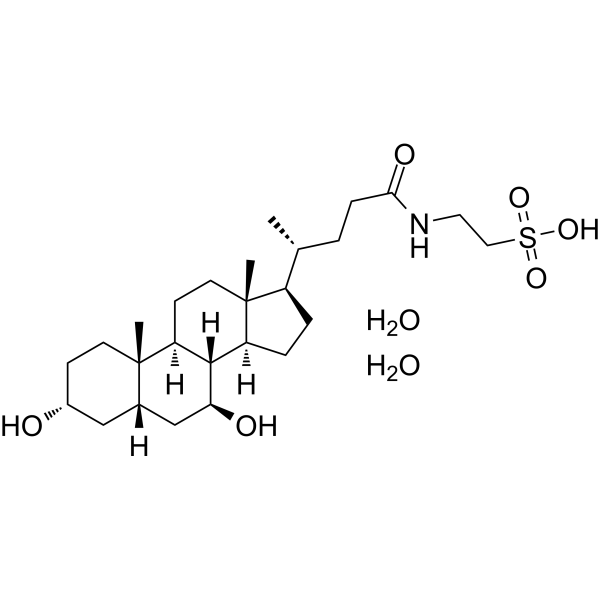
    Taurohyodeoxycholic acid
    2 Publications Verification

    Endogenous Metabolite COX Interleukin Related Glutathione Peroxidase TNF Receptor Neurological Disease Metabolic Disease Inflammation/Immunology Cancer
    Taurohyodeoxycholic acid is an orally active 6 alpha-hydroxylated bile acid. Taurohyodeoxycholic acid decreases colonic MPO activity, TNF-α, lL-6 serum levels and the expression of COX-2. Taurohyodeoxycholic acid alleviates trinitrobenzene sulfonic acid induced ulcerative colitis via regulating Th1/Th2 and Th17/Treg cells balance. Taurohyodeoxycholic acid ameliorates high-fat diet-induced nonalcoholic fatty liver disease in mice. Taurohyodeoxycholic acid prevents Taurochenodeoxycholic acid (HY-N2027)-induced hepatotoxicity in bile fistula rats. Taurohyodeoxycholic acid can be used for the study of nonalcoholic fatty liver disease (NAFLD), colitis and biliary fistula .
    Taurohyodeoxycholic acid
  • HY-145801
    XT2
    2 Publications Verification

    NF-κB Inflammation/Immunology
    XT2 is a potent, orally active, and selective inhibitor of NF-κB-inducing kinase (NIK) with an IC50 of 9.1 nM. XT2 suppresses CCl4-induced upregulation of ALT, a key biomarker of acute liver injury. XT2 also decreases immune cell infiltration into the injured liver tissue. XT2 has the potential for the research of liver inflammatory diseases . XT2 is a click chemistry reagent, it contains an Alkyne group and can undergo copper-catalyzed azide-alkyne cycloaddition (CuAAc) with molecules containing Azide groups.
    XT2
  • HY-15800A

    TNK1 LRRK2 Neurological Disease Inflammation/Immunology
    CZC-25146 is a potent and orally active LRRK2 inhibitor with IC50 values of 4.76 nM and 6.87 nM for wild-type LRRK2 and G2019S LRRK2, respectively. CZC-25146 inhibits PLK4, GAK, TNK1, CAMKK2 and PIP4K2C as well. CZC-25146 prevents mutant LRRK2-induced injury of neurons in vitro. CZC-25146 exhibits relatively favorable pharmacokinetic properties in mice. CZC-25146 can increase normal α-1-antitrypsin (AAT) secretion and reduce inflammatory cytokines. CZC-25146 can be used to research Parkinson's disease and liver diseases .
    CZC-25146
  • HY-151500B

    Amine N-methyltransferase Metabolic Disease
    JBSNF-00002 hydrochloride is an orally active small molecule inhibitor of the tricyclic nicotinamide N-methyltransferase (NNMT) with IC50 values for human, mouse and monkey sources of NNMT of 33, 210 and 190 nM respectively. JBSNF-00002 hydrochloride can reduce endogenous MNA levels in U2OS osteosarcoma cells, with its EC50 being 2.5 μM. JBSNF-00002 hydrochloride exhibits significant anti-obesity and anti-diabetic activities in the diet-induced obesity (DIO) model. JBSNF-00002 hydrochloride can be used for the study of metabolic diseases such as obesity, type 2 diabetes and non-alcoholic fatty liver disease .
    JBSNF-000028 hydrochloride
  • HY-153476

    GCGR GLP Receptor Inflammation/Immunology
    GIP/GLP-1 dual receptor agonist-1 is a GIP/GLP-1 dual receptor agonist. GIP/GLP-1 dual receptor agonist-1 is used in the research of metabolic disorders and fatty liver diseases, including non-alcoholic steatohepatitis (NASH) and non-alcoholic fatty liver disease (NAFLD) .
    GIP/GLP-1 dual receptor agonist-1
  • HY-P2985A

    Endogenous Metabolite Inflammation/Immunology
    Alanine aminotransferase, human liver is an enzyme mainly produced in the liver. It is a pyridoxalase that catalyzes the reversible interconversion of L-alanine and 2-oxoglutamate to pyruvate and L-glutamate. Alanine aminotransferase, human liver is elevated in active anti-HMGCR myopathy. Alanine aminotransferase, human liver can be used in studies related to immune-mediated necrotizing myopathy and non-alcoholic fatty liver disease .
    Alanine aminotransferase, Human liver
  • HY-153815

    GLP Receptor Metabolic Disease
    GLP-1 receptor agonist 11 (compound 3) is an agonist of GLP Receptor. GLP-1 receptor agonist 11 can be used in the study of diseases such as diabetes and non-alc. fatty liver disease .
    GLP-1 receptor agonist 11
  • HY-147055

    Thyroid Hormone Receptor Metabolic Disease Inflammation/Immunology
    THR-β agonist 5 is a THR-β agonist. THR-β agonist 5 can be used for the research of nonalcoholic fatty liver disease, nonalcoholic steatohepatitis .
    THR-β agonist 5
  • HY-130437

    MDM-2/p53 TGF-β Receptor Caspase Infection Metabolic Disease
    p-nitro-Pifithrin-α, a cell-permeable analog of pifithrin-α, is a potent p53 inhibitor. p-nitro-Pifithrin-α suppresses p53-mediated TGF-β1 expression in HK-2 cells. p-nitro-Pifithrin-α inhibits the activation of caspase-3 by Zika virus (ZIKV) strains. p-nitro-Pifithrin-α attenuates steatosis and liver injury in mice fed a high-fat diet [4]. non-alcoholic fatty liver disease .
    p-nitro-Pifithrin-α
  • HY-151500A

    Amine N-methyltransferase Metabolic Disease
    JBSNF-00002 TFA is an orally active small molecule inhibitor of the tricyclic nicotinamide N-methyltransferase (NNMT) with IC50 values for human, mouse and monkey sources of NNMT of 33, 210 and 190 nM respectively. JBSNF-00002 TFA can reduce endogenous MNA levels in U2OS osteosarcoma cells, with its EC50 being 2.5 μM. JBSNF-00002 TFA exhibits significant anti-obesity and anti-diabetic activities in the diet-induced obesity (DIO) model. JBSNF-00002 TFA can be used for the study of metabolic diseases such as obesity, type 2 diabetes and non-alcoholic fatty liver disease .
    JBSNF-000028 TFA
  • HY-142059

    Phosphodiesterase (PDE) Cardiovascular Disease Metabolic Disease
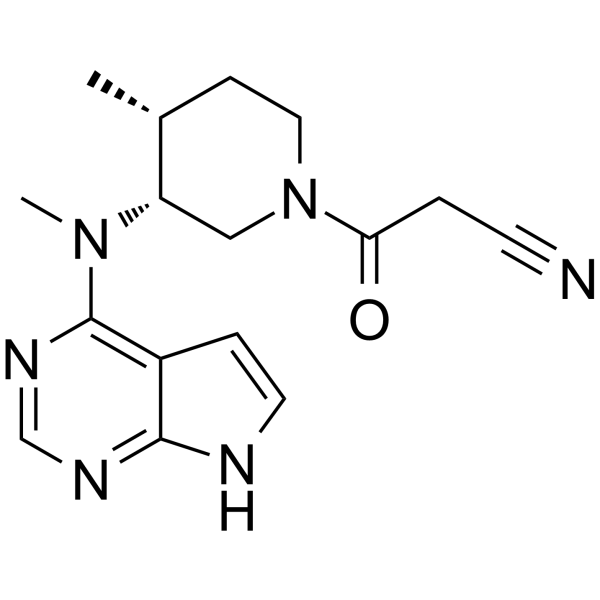
    PDE5-IN-4 is a phosphodiesterase 5 inhibitor. PDE5-IN-4 can be used for the research of acute myocardial infarction and damage caused by reperfusion, gastrointestinal diseases, damage caused by diabetes, and liver failure .
    PDE5-IN-4
  • HY-148264

    HIF-2α-IN-7

    HIF/HIF Prolyl-Hydroxylase Infection Metabolic Disease Inflammation/Immunology Cancer
    Imdatifan (HIF-2α-IN-7) is a hypoxia inducible factor 2α (HIF-2α) inhibitor. Imdatifan can inhibit HIF-2α with an EC50 value of 6 nM. Imdatifan can be used for the research of various types of diseases including cancer, liver disease, inflammatory disease, pulmonary diseases and iron load disorders .
    Imdatifan
  • HY-139607

    Monoamine Oxidase Inflammation/Immunology
    SSAO inhibitor-1 is a semicarbazide-sensitive amine oxidase (SSAO) inhibitor. SSAO inhibitor-1 has anti-inflammatory activity and can be used for liver diseases research .
    SSAO inhibitor-1
  • HY-P10133

    Ferroptosis Metabolic Disease
    PRDX3(103-112) SO3 modified, human is a marker of ferroptosis, and can be used for liver diseases study .
    PRDX3(103-112) SO3 modified, human
  • HY-138942

    Acyltransferase Metabolic Disease Inflammation/Immunology
    PF-06427878 is an orally active, selective liver-targeted diacylglycerol acyltransferase 2 (DGAT2) inhibitor with IC50s of 99 nM and 202 nM for human and rat DGAT2, respectively. PF-06427878 shows greater than 470-fold selectivity for DGAT2 over DGAT1, MGAT1, MGAT2 and MGAT3. PF-06427878 can improve liver steatosis and function. PF-06427878 can be used for the study of nonalcoholic fatty liver diseases .
    PF-06427878
  • HY-131675

    TNF Receptor Inflammation/Immunology
    CH-100 is an immunomodulatory agent targeting T-cell activation and inflammatory mediator production. CH-100 demonstrates anti-inflammatory and hepatoprotective effects by reducing TNF-α secretion, suppressing CD4+ T-cell proliferation, and lowering endotoxin levels in alcohol-fed rats. CH-100 is promising for research of alcoholic liver disease and T-cell-mediated hepatitis .
    CH-100
  • HY-179473

    Dipeptidyl Peptidase NO Synthase Cardiovascular Disease Metabolic Disease
    MK-0626 is a selective, orally active DPP-4 inhibitor with an IC50 of 6.3 nM. MK-0626 increases endothelial nitric oxide synthetase expression. MK-0626 improves neovascularization, attenuates hepatic steatosis, attenuates pancreatic islet injury. MK-0626 can be used in the research of diabetes and non-alcoholic fatty liver disease .
    MK-0626
  • HY-N0690R

    Schizandrin-C (Standard); Wuweizisu-C (Standard)

    Reference Standards Apoptosis Cardiovascular Disease Inflammation/Immunology Cancer
    Schisandrin C (Standard) (Schizandrin-C (Standard)) is the analytical standard of Schisandrin C (HY-N0690). This product is intended for research and analytical applications. Schisandrin C (Schizandrin-C) is a phytochemical lignan isolated from Schizandra chinensis . Schisandrin C has diverse biological activities, including anticancer, anti-inflammatory and antioxidant effects. Schisandrin C is a molecular glue. Schisandrin C can be used for cancer, alzheimer’s disease, and liver diseases research . Schisandrin C induces cell apoptosis .
    Schisandrin C (Standard)
  • HY-176873

    Amino acid Transporter Metabolic Disease
    SLC6A19-IN-2 (Example 4) is a potent SLC6A19 inhibitor with an IC50 of 14 nM. SLC6A19-IN-2 can be used for the study of metabolic diseases such as nonalcoholic steatohepatitis (NASH), nonalcoholic fatty liver disease (NAFLD) and phenylketonuria (PKU) .
    SLC6A19-IN-2
  • HY-163752

    MAP3K Metabolic Disease
    CS17919 is a potent, selective and orally active ASK1 inhibitor with an IC50 of 22.52 nM. CS17919 shows anti-inflammatory and antifibrotic effects. CS17919 can be used for the study of metabolic-related kidney and liver diseases .
    CS17919
  • HY-15800

    TNK1 LRRK2 Neurological Disease Inflammation/Immunology
    CZC-25146 hydrochloride is a potent LRRK2 inhibitor with IC50 values of 4.76 nM and 6.87 nM for wild-type LRRK2 and G2019S LRRK2, respectively. CZC-25146 hydrochloride inhibits PLK4, GAK, TNK1, CAMKK2 and PIP4K2C as well. CZC-25146 hydrochloride prevents mutant LRRK2-induced injury of neurons in vitro. CZC-25146 hydrochloride exhibits relatively favorable pharmacokinetic properties in mice. CZC-25146 hydrochloride can increase normal α-1-antitrypsin (AAT) secretion and reduce inflammatory cytokines. CZC-25146 hydrochloride can be used to research Parkinson's disease and liver diseases .
    CZC-25146 hydrochloride
  • HY-14908A

    4sc-101 hemicalcium; SC12267 hemicalcium

    Dihydroorotate Dehydrogenase Interleukin Related FXR Infection Inflammation/Immunology
    Vidofludimus (4sc-101; SC12267) hemicalcium is an orally active inhibitor for dihydroorotate dehydrogenase (DHODH) and also is a novel modulator for farnesoid X receptor (FXR). Vidofludimus hemicalcium, as an immunomodulatory agent, can be used for the research of autoimmune disorders such as inflammatory bowel disease (IBD). Vidofludimus hemicalcium also can be used for the research of fatty liver by targeting FXR .
    Vidofludimus hemicalcium
  • HY-W587771

    MECPTP

    Drug Metabolite Metabolic Disease
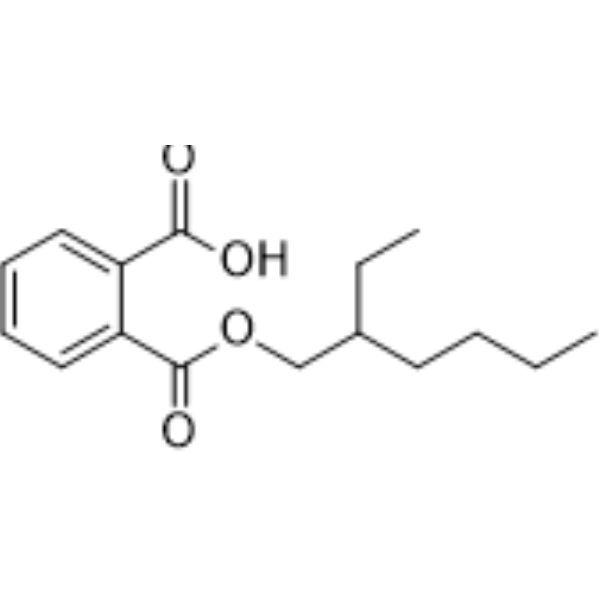
    Mono-2-ethyl-5-carboxypentyl terephthalate (MECPTP) is a major metabolite of Di-2-ethylhexyl terephthalate (DEHTP). Mono-2-ethyl-5-carboxypentyl terephthalate is promising for research of metabolic liver diseases, such as nonalcoholic fatty liver disease (NAFLD) .
    Mono-2-ethyl-5-carboxypentyl terephthalate
  • HY-162220

    Estrogen Receptor/ERR 17β-HSD Metabolic Disease
    HSD17B13-IN-94 (Compound 12) is an effective inhibitor of hydroxysteroid 17β-dehydrogenase 13 (HSD17B13) with an IC50 value of ≤ 0.1 μM for Estradiol (HY-B0141). HSD17B13-IN-94 can be used for research on liver diseases, metabolic diseases, or cardiovascular diseases, such as NAFLD, NASH, or drug-induced liver injury (DILI) .
    HSD17B13-IN-94
  • HY-168332

    FXR Metabolic Disease
    FXR agonist 11 (Compound 14) is an FXR agonist with an EC50 of 1.2 μM and a maximum effect of 73.7%. FXR agonist 11 can significantly increase GSH levels in the liver and is used to study drug-induced liver injury diseases .
    FXR agonist 11
  • HY-174253

    17β-HSD Metabolic Disease
    HSD17B13-IN-105 (Compound EX.87) is a selective 17β-hydroxysteroid dehydrogenase 13 (17BHSD13) inhibitor with an IC50 value of 0.036 μM, showing high selectivity over 17BHSD4 (with an IC50 value of 31.5 μM). HSD17B13-IN-105 is promising for research of liver diseases such as non-alcoholic fatty liver disease (NAFLD) and non-alcoholic steatohepatitis (NASH) .
    HSD17B13-IN-105
  • HY-170571

    Mitochondrial Metabolism Metabolic Disease Inflammation/Immunology
    BE2647 is a selective inhibitor for mitochondrial pyruvate carrier (MPC) with an EC50 of 70 nM. BE2647 exhibits good metabolic stability in mouse liver microsomes. BE2647 can be used in research of metabolic diseases, non-alcoholic fatty liver disease (MASLD), or non-alcoholic steatohepatitis (MASH) .
    BE2647
  • HY-174805

    Thyroid Hormone Receptor Metabolic Disease
    THRβ receptor agonist-2 (Example 7-4) is a THRβ receptor agonist. THRβ receptor agonist-2 can be used for research of liver disorder or a cardiometabolic disease .
    THRβ receptor agonist-2
  • HY-145624A

    ION-769357 sodium

    Acyltransferase Metabolic Disease
    Obeversen sodium is an antisense oligonucleotide that inhibits the synthesis of Diacylglycerol acyltransferase 2 (DGAT-2). Obeversen sodium can be used in the research of nonalcoholic fatty liver disease .
    Obeversen sodium
  • HY-N10017

    Others Metabolic Disease Inflammation/Immunology
    Lucidone F is a nortriterpenoid analogue which is derivated from Ganoderma resinaceum. Lucidone F is promising for research of immune-regulation, hyperglycemia and liver disease .
    Lucidone F
  • HY-171780

    Phosphodiesterase (PDE) TNF Receptor Inflammation/Immunology
    ASP9831 is an orally active PDE4 inhibitor. ASP9831 inhibits LSP-induced TNF-α production and has anti-inflammatory activity. ASP9831 can be used in fatty liver disease research .
    ASP9831
  • HY-N15535

    Others Cancer
    Cuneataside E is a phenylpropanoid glycoside compound found in Lespedeza cuneata. Cuneataside E exhibits hepatoprotective activity against the toxicity induced by N-acetyl-p-aminophenol (APAP) in the human hepatocellular carcinoma cell line HepG2. Cuneataside E is promising for research of liver diseases .
    Cuneataside E
  • HY-163248

    17β-HSD Metabolic Disease
    HSD17B13-IN-37 (78) is a 17β-Hydroxysteroid dehydrogenases (HSD17B13) inhibitor, with an IC50 of <0.1 μM for Estradiol. Used in NAFLD (Nonalcoholic fatty liver diseases) research .
    HSD17B13-IN-37
  • HY-163255

    17β-HSD Metabolic Disease
    HSD17B13-IN-58 (96) is a 17β-Hydroxysteroid dehydrogenases (HSD17B13) inhibitor, with an IC50 of <0.1 μM for Estradiol. Used in NAFLD (Nonalcoholic fatty liver diseases) research .
    HSD17B13-IN-58

온라인 문의

Your information is safe with us. * Required Fields.

호칭


Country or Region *

고객명 *


회사명 *

Department *


메일주소 *


상품명 *

Cat. No.


Requested quantity *

전화번호 *


비고

온라인 문의

Inquiry Information

상품명:
Cat. No.:
수량:
MCE Japan Authorized Agent:

