
21 Results for "

lysosome fusion

" in MedChemExpress (MCE) Product Catalog:
Products (21)

21 Results for "lysosome fusion" in MCE Product Catalog:

909
909 Publications Verification
Cat. No.: HY-100558
CAS No.: 88899-55-2
Purity:  99.95%
Synonyms: BafA1
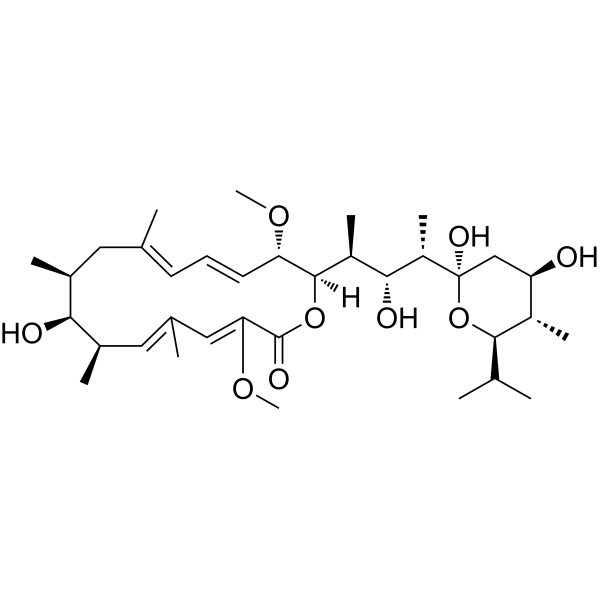
Bafilomycin A1 (BafA1) is a specific and reversible inhibitor of vacuolar H +-ATPase (V-ATPase) with IC50 values of 4-400 nmol/mg. Bafilomycin A1, a macrolide antibiotic, is also used as an autophagy inhibitor at the late stage. Bafilomycin A1 blocks autophagosome-lysosome fusion and inhibits acidification and protein degradation in lysosomes of cultured cells. Bafilomycin A1 induces apoptosis .
loading...
    loading...
223
223 Cited Publications
Cat. No.: HY-B0795
CAS No.: 326914-06-1
Target:  

mTOR Autophagy

Research Areas:  

Cancer

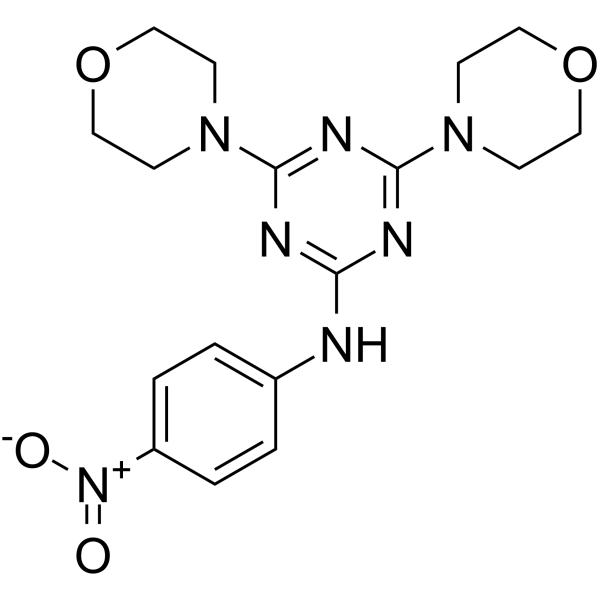
MHY1485 is a potent cell-permeable mTOR activator that targets the ATP domain of mTOR. MHY1485 inhibits autophagy by suppression of fusion between autophagosomes and lysosomes .
loading...
    loading...
22
22 Cited Publications
Cat. No.: HY-N0485
CAS No.: 5088-90-4
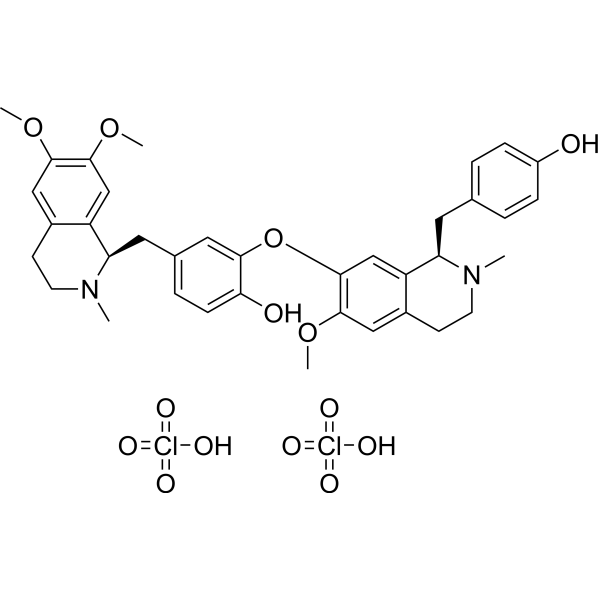
Liensinine Diperchlor​ate is a major isoquinoline alkaloid, extracted from the seed embryo of Nelumbo nucifera Gaertn. Liensinine Diperchlor​ate inhibits late-stage autophagy/mitophagy through blocking autophagosome-lysosome fusion. Liensinine Diperchlor​ate has a wide range of biological activities, including anti-arrhythmias, anti-hypertension, anti-pulmonary fibrosis, relaxation on vascular smooth muscle, etc .
loading...
    loading...
5
5 Cited Publications
Cat. No.: HY-129111
CAS No.: 864941-31-1
Purity:  99.49%
Target:  

Autophagy

Research Areas:  

Infection Neurological Disease

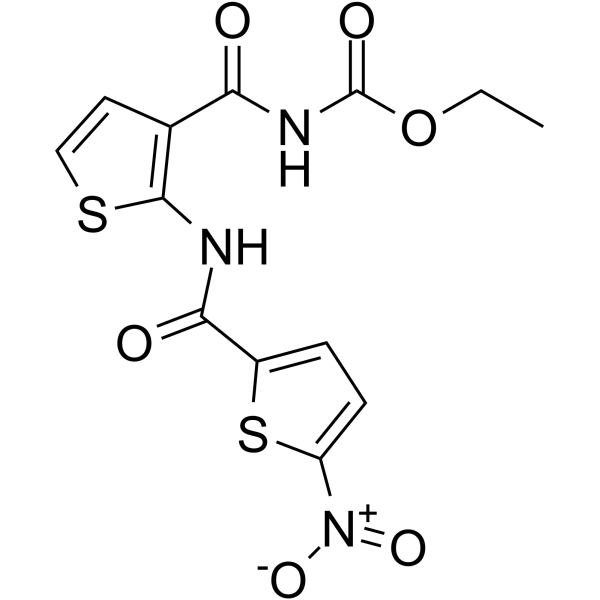
EACC is a reversible autophagy inhibitor, which can block autophagic flux. EACC selectively inhibits the translocation of autophagosome-specific SNARE Stx17 thereby blocking autophagosome-lysosome fusion .
loading...
    loading...
4
4 Cited Publications
Cat. No.: HY-112698
CAS No.: 1370032-19-1
Purity:  99.14%
Research Areas:  

Cancer

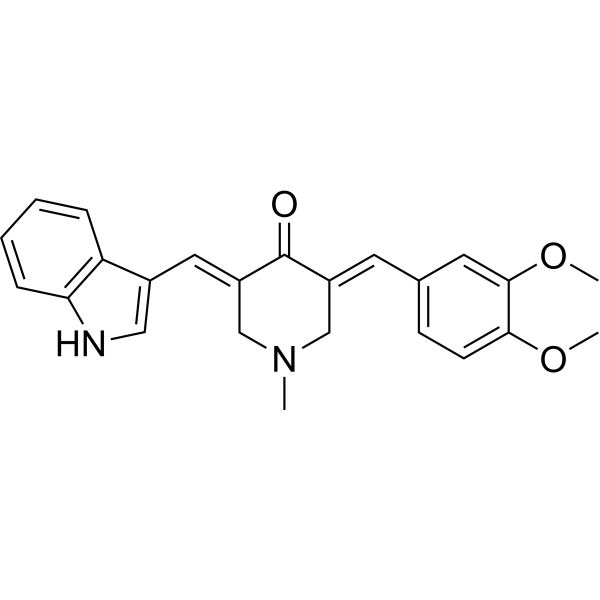
CA-5f is a potent late-stage macroautophagy/autophagy inhibitor via inhibiting autophagosome-lysosome fusion. CA-5f increases LC3B-II (a marker to monitor autophagy) and SQSTM1 protein, and also increases ROS production. Anti-tumor activity .
loading...
    loading...
1
1 Cited Publications
Cat. No.: HY-124582
CAS No.: 1361198-80-2
Purity:  ≥98.0%
Target:  

Autophagy mTOR

Research Areas:  

Cancer

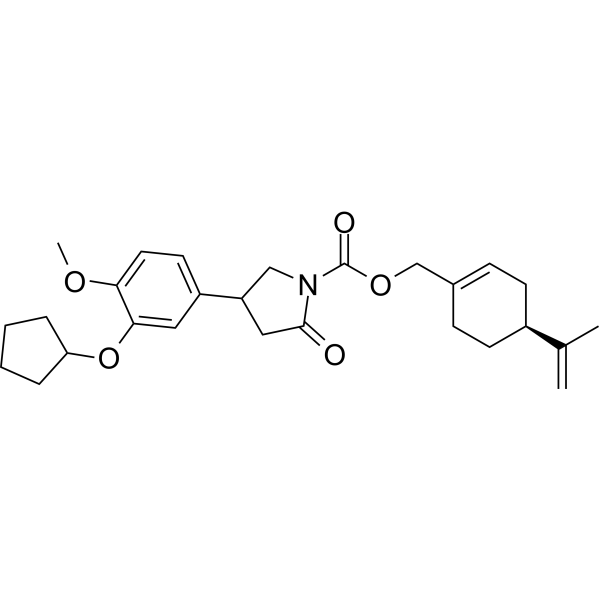
NEO214 is an autophagy inhibitor and a covalent conjugate of the PDE4 inhibitor Rolipram (HY-16900) and perillyl alcohol (HY-N7000). It has anti-cancer activity and blood-brain barrier (BBB) permeability. Over sex. NEO214 prevents autophagy-lysosome fusion, thereby blocking autophagic flux and triggering glioma cell death. The process involves mTOR activation, andTFEB(Transcription Factor EB) aggregation. NEO214 inhibitionMacroautophagy/autophagy in glioblastoma cells has the potential to overcome chemotherapy resistance in glioblastoma .
loading...
    loading...
Cat. No.: HY-152100
CAS No.: 1370032-20-4
Purity:  98.69%
Target:  

Autophagy

Research Areas:  

Cancer

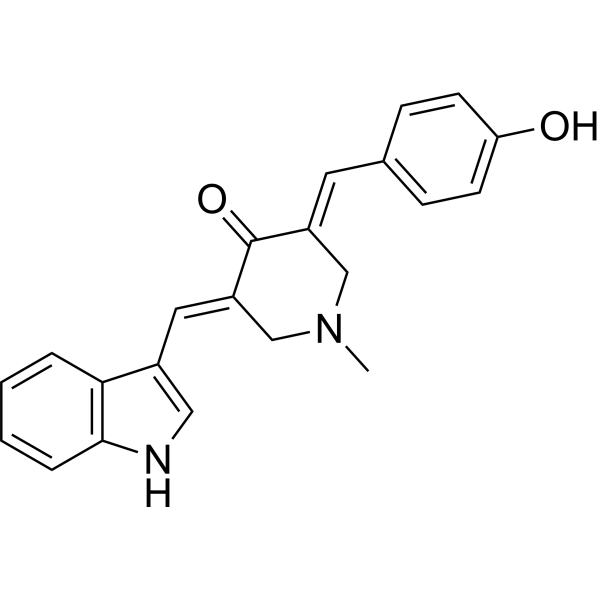
CUR5g is a potent autophagy inhibitor. CUR5g selectively inhibits autophagosome degradation in cancer cells by blocking autophagosome-lysosome fusion. CUR5g blocks the recruitment of STX17 to autophagosomes via a UVRAG-dependent mechanism, resulting in the inability of autophagosomes to fuse with lysosomes. CUR5g improves the anticancer effect of Cisplatin (HY-17394) against A549 cells both in vitro and in vivo .
loading...
    loading...
Cat. No.: HY-119357
CAS No.: 33016-12-5
Purity:  99.78%
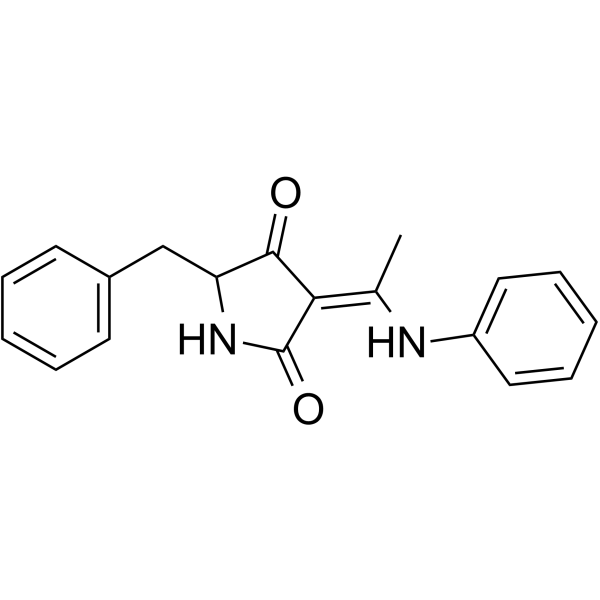
TN-16 is a Microtubule polymerization inhibitor. TN-16 induces G2/M cell cycle arrest, metaphase mitotic arrest and Apoptotic cell death in cells, and blocks late Autophagic flux by inhibiting autophagosome-lysosome fusion. TN-16 suppresses tumor growth in syngeneic mouse breast cancer models. TN-16 can be used in research related to neuroblastoma, cervical cancer, breast cancer and other tumors .
loading...
    loading...
Cat. No.: HY-177120
CAS No.: 133156-42-0
Target:  

Autophagy

Research Areas:  

Cancer

DMBP is a VPS41 inhibitor. DMBP induces methuosis and inhibits autophagy in cancer cells. DMBP inhibits the fusion of late endosomes and autophagosomes with lysosomes. DMBP effectively inhibits metastasis in a mouse metastatic melanoma model. DMBP can be used for the study of melanoma .
loading...
    loading...
Cat. No.: HY-P2948
CAS No.: 9026-43-1
Synonyms: Ser/Thr protein kinase
Research Areas:  

Infection

Protein serine/threonine kinase (Ser/Thr protein kinase) is a signal transduction molecule. Protein serine/threonine kinase phosphorylates specific residues on target substrates, regulates phosphorylation-dependent signal cascades, modulates cellular processes of mycobacteria, blocks phagosome-lysosome fusion, promotes meiotic maturation of Xenopus laevis (African clawed frog) oocytes, rescues the phenotype of Saccharomyces cerevisiae (budding yeast) CDC5 mutants, and exhibits cell cycle phase-specific kinase activity. Protein serine/threonine kinase maintains a tightly regulated cell cycle expression pattern, and sustains the growth and survival of mycobacteria. Protein serine/threonine kinase can be used in studies related to tuberculosis .
loading...
    loading...
Cat. No.: HY-150636
CAS No.: 3031485-19-2
Purity:  99.18%
Target:  

Autophagy Apoptosis

Research Areas:  

Cancer

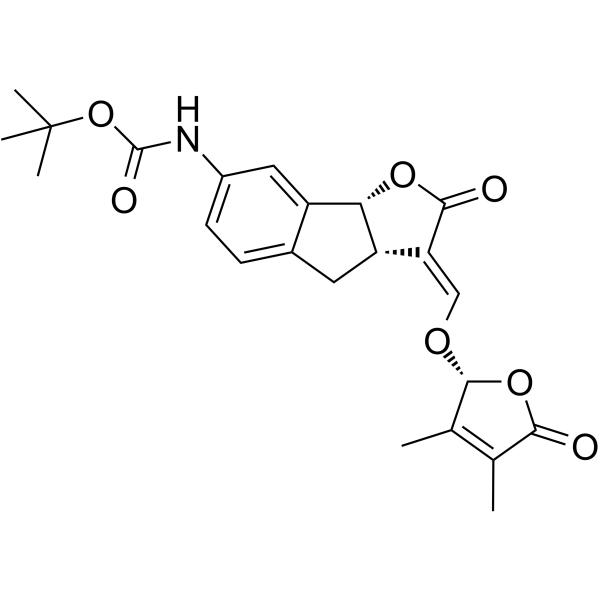
Autophagy-IN-1 is a potent autophagy/mitophagy inhibitor, acts by selectively increasing the autophagic flux while blocking the autophagosome-lysosome fusion in cancer cells. Autophagy-IN-1 can induce apoptosis and cell cycle arrest. Autophagy-IN-1 significantly inhibits tumor growth in an HCT116 xenograft mouse model and with low toxicity. Autophagy-IN-1 can be used for researching colorectal cancer .
loading...
    loading...
Cat. No.: HY-165426
CAS No.: 3031522-14-9
Research Areas:  

Inflammation/Immunology

HB-230 is a Transglutaminase-2 (TG2) (human IC50 = 4.9 μM) inhibitor and a selective fluorescent imaging probe for active TG2 localization. HB-230 modifies TG2 Cys277 to sustain the enzyme open conformation. HB-230 forms a ternary complex with TG2 and α2-macroglobulin, undergoes receptor-mediated endocytosis, and trafficks directly to lysosomes without early/late endosome fusion. HB-230 exhibits TG2 activity-dependent and α2-macroglobulin-dependent uptake. HB-230 can be used for the research of celiac disease, (Ex/Em = 649/665 nm) .
loading...
    loading...
Cat. No.: HY-N3855
CAS No.: 77263-06-0
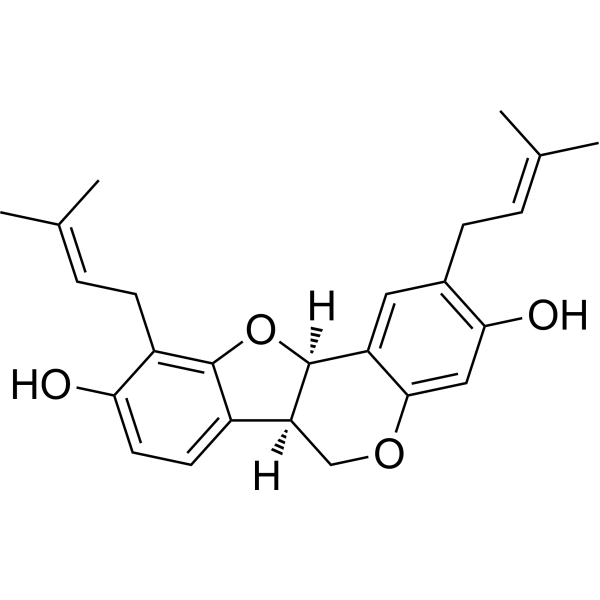
Erythrabyssin II (EL-19) is a potent late-stage autophagy inhibitor that blocks the fusion of autophagosome and lysosome. Erythrabyssin II leads to the accumulation of autophagic substrates and does not impair lysosomal pH or lysosomal enzyme activity. Erythrabyssin II suppresses ovarian cancer organoid activity and induces apoptosis. Erythrabyssin II can be used for the study of ovarian cancer .
loading...
    loading...
Cat. No.: HY-P99803
CAS No.: 2145123-44-8
Synonyms: VAL-1221

Target:  

Glycosidase

Research Areas:  

Others

Clervonafusp alfa (VAL-1221) is a fusion protein targeting both cytosolic and lysosomal glycogen. Clervonafusp alfa is comprised of the Fab portion of a cell-penetrating antibody and recombinant human acid alpha glucosidase (rhGAA), the former utilizing the nucleoside transporter ENT-2 to gain access to the cytosol, and the latter enters lysosomes via mannose-6-phosphate receptors (M6PRs). Clervonafusp alfa can be used for late-onset Pompe disease research .
loading...
    loading...
Cat. No.: HY-173150
CAS No.: 106928-29-4
Hapalindole Q (Compound (+)-1) is an autophagy (Autophagy) inhibitor targeting YAP1. Hapalindole Q binds to the Hippo pathway transcription factor YAP1 with a Kd of 9.13 μM and induces its degradation via the chaperone-mediated autophagy (CMA) pathway. This process inhibits Rab7-mediated fusion of autophagosomes and lysosomes, thereby reducing overall autophagy levels without affecting lysosomal function. Hapalindole Q holds promise for research in cancer (e.g., liver cancer, breast cancer, etc.) .
loading...
    loading...
Cat. No.: HY-B0795R
CAS No.: 326914-06-1
MHY1485 (Standard) is the analytical standard of MHY1485 (HY-B0795). This product is intended for research and analytical applications. MHY1485 is a potent cell-permeable mTOR activator that targets the ATP domain of mTOR. MHY1485 inhibits autophagy by suppression of fusion between autophagosomes and lysosomes .
loading...
    loading...
Cat. No.: HY-100558R
CAS No.: 88899-55-2
Synonyms: BafA1 (Standard)
Bafilomycin A1 (Standard) is the analytical standard of Bafilomycin A1 (HY-100558). This product is intended for research and analytical applications. Bafilomycin A1 (BafA1) is a specific and reversible inhibitor of vacuolar H +-ATPase (V-ATPase) with IC50 values of 4-400 nmol/mg. Bafilomycin A1, a macrolide antibiotic, is also used as an autophagy inhibitor at the late stage. Bafilomycin A1 blocks autophagosome-lysosome fusion and inhibits acidification and protein degradation in lysosomes of cultured cells. Bafilomycin A1 induces apoptosis .
loading...
    loading...
Cat. No.: HY-D3163
Target:  

Fluorescent Dye

Research Areas:  

Others

Endo-pH is a cell-permeable, pH-responsive fluorescent probe based on BODIPY, with a pKa of 5.08. When pH decreases from 7.32 to 4.97, Endo-pH undergoes protonation under acidic conditions, resulting in a 79-fold increase in fluorescence intensity at 786 nm. The detection wavelengths of its protonated form are Ex/Em=688/786 nm, while the absorption wavelength of its non-protonated form is 745 nm. Endo-pH can be used for staining late endosomes in live cells and determining the fusion time of late endosomes and lysosomes .
loading...
    loading...
Cat. No.: HY-N21694
CAS No.: 303084-57-3
Ciliatoside A is a naturally bioactive compound that exhibits significant anti-inflammatory, antiviral, and neuroprotective activities. Ciliatoside A serves as a mitophagy inducer and NLRP3 inflammasome inhibitor, activating AMPK, SIRT1, and the PINK1/Parkin axis, and inhibiting pyroptosis and apoptosis. Ciliatoside A promotes autophagic flux, autophagosome-lysosome fusion, mTOR inhibition, and p62-dependent HBc degradation; reduces Aβ aggregation, plaque deposition, microglial/astrocyte activation, and bacterial load; and maintains neuronal integrity, mitochondrial membrane potential, and ATP production. Ciliatoside A is used in research on Alzheimer's disease, Klebsiella pneumoniae-induced pneumonia, hepatitis B virus infection, and inflammation .
loading...
    loading...
Cat. No.: HY-181062
Research Areas:  

Cancer

VWK147 is a second-generation HSP90 C-terminal domain (CTD) inhibitor. VWK147 targets the CTD dimerization interface, prevents HSP90 CTD dimerization, disrupts co-chaperone PPID binding to HSP90 CTD, and inhibits HSP90 chaperone function dependent on dimerization. VWK147 reduces protein levels of HSP90 client proteins ULK1, RIPK1, and CDK4 without inducing a heat shock response. VWK147 induces cell death, including apoptosis, in Cisplatin (HY-17394)-sensitive and -resistant urothelial carcinoma cells. VWK147 induces LC3-II accumulation, inhibits autophagosome-lysosome fusion to block canonical autophagy, and induces non-canonical LC3 lipidation independent of ULK1 and PIK3C3 complexes. VWK147 can be used for the research of urothelial carcinoma .
loading...
    loading...

