41 Results for "

m6A

" in MedChemExpress (MCE) Product Catalog:
Products (41)

41 Results for "m6A" in MCE Product Catalog:

29
29 Publications Verification
Cat. No.: HY-127103
CAS No.: 2243736-45-8
Purity:  98.64%
Target:  

Apoptosis

Research Areas:  

Cancer

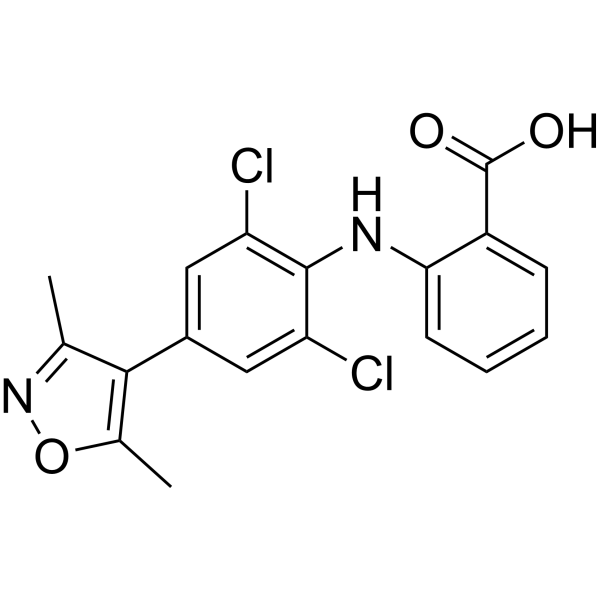
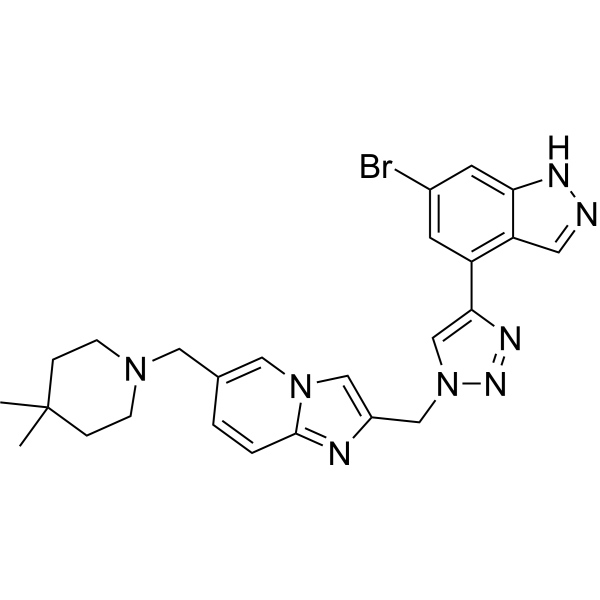
FB23-2 is a potent and selective inhibitor of mRNA N 6-methyladenosine (m 6A) demethylase FTO, with an IC50 of 2.6 μM. FB23-2 has anti-proliferation activity. FB23-2 can be used for the research of acute myeloid leukemia (AML) .
loading...
    loading...
6
6 Cited Publications
Cat. No.: HY-153274
CAS No.: 2408590-36-1
Purity:  98.18%
Target:  

Apoptosis

Research Areas:  

Cancer

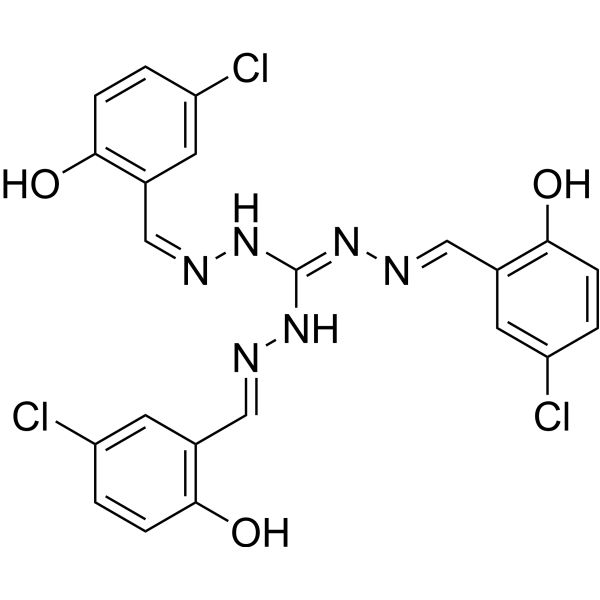
CWI1-2 is an IGF2BP2 inhibitor that binds IGF2BP2 and inhibits its interaction with m6A-modified target transcripts, induces apoptosis and differentiation, and shows promising anti-leukemic effects .
loading...
    loading...
6
6 Cited Publications
Cat. No.: HY-153274A
CAS No.: 2408590-37-2
Purity:  98.27%
Target:  

Apoptosis

Research Areas:  

Cancer

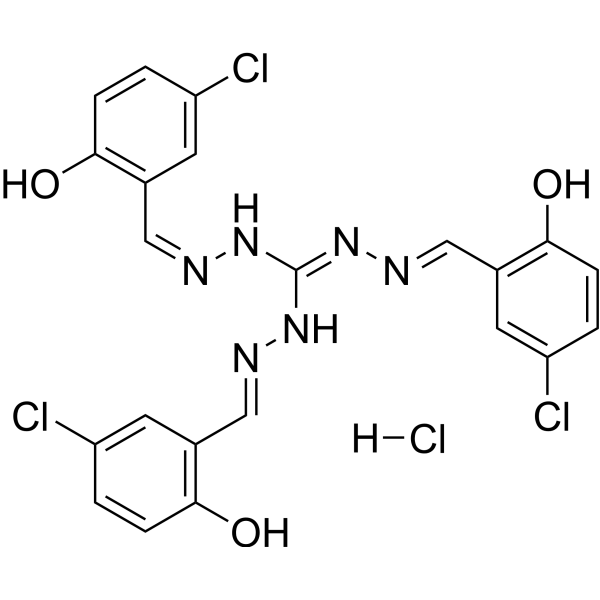
CWI1-2 hydrochloride is an IGF2BP2 inhibitor that binds IGF2BP2 and inhibits its interaction with m6A-modified target transcripts, induces apoptosis and differentiation, and shows promising anti-leukemic effects .
loading...
    loading...
3
3 Cited Publications
Cat. No.: HY-155489
CAS No.: 3029515-97-4
Purity:  98.55%
Research Areas:  

Cancer

DDO-2728 (compound 19) is a selective AlkB homologue 5 (ALKBH5) inhibitor with an IC50 of 2.97 μM. DDO-2728 increases the abundance of N 6 methyladenosine (m 6A) modifications, inducing cell apoptosis and cycle arrest. DDO-2728 suppresses tumor growth in the MV4 11 xenograft model with favorable safety profile, shows the potential of targeting ALKBH5 in cancer research .
loading...
    loading...
3
3 Cited Publications
Cat. No.: HY-111926
CAS No.: 81921-35-9
Purity:  99.84%
Research Areas:  

Others

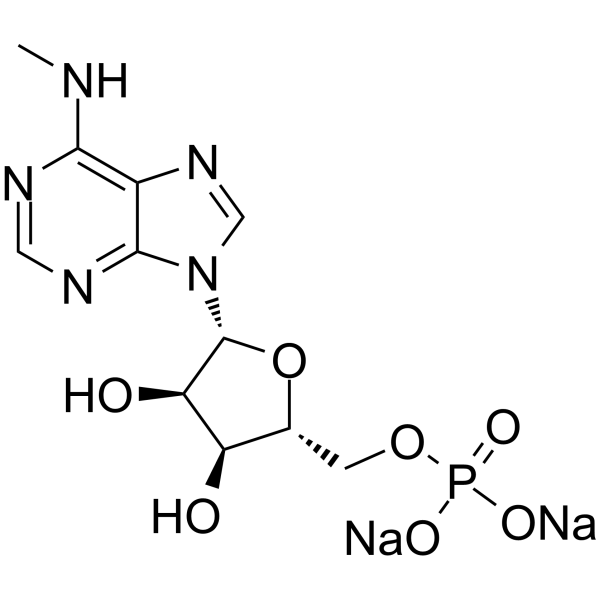
N6-Methyladenosine 5'-monophosphate disodium salt is an N6-methyladenosine derivative and also the phosphorylated form of N 6-methyladenosine. N6-Methyladenosine 5'-monophosphate disodium salt serves as an elution reagent for m6A-modified RNA in MeRIP assays .
loading...
    loading...
2
2 Cited Publications
Cat. No.: HY-137187
CAS No.: 2243736-35-6
Purity:  98.88%
Research Areas:  

Cancer

FB23 is a potent and selective FTO demethylase inhibitor with an IC50 of 60 nM. FB23 directly binds to FTO and selectively inhibits FTO's mRNA N 6-methyladenosine (m6A) demethylase activity .
loading...
    loading...
2
2 Cited Publications
Cat. No.: HY-156773
CAS No.: 2499664-52-5
Purity:  98.71%
Target:  

Apoptosis METTL3

Research Areas:  

Cancer

STM3006 is a highly potent, selective, and orally active inhibitor of METTL3 (IC50: 5 nM). STM3006 can reduce the m6A level, promote the formation of dsRNA, trigger a cell-intrinsic interferon response, and enhance the killing effect of T cells on tumors. STM3006 has anti-tumor activity, and its combination with anti-PD-1 immunotherapy yields better results .
loading...
    loading...
2
2 Cited Publications
Cat. No.: HY-N0353
CAS No.: 13657-68-6
Synonyms: (+)-Curdione
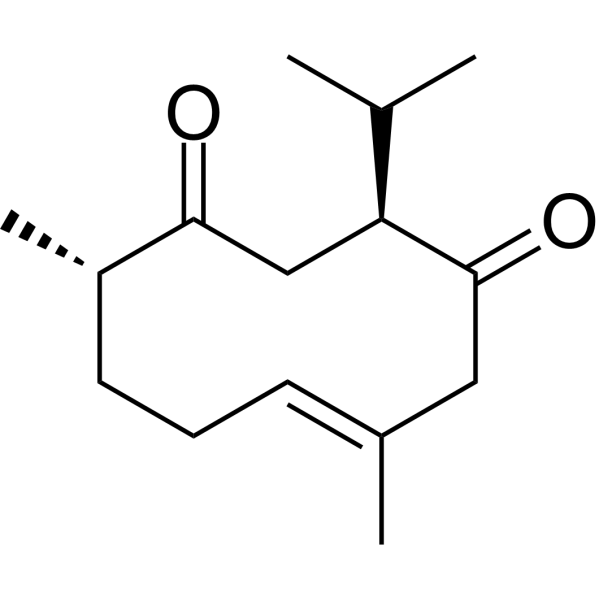
Curdione ((+)-Curdione) is an orally active sesquiterpenoid. Curdione inhibits platelet aggregation. Curdione induces ferroptosis in colorectal cancer via m6A methylation mediated by METTL14 and YTHDF2. Curdione inhibits ferroptosis in Isoproterenol (HY-B0468)-induced myocardial infarction by regulating the Keap1/Trx1/GPX4 signaling pathway, suppressing oxidative stress (ROS) and apoptosis. Curdione ameliorates Doxorubicin (HY-15142)-induced cardiotoxicity by inhibiting oxidative stress (ROS) and activating the Nrf2/HO-1 pathway. Curdione ameliorates sepsis-induced lung injury by inhibiting platelet-mediated neutrophil extracellular trap formation. Curdione ameliorates Bleomycin (HY-17565A)-induced pulmonary fibrosis by inhibiting TGF-β-induced fibroblast-to-myofibroblast differentiation. Curdione exhibits neuroprotective effects against focal cerebral ischemia-reperfusion injury in rats. Curdione exerts antiproliferative effects against human uterine leiomyosarcoma by targeting IDO1. Curdione protects vascular endothelial cells and atherosclerosis by regulating DNMT1-mediated ERBB4 promoter methylation. Curdione inhibits inducible prostaglandin E2 production (IC50 = 1.1 μM) and cyclooxygenase 2 expression [6] .
loading...
    loading...
2
2 Cited Publications
Cat. No.: HY-N0086R
CAS No.: 1867-73-8
Synonyms: 6-Methyladenosine (Standard); N-Methyladenosine (Standard)
N6-Methyladenosine (Standard) is the analytical standard of N6-Methyladenosine. This product is intended for research and analytical applications. N6-Methyladenosine is the most prevalent internal (non-cap) modification present in the messenger RNA (mRNA) of all higher eukaryotes. N6-Methyladenosine can modifies viral RNAs and has antiviral activities. In Vitro: N6-methyladenosine (m6A) is selectively recognized by the human YTH domain family 2 (YTHDF2) protein to regulate mRNA degradation. N6-methyladenosine (m6A), a prevalent internal modification in the messenger RNA of all eukaryotes, is post-transcriptionally installed by m6A methyltransferase (e.g., MT-A70) within the consensus sequence of G(m6A)C (70%) or A(m6A)C (30%). N6-methyladenosine (m6A)-containing RNAs are greatly enriched in the YTHDF-bound portion and diminished in the flow-through portion . N6-methyladenosine (m6A), the most abundant internal RNA modification, functions in diverse biological processes, including regulation of embryonic stem cell self-renewal and differentiation. N6-methyladenosine (m6A) is a large protein complex, consisting in part of methyltransferase-like 3 (METTL3) and methyltransferase-like 14 (METTL14) catalytic subunits .
loading...
    loading...
1
1 Cited Publications
Cat. No.: HY-P10387
Research Areas:  

Cancer

RSM3 is a METTL3-METTL14 complex inhibitor with a Kd of 3.10 μM for the METTL3-METTL14 complex. RSM3 reduces the m 6A modification level of SLC31A1 and the global RNA methylation level. RSM3 upregulates programmed cell death-related genes, enhances cell apoptosis, inhibits pro-cancer signals and suppresses tumor growth. RSM3 is applicable to the research of preeclampsia and cancer .
loading...
    loading...
1
1 Cited Publications
Cat. No.: HY-172158
CAS No.: 140481-05-6
Research Areas:  

Cancer

ALKBH5-IN-5 is a highly selective ALKBH5 (IC50 = 0.62 μM, Kd = 804 nM). ALKBH5-IN-5 disrupts ALKBH5 binding to m 6A-RNA and 6mA-DNA substrates. ALKBH5-IN-5 promotes differentiation, induces apoptosis, cause G2-M phase arrest and exerts strong antiproliferative effects in cancer cells. ALKBH5-IN-5 reduces TACC3 and MYC protein levels and increases cleaved caspase-3 levels. ALKBH5-IN-5 exerts antitumor activity in tumor xenograft mice models. ALKBH5-IN-5 can be used for the research of acute myeloid leukemia .
loading...
    loading...
Cat. No.: HY-165422
CAS No.: 1505579-77-0
Research Areas:  

Cancer

ALKBH5-IN-3 is a selective, cell active ALKBH5 inhibitor with an IC50 of 0.021 μM. ALKBH5-IN-3 stabilizes ALKBH5 in HepG2 cells, and increases m 6A level in intact cells. ALKBH5-IN-3 can be used as a versatile chemical probe to explore the biological function of ALKBH5. ALKBH5-IN-3 can be used for the research of Cancer .
loading...
    loading...
Cat. No.: HY-21197
CAS No.: 375-85-9
Synonyms: Perfluoroheptanoic acid; Tridecafluoroheptanoic acid; PFHpA
Perfluoroenanthic acid (Perfluoroheptanoic acid) is a kind of perfluoroalkyl carboxylic acid organic pollutant. Perfluoroenanthic acid has environmental persistence and bioaccumulation, and exposure can occur via oral, dermal and other routes. Perfluoroenanthic acid exhibits reproductive toxicity, neurotoxicity, hepatotoxicity, immunotoxicity and endocrine-disrupting effects. Perfluoroenanthic acid exerts definite adverse effects on development, spermatogenesis, neuronal activity and liver tissue .
loading...
    loading...
Cat. No.: HY-174982
CAS No.: 3093182-34-1
Target:  

YTHDF

Research Areas:  

Cancer

YTHDF2 ligand-1 (Compound 23) is a competitive, selective, and high-affinity YTHDF2 ligand with an IC50 of 11 μM and a Kd of 1.3 μM. YTHDF2 ligand-1 competes with m 6A-RNA for binding to YTHDF2. YTHDF2 ligand-1 is applicable for cancer research .
loading...
    loading...
Cat. No.: HY-148334
CAS No.: 2855085-25-3
Purity:  99.95%
Research Areas:  

Cancer

MS8815 is a EZH2 PROTAC degrader, with a DC50 of 140 nM in MDA-MB-453 triple-negative breast cancer (TNBC) cells and an IC50 of 8.6 nM against human EZH2. MS8815 induces ubiquitin-proteasome system-mediated degradation of EZH2, reduces the levels of EED, SUZ12, FOXM1, H3K27me3 and global m6A, and increases the protein level of HMGCS2. MS8815 can be used in the research of breast cancer and prostate cancer [6] .
loading...
    loading...
Cat. No.: HY-174873
Research Areas:  

Cancer

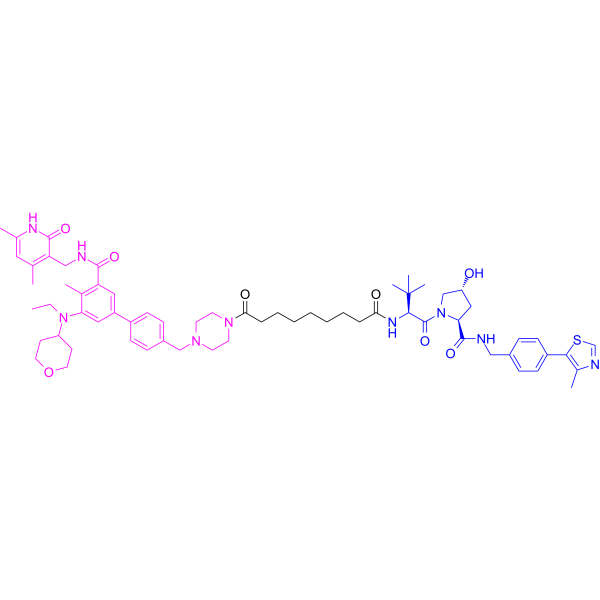
AF151 is a METTL3 PROTAC degrader with the DC50 of 0.43 μM in MOLM-13 cells. AF151 inhibits cell growth by significantly degrading METTL3 protein and reducing m6A levels. AF151 can induce cell apoptosis and reduce the level of Bcl-2 protein. AF151 can be used for research on cancer such as acute myeloid leukemia (AML). (Pink: METTL3 Ligand (HY-174874); Blue: VHL Ligand (HY-125845); Black: Linker; VHL Ligand+Linker (HY-174875)) .
loading...
    loading...
Cat. No.: HY-137341
CAS No.: 2769753-23-1
Purity:  98.33%
Target:  

PROTACs YTHDF

Research Areas:  

Neurological Disease Cancer

SK-3-91 is a multi-kinase PROTAC degrader that induces the degradation of the maximum number of unique kinases (over 125 distinct kinases) simultaneously. SK-3-91 induces protein degradation via the ubiquitin biotinylation (E-STUB) pathway, such as inducing the degradation of YTHDF2. SK-3-91 also inhibits cell proliferation and induces cell morphological changes. SK-3-91 can be used in research related to acute lymphoblastic leukemia, multiple myeloma, neuroblastoma, ovarian cancer, mantle cell lymphoma, and gastric cancer .
loading...
    loading...
Cat. No.: HY-N4031
CAS No.: 82375-29-9
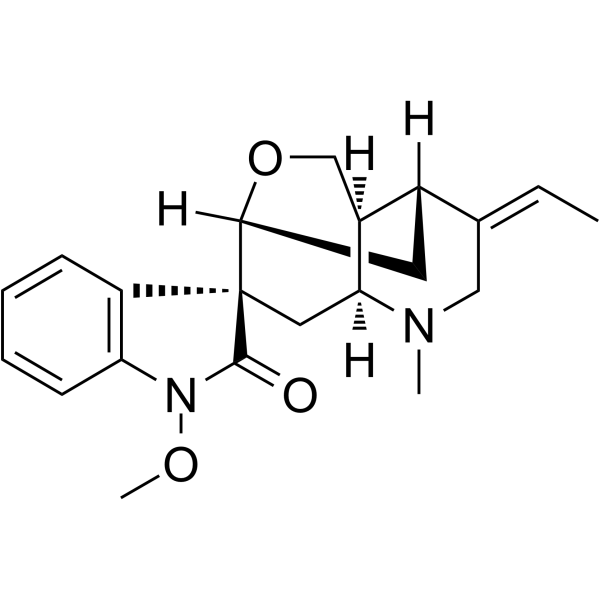
Humantenine is a highly toxic indole alkaloid from Gelsemium elegans (Gardn. & Champ.) Benth. that binds to RNA m6A modification regulatory proteins (ALKBH5, METTL). Humantenine stably binds via hydrogen bonding and hydrophobic interactions and disrupts the m6A methylation level of target genes, thereby impairing the expression of intestinal epithelial cell tight junction and cytoskeleton-related genes, causing intestinal barrier dysfunction and significant intestinal cytotoxicity. The intraperitoneal injection LD50 values of Humantenine are <1 mg/kg in mice, 1.2 mg/kg in male rats and 1.5 mg/kg in female rats, respectively. Species differences exist in the metabolism of Humantenine in human, porcine, goat and rat liver microsomes, and demethylation, dehydrogenation and oxidation occur in liver microsomes .
loading...
    loading...
Cat. No.: HY-159604
CAS No.: 295348-36-6
Target:  

METTL3

Research Areas:  

Cancer

METTL3-IN-9 (compound C3) is an inhibitor of methyltransferase-like METTL3, an RNA methyltransferase that catalyzes the N6-methyladenosine (m6A) modification of mRNA in eukaryotic cells .
loading...
    loading...
Cat. No.: HY-168878
CAS No.: 3050819-22-9
Target:  

METTL3

Research Areas:  

Cancer

EP652 is a METTL3 inhibitor and antitumor agent with IC50 values of 2 nM, <10 nM, and 37 nM in SPA, intracellular, and ATPlite assays, respectively. EP652 exhibits high selectivity against 40 other methyltransferases and FTO, and possesses favorable pharmacokinetic parameters. EP652 reduces intracellular N 6-methyladenosine (m 6A) levels in mRNA. EP652 inhibits tumor growth and progression of both hematologic malignancies and solid tumors. EP652 can be used for the research of acute myeloid leukemia, ovarian cancer, non-small cell lung cancer, and hypopharyngeal squamous cell carcinoma .
loading...
    loading...

