14 Results for "

mitochondrial membrane potential collapse

" in MedChemExpress (MCE) Product Catalog:
Products (14)

14 Results for "mitochondrial membrane potential collapse" in MCE Product Catalog:

6
6 Cited Publications
Cat. No.: HY-115576
CAS No.: 1809031-84-2
Purity:  99.54%
Research Areas:  

Neurological Disease Cancer

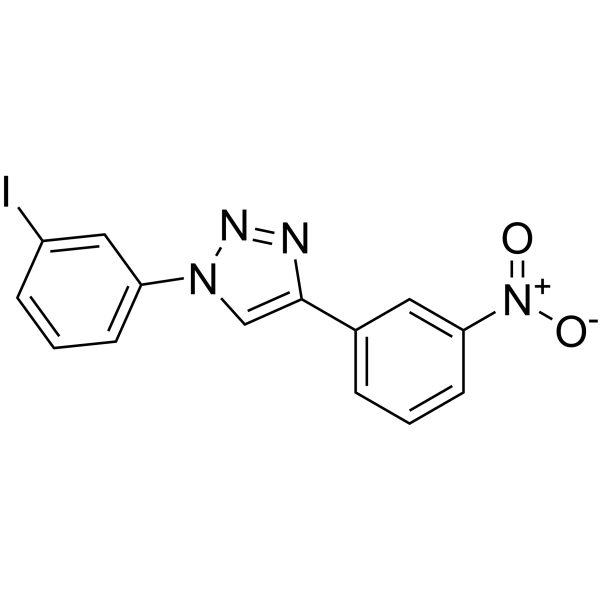
P62-mediated mitophagy inducer (PMI) is a P62-mediated mitophagy activator. P62-mediated mitophagy inducer activates mitochondrial autophagy without recruitment of Parkin or collapse of the mitochondrial membrane potential and remains active in cells lacking a fully functional PINK1/Parkin pathway. P62-mediated mitophagy inducer serves as a pharmacological tool to study the molecular mechanisms of mitosis, avoiding toxicity and some of the non-specific effects associated with the sudden dissipation of mitochondria lacking membrane potential .
loading...
    loading...
Cat. No.: HY-114220
CAS No.: 873546-31-7
Purity:  98.41%
Research Areas:  

Infection

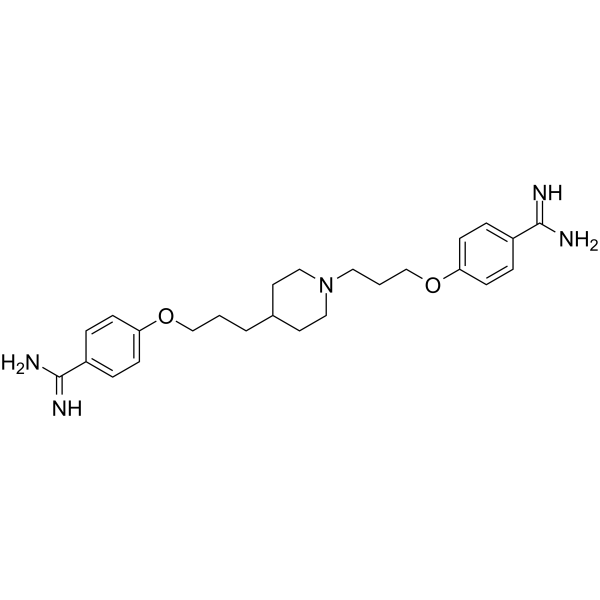
T-2307 is an antifungal agent with blood-brain barrier penetration. T-2307 exhibits broad-spectrum antifungal activity against Candida species, including echinocandin-resistant strains, Cryptococcus neoformans, Cryptococcus gattii, and some Aspergillus species. T-2307 selectively targets fungal mitochondrial respiratory chain complexes III and IV, causing collapse of the fungal mitochondrial membrane potential and exerting fungicidal or fungistatic effects. T-2307 can be used in research related to fungal infections such as invasive candidiasis, cryptococcosis, and aspergillosis .
loading...
    loading...
Cat. No.: HY-N125722
CAS No.: 33538-71-5
Synonyms: Aabomycin A1
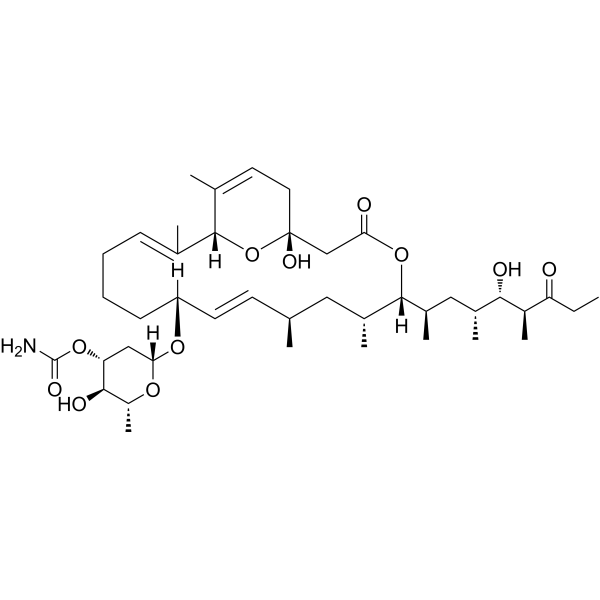
Venturicidin A (Aabomycin A1) is a natural product derived from Streptomyces, possessing antifungal, anti-Trypanosoma brucei, anti-Leishmania donovani, and ATP synthase inhibitory activities. Venturicidin A acts as an antibiotic adjuvant, promoting the uptake of aminoglycoside antibiotics and enhancing bactericidal efficacy. Venturicidin A inhibits ATP synthesis by blocking proton translocation through the FO subunit. In bloodstream-form Trypanosoma brucei, Venturicidin A causes collapse of the mitochondrial membrane potential; in fungi, it disrupts cell membrane integrity, induces leakage of cytoplasmic contents, elevates ROS levels, and downregulates the expression of fungal pathogenicity-related genes. Venturicidin A exhibits antifungal activity against Botrytis cinerea. Venturicidin A is used in research on bacterial infections, trypanosome/leishmania infections, and gray mold disease .
loading...
    loading...
Cat. No.: HY-Y0785
CAS No.: 107-22-2
Glyoxal (40% w/w in water) is an α-oxoaldehyde that inhibits Aldose Reductase, Glutathione Reductase, and NADPH synthase. Glyoxal (40% w/w in water) exhibits cytotoxicity, triggers oxidative stress, induces ROS accumulation, lipid peroxidation, mitochondrial membrane potential collapse, DNA damage, apoptosis, and massive production of advanced glycation end products (AGEs). Glyoxal (40% w/w in water) depletes glutathione and activates MAPK phosphorylation. It has lower toxicity as a fixative than paraformaldehyde (PFA) and serves as a precursor for the synthesis of oxalates and dietary carcinogens. Glyoxal (40% w/w in water) is suitable for research related to calcium oxalate kidney stones, diabetes, atherosclerosis, cardiovascular diseases, retinopathy, and cataracts .
loading...
    loading...
Cat. No.: HY-179054
Apoptosis inducer 51 (Compound 5d) is an apoptosis inducer. Apoptosis inducer 51 exhibits strong inhibitory activity against MDA-MB-231 cells. Apoptosis inducer 51 inhibits cell invasion and migration, induces G2/M phase cell cycle arrest and cell apoptosis. Apoptosis inducer 51 causes DNA damage, ROS burst and mitochondrial membrane potential (MMP) collapse. Apoptosis inducer 51 can be used for the study of triple-negative breast cancer.
loading...
    loading...
Cat. No.: HY-121642
CAS No.: 1169831-01-9
Target:  

Others

Research Areas:  

Others

SL-017 is a novel photoacoustic sensitizer and a derivative of photofrin B. It can be taken up by cells to the maximum extent within 30 minutes and is mainly localized in mitochondria. After being activated by visible light or ultrasound, SL-017 can significantly increase the production of reactive oxygen species (ROS). Low concentrations of SL-017 can rapidly cause the loss of mitochondrial membrane potential. SL-017 can also cause mitochondrial fragmentation, a process that occurs after the loss of membrane potential. Epoxyeicosatrienoic acids (EETs) can alleviate the loss of mitochondrial membrane potential caused by SL-017, but the antioxidant ascorbic acid has no such effect. These characteristics indicate that SL-017 mainly targets mitochondria and exerts its cytotoxic effect by triggering the collapse of mitochondrial membrane potential, generating ROS, and causing mitochondrial fragmentation. As a novel photoacoustic sensitizer, SL-017 has potential application value in photodynamic therapy and sonodynamic therapy.
loading...
    loading...
Cat. No.: HY-176162
Research Areas:  

Cancer

BJ-13 is a reactive oxygen species (ROS) inducer that can lead to mitochondrial membrane potential collapse and caspase-dependent apoptosis. BJ-13 inhibits the proliferation of SGC-7901, U-87MG, and HepG-2 cancer cells (IC50 values of 15.33, 27.18, and 20.44 nM, respectively). BJ-13 can be used in the study of gastric cancer .
loading...
    loading...
Cat. No.: HY-173356
Antiparasitic agent-26 (Compound 8) is an antiparasitic compound that potently inhibits the growth of Naegleria fowleri, with IC50 values of 22.87 μM (trophozoite stage) and 25.16 μM (cyst stage). Antiparasitic agent-26 exerts its antiparasitic activity by inducing programmed cell death, including cytoplasmic calcium accumulation, mitochondrial membrane potential collapse, ATP synthesis inhibition, ROS accumulation, and chromatin condensation. Antiparasitic agent-26 can be used in the research of primary amoebic meningoencephalitis (PAM) .
loading...
    loading...
Cat. No.: HY-167255
CAS No.: 5563-28-0
JC-10 is a lipophilic mitochondrial membrane potential indicator and is a fluorescent dye. JC-10 accumulates and aggregates in healthy mitochondria to emit red fluorescence; exists as a monomer emitting green fluorescence in the cytosol or apoptotic cells with collapsed mitochondrial membrane potential, enabling measurement of mitochondrial depolarization via the green/red fluorescence ratio .
loading...
    loading...
Cat. No.: HY-187115
CAS No.: 20762-32-7
GGW is a tripeptide with neuroprotective activity. GGW blocks the mitochondria-mediated apoptosis pathway, reverses glutamate-induced upregulation of the pro-apoptotic protein Bax and downregulation of the anti-apoptotic protein Bcl-2. GGW reduces ROS production, reverses the depletion of SOD and Glutathione Peroxidase, decreases intracellular calcium concentration, and reverses the collapse of mitochondrial membrane potential. GGW can be used in studies related to memory impairment induced by sleep deprivation .
loading...
    loading...
Cat. No.: HY-N11418
CAS No.: 149064-34-6
Pycnidione is a natural small-molecule compound isolated from fungi. Pycnidione inhibits stromelysin/MMP3, targets cyclin D1/E, induces G1 phase arrest, modulates survivin, affects caspase-8/3, targets PAI-1, inhibits topoisomerases, and induces HIF-1α accumulation/nuclear translocation and DNA binding/reporter gene transactivation and erythropoietin expression. Pycnidione induces apoptosis, reactive oxygen species (ROS) generation, and mitochondrial membrane potential collapse. Pycnidione can be used for research on lung cancer .
loading...
    loading...
Cat. No.: HY-179399
Research Areas:  

Cancer

β-carboline-ACS81 is a β-carboline derivative with potent antitumor properties. β-carboline-ACS81 induces apoptosis through the collapse of mitochondrial membrane potential and arrests cell cycle at G2/M phase in HL-60 cells. β-carboline-ACS81 possesses potent antiproliferative activity against HL-60 cells (IC50 = 1.52 μM). β-carboline-ACS81 can be used for the research of leukemia, histiocytic lymphoma, hepatocellular carcinoma, malignant melanoma, colorectal carcinoma and lung carcinoma .
loading...
    loading...
Cat. No.: HY-W975617
CAS No.: 479-54-9
Synonyms: Carthamidin
4',5,7,8-Tetrahydroxyflavanone (Carthamidin) is a flavanone pigment. 4',5,7,8-Tetrahydroxyflavanone can be found in Carthamus tinctorius. 4',5,7,8-Tetrahydroxyflavanone induces ROS generation, oxidative stress, Apoptosis-mediated cell death, cell cycle arrest at G0/G1 phase, mitochondrial membrane potential collapse, and LDH leakage. 4',5,7,8-Tetrahydroxyflavanone exhibits anti-inflammatory, antioxidant, and neuroprotective effects, and acts as a reducing and capping agent for gold nanoparticles. 4',5,7,8-Tetrahydroxyflavanone can be used in breast cancer research .
loading...
    loading...
Cat. No.: HY-189384
CAS No.: 113062-58-1
PB1-3 is an orally active CDK4/CDK6 inhibitor with selective antiproliferative activity against 4T1 and MCF-7 breast cancer cells. PB1-3 directly binds to CDK4 and CDK6, downregulates total protein expression, reduces Rb phosphorylation, and induces G0/G1 phase arrest. PB1-3 induces ROS accumulation, mitochondrial membrane potential collapse, initiation of mitochondria-mediated intrinsic apoptosis, upregulation of the Bax/Bcl-2 ratio, and activation of cleaved caspase-3. PB1-3 inhibits tumor growth in a 4T1 orthotopic syngeneic mouse model. PB1-3 can be used for research related to triple-negative breast cancer .
loading...
    loading...
  • 1

