
93 Results for "

molecular modelling

" in MedChemExpress (MCE) Product Catalog:
Products (93)

93 Results for "molecular modelling" in MCE Product Catalog:

10
10 Publications Verification
Cat. No.: HY-116282C
CAS No.: 9011-18-1
Synonyms: DSS (MW 35000-45000); DXS (MW 35000-45000)
Target:  

Apoptosis

Dextran sulfate sodium salt (DSS) (MW 35000-45000) is a polymer of dehydrated glucose with a molecular weight of approximately 35000-45000. DSS with different molecular weights exhibits different biological activities. Dextran sulfate sodium salt (DSS) (MW 35000-45000) is a potent inducer of colitis. Dextran sulfate sodium salt (DSS) (MW 35000-45000) can be used to induce model acute colitis, chronic colitis, and colitis-related colon cancer. Dextran sulfate sodium salt (DSS) (MW 35000-45000) may be related to macrophage dysfunction, intestinal flora dysbiosis, and is particularly toxic to the colonic epithelium .
loading...
    loading...
3
3 Cited Publications
Cat. No.: HY-70006
CAS No.: 851983-85-2
Synonyms: TOK-001; VN-124-1
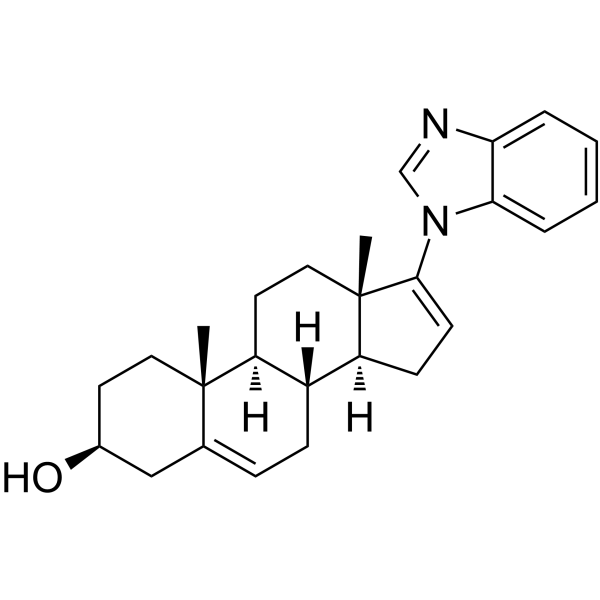
Galeterone (TOK-001) is a potent, orally active molecular glue degrader, which degrades androgen receptor (AR) and its splice variants (AR-Vs) and MAP kinase-interacting serine/threonine protein kinase Mnk1/2. Galeterone also functions as a CYP17 inhibitor (IC50 = 47 nM). Galeterone induces cell apoptosis. Galeterone inhibits tumor growth in human prostate cancer xenograft mouse models. Galeterone can be used for castration resistant prostate cancer (CRPC) and pancreatic ductal adenocarcinoma (PDAC) research [1][2].
loading...
    loading...
3
3 Cited Publications
Cat. No.: HY-Y0850L
CAS No.: 9002-89-5
Synonyms: PVA (Mw 85000-124000, 99+% hydrolyzed); Poly(Ethenol) (Mw 85000-124000, 99+% hydrolyzed)
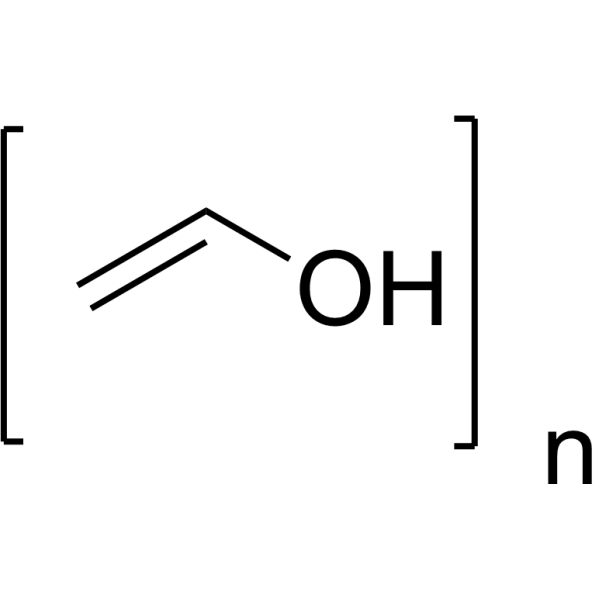
Polyvinyl alcohol (Mw 85000-124000, 99+% hydrolyzed) is a polyvinyl alcohol with a molecular weight of 85000-124000 and hydrolytic properties. Polyvinyl alcohol (Mw 85000-124000, 99+% hydrolyzed) forms hydrogels that can be used to simulate digestive organs and lesion models for the training of endoscopic ultrasound (EUS) and endoscopic ultrasound elastography (EUS-E). Polyvinyl alcohol with different degrees of hydrolysis can be used to self-crosslink to form cryogel, which can be used as biological excipients .
loading...
    loading...
3
3 Cited Publications
Cat. No.: HY-123960
CAS No.: 2022961-17-5
Purity:  99.75%
Target:  

Phosphatase

Research Areas:  

Neurological Disease

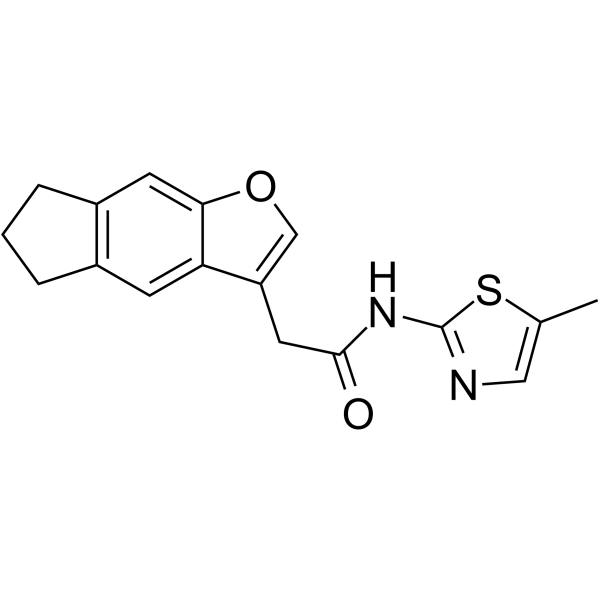
Raphin1 is an orally bioavailable, selective inhibitor of the regulatory phosphatase PPP1R15B (R15B). Raphin1 binds strongly to the R15B-PP1c holophosphatase (Kd=33 nM), and shows ~30-fold selective in binding R15B-PP1c over R15A-PP1c. Raphin1 crosses the blood-brain barrier, and reduces organismal and molecular deficits in a mouse model of a protein misfolding disease .
loading...
    loading...
3
3 Cited Publications
Cat. No.: HY-123960A
CAS No.: 2242616-04-0
Purity:  99.93%
Target:  

Phosphatase

Research Areas:  

Neurological Disease

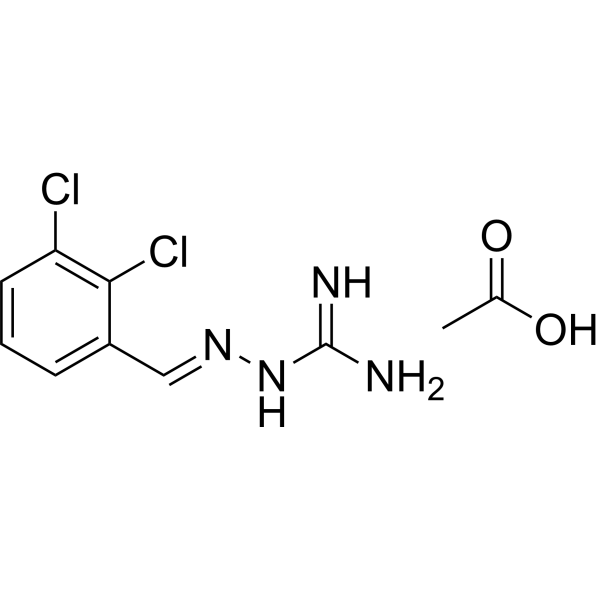
Raphin1 acetate is an orally bioavailable, selective inhibitor of the regulatory phosphatase PPP1R15B (R15B). Raphin1 acetate binds strongly to the R15B-PP1c holophosphatase (Kd=33 nM), and shows ~30-fold selective in binding R15B-PP1c over R15A-PP1c. Raphin1 acetate crosses the blood-brain barrier, and reduces organismal and molecular deficits in a mouse model of a protein misfolding disease .
loading...
    loading...
1
1 Cited Publications
Cat. No.: HY-103609
CAS No.: 129-00-0
Purity:  99.72%
Synonyms: Benzo[def]phenanthrene
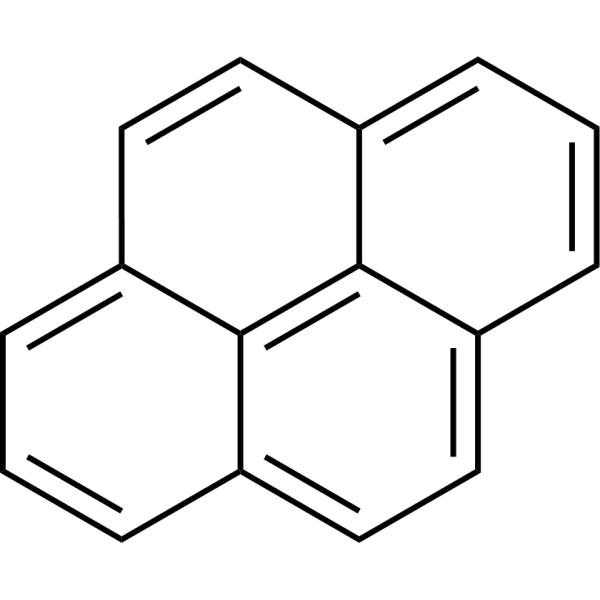
Pyrene is a polycyclic aromatic hydrocarbon (PAH) composed of four fused benzene rings. It has a distinct aromatic odor, produced by incomplete combustion of organic matter. Pyrene exhibits strong fluorescence, emitting in the blue region of the spectrum, making it useful as a probe for studying molecular interactions in solution and on surfaces. Pyrene is also used as a model compound for the study of PAHs in various environments and biological systems because of its ubiquity in these environments. However, long-term exposure to pyrene has been associated with potential health risks, including carcinogenicity and mutagenicity.
loading...
    loading...
1
1 Cited Publications
Cat. No.: HY-157214
CAS No.: 3030588-01-0
Purity:  99.76%
Target:  

STING Molecular Glues

Research Areas:  

Cancer

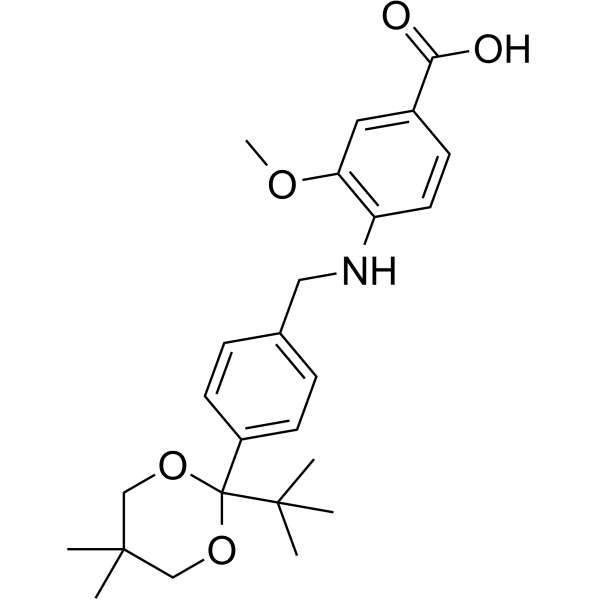
NVS-STG2 is a molecular glue that targets STINGmolecular glue. NVS-STGI enhances the activity of cGAMP by inducing the formation of more abundant and larger oligomers. NVS-STG2 produces antitumor activity in animal models .
loading...
    loading...
1
1 Cited Publications
Cat. No.: HY-W035091
CAS No.: 16903-35-8
Tetrachloroauric acid is an Au (III) compound and bilayer disruptor that can be used to damage red blood cells. Tetrachloroauric acid specifically disrupts the bilayer structure of representative phospholipids (dimyristoylphosphatidylcholine and dimyristoylphosphatidylethanolamine) in human red blood cell membranes, and induces morphological changes in intact human red blood cells. Tetrachloroauric acid causes downregulation of MT I-II and GFAP expression in the mouse brain following chronic treatment. Tetrachloroauric acid is being used in studies related to neurotoxicity and hematotoxicity, including analyses of human red blood cells and molecular models of red blood cell membranes, as well as immunohistochemical evaluation of the mouse brain .
loading...
    loading...
1
1 Cited Publications
Cat. No.: HY-13072
CAS No.: 871357-89-0
Purity:  99.86%
Synonyms: AS-703569; R-763
Research Areas:  

Cancer

Cenisertib (AS-703569) is an ATP-competitive multi-kinase inhibitor that blocks the activity of Aurora-kinase-A/B, ABL1, AKT, STAT5 and FLT3. Cenisertib induces major growth-inhibitory effects by blocking the activity of several different molecular targets in neoplastic mast cells (MC). Cenisertib inhibits tumor growth in xenograft models of pancreatic, breast, colon, ovarian, and lung tumors and leukemia .
loading...
    loading...
Cat. No.: HY-168625
CAS No.: 3050683-38-7
Synonyms: VAV1 degrader-3
MRT-6160 (Example 185) is an orally active VAV1 molecular glue degrader (DC50: 7 nM). MRT-6160 reduces immune cell activation, immune cell proliferation and the production of various cytokines. MRT-6160 can be used for research of inflammatory or autoimmune disorder. MRT-6160 inhibits disease progression in experimntal autoimmune encephalomyelitis (EAE) mouse model, Collagen-induced arthritis (CIA) mouse model, etc. .
loading...
    loading...
Cat. No.: HY-159641
CAS No.: 3034880-93-5
Synonyms: BAY-3605349
VVD-130037 (BAY-3605349) is a covalent molecular glue and allosteric NRF2 degrader. VVD-130037 covalently binds to KEAP1 and allosterically enhances the affinity of KEAP1-CUL3, promotes the formation of the active KEAP1-CUL3 E3 ligase complex, and thereby enhances the ubiquitination and degradation of NRF2. VVD-130037 exhibits KEAP1 target-binding activity both in in vitro systems and mouse models, and it can be used in research related to NRF2-dependent cancers, solid tumors harboring KEAP1 nonsense mutations and frameshift mutations, as well as advanced solid tumors .
loading...
    loading...
Cat. No.: HY-D1056A3
Synonyms: LPS, from Escherichia coli (O26:B6)
Lipopolysaccharides, from E. coli (Escherichia coli) O26:B6 are lipopolysaccharide endotoxins and TLR-4 activators derived from E. coli, classified as S-type LPS, which can activate pathogen-associated molecular patterns (PAMP) of the immune system and induce cellular secretion of migrasomes. Lipopolysaccharides, from E. coli O26:B6 exhibit a typical three-part structure: O-antigen, core oligosaccharide, and lipid A, and can be recognized by the core-specific monoclonal antibody MAb J8-4C10. Lipopolysaccharides, from E. coli O26:B6 can promote an increase in pro-inflammatory cytokines in plasma, thereby triggering hypothalamic-pituitary-adrenal (HPA) activation and leading to adrenal oxidative damage. The pathogenic effects of Lipopolysaccharides, from E. coli O26:B6 can be used to construct various models, such as cellular inflammation models, sepsis, acute lung injury models, adrenal dysfunction models, and bladder infection models, etc .
It is recommended to prepare a solution with concentration ≥2 mg/mL. Vortex thoroughly for more than 10 minutes. Due to the adsorption characteristics of LPS, silanized container or low adsorption centrifuge tubes should be used for aliquoting and storage, and mix thoroughly before use.
loading...
    loading...
Cat. No.: HY-119264
CAS No.: 903499-49-0
PRLX-93936 is a molecular Glues that binds to and reprograms the TRIM21 ubiquitin ligase to degrade nuclear pore complexes. PRLX-93936 binds to TRIM21, forms a ternary complex with TRIM21 and NUP98, and mediates the ubiquitination and proteasomal degradation of NUP98 and other nuclear pore complex proteins. PRLX-93936 induces the loss of short-lived cytoplasmic mRNA transcripts, triggers cancer cell apoptosis (Apoptosis), and inhibits the activated Ras pathway. PRLX-93936 inhibits HIF-1 under hypoxic conditions (IC50 = 0.09 μM in cell-based reporter gene assay). PRLX-93936 suppresses tumor growth in mouse models and improves survival rates in mouse models of multiple myeloma. PRLX-93936 is applicable to research related to pancreatic cancer and multiple myeloma .
loading...
    loading...
Cat. No.: HY-176444
CAS No.: 3036606-92-2
Target:  

Molecular Glues CDK

Research Areas:  

Cancer

CDK2 degrader 6 is an orally active and potent CDK2 molecular glue degrader with a DC50 of 46.5 nM. CDK2 degrader 6 binds to cereblon and CDK2 to induce ubiquitination and subsequent proteasomal degradation of CDK2. CDK2 degrader 6 modulates cell cycle in breast cancer cells. CDK2 degrader 6 reduces proliferation of breast cancer cells. CDK2 degrader 6 exhibits in vivo antitumor activity in gastric cancer mouse models. CDK2 degrader 6 can be used for the research of breast cancer, gastric cancer .
loading...
    loading...
Cat. No.: HY-161779
CAS No.: 2851986-76-8
Research Areas:  

Cancer

PLX-3618 is a molecular glue, that degrades BRD4 with DC50 of 12.2 nM. PLX-3618 promotes polyubiquitination and subsequent proteasomal degradation of BRD4 by recruiting of the E3 ligase substrate receptor, DCAF11. PLX-3618 inhibits the proliferation of various cancer cells, induces apoptosis in AML cells. PLX-3618 exhibits antitumor activity against AML in mouse models .
loading...
    loading...
Cat. No.: HY-P991577
Synonyms: DS-8895A

Target:  

Ephrin Receptor

Research Areas:  

Cancer

DS-8895(DS-8895A) is an anti-EphA2 monoclonal antibody with specific binding to EphA2 receptors and EphA2-expressing cells. DS-8895, when conjugated with 89Zr, 111In, or 125I, supports molecular imaging of EphA2 expression in xenograft models. DS-8895 allows noninvasive measurement of EphA2 expresssion in tumors in vivo. .
loading...
    loading...
Cat. No.: HY-W134328
CAS No.: 87915-38-6
Synonyms: Dextran blue (MW 2000000)
Blue dextran (Dextran blue) (MW 2000000) is a high-molecular-weight long-chain polymer of D-glucose. Blue dextran (MW 2000000) serves as an important model macromolecular drug and molecular weight estimation marker, and can be used as a standard for gel permeation chromatography. The release of Blue dextran (MW 2000000) from alginate microspheres is regulated by preparation conditions; its release rate in a pH 6.8 environment is significantly faster than that in pH 1.2, and it exhibits release characteristics close to zero-order kinetics under this condition .
loading...
    loading...
Cat. No.: HY-159098
dWIZ-1 is an orally active molecular glue and chemical probe targeting the WIZ transcription factor, which based on an IMiD backbone, binding to human WIZ with an affinity of 3.5 μM. dWIZ-1 recruits WIZ to the cereblon-DDB1 complex via its ZF7 domain, thereby triggering proteasome-dependent degradation of WIZ. dWIZ-1 significantly induces fetal hemoglobin expression in erythroblasts while reducing the level of inhibitory H3K9 dimethylation at WIZ binding sites such as the β-globin locus. Meanwhile, dWIZ-1 does not affect the proliferation and differentiation of erythroblasts, and no cytotoxicity is observed in in vitro cells or cynomolgus monkey models. dWIZ-1 serves as a critical tool molecule for investigating the mechanism and underlying pathways of sickle cell disease .
loading...
    loading...
Cat. No.: HY-112624H
CAS No.: 9004-54-0
Synonyms: Dextran 2; Dextran D2; Dextran T2(MW 1600-2400)
Dextran T2 (Dextran 2; Dextran T2(MW 1600-2400)) is a natural high molecular weight polysaccharide, the glycosidic bonds in its structure can be recognized by endo-dextranase and exo-dextranase. Dextran T2 (MW 2,000) breaks the glycosidic bonds in the enzymatic hydrolysis mechanism, releasing products such as D-glucose, Isomaltose (IM2), and Isomaltotriose (IM3). Dextran T2 (MW 2,000) can be used as a model substrate to characterize the catalytic properties of dextranase (such as optimal pH, temperature and product specificity), and to study enzymatic mechanism research and polysaccharide degradation pathways in glycobiology. The Dextran series of compounds are also a natural polysaccharide drug carrier, which can be connected to drugs through covalent bonding methods such as ester bonds, amide bonds or click chemistry, or self-assembled to form carriers such as nanoparticles and hydrogels. Dextran is biodegradable and biocompatible, and can achieve targeted delivery and controlled release of drugs. Dextran derivatives can prolong drug half-life, increase local concentration and reduce immune clearance activity .
loading...
    loading...
Cat. No.: HY-W181530
CAS No.: 790245-61-3
Research Areas:  

Cancer

NCT02 is a molecular glue degrader based on the E3 ubiquitin ligase DDB1 that targets CDK12 and its binding partner CCNK. NCT02 triggers the ubiquitination and proteasomal degradation of CCNK, thereby downregulating CDK12 protein levels and inhibiting its downstream signaling pathways. NCT02 can induce tumor cell apoptosis, arrest the cell cycle, and selectively inhibit the proliferation of colorectal cancer cells carrying TP53 defects or belonging to the consensus molecular subtype CMS4. NCT02 has the potential to inhibit tumor growth in in vitro and in vivo models .
loading...
    loading...

