

1. Search Result
Search Result
Results for "

nodules

" in MedChemExpress (MCE) Product Catalog:

23

Inhibitors & Agonists

2

Peptides

1

Inhibitory Antibodies

3

Natural
Products

2

Isotope-Labeled Compounds

1

Click Chemistry

Cat. No. Nombre del producto Target Áreas de investigación Chemical Structure
  • HY-107910
    Hyaluronidase, Bovine testes
    15+ Cited Publications

    Hyaluronate 4-glycanohydrolase, Bovine testes; Hyaluronoglucosaminidase, Bovine testes

    NF-κB Inflammation/Immunology Cancer
    Hyaluronidase, Bovine testes (Hyaluronate 4-glycanohydrolase; Hyaluronoglucosaminidase) is an endoglycosidase that depolymerizes Hyaluronic acid (HA) (HY-B0633A) by cleavage of glycosidic bonds. Hyaluronidase degrades HA and activates membrane receptors that trigger pathways converging in NF-κB activation. Hyaluronidase is employed in the research of granulomatous foreign body reactions, soft-tissue necrosis caused by vascular compromise and uncomplicated nodules, overcorrection, inflamed nodules or tissue ischemia associated with HA filler injection .
    Hyaluronidase, Bovine testes
  • HY-145588

    INCB54707

    JAK Inflammation/Immunology
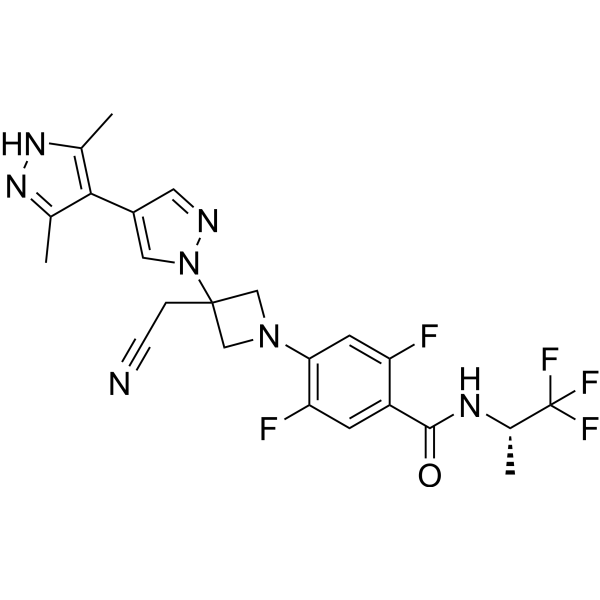
    Povorcitinib (INCB54707) is a potent and selective JAK1 inhibitor that effectively reduces abscesses and inflammatory nodules. Povorcitinib is used to study cutaneous lupus erythematosus (CLE) and lichen planus (LP) .
    Povorcitinib
  • HY-119443

    Phosphatase Metabolic Disease
    Neridronate is an aminobisphosphonate. Neridronate induces osteoblast differentiation, enhances alkaline phosphatase activity and mineralized nodule formation. Neridronate inhibits endothelial cell proliferation, fibroblast growth factor-2-induced capillary-like tube formation, and angiogenesis. Neridronate can be used for osteogenesis imperfecta and Paget’s disease of bone .
    Neridronate
  • HY-Y1097

    2-(Methoxycarbonyl)benzoic acid

    Endogenous Metabolite Reactive Oxygen Species (ROS) Cancer
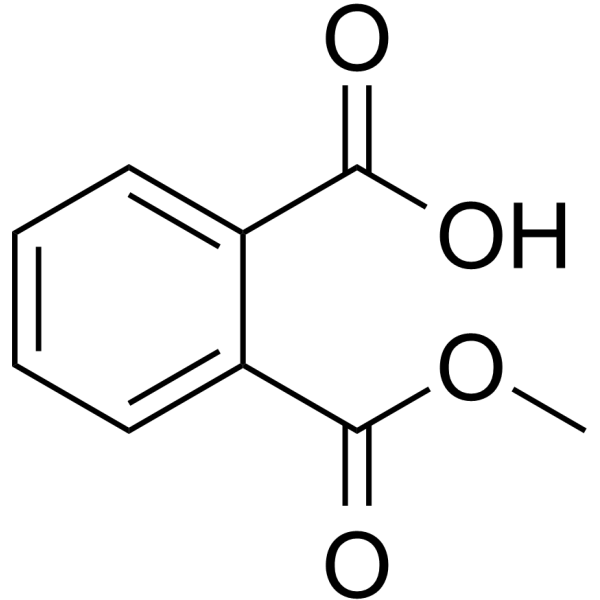
    Monomethyl phthalate is an orally active metabolite of phthalic acid. Monomethyl phthalate, as a urine biomarker after exposure to phthalate, can be used as a detection indicator for thyroid cancer and benign nodules. Monomethyl phthalate reduces the survival rate of young frogs. Monomethyl phthalate induces oxidative damage to red blood cells in rats .
    Monomethyl phthalate
  • HY-W011258

    L-Tyrosyl-L-phenylalanine

    Xanthine Oxidase Angiotensin-converting Enzyme (ACE) Inflammation/Immunology Cancer
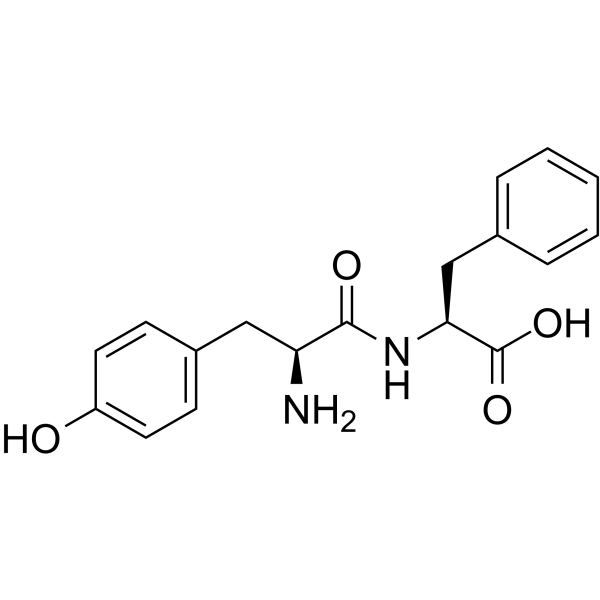
    H-Tyr-Phe-OH (L-Tyrosyl-L-phenylalanine) is an orally active inhibitor of Angiotensin converting enzyme (ACE), with an inhibiton rate of 48% at 50 μM. H-Tyr-Phe-OH can be used as an biomarker for differentiating benign thyroid nodules (BTN) from thyroid cancer (TC). H-Tyr-Phe-OH exhibits xanthine oxidase inhibition (uric acid lowering) activity and serves as regulator in IL-8 production in neutrophil-like cells .
    H-Tyr-Phe-OH
  • HY-138822

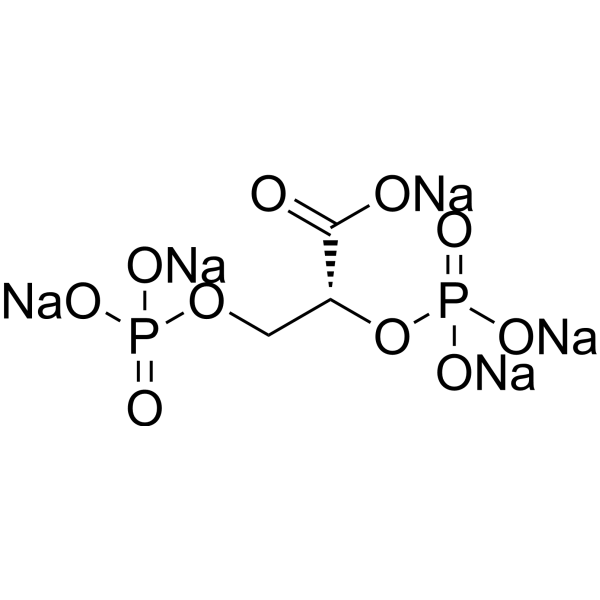
    2,3-DPG pentasodium salt

    Endogenous Metabolite Cardiovascular Disease
    2,3-Diphospho-D-glyceric acid (2,3-DPG) pentasodium salt is a hemoglobin binder and vascular calcification inhibitor that reduces the oxygen affinity of hemoglobin. 2,3-Diphospho-D-glyceric acid pentasodium salt also specifically delays the transformation of colloidal calciprotein particles into crystalline forms, thereby effectively inhibiting vascular smooth muscle cell calcification without affecting the normal formation of osteoid nodules in osteoblast-like cells. 2,3-Diphospho-D-glyceric acid pentasodium salt shows no cytotoxicity to tested cell lines and only weakly interferes with β-hematin formation mediated by glyceryl monopalmitate. 2,3-Diphospho-D-glyceric acid pentasodium salt can be used to study the pathological mechanisms of vascular calcification and malaria-related conditions .
    2,3-Diphospho-D-glyceric acid pentasodium salt
  • HY-Y1097S

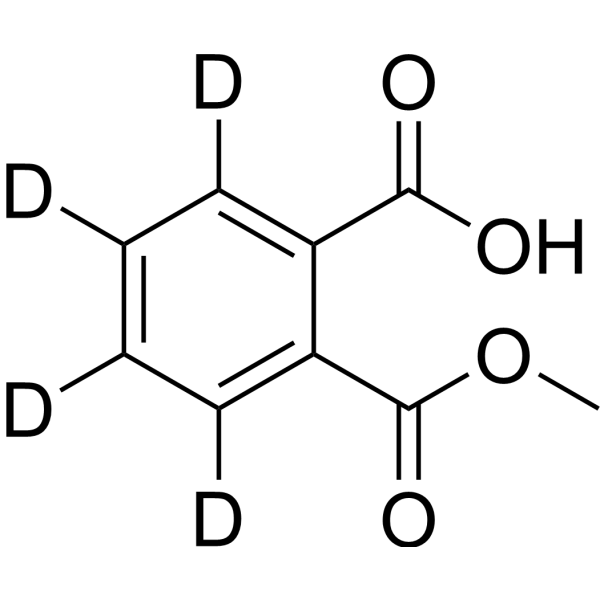
    2-(Methoxycarbonyl)benzoic acid-d4

    Isotope-Labeled Compounds Cancer
    Monomethyl phthalate-d4 (2-(Methoxycarbonyl)benzoic acid-d4) is the deuterium labeled Monomethyl phthalate. Monomethyl phthalate is a phthalate metabolite. Monomethyl phthalate acts as a urinary biomarker of phthalates exposure and can be used as a standard for the determination of thyroid cancer and benign nodule .
    Monomethyl phthalate-d4
  • HY-110280

    HDAC Apoptosis Cancer
    MC1742 is a potent HDAC inhibitor, with IC50s of 0.1 μM, 0.11 μM, 0.02 μM, 0.007 μM, 0.61 μM, 0.04 μM and 0.1 μM for HDAC1, HDAC2, HDAC3, HDAC6, HDAC8, HDAC10 and HDAC11, respectively. MC1742 can increase acetyl-H3 and acetyl-tubulin levels and inhibits cancer stem cells growth. MC1742 can induce growth arrest, apoptosis, and differentiation in sarcoma CSC .
    MC1742
  • HY-B1341

    Enidrel; SC-4642; NSC 15432

    Endogenous Metabolite Progesterone Receptor Cancer
    Norethynodrel (Enidrel; SC-4642) is an orally active progestogen analog that reduces estrogen-like effects and enhances progestogen-like responses in endometrial stromal cells. Norethynodrel also promotes cell maturation and predecidual cell formation by inducing organelle hyperplasia and glycogen accumulation. Norethynodrel competitively inhibits drug-metabolizing enzymes in rat liver microsomes, thereby prolonging Pentobarbital sleep time, while exhibiting multiple effects including reduced body weight gain, attenuated heart rate elevation and ovulation inhibition. In mouse models, Norethynodrel significantly increases the incidence of mammary adenocarcinoma, cervical cancer and pituitary tumors. Norethynodrel can be used for mechanism research on related diseases such as mammary adenocarcinoma, cervical cancer, ovarian tubular adenoma and pituitary adenoma .
    Norethynodrel
  • HY-145588A

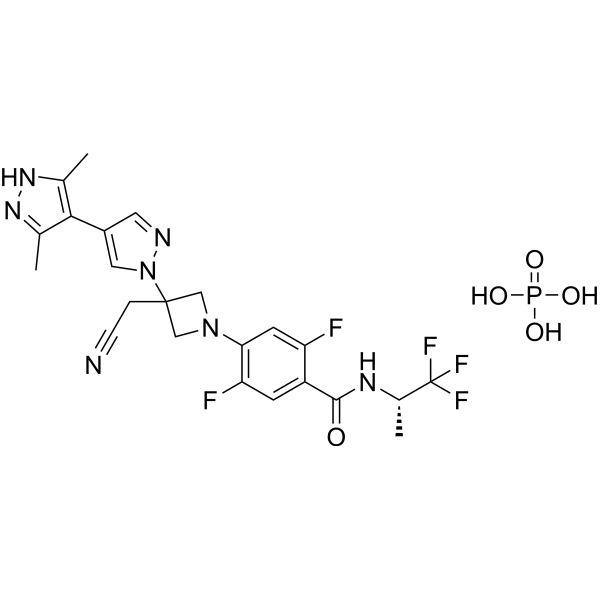
    INCB54707 phosphate

    JAK Inflammation/Immunology
    Povorcitinib (INCB54707) phosphate is a potent and selective JAK1 inhibitor that effectively reduces abscesses and inflammatory nodules. Povorcitinib phosphate can be used to study cutaneous lupus erythematosus (CLE) and lichen planus (LP) (information extracted from patent WO2021076124A1) .
    Povorcitinib phosphate
  • HY-N7698A

    Bacterial Inflammation/Immunology
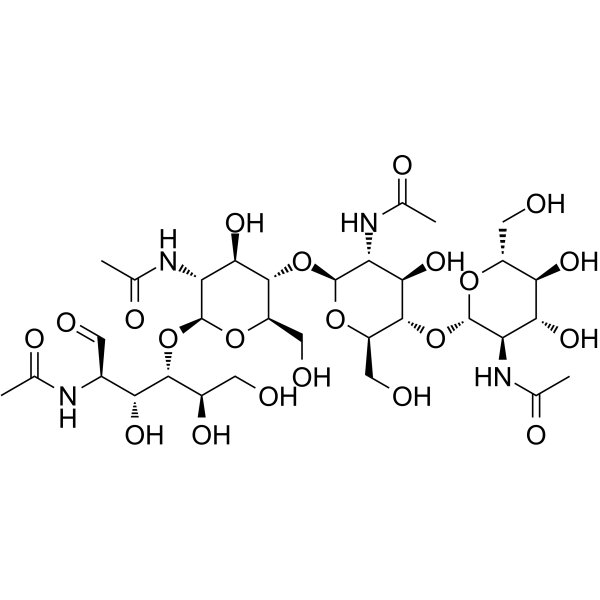
    Penta-N-acetylchitopentaose elicits plant defense systems. Penta-N-acetylchitopentaose is a substrate for the Rhizobium leguminosarum nodulation protein NodL .
    Penta-N-acetylchitopentaose
  • HY-N7698

    Biochemical Assay Reagents Others
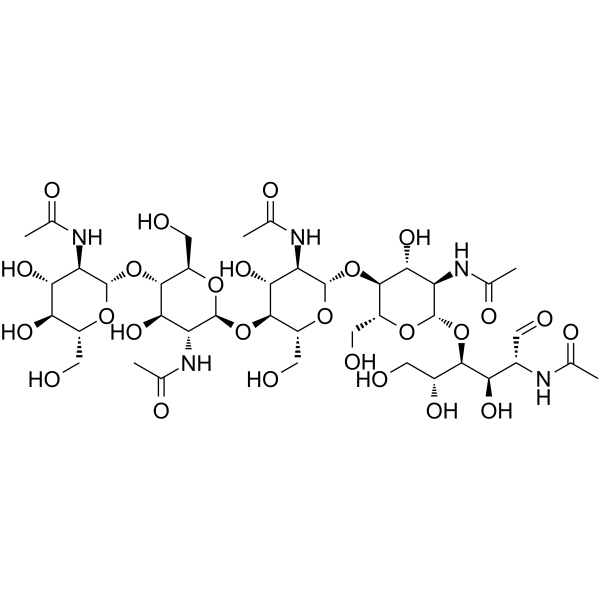
    Tetra-N-acetylchitotetraose is a linear chitosan oligosaccharide. Tetra-N-acetylchitotetraose is a component of the hpo-chitoo gosacchaπdes (LCOs) secreted from Rhizobia. Tetra-N-acetylchitotetraose is also a substrate for the Rhizobium leguminosarum nodulation protein NodB, a CO deacetylase .
    Tetra-N-acetylchitotetraose
  • HY-139061

    LPL Receptor ROCK Cancer
    Palmitoyl 3-carbacyclic phosphatidic acid (HY-139061) is a palmitoylated Carba-like cyclophosphatidic acid and an analog of lysophosphatidic acid (LPA). Palmitoyl 3-carbacyclic phosphatidic acid has different functions from LPA and can inhibit the activation of RhoA and inhibit the migration of melanoma cells. Palmitoyl 3-carbacyclic phosphatidic acid effectively inhibited experimental lung metastasis and reduced the number of tumor nodules in a B16-F0 xenograft mouse model .
    Palmitoyl 3-carbacyclic phosphatidic acid
  • HY-169703
    SPA0355
    1 Publications Verification

    RANKL/RANK p38 MAPK Akt NF-κB Inflammation/Immunology
    SPA0355 is a thiourea derivative that has antioxidant and anti-inflammatory properties. SPA0355 inhibits the RANKL (receptor activator of nuclear factor κB ligand) induced osteoclast formation in primary bone marrow-derived macrophages. SPA0355 also suppresses the activation of the MAPKs, Akt, and NF-κB pathways. Additionally, SPA0355 promotes osteoblast differentiation, increases alkaline phosphatase activity, and enhances mineral nodule formation. SPA0355 can protect ovariectomized mice from bone loss by stimulating osteoblast differentiation and inhibiting osteoclast resorption, making it useful for studying postmenopausal osteoporosis .
    SPA0355
  • HY-149949

    Apoptosis Cancer
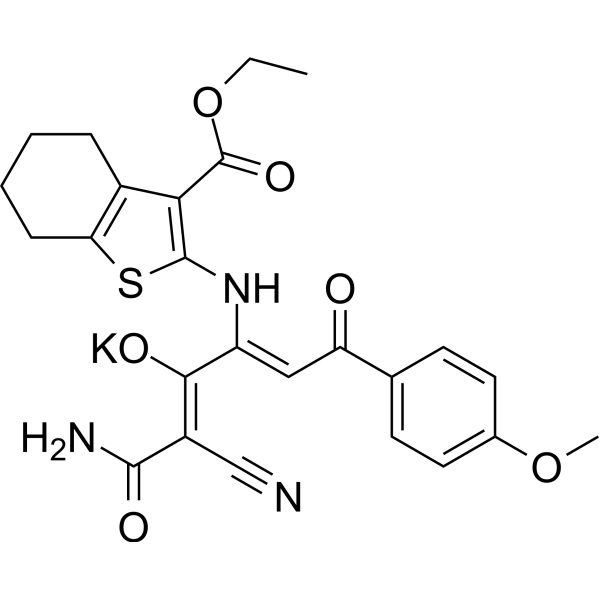
    Anticancer agent 105 is a compound based on thienopyrimidine scaffold, with with good safety and anticancer properties. Anticancer agent 105 shows selective toxicity towards melanoma cancer, and induces apoptosis. And Anticancer agent 105 significantly inhibits the metastatic nodules, even in pulmonary metastatic melanoma mouse model .
    Anticancer agent 105
  • HY-Y1097R

    2-(Methoxycarbonyl)benzoic acid (Standard)

    Reference Standards Endogenous Metabolite Cancer
    Monomethyl phthalate (Standard) is the analytical standard of Monomethyl phthalate. This product is intended for research and analytical applications. Monomethyl phthalate is an orally active metabolite of phthalic acid. Monomethyl phthalate, as a urine biomarker after exposure to phthalate, can be used as a detection indicator for thyroid cancer and benign nodules. Monomethyl phthalate reduces the survival rate of young frogs. Monomethyl phthalate induces oxidative damage to red blood cells in rats.
    Monomethyl phthalate (Standard)
  • HY-200621

    Biochemical Assay Reagents Cancer
    Methoxyisobutylisonitrile is a radioactive compound that can form a complex with technetium-99m and be used as a tracer to diagnose lung lesions and malignant thyroid nodules, etc .
    Methoxy isobutyl isonitrile
  • HY-149950

    Apoptosis Cancer
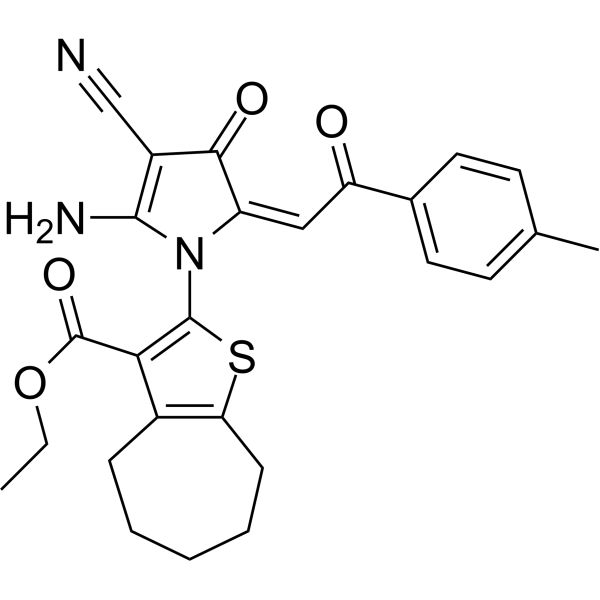
    Anticancer agent 106 (compound 10ic) is an anticancer agent that induces apoptosis in B16-F10 melanoma cells. Anticancer agent 106 also potently inhibits metastatic nodules in a mouse model of lung metastatic melanoma. Anticancer agent 106 can be used in the study of cancer, especially lung metastatic melanoma .
    Anticancer agent 106
  • HY-145588S

    INCB54707-d6

    Isotope-Labeled Compounds JAK Inflammation/Immunology
    Povorcitinib-d6 (INCB54707-d6) is the deuterium labeled Povorcitinib (HY-145588). Povorcitinib (INCB54707) is a potent and selective JAK1 inhibitor that effectively reduces abscesses and inflammatory nodules. Povorcitinib is used to study cutaneous lupus erythematosus (CLE) and lichen planus (LP) .
    Povorcitinib-d6
  • HY-119443R

    Reference Standards Phosphatase Metabolic Disease Inflammation/Immunology
    Neridronate (Standard) is the analytical standard of Neridronate (HY-119443). This product is intended for research and analytical applications. Neridronate is an aminobisphosphonate. Neridronate induces osteoblast differentiation, enhances alkaline phosphatase activity and mineralized nodule formation. Neridronate inhibits endothelial cell proliferation, fibroblast growth factor-2-induced capillary-like tube formation, and angiogenesis. Neridronate can be used for osteogenesis imperfecta and Paget’s disease of bone .
    Neridronate (Standard)
  • HY-120015

    MMP Cancer
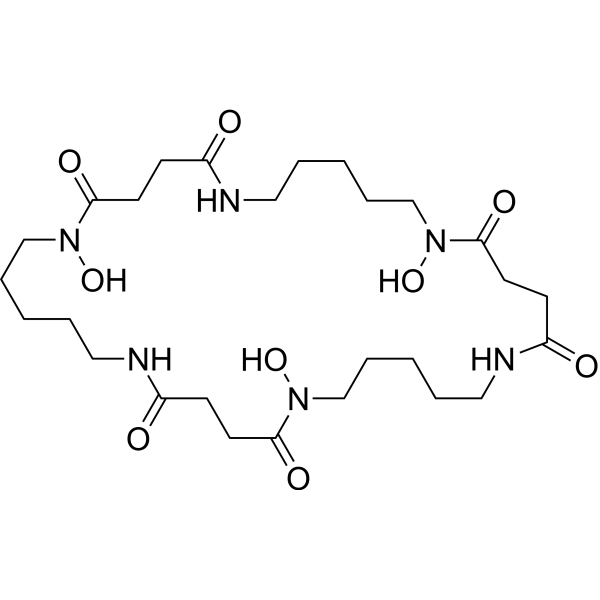
    BE-16627B is a metalloproteinase inhibitor. BE-16627B can be isolated from microbial cultures. BE-16627B can inhibit metalloproteinases in enzyme assays. BE-16627B reduces the number and size of HT1080 cell nodules on lung surface in mouse models. BE-16627B inhibits growth of HT1080 cells in mice. BE-16627B can be studied in anti-cancer research .
    BE-16627B
  • HY-P11767

    Ferroptosis Infection
    NCR247 is a defensin-like nodule cysteine-rich (NCR) peptide and haem sequesterer. NCR247 forms 6:6 haem:NCR247 hexamers and higher-order complexes to render haem and bound iron biologically inaccessible, induces iron-starvation response in Sinorhizobium meliloti and Medicago truncatula, and supports nitrogenase activity.NCR247 is critical for establishing nitrogen-fixing symbiosis between Sinorhizobium meliloti and Medicago truncatula, and is inactive against cytochrome haem.NCR247’s D-enantiomer binds and sequesters haem equivalently to its L-enantiomer.NCR247 can be used for the research of infections, periodontal disease, toxoplasmosis .
    NCR247
  • HY-P992459

    ADC Antibody Transmembrane Glycoprotein Cancer
    SGM-101 Antibody is a chimeric monoclonal antibody targeting carcinoembryonic antigen (CEA). SGM-101 Antibody can serve as a tumor-specific fluorescent imaging probe after being covalently conjugated with the near-infrared fluorescent dye BM104 . SGM-101 Antibody accumulates in CEA-positive tumor tissues via antigen-antibody specific binding, and emits near-infrared fluorescence to enable imaging of tumor lesions. SGM-101 Antibody can be used in research related to gastric cancer, colorectal cancer, pancreatic cancer, non-small cell lung cancer, breast cancer, peritoneal carcinomatosis, and liver metastases .
    SGM-101 Antibody

Consulta en línea

Your information is safe with us. * Required Fields.

Saludo


Country or Region *

Nombre del solicitante *


Nombre de la Organizaciòn *

Department *


Direcciòn del E-mail *


Nombre del producto *

Cat. No.


Requested quantity *

Número de teléfono *


Observaciones

Consulta en línea

Inquiry Information

Nombre del producto:
Cat. No.:
Cantidad:
MCE Japan Authorized Agent:

