
126 Results for "

oryzae

" in MedChemExpress (MCE) Product Catalog:
Products (126)

126 Results for "oryzae" in MCE Product Catalog:

5
5 Cited Publications
Cat. No.: HY-B1858
CAS No.: 50512-35-1
Isoprothiolane is a blast fungicide with antifungal, anti-inflammatory and insecticidal activities. Isoprothiolane primarily acts on fungi during the penetration and growth stages of infecting hyphae. Isoprothiolane can be used as an insecticide, pesticide, etc. In addition, Isoprothiolane can reduce serum phospholipid and total lipid concentrations, regulating lipid metabolism. Isoprothiolane is also used in the research of fatty liver .
loading...
    loading...
2
2 Cited Publications
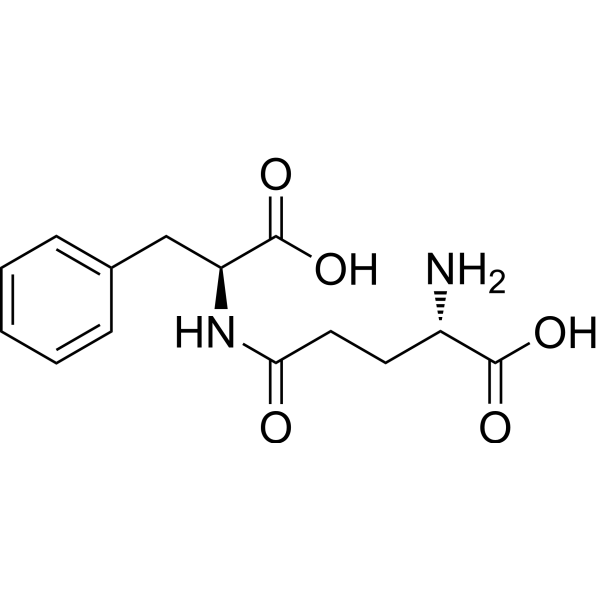
Cat. No.: HY-101399
CAS No.: 7432-24-8
Purity:  99.82%
Synonyms: H-γ-Glu-Phe-OH; γ-Glutamylphenylalanine
γ-Glu-Phe is synthesized by Bacillus amyloliquefaciens (GBA) and Aspergillus oryzae (GAO). γ-Glu-Phe or the post-enzymatic reaction mixture enhances the umami intensity of commercial soy sauce and model chicken broth .
loading...
    loading...
2
2 Cited Publications
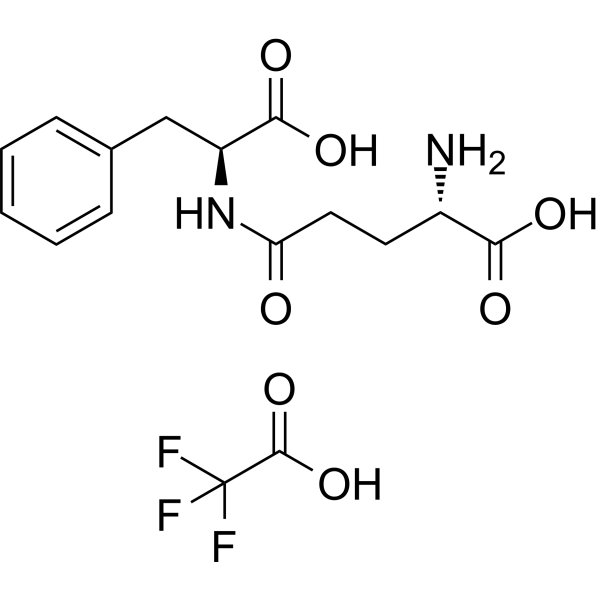
Cat. No.: HY-101399A
CAS No.: 2828432-42-2
Purity:  99.50%
Synonyms: H-γ-Glu-Phe-OH TFA; γ-Glutamylphenylalanine TFA
γ-Glu-Phe TFA (γ-Glutamylphenylalanine TFA) is synthesized by Bacillus amyloliquefaciens (GBA) and Aspergillus oryzae (GAO). γ-Glu-Phe TFA or the post-enzymatic reaction mixture enhances the umami intensity of commercial soy sauce and model chicken broth .
loading...
    loading...
2
2 Cited Publications
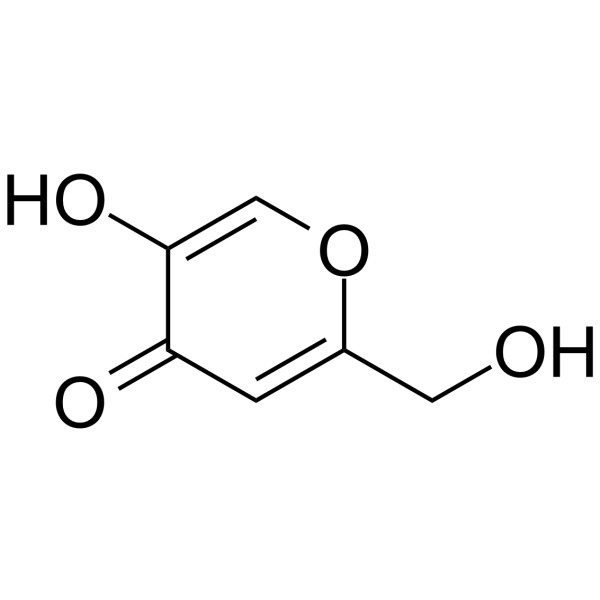
Cat. No.: HY-W050154
CAS No.: 501-30-4
Kojic acid is a substance produced by Aspergillus oryzae that is orally effective and can also be absorbed transdermally. Kojic acid exhibits various biological activities, including anti-aging, anti-nematode, antimicrobial, antioxidant, and anti-inflammatory effects. Kojic acid is a Tyrosinase inhibitor with an Mushroom Tyrosinase IC50 of 182.7 μM. Kojic acid prevents melanin production by capturing copper ions that bind to the tyrosinase active site, thus inhibiting its activation. Kojic acid also suppresses the NF-κB and p21 signaling pathways in human keratinocytes. Kojic acid derivatives have anticancer activity .
loading...
    loading...
2
2 Cited Publications
Cat. No.: HY-119323
CAS No.: 95633-27-5
Purity:  99.11%
Target:  

Fluorescent Dye

Research Areas:  

Others

7-Azido-4-methylcoumarin is a selective coumarin-based fluorescent probe for hydrogen sulfide (H2S). In the presence of H2S, the aromatic azido group of 7-Azido-4-methylcoumarin is selectively reduced to produce the fluorescently active 7-amino-4-methylcoumarin (AMC). 7-Azido-4-methylcoumarin binds to the coumarin/phenol-binding site of BSA, the aglycone-binding site of UGT1A6, and the substrate-binding site of SULT1A1, respectively. 7-Azido-4-methylcoumarin retains its fluorescent properties after covalent binding, acts as a fluorescent H2S probe, and does not react with cysteine, homocysteine or glutathione (Ex/Em = 340/445 nm) .
loading...
    loading...
1
1 Cited Publications
Cat. No.: HY-B2228
CAS No.: 9001-92-7
Proteinase, Aspergillus oryzae is a serine protease that hydrolyzes peptide bonds in protein substrates, preferring alkaline conditions (optimal pH 10.5). It efficiently degrades casein, poly-L-glutamic acid, and poly-L-lysine, with activity irreversibly inhibited by diisopropylfluorophosphate (DFP) and potato inhibitor. This enzyme catalyzes proteolysis via serine residues in its active site, finding applications in food processing (e.g., soy sauce fermentation), detergents, and leather industries due to its high yield in solid-state fermentation and cost-effective production.
loading...
    loading...
1
1 Cited Publications
Cat. No.: HY-N3300
CAS No.: 480-33-1
Synonyms: (R)-Mellein
Mellein ((R)-Mellein) is an isocoumarin compound with antibacterial activity. Mellein inhibits the activity of HCV Protease, disrupts the cell wall of Xanthomonas sp., and acts as an insect trail pheromone. Mellein is applicable to research related to fungal infections, bacterial infections, and hepatitis C virus infections .
loading...
    loading...
Cat. No.: HY-P2773
CAS No.: 37288-25-8
Target:  

DNA/RNA Synthesis

Research Areas:  

Others

Nuclease S1, Aspergillus oryzae is a specific endonuclease that degrades single stranded DNA (ssDNA) and RNA. Nuclease S1 can also remove protruding single-strand ends from double-stranded DNA .
loading...
    loading...
Cat. No.: HY-N6784
CAS No.: 11050-94-5
Oligomycin B is an antibiotic that acts as a non-selective inhibitor of ATP Synthase. Oligomycin B increases mitochondrial membrane potential. Oligomycin B induces apoptosis and necrosis. Oligomycin B impairs the motility of Plasmopara viticola zoospores and induces their lysis. Oligomycin B inhibits Magnaporthe oryzae (wheat blast fungus) and suppresses the development of wheat blast. Oligomycin B reduces hyphal growth and spore germination of Botrytis cinerea, and protects Arabidopsis thaliana against Botrytis cinerea infection. Oligomycin B exacerbates cytotoxic brain edema in rats with cerebral cortical contusion, increases intracranial pressure and brain water content, and aggravates mitochondrial damage in these rats. Oligomycin B is used in studies related to grape downy mildew, traumatic brain injury, wheat blast, and gray mold .
loading...
    loading...
Cat. No.: HY-P2762
CAS No.: 9001-19-8
Target:  

Amylases

Research Areas:  

Others

α-Amylase from Aspergillus oryzae is an amylase. α-Amylase from Aspergillus oryzae can be used for various biochemical studies .
loading...
    loading...
Cat. No.: HY-N1677
CAS No.: 530-55-2
2,6-Dimethoxy-1,4-benzoquinone is a 1,4-benzoquinone derivative. 2,6-Dimethoxy-1,4-benzoquinone promotes phosphorylation of AKT, S6K, mTOR, 4E-BP1, and AMPK, and attenuates mTORC1 activity as part of the AKT/mTOR pathway. 2,6-Dimethoxy-1,4-benzoquinone stimulates myoblast differentiation, increases myotube size, elevates MHC protein expression, enhances mitochondrial biogenesis, respiration, and DNA content, and increases skeletal muscle weights, fiber size, grip strength, and treadmill performance. 2,6-Dimethoxy-1,4-benzoquinone exerts anti-cancer, anti-inflammatory, anti-adipogenic, antibacterial, and antimutagenic effects, inhibits adipogenic transcription factors, nitric oxide production, skin tumor development, Magnaporthe oryzae growth, spore germination, appressorium formation, and growth of select bacterial species, induces H2O2 generation and rice defense gene expression, and reduces rice blast lesion formation. 2,6-Dimethoxy-1,4-benzoquinone can be used for the research of obesity, skin tumorigenesis, rice blast disease, and food-borne illness .
loading...
    loading...
Cat. No.: HY-P0229
CAS No.: 9026-12-4
Synonyms: Rnase T1
Target:  

DNA/RNA Synthesis

Research Areas:  

Others

Ribonulease T1, Aspergillus oryzae (Rnase T1), is commonly used in biochemical research. Ribonuclease T1 is an endonuclease that can specifically degrade single stranded RNA. Ribonuclease T1 can form nucleoside 2 ', 3 '-cyclic phosphoric acid intermediates to cut the phosphodiester bond between 3' -guanosine residues and adjacent nucleoside 5 '-OH groups to produce 3' -GMP terminal oligonucleotides .
loading...
    loading...
Cat. No.: HY-20349
CAS No.: 30233-64-8
Target:  

Bacterial

Research Areas:  

Infection

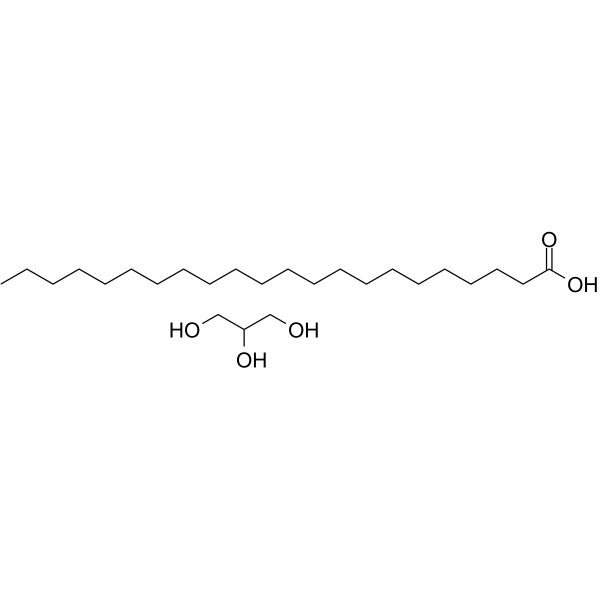
Monobehenin, an bacterial biofilm formation inhibitor, has strong inhibitory activity toward bacterial biofilm formation of S. mutans, X. oryzae, and Y. enterocolitica in a strain specific manner .
loading...
    loading...
Cat. No.: HY-N14257
CAS No.: 108868-95-7
Andrimid is a peptide Antibiotic and acetyl-CoA carboxylase inhibitor. Andrimid is produced by symbiotic bacteria of the genus *Enterobacter* residing in the brown planthopper Nilaparvata lugens. Andrimid exhibits strong specific activity against Xanthomonas campestris pv. oryzae. Andrimid shows no or only weak activity against Gram-positive and Gram-negative bacteria, including most plant pathogenic bacteria. Andrimid can be used in studies related to bacterial infections and rice bacterial blight .
loading...
    loading...
Cat. No.: HY-N8105
CAS No.: 191334-50-6
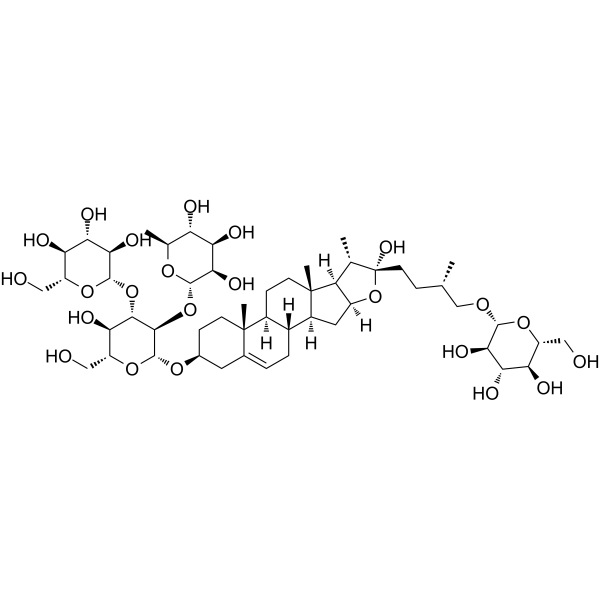
Protoneogracillin, a furostanol glycoside, shows anti-fungal activity against the plant pathogenic fungus P.oryzae (MMDC=94.0 μM) and cytotoxic activity on K562 cancer cells (IC50=6.6 μM) .
loading...
    loading...
Cat. No.: HY-P2206
CAS No.: 221197-33-7
Target:  

Bacterial Antibiotic

Research Areas:  

Infection

Zelkovamycin is a cyclic peptide antibiotic originally isolated from Streptomyces. It inhibits growth of X. oryzae, P. oryzae, S. aureus, and A. laidlawii in a concentration-dependent manner when used at concentrations ranging from 0.01 to 300 μg/mL.
loading...
    loading...
Cat. No.: HY-B2192A
CAS No.: 9000-92-4
Synonyms: Maltin
Research Areas:  

Others

Diastase, Aspergillus oryzae (Maltin) is a starch hydrolase derived from Aspergillus oryzae. Diastase, Aspergillus oryzae catalyzes starch hydrolysis through sequential stages, first producing dextrins, then glucose and maltose .
loading...
    loading...
Cat. No.: HY-N7731A
CAS No.: 498-16-8
Synonyms: (R)-Lavandulol
(-)-Lavandulol is the isomer of (±)-Lavandulol (HY-N7731). (±)-Lavandulol is an irregular monoterpene alcohol. (±)-Lavandulol can be transformed by a fungal strain Rhizopus oryzae into corresponding oxygenated metabolite .
loading...
    loading...
Cat. No.: HY-118401
CAS No.: 81845-40-1
Mansonone E (Compound 5) is a pesticide. Mansonone E can be isolated from heartwood of Mansonia gagei. Mansonone E has significant antifungal activity against Cladosporium cucumerinum, Candida albicans and Phytophthora parasitica. Mansonone E has potent antibacterial activity with MIC50s of both 7.8 μg/mL for Xanthomonas oryzae pv. oryzae and X. oryzae pv. Oryzicola. Mansonone E also has antifeedant and herbicidal activities .
loading...
    loading...
Cat. No.: HY-116975
CAS No.: 238410-11-2
Synonyms: Enestroburin
Target:  

Fungal

Research Areas:  

Infection

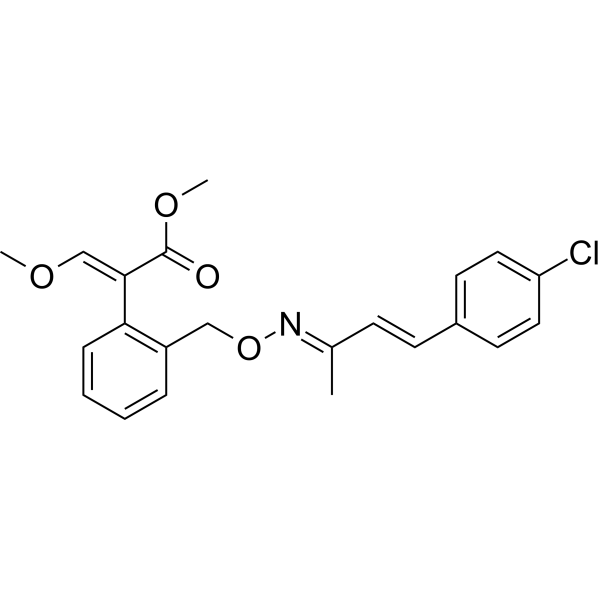
Enoxastrobin (Enestroburin) is an anti-fungal agent. Enoxastrobin is active against P. oryzae and B. cinerea .
loading...
    loading...

