9368 Results for "

pairing

" in MedChemExpress (MCE) Product Catalog:
Products (9368)

9368 Results for "pairing" in MCE Product Catalog:

175
175 Publications Verification
Cat. No.: HY-D0814
CAS No.: 28718-90-3
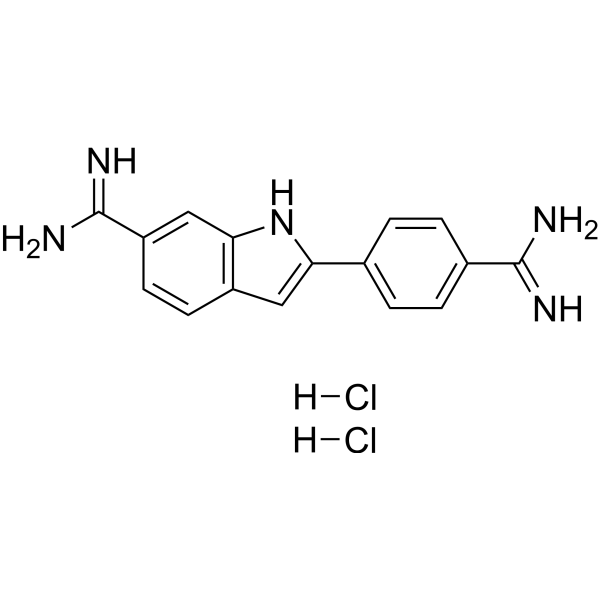
Synonyms: 4',6-Diamidino-2-phenylindole dihydrochloride
DAPI (4',6-Diamidino-2-phenylindole) dihydrochloride is a DAPI dye. DAPI is a fluorescent dye that binds strongly to DNA. It binds to the AT base pair of the double-stranded DNA minor groove, and one DAPI molecule can occupy three base pair positions. The fluorescence intensity of DAPI molecules bound to double-stranded DNA is increased by about 20 times, and it is commonly observed with fluorescence microscopy, and the amount of DNA can be determined based on the intensity of fluorescence. DAPI cannot penetrate intact cell membranes and is commonly used for staining damaged and fixed cells . DAPI (Compound 3) is an acid-sensing ion channel 3 (ASIC3) inhibitor. DAPI binds to ASIC3 and blocks the channel function. DAPI can be used in the study of chronic pain treatment (Ex/Em = 356/451 nm).
loading...
    loading...
159
159 Cited Publications
Cat. No.: HY-D2868
CAS No.: 47165-04-8
Synonyms: 4',6-Diamidino-2-phenylindole
DAPI (4',6-Diamidino-2-phenylindole) is a DAPI dye. DAPI is a fluorescent dye that binds strongly to DNA. It binds to the AT base pair of the double-stranded DNA minor groove, and one DAPI molecule can occupy three base pair positions. The fluorescence intensity of DAPI molecules bound to double-stranded DNA is increased by about 20 times, and it is commonly observed with fluorescence microscopy, and the amount of DNA can be determined based on the intensity of fluorescence. DAPI cannot penetrate intact cell membranes and is commonly used for staining damaged and fixed cells . DAPI (Compound 3) is an acid-sensing ion channel 3 (ASIC3) inhibitor. DAPI binds to ASIC3 and blocks the channel function. DAPI can be used in the study of chronic pain treatment (Ex/Em = 356/451 nm).
loading...
    loading...
129
129 Cited Publications
Cat. No.: HY-D1738
CAS No.: 28718-91-4
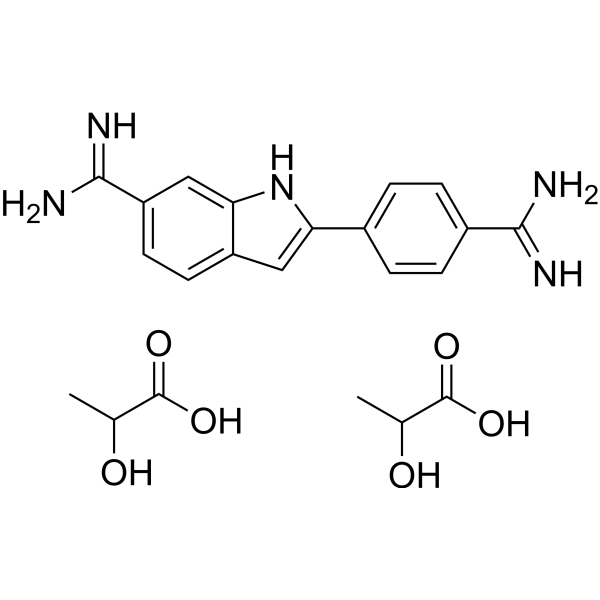
Synonyms: 4',6-Diamidino-2-phenylindole dilactate
DAPI (4',6-Diamidino-2-phenylindole) dilactate is a DAPI dye. DAPI is a fluorescent dye that binds strongly to DNA. It binds to the AT base pair of the double-stranded DNA minor groove, and one DAPI molecule can occupy three base pair positions. The fluorescence intensity of DAPI molecules bound to double-stranded DNA is increased by about 20 times, and it is commonly observed with fluorescence microscopy, and the amount of DNA can be determined based on the intensity of fluorescence. DAPI cannot penetrate intact cell membranes and is commonly used for staining damaged and fixed cells . DAPI (Compound 3) is an acid-sensing ion channel 3 (ASIC3) inhibitor. DAPI binds to ASIC3 and blocks the channel function. DAPI can be used in the study of chronic pain treatment (Ex/Em = 356/451 nm) .
loading...
    loading...
22
22 Cited Publications
Cat. No.: HY-D0086
CAS No.: 67483-13-0
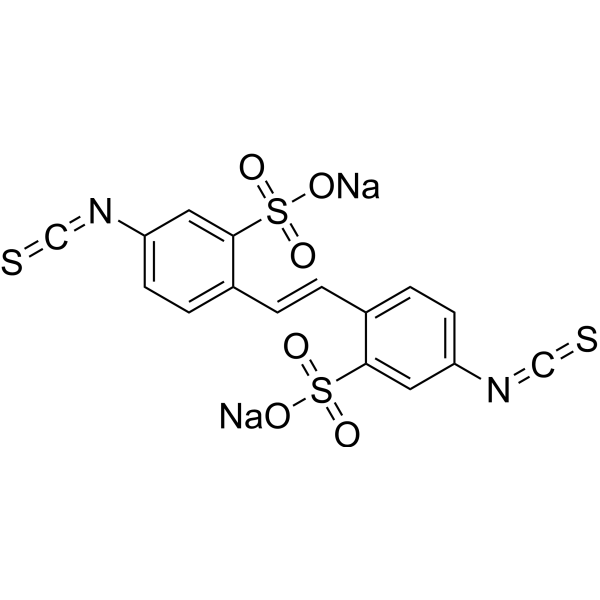
Synonyms: MDL101114ZA
DIDS sodium salt (MDL101114ZA) is a dual inhibitor of ABCA1 and VDAC1. DIDS also inhibits RAD51, inhibiting RAD51-mediated homologous pairing and strand exchange reactions. DIDS inhibits anion exchange and binding to red blood cell membranes, inhibits the activation of caspase-3 and -9, and can be used in cancer research .
loading...
    loading...
14
14 Cited Publications
Cat. No.: HY-12404
CAS No.: 908-54-3
Purity:  99.16%
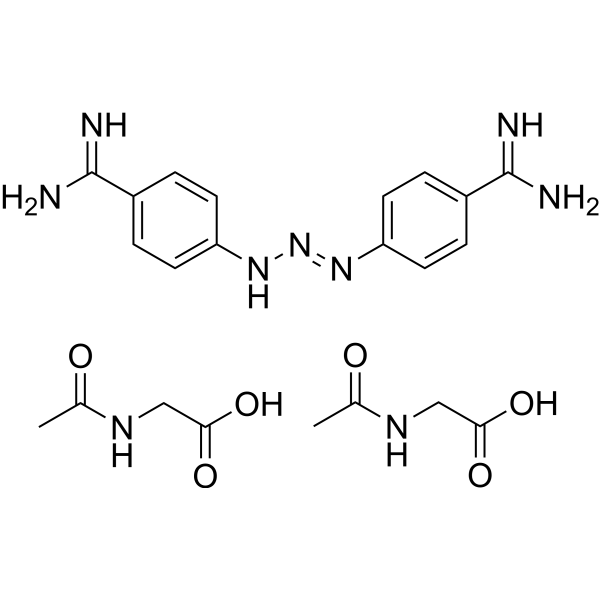
Synonyms: Diminazene diaceturate
Diminazene aceturate (Diminazene diaceturate) is an anti-trypanosome agent for livestock. The main biochemical mechanism of the trypanocidal actions of Diminazene aceturate is by binding to trypanosomal kinetoplast DNA (kDNA) in a non-intercalative manner through specific interaction with sites rich in adenine-thymine base pairs. Diminazene aceturate is also an angiotensin-converting enzyme 2 (ACE2) activator and has strong and potent anti-inflammatory properties .
loading...
    loading...
5
5 Cited Publications
Cat. No.: HY-D1191
CAS No.: 2225748-05-8
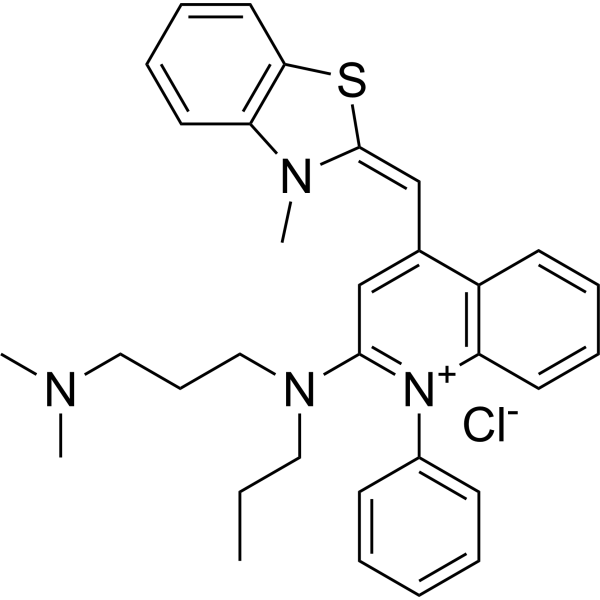
SYBR Green I chloride is a highly sensitive fluorescent nucleic acid dye that binds specifically to the minor groove of double-stranded DNA or intercalates between base pairs. SYBR Green I chloride exhibits weak fluorescence in the unbound state but emits bright fluorescence upon binding, and it preferentially binds to large-fragment DNA and DNA with high G+C content. SYBR Green I chloride is suitable for real-time PCR technology; its fluorescence intensity correlates with the amount and size of amplification products, enabling accurate quantification of gene expression and discrimination of amplicons via melting curve analysis without additional post-processing. SYBR Green I chloride is widely used in preclinical in vitro nucleic acid detection .
loading...
    loading...
3
3 Cited Publications
Cat. No.: HY-D1396
CAS No.: 2387906-44-5
Research Areas:  

Others

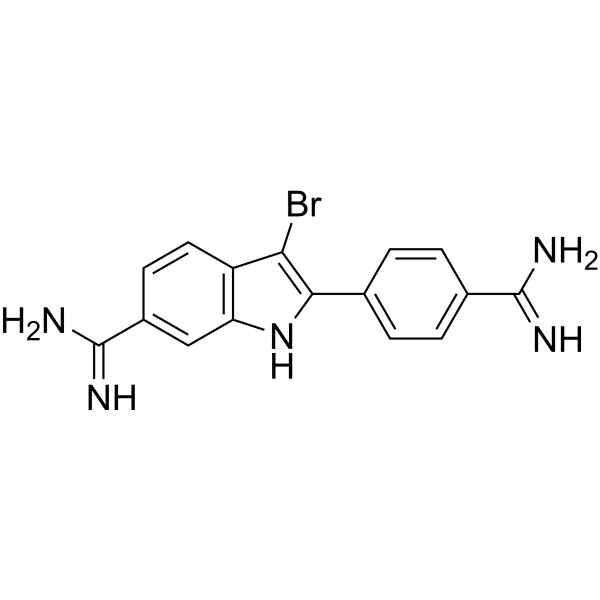
Br-DAPI is a marker dye in DAPI series. DAPI is a fluorescent dye that binds strongly to DNA. It binds to the AT base pair of the double-stranded DNA minor groove, and one DAPI molecule can occupy three base pair positions. The fluorescence intensity of DAPI molecules bound to double-stranded DNA is increased by about 20 times, and it is commonly observed with fluorescence microscopy, and the amount of DNA can be determined based on the intensity of fluorescence. DAPI cannot penetrate intact cell membranes and is commonly used for staining damaged and fixed cells . Storage: Keep away from light.
loading...
    loading...
3
3 Cited Publications
Cat. No.: HY-RI00449A
Target:  

MicroRNA

Research Areas:  

Cancer

hsa-miR-21-5p antagomirs are chemically-modified oligonucleotides that hybridize with mature miRNAs. The miRNA antagomirs have 2 phosphorothioates at the 5' end, 4 phosphorothioates at the 3' end, 1 cholesterol group at the 3' end, and full-length nucleotide 2'-methoxy modification. The miRNA antagomirs strongly compete with mature miRNAs to prevent the complementary pairing of miRNAs and their target genes, thereby inhibiting miRNAs from functioning. Stability of miRNA antagomirs appears to be significantly higher than miRNA inhibitors, they exhibits enhanced cellular uptake, stability and regulatory activity in vivo.
loading...
    loading...
2
2 Cited Publications
Cat. No.: HY-114577
CAS No.: 1070409-31-2
Synonyms: Isophosphoramide mustard tromethamine; IPM tromethamine; ZIO-201 tromethamine
Research Areas:  

Cancer

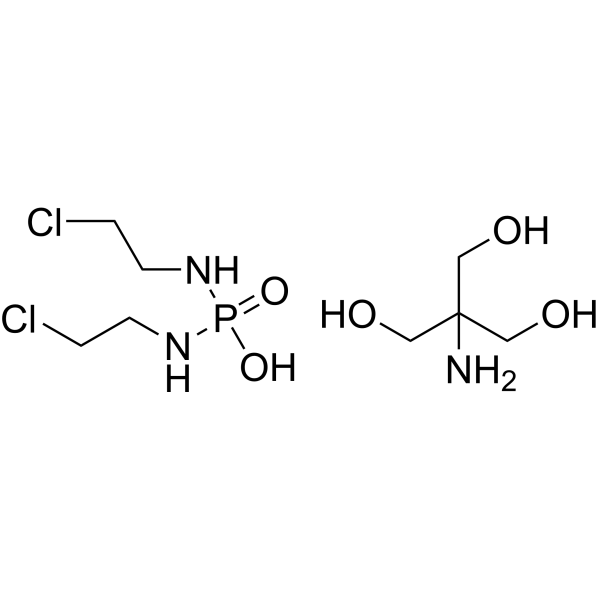
Palifosfamide (tromethamine) is a synthetic alkylating agent with potential antineoplastic activity. As the stabilized active metabolite of ifosfamide, palifosfamide (tromethamine) irreversibly alkylates and crosslinks DNA through GC base pairs. This leads to an inhibition of DNA replication and ultimately cell death. Compared to ifosfamide, palifosfamide (tromethamine) is less toxic.
loading...
    loading...
1
1 Cited Publications
Cat. No.: HY-P5128
CAS No.: 1039726-31-2
Synonyms: Satoreotide tetraxetan
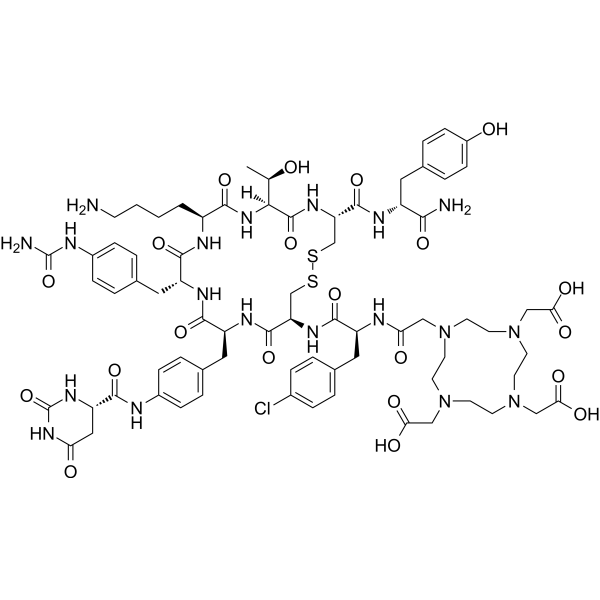
DOTA-JR11 is a somatostatin receptor 2 (SSTR2)antagonist. DOTA-JR11 can be labeled by 68Ga, used for paired imaging in neuroendocrine tumors (NETs) research . DOTA-JR11 can be used for the synthesis/research of Radionuclide-Drug Conjugates (RDCs).
loading...
    loading...
1
1 Cited Publications
Cat. No.: HY-19714
CAS No.: 1624117-53-8
Target:  

Drug Derivative

Research Areas:  

Cancer

XY1 is an analog of SGC707 (HY-19715), a potent and selective PRMT3 inhibitor with an IC50 of 31 nM. XY1 is completely inactive against PRMT3. XY1 and SGC707 represent an excellent pair of tools for further elucidating the biological functions and disease relevance of PRMT3 .
loading...
    loading...
1
1 Cited Publications
Cat. No.: HY-124838
CAS No.: 693241-54-2
Purity:  98.26%
Target:  

DNA/RNA Synthesis

Research Areas:  

Cancer

EG1, a specific Pax2 inhibitor, directly binds the paired domain of Pax2 (Kd=1.35-1.5 μM) and inhibits Pax2-DNA interactions. EG1 can inhibit embryonic kidney development, a process directly dependent on Pax2 activity .
loading...
    loading...
1
1 Cited Publications
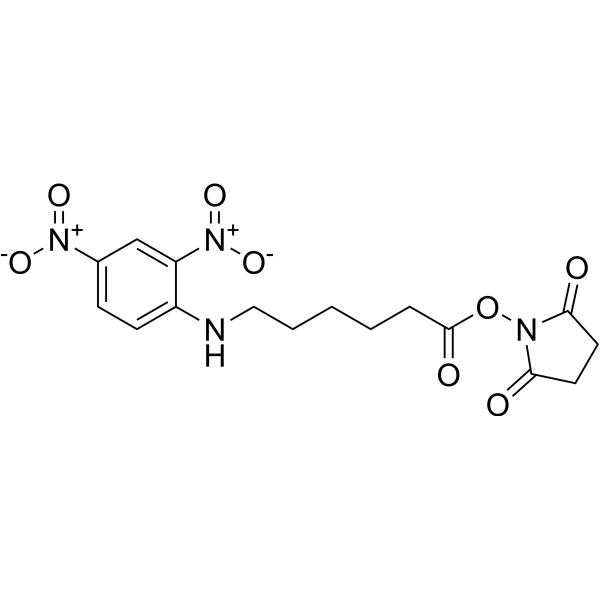
Cat. No.: HY-D1050
CAS No.: 82321-04-8
Synonyms: 6-(2,4-Dinitrophenyl)aminohexanoic acid, succinimidyl ester
DNP-X, SE (6-(2,4-Dinitrophenyl)aminohexanoic acid, succinimidyl ester), the DNP-X acid modified by succinimidyl ester, is an amine-reactive building block for developing a probe, which can be recognized by anti-DNP antibodies. DNP-X, SE (6-(2,4-Dinitrophenyl)aminohexanoic acid, succinimidyl ester) is also an excellent amine-reactive FRET quencher paired with Trp or Tyr.
loading...
    loading...
1
1 Cited Publications
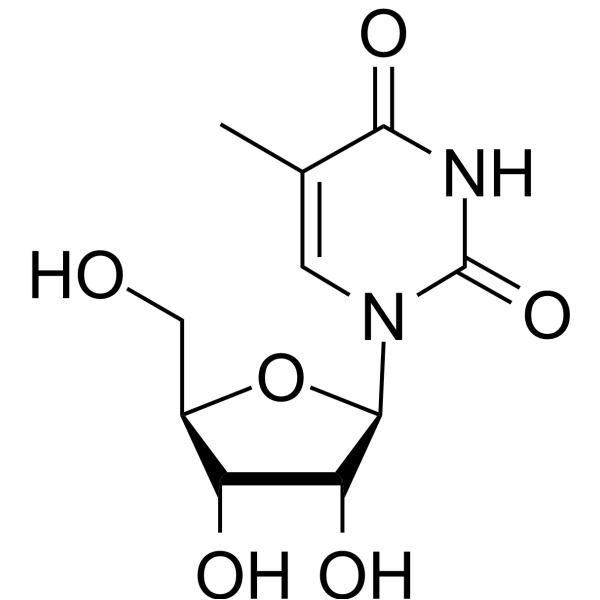
Cat. No.: HY-W009444
CAS No.: 1463-10-1
5-Methyluridine (m 5U) is an RNA modified nucleotide generated by RNA methyltransferases (such as TrmA and RumA), which mainly targets specific uracil sites in RNA molecules such as the T arm of tRNA and rRNA. 5-Methyluridine relies on enzyme recognition of RNA secondary/tertiary structures (such as the T loop of tRNA or the specific stem-loop structure of rRNA) and participates in physiological processes such as translation accuracy and ribosome function by stabilizing RNA folding or regulating base pairing .
loading...
    loading...
1
1 Cited Publications
Cat. No.: HY-113138
CAS No.: 2140-69-4
Purity:  99.05%
Synonyms: N3-Methyluridine
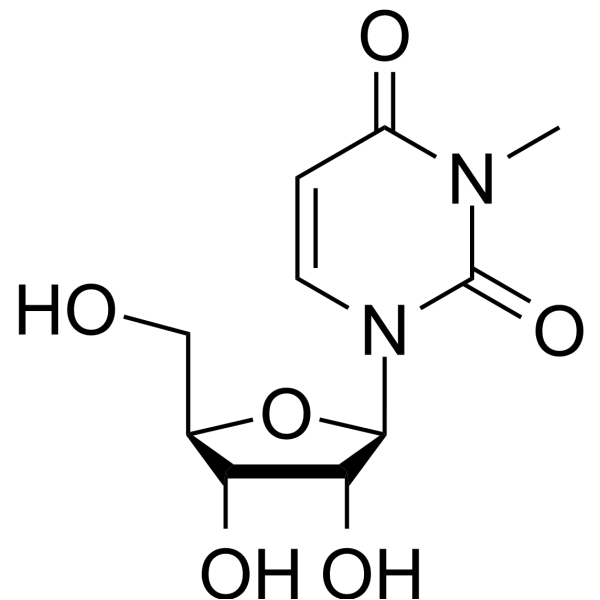
3-Methyluridine (m 3U; N3-Methyluridine) is a methylated nucleotide present in ribosomal RNA (rRNA), mainly targeting specific base sites of RNA molecules such as 23S rRNA. 3-Methyluridine can introduce a methyl group at the N3 position of uracil, affecting the secondary structure stability and base pairing ability of RNA, and regulating ribosome function. For example, it affects ribosomal subunit binding and tRNA interaction. 3-Methyluridine is often used as a key raw material for the synthesis of modified nucleotides, and is used to construct RNA oligonucleotides containing methylation modifications to study the effects of RNA methylation on gene expression and drug resistance .
loading...
    loading...
Cat. No.: HY-113306
CAS No.: 5142-22-3
Purity:  99.88%
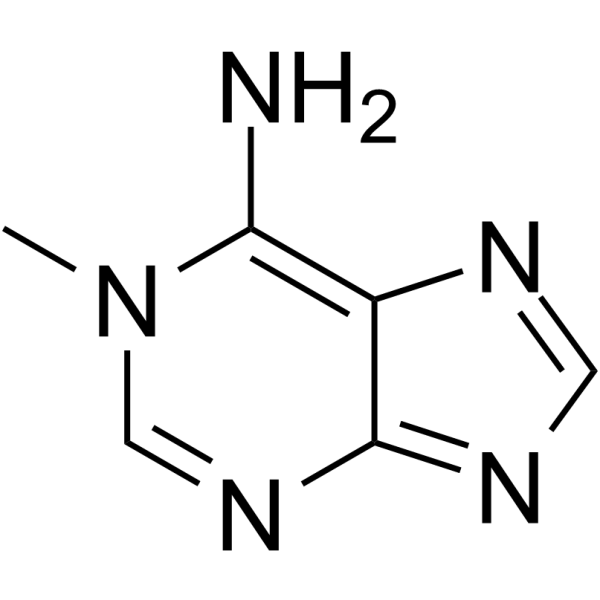
1-Methyladenine is a gonad maturation-promoting regulator. 1-Methyladenine is produced in testes and ovarian follicle cells of starfish under the induction of gonad-stimulating substance (GSS). 1-Methyladenine promotes starfish oocyte maturation and spawning, and modifies bases that regulate DNA structure. 1-Methyladenine converts T-A base pairs in double-stranded DNA into non-disruptive T (anti)m1A (syn) Hoogsteen conformation. If this conformational base is not repaired in a timely manner, 1-Methyladenine transforms into cytotoxic DNA damage and blocks the replication process .
loading...
    loading...
Cat. No.: HY-21997
CAS No.: 136834-22-5
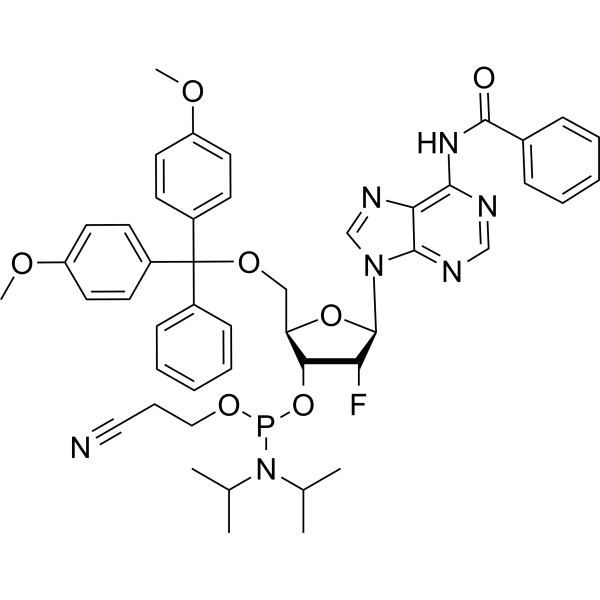
DMT-2'fluoro-da(bz) amidite is a key intermediate for synthesizing antisense oligonucleotides with high nuclease resistance, high RNA binding affinity, and maintained base-pair specificity .
loading...
    loading...
Cat. No.: HY-148424
CAS No.: 145325-57-1
Purity:  98.03%
Research Areas:  

Cancer

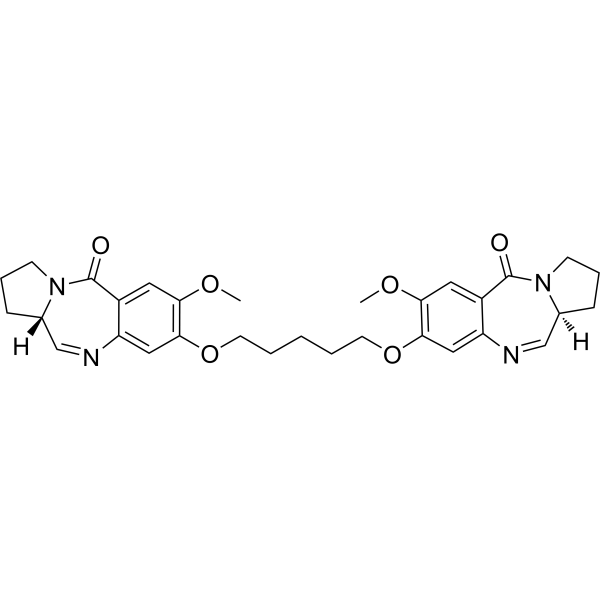
PBD dimer-2 (compound 2c) is a C8-linked pyrrolobenzodiazepine dimer. PBD dimer-2 can span an extra base pair and cross-link the 5′-Pu-GA(T/A)TC-Py sequence. PBD dimer-2 can be used as a payload for antibody–agent conjugates (ADCs), and it can be used for the research of cancer .
loading...
    loading...
Cat. No.: HY-D0947
CAS No.: 531-53-3
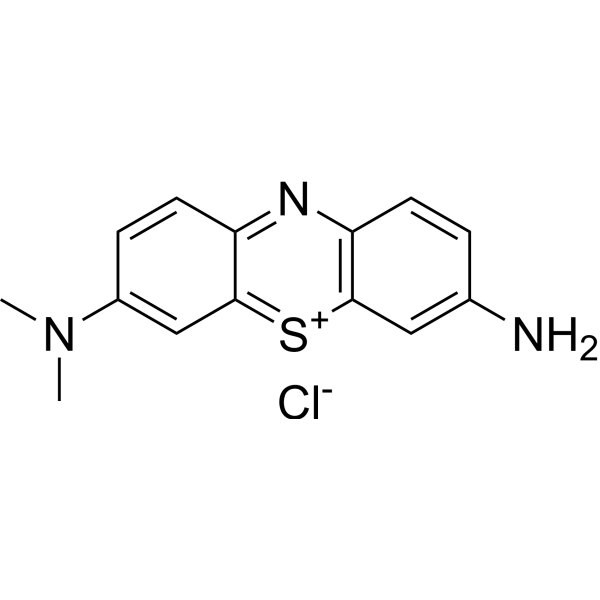
Azure A chloride is a phenothiazine dye. Azure A chloride is an alternative DNA dye used for the separation of DNA and protein fragments in agarose gel electrophoresis and PAGE. Azure A chloride can be chemisorbed on the surface of mild steel according to the Langmuir adsorption isotherm to form a protective film. Azure A chloride binds to double-stranded DNA in a non-cooperative manner via weak intercalation, triggering molecular conformational disturbance, restricted rotational motion, and changes in optical activity .
loading...
    loading...
Cat. No.: HY-D2365
CAS No.: 304014-13-9
QSY 21 NHS is a dark quencher and an efficient energy transfer acceptor for far-red and near-infrared fluorescent probes. QSY 21 NHS operates at a wavelength range of 540-750 nm and is commonly used in FRET applications. QSY 21 NHS does not fluoresce under normal conditions. The NHS ester can be used to label primary amines (R-NH2) of proteins, amine-modified oligonucleotides and other amine-containing molecules. QSY 21 NHS can be conjugated with dendritic poly-L-lysine to achieve intramolecular quenching of Cy5 fluorescence .
loading...
    loading...

