
1. Search Result
Search Result
Results for "

patch

" in MedChemExpress (MCE) Product Catalog:

35

Inhibitors & Agonists

2

Biochemical Assay Reagents

2

Peptides

1

Inhibitory Antibodies

4

Natural
Products

3

Isotope-Labeled Compounds

1

Oligonucleotides

Cat. No. Product Name Target Research Areas Chemical Structure
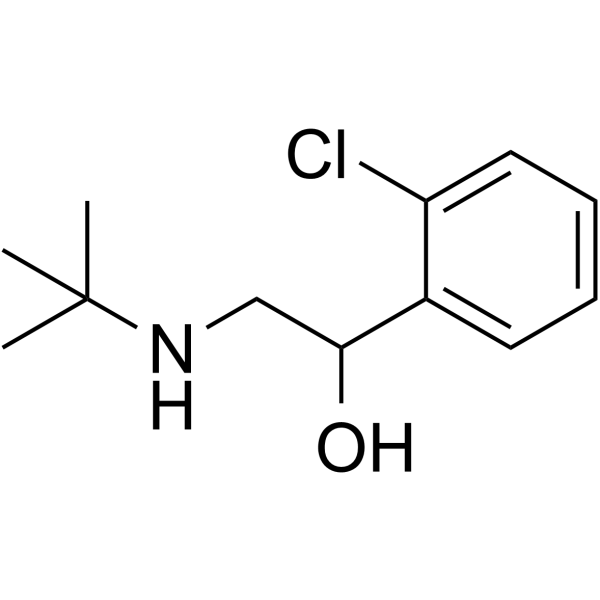
  • HY-B1810
    Tulobuterol
    2 Publications Verification

    C-78 free base

    Adrenergic Receptor Inflammation/Immunology Endocrinology
    Tulobuterol (C-78 free base) is a long-acting β2-adrenoceptor agonist, which reduces the frequency of exacerbations of chronic obstructive pulmonary disease and bronchial asthma. Tulobuterol is also a sympathomimetic agent used as a transdermal patch, and increases normal diaphragm muscle strength .
    Tulobuterol
  • HY-P990203

    Integrin Inflammation/Immunology
    Anti-Mouse LPAM-1/Integrin α4β7 Antibody (DATK32) is a rat-derived anti-LPAM-1/Integrin α4β7 IgG2a, κ type antibody inhibitor. Anti-Mouse LPAM-1/Integrin α4β7 Antibody (DATK32) specifically reacts with both chains of the α4β7 heterodimer and blocks the adhesion to immobilized mucosal addressin cell adhesion molecule-1 (MAdCAM-1). Anti-Mouse LPAM-1/Integrin α4β7 Antibody (DATK32) suppresses the proliferation and cytokine secretion of CD8+ T cells. Anti-Mouse LPAM-1/Integrin α4β7 Antibody (DATK32) decreases Peyer’s patches and follicular B cells in mice. Anti-Mouse LPAM-1/Integrin α4β7 Antibody (DATK32) can be used for the researches of inflammation, such as ulcerative colitis .
    Anti-Mouse LPAM-1/Integrin α4β7 Antibody (DATK32)
  • HY-N6801

    Caspase Apoptosis Bcl-2 Family Infection Inflammation/Immunology Cancer
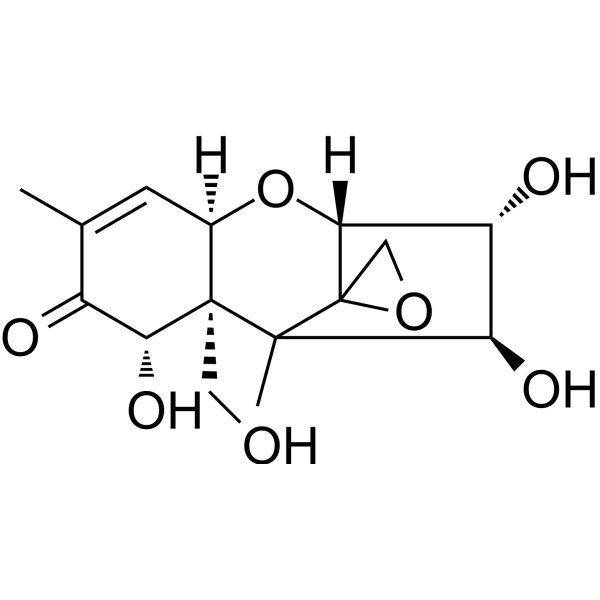
    Nivalenol, a trichothecene mycotoxin that can be produced by Fusarium graminearum, is a fungal metabolite present in agricultural product. Nivalenol modulates apoptotic pathway, cell cycle regulation, Bax, ERK, caspase-3, and poly-ADP-ribose synthase activity in macrophages. Nivalenol inhibits ribosomal peptidyltransferase site, protein synthesis, DNA synthesis, and cell proliferation. Nivalenol induces late-stage apoptotic morphological changes, reduces cellular metabolism, and decreases cell proliferation in erythroleukemia cells. Nivalenol induces lymphocyte apoptosis in murine thymus, spleen, and Peyer's patches. Nivalenol can be used for the research of erythroleukemia .
    Nivalenol
  • HY-B1620I

    PVP K120; Polyvidone K120; Povidone K120

    Environmental Pollutants Biochemical Assay Reagents Others
    Polyvinylpyrrolidone K120 is a multifunctional synthetic polymer with excellent adhesiveness and thickening properties. Polyvinylpyrrolidone K120 is a versatile excipient for both conventional formulations and novel controlled or targeted delivery systems. Polyvinylpyrrolidone K120 can be used to prepare drug-loaded hydrogel patches .
    Polyvinylpyrrolidone K120
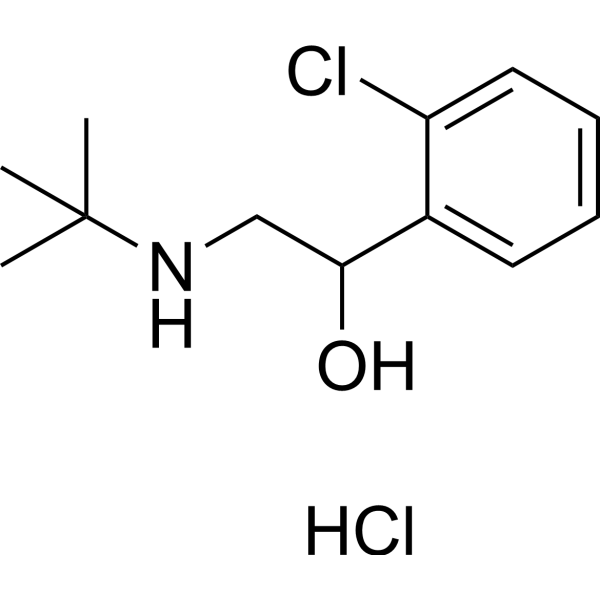
  • HY-W011733
    Tulobuterol hydrochloride
    2 Publications Verification

    C-78

    Adrenergic Receptor Influenza Virus Antibiotic Infection Inflammation/Immunology Endocrinology
    Tulobuterol hydrochloride (C-78) is a long-acting β2-adrenoceptor agonist, which reduces the frequency of exacerbations of chronic obstructive pulmonary disease and bronchial asthma. Tulobuterol hydrochloride is also a sympathomimetic agent used as a transdermal patch, increases normal diaphragm muscle strength . Tulobuterol hydrochloride inhibit rhinovirus replication and modulate airway inflammation .
    Tulobuterol hydrochloride
  • HY-110121A
    NS3861
    1 Publications Verification

    nAChR Neurological Disease
    NS3861 is an agonist of nicotinic acetylcholine receptors (nAChRs) and binds with high affinity to heteromeric α3β4 nAChR. The binding Ki values of 0.62, 25, 7.8, 55 nM for α3β4, α3β2, α4β4, α4β2, respectively .
    NS3861
  • HY-109547

    Diclofenac hydroxyethylpyrrolidine

    COX Inflammation/Immunology Cancer
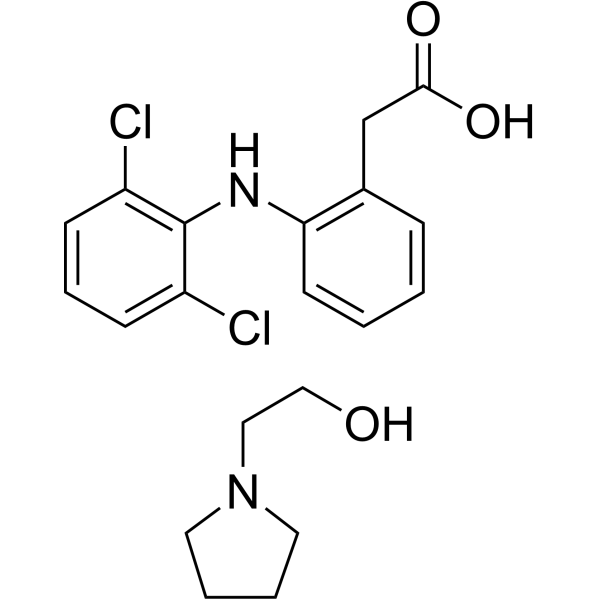
    Flector Patch (Diclofenac epolamine) is a non-steroidal anti-inflammatory drug (NSAID) . Flector Patch is used for relieving arthritis Pain, acute Pain, osteoarthritis, and actinic Keratosis. Flector Patch has good skin absorption characteristics without local adverse reactions and allergies .
    Diclofenac epolamine
  • HY-158224

    FibMA

    Biochemical Assay Reagents Others
    Silk Fibroin Methacryloyl (FibMA) is methacrylated silk fibroin with excellent biocompatibility, stable mechanical properties and good processing properties, and was selected as the substrate for multifunctional microneedle (MN) patches. . MN patches made of Silk Fibroin Methacryloyl exhibit excellent biocompatibility, sustained drug release, pro-angiogenic, antioxidant and antibacterial properties depending on the specific drug encapsulated . Silk Fibroin Methacryloyl needs to self-assemble into fibrous hydrogel under the action of photoinitiator LAP (HY-44076), and target bioactive adhesion sites, play an inherent supporting role for tissue cells and biodegradable activity.
    Application: cell culture, biological 3D printing, tissue engineering, etc.
    Silk Fibroin Methacryloyl
  • HY-178058A

    Potassium Channel Others
    VU6080824 (hydrochloride), a derivative of ML-133 (HY-100230), is an inward-rectifier potassium channel (Kir2.1) inhibitor with an IC50 of 0.35  μM. VU6080824 (hydrochloride) has superior thallium flux and manual patch clamp (MPC) functional potency .
    VU6080824 hydrochloride
  • HY-P10875

    Hedgehog Cancer
    HL2-m5 is the inhibitor for the interaction between sonic hedgehog/patched (Shh/PTCH1) with Kd of 170 nM for Shh. HL2-m5 inhibits activation of Hedgehog signaling pathway and transcription of Gli-controlled gene with an IC50 of 230 nM .
    HL2-m5
  • HY-137115

    Smo Cancer
    BODIPY-Cyclopamine is a fluorescently labeled ligand for the Smoothened (SMO) receptor. The activation of SMO is regulated by Patch protein, and over-activated SMO signaling pathways are associated with tumorigenesis. The NanoBRET (Nanofluorescein bioluminescence resonance energy transfer) technique used in the study can sensitively detect the resonance energy transfer between SMO and BODIPY-Cyclopamine, which can be used for high-throughput screening and kinetic analysis. Studying the binding site of BODIPY-Cyclopamine on SMO can also further explore SMO-targeted drugs .
    BODIPY-Cyclopamine
  • HY-175729

    CDK Cancer
    Cyclin A/B RxL-IN-1 is a inhibitor targeting the Cyclin A/B RxL interaction at the hydrophobic patch (HP). Cyclin A/B RxL-IN-1 inhibits Cyclin A with an IC50 of 0.12 μM. Cyclin A/B RxL-IN-1 demonstrates antitumor efficacy in mouse cell line-derived xenograft (CDX) models. CDK-IN-19 can be used for the study of E2F-driven cancers such as small-cell lung cancer (SCLC) .
    Cyclin A/B RxL-IN-1
  • HY-N9506

    GABA Receptor Neurological Disease
    Anisatin, a pure toxic substance isolated from the seeds of a Japanese plant (Illicium anisatum) acts as a picrotoxin-like, non-competitive GABA antagonist. Anisatin suppresses GABA-induced currents in a concentration-dependent manner with an EC50 of ~1.10 μM .
    Anisatin
  • HY-N6801S

    Isotope-Labeled Compounds Caspase Apoptosis Bcl-2 Family Infection Inflammation/Immunology Cancer
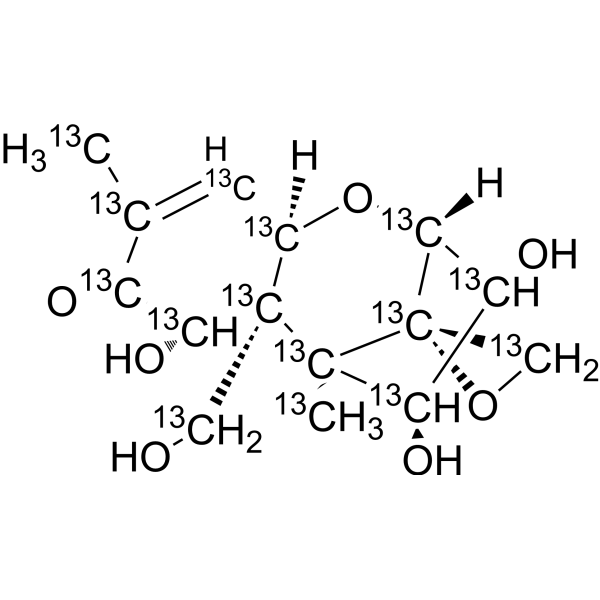
    Nivalenol- 13C15 is the 13C labeled Nivalenol (HY-N6801) . Nivalenol, a trichothecene mycotoxin that can be produced by Fusarium graminearum, is a fungal metabolite present in agricultural product. Nivalenol modulates apoptotic pathway, cell cycle regulation, Bax, ERK, caspase-3, and poly-ADP-ribose synthase activity in macrophages. Nivalenol inhibits ribosomal peptidyltransferase site, protein synthesis, DNA synthesis, and cell proliferation. Nivalenol induces late-stage apoptotic morphological changes, reduces cellular metabolism, and decreases cell proliferation in erythroleukemia cells. Nivalenol induces lymphocyte apoptosis in murine thymus, spleen, and Peyer's patches. Nivalenol can be used for the research of erythroleukemia.
    Nivalenol-13C15
  • HY-168377

    Fluorescent Dye Others
    Fluo-4 potassium is a cell-impermeable Ca 2+ (calcium ion) indicator (λex=494 nm, λem=516 nm). Fluo-4 potassium can be introduced into cells using methods such as patch clamping and microinjection .
    Fluo-4 potassium
  • HY-144287

    Glucokinase Sodium Channel Metabolic Disease
    Glucokinase activator 3 is an orally active Glucokinase (GK) activator with an AC50 of 38 nM. Glucokinase activator 3 inhibits hERG channel and sodium channel in patch clamp assays. Glucokinase activator 3 exhibits high efficacy in reducing blood glucose in diet-induced obese (DIO) mice. Glucokinase activator 3 has the potential for the research of type 2 diabetes .
    Glucokinase activator 3
  • HY-110121
    NS3861 fumarate
    1 Publications Verification

    nAChR Neurological Disease
    NS3861 fumarate is an agonist of nicotinic acetylcholine receptors (nAChRs) and binds with high affinity to heteromeric α3β4 nAChR. The binding Ki values of 0.62, 25, 7.8, 55 nM for α3β4, α3β2, α4β4, α4β2, respectively .
    NS3861 fumarate
  • HY-W020576

    NAP 226-90

    Drug Metabolite Others Neurological Disease
    Rivastigmine metabolite (NAP 226-90) is a metabolite produced by the hydrolysis of Rivastigmine (HY-17368) . Rivastigmine metabolite serves as a surrogate marker to track the bioavailability, metabolic extent, and transdermal patch delivery rate of Rivastigmine .
    Rivastigmine metabolite
  • HY-178058

    Potassium Channel Others
    VU6080824 (Compound 5s), a derivative of ML-133 (HY-100230), is an inward-rectifier potassium channel (Kir2.1) inhibitor with an IC50 of 0.35  μM. VU6080824 has superior thallium flux and manual patch clamp (MPC) functional potency .
    VU6080824
  • HY-126336

    Calcium Channel Cardiovascular Disease Neurological Disease
    HM12 is a covalent inhibitor of L-/T-type calcium channels. HM12 can strongly inhibit the Cav1.2 (L-type) and Cav3.2 (T-type) calcium channels, and has selectivity for the N-type channels. HM12 produces an irreversible inhibition that persisted after washout. HM12 can be used to study diseases such as hypertension, pain, epilepsy, etc .
    HM12
  • HY-N6801R

    Reference Standards Caspase Apoptosis Bcl-2 Family Infection Inflammation/Immunology Cancer
    Nivalenol (Standard) is the analytical standard of Nivalenol (HY-N6801). This product is intended for research and analytical applications. Nivalenol, a trichothecene mycotoxin that can be produced by Fusarium graminearum, is a fungal metabolite present in agricultural product. Nivalenol modulates apoptotic pathway, cell cycle regulation, Bax, ERK, caspase-3, and poly-ADP-ribose synthase activity in macrophages. Nivalenol inhibits ribosomal peptidyltransferase site, protein synthesis, DNA synthesis, and cell proliferation. Nivalenol induces late-stage apoptotic morphological changes, reduces cellular metabolism, and decreases cell proliferation in erythroleukemia cells. Nivalenol induces lymphocyte apoptosis in murine thymus, spleen, and Peyer's patches. Nivalenol can be used for the research of erythroleukemia.
    Nivalenol (Standard)
  • HY-174724

    mRNA Inflammation/Immunology
    Human CXCR5 mRNA encodes the human C-X-C motif chemokine receptor 5 (CXCR5) protein, a multi-pass membrane protein that belongs to the CXC chemokine receptor family. CXCR5 is involved in B-cell migration into B-cell follicles of spleen and Peyer patches.
    Human CXCR5 mRNA
  • HY-W020576R

    NAP 226-90 (Standard)

    Reference Standards Drug Metabolite Neurological Disease
    Rivastigmine metabolite (Standard) is the analytical standard of Rivastigmine metabolite. This product is intended for research and analytical applications. Rivastigmine metabolite (NAP 226-90) is a metabolite produced by the hydrolysis of Rivastigmine (HY-17368) . Rivastigmine metabolite serves as a surrogate marker to track the bioavailability, metabolic extent, and transdermal patch delivery rate of Rivastigmine .
    Rivastigmine metabolite (Standard)
  • HY-B1810S

    C-78-d9

    Isotope-Labeled Compounds Adrenergic Receptor Inflammation/Immunology Endocrinology
    Tulobuterol-d9 (hydrochloride) is the deuterium labeled Tulobuterol. Tulobuterol (C-78 free base) is a long-acting β2-adrenoceptor agonist, which reduces the frequency of exacerbations of chronic obstructive pulmonary disease and bronchial asthma. Tulobuterol is also a sympathomimetic agent used as a transdermal patch, and increases normal diaphragm muscle strength .
    Tulobuterol-d9 hydrochloride
  • HY-B1810R

    C-78 free base (Standard)

    Reference Standards Adrenergic Receptor Inflammation/Immunology Endocrinology
    Tulobuterol (Standard) is the analytical standard of Tulobuterol. This product is intended for research and analytical applications. Tulobuterol (C-78 free base) is a long-acting β2-adrenoceptor agonist, which reduces the frequency of exacerbations of chronic obstructive pulmonary disease and bronchial asthma. Tulobuterol is also a sympathomimetic agent used as a transdermal patch, and increases normal diaphragm muscle strength .
    Tulobuterol (Standard)
  • HY-123803

    Potassium Channel Cardiovascular Disease
    PF-06807656 is a selective renal outer medullary potassium channel (ROMK or Kir1.1) inhibitor. PF-06807656 has an IC50 of 61 nM against hROMK in patch-clamp assays. PF-06807656 exhibits high selectivity for inhibiting rat ROMK and is insensitive to N171D pore mutations. PF-06807656 may be used in cardiovascular disease research .
    PF-06807656
  • HY-W011733R

    C-78 (Standard)

    Reference Standards Adrenergic Receptor Influenza Virus Antibiotic Infection Inflammation/Immunology Endocrinology
    Tulobuterol (hydrochloride) (Standard) is the analytical standard of Tulobuterol (hydrochloride). This product is intended for research and analytical applications. Tulobuterol hydrochloride (C-78) is a long-acting β2-adrenoceptor agonist, which reduces the frequency of exacerbations of chronic obstructive pulmonary disease and bronchial asthma. Tulobuterol hydrochloride is also a sympathomimetic agent used as a transdermal patch, increases normal diaphragm muscle strength . Tulobuterol hydrochloride inhibit rhinovirus replication and modulate airway inflammation .
    Tulobuterol hydrochloride (Standard)
  • HY-120059

    Potassium Channel Neurological Disease
    NS4591 is a modulator of calcium-activated potassium channels with activity that enhances small (SK) and intermediate (IK) conductivity. NS4591 doubled IK-mediated currents in whole-cell patch-clamp experiments at a concentration of 45 +/- 6 nM, and doubled SK3-mediated currents at a concentration of 530 +/- 100 nM. NS4591 inhibits the number of action potentials generated by suprathreshold depolarizing pulses in acutely isolated bladder primary afferent neurons. NS4591 also reduced carbakol-induced detrusor ring contraction in the rat bladder, demonstrating sensitivity to apamin .
    NS4591
  • HY-121183

    RP 52891

    Potassium Channel Cardiovascular Disease
    Aprikalim (RP 52891), a potassium channel opener (KCO), activates ATP-sensitive K+ (KATP) channels in guinea pig ventricular myocytes. Using patch-clamp techniques, it was found that aprikalim enhances KATP channel activity more effectively in Mg-NDP solution compared to standard solutions. In Mg-NDP solution, aprikalim reduced the sensitivity of KATP channels to ATP, increasing the concentration of ATP required to inhibit channel activity by half (K1) from 56 μM to 180 μM. However, this effect diminished over time. Aprikalim's ability to activate KATP channels in Mg-NDP solution suggests potential therapeutic implications in modulating cardiac excitability and may relate to changes in channel protein enzymatic activity under experimental conditions .
    Aprikalim
  • HY-W020576S

    NAP 226-90-d6

    Isotope-Labeled Compounds Drug Metabolite Others
    Rivastigmine metabolite-d6 (NAP 226-90-d6) is a deuterated form of Rivastigmine metabolite. Rivastigmine metabolite (NAP 226-90) is a metabolite produced by the hydrolysis of Rivastigmine (HY-17368) . Rivastigmine metabolite serves as a surrogate marker to track the bioavailability, metabolic extent, and transdermal patch delivery rate of Rivastigmine .
    Rivastigmine metabolite-d6
  • HY-181481

    TRP Channel Others
    2'-Deoxyadenosine-5'-O-diphosphoribose sodium is a TRPM2 agonist. 2'-Deoxyadenosine-5'-O-diphosphoribose sodium enhances calcium-induced currents in inside-out patch-clamp experiments using HEK293 cells expressing human TRPM2. 2'-Deoxyadenosine-5'-O-diphosphoribose sodium is a substrate for Nucleoside Triphosphate Diphosphatase 9 (NUDT9) .
    2'-Deoxyadenosine-5'-O-diphosphoribose sodium
  • HY-N18750

    Bacterial Cardiovascular Disease Infection Inflammation/Immunology
    Celery Extract, derived from celery seeds (Apium graveolens), is a natural extract rich in bioactive compounds such as flavonoids, phenolic acids, and volatile oils. It is known for its antihypertensive, anti-inflammatory, antimicrobial, and antioxidant properties. This extract has been used in traditional medicine to manage hypertension and inflammation, and modern research supports its potential health benefits. In addition to its medicinal uses, Celery Extract is also utilized in the food industry for flavor enhancement and in cosmetics for its skin-protecting and soothing effects. While generally safe, a patch test is recommended to avoid potential allergic reactions.
    Celery extract
  • HY-183056

    P2X Receptor Others Neurological Disease Inflammation/Immunology
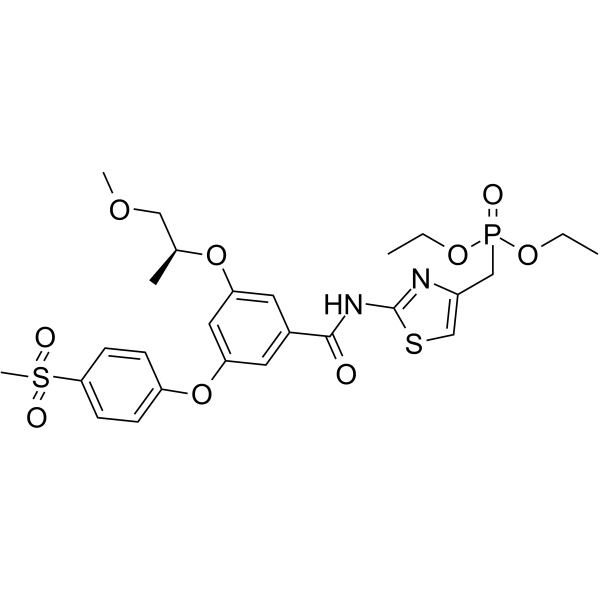
    P2X3 antagonist 40 is a P2X3 antagonist with a human P2X3 receptor pIC50 < 4.52. P2X3 antagonist 40 can be used for research on ATP-mediated proinflammatory fingerprint, including overactive bladder, pain, and chronic cough .
    P2X3 antagonist 40
  • HY-183118

    CDK Apoptosis Neurological Disease Cancer
    CID-078 is an orally active macrocyclic cyclin A and cyclin B inhibitor. CID-078 binds cyclin hydrophobic patches, disrupting interactions of cyclin A-Cdk2 with E2F1 and cyclin B-Cdk1 with Myt1, and selectively targets RxL binding motifs to block complex-substrate interactions. CID-078 induces DNA damage, G2/M cell cycle arrest, apoptosis, mitotic catastrophe, spindle assembly checkpoint activation, and neomorphic cyclin B-CDK2 complex formation, driving synthetic lethality in E2F-driven cancer cells. CID-078 can be used for the research of small cell lung cancer, non-small cell lung cancer, triple negative breast cancer, advanced solid tumors, luminal HR +/HER 2- breast cancer, RB1-altered solid tumors, and neuroblastoma .
    CID-078
  • HY-W040536

    Dimethyloldimethyl hydantoin

    Environmental Pollutants Bacterial Fungal Infection
    DMDM hydantoin (Glydant) is an allergen and formaldehyde-releasing preservative. DMDM hydantoin releases formaldehyde under regulation by multiple factors and with enhanced release in alkaline environments. DMDM hydantoin induces allergic contact dermatitis via type-IV delayed hypersensitivity, either directly or through released formaldehyde. DMDM hydantoin is a broad-spectrum preservative that is effective against fungi, yeast, and gram-positive and gram-negative bacteria. DMDM hydantoin can be used in cosmetics industry production research (e.g., shampoos, hairsprays, and skincare products) and can be used for research on allergic contact dermatitis .
    DMDM hydantoin

Inquiry Online

Your information is safe with us. * Required Fields.

Salutation


Country or Region *

Applicant Name *


Organization Name *

Department *


Email Address *


Product Name *

Cat. No.


Requested quantity *

Phone Number *


Remarks

Inquiry Online

Inquiry Information

Product Name:
Cat. No.:
Quantity:
MCE Japan Authorized Agent:

