

1. Search Result
Search Result
Results for "

quality control

" in MedChemExpress (MCE) Product Catalog:

20

Inhibitors & Agonists

8

Screening Libraries

1

Peptides

1

MCE Kits

3

Natural
Products

1

Click Chemistry

Cat. No. Product Name Target Research Areas Chemical Structure
  • HY-N0478
    Neoline
    1 Publications Verification

    Bullatine B

    Others Neurological Disease
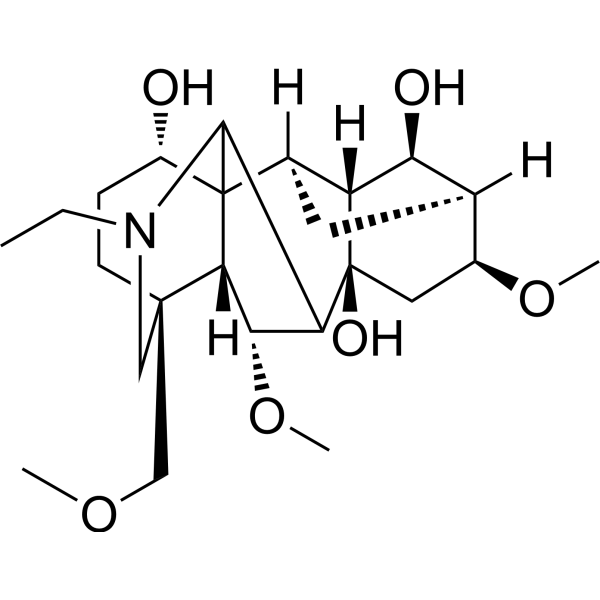
    Neoline (Bullatine B) is the active ingredient of the active ingredient (PA), which can be used to cure the disease. Neoline Flow Suppression Nav1.7 Electrical Flow Control (VGSC), improve diabetes mechanical pain sensitivity. Neoline has a list of compounds that can be used, research on its use, and the quality of its processing during processing in pain .
    Neoline
  • HY-145149

    ADC Payload Cancer
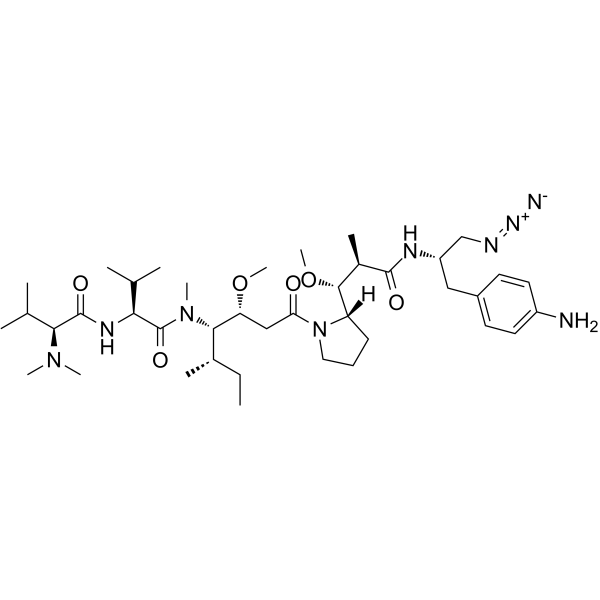
    Duostatin 5 is a ADC Cytotoxin designed based on MMAF (HY-15579) and can be used to synthesize ADCs. The preparation of Duostatin 5 has the advantages of fewer synthetic steps, simple operation, less difficulty in quality control, and more stable chemical synthesis process. Duostatin 5 can be linked to the antibody targeting 5T4 (ZV05) by cross-linking with interchain cysteines through a disubstituted C-Lock linker. Duostatin 5 is a click chemistry reagent. It contains an azide group and can undergo copper-catalyzed azide-alkyne cycloaddition (CuAAc) with molecules containing alkyne groups. It can also undergo ring strain-driven alkyne-azide cycloaddition (SPAAC) with molecules containing DBCO or BCN groups[1][2].
    Duostatin 5
  • HY-P2799A
    Creatine Kinase (CPK/CK), Bovine Heart
    1 Publications Verification

    CK, CPK, Creatine Phosphokinase

    Endogenous Metabolite Creatine Kinase Cardiovascular Disease
    Creatine Kinase (CPK/CK), Bovine Heart (CK) is a creatine kinase derived from bovine heart. Creatine Kinase (CPK/CK), Bovine Heart catalyzes the reversible phosphate transfer reaction between phosphocreatine and ADP, and is widely used in myocardial energy metabolism research and quality control of clinical biochemical tests .
    Creatine Kinase (CPK/CK), Bovine Heart
  • HY-N7026
    Celosin I
    1 Publications Verification

    Others Metabolic Disease
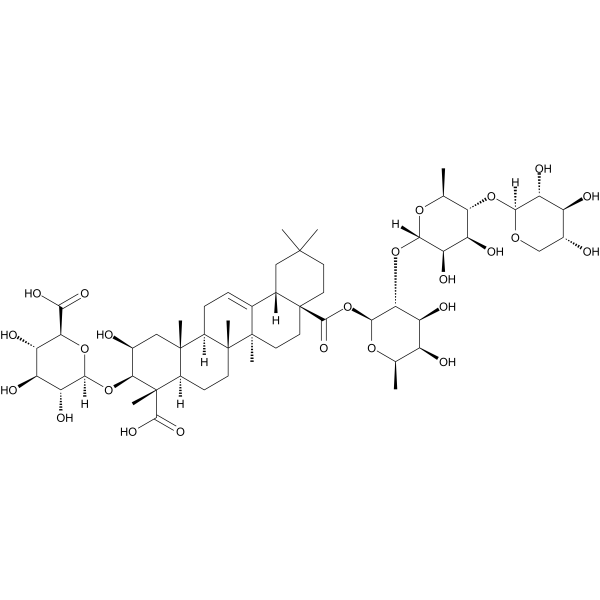
    Celosin I, an oleanane-type triterpenoid saponin isolated from the seeds of Celosia argentea L, could be used as chemical markers for the quality control of C. argentea seeds. Celosin I exhibits significant hepatoprotective effect on carbon tetrachloride-induced and N,N-dimethylformamide-induced hepatotoxicity in mice .
    Celosin I
  • HY-124482

    Others Others
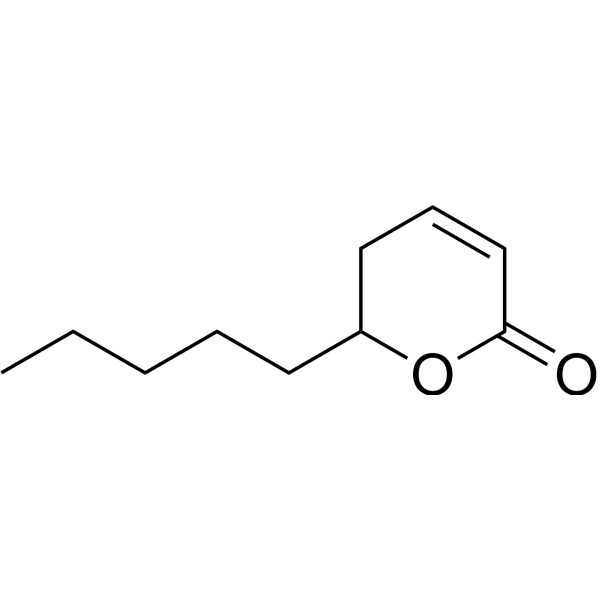
    Mesembrenol (Chemotype c) is an alkaloid widely found in plants. Mesembrenol has potential application in quality control of raw materials and products of S.tortuosum .
    Mesembrenol
  • HY-B1337C

    Biochemical Assay Reagents Endogenous Metabolite Others
    Choline (chloride), >98% serves as a pharmaceutical secondary standard for quality control, offering pharmaceutical laboratories and manufacturers a convenient and cost-effective alternative to preparing in-house working standards.
    Choline chloride, >98%
  • HY-177569

    Eukaryotic Initiation Factor (eIF) Others
    NVS1.1 is a potent, orally active and brain-penetrant readthrough promoter. NVS1.1 triggers the degradation of eRF1 by activating the ribosome-related quality control pathways (involving GCN1, RNF14, and RNF25), thereby facilitating the reading through of premature termination codons. NVS1.1 can be used for the research of genetic diseases caused by nonsense mutations .
    NVS1.1
  • HY-W097929

    2,4,6-Trichloroanisole

    Olfactory Receptor Others
    Tyrene (2,4,6-Trichloroanisole) is a the detoxification product of toxic 2,4,6-Trichlorophenol by filamentous fungi. Tyrene is the key substance that causes "cork taint" in wine. Tyrene can be used for the researches on food quality control and detoxification of environmental pollutants .
    Tyrene
  • HY-177757

    Eukaryotic Initiation Factor (eIF) Others
    NVS2.1 is a potent, orally active and brain-penetrant readthrough promoter. NVS2.1 triggers the degradation of eRF1 by activating the ribosome-related quality control pathways (involving GCN1, RNF14, and RNF25), thereby facilitating the reading through of premature termination codons. NVS2.1 can be used for the research of genetic diseases caused by nonsense mutations .
    NVS2.1
  • HY-N0624

    Others Cancer
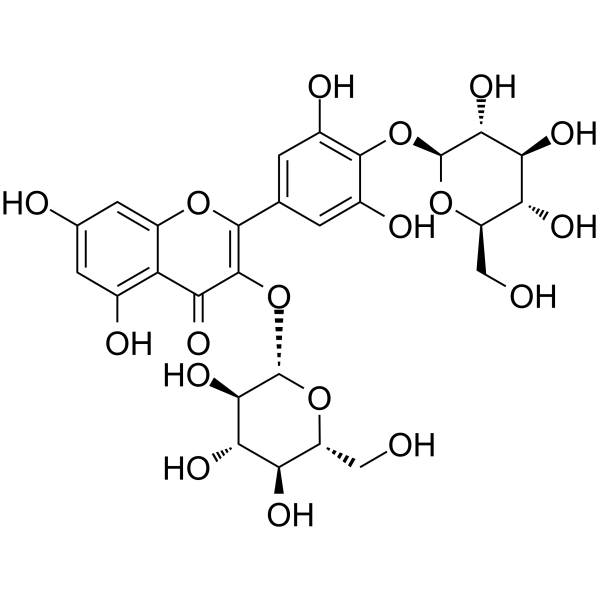
    Complanatoside A is a flavonol glycoside isolated from Astragalus complanatus, and currently it is used as a quality control index for A. complanatus in the 2010 edition of the Chinese Pharmacopoeia.
    Complanatoside A
  • HY-P10416

    Q14 peptide

    Deubiquitinase Mitophagy Others Neurological Disease
    Q14 is a polypeptide derived from the USP30 (ubiquitin specific peptidase 30) transmembrane (TM) domain with the ability to inhibit the deubiquitination activity of USP30 (IC50=57.2 nM). Q14 reduces USP30 activity by inhibiting the interaction between the USP30 transmembrane domain and its catalytic domain. Q14 peptide contains the LC3 interaction region (LIR) motif, which enables it to bind to the LC3 and accelerate the formation of autophagosomes, thereby promoting mitophagy. Q14 can be used in the study of neurodegenerative diseases as well as mitochondrial quality control and cell metabolism .
    Q14
  • HY-118615

    Opioid Receptor Neurological Disease
    LY2048978 is a non-selective opioid receptor antagonist with Ki of 0.287, 0.471 and 1.05 nM for human mu, kappa and delta opioid receptors in vitro, respectively. LY2048978 can be used in the research of major depressive disorder and alcohol use disorder .
    LY2048978
  • HY-W488109

    Insecticide
    Genite is a highly effective pesticide with strong insecticidal activity. Genite can effectively control the number of various pests and is widely used in agricultural production. The use of Genite can significantly increase the yield and quality of crops.
    Genite
  • HY-W774918

    Fungal
    Oxaziclomefone is a broad-spectrum pesticide with fungal activity. Oxaziclomefone effectively controls a variety of crop diseases and has significant effects against plant pathogenic fungi. Oxaziclomefone is widely used in agriculture to protect crops from diseases and improve crop yield and quality.
    Oxaziclomefone
  • HY-W774918R

    Fungal Reference Standards
    Oxaziclomefone (Standard) is the analytical standard of Oxaziclomefone. This product is intended for research and analytical applications. Oxaziclomefone is a broad-spectrum pesticide with fungal activity. Oxaziclomefone effectively controls a variety of crop diseases and has significant effects against plant pathogenic fungi. Oxaziclomefone is widely used in agriculture to protect crops from diseases and improve crop yield and quality.
    Oxaziclomefone (Standard)
  • HY-112101R

    n-Propyl dihydrojasmonate (Standard)

    Drug Isomer Reference Standards Others
    Oxaziclomefone (Standard) is the analytical standard of Oxaziclomefone. This product is intended for research and analytical applications. Oxaziclomefone is a broad-spectrum pesticide with fungal activity. Oxaziclomefone effectively controls a variety of crop diseases and has significant effects against plant pathogenic fungi. Oxaziclomefone is widely used in agriculture to protect crops from diseases and improve crop yield and quality.
    Prohydrojasmon racemate (Standard)
  • HY-B0661C

    YM12617 hydrochloride; LY253351 hydrochloride

    Adrenergic Receptor Endocrinology
    Tamsolusin (YM12617) hydrochloride is a highly selective alpha-1A adrenergic receptor antagonist used in the treatment of benign prostatic hypertrophy, demonstrating effective biological activity in alleviating associated symptoms. Tamsolusin hydrochloride can also be quantified using a validated spectrofluorimetric method, showcasing its potential for routine quality control analysis in pharmaceutical formulations.
    Tamsolusin hydrochloride
  • HY-181764

    Ser/Thr Protease Cancer
    LZL50 is an orally effective human caseinolytic protease P (hClpP) activator with an EC50 of 0.29 μM. LZL50 activates hClpP, a serine protease that mediates mitochondrial quality control by degrading damaged or misfolded mitochondrial proteins. LZL50 exhibits antitumor activity in a breast cancer xenograft mouse model. LZL50 can be used in research related to breast cancer .
    LZL50
  • HY-Z17392

    Drug Intermediate Others
    Sunitinib impurity 61 (Compound 5h) is an intermediate. Sunitinib impurity 61 is a synthetic intermediate or impurity of Sunitinib (HY-10255A) and can be used as a reference standard for purity analysis and quality control .
    Sunitinib impurity 61
  • HY-48813

    Endogenous Metabolite NF-κB Interleukin Related Metabolic Disease
    Glycoursodeoxycholic acid 3-sulfate is a glycine-conjugated sulfated bile acid 3-sulfate, which is produced by SULT2A1-mediated sulfation of glycoursodeoxycholic acid (HY-N1424) in the liver. Glycoursodeoxycholic acid 3-sulfate attenuates the anti-inflammatory effect of glycoursodeoxycholic acid and impairs the inhibitory effect on the IL-17 and NF-κB signaling pathways. Glycoursodeoxycholic acid 3-sulfate shows a significant correlation with aortic flow velocity and BNP in patients with aortic stenosis. Glycoursodeoxycholic acid 3-sulfate is mainly used in related studies such as quantitative analysis, quality control and biochemical experiments; it often serves as a reagent for metabolomics analysis and can also be applied to research related to aortic stenosis .
    Glycoursodeoxycholic acid 3-sulfate

Inquiry Online

Your information is safe with us. * Required Fields.

Salutation


Country or Region *

Applicant Name *


Organization Name *

Department *


Email Address *


Product Name *

Cat. No.


Requested quantity *

Phone Number *


Remarks

Inquiry Online

Inquiry Information

Product Name:
Cat. No.:
Quantity:
MCE Japan Authorized Agent:

