1. Search Result
Search Result
Results for "

self-assemble

" in MedChemExpress (MCE) Product Catalog:

214

Inhibitors & Agonists

27

Fluorescent Dyes

131

Biochemical Assay Reagents

39

Peptides

7

Natural
Products

4

Isotope-Labeled Compounds

4

Click Chemistry

33

Oligonucleotides

Cat. No. Product Name Target Research Area
  • HY-W048825

    Amino Acid Derivatives Others
    Fmoc-Ala-Ala-OH is a self-assembling fluorenylmethoxycarbonyl dipeptide, a small amphiphilic building block composed of a dipeptide linked to a fluorenylmethoxycarbonyl (Fmoc) group. Under conditions of pH < 4, Fmoc-Ala-Ala-OH spontaneously assembles to form a nanofiber network, constructing a hydrogel scaffold with a water content exceeding 99% (w/w). The fibers have a diameter of approximately 22 nm, matching the size of extracellular matrix (ECM) components. Fmoc-Ala-Ala-OH supports cell adhesion, proliferation, and maintains of cell phenotype. Fmoc-Ala-Ala-OH's function is to mimic the ECM, providing a 3D growth microenvironment for cells, and Fmoc-Ala-Ala-OH is primarily used in tissue engineering and 3D cell culture, particularly suitable for in vitro culture studies of cells such as chondrocytes[1] .
  • HY-P10294

    Amyloid-β Others
    Oligopeptide P11-4 is an α-peptide that can be self-assembled into β-sheet amyloids with a hydrogel appearance at low pH. Oligopeptide P11-4 can be used in biomimetic mineralization, enamel regeneration and oral care agent .
  • HY-P2263

    Peptides Inflammation/Immunology
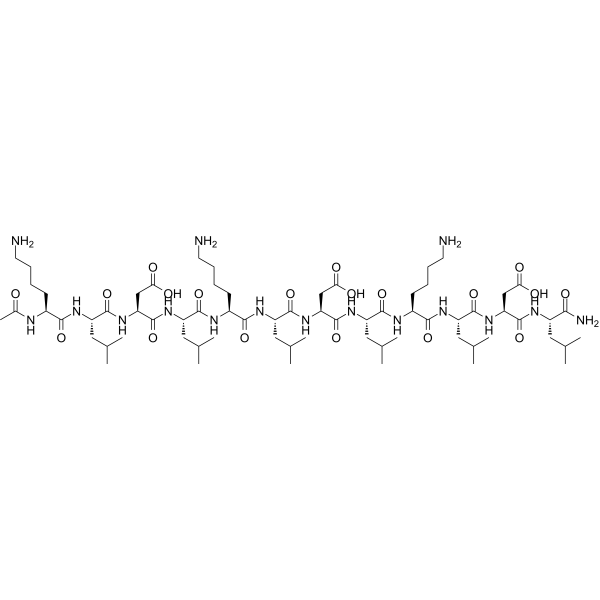
    KLD-12 is a 12-residue self-assembling peptide that is used in tissue-engineering. KLD-12 combined with SDF-1 self-assembled polypeptide enhances chondrogenic differentiation of bone marrow stromal cells (BMSCs). KLD-12 hydrogel can fill full-thickness osteochondral defects in situ and improve cartilage repair .
  • HY-P2632

    RADA16

    Biochemical Assay Reagents Neurological Disease
    RAD16-I (RADA16) is a non-directed self-assembling peptide hydrogel. Under physiological conditions, RAD16-I spontaneously forms a three-dimensional nanofiber network that mimics the extracellular matrix, and possesses excellent properties such as high water content, biocompatibility and degradability. RAD16-I serves as an ideal scaffold for three-dimensional cell culture. RAD16-I not only maintains cell viability and induces self-organization, but also supports cell adhesion, proliferation, differentiation and insulin secretion, effectively stabilizes islet clusters and promotes directed differentiation of the cardiac lineage. RAD16-I can construct a cell-friendly nano-microenvironment for research related to diseases such as myocardial infarction and diabetes .
  • HY-P10709A

    Biochemical Assay Reagents Cardiovascular Disease Cancer
    CREKA peptide acetate is a short peptide sequence, belonging to self-assembling peptides (SAPs), which can self-assemble into functional nanostructures, typically nanofibers, under physiological conditions. CREKA peptide acetate can be used to target tumor cells and tumor vasculature, exhibiting antitumor activity .
  • HY-P2632A

    RADA16 hydrochloride

    Peptides Neurological Disease
    RAD16-I hydrochloride, a soft nanofibrous self-assembling peptide, is a suitable microenvironment for human mesenchymal stem cells’ (hMSC) proliferation and differentiation into chondrocytes . RAD16-I is a well-studied ionic complementary peptide was used as a model to check potential amyloid-like staining properties of SAPNFs .
  • HY-P6299

    Peptides Others
    MAX8 is a peptide made up of 20 residues that can fold and self-assemble under the influence of DMEM, forming a mechanically rigid hydrogel, this allows cells to be evenly immersed in the gel when the gelation is triggered in the presence of cells .
  • HY-P4054

    Peptides Others
    IEIK 13 is a self-assembling peptide (SAP) sequence. IEIK 13 can be used for the research of cartilage tissue engineering
  • HY-P11501

    Amyloid-β Biochemical Assay Reagents Neurological Disease
    AAKLVFF is an oligopeptide capable of self-assembling into nanotubes. AAKLVFF can be derived from the core section of β-amyloid. AAKLVFF becomes the first methanol compatible LC alignment medium for residual dipolar coupling measurement .
  • HY-P10701

    Biochemical Assay Reagents Inflammation/Immunology Cancer
    Q11 peptide is a β-sheet-forming peptide that plays an important role in self-assembly and targeted applications. As a scaffold peptide, Q11 peptide can display immunogenic epitopes and is widely used in peptide-based immune vaccine research. Additionally, Q11 peptide can be conjugated with MUC1 glycopeptides for the study of self-assembling, adjuvant-free MUC1 glycopeptide vaccines. Q11 peptide holds great potential for research in the field of cancer immunology .
  • HY-P11309

    Biochemical Assay Reagents Neurological Disease
    QL6 peptide is a self-assembling peptide. QL6 peptide can self-assembles into β-sheets bridging the cavity at neutral pH and improves the inhibitory environment by reducing inflammation and tissue scaring. QL6 peptide can be used for synthesis nanofiber scaffolds for spinal cord injuries (SCI) research .
  • HY-P10494

    Amyloid-β Neurological Disease
    FEFEFKFK is an octapeptide that self-assembles into fibrillar structures. FEFEFKFK is able to form gels at concentrations greater than about 7 mg/mL. The self-assembly and gelation properties of FEFEFKFK help to understand the mechanism of amyloid fibril formation in protein misfolding diseases such as Alzheimer's disease and Parkinson's disease .
  • HY-P10686

    EGFR Cancer
    CH401 peptide is a HER2-derived antigen peptide. After being bound to the artificial viral capsid by a self-assembled β-cyclic peptide, CH401 peptide is encapsulated in a lipid bilayer containing the lipid adjuvant α-GalCer, and can be studied as a self-adjuvant anti-breast cancer vaccine candidate .
  • HY-P10699

    Biochemical Assay Reagents Others
    MAX1 is a self-assembling peptide used to prepare hydrogels .
  • HY-P10712

    Biochemical Assay Reagents Others
    Nap-GFFY, a naphthylacetic acid modifi ed tetrapeptide of GFFY, is a self-assembling fiber peptide .
  • HY-P10793

    EGFR Apoptosis Cancer
    Cyclic(YCDGFYACYMDV) is a HER2 signaling pathway inhibitor with anti-cancer activity. This compound self-assembles into nanoparticles in aqueous solution and transforms into nanofibers upon specific binding to HER2 on cancer cells. This transformation disrupts HER2 dimerization and subsequent downstream signaling events, leading to cancer cell apoptosis (Apoptosis). The inhibitory effects on HER2 positive breast cancer have been demonstrated to be effective in a murine xenograft model .
  • HY-P10715

    Peptides Inflammation/Immunology Cancer
    Fmoc-KCRGDK is a self-assembling peptide that can be used to prepare hydrogels and assist in drug delivery for immune checkpoint inhibitors. Fmoc-KCRGDK can be applied in cancer immunotherapy research .
  • HY-P10675

    Biochemical Assay Reagents Metabolic Disease
    Peptide K is a self-assembling peptide fiber that can be used to prepare fibrous nanocomposite hydrogels. The fibrous nanocomposite hydrogels have a dynamic network that adapts to cells and enhances cell-matrix and cell-cell interactions, thus significantly promoting the mechanotransduction, metabolic energy, and osteogenesis of encapsulated stem cells .
  • HY-P10705

    Biochemical Assay Reagents Cancer
    KGFRWR is a short peptide sequence, belonging to self-assembling peptides (SAPs), which can self-assemble into functional nanostructures, typically nanofibers, under physiological conditions. KGFRWR can be used to target tumor cells and tumor vasculature, exhibiting antitumor activity .
  • HY-P10702

    Biochemical Assay Reagents Others
    SAF-p1 is a self-assembling fiber peptide that can form sticky-ended heterodimers by assembling with SAF-p2 (HY-P10703) through complementary amino acid sequences. These heterodimers further self-assemble into long-chain fiber structures. SAF-p1 is promising for the development of nanomaterials in the biomedical field .
  • HY-P10703

    Biochemical Assay Reagents Others
    SAF-p2 is a self-assembling fiber peptide that can form sticky-ended heterodimers by assembling with SAF-p2 (HY-P10702) through complementary amino acid sequences. These heterodimers further self-assemble into long-chain fiber structures. SAF-p2 is promising for the development of nanomaterials in the biomedical field .
  • HY-P4579

    Biochemical Assay Reagents Others
    Pyr-Phe-OH is an effective pyrene-based hydrogel. Pyr Phe OH can self-assemble into hydrogels in the range of pH=7.5-14.0, and also shows a very low gel concentration (0.037% (w/v)) in phosphate buffer .
  • HY-P2263A

    Peptides Inflammation/Immunology
    KLD-12 TFA is the TFA salt form of KLD-12 (HY-P2263). KLD-12 TFA is a self a 12-residue self-assembling peptide that is used in tissue-engineering. KLD-12 TFA combined with SDF-1 self-assembled polypeptide enhances chondrogenic differentiation of bone marrow stromal cells (BMSCs). KLD-12 TFA hydrogel can fill full-thickness osteochondral defects in situ and improve cartilage repair .
  • HY-P10453

    Peptides Others
    Myr5A peptide is an acylated peptide composed of apolipoprotein A1 (ApoA1) analog peptide 5A peptide coupled to the saturated fatty acid myristate. Myr5A peptide self-assembled into lipid nanostructures can be used to encapsulate anthracycline Doxorubicin (HY-15142A) and Valrubicin (HY-13772) for compound release studies in vitro .
  • HY-P6079A

    Biochemical Assay Reagents Others
    Ac-IHIHIYI-NH2 TFA is an amyloid self-assembling peptide variant that can be used as a bioactive nanomaterial with esterase activity .
  • HY-P10706

    Biochemical Assay Reagents Others
    Ac-ILVAGK-NH2 is a self-assembling peptide that helps human H1 embryonic stem cells maintain their pluripotency .
  • HY-P11067

    Peptides Others
    PRG peptide is a self-assembling peptide. PRG peptide significantly enhances endothelial cell survival, proliferation, migration, and morphological tubulogenesis. PRG peptide can be used for tissue regeneration research .
  • HY-P10659

    EGFR Cancer
    Self-assembling peptide pY1 is a peptide that assemblies around cancer cells and targets EGFR. When co-cultured with Ovalbumin (OVA), pY1 can effectively block the endocytosis of OVA .
  • HY-P11063

    Peptides Cancer
    AcfffGk is a short peptide with the ability to self-assemble into helical nanofibers, forming non-covalently cross-linked hydrogels that serve as scaffolds for 3D cell culture .
  • HY-P11055

    Bacterial Infection
    IKFQFHFD is a pH-responsive and self-assembling peptide. IKFQFHFD is biocompatible at neutral pH and becomes an antimicrobial peptide-like molecular structure only at acidic pH. IKFQFHFD can be used for chronic wounds (venous ulcers, diabetic ulcers, and pressure ulcers) induced by biofilm infections research .
  • HY-P2787

    Peptides Others
    Pro-Phe-Phe is the most aggregation-prone tripeptide of natural amino acids. Pro-Phe-Phe forms unique helical-like sheets that mate via aromatic dry interfaces. Pro-Phe-Phe can be used for the design of modular super-helical self-assembling nanostructures .
  • HY-P11066

    Peptides Others
    RAD-FHR peptide is a self-assembling peptide. RAD-FHR peptide significantly enhances migration, proliferation and growth factor-secretion ability in human adipose stem cells (hASCs). RAD-FHR peptide can be used for synthesis of nanofiber hydrogel for stem cell behaviors research in biomimetic 3D systems .
  • HY-P4481

    Peptides Others
    H-Phe-Phe-Phe-Phe-Phe-OH has a self-assembled structure, which can be assembled into an ordered autofluorescent elongated structure, showing mechanochromic properties .
  • HY-P11468

    Bacterial Antibiotic Cardiovascular Disease Infection
    wkwkwNGwkwkw-NH2 is a self-assembling β-hairpin antimicrobial peptide. wkwkwNGwkwkw-NH2 self-assembles into nanofibers. wkwkwNGwkwkw-NH2 interacts with LPS on the surface of the bacterial membrane and then disrupts the bacterial outer membrane, inner membrane, and cytoplasmic membrane to exert its antibacterial effects. wkwkwNGwkwkw-NH2 has high antibacterial activity and low hemolytic activity. wkwkwNGwkwkw-NH2 significantly reduces the S. aureus ATCC 25923 load at the skin wound. wkwkwNGwkwkw-NH2 displays synergistic effects when combined with antibiotics. wkwkwNGwkwkw-NH2 facilitates wound healing .
  • HY-P11068

    Peptides Others
    RAD-KLT is a self-assembling peptide. RAD-KLT significantly enhances endothelial cell survival, proliferation, migration, and morphological tubulogenesis. RAD-KLT can be used for tissue regeneration research .
  • HY-P11065

    Peptides Others
    RAD-SKP peptide is a self-assembling peptide. RAD-SKP peptide with decellularized cartilage matrix (DCM) can be used for synthesis of nanofiber hydrogel. RAD-SKP peptide can be used for cartilage repair research .
  • HY-P5423C

    Peptides Others
    GALA-Cys is a chemically modified GALA peptide (HY-P5423) that retains GALA functions while acquiring strong covalent conjugation capability. GALA-Cys undergoes pH-driven reversible secondary structure transition, rearranges into an amphipathic α-helix, self-oligomerizes, penetrates lipid membranes to form pores, and disrupts lipid bilayers, thereby enabling endosomal escape and cytosolic cargo delivery. GALA-Cys can be conjugated with lipid DPTE for integration into liposomes, self-assembles into a tilted monolayer on gold surfaces, and serves as a pH-responsive coating for particle surface functionalization. GALA-Cys is applicable to studies related to targeted cargo delivery .
  • HY-P11218

    Peptides Cancer
    Lipo-PtIV-R8K is a nuclear targeting peptide containing R8K. Lipo-PtIV-R8K is a lipid PtIV prodrug amphiphilic molecule that can self assemble to form nanoparticles. Lipo-PtIV-R8K can be used in the research of cancer such as breast cancer .
  • HY-P2632C

    Biochemical Assay Reagents Neurological Disease
    RAD16-I, free acid TFA is a derivative of RADA16 (HY-P2632), with no Ac and NH2 modifications at both ends, and it has the same function as RADA16. RAD16-I, free acid TFA is a non-directed self-assembling peptide hydrogel. Under physiological conditions, RAD16-I, free acid TFA spontaneously forms a three-dimensional nanofiber network that mimics the extracellular matrix, and possesses excellent properties such as high water content, biocompatibility and degradability. RAD16-I, free acid TFA serves as an ideal scaffold for three-dimensional cell culture. RAD16-I, free acid TFA not only maintains cell viability and induces self-organization, but also supports cell adhesion, proliferation, differentiation and insulin secretion, effectively stabilizes islet clusters and promotes directed differentiation of the cardiac lineage. RAD16-I, free acid TFA can construct a cell-friendly nano-microenvironment for research related to diseases such as myocardial infarction and diabetes .

Inquiry Online

Your information is safe with us. * Required Fields.

Salutation


Country or Region *

Applicant Name *


Organization Name *

Department *


Email Address *


Product Name *

Cat. No.


Requested quantity *

Phone Number *


Remarks

Inquiry Online

Inquiry Information

Product Name:
Cat. No.:
Quantity:
MCE Japan Authorized Agent:

