

1. Search Result
Search Result
Results for "

self-assembly

" in MedChemExpress (MCE) Product Catalog:

136

Inhibitors & Agonists

1

Screening Libraries

106

Biochemical Assay Reagents

12

Peptides

3

Natural
Products

1

Isotope-Labeled Compounds

3

Click Chemistry

28

Oligonucleotides

Cat. No. Product Name Target Research Areas Chemical Structure
  • HY-101064

    N-FMOC-leucine; NPC 15199; NSC 334290

    PPAR Calcium Channel Lipase Metabolic Disease Inflammation/Immunology
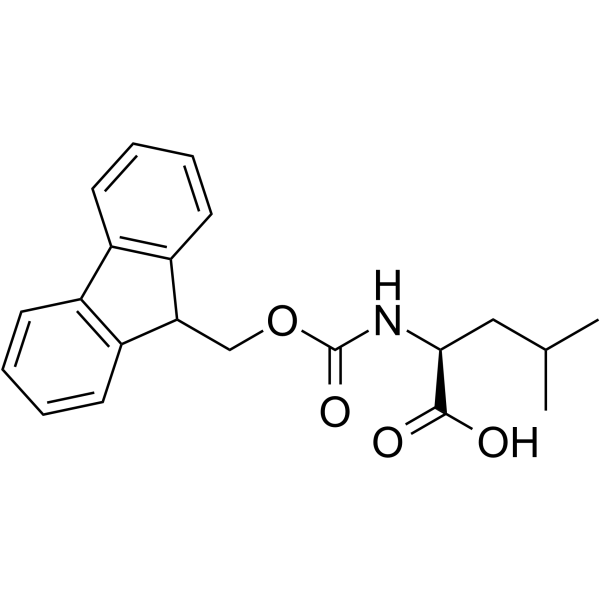
    Fmoc-Leucine (N-FMOC-leucine) is an anti-inflammatory agent that not only promotes extracellular Ca 2+ influx but also facilitates intracellular Ca 2+ release. Fmoc-Leucine is a selective ligand for PPARγ (Ki = 15 μM), exhibiting insulin-sensitizing effects but with weak fatogenic activity. Fmoc-Leucine exhibits unique self-assembly properties and can form transient gels, stable gels, or crystals/2D sheets through different pathways. Fmoc-Leucine can be used in the research of diabetes, colitis, and bladder cancer .
    Fmoc-leucine
  • HY-P1449

    ADC Linker Cancer
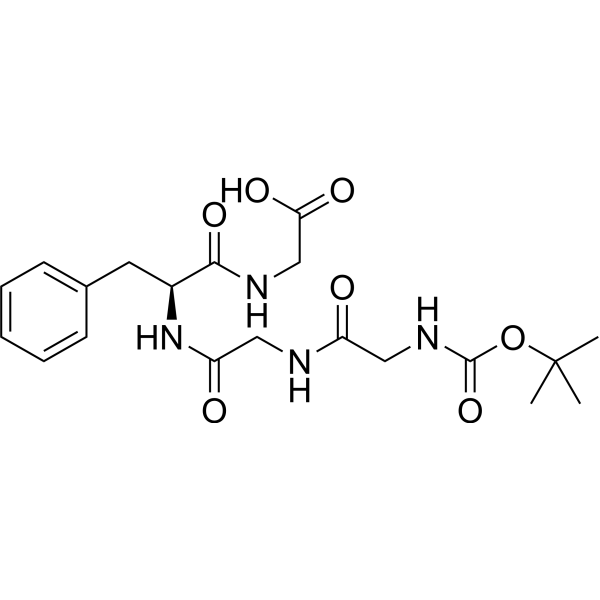
    Boc-Gly-Gly-Phe-Gly-OH, a self-assembly of N- and C-protected tetrapeptide, is a protease cleavable linker used for the antibody-drug conjugate (ADC).
    Boc-Gly-Gly-Phe-Gly-OH
  • HY-B0949
    Protriptyline hydrochloride
    2 Publications Verification

    Cholinesterase (ChE) Amyloid-β Neurological Disease
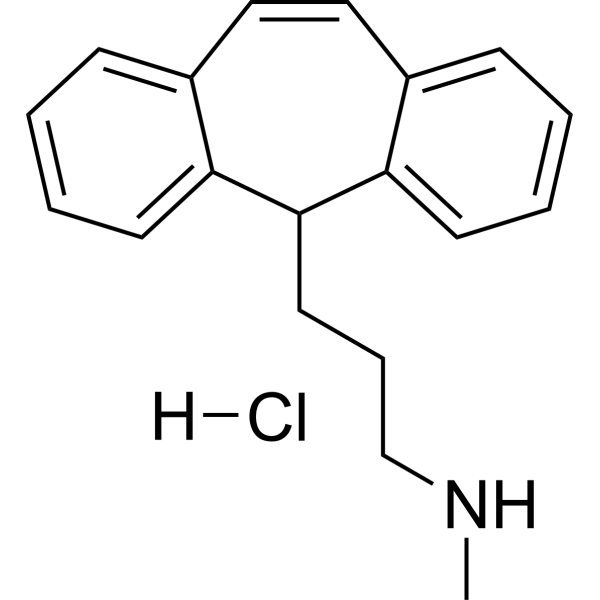
    Protriptyline hydrochloride is a potent tricyclic antidepressant (TCA). Protriptyline hydrochloride inhibits AChE activity with an IC50 value of 0.06 mM and inhibits Aβ self-assembly. Protriptyline hydrochloride can be used for the study of depression and Alzheimers disease .
    Protriptyline hydrochloride
  • HY-P4808

    Amyloid-β Autophagy Neurological Disease
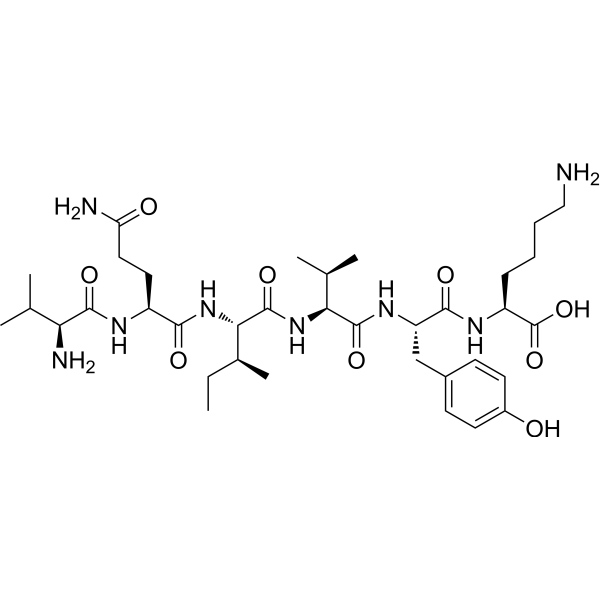
    PHF6 (VQIVYK) is a self-assembly sequence capable of initiating the full-length tau protein aggregation and is mapped to the third microtubule-binding repeat region of the tau protein .
    PHF6
  • HY-154644

    Environmental Pollutants Biochemical Assay Reagents Cancer
    Soya Lecithin is a phospholipid mixture that can be used as a drug delivery vehicle and is a pharmaceutical excipient. Soya Lecithin can form a lipid bilayer structure through self-assembly, and its binding properties are amphiphilic (hydrophilic head and hydrophobic tail), encapsulating hydrophobic drugs. Soya Lecithin forms stable nanoliposomes or microemulsions, improves the solubility and cellular uptake efficiency of poorly soluble drugs (such as Curcumin (HY-N0005)), and exerts activities such as enhancing drug delivery and regulating cell proliferation .
    Soya Lecithin
  • HY-N0687
    Vindoline
    1 Publications Verification

    Microtubule/Tubulin Apoptosis NF-κB PERK Metabolic Disease Inflammation/Immunology Endocrinology
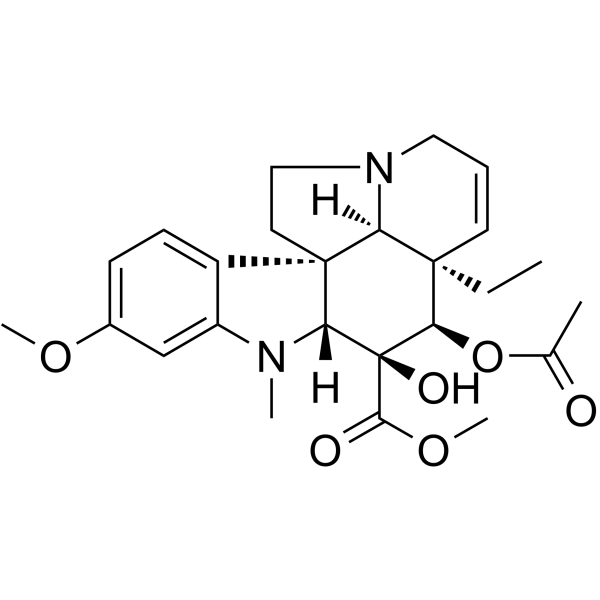
    Vindoline is an orally active vinca alkaloid. Vindoline can be extracted from the leaves of Catharanthus roseus. Vindoline has a weak inhibitory effect on the self-assembly of tubulin. Vindoline alleviates Apoptosis, inhibits p-p65 and p-ERK. Vindoline improves diabetes, bone loss, osteoarthritis, and kidney damage .
    Vindoline
  • HY-121447

    Endogenous Metabolite Metabolic Disease
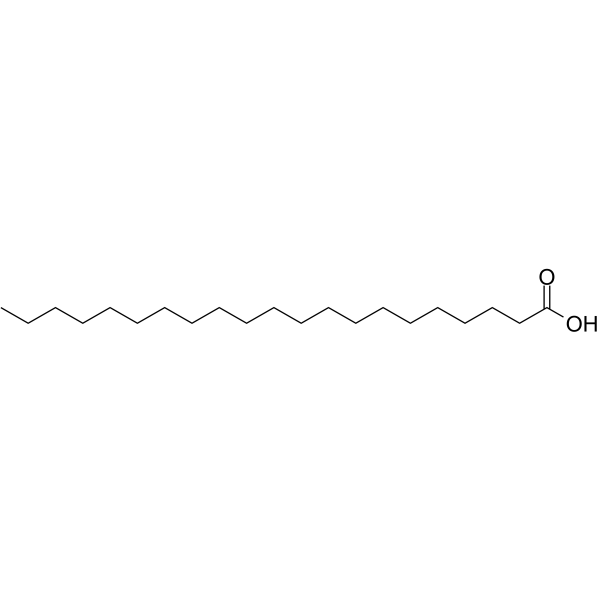
    Heneicosanoic acid is an odd-chain saturated fatty acid widely present in human milk, fish, seeds, and cerebrosides in the cell membranes of the nervous system. Heneicosanoic acid can form Langmuir monolayers and is often used as a model to study lipid self-assembly and disassembly processes in biological membranes and drug delivery systems. In the low-temperature L'2 and CS crystalline phases, Heneicosanoic acid undergoes local oscillations, which in turn drive the spontaneous formation and expulsion of micelles and vesicles .
    Heneicosanoic acid
  • HY-145785A

    MDM-2/p53 Apoptosis Cancer
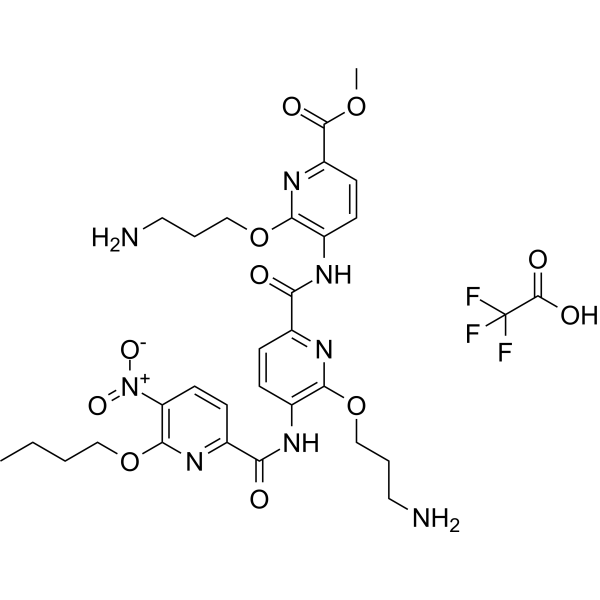
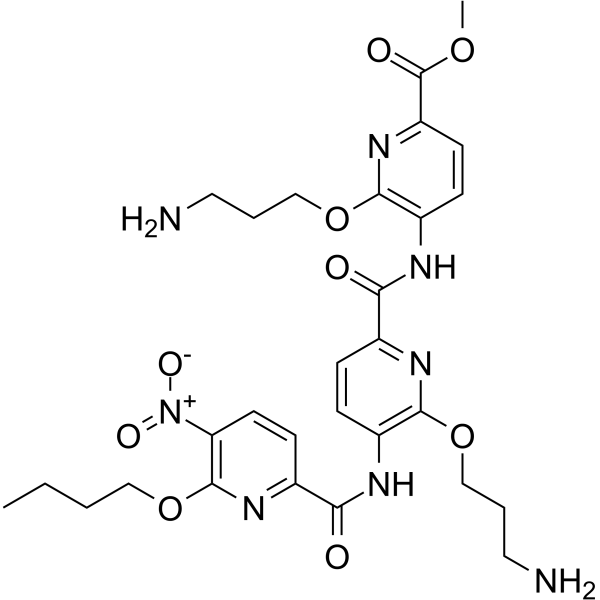
    ADH-6 TFA is a tripyridylamide compound. ADH-6 abrogates self-assembly of the aggregation-nucleating subdomain of mutant p53 DBD. ADH-6 TFA targets and dissociates mutant p53 aggregates in human cancer cells, which restores p53's transcriptional activity, leading to cell cycle arrest and apoptosis. ADH-6 TFA has the potential for the research of cancer diseases .
    ADH-6 TFA
  • HY-W440702

    Biochemical Assay Reagents Others
    Cholesterol-PEG2000-NHS is a cholesterol PEG derivative that can form micelles through molecular self-assembly and has a longer half-life in vivo. Cholesterol-PEG2000-NHS can be used in drug delivery research .
    Cholesterol-PEG2000-NHS
  • HY-P4637

    H-Ile-Phe-OH

    Amyloid-β Others
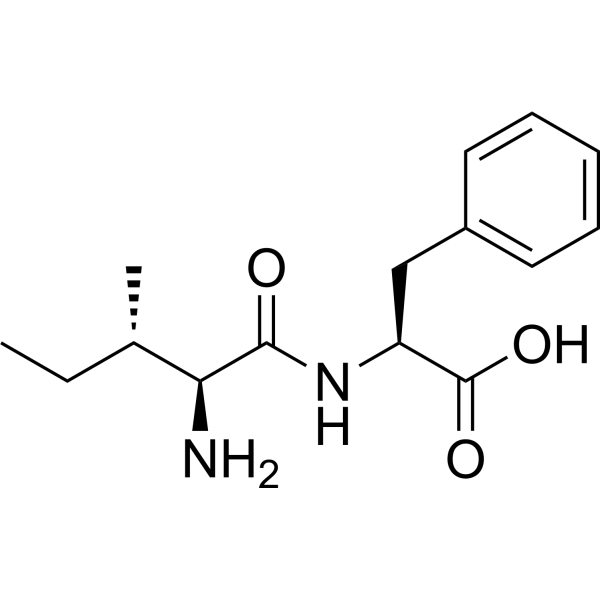
    Ile-Phe is a dipeptide that self-associates in aqueous solution to form a transparent thermoreversible gel formed by a network of fibrillar nanostructures. It may be involved in triggering self-assembly processes such as amyloid formation.
    Ile-Phe
  • HY-P4808A

    Amyloid-β Autophagy Neurological Disease
    PHF6 (VQIVYK) TFA is a self-assembly sequence capable of initiating the full-length tau protein aggregation. PHF6 TFA is mapped to the third microtubule-binding repeat region of the tau protein .
    PHF6 TFA
  • HY-W440697

    Biochemical Assay Reagents Others
    Cholesterol-PEG1000-NHS is a cholesterol PEG derivative that can form micelles through molecular self-assembly and has a longer half-life in vivo. Cholesterol-PEG1000-NHS can be used in drug delivery research .
    Cholesterol-PEG1000-NHS
  • HY-158189

    Photosensitizer Reactive Oxygen Species (ROS) Apoptosis Neurological Disease Cancer
    TPP-Ce6 is a mitochondria-targeted photosensitizer formed by the ester bond conjugation of chlorophyll e6 (Ce6) with triphenylphosphine (TPP). Under light irradiation or ultrasound exposure, TPP-Ce6 generates reactive oxygen species, induces cell apoptosis, and triggers immunogenic cell death. TPP-Ce6 can serve as a component of carrier-free co-delivery systems, undergo enzyme-induced self-assembly within tumors, and modulate tumor hypoxia. TPP-Ce6 is applicable to research on breast cancer and glioblastoma .
    TPP-Ce6
  • HY-P5681

    Bacterial Infection Inflammation/Immunology
    Human α-Defensin 6, a 32-residue cysteine-rich peptide, can inhibit bacterial invasion and contribute to the mucosal immunity. Human α-Defensin 6 forms ordered self-assembly fibrils and nanonets that surround and entangle bacteria after stochastic binding to bacterial surface proteins. Human α-Defensin 6 also inhibits C. albicans biofilm formation .
    Human α-Defensin 6
  • HY-W099571
    Lithium stearate
    Maximum Cited Publications
    22 Publications Verification

    Stearic acid lithium; Lithium octadecanoate

    Environmental Pollutants Biochemical Assay Reagents Others
    Lithium stearate (Stearic acid (lithium)) is a compound that forms vesicles in reaction with silver nitrate, thereby changing the reaction kinetics of the nucleation and self-assembly process of silver stearate. It has the activity that even in the presence of excess silver nitrate, only about 80% can be converted into silver stearate and the residual lithium stearate will inhibit the growth process of silver stearate crystals, thereby producing silver stearate crystals that are much smaller than those obtained from sodium stearate, providing an opportunity to further control the self-assembly and crystal growth of silver stearate.
    Lithium stearate
  • HY-W000933

    Drug Intermediate Others
    Ethylboronic acid is an organic boron compound that can be used as a synthetic intermediate .
    Ethylboronic acid
  • HY-P1449A

    ADC Linker Cancer
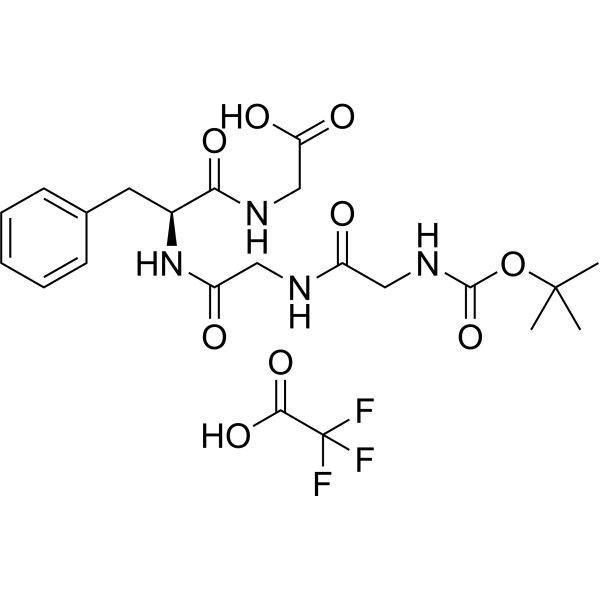
    Boc-Gly-Gly-Phe-Gly-OH TFA, a self-assembly of N- and C-protected tetrapeptide, is a protease cleavable linker used for the antibody-drug conjugate (ADC).
    Boc-Gly-Gly-Phe-Gly-OH TFA
  • HY-145785

    MDM-2/p53 Apoptosis Cancer
    ADH-6 is a tripyridylamide compound. ADH-6 abrogates self-assembly of the aggregation-nucleating subdomain of mutant p53 DBD. ADH-6 targets and dissociates mutant p53 aggregates in human cancer cells, which restores p53's transcriptional activity, leading to cell cycle arrest and apoptosis. ADH-6 has the potential for the research of cancer diseases[1].
    ADH-6
  • HY-178106

    Drug Intermediate Cancer
    SCN2 is a esterase-responsive prodrug-based amphiphile composed of SN38 (HY-13704) and di-(triazole-[12]aneN3, N) moiety through a 7‑carbon alkyl chains. SCN2 has excellent self-assembly and reversible siRNA condensation capabilities as well as anti-proliferation activity against cancer cells. SCN2 can be used for synthesis of nanoparticles for drug delivery of lung cancer .
    SCN2
  • HY-149764

    Amyloid-β Neurological Disease
    Aβ42 agonist-2 (compound 7b) is a small molecule compound that can promote Aβ42 aggregation. Aβ42 agonist-2 can interact with Aβ42 oligomers and pentamers to promote nontoxic aggregate self-assembly and rapid fibril formation. Aβ42 agonist-2 prevents Aβ42-induced cytotoxicity in HT22 hippocampal neuronal cells .
    Aβ42 agonist-2
  • HY-P10701

    Biochemical Assay Reagents Inflammation/Immunology Cancer
    Q11 peptide is a β-sheet-forming peptide that plays an important role in self-assembly and targeted applications. As a scaffold peptide, Q11 peptide can display immunogenic epitopes and is widely used in peptide-based immune vaccine research. Additionally, Q11 peptide can be conjugated with MUC1 glycopeptides for the study of self-assembling, adjuvant-free MUC1 glycopeptide vaccines. Q11 peptide holds great potential for research in the field of cancer immunology .
    Q11 peptide
  • HY-B0949A

    Cholinesterase (ChE) Amyloid-β Neurological Disease
    Protriptyline is a potent tricyclic antidepressant (TCA). Protriptyline inhibits AChE activity with an IC50 value of 0.06 mM and inhibits Aβ self-assembly. Protriptyline can be used for the study of depression and Alzheimers disease .
    Protriptyline
  • HY-P10494

    Amyloid-β Neurological Disease
    FEFEFKFK is an octapeptide that self-assembles into fibrillar structures. FEFEFKFK is able to form gels at concentrations greater than about 7 mg/mL. The self-assembly and gelation properties of FEFEFKFK help to understand the mechanism of amyloid fibril formation in protein misfolding diseases such as Alzheimer's disease and Parkinson's disease .
    FEFEFKFK
  • HY-N0687R

    Reference Standards Microtubule/Tubulin Apoptosis NF-κB PERK Metabolic Disease Inflammation/Immunology Endocrinology
    Vindoline (Standard) is an analytical standard of Vindoline (HY-N0687). This product is intended for research and analytical applications. Vindoline is an orally active vinca alkaloid. Vindoline can be extracted from the leaves of Catharanthus roseus. Vindoline has a weak inhibitory effect on the self-assembly of tubulin. Vindoline alleviates Apoptosis, inhibits p-p65 and p-ERK. Vindoline improves diabetes, bone loss, osteoarthritis, and kidney damage .
    Vindoline (Standard)
  • HY-W440718

    Biochemical Assay Reagents Others
    Cholesterol-PEG1000-Mal is a cholesterol PEG derivative that can form micelles through molecular self-assembly and has a longer half-life in vivo. Cholesterol-PEG1000-Mal can be used in drug delivery research .
    Cholesterol-PEG1000-Mal
  • HY-W440704

    Biochemical Assay Reagents Others
    Cholesterol-PEG5000-NHS is a cholesterol PEG derivative that can form micelles through molecular self-assembly and has a longer half-life in vivo. Cholesterol-PEG5000-NHS can be used in drug delivery research .
    Cholesterol-PEG5000-NHS
  • HY-167006

    PLGA10000-PEG3000-Vinylsulfone

    Biochemical Assay Reagents Others
    PLGA10000-PEG3000-VS (PLGA10000-PEG3000-Vinylsulfone) is an amphiphilic polymer. Amphiphilic polymers can be used in drug delivery studies due to their ability to self-assemble into discrete aggregates .
    PLGA10000-PEG3000-VS
  • HY-163201

    TMV Infection
    TMV-IN-7 (compound G2) is a potent inhibitor of tobacco mosaic virus (TMV). TMV-IN-7 exhibits strong hydrophobic interactions to obstructing the virus’s self-assembly .
    TMV-IN-7
  • HY-W591891

    Biochemical Assay Reagents Others
    Cholesterol-PEG1000-acid is a cholesterol PEG derivative that can form micelles through molecular self-assembly and has a longer half-life in vivo. Cholesterol-PEG1000-acid can be used in drug delivery research .
    Cholesterol-PEG1000-acid
  • HY-154971

    Apoptosis Cancer
    Ara-SH is a Cytarabine mercaptopropionic acid-substituted derivative. Ara-SH is used as the trigger to fabricate a smart Cytarabine and Venetoclax-coloaded nanoparticle (AV-NP) through self-assembly. Ara-SH exhibits remarkable synergistic antileukemia effects in vitro and in vivo .
    Ara-SH
  • HY-W440695

    Biochemical Assay Reagents Others
    Cholesterol-PEG3400-azide is a cholesterol PEG derivative that can form micelles through molecular self-assembly and has a longer half-life in vivo. Cholesterol-PEG3400-azide can be used in drug delivery research .
    Cholesterol-PEG3400-azide
  • HY-W440692

    Biochemical Assay Reagents Others
    Cholesterol-PEG5000-amine is a cholesterol PEG derivative that can form micelles through molecular self-assembly and has a longer half-life in vivo. Cholesterol-PEG5000-amine can be used in drug delivery research .
    Cholesterol-PEG5000-amine
  • HY-W440696

    Biochemical Assay Reagents Others
    Cholesterol-PEG5000-azide is a cholesterol PEG derivative that can form micelles through molecular self-assembly and has a longer half-life in vivo. Cholesterol-PEG5000-azide can be used in drug delivery research .
    Cholesterol-PEG5000-azide
  • HY-W591912

    Biochemical Assay Reagents Others
    Cholesterol-PEG1000-methoxy is a cholesterol PEG derivative that can form micelles through molecular self-assembly and has a longer half-life in vivo. Cholesterol-PEG1000-methoxy can be used in drug delivery research .
    Cholesterol-PEG1000-methoxy
  • HY-W440723

    Biochemical Assay Reagents Others
    Cholesterol-PEG2000-Thiol is a cholesterol PEG derivative that can form micelles through molecular self-assembly and has a longer half-life in vivo. Cholesterol-PEG2000-Thiol can be used in drug delivery research .
    Cholesterol-PEG2000-Thiol
  • HY-W440707

    Biochemical Assay Reagents Others
    Cholesterol-PEG3400-alcohol is a cholesterol PEG derivative that can form micelles through molecular self-assembly and has a longer half-life in vivo. Cholesterol-PEG3400-alcohol can be used in drug delivery research .
    Cholesterol-PEG3400-alcohol
  • HY-W440721

    Biochemical Assay Reagents Others
    Cholesterol-PEG5000-Mal is a cholesterol PEG derivative that can form micelles through molecular self-assembly and has a longer half-life in vivo. Cholesterol-PEG5000-Mal can be used in drug delivery research .
    Cholesterol-PEG5000-Mal
  • HY-W440693

    Biochemical Assay Reagents Others
    Cholesterol-PEG1000-azide is a cholesterol PEG derivative that can form micelles through molecular self-assembly and has a longer half-life in vivo. Cholesterol-PEG1000-azide can be used in drug delivery research .
    Cholesterol-PEG1000-azide
  • HY-W440691

    Biochemical Assay Reagents Others
    Cholesterol-PEG3400-amine is a cholesterol PEG derivative that can form micelles through molecular self-assembly and has a longer half-life in vivo. Cholesterol-PEG3400-amine can be used in drug delivery research .
    Cholesterol-PEG3400-amine
  • HY-W440705

    Biochemical Assay Reagents Others
    Cholesterol-PEG1000-alcohol is a cholesterol PEG derivative that can form micelles through molecular self-assembly and has a longer half-life in vivo. Cholesterol-PEG1000-alcohol can be used in drug delivery research .
    Cholesterol-PEG1000-alcohol
  • HY-W440720

    Biochemical Assay Reagents Others
    Cholesterol-PEG3400-Mal is a cholesterol PEG derivative that can form micelles through molecular self-assembly and has a longer half-life in vivo. Cholesterol-PEG3400-Mal can be used in drug delivery research .
    Cholesterol-PEG3400-Mal
  • HY-W440708

    Biochemical Assay Reagents Others
    Cholesterol-PEG5000-alcohol is a cholesterol PEG derivative that can form micelles through molecular self-assembly and has a longer half-life in vivo. Cholesterol-PEG5000-alcohol can be used in drug delivery research .
    Cholesterol-PEG5000-alcohol
  • HY-W440703

    Biochemical Assay Reagents Others
    Cholesterol-PEG3400-NHS is a cholesterol PEG derivative that can form micelles through molecular self-assembly and has a longer half-life in vivo. Cholesterol-PEG3400-NHS can be used in drug delivery research .
    Cholesterol-PEG3400-NHS
  • HY-W440712

    Biochemical Assay Reagents Others
    Cholesterol-PEG3400-Biotin is a cholesterol PEG derivative that can form micelles through molecular self-assembly and has a longer half-life in vivo. Cholesterol-PEG3400-Biotin can be used in drug delivery research .
    Cholesterol-PEG3400-Biotin
  • HY-W751932

    Biochemical Assay Reagents Others
    Carboxy-EG6-undecanethiol is an alkanethiol that suitable for self-assembly a gold thin-film substrate. Carboxy-EG6-undecanethiol can selectively capture HbA1c in sample by covalent coupling of 3-aminophenyl boronic acid (3-APBA) .
    Carboxy-EG6-undecanethiol
  • HY-B0949AS

    Cholinesterase (ChE) Isotope-Labeled Compounds Amyloid-β Neurological Disease
    Protriptyline-d3 is deuterium labeled Protriptyline (HY-B0949). Protriptyline is a potent tricyclic antidepressant (TCA). Protriptyline inhibits AChE activity with an IC50 value of 0.06 mM and inhibits Aβ self-assembly. Protriptyline can be used for the study of depression and Alzheimers disease .
    Protriptyline-d3
  • HY-163999

    TMV Infection
    TMV-IN-12 (compound 4) is an inhibitor of tobacco mosaic virus (TMV) with antifungal properties. TMV-IN-12 effectively prevents TMV particle aggregation and self-assembly of TMV capsid protein (TMV-CP) (Kd=0.142 μM), preventing TMV from infecting tobacco plants .
    TMV-IN-12
  • HY-B0949R

    Reference Standards Cholinesterase (ChE) Amyloid-β Neurological Disease
    Protriptyline hydrochloride (Standard) is the analytical standard of Protriptyline hydrochloride (HY-B0949). This product is intended for research and analytical applications. Protriptyline hydrochloride is a potent tricyclic antidepressant (TCA). Protriptyline hydrochloride inhibits AChE activity with an IC50 value of 0.06 mM and inhibits Aβ self-assembly. Protriptyline hydrochloride can be used for the study of depression and Alzheimers disease .
    Protriptyline hydrochloride (Standard)
  • HY-169434

    Lon-TK-BMS-1

    PD-1/PD-L1 Cancer
    LTB is a prodrug formed by coupling glycolysis inhibitor (Lonidamine (HY-B0486)) with PD1/PDL1 blocker (BMS-1 (HY-19991)) by thioketal linkage. LTB can further encapsulate photosensitizer chlorine e6 (Ce6) (HY-13594) to construct a co-delivery photodynamic nanoplatform (LTB-6 NPs) by self-assembly .
    LTB
  • HY-149763

    Amyloid-β Neurological Disease
    Aβ42 agonist-1 is a compound that can promote Aβ42 aggregation. Aβ42 agonist-1 can interact with Aβ42 oligomers and pentamers to promote nontoxic aggregate self-assembly and rapid fibril formation. Aβ42 agonist-1 prevents Aβ42-induced cytotoxicity in HT22 hippocampal neuronal cells .
    Aβ42 agonist-1

Inquiry Online

Your information is safe with us. * Required Fields.

Salutation


Country or Region *

Applicant Name *


Organization Name *

Department *


Email Address *


Product Name *

Cat. No.


Requested quantity *

Phone Number *


Remarks

Inquiry Online

Inquiry Information

Product Name:
Cat. No.:
Quantity:
MCE Japan Authorized Agent:

