1. Search Result
Search Result
Results for "

senescent

" in MedChemExpress (MCE) Product Catalog:

33

Inhibitors & Agonists

1

Screening Libraries

4

Peptides

5

Natural
Products

1

Recombinant Proteins

1

Antibodies

Cat. No. Product Name Target Research Areas Chemical Structure
  • HY-P4157

    MDM-2/p53 Apoptosis Metabolic Disease
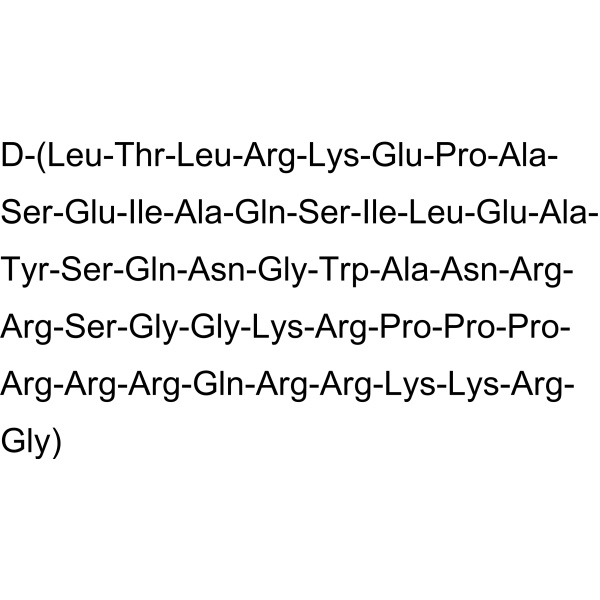
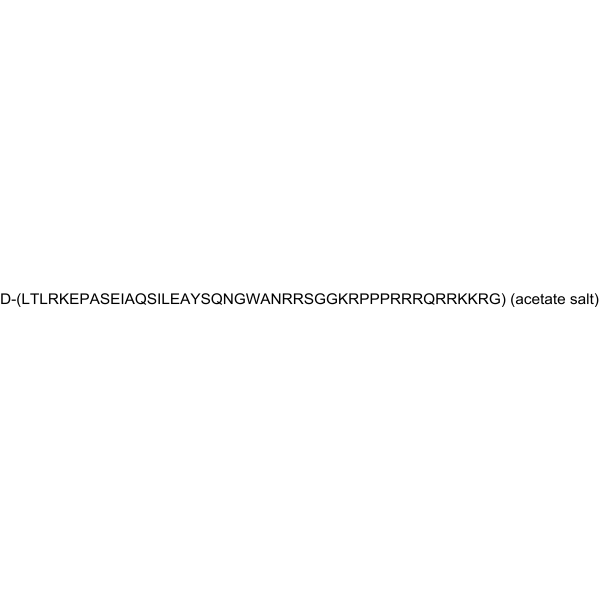
    FOXO4-DRI is a cell-permeable peptide antagonist that blocks the interaction of FOXO4 and p53. FOXO4-DRI is a senolytic peptide that induces apoptosis of senescent cells .
    FOXO4-DRI
  • HY-N1458
    Isoschaftoside
    1 Publications Verification

    Parasite Autophagy p62 Reactive Oxygen Species (ROS) Infection Metabolic Disease Inflammation/Immunology Cancer
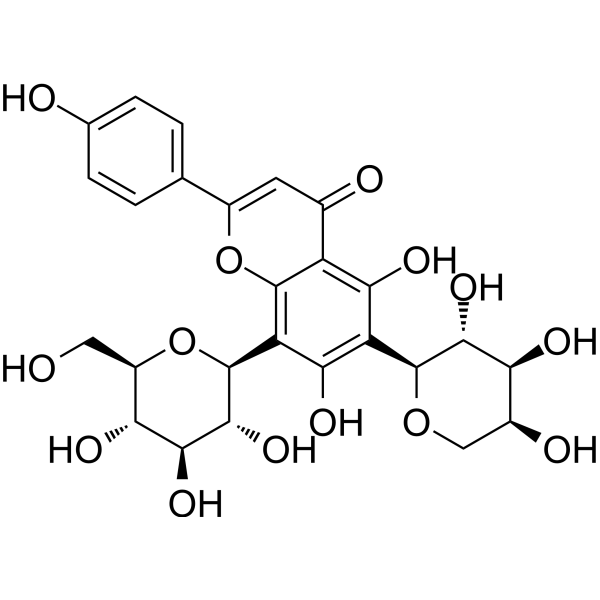
    Isoschaftoside, a C-glycosylflavonoid from Desmodium uncinatum root exudate, can inhibit the growth of germinated S. hermonthica radicles. Isoschaftoside reduces reactive oxygen species (ROS) and induces proliferation in senescent cells. Isoschaftoside activates autophagy. Isoschaftoside can be used for anti-tumor, anti-inflammatory, antioxidant, antihypertensive, hepatoprotective and nematicidal study .
    Isoschaftoside
  • HY-16705
    BRD4770
    5 Publications Verification

    Histone Methyltransferase Cancer
    BRD4770 is a histone methyltransferase G9a inhibitor. BRD4770 reduces di- and trimethylation of lysine 9 on histone H3 (H3K9) with an EC50 of 5 μM, and has less or little effect toward H3K27me3, H3K36me3, H3K4me3, and H3K79me3. BRD4770 can activate the ataxia telangiectasia mutated (ATM) pathway and induce cell senescence .
    BRD4770
  • HY-138832

    APG-1252-M1

    Bcl-2 Family Apoptosis Caspase PARP Cancer
    BM-1244 (APG-1252-M1) is a Bcl-xL/Bcl-2 inhibitor with Kis of 134 nM and 450 nM. BM-1244 has anti-tumor effects by inducing apoptosis and suppressing tumor growth. BM-1244 can induce cytochrome C and Smac release from mitochondria with caspase-3 and PARP cleavage. BM-1244 exhibits synergy with chemotherapy in vivo. BM-1244 can be studied in research for colorectal cancer, acute myeloid leukemia and gastric cancer .
    BM-1244
  • HY-158742
    SBB-Analogue (GL13) Biotin
    1 Publications Verification

    GL13; SBB-A-B

    Tyrosinase Others
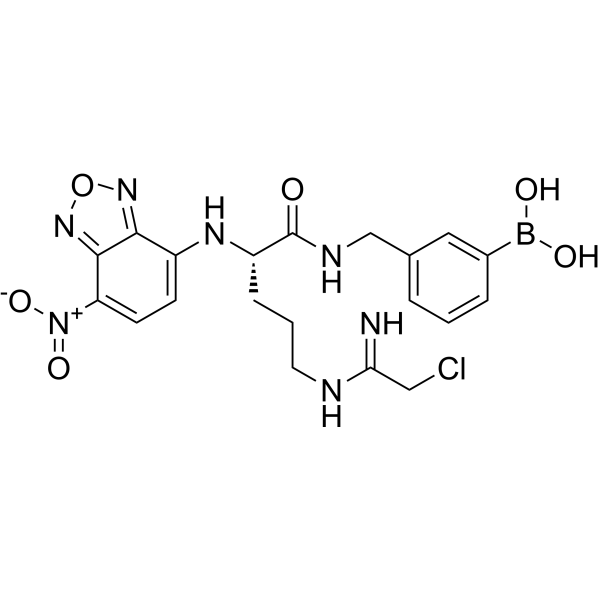
    SBB-Analogue (GL13) Biotin (GL13; SBB-A-B) consists of a Sudan Black B (SBB) (HY-D0213) derivative conjugated with biotin. SBB-Analogue (GL13) Biotin potently detects senescent cells and eliminates the drawback of false-positive staining caused by serum starvation and cell fusion in SA-β-gal assays. SBB-Analogue (GL13) Biotin can be used in flow cytometry, immunofluorescence analysis, and other applications .
    SBB-Analogue (GL13) Biotin
  • HY-138936
    SSK1
    2 Publications Verification

    p38 MAPK Apoptosis Inflammation/Immunology
    SSK1, a senescence-specific killing compound, is a β-galactosidase-targeted proagent attenuates inflammation. SSK1 is activated by lysosomal β-galactosidase and selectively killed senescent cells through the activation of p38 MAPK and induction of apoptosis .
    SSK1
  • HY-150069

    Bcl-2 Family Apoptosis Metabolic Disease
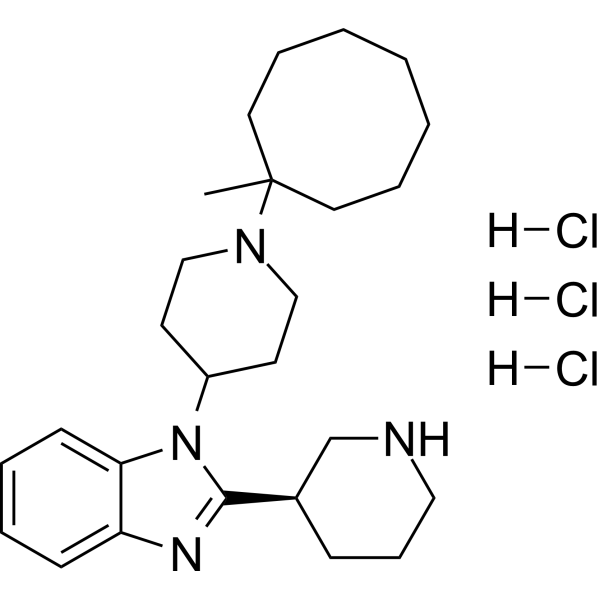
    UBX1325 is an Bcl-xL inhibitor that promotes apoptosis in senescent cells. UBX1325 is a potent anti-aging agent that can be used in studies of age-related eye diseases such as diabetic macular oedema (DME), age-related macular degeneration (AMD) and diabetic retinopathy (DR) .
    UBX1325
  • HY-15647
    BRD9539
    1 Publications Verification

    Histone Methyltransferase Cancer
    BRD9539 is a histone methyltransferase G9a inhibitor with an IC50 of 6.3 μM. BRD9539 also inhibits PRC2 activity and is inactive against SUV39H1, NSD2 and DNMT1 .
    BRD9539
  • HY-126222A

    Apoptosis Mitochondrial Metabolism Cancer
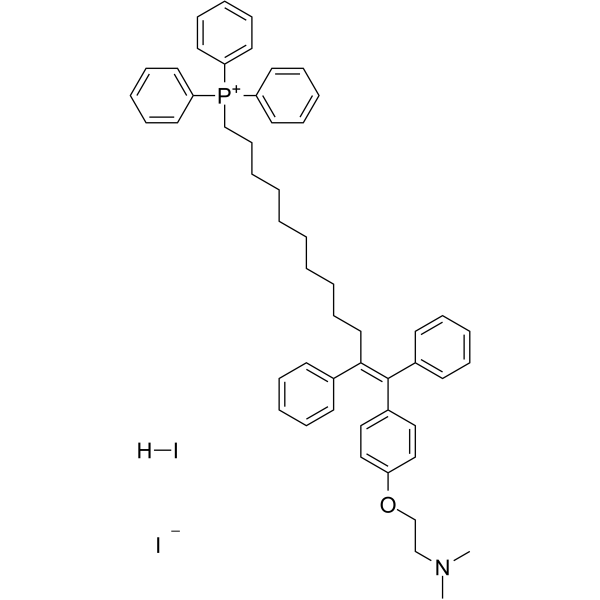
    MitoTam iodide, hydriodide is a Tamoxifen derivative , an electron transport chain (ETC) inhibitor, spreduces mitochondrial membrane potential in senescent cells and affects mitochondrial morphology . MitoTam iodide, hydriodide is an effective anticancer agent, suppresses respiratory complexes (CI-respiration) and disrupts respiratory supercomplexes (SCs) formation in breast cancer cells . MitoTam iodide, hydriodide causes apoptosis .
    MitoTam iodide, hydriodide
  • HY-131035

    Lys-coenzyme A

    Histone Acetyltransferase Cancer
    Lys-CoA TFA is a selective p300 histone acetyltransferase (HAT) inhibitor (IC50=50-500 nM). Lys-CoA TFA displays >100-fold selectivity for p300 over PCAF (IC50=200 μM). Lys-CoA TFA inhibits p300 HAT activity-dependent transcriptional activation .
    Lys-CoA TFA
  • HY-170851

    Apoptosis Inflammation/Immunology Cancer
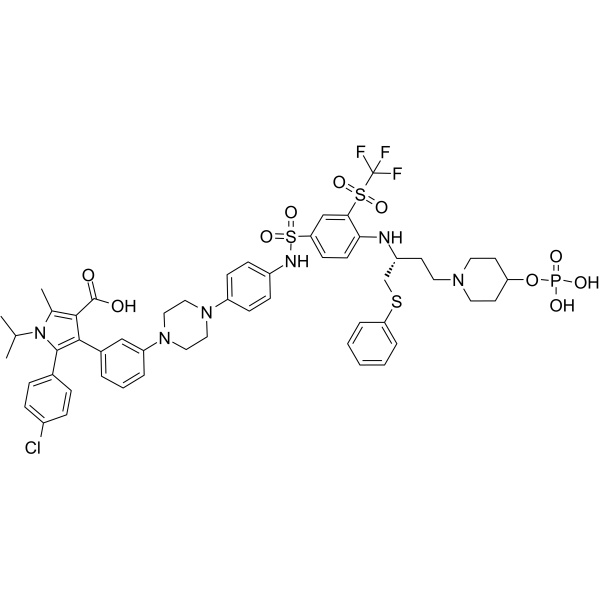
    GL392 is a senolytic agent that selectively delivers the potent senolytic compound Dasatinib (HY-10181) to senescent cells. GL392 targets lipofuscin in senescent cells via the LBD domain and is linked to Dasatinib through an ester bond. Upon internalization in senescent cells, Dasatinib is released, inducing apoptosis of the senescent cells. GL392 in micelle encapsulation (mGL392) enables selective delivery to senescent cells, achieving selective senescent cell elimination in vitro and in vivo. GL392 can be used for the research of melanoma .
    GL392
  • HY-169265

    Bcl-2 Family Others
    BRD-K20733377 is an inhibitor for Bcl-2, and exhibits selective cytotoxicity against senescent cells, that inhibits the viability of Etoposide (HY-13629)-induced IMR-90 senescent cell with an IC50 of 10.7 μM. BRD-K20733377 reduces the mRNA expression of aging-related genes p16, p21 and KI67 in aged mouse model .
    BRD-K20733377
  • HY-169266

    Bcl-2 Family Apoptosis Metabolic Disease
    BRD-K56819078 is a Bcl-2 inhibitor that significantly reduces senescent cell load and senescence-related genes in the kidney mRNA expression. BRD-K56819078 exerts anti-aging effects by inhibiting apoptosis .
    BRD-K56819078
  • HY-126222

    Apoptosis Mitochondrial Metabolism Cancer
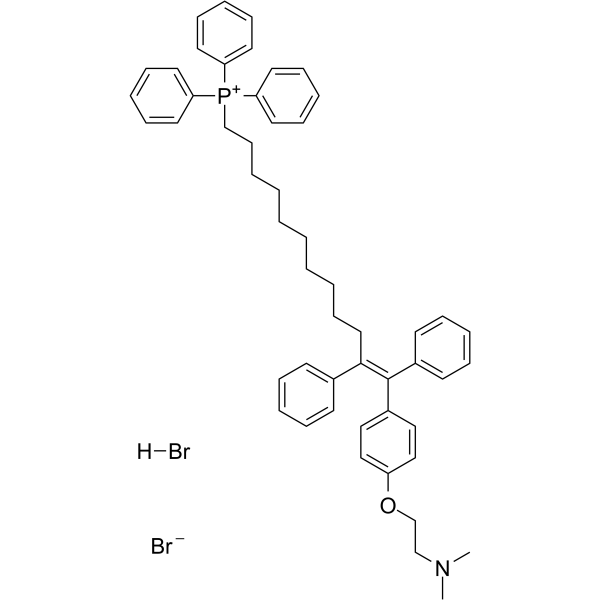
    MitoTam bromide, hydrobromide, a Tamoxifen derivative , is an electron transport chain (ETC) inhibitor. MitoTam bromide, hydrobromide reduces mitochondrial membrane potential in senescent cells and affects mitochondrial morphology . MitoTam bromide, hydrobromide is an effective anticancer agent, suppresses respiratory complexes (CI-respiration) and disrupts respiratory supercomplexes (SCs) formation in breast cancer cells .
    MitoTam bromide, hydrobromide
  • HY-162269

    NAMPT Inflammation/Immunology
    Nampt activator-5 is a NAMPT activator with a KD value of 6.19 μM. Nampt activator-5 activates the rate-limiting enzyme in NAD + biosynthesis and promotes NAD + production. Nampt activator-5 delays the senescence process of senescent hepatocytes, extends the lifespan of *Caenorhabditis elegans*, and alleviates age-related dysfunction and abnormal biomarkers in naturally aged mice. Nampt activator-5 can be used in aging research .
    Nampt activator-5
  • HY-65008

    Others Others
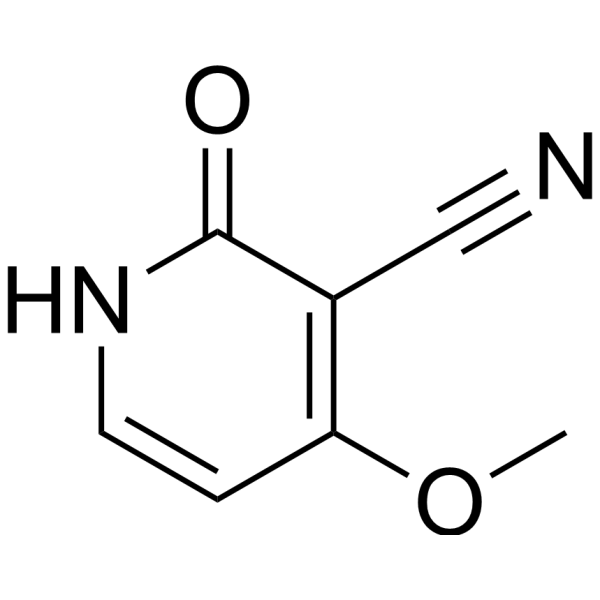
    N-Demethylricinine is a ricinine, can be interconverted with ricinine in senescent and green castor plant leaves. Ricinine, is a α-pyridone alkaloid biosynthetically related to the pyridine nucleotide cycle. The alkaloid catabolism of ricinine is associated with aging process .
    N-Demethylricinine
  • HY-131993

    RvE4

    Endogenous Metabolite Inflammation/Immunology
    Resolvin E4 (RvE4) is an endogenous metabolite that stimulates efferocytosis of apoptotic neutrophils and senescent erythrocytes. Resolvin E4 enhances resolution of hemorrhagic exudates and inflammation in vivo .
    Resolvin E4
  • HY-P4157A

    MDM-2/p53 Apoptosis Metabolic Disease
    FOXO4-DRI acetate is a cell-permeable peptide antagonist that blocks the interaction of FOXO4 and p53. FOXO4-DRI acetate is a senolytic peptide that induces apoptosis of senescent cells .
    FOXO4-DRI acetate
  • HY-161088

    Drug Derivative ERK Others
    Anti-aging agent 1 (compound 24) is a derivative of piperlongumine (HY-N2329) (PL). Anti-aging agent 1 exhibits a 50-fold enhancement in senolytic activity against senescent WI-38 fibroblasts compared to PL .
    Anti-aging agent 1
  • HY-158331

    PROTACs Epigenetic Reader Domain Apoptosis Cancer
    Gal-ARV-771, PROTAC prodrug, is a gal modified ARV-771 (HY-100972). Gal-ARV-771 can be activated in SA-β-Gal-expressed cancer senescent cells to release ARV-771. Gal-ARV-771 induces selective degradation of BRD4 protein by the ubiquitin-proteasome pathway in senescent cells. Gal-ARV-771 promotes apoptosis of senescent cancer cells .
    Gal-ARV-771
  • HY-157329

    Endonuclease Inflammation/Immunology
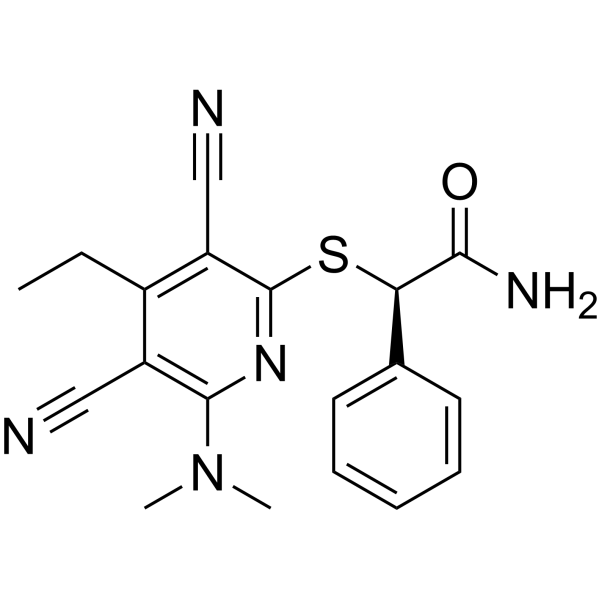
    AD16 (Acetamide) is a LINE-1 retrotransposon endonuclease inhibitor with the IC50 of 4.7 μM. AD16 (Acetamide) reduce LINE-1 retrotransposition, L1-induced DNA damage, and inflammation reinforced by L1 in senescent cells .
    AD16
  • HY-P11164

    DNA Alkylator/Crosslinker Endocrinology
    PRKGGRRRRAWGRRRRRRRRRRRRRRAPRKRLTLA is a peptide. PRKGGRRRRAWGRRRRRRRRRRRRRRAPRKRLTLA has a higher affinity for CR3 and DNA binding domain than FOXO4 and DRI. PRKGGRRRRAWGRRRRRRRRRRRRRRAPRKRLTLA can be used in the research of aging .
    PRKGGRRRRAWGRRRRRRRRRRRRRRAPRKRLTLA
  • HY-126222B

    MitoTax iodide, hydriodide

    Mitochondrial Metabolism Apoptosis Cancer
    (E/Z)-MitoTam (iodide, hydriodide) (MitoTam (iodide, hydriodide)) is the E/Z mixture of MitoTam iodide, hydriodide. MitoTam iodide, hydriodide is a Tamoxifen derivative , an electron transport chain (ETC) inhibitor, spreduces mitochondrial membrane potential in senescent cells and affects mitochondrial morphology . MitoTam iodide, hydriodide is an effective anticancer agent, suppresses respiratory complexes (CI-respiration) and disrupts respiratory supercomplexes (SCs) formation in breast cancer cells . MitoTam iodide, hydriodide causes apoptosis .
    (E/Z)-MitoTam iodide, hydriodide
  • HY-177945

    Gal-MS99

    PROTACs Anaplastic lymphoma kinase (ALK) Cancer
    MS99-β-Gal (Gal-MS99) is a galactose-modified NPM-ALK PROTAC degrader. MS99-β-Gal is only hydrolyzed by SA-β-gal and esterase in senescent cancer cells, releasing MS99, which specifically degrades the NPM-ALK fusion protein. MS99-β-Gal shows an IC50 of 454.8 nM for aging Karpas 299 cells, significantly lower than that of normal Karpas 299 cells (IC50 = 2.162 μM). MS99-β-Gal can be used for the research of cancer .
    MS99-β-Gal
  • HY-176127

    p38 MAPK NF-κB Metabolic Disease
    JX10 is a senomorphic agent. JX10 suppresses the expression of p38 MAPK and NF-κB. JX10 exhibits competent antiaging effects in C. elegans, senescent cells, and aged mice .
    JX10
  • HY-N15138

    Glycosidase Infection Metabolic Disease Inflammation/Immunology
    Sativanone is a compound that can be isolated from Dalbergia tonkinensis. Sativanone is a potent α-glucosidase inhibitor, with an EC50 of 0.357 mg/mL for rat α-glucosidase. Sativanone has antibacterial activity against Ralstonia solanacearum. Sativanone also has anti-senescent and antioxidant effects .
    Sativanone
  • HY-N1458R

    Reference Standards Parasite Autophagy p62 Reactive Oxygen Species (ROS) Infection Metabolic Disease Inflammation/Immunology Cancer
    Isoschaftoside (Standard) is the analytical standard of Isoschaftoside. This product is intended for research and analytical applications. Isoschaftoside, a C-glycosylflavonoid from Desmodium uncinatum root exudate, can inhibit growth of germinated S. hermonthica radicles. Isoschaftoside reduces reactive oxygen species (ROS) and induces proliferation in senescent cells. Isoschaftoside activates autophagy. Isoschaftoside can be used for anti-tumor, anti-inflammatory, antioxidant, antihypertensive, hepatoprotective and nematicidal study.
    Isoschaftoside (Standard)
  • HY-170994

    Imidazoline Receptor Neurological Disease Inflammation/Immunology
    I2-IRs ligand-1 (Compound 12d) is an orally active and BBB-penetrable compound. I2-IRs ligand-1 has a high affinity for imidazoline I2 receptors (I2-IRs) (pKi: 9.98). I2-IRs ligand-1 can improve cognitive impairment in senescent mice and exhibits analgesic, anti-inflammatory, and neuroprotective activities. I2-IRs ligand-1 can be used for the research of Alzheimer's disease and related pain disorders .
    I2-IRs ligand-1
  • HY-178984

    PI3K Epigenetic Reader Domain DNA/RNA Synthesis Akt c-Myc AMPK Cancer
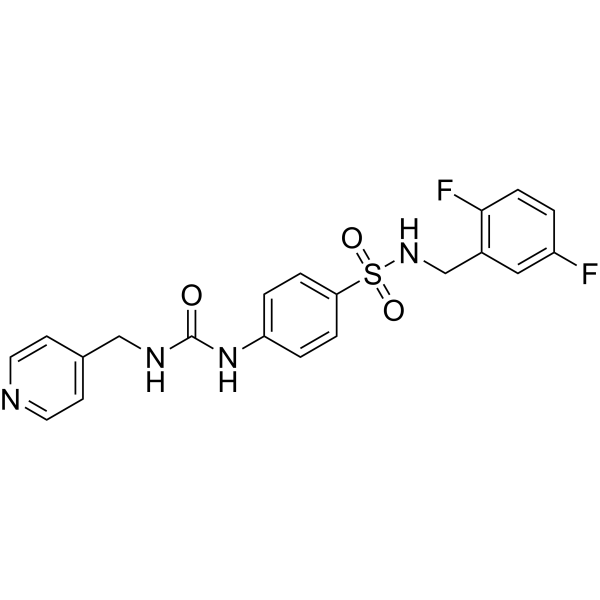
    PI3Kα-IN-28 (Compound 23) is an efficient dual targeted PI3K/BRD4 inhibitor. PI3Kα-IN-28 can inhibit the proliferation of various cells, such as KYSE180 and KYSE450 cells. PI3Kα-IN-28 can concentration dependently inhibit migration and colony formation, induce G0/G1 phase arrest, significantly inhibit DNA synthesis, and significantly increase the proportion of senescent cells. PI3Kα-IN-28 can inhibit the expression of p-AKT and c-Myc and activate the AMPK-p27 pathway. PI3Kα-IN-28 can be used for research on cancers such as esophageal cancer .
    PI3Kα-IN-28
  • HY-182898

    Apoptosis Glycosidase Inflammation/Immunology
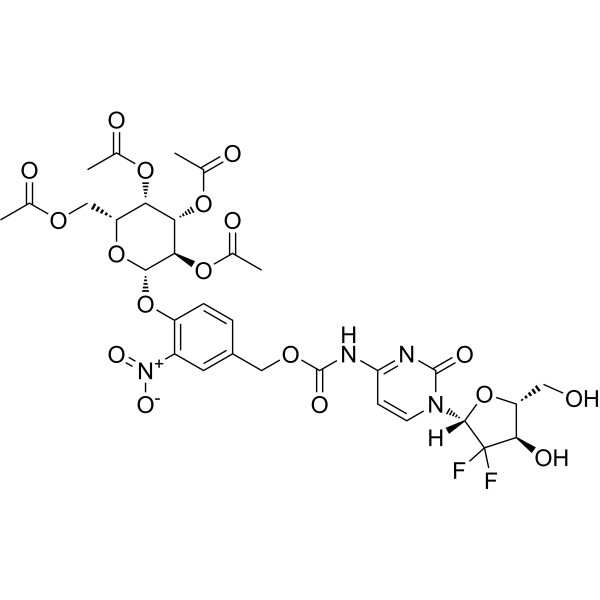
    Gal-dMor-Gem is a selective senescent cell scavenger, Apoptosis inducer, and a prodrug of Gemcitabine (HY-17026). Gal-dMor-Gem releases Gemcitabine upon activation by Esterases and β-gal. Gal-dMor-Gem reduces SA-β-gal, preferentially induces apoptosis in senescent cells, regulates apoptosis-related proteins, accumulates in senescent tissues, and ameliorates senescence-related organ phenotypes. Gal-dMor-Gem is applicable to research on chemotherapy-induced senescence .
    Gal-dMor-Gem
  • HY-N18193

    Drug Metabolite Others
    Prunasinamide is a catabolite of Prunasin (HY-N1548) and can be found in senescent leaves of Prunus laurocerasus. Prunasinamide can be generated from Prunasin via the Radziszewski reaction .
    Prunasinamide
  • HY-183307

    mTOR STAT Neurological Disease Cancer
    mTOR-IN-29 (Compound 4k) is an mTOR inhibitor with a IC50 of ~120 nM. mTOR-IN-29 inhibits mTOR kinase activity without affecting the phosphorylation of STAT3. mTOR-IN-29 acts as a cytotoxic agent against proliferating and senescent cells. mTOR-IN-29 can be used in studies related to glioblastoma .
    mTOR-IN-29
  • HY-182824

    Autophagy Others
    Sucrose dilaurate acts as an emulsifier, dispersant and stabilizer. Sucrose dilaurate reduces the release of HMGB1 from UVB-irradiated keratinocytes. Sucrose dilaurate inhibits melanogenesis and decreases bilirubin levels. Sucrose dilaurate induces autophagy in human epidermal keratinocytes, thereby reducing carboxymethyl lysine (CML) levels. Sucrose dilaurate reduces the secretion of insulin-like growth factor-binding protein 3 (IGFBP3) and nerve growth factor (NGF) by senescent keratinocytes. Sucrose dilaurate is investigated as an emulsifier, dispersant or stabilizer in the cosmetics, food and pharmaceutical industries .
    Sucrose dilaurate

Inquiry Online

Your information is safe with us. * Required Fields.

Salutation


Country or Region *

Applicant Name *


Organization Name *

Department *


Email Address *


Product Name *

Cat. No.


Requested quantity *

Phone Number *


Remarks

Inquiry Online

Inquiry Information

Product Name:
Cat. No.:
Quantity:
MCE Japan Authorized Agent:

