

41 Results for "

sludge matrices

" in MedChemExpress (MCE) Product Catalog:
Products (41)

41 Results for "sludge matrices" in MCE Product Catalog:

10
10 Publications Verification
Cat. No.: HY-P1740
CAS No.: 114681-65-1
Target:  

Integrin Apoptosis Caspase

Research Areas:  

Inflammation/Immunology

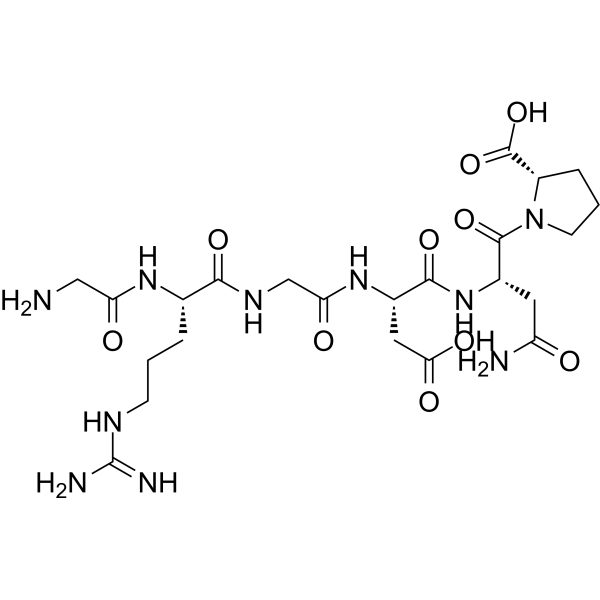
RGD peptide (GRGDNP) is an inhibitor of integrin-ligand interactions. RGD peptide (GRGDNP) competitively inhibits α5β1 binding with extracellular matrice (ECM). RGD peptide (GRGDNP) promotes apoptosis through activation of conformation changes that enhance pro-caspase-3 activation and autoprocessing. RGD peptide (GRGDNP) plays an important role in cell adhesion, migration, growth, and differentiation .
loading...
    loading...
10
10 Publications Verification
Cat. No.: HY-P1740A
Target:  

Integrin Apoptosis

Research Areas:  

Inflammation/Immunology Cancer

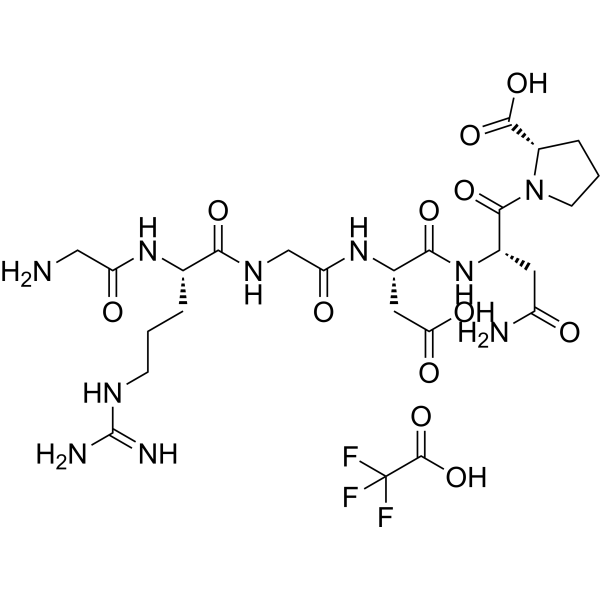
RGD peptide (GRGDNP) TFA is an inhibitor of integrin-ligand interactions. RGD peptide (GRGDNP) TFA competitively inhibits α5β1 binding with extracellular matrice (ECM). RGD peptide (GRGDNP) TFA promotes apoptosis through activation of conformation changes that enhance pro-caspase-3 activation and autoprocessing. RGD peptide (GRGDNP) TFA plays an important role in cell adhesion, migration, growth, and differentiation .
loading...
    loading...
4
4 Cited Publications
Cat. No.: HY-A0104
CAS No.: 9004-65-3
Synonyms: Hypromellose (Viscosity:11250-21000mPa.s); (Hydroxypropyl)methyl cellulose (Viscosity:11250-21000mPa.s); Celacol HPM 5000 (Viscosity:11250-21000mPa.s)
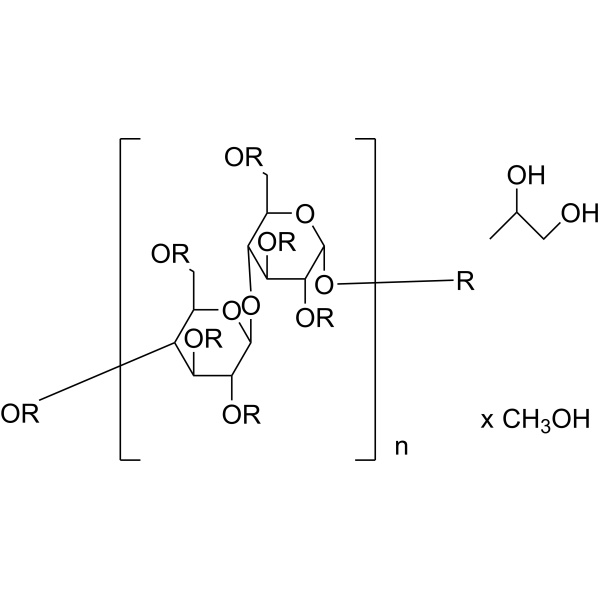
HPMC (Viscosity:11250-21000mPa.s) is a hydrophilic, non-ionic cellulose ether used to form swellable-soluble matrices.
loading...
    loading...
1
1 Cited Publications
Cat. No.: HY-W030778
CAS No.: 139-13-9
Synonyms: Triglycollamic acid
Research Areas:  

Others

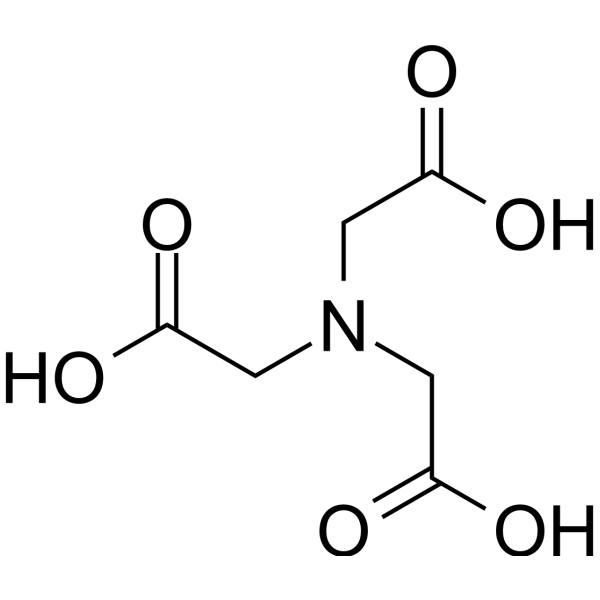
Nitrilotriacetic acid is an orally active chelating agent for metal ions. Nitrilotriacetic acid is an aminotricarboxylic acid that can sequester metal ions as water soluble complexes. Nitrilotriacetic acid reacts with strong oxidizing agents such as hypochlorite, chlorine, ozone, or oxygen in the presence of palladium/carbon catalyst. Nitrilotriacetic acid interacts with solid phases such as cell membranes and bone matrices in the mammalian system. Nitrilotriacetic acid is classified as an epigenetic rodent carcinogen .
loading...
    loading...
Cat. No.: HY-A0104J
CAS No.: 9004-65-3
Synonyms: Hypromellose (Type II,Viscosity:5mPa.s); (Hydroxypropyl)methyl cellulose (Type II,Viscosity:5mPa.s); Celacol HPM 5000 (Type II,Viscosity:5mPa.s)
HPMC (Hypromellose) (Type II,Viscosity:5mPa.s) is a hydrophilic, non-ionic cellulose ether used to form swellable-soluble matrices. HPMC (Type II,Viscosity:5mPa.s) is widely used in agent formulations due to its biocompatibility, uncharged nature, solubility in water and thermoplastic behavior .
loading...
    loading...
Cat. No.: HY-D2836
Synonyms: FITC-Hyaluronate (MW 1000000)
FITC-HA (MW 1000000) is hyaluronic acid (HA) (HY-B0633A) labeled with FITC (HY-66019). FITC-HA retains the ability of HA to bind to receptors (such as CD44) and form extracellular matrices, while it can be detected by fluorescence microscopy or flow cytometry for tracing the localization, binding, internalization and metabolic pathways of HA in cells, tissues or living organisms (Ex/Em ≈ 490/520 nM) .
loading...
    loading...
Cat. No.: HY-B1727S
CAS No.: 1517-22-2
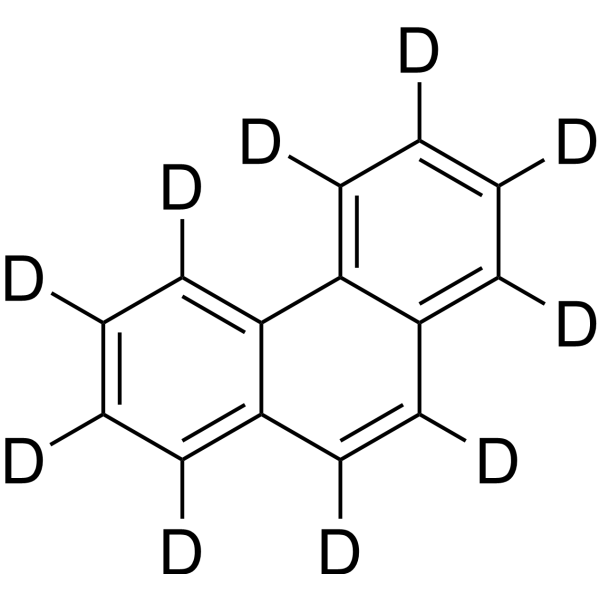
Phenanthrene-d10 is the deuterium labeled Phenanthrene. Phenanthrene is a polycyclic aromatic hydrocarbon (PAH) and has been frequently used as an indicator for monitoring PAH contaminated matrices . Phenanthrene induces oxidative stress and inflammation .
loading...
    loading...
Cat. No.: HY-W016153
CAS No.: 6627-55-0
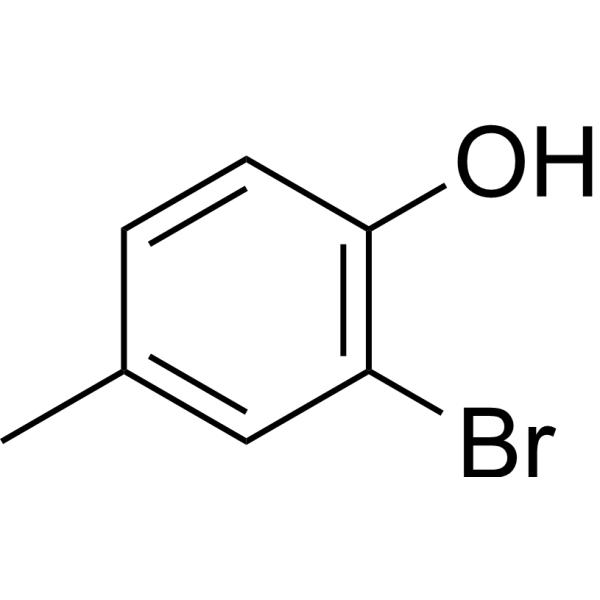
2-Bromo-4-methylphenol is a versatile compound. 2-Bromo-4-methylphenol produces an iodine-like odor in reverse osmosis water and red wine matrices. 2-Bromo-4-methylphenol exhibits antibacterial properties and effectively inhibits the growth of bacteria and fungal. 2-Bromo-4-methylphenol is an important intermediate for a variety of organic compounds .
loading...
    loading...
Cat. No.: HY-32876
CAS No.: 16133-25-8
Research Areas:  

Others

Pyridine-3-sulfonyl chloride is a sulfonyl chlorination derivatization reagent for steroidal estrogens. Pyridine-3-sulfonyl chloride reacts with estrogens to form pyridine-3-sulfonyl derivatives, which generate abundant analyte-specific fragment ions upon collision-induced dissociation. Pyridine-3-sulfonyl chloride facilitates quantitative LC-ESI-MS/MS analysis of estrogens in serum and water matrices .
loading...
    loading...
Cat. No.: HY-W587839
CAS No.: 919005-14-4
Research Areas:  

Endocrinology

4,8-Dioxa-3H-perfluorononanoic acid is an ether-substituted polyfluoroalkyl compound and also a ligand of human pregnane X receptor (hPXR), which binds to the ligand-binding domain of hPXR. 4,8-Dioxa-3H-perfluorononanoic acid targets Arg-410, Lys-210, Lys-226, Met-323 and His-327 residues. Its binding process relies on long-range electrostatic interactions, and no significant hydrogen bonds form with hPXR residues. 4,8-Dioxa-3H-perfluorononanoic acid is used as a substitute for PFOA in Germany. 4,8-Dioxa-3H-perfluorononanoic acid is detectable in environmental matrices such as river water near fluoride production plants, accumulates in organisms including grass, deer liver and locusts, and is present in plasma samples of populations in southern Germany .
loading...
    loading...
Cat. No.: HY-P2800
CAS No.: 9001-18-7
Research Areas:  

Others

Diaphorase, Recombinant microorganisms can be obtained from anaerobic sludge organisms. Diaphorase catalyzes biotransformation of hexahydro-1,3, 5-trinitro-1,3, 5-triazine (RDX) by denitrification .
loading...
    loading...
Cat. No.: HY-133970
CAS No.: 481-21-0
Purity:  99.34%
5α-Cholestane is a steroidal hydrocarbon and fecal stanol, and is used as an internal standard for gas chromatographic sterol analysis. 5α-Cholestane is the parent steroidal skeleton of polyhydroxylated brassinosteroids of plant origin. It is used as an internal standard for GC-FID and GC-MS analysis of fecal sterols in urine and sludge samples. 5α-Cholestane can be used in studies of age- or disease-related skeletal muscle atrophy .
loading...
    loading...
Cat. No.: HY-139201E
CAS No.: 27964-99-4
Synonyms: PDLHB (MW 150000-300000)
Poly-D-lysine hydrobromide (MW 150000-300000) is a synthetic polymer composed of D-lysine residues and is one of the most widely used matrices in neural cell culture applications. Poly-D-lysine hydrobromide (MW 150000-300000) can be used as a non-specific cell adhesion enhancer. Poly-D-lysine hydrobromide (MW 30000-70000) is an orally active CaSR agonist peptide that indirectly activates the 5-HT₃ receptor signaling pathway, delaying gastric emptying and thereby slowing the rate at which glucose enters the small intestine and is absorbed .
loading...
    loading...
Cat. No.: HY-Y0850U2
CAS No.: 9002-89-5
Synonyms: Polyvinyl alcohol (Mw 130000, 87-89% hydrolyzed, ~2700 polymerization); Poly(Ethenol) (Mw 130000, 87-89% hydrolyzed, ~2700 polymerization)
PVA (Polyvinyl alcohol; Poly(Ethenol)) (Mw 130000, 87-89% hydrolyzed, ~2700 polymerization) is a non-toxic, biodegradable, and highly biocompatible semicrystalline synthetic polymer. PVA (Mw 130000, 87-89% hydrolyzed, ~2700 polymerization) acts as a coating agent to improve tableting performance, and can be cross-linked with sodium trimetaphosphate to prepare tubular vascular grafts or form hydrogels for use as artificial articular cartilage and sustained-release matrices for growth factors. PVA (Mw 130000, 87-89% hydrolyzed, ~2700 polymerization) enhances the redox cycle of iron species in photo-assisted Fenton reactions to simultaneously generate hydrogen peroxide and degrade pollutants, enabling integrated sustainable waste management and water treatment. PVA (Mw 130000, 87-89% hydrolyzed, ~2700 polymerization) is used in the manufacture of biodegradable films and in studies of dry or minimally invasive ex vivo wounds, but cannot form freeze-thaw cross-linked solid sheets for wound dressings .
loading...
    loading...
Cat. No.: HY-D2836I
Synonyms: FITC-Hyaluronate (MW 5000)
FITC-HA (MW 5000) is hyaluronic acid (HA) (HY-B0633A) labeled with FITC (HY-66019). FITC-HA retains the ability of HA to bind to receptors (such as CD44) and form extracellular matrices, while it can be detected by fluorescence microscopy or flow cytometry for tracing the localization, binding, internalization and metabolic pathways of HA in cells, tissues or living organisms (Ex/Em ≈ 490/520 nM) .
loading...
    loading...
Cat. No.: HY-W075176
CAS No.: 118712-89-3
Target:  

Insecticide

Research Areas:  

Infection

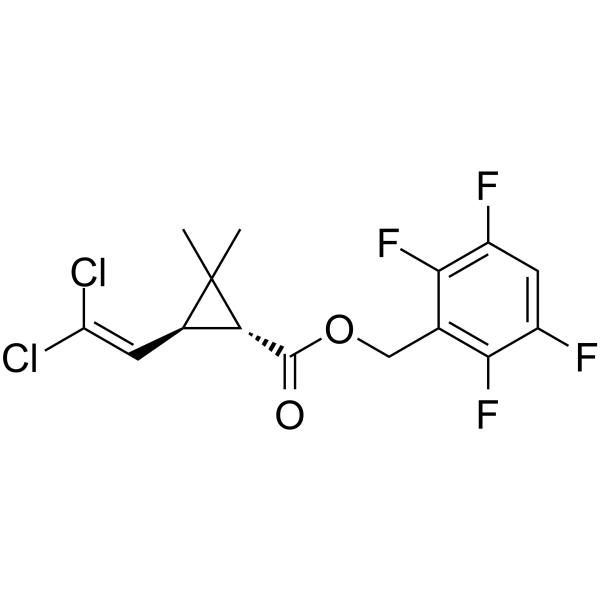
Transfluthrin is an insecticide with extremely low acute toxicity to vertebrates. Transfluthrin acts as a mosquito repellent, exerts mosquito control effects via electric heating fumigators, and is widely used in studies related to malaria, bancroftian filariasis and mosquito-borne infectious diseases. Transfluthrin may also induce adverse reactions such as pulmonary sensory irritation, sensitization, genotoxicity and respiratory depression, and can increase the concentrations and activities of CYP2E1 and CYP3A2 in rat brains. Transfluthrin can be removed from wastewater through biodegradation and activated sludge adsorption, and can be degraded by microorganisms such as Azovibrio and Tauera .
loading...
    loading...
Cat. No.: HY-D0651
CAS No.: 70210-06-9
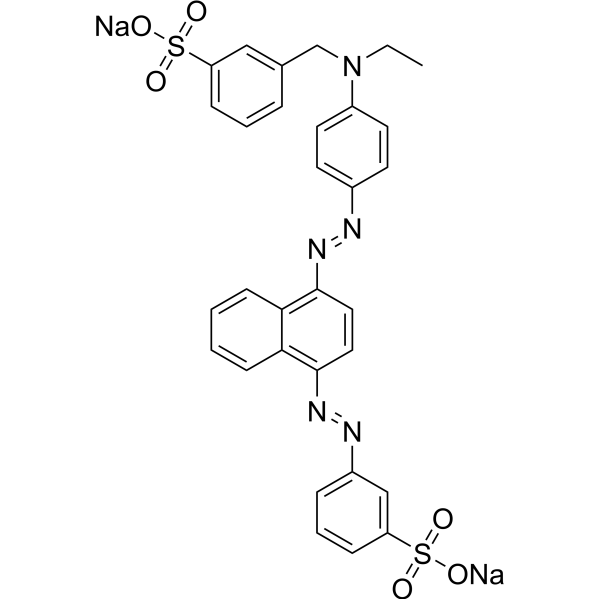
Acid red 119 is an acid red dye that can be removed from aqueous solutions when polyaluminum chloride (PAC) and polyaluminum chloride sludge (PACS) are used as coagulants.
loading...
    loading...
Cat. No.: HY-121991
CAS No.: 79206-51-2
Target:  

Glycosidase

Research Areas:  

Others

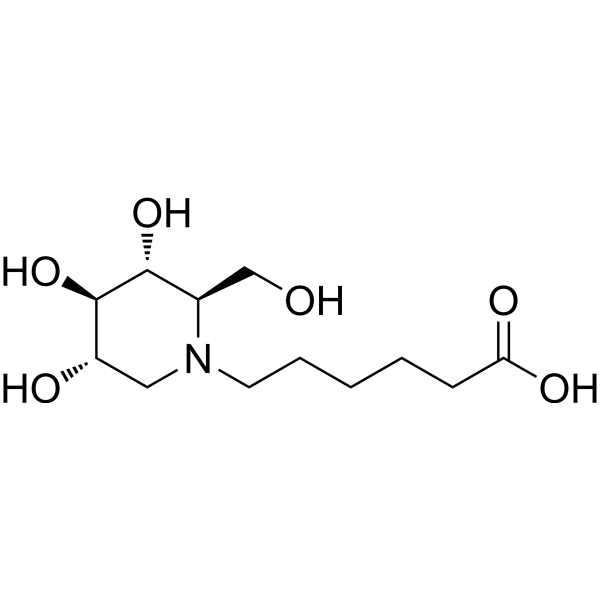
N-5-Carboxypentyl-1-deoxynojirimycin is an alpha-glucosidase inhibitor, and also can be used to prepare affinity matrices for binding to resins.
loading...
    loading...
Cat. No.: HY-D2987
BacGO is a highly selective, wash free fluorescent probe for Gram positive bacteria. BacGO binds to the carbohydrate structure in peptidoglycan through boric acid and exhibits depolymerization induced luminescence (DIE) properties. BacGO can be used for imaging complex environmental samples (such as activated sludge) and flat plate bacteria without affecting bacterial activity .
loading...
    loading...
Cat. No.: HY-155983
Research Areas:  

Cancer

E07 aptamer is an aptamer that targets human EGFR. E07 aptamer can compete with EGF for binding, binds to a novel epitope on EGFR. E07 aptamer binds to cells expressing EGFR, blocks receptor autophosphorylation, and prevents proliferation of tumor cells in three-dimensional matrices. E07 aptamer can be used for tomor disease research .
loading...
    loading...

