145 Results for "

substrate degradation

" in MedChemExpress (MCE) Product Catalog:
Products (145)

145 Results for "substrate degradation" in MCE Product Catalog:

  • Categories Recommended:
    More
64
64 Publications Verification
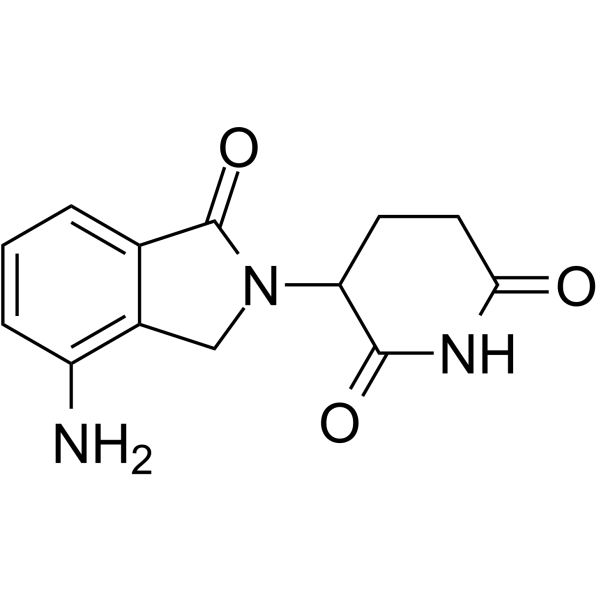
Art. -Nr.: HY-A0003
CAS. Nr.: 191732-72-6
Synonyms: CC-5013
Lenalidomide (CC-5013) is an orally active immunomodulatory agent that binds CRBN as a molecular glue to alter substrate specificity, inducing ubiquitination and proteasome-dependent degradation of IKZF1, IKZF3 and CK1α. Lenalidomide induces apoptosis by degrading IKZF1/3, and activates p53 by degrading CK1α. Lenalidomide promotes IL-2 release and effector functions of CD8 + T/NK cells, while inhibiting TNF-α secretion and M1-type pyroptosis. Lenalidomide can be used in research related to hematological malignancies, acute liver failure and acute kidney injury .
loading...
    loading...
64
64 Publications Verification
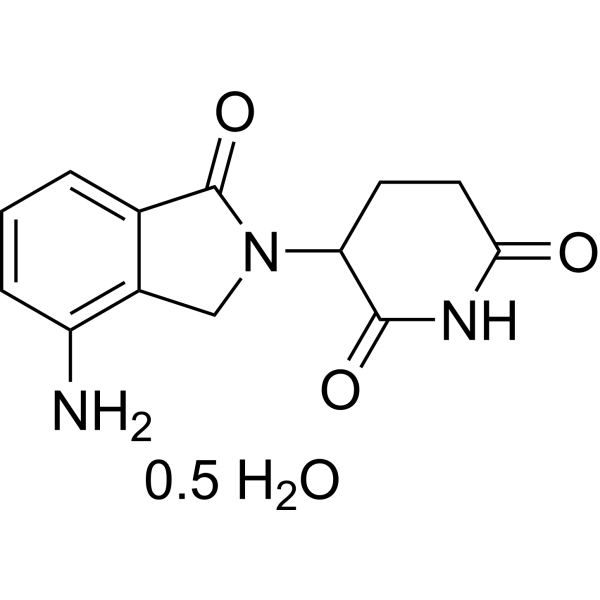
Art. -Nr.: HY-A0003B
CAS. Nr.: 847871-99-2
Synonyms: CC-5013 hemihydrate
Lenalidomide hemihydrate (CC-5013 hemihydrate) is an orally active immunomodulatory agent that binds CRBN as a molecular glue to alter substrate specificity, inducing ubiquitination and proteasome-dependent degradation of IKZF1, IKZF3 and CK1α. Lenalidomide hemihydrate induces apoptosis by degrading IKZF1/3, and activates p53 by degrading CK1α. Lenalidomide hemihydrate promotes IL-2 release and effector functions of CD8 + T/NK cells, while inhibiting TNF-α secretion and M1-type pyroptosis. Lenalidomide hemihydrate can be used in research related to hematological malignancies, acute liver failure and acute kidney injury .
loading...
    loading...
26
26 Cited Publications
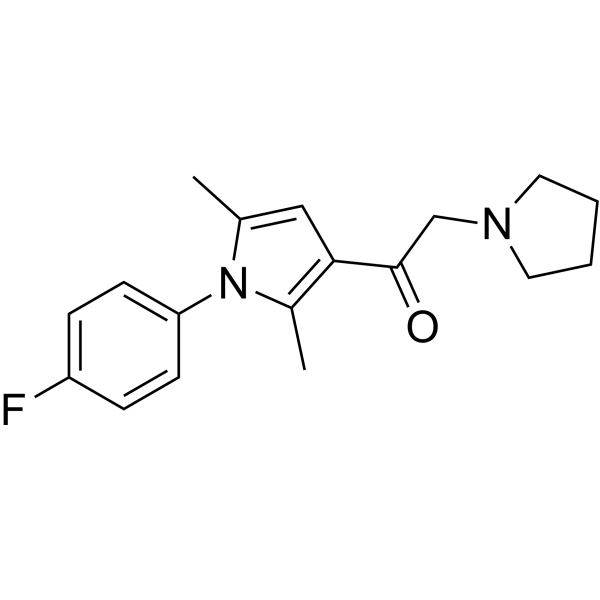
Art. -Nr.: HY-13817
CAS. Nr.: 314245-33-5
Reinheit:  99.30%
IU1 is a selective, reversible USP14 inhibitor with an IC50 of 4-5 μM. IU1 binds USP14’s catalytic cleft to block deubiquitinase activity. IU1 induces calpain-dependent Tau cleavage, causes ATP deficits, reduces E1~Ub thioester levels and 26S proteasome assembly. IU1 enhances 26S proteasome chymotrypsin-like activity, modulates LC3B-dependent autophagy flux, reduces cancer cell proliferation and migration, and blocks G0/G1 to S phase cell cycle transition in follicular thyroid cancer cells. IU1 activates autophagy-lysosomal and ubiquitin-proteasome pathways, triggers apoptosis, and reduces cervical cancer cell growth. IU1 enhances degradation of proteasome substrates linked to neurodegenerative disease, accelerates oxidized protein degradation, and increases oxidative stress resistance. IU1 can be used for the research of Alzheimer’s disease, follicular thyroid cancer, ischemic stroke, cervical cancer, and neurodegenerative disease .
loading...
    loading...
20
20 Cited Publications
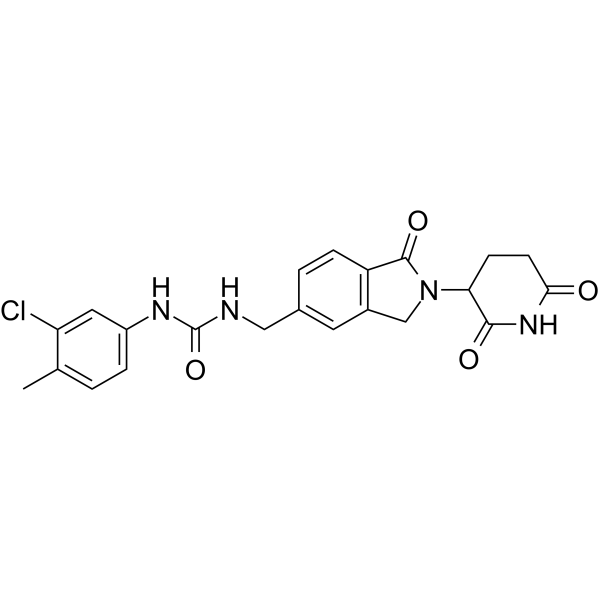
Art. -Nr.: HY-101488
CAS. Nr.: 1010100-07-8
Reinheit:  99.85%
CC-885, a cereblon (CRBN) modulator, acts as a molecular glue degrader targeting GSPT1 with a Kd of 350 nM. CC-885 binds to CRBN to alter the substrate specificity of the CRL4 E3 ligase, promoting the ubiquitination and proteasomal degradation of GSPT1, BNIP3L, PLK1, CDK4, IKZF1/3, GSPT2, WIZ, CHD7, GOLM1, CK1α and ETS1. CC-885 induces apoptosis, cell cycle arrest, transcriptional downregulation and antiproliferation in cancer cells. CC-885 is applicable to research related to relapsed/refractory acute myeloid leukemia, MYC-driven tumors, metastatic castration-resistant prostate cancer, multiple myeloma, hepatocellular carcinoma, glioblastoma, VHL-deficient clear cell renal cell carcinoma and non-small cell lung cancer .
loading...
    loading...
5
5 Cited Publications
Art. -Nr.: HY-125878
CAS. Nr.: 2381320-35-8
Reinheit:  99.89%
Synonyms: SGK3-PROTAC1
Target:  

PROTACs SGK

Forschungsgebiete:  

Cancer

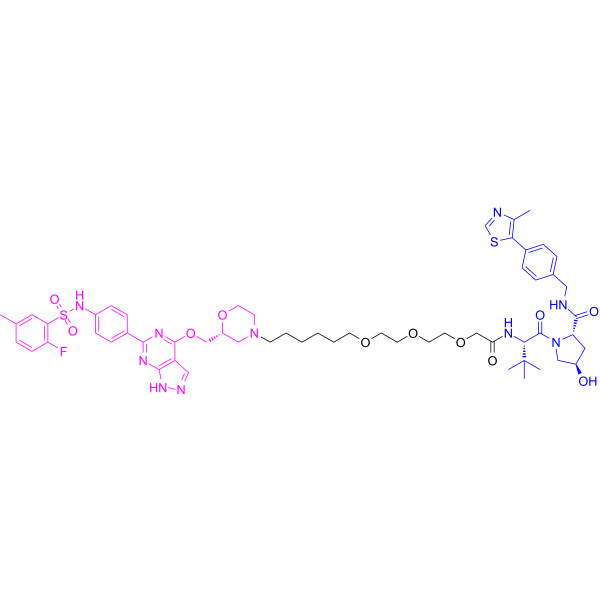
PROTAC SGK3 degrader-1 (SGK3-PROTAC1), a chemical probe, is a von Hippel-Lindau ligand-based SKG3 PROTAC composed of a PEG3-C4-OBn (HY-130620) alkyl linker, an SGK3 degrader (red structure), and a VHL ligand (HY-150803, blue structure). PROTAC SGK3 degrader-1 (0.3 μM) induced 50% endogenous SGK3 degradation within 2 hours, and 80% SGK3 degradation was observed at 8 hours, accompanied by loss of phosphorylation of NDRG1 (SGK3 substrate) .
loading...
    loading...
4
4 Cited Publications
Art. -Nr.: HY-153321
CAS. Nr.: 2649400-34-8
Reinheit:  98.67%
Synonyms: NX-5948; BTK-IN-24
Target:  

PROTACs Btk

Forschungsgebiete:  

Inflammation/Immunology

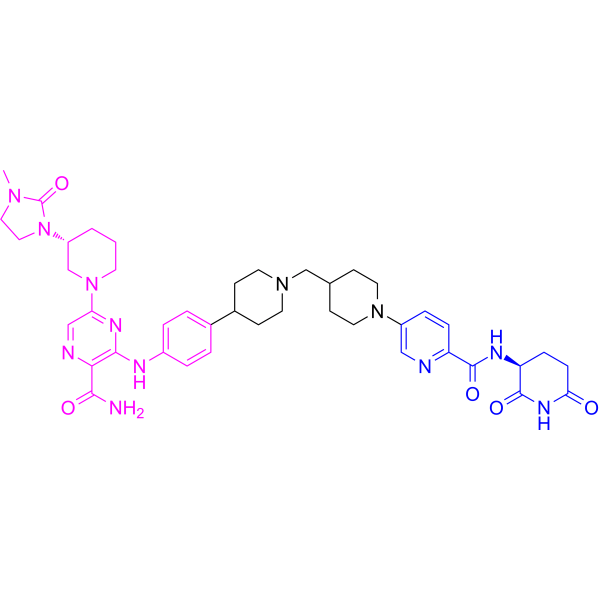
Bexobrutideg (NX-5948) is an orally active chimeric targeting molecule (CTM) that induces specific BTK protein degradation by the cereblon E3 ligase (CRBN) complex without degradation of other cereblon neo-substrates. Bexobrutideg mediates potent anti-inflammatory activity via BTK degradation with resultant inhibition of B cell activation. Bexobrutideg exhibits potent tumor growth inhibition in TMD8 xenograft models that contain either wild-type BTK or BTKi-resistant mutations. Bexobrutideg is efficacious in a mouse collageninduced arthritis (CIA) model. Bexobrutideg can cross the blood brain barrier (BBB). Bexobrutideg is a PROTAC composed of the ligand for target protein, a linker, and a cereblon E3 ligase (CRBN) complex (Red: BTK ligand (HY-170324); Blue: CRBN ligand (HY-171893); Black: linker) .
loading...
    loading...
2
2 Cited Publications
Art. -Nr.: HY-144981
CAS. Nr.: 1226443-41-9
Reinheit:  98.10%
Target:  

CDK Molecular Glues

Forschungsgebiete:  

Cancer

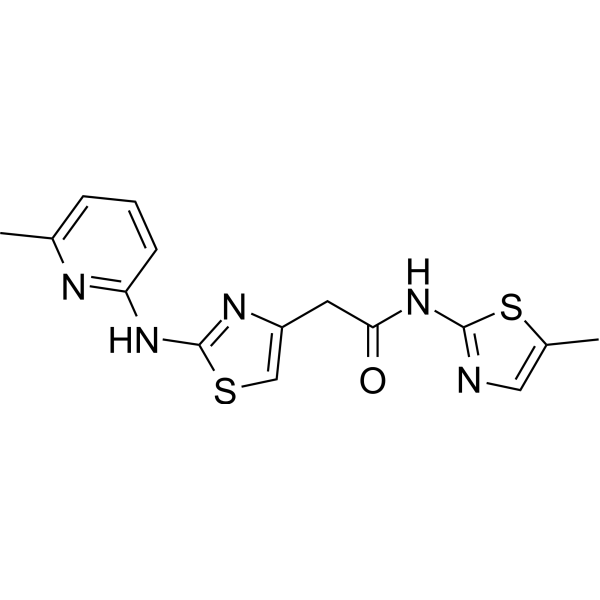
HQ461 is a molecular glue that promotes CDK12-DDB1 interaction to trigger cyclin K degradation. HQ461-mediated degradation of cyclin K impairs CDK12 function, resulting in decreased CDK12 substrate phosphorylation, downregulation of DNA damage response genes, and cell death .
loading...
    loading...
2
2 Cited Publications
Art. -Nr.: HY-110197
CAS. Nr.: 1774353-12-6
Reinheit:  99.35%
Target:  

IDE

Forschungsgebiete:  

Metabolic Disease

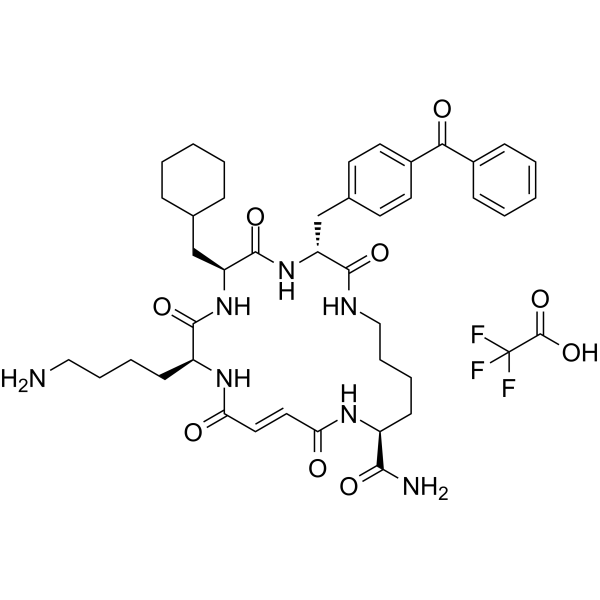
6bK TFA is a selective insulin-degrading enzyme (IDE) inhibitor with an IC50 of 50 nM. 6bK TFA binds to the distal pocket of IDE, thereby blocking substrate binding, peptide unfolding and cleavage processes, and reducing the degradation of insulin, glucagon and amylin. 6bK TFA improves oral glucose tolerance but impairs intraperitoneal glucose tolerance. 6bK TFA can be used in research related to type 2 diabetes .
loading...
    loading...
2
2 Cited Publications
Art. -Nr.: HY-132857A
CAS. Nr.: 2711006-67-4
Reinheit:  99.71%
Target:  

PROTACs

Forschungsgebiete:  

Neurological Disease

ZXH-4-130 TFA is a potent and selective Cereblon (CRBN) degrader. ZXH-4-130 TFA recruits the VHL E3 ligase to specifically target CRBN as a substrate for selective degradation as a hetero-PROTAC molecule. ZXH-4-130 TFA can be applied in studies on the biological functions of CRBN and related research of frontotemporal dementia .
loading...
    loading...
2
2 Cited Publications
Art. -Nr.: HY-132857
CAS. Nr.: 2711006-66-3
Target:  

PROTACs

Forschungsgebiete:  

Neurological Disease

ZXH-4-130 is a potent and selective Cereblon (CRBN) degrader. ZXH-4-130 recruits the VHL E3 ligase to specifically target CRBN as a substrate for selective degradation as a hetero-PROTAC molecule. ZXH-4-130 can be applied in studies on the biological functions of CRBN and related research of frontotemporal dementia .
loading...
    loading...
2
2 Cited Publications
Art. -Nr.: HY-W013205
CAS. Nr.: 645-15-8
Synonyms: BNPP
Forschungsgebiete:  

Others

Bis(4-nitrophenyl) phosphate (BNPP) is an esterase inhibitor, inhibits the activity of esterases such as carboxylesterase. Bis(4-nitrophenyl) phosphate inhibits the degradation of Abiraterone in fresh plasma. Bis(4-nitrophenyl) phosphate can be used as a substrate to determine the enzymatic activity of phosphodiesterase in the roots of wetland plants. Bis(4-nitrophenyl) phosphate also acts as a catalyst for metallomicelles and a catalyst that promotes ring-opening polymerization (ROP) .
loading...
    loading...
2
2 Cited Publications
Art. -Nr.: HY-W013205B
CAS. Nr.: 4043-96-3
Synonyms: BNPP sodium
Bis(4-nitrophenyl) phosphate sodium (BNPP sodium) is an esterase inhibitor, inhibits the activity of esterases such as carboxylesterase. Bis(4-nitrophenyl) phosphate sodium inhibits the degradation of Abiraterone in fresh plasma. Bis(4-nitrophenyl) phosphate sodium can be used as a substrate to determine the enzymatic activity of phosphodiesterase in the roots of wetland plants. Bis(4-nitrophenyl) phosphate sodium also acts as a catalyst for metallomicelles and a catalyst that promotes ring-opening polymerization (ROP) .
loading...
    loading...
1
1 Cited Publications
Art. -Nr.: HY-145752
CAS. Nr.: 2365478-58-4
Reinheit:  98.18%
Target:  

PROTACs SGK PI3K

Forschungsgebiete:  

Cancer

HaloPROTAC-E is a SGK3/VPS34 HaloPROTAC degrader that degrades Halo-tagged SGK3 and VPS34, with a DC50 of 3-10 nM in HEK293 cells. HaloPROTAC-E induces ubiquitination and proteasomal degradation of target proteins. HaloPROTAC-E blocks downstream phosphorylation of SGK3 substrate NDRG1. HaloPROTAC-E is applicable for cancer research .
loading...
    loading...
1
1 Cited Publications
Art. -Nr.: HY-153368
CAS. Nr.: 2655656-99-6
Reinheit:  95.43%
Synonyms: KT-413
Forschungsgebiete:  

Cancer

Zomiradomide (KT-413) is an orally active IRAK4 PROTAC degrader with a DC50 of 6 nM. Zomiradomide inhibits the NF-κB signaling pathway, while its molecular glue function mediates the degradation of Ikaros and Aiolos (with a DC50 of 1 nM for both), activates the IFN-I signaling pathway, and selectively degrades IMiD substrates. Zomiradomide inhibits cancer cell proliferation and tumor growth. Zomiradomide can be used in research related to B-cell non-Hodgkin's lymphoma and diffuse large B-cell lymphoma .
loading...
    loading...
1
1 Cited Publications
Art. -Nr.: HY-107858
CAS. Nr.: 93-03-8
Reinheit:  99.98%
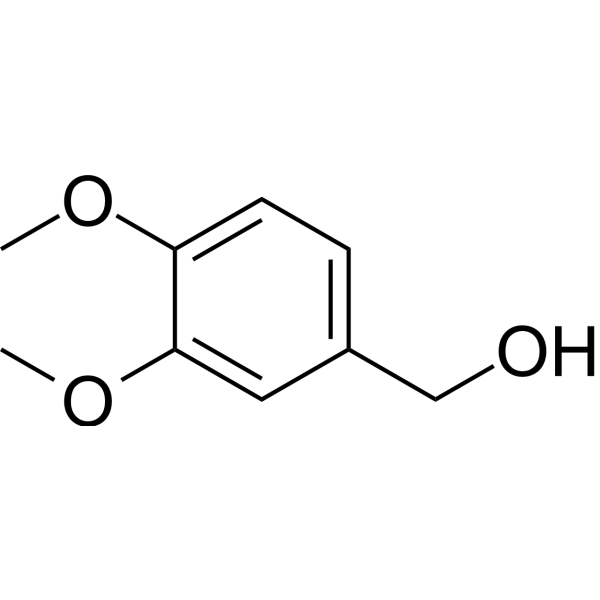
Synonyms: 3,4-Dimethoxybenzyl alcohol
Veratryl alcohol (3,4-Dimethoxybenzyl alcohol) is a secondary metabolite of lignin-degrading fungi, commonly used as a substrate for lignin peroxidase (LiP) to measure lignin degradation activity. Veratryl alcohol protects LiP from inactivation by H2O2 and prevents the accumulation of LiP III compounds. Veratryl alcohol also acts as a stabilizer for manganese-dependent peroxidases (MnP). Veratryl alcohol is a quorum-sensing inhibitor (QSI) and exhibits antibacterial efficacy .
loading...
    loading...
1
1 Cited Publications
Art. -Nr.: HY-145935
CAS. Nr.: 1198078-60-2
Reinheit:  98.57%
Target:  

Insulin Receptor STAT

Forschungsgebiete:  

Cancer

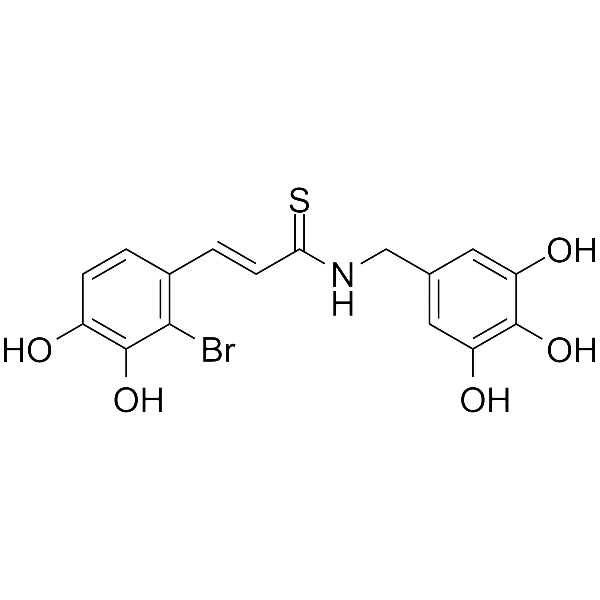
NT219 is a potent and dual inhibitor of insulin receptor substrates 1/2 (IRS1/2) and STAT3. IRS1/2 and STAT3 are major signaling junctions regulated by various oncogenes. NT219 affects IRS1/2 degradation and inhibits STAT3 phosphorylation. NT219 has the potential for the research of cancer diseases .
loading...
    loading...
1
1 Cited Publications
Art. -Nr.: HY-B0399S
CAS. Nr.: 126827-79-0
Synonyms: (R)-Carnitine-d9; Levocarnitine-d9
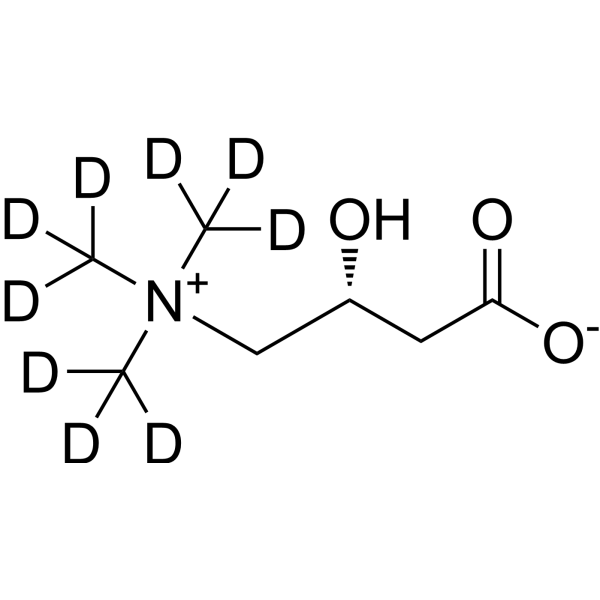
L-Carnitine-d9 is the deuterium labeled L-Carnitine. L-Carnitine (Levocarnitine) is an endogenous molecule involved in fatty acid metabolism, biosynthesized within the human body using amino acids: L-lysine and L-methionine, as substrates. L-Carnitine functions to transport long chain fatty acyl-CoAs into the mitochondria for degradation by β-oxidation. L-carnitine can ameliorate metabolic imbalances in many inborn errors of metabolism .
loading...
    loading...
1
1 Cited Publications
Art. -Nr.: HY-B2023
CAS. Nr.: 15545-48-9
Synonyms: Chlortoluron
Forschungsgebiete:  

Others

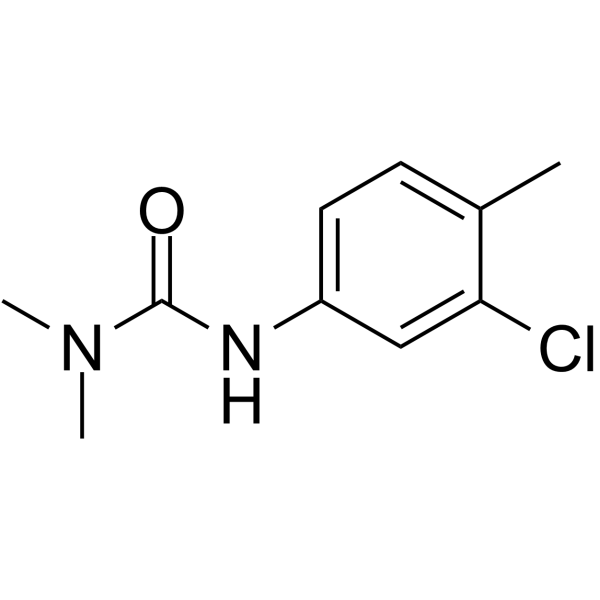
Chlorotoluron (Chlortoluron) is a urea herbicide. Chlorotoluron serves as a degradation substrate that undergoes dissipation in soil and produces demethylated chlorotoluron metabolites via N-dealkylation. Chlorotoluron is used for pre-emergence and post-emergence weed control in cereals and various other crops .
loading...
    loading...
1
1 Cited Publications
Art. -Nr.: HY-B2228
CAS. Nr.: 9001-92-7
Proteinase, Aspergillus oryzae is a serine protease that hydrolyzes peptide bonds in protein substrates, preferring alkaline conditions (optimal pH 10.5). It efficiently degrades casein, poly-L-glutamic acid, and poly-L-lysine, with activity irreversibly inhibited by diisopropylfluorophosphate (DFP) and potato inhibitor. This enzyme catalyzes proteolysis via serine residues in its active site, finding applications in food processing (e.g., soy sauce fermentation), detergents, and leather industries due to its high yield in solid-state fermentation and cost-effective production.
loading...
    loading...
1
1 Cited Publications
Art. -Nr.: HY-P2543
CAS. Nr.: 150138-78-6
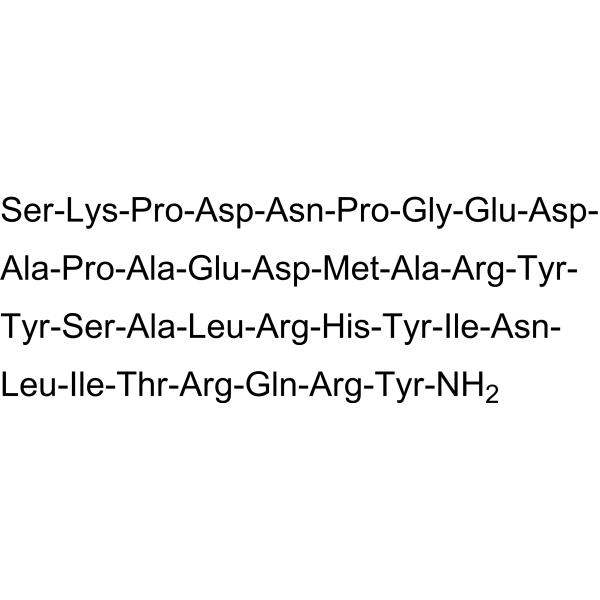
Neuropeptide Y (3-36) (human, rat) is a neuropeptide Y fragment derived from humans or rats. Neuropeptide Y is an extremely abundant neurotransmitter in central and peripheral neurons, and it participates in the regulation of psychomotor activity, circadian rhythm, feeding behavior and cardiovascular function. Neuropeptide Y (3-36) (human, rat) can serve as a substrate to be sequentially degraded from its N-terminus by AfuS28, and it requires binding to AfuS28 and SedB to be decomposed into amino acids, dipeptides and tripeptides [1] [2].
loading...
    loading...

