22 Results for "

synaptic binding

" in MedChemExpress (MCE) Product Catalog:
Products (22)

22 Results for "synaptic binding" in MCE Product Catalog:

3
3 Cited Publications
Cat. No.: HY-P2264
CAS No.: 676657-00-4
Target:  

Ephrin Receptor

Research Areas:  

Inflammation/Immunology

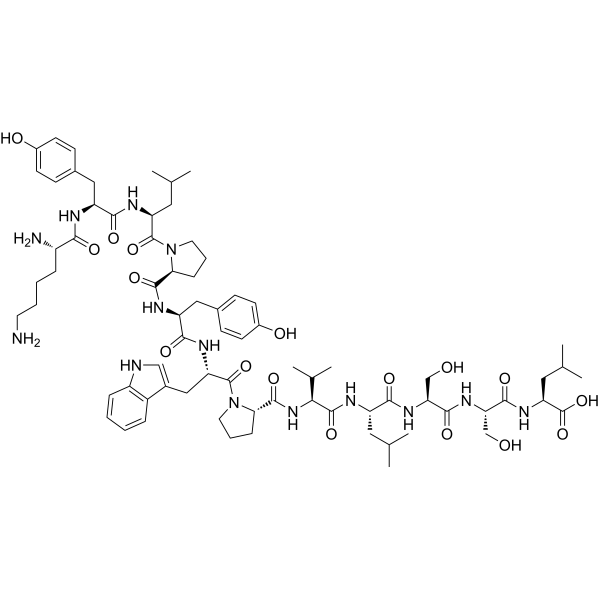
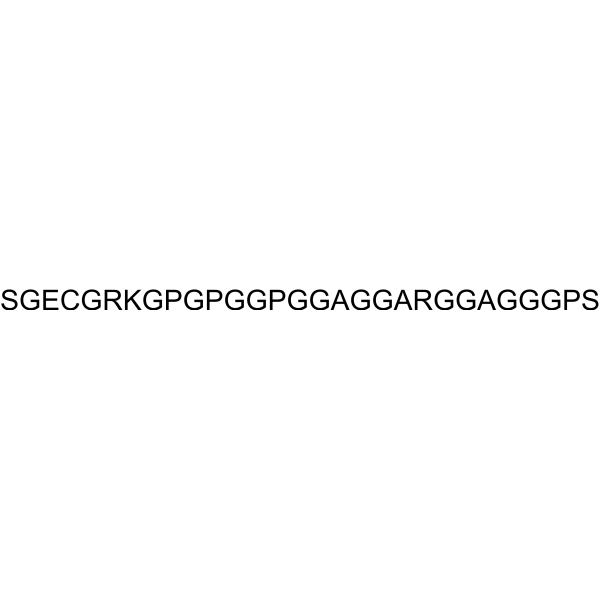
KYL peptide, an antagonistic peptide, selectively targets EphA4 receptor (IC50:4.22 μM, Kd:1.3 μM). KYL peptide binds to the ligand-binding domain of EphA4, effectively alleviates Aβ-induced synaptic dysfunction and synaptic plasticity defects in AD mice. KYL peptide can promote nerve regeneration after injury and modulating immune responses .
loading...
    loading...
2
2 Cited Publications
Cat. No.: HY-120051
CAS No.: 1398496-82-6
Purity:  98.40%
Synonyms: S44819; Egis-13529
Target:  

GABA Receptor

Research Areas:  

Neurological Disease

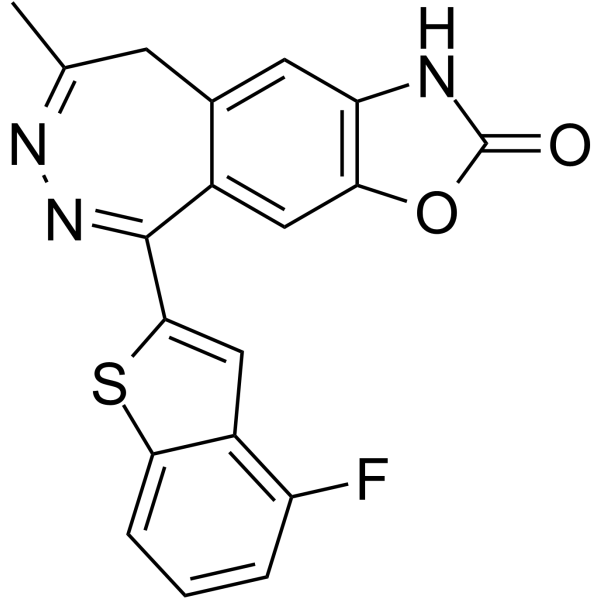
Afizagabar (S44819) is a first-in-class, competitive, and selective antagonist at the GABA-binding site of the α5-GABAAR, with an IC50 of 585 nM for α5β2γ2 and a Ki of 66 nM for α5β3γ2. Afizagabar enhances hippocampal synaptic plasticity and exhibits pro-cognitive efficacy .
loading...
    loading...
1
1 Cited Publications
Cat. No.: HY-P3443
Synonyms: PNA
Peanut agglutinin (PNA) is a carbohydrate-recognition protein that binds competitively and irreversibly to cell-surface β-D-Gal (1-3)-GalNAc, and this binding can be inhibited by D-galactose and asialofetuin. Peanut agglutinin recognizes exposed glycoepitopes and reflects the glycosylation status of cells. Peanut agglutinin can label glycoconjugates at neuromuscular junctions to safely visualize synaptic structures. Peanut agglutinin can be used to synthesize dyes to distinguish between normal and tumor tissues. Peanut agglutinin provides support for research on leukemia, Burkitt's tumors, and cutaneous squamous lesions .
loading...
    loading...
1
1 Cited Publications
Cat. No.: HY-125900
CAS No.: 124958-29-8
Purity:  95.82%
Synonyms: NCA
Target:  

Others

Neocarzilin A (NCA) reduces BST-2 levels via lysosomal degradation. Neocarzilin A has antimigratory and antiproliferative effects on cancer cells. Neocarzilin A inhibits cancer cell migration via irreversible binding to the synaptic vesicle membrane protein VAT-1 .
loading...
    loading...
1
1 Cited Publications
Cat. No.: HY-P1297
CAS No.: 120066-38-8
Target:  

CRFR

Research Areas:  

Neurological Disease

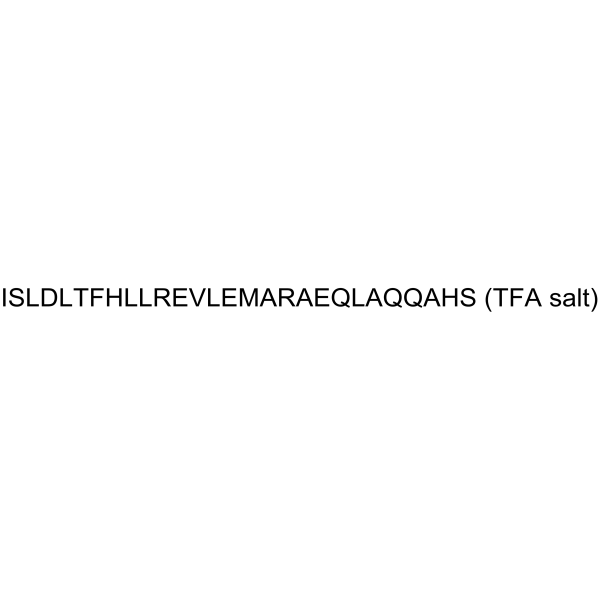
CRF(6-33)(human) is a CRF binding protein (CRF-BP) ligand inhibitor. CRF(6-33)(human) competitively binds the CRF-BP but not the post-synaptic CRF receptors. CRF(6-33)(human) has anti-obesity effect .
loading...
    loading...
Cat. No.: HY-I1070
CAS No.: 319-78-8
Synonyms: (R)-Isoleucine
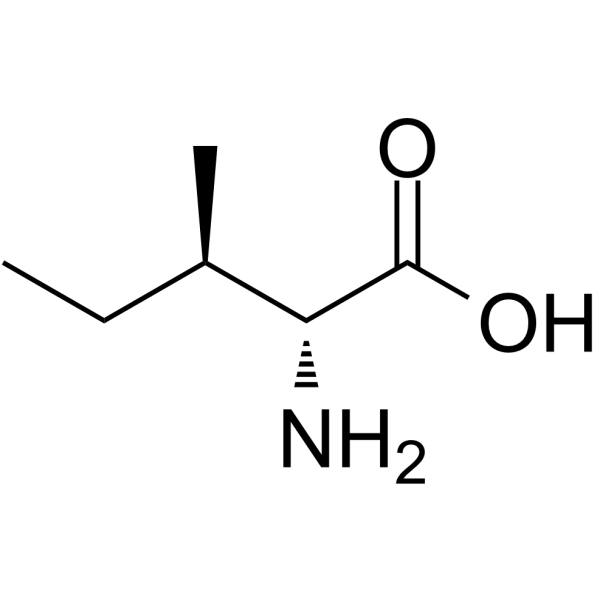
D-Isoleucine is a selective competitive activator of the Asc-1 antiporter (Ki=0.98 mM). D-Isoleucine promotes the release of D-serine and glycine by binding to the Asc-1 protein on the neuronal cell membrane, and enhances NMDA receptor-dependent synaptic plasticity. D-Isoleucine can be used in the study of neurodegenerative diseases (such as Alzheimer's disease and schizophrenia). D-Isoleucine also acts as a non-classical D-amino acid, interferes with bacterial peptidoglycan synthesis, and inhibits the formation of Staphylococcus aureus biofilm, and has potential antibacterial application value[1][2].
loading...
    loading...
Cat. No.: HY-P10430
Research Areas:  

Neurological Disease

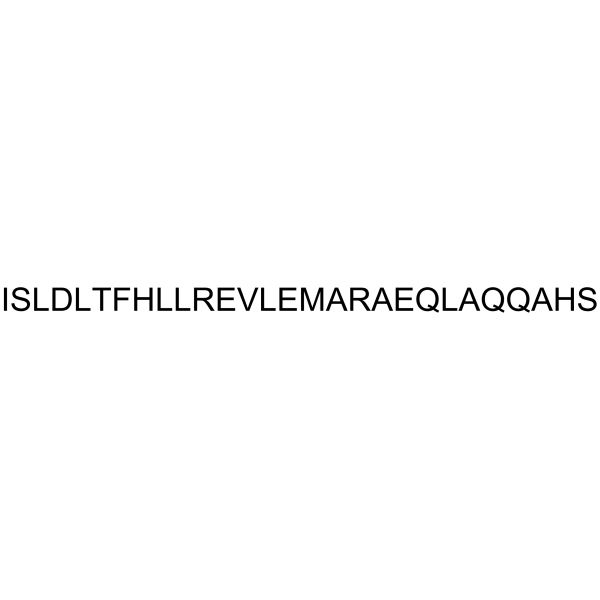
Stalk peptide is a GPR110 activator. Stalk peptide is released from GPCR Autoproteolysis INducing domain by autocatalytic process and then Stalk peptide is inserted into the ligand-binding pocket of the receptor to activate the receptor. Stalk peptide can promote nerve growth and synaptic formation. Stalk peptide can be used to study neurodevelopmental and neurodegenerative diseases .
loading...
    loading...
Cat. No.: HY-167822
CAS No.: 1531600-36-8
Target:  

iGluR GABA Receptor

Research Areas:  

Neurological Disease

Caramboxin is a phenylalanine-like α-amino acid neurotoxin found in star fruit (Averrhoa carambola) with glutamatergic ionotropic action. Caramboxin activates NMDA, AMPA, and kainate receptors while inhibiting GABA binding to synaptic membranes, shifting the CNS toward an excitatory state and exerting neurotoxic effects linked to star fruit ingestion. Caramboxin can be used for research on neurotoxicity and as a reference standard for toxicological studies .
loading...
    loading...
Cat. No.: HY-100143
CAS No.: 81382-51-6
Purity:  99.95%
Synonyms: CGS 10746
Target:  

Dopamine Receptor

Research Areas:  

Neurological Disease

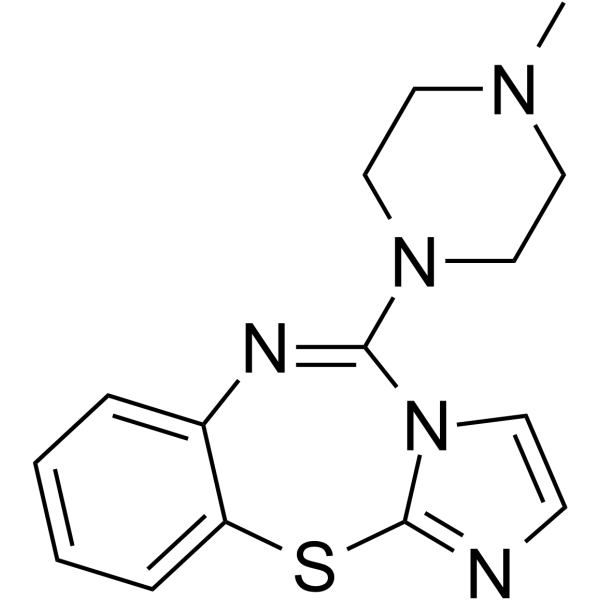
Pentiapine (CGS 10746) is a dopamine release inhibitor without binding to synaptic dopamine receptor sites .
loading...
    loading...
Cat. No.: HY-100821
CAS No.: 111872-98-1
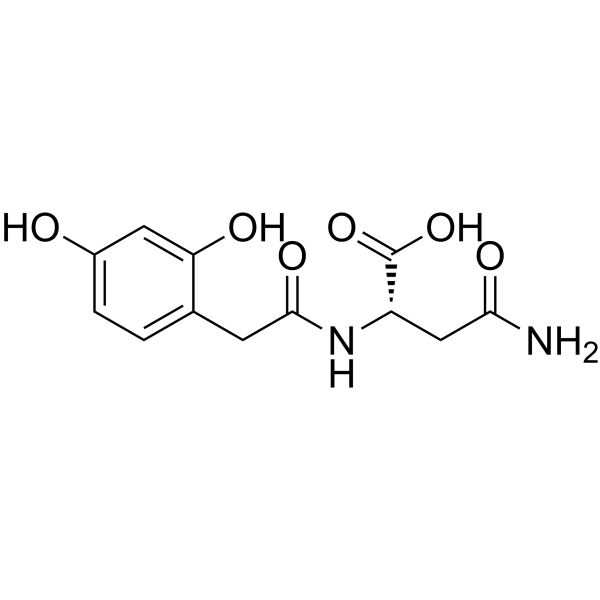
2,4-Dihydroxyphenylacetylasparagine is a potent and selective antagonist of glutamate. 2,4-Dihydroxyphenylacetylasparagine inhibits glutamate binding to rat brain synaptic membranes .
loading...
    loading...
Cat. No.: HY-106469
CAS No.: 81428-04-8
Synonyms: MY-117
Target:  

Drug Derivative

Research Areas:  

Neurological Disease

Taltrimide (MY-117), a lipophilic derivative of Taurine (HY-B0351), strongly inhibits the sodium-independent binding of Taurine to synaptic membranes of brain, the effects on the binding of GABA being less pronounced. Taltrimide exhibits definitive anticonvulsive effects in experimental epilepsy models .
loading...
    loading...
Cat. No.: HY-P2471
Target:  

Calmodulin

Research Areas:  

Neurological Disease

Neurogranin (48-76), mouse is a peptide corresponding to residues 48-76 of Neurogranin. Neurogranin, a calmodulin-binding protein, is exclusively expressed in the post-synapse, and mediates NMDAR driven synaptic plasticity by regulating the calcium-calmodulin (Ca 2+-CaM) pathway .
loading...
    loading...
Cat. No.: HY-P1297A
Target:  

CRFR

Research Areas:  

Neurological Disease

CRF(6-33)(human) TFA is a CRF binding protein (CRF-BP) ligand inhibitor. CRF(6-33)(human) TFA competitively binds the CRF-BP but not the post-synaptic CRF receptors. CRF(6-33)(human) TFA has anti-obesity effect .
loading...
    loading...
Cat. No.: HY-115739
CAS No.: 1009376-10-6
Target:  

Ras

Research Areas:  

Neurological Disease Cancer

RTIL 13 is a potent inhibitor of dynamin GTPase, with an IC50 of 2.3 μM for dynamin I GTPase. RTIL 13 also targets pleckstrin homology lipid binding domain. RTIL 13 can inhibit receptor-mediated and synaptic vesicle endocytosis, with IC50s of 9.3 μM and 7.1 μM, respectively .
loading...
    loading...
Cat. No.: HY-B1789
CAS No.: 80880-90-6
Target:  

mAChR

Research Areas:  

Neurological Disease

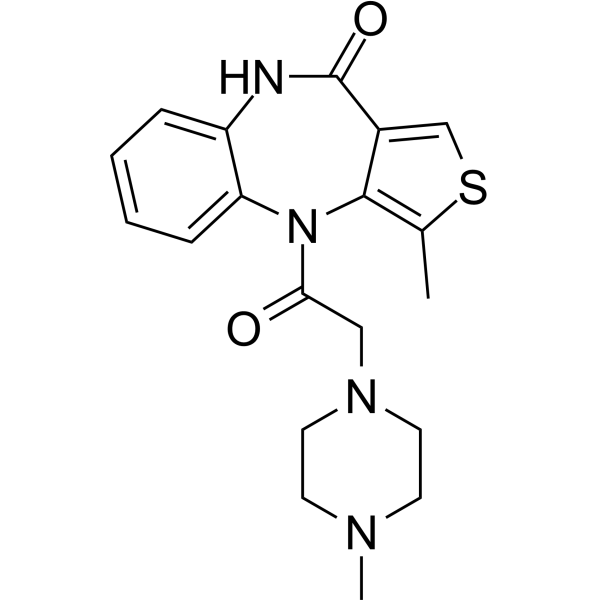
Telenzepine is an antimuscarinic agent with Kis of 0.94 nM (M1 mAChR) and 17.8 nM (M2 mAChR) binding to muscarinic receptors. Telenzepine effectively blocks synaptic transmission promoted by muscarinic or M1 receptor agonists. Thus, Telenzepine can reduce the amplitude of extracellular slow excitatory postsynaptic potentials (EC50=38 nM) and slow inhibitory postsynaptic potentials (EC50=253 nM) .
loading...
    loading...
Cat. No.: HY-100143R
CAS No.: 81382-51-6
Synonyms: CGS 10746 (Standard)
Pentiapine (Standard) is the analytical standard of Pentiapine (HY-100143). This product is intended for research and analytical applications. Pentiapine (CGS 10746) is a dopamine release inhibitor without binding to synaptic dopamine receptor sites .
loading...
    loading...
Cat. No.: HY-165474
CAS No.: 2231103-08-3
Target:  

iGluR

Research Areas:  

Neurological Disease

TDPAM01 is a positive allosteric modulator of AMPA receptor GluA2. TDPAM01 can specifically bind to the ligand-binding domain (LBD) of GluA2 and shows an IC50 of 13.4 nM for the GluA2 flop subtype. TDPAM01 can stabilize the activated conformation of GluA2 receptors, delay the receptor deactivation or desensitization process, maintaining the rapid excitatory synaptic transmission in the central nervous system .
loading...
    loading...
Cat. No.: HY-15129A
CAS No.: 73913-63-0
Synonyms: D-Serine O-phosphate; D-SOP
Research Areas:  

Neurological Disease

O-Phospho-D-serine (D-SOP) is the D-configurational enantiomer of O-Phospho-L-serine (HY-15129). O-Phospho-D-serine inhibits L-[ 3H]glutamate binding to APB-sensitive sites in rat brain synaptic plasma membranes, with a Ki of 303 μM. Compared with the L-configurational form, D-SOP does not significantly activate the tested mGluR at 1 mM, and it is mainly used in studies related to the stereoselectivity of phosphatidylserine and mGluR ligands .
loading...
    loading...
Cat. No.: HY-D3394
CAS No.: 1331918-67-2
Target:  

Fluorescent Dye

Research Areas:  

Neurological Disease

SGC5 is a fluorescence enhancer and membrane dissociator with millisecond-scale membrane dissociation kinetics, with an emission spectrum of 500-650 nm. SGC5 produces strong fluorescence upon binding to lipid membranes, exhibits fast partitioning dissociation kinetics at higher temperatures, and is unaffected by pH or cholesterol. SGC5 does not belong to the FM dye family and shows the highest membrane-bound fluorescence intensity among the tested styryl/FM dyes. SGC5 can be used to study synaptic vesicle cycling in neurons .
loading...
    loading...
Cat. No.: HY-165475
CAS No.: 2231101-34-9
Target:  

iGluR

Research Areas:  

Neurological Disease

TDPAM02 is a potent positive allosteric modulator of the AMPA receptor GluA2 subunit, with an EC50 of 1.4 nM for the GluA2 flop (Q) subunit. TDPAM02 binds at the dimer interface of the GluA2 ligand-binding domain and stabilizes the receptor conformation by simultaneously occupying two allosteric sites, thereby significantly slowing the receptor desensitization process and maintaining rapid excitatory synaptic transmission in the central nervous system. TDPAM02 is also a positive allosteric modulator of the GluK1 receptor. TDPAM02 can be used for research on neurological diseases .
loading...
    loading...

