



Semapimod tetrahydrochloride
Based on 4 publication(s) in Google Scholar
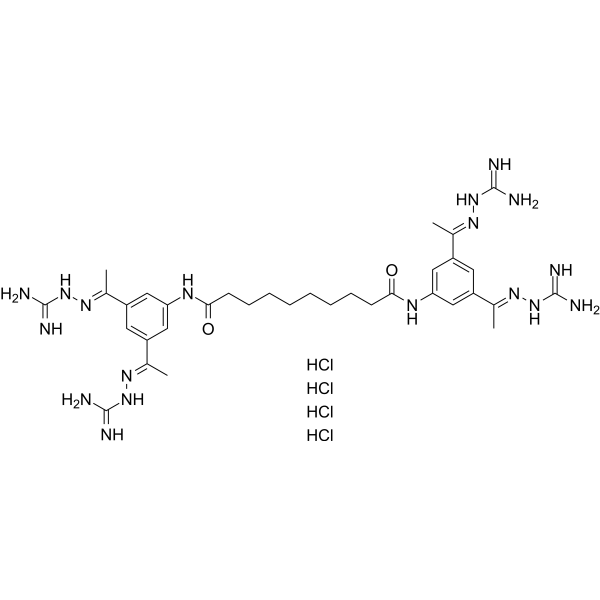
Semapimod tetrahydrochloride (CNI-1493), an inhibitor of proinflammatory cytokine production, can inhibit TNF-α, IL-1β, and IL-6. Semapimod tetrahydrochloride inhibits TLR4 signaling (IC50≈0.3 μM). Semapimod tetrahydrochloride inhibits p38 MAPK and nitric oxide production in macrophages. Semapimod tetrahydrochloride has potential in a variety of inflammatory and autoimmune disorders.
For research use only. We do not sell to patients.
- Purity : 99.18%
- CAS No.: 164301-51-3
- Formula: C34H56Cl4N18O2
- Molecular Weight:890.74
-
Storage:
-20°C, sealed storage, away from moisture and light
* In solvent : -80°C, 6 months; -20°C, 1 month (sealed storage, away from moisture and light)

To place orders, for customer services and technical support, please contact: MedChemExpress USA
Tel: 609-228-6898 E-mail: [email protected] [email protected]


-
 Biological Activity
-
Chemical Information
-
Solvent & Solubility
- Protocols
- Purity & Documentation
- References
-
 Help & FAQs


-
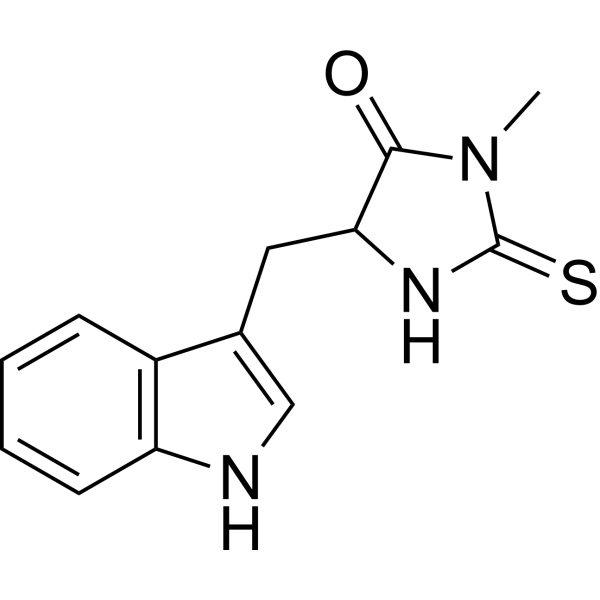
HY-15760
Necrostatin-1RIPK1 Inhibitor -
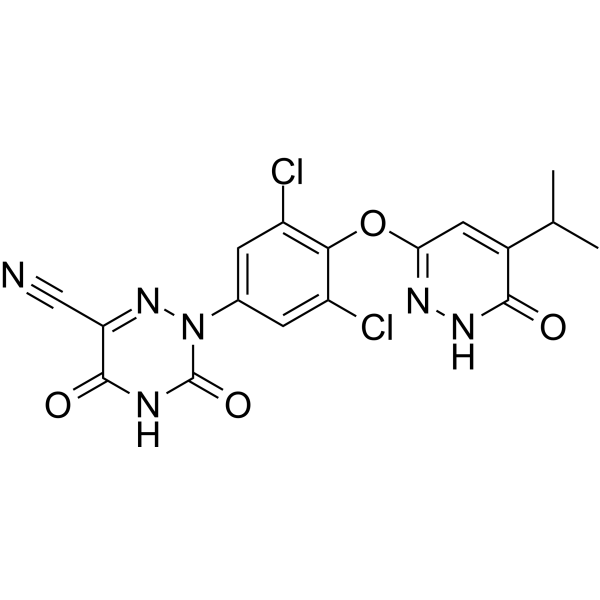
HY-12216
ResmetiromTHR-β Agonist -
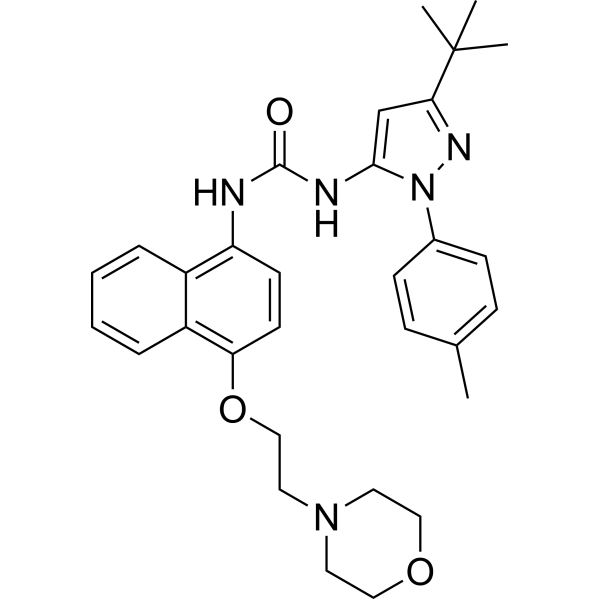
HY-10320
Doramapimodp38 MAPK Inhibitor -
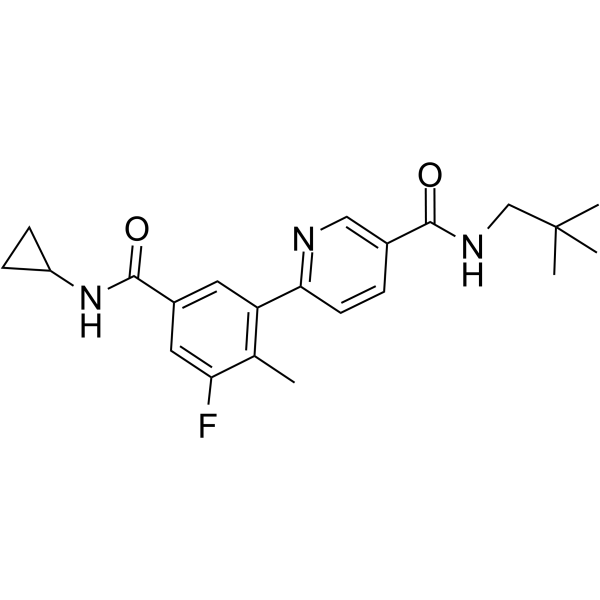
HY-10402
Losmapimodp38α/β MAPK Inhibitor -
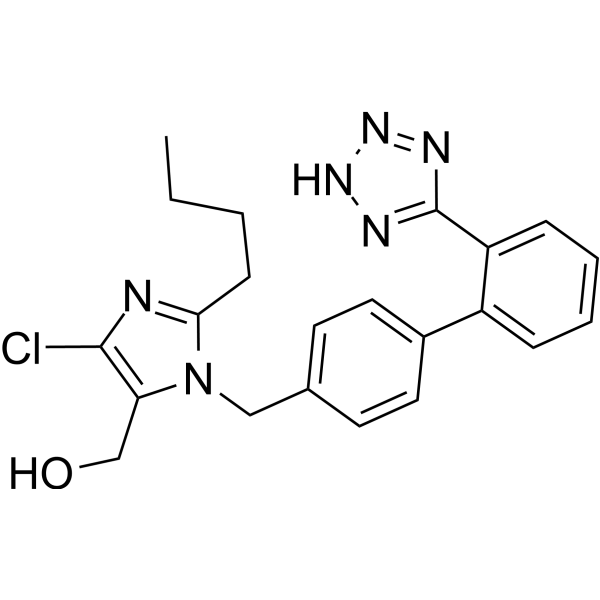
HY-17512
LosartanAngiotensin II Receptor Antagonist -
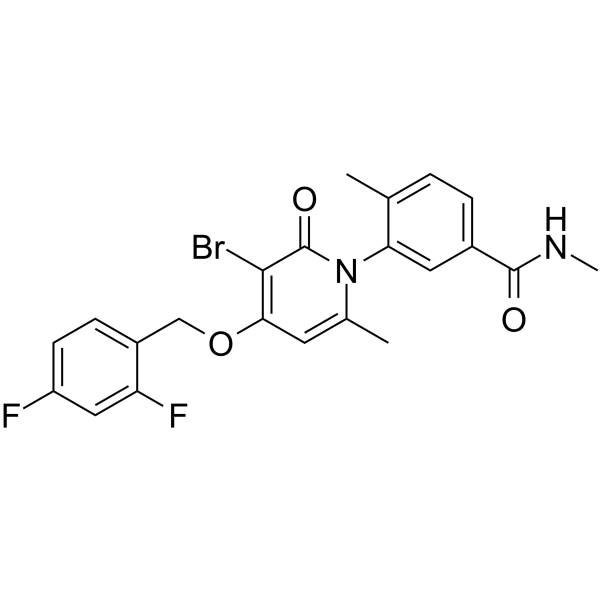
HY-10403
PH-797804p38α/β Inhibitor -
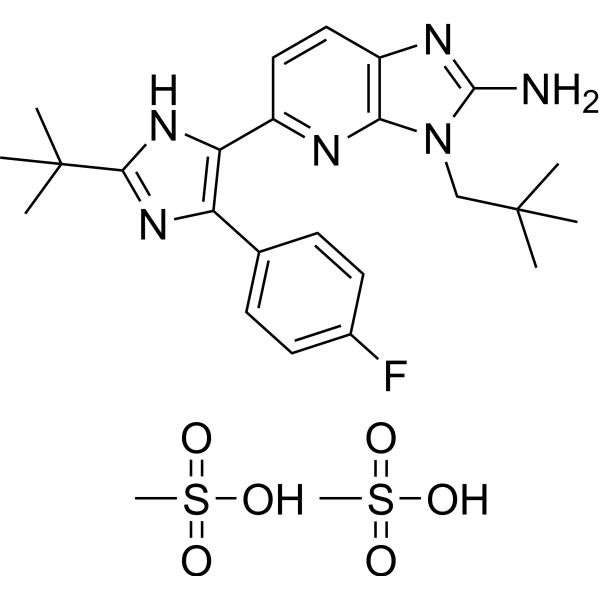
HY-13241
Ralimetinib dimesylateApoptosis Inducer -
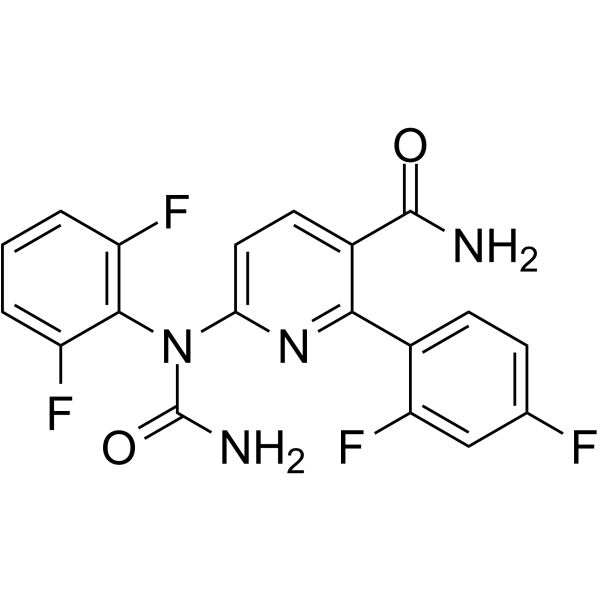
HY-10401
VX-702p38α MAPK Inhibitor -
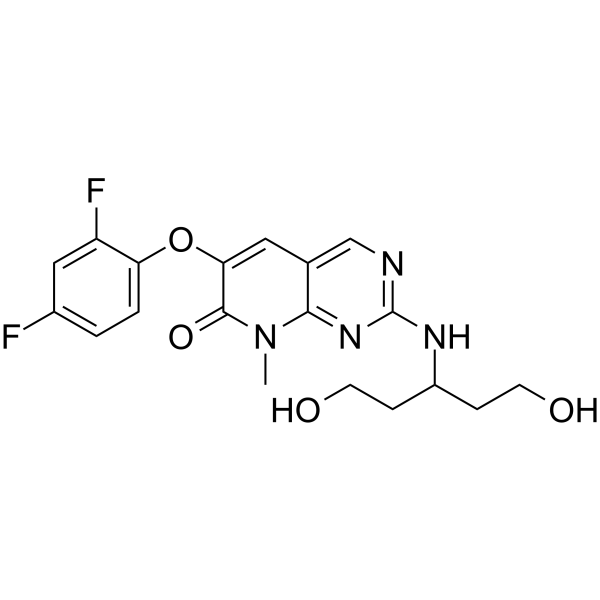
HY-10405
Pamapimodp38α Inhibitor -
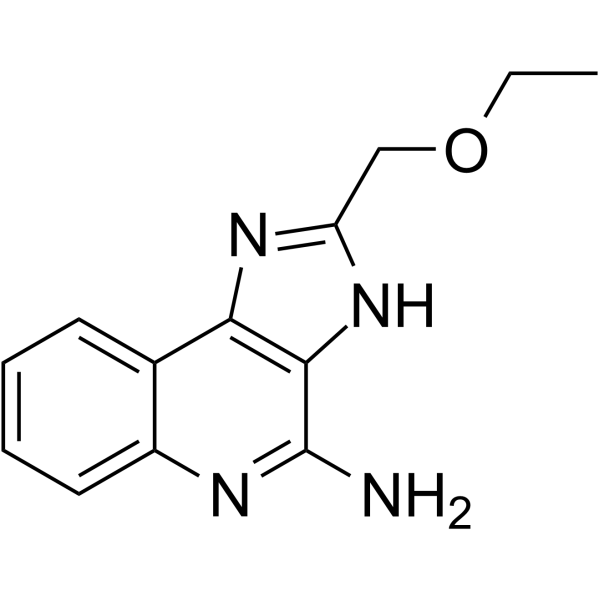
HY-128799
CL097TLR7/8 Agonist -
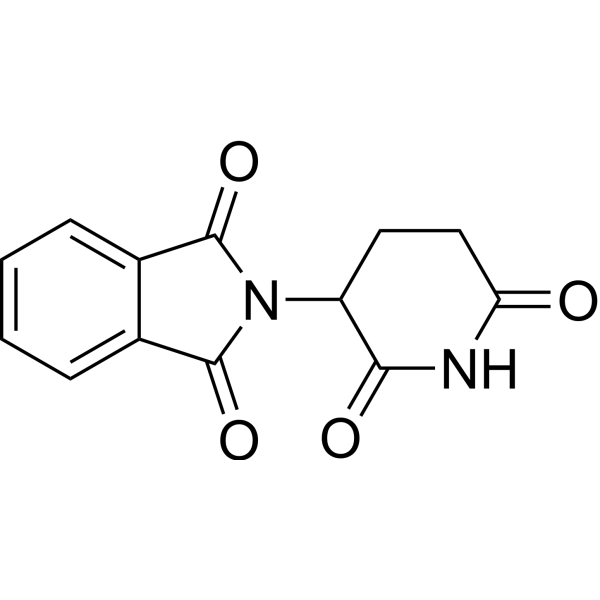
HY-14658
ThalidomideCereblon Inhibitor -
HY-107390A
AX-024 hydrochlorideTCR-Nck Interaction Inhibitor
Publications Citing Use of MedChemExpress (MCE) Semapimod tetrahydrochloride
More

Biological Activity
Description
|
IL-1β |
IL-6 |
p38 MAPK |
In Vitro
Semapimod tetrahydrochloride leads to a significant decrease of p38-MAPK phosphorylation in macrophages, proinflammatory gene expression of macrophage inflammatory protein-1alpha, interleukin-6, monocyte chemoattractant protein-1, and intercellular adhesion molecule-1, and neutrophil infiltration. Semapimod tetrahydrochloride completely abrogated nitric oxide production within the tunica muscularis[2].
Semapimod tetrahydrochloride desensitizes TLR signaling via its effect on the TLR chaperone gp96. Semapimod tetrahydrochloride inhibits ATP-binding and ATPase activities of gp96 in vitro (IC50≈0.2-0.4 μM). Semapimod tetrahydrochloride desensitizes TLR signaling via its effect on the TLR chaperone gp96[3].
Semapimod (0-500 nM) inhibits microglia-stimulated GL261 invasion[4].
Semapimod (0-10 µM) dose not affect serum-stimulated glioblastoma cell invasion, even at 10 µM, underlining the selectivity of semapimod for cells from the monocytic lineage[4].
Semapimod (200 nM) does not affect microglia-stimulated glioblastoma cell proliferation[4].
MedChemExpress (MCE) has not independently confirmed the accuracy of these methods. They are for reference only. Further protocols information, click here.
In Vivo
Semapimod tetrahydrochloride restores AM-induced akt phosphorylation and cGMP production in OZ rats[1].
Semapimod (6 mg/kg/day, Intracranially for 1 week) inhibits glioblastoma cell invasion in vivo[4].
Semapimod (intracranially administered, 2 weeks) semapimos strongly increases the survival of GL261 tumor-bearing animals in combination with radiation, but has no significant benefit in the absence of radiation[4].
MedChemExpress (MCE) has not independently confirmed the accuracy of these methods. They are for reference only.
-
Animal Model:Male OZ rats[1]
-
Dosage:5 mg/kg
-
Administration:I.p; daily for 2 weeks
-
Result:Restored endothelium-dependent vasorelaxation in OZ rats.
-
Animal Model:C57Bl/6 mice (GL261 cells were orthotopically implanted)[4]
-
Dosage:6 mg/kg/day
-
Administration:Intracranially for 1 week, delivered via an osmotic pump
-
Result:Inhibited tumor cell invasion by more than 75%.


Chemical Information
-
CAS No. 164301-51-3
-
Appearance Solid
-
Molecular Weight 890.74
-
Formula C34H56Cl4N18O2
-
Color White to yellow
-
SMILES
O=C(NC1=CC(/C(C)=N/NC(N)=N)=CC(/C(C)=N/NC(N)=N)=C1)CCCCCCCCC(NC2=CC(/C(C)=N/NC(N)=N)=CC(/C(C)=N/NC(N)=N)=C2)=O.Cl.Cl.Cl.Cl
-
Synonyms
CNI-1493; CPSI-2364 tetrahydrochloride
-
Shipping
Room temperature in continental US; may vary elsewhere.
-
Storage
-20°C, sealed storage, away from moisture and light
* In solvent : -80°C, 6 months; -20°C, 1 month (sealed storage, away from moisture and light)


Publications (4)


Solvent & Solubility
In Vitro:
H2O : 2.17 mg/mL (2.44 mM; ultrasonic and warming and heat to 60°C)
Please refer to the solubility information to select the appropriate solvent. Once prepared, please aliquot and store the solution to prevent product inactivation from repeated freeze-thaw cycles.
Storage method and period of stock solution: -80°C, 6 months; -20°C, 1 month (sealed storage, away from moisture and light). When stored at -80°C, please use it within 6 months. When stored at -20°C, please use it within 1 month.
* Note: If you choose water as the stock solution, please dilute it to the working solution, then filter and sterilize it with a 0.22 μm filter before use.
Please refer to the solubility information to select the appropriate solvent. Once prepared, please aliquot and store the solution to prevent product inactivation from repeated freeze-thaw cycles.
Storage method and period of stock solution: -80°C, 6 months; -20°C, 1 month (sealed storage, away from moisture and light). When stored at -80°C, please use it within 6 months. When stored at -20°C, please use it within 1 month.
* Note: If you choose water as the stock solution, please dilute it to the working solution, then filter and sterilize it with a 0.22 μm filter before use.
Concentration (start) × Volume (start) = Concentration (final) × Volume (final)

Protocols
-
Cell Cytotoxicity Assay
Cytotoxicity assays are usually based on the assessment of cell membrane damage, which can also be indirectly detected by measuring cell viability. Detection methods include MTT assay, CKK-8 assay, LDH assay and ATP assay, etc.
-
Research Protocol for Inflammation-related Diseases
The NLRP3 inflammasome is a cytosolic innate immune signaling platform that integrates priming signals and danger-signal activation to promote caspase-1 activation, maturation of IL-1β and IL-18, and gasdermin D-mediated pyroptotic cell death. The core experimental logic is to determine whether inflammatory disease phenotypes are driven by increased NLRP3 expression, ASC-containing inflammasome assembly, caspase-1 cleavage, GSDMD cleavage, and extracellular release of IL-1β/IL-18 rather than by nonspecific cell injury alone. The pathway is strongly linked to inflammation-related disease phenotypes because monosodium urate crystals activate NALP3/NLRP3 inflammasome signaling in gout-like crystal inflammation, cholesterol crystals activate NLRP3 inflammasomes in atherogenesis models, and DSS-induced intestinal inflammation has been reported to involve NLRP3 inflammasome activity. However, experimental colitis studies also show context-dependent protective effects of NLRP3 inflammasome co
-
Pyroptosis Solutions
Pyroptosis is a lytic inflammatory cell-death pathway executed by gasdermin pores, most classically through inflammasome-mediated activation of caspase-1, cleavage of gasdermin D, membrane pore formation, LDH release, and secretion of IL-1β and IL-18. The canonical pathway is commonly modeled by priming cells with an inflammatory signal such as LPS to induce pro-IL-1β and inflammasome components, followed by an activation signal such as ATP or nigericin to activate NLRP3, ASC speck formation, caspase-1 cleavage, GSDMD cleavage, cytokine release, and pyroptotic membrane rupture. The non-canonical pathway is triggered when cytosolic LPS activates mouse caspase-11 or human caspase-4/5, leading to GSDMD cleavage and pyroptosis, and this can secondarily activate NLRP3-dependent IL-1β release. Pyroptosis is linked to inflammatory injury, infection, cancer, liver disease, ocular disease, placental inflammation, and other disease phenotypes, but unresolved questions include which gasdermin fam


Purity & Documentation
-
Data Sheet (276 KB)
-
SDS (394 KB)
- English - EN (394 KB)
- Français - FR (394 KB)
- Deutsch - DE (394 KB)
- Norwegian - NO (394 KB)
- Español - ES (394 KB)
- Swedish - SV (394 KB)
- Italian - IT (394 KB)
- Korean - KR (394 KB)
- Portuguese - PT (394 KB)
-
Handling Instructions (2659 KB)
References
[1]. Nishimatsu H, et al. Blockade of endogenous proinflammatory cytokines ameliorates endothelial dysfunction in obese Zucker rats. Hypertens Res. 2008;31(4):737‐743. [Content Brief]
[2]. Wehner S, Set al. Inhibition of p38 mitogen-activated protein kinase pathway as prophylaxis of postoperative ileus in mice. Gastroenterology. 2009;136(2):619‐629. [Content Brief]
[3]. Wang J, et al. Experimental Anti-Inflammatory Drug Semapimod Inhibits TLR Signaling by Targeting the TLR Chaperone gp96. J Immunol. 2016;196(12):5130‐5137. [Content Brief]
[4]. Miller IS, et al. Semapimod sensitizes glioblastoma tumors to ionizing radiation by targeting microglia. PLoS One. 2014 May 9;9(5):e95885. [Content Brief]


Complete Stock Solution Preparation Table
Please refer to the solubility information to select the appropriate solvent. Once prepared, please aliquot and store the solution to prevent product inactivation from repeated freeze-thaw cycles.
Storage method and period of stock solution: -80°C, 6 months; -20°C, 1 month (sealed storage, away from moisture and light). When stored at -80°C, please use it within 6 months. When stored at -20°C, please use it within 1 month.
| Optional Solvent | Concentration Solvent Mass | 1 mg | 5 mg | 10 mg | 25 mg |
|---|---|---|---|---|---|
| H2O | 1 mM | 1.1227 mL | 5.6133 mL | 11.2266 mL | 28.0666 mL |
* Note: If you choose water as the stock solution, please dilute it to the working solution, then filter and sterilize it with a 0.22 μm filter before use.


Semapimod tetrahydrochloride Related Classifications
HY-15509A Related Classifications
 Powered by Bioz