



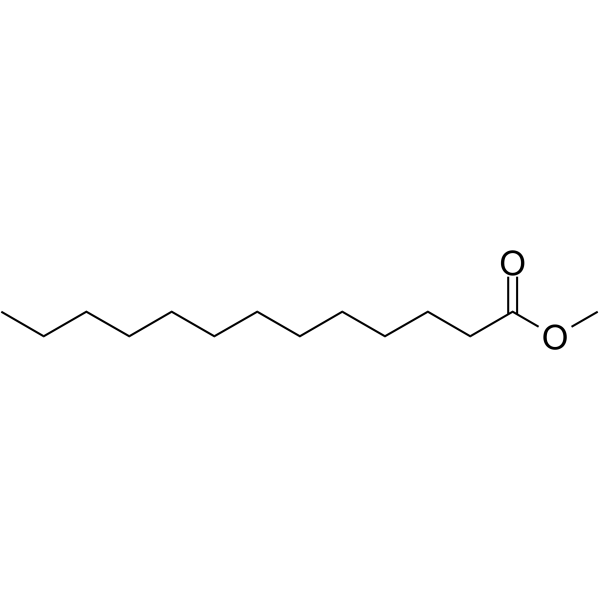
Methyl tridecanoate

Based on 1 Customer Validation
Methyl tridecanoate is a fatty acid methyl ester. Methyl tridecanoate exhibits an IC50 of 3.26 μM and a Ki of 2.30 μM against AsOBP21f in Anopheles sinensis. Methyl tridecanoate induces electroantennographic responses in female Anopheles sinensis. Methyl tridecanoate shows a dose-dependent attractive effect on Anopheles sinensis. Methyl tridecanoate weakly inhibits β-amyloid aggregation and AChE activity. Methyl tridecanoate can be used in the research of malaria and Alzheimer's disease.
For research use only. We do not sell to patients.
- Purity : 99.75%
- CAS No.: 1731-88-0
- Formula: C14H28O2
- Molecular Weight:228.37
-
Storage:Pure form -20°C, 3 years , 4°C, 2 years ; In solvent -80°C, 6 months , -20°C, 1 month

To place orders, for customer services and technical support, please contact: MedChemExpress USA
Tel: 609-228-6898 E-mail: [email protected] [email protected]


-
 Biological Activity
-
Chemical Information
-
Solvent & Solubility
- Protocols
- Purity & Documentation
- References
-
 Help & FAQs


-
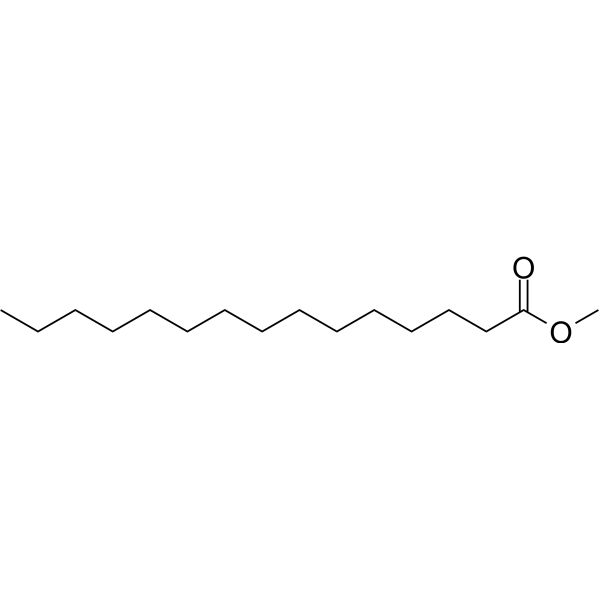
HY-W004289
Methyl pentadecanoateFatty Acid Ester -

HY-W004287R
Methyl tridecanoate (Standard)β-amyloid Aggregation Inhibitor -

HY-W004290
Methyl heptadecanoateInternal Standard for Biodiesel -
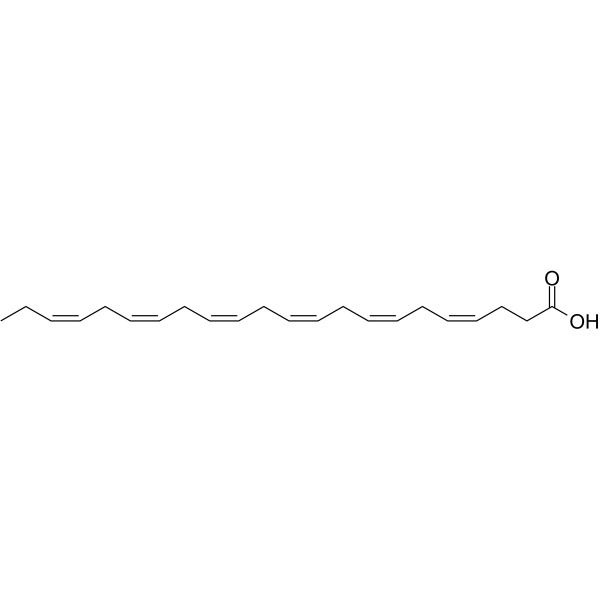
HY-B2167
Docosahexaenoic acidomega-3 Fatty Acid -

HY-N7103
Ethyl oleateFatty Acid Ester -
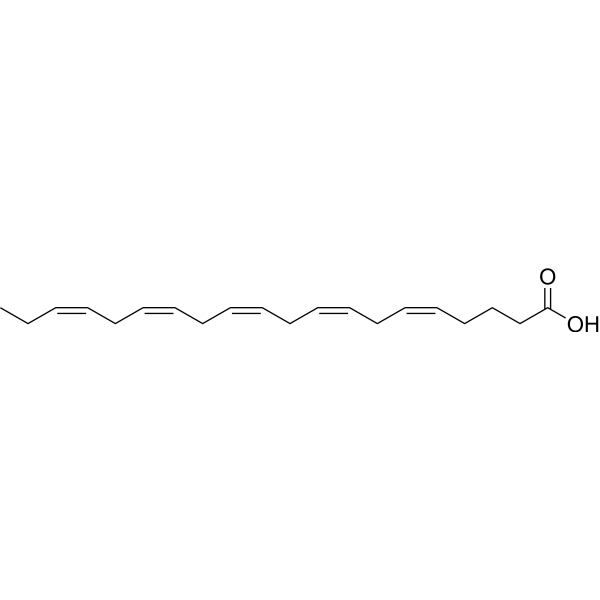
HY-B0660
Eicosapentaenoic AcidLC-PUFA -
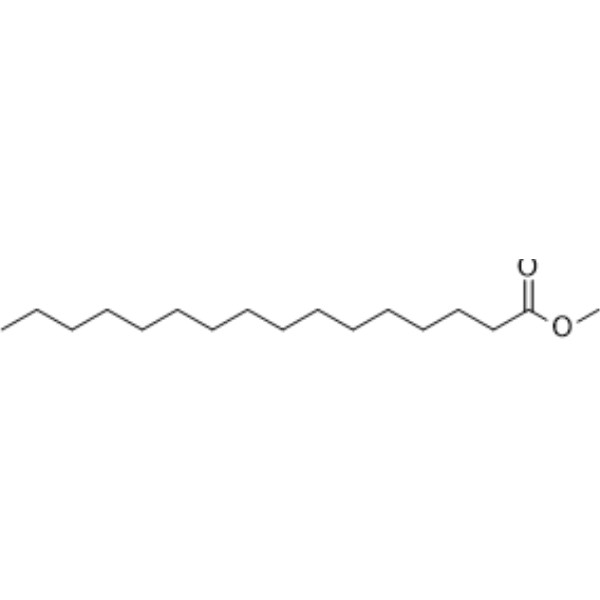
HY-N1482
Methyl palmitateAnti-inflammatory Agent -

HY-W004289R
Methyl pentadecanoate (Standard)Fatty Acid Ester -
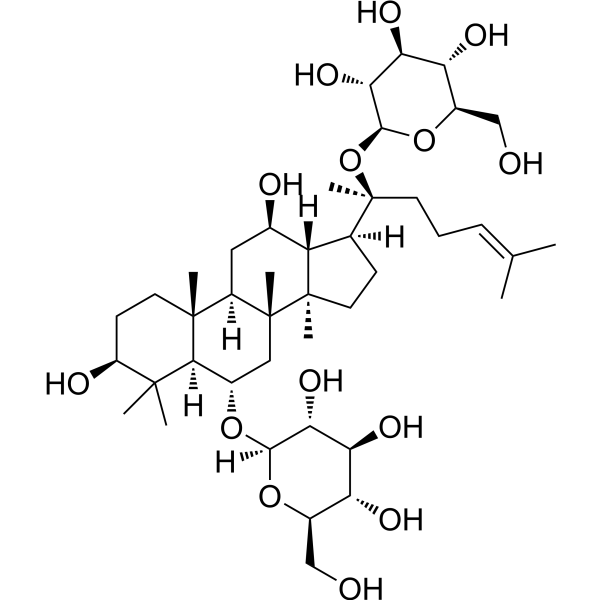
HY-N0045
Ginsenoside Rg1Apoptosis Inducer -
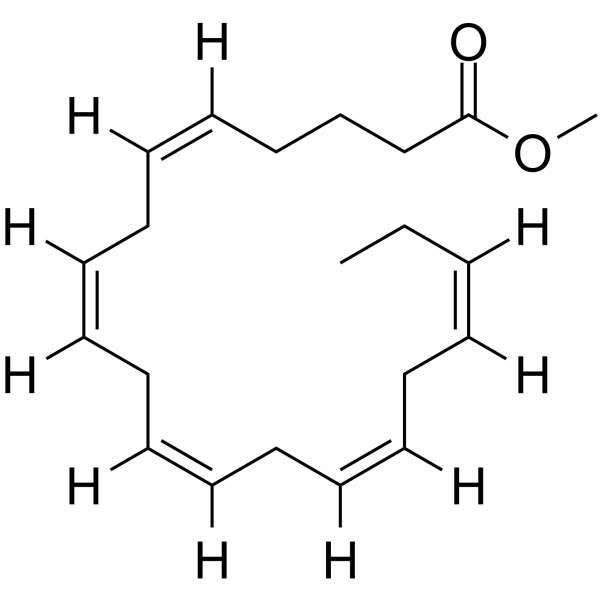
HY-W011311
Eicosapentaenoic acid methyl esterApoptosis Inducer Degrader -
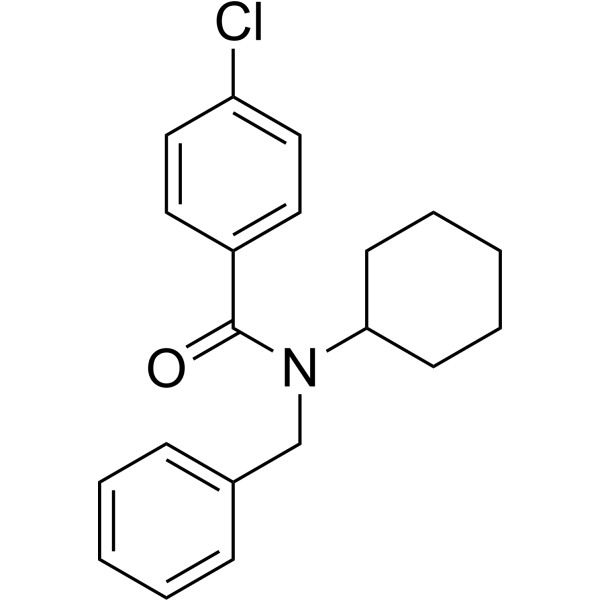
HY-19370
FPS-ZM1Amyloid-β Inhibitor -

HY-W004288
Methyl myristateB16F10 Inducer
All Parasite Isoforms
More

Biological Activity
Description
IC50 & Target
|
AChE |
In Vitro
Methyl tridecanoate (10-70 μM) binds tightly to the recombinant Anopheles sinensis AsOBP21f protein, with a Ki value of 2.3 μM[1].
Methyl tridecanoate exerts weak inhibitory effects on β-amyloid aggregation and acetylcholinesterase activity[2].
MedChemExpress (MCE) has not independently confirmed the accuracy of these methods. They are for reference only.
In Vivo
MedChemExpress (MCE) has not independently confirmed the accuracy of these methods. They are for reference only.
-
Animal Model:wild-type (Wuxi) (3-5-day-old non-blood-fed female adults)/AsOrco−/− mutant (derived from Wuxi wild-type) (3-5-day-old non-blood-fed female adults)[1]
-
Dosage:0.0001% (v/v), 0.001% (v/v), 0.01% (v/v)/0.01% (v/v), 0.10% (v/v), 1.00% (v/v), 2.50% (v/v), 5.00% (v/v)
-
Administration:topical application; single exposure/aerosol exposure; single stimulation per concentration
-
Result:Exhibited a significant dose-dependent attractant effect.
sinensis.
Elicited dose-dependent EAG responses in wild-type An.
sinensis.


Chemical Information
-
CAS No. 1731-88-0
-
Appearance Solid-Liquid Mixture
-
Molecular Weight 228.37
-
Formula C14H28O2
-
Color Colorless to light yellow
-
SMILES
CCCCCCCCCCCCC(=O)OC
-
Structure Classification
-
Initial Source
-
Shipping
Room temperature in continental US; may vary elsewhere.
-
Storage
Pure form -20°C 3 years 4°C 2 years In solvent -80°C 6 months -20°C 1 month


Solvent & Solubility
In Vitro:
DMSO : ≥ 10 mg/mL (43.79 mM; Hygroscopic DMSO has a significant impact on the solubility of product, please use newly opened DMSO)
* "≥" means soluble, but saturation unknown.
Please refer to the solubility information to select the appropriate solvent. Once prepared, please aliquot and store the solution to prevent product inactivation from repeated freeze-thaw cycles.
Storage method and period of stock solution: -80°C, 6 months; -20°C, 1 month. When stored at -80°C, please use it within 6 months. When stored at -20°C, please use it within 1 month.
Please refer to the solubility information to select the appropriate solvent. Once prepared, please aliquot and store the solution to prevent product inactivation from repeated freeze-thaw cycles.
Storage method and period of stock solution: -80°C, 6 months; -20°C, 1 month. When stored at -80°C, please use it within 6 months. When stored at -20°C, please use it within 1 month.
Concentration (start) × Volume (start) = Concentration (final) × Volume (final)
In Vivo:
Select the appropriate dissolution method based on your experimental animal and administration route.
- For the following dissolution methods, please ensure to first prepare a clear stock solution using an In Vitro approach and then sequentially add co-solvents:
- To ensure reliable experimental results, the clarified stock solution can be appropriately stored based on storage conditions. As for the working solution for In Vivo experiments, it is recommended to prepare freshly and use it on the same day.
- The percentages shown for the solvents indicate their volumetric ratio in the final prepared solution. If precipitation or phase separation occurs during preparation, heat and/or sonication can be used to aid dissolution.
Add each solvent one by one: 10% DMSO 40% PEG300 5% Tween-80 45% Saline
Solubility: ≥ 5 mg/mL (21.89 mM); Clear solution
This protocol yields a clear solution of ≥ 5 mg/mL (saturation unknown).
Taking 1 mL working solution as an example, add 100 μL DMSO stock solution (50.0 mg/mL) to 400 μL PEG300, and mix evenly; then add 50 μL Tween-80 and mix evenly; then add 450 μL Saline to adjust the volume to 1 mL.
Preparation of Saline: Dissolve 0.9 g sodium chloride in ddH₂O and dilute to 100 mL to obtain a clear Saline solution.
In Vivo Dissolution Calculator
Please enter the basic information of animal experiments:
-
-
-
-
Recommended: Prepare an additional quantity of animals to account for potential losses during experiments.
Please enter your animal formula composition:
-
%DMSO +
Recommended: Keep the proportion of DMSO in working solution below 2% if your animal is weak.
-
%+
-
+%Tween-80 + +
-
%Saline +
The co-solvents required include: DMSO, . All of co-solvents are available by MedChemExpress (MCE). , Tween 80. All of co-solvents are available by MedChemExpress (MCE).
Working solution concentration: 0.22 mg/mL
Method for preparing stock solution: mg drug dissolved in μL DMSO. Stock solution concentration: mg/mL.
1. Take μL DMSO stock solution;
2. Add μL .
μL , mix evenly;
3. Then add μL Tween 80, mix evenly;
4. Then add μL
Please ensure that the stock solution in the first step is dissolved to a clear state, and add co-solvents in sequence. You can use ultrasonic heating (ultrasonic cleaner, recommended frequency 20-40 kHz), vortexing, etc. to assist dissolution.


Purity & Documentation
-
Data Sheet (272 KB)
-
SDS (476 KB)
- English - EN (476 KB)
- Français - FR (476 KB)
- Deutsch - DE (476 KB)
- Norwegian - NO (476 KB)
- Español - ES (476 KB)
- Swedish - SV (476 KB)
- Italian - IT (476 KB)
- Korean - KR (476 KB)
- Portuguese - PT (476 KB)
-
Handling Instructions (2659 KB)
References
[1]. Li F, et al. Functional characterization of AsOBP21f, an odorant-binding protein involved in human odor detection in the malaria vector Anopheles sinensis. Parasit Vectors. Published online March 23, 2026. [Content Brief]
[2]. Lomarat P, et al. Bioactivity-guided Separation of the Active Compounds in Acacia pennata Responsible for the Prevention of Alzheimer's Disease. Nat Prod Commun. 2015 Aug;10(8):1431-4. [Content Brief]


Complete Stock Solution Preparation Table
Please refer to the solubility information to select the appropriate solvent. Once prepared, please aliquot and store the solution to prevent product inactivation from repeated freeze-thaw cycles.
Storage method and period of stock solution: -80°C, 6 months; -20°C, 1 month. When stored at -80°C, please use it within 6 months. When stored at -20°C, please use it within 1 month.
| Optional Solvent | Concentration Solvent Mass | 1 mg | 5 mg | 10 mg | 25 mg |
|---|---|---|---|---|---|
| DMSO | 1 mM | 4.3789 mL | 21.8943 mL | 43.7886 mL | 109.4715 mL |
| 5 mM | 0.8758 mL | 4.3789 mL | 8.7577 mL | 21.8943 mL | |
| 10 mM | 0.4379 mL | 2.1894 mL | 4.3789 mL | 10.9471 mL | |
| 15 mM | 0.2919 mL | 1.4596 mL | 2.9192 mL | 7.2981 mL | |
| 20 mM | 0.2189 mL | 1.0947 mL | 2.1894 mL | 5.4736 mL | |
| 25 mM | 0.1752 mL | 0.8758 mL | 1.7515 mL | 4.3789 mL | |
| 30 mM | 0.1460 mL | 0.7298 mL | 1.4596 mL | 3.6490 mL | |
| 40 mM | 0.1095 mL | 0.5474 mL | 1.0947 mL | 2.7368 mL |


Methyl tridecanoate Related Classifications
HY-W004287 Related Classifications
 Powered by Bioz
Keywords
- Methyl tridecanoate
- 1731-88-0
- Amyloid-β
- Cholinesterase (ChE)
- Parasite
- RNAi
- recombinant protein
- AsOrco?/?
- host-seeking behavior
- malaria
- Anopheles sinensis
- Ser124
- antennal electrophysiological responses
- AsOBP21f
- electroantennogram responses
- fatty acid methyl ester
- β-amyloid
- AChE
- Alzheimer's disease
- Inhibitor
- inhibitor
- inhibit