



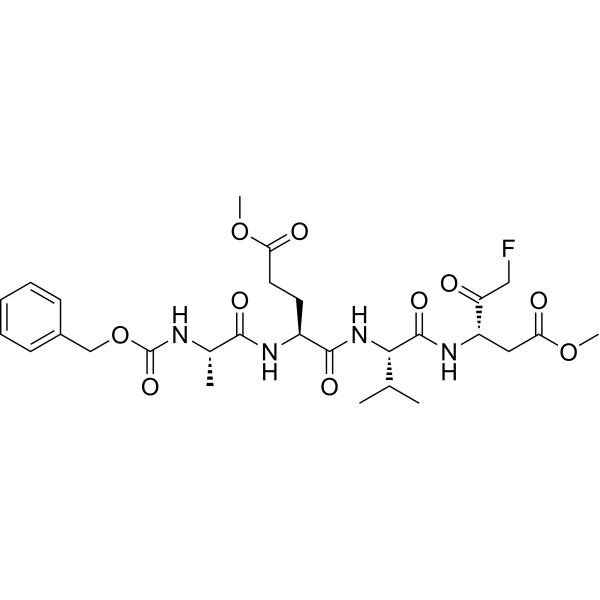
Z-AEVD-FMK

Based on 1 Customer Validation
Z-AEVD-FMK is a caspase-10 inhibitor. Z-AEVD-FMK can inhibit the activation of Bid and the release of apoptosis-inducing factor (AIF) in mitochondria in cells, resulting in a significant decrease in the number of apoptotic cells.
For research use only. We do not sell to patients.
- Purity : 95.0%
- CAS No.: 1135688-47-9
- Formula: C28H39FN4O10
- Molecular Weight:610.63
-
Storage:
-20°C, protect from light, stored under nitrogen
* In solvent : -80°C, 6 months; -20°C, 1 month (protect from light, stored under nitrogen)

To place orders, for customer services and technical support, please contact: MedChemExpress USA
Tel: 609-228-6898 E-mail: [email protected] [email protected]


-
 Biological Activity
-
Chemical Information
-
Solvent & Solubility
- Protocols
- Purity & Documentation
- References
-
 Help & FAQs


-
HY-16658B
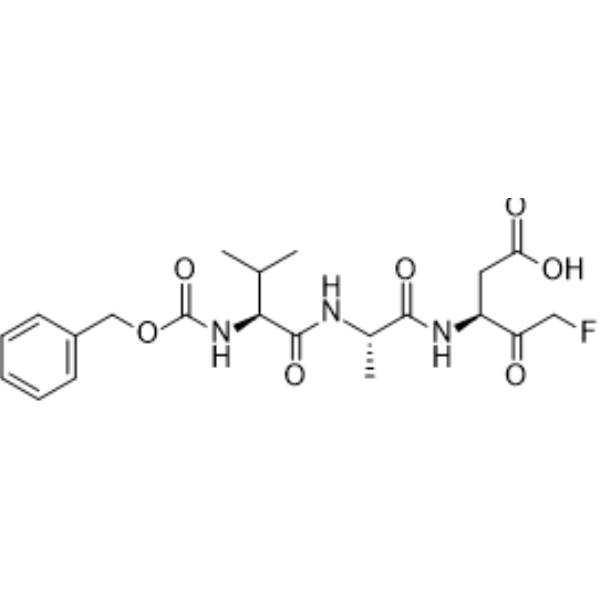
Z-VAD-FMKPan-Caspase Inhibitor -
HY-12466
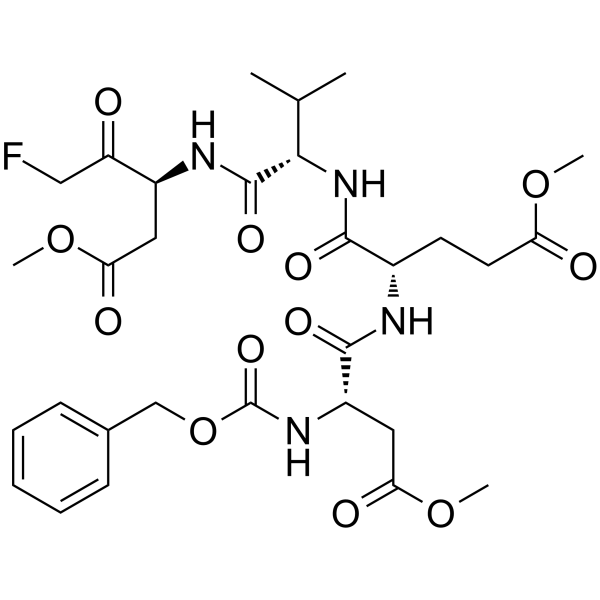
Z-DEVD-FMKCaspase-3 Inhibitor -
HY-12305
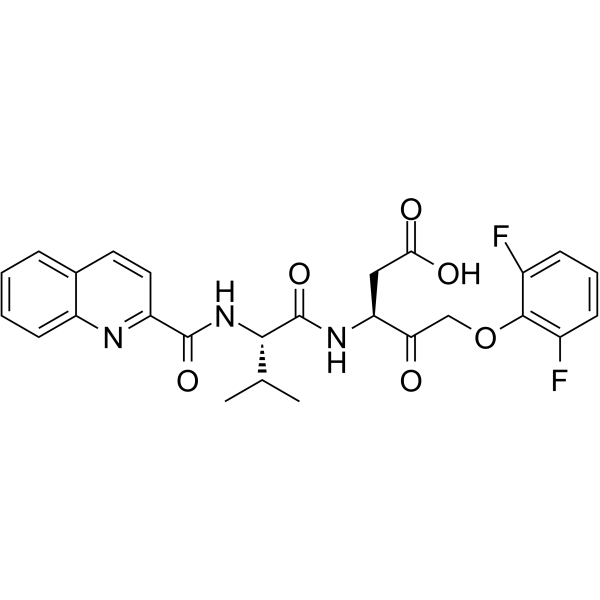
Q-VD-OPhPan-caspase Inhibitor -
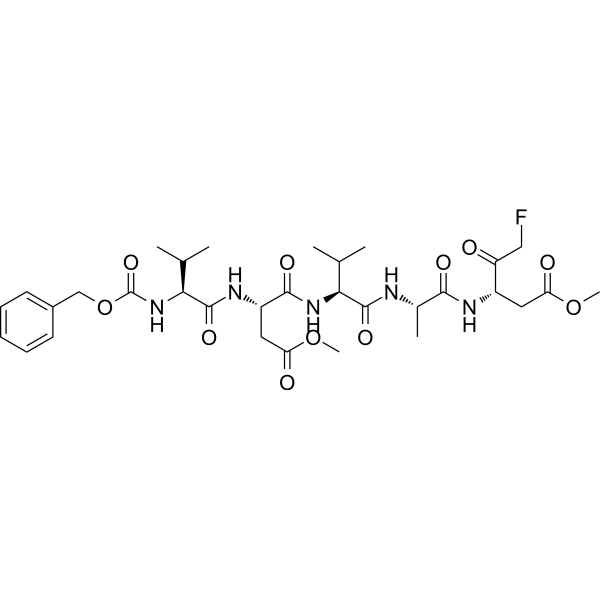
HY-P1008
Z-VDVAD-FMKCaspase-2 Inhibitor -
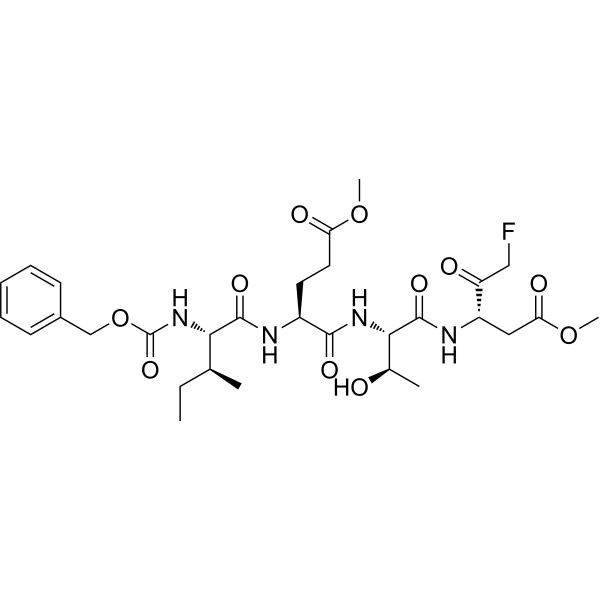
HY-101297
Z-IETD-FMKCaspase-8 Inhibitor -
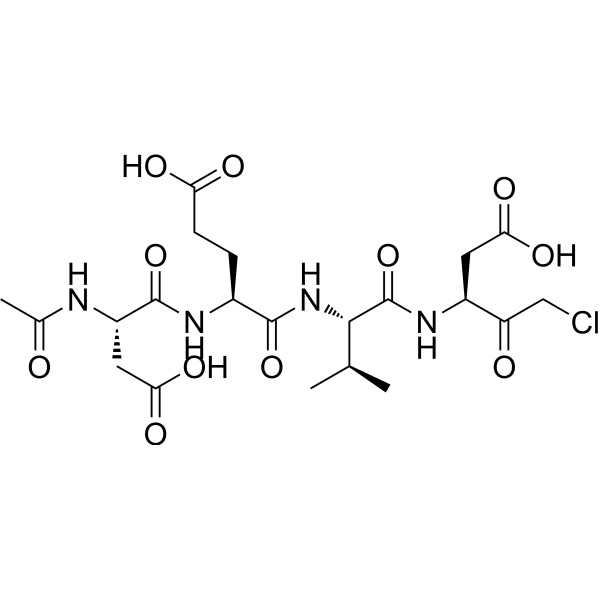
HY-P0034
Ac-DEVD-CMKCaspase-3 Inhibitor -
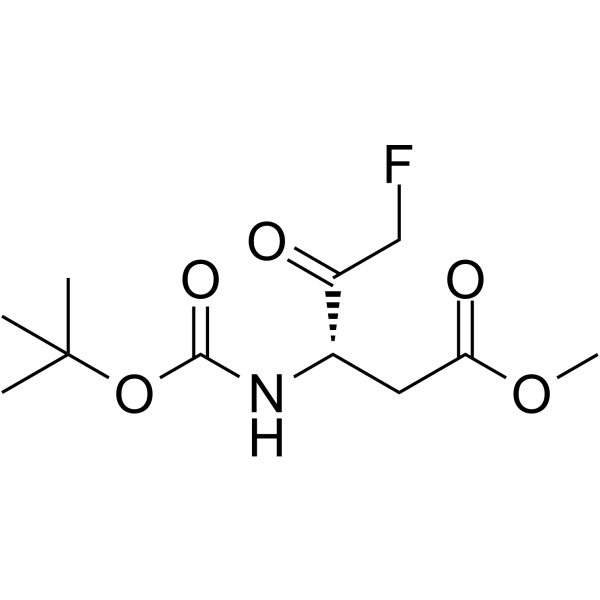
HY-103348
Boc-Asp(OMe)-fluoromethyl ketoneCaspase Inhibitor -

HY-116692
Apoptosis inducer 34Caspase Activator -
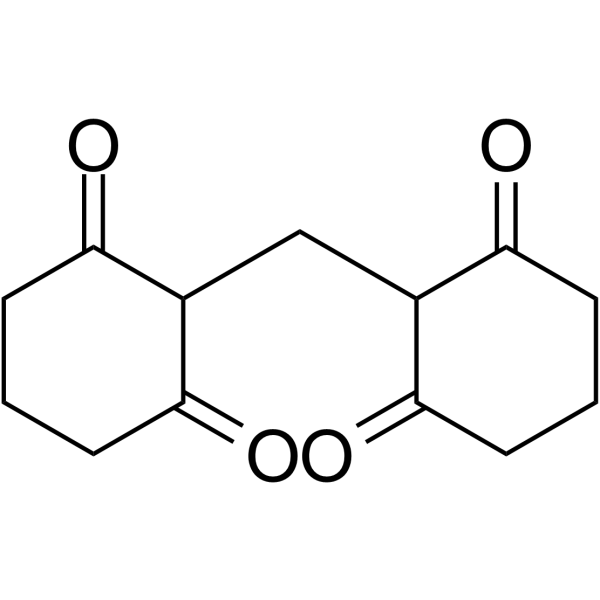
HY-103347
M50054Apoptosis Inhibitor -
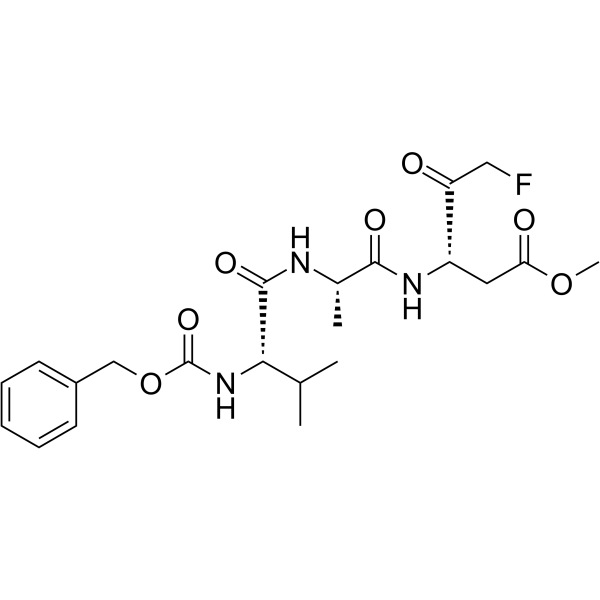
HY-16658
Z-VAD(OMe)-FMKPan-caspase Inhibitor -

HY-W033813
Caspase-3/7 Inhibitor ICaspase-3/7 Inhibitor -
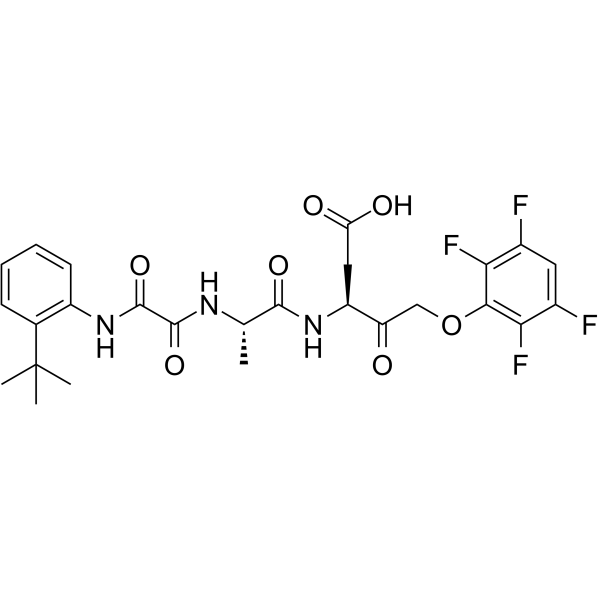
HY-10396
Emricasanpan-Caspase Inhibitor
All Caspase Isoforms
More

Biological Activity
Description
IC50 & Target
[1]|
Caspase-10 |


Chemical Information
-
CAS No. 1135688-47-9
-
Appearance Solid
-
Molecular Weight 610.63
-
Formula C28H39FN4O10
-
Color White to light yellow
-
SMILES
O=C(OC)C[C@@H](C(CF)=O)NC([C@H](C(C)C)NC([C@H](CCC(OC)=O)NC([C@H](C)NC(OCC1=CC=CC=C1)=O)=O)=O)=O
-
Shipping
Room temperature in continental US; may vary elsewhere.
-
Storage
-20°C, protect from light, stored under nitrogen
* In solvent : -80°C, 6 months; -20°C, 1 month (protect from light, stored under nitrogen)


Solvent & Solubility
In Vitro:
DMSO : 125 mg/mL (204.71 mM; Need ultrasonic; Hygroscopic DMSO has a significant impact on the solubility of product, please use newly opened DMSO)
Please refer to the solubility information to select the appropriate solvent. Once prepared, please aliquot and store the solution to prevent product inactivation from repeated freeze-thaw cycles.
Storage method and period of stock solution: -80°C, 6 months; -20°C, 1 month (protect from light, stored under nitrogen). When stored at -80°C, please use it within 6 months. When stored at -20°C, please use it within 1 month.
Please refer to the solubility information to select the appropriate solvent. Once prepared, please aliquot and store the solution to prevent product inactivation from repeated freeze-thaw cycles.
Storage method and period of stock solution: -80°C, 6 months; -20°C, 1 month (protect from light, stored under nitrogen). When stored at -80°C, please use it within 6 months. When stored at -20°C, please use it within 1 month.
Concentration (start) × Volume (start) = Concentration (final) × Volume (final)

Protocols
-
Apoptosis
Apoptosis, also called programmed cell death, is generally characterized by distinct morphological characteristics.
-
TUNEL staining for apoptotic DNA fragmentation
TUNEL staining detects DNA strand breaks by using terminal deoxynucleotidyl transferase to add labeled nucleotides to exposed 3′-OH DNA termini, generating either microscopic staining in fixed cells or tissue sections, or fluorescence/cytometric signal in cell suspensions. TUNEL positivity reflects DNA fragmentation but should not be interpreted alone as definitive apoptosis, because TUNEL can also label necrotic, autolytic, mechanically damaged, or DNA-repair-associated DNA breaks.
-
Annexin V plus membrane-impermeant dye apoptosis staining
Annexin V-based apoptosis assays rely on the detection of phosphatidylserine (PS) externalization from the inner leaflet of the plasma membrane to the outer leaflet, an early biochemical hallmark of apoptosis. Fluorescently labeled Annexin V binds PS in a calcium-dependent manner, enabling identification of early apoptotic cells by flow cytometry or fluorescence microscopy. When combined with a membrane-impermeant DNA-binding dye (e. g. , propidium iodide), this approach allows discrimination between viable (Annexin V−/dye−), early apoptotic (Annexin V+/dye−), and late apoptotic or necrotic (Annexin V+/dye+) cell populations by assessing membrane integrity and PS exposure.
-
Apoptosis Solutions
Apoptosis is a regulated, generally non-lytic cell-death pathway that removes unwanted, damaged, infected, or abnormal cells through coordinated morphological changes, caspase activation, DNA fragmentation, and membrane remodeling. The intrinsic apoptosis pathway is controlled mainly by mitochondrial outer membrane permeabilization, BCL-2 family proteins, cytochrome c release, apoptosome formation, caspase-9 activation, and downstream executioner caspase-3/7 activation. The extrinsic apoptosis pathway is initiated by death receptors such as Fas, TNFR, and TRAIL receptors, which recruit adaptor proteins and activate caspase-8 before engaging executioner caspases or mitochondrial amplification through BID cleavage. Apoptosis is linked to many phenotypes, including cancer cell killing, tissue homeostasis, immune regulation, neurodegeneration, infection response, and treatment-induced cytotoxicity; unresolved questions include how apoptosis interacts with necroptosis, pyroptosis, ferroptos


Purity & Documentation
-
Data Sheet (270 KB)
-
SDS (393 KB)
- English - EN (393 KB)
- Français - FR (393 KB)
- Deutsch - DE (393 KB)
- Norwegian - NO (393 KB)
- Español - ES (393 KB)
- Swedish - SV (393 KB)
- Italian - IT (393 KB)
- Korean - KR (393 KB)
- Portuguese - PT (393 KB)
-
Handling Instructions (2659 KB)
References
[1]. Park SJ, et al. Taxol induces caspase-10-dependent apoptosis. J Biol Chem. 2004 Dec 3;279(49):51057-67. [Content Brief]
[2]. Ekchariyawat P, et al. Apoptosis induced by avian H5N1 virus in human monocyte-derived macrophages involves TRAIL-inducing caspase-10 activation. Innate Immun. 2012 Jun;18(3):390-7. [Content Brief]


Complete Stock Solution Preparation Table
Please refer to the solubility information to select the appropriate solvent. Once prepared, please aliquot and store the solution to prevent product inactivation from repeated freeze-thaw cycles.
Storage method and period of stock solution: -80°C, 6 months; -20°C, 1 month (protect from light, stored under nitrogen). When stored at -80°C, please use it within 6 months. When stored at -20°C, please use it within 1 month.
| Optional Solvent | Concentration Solvent Mass | 1 mg | 5 mg | 10 mg | 25 mg |
|---|---|---|---|---|---|
| DMSO | 1 mM | 1.6377 mL | 8.1883 mL | 16.3765 mL | 40.9413 mL |
| 5 mM | 0.3275 mL | 1.6377 mL | 3.2753 mL | 8.1883 mL | |
| 10 mM | 0.1638 mL | 0.8188 mL | 1.6377 mL | 4.0941 mL | |
| 15 mM | 0.1092 mL | 0.5459 mL | 1.0918 mL | 2.7294 mL | |
| 20 mM | 0.0819 mL | 0.4094 mL | 0.8188 mL | 2.0471 mL | |
| 25 mM | 0.0655 mL | 0.3275 mL | 0.6551 mL | 1.6377 mL | |
| 30 mM | 0.0546 mL | 0.2729 mL | 0.5459 mL | 1.3647 mL | |
| 40 mM | 0.0409 mL | 0.2047 mL | 0.4094 mL | 1.0235 mL | |
| 50 mM | 0.0328 mL | 0.1638 mL | 0.3275 mL | 0.8188 mL | |
| 60 mM | 0.0273 mL | 0.1365 mL | 0.2729 mL | 0.6824 mL | |
| 80 mM | 0.0205 mL | 0.1024 mL | 0.2047 mL | 0.5118 mL | |
| 100 mM | 0.0164 mL | 0.0819 mL | 0.1638 mL | 0.4094 mL |


Z-AEVD-FMK Related Classifications
HY-125305 Related Classifications
 Powered by Bioz