



Isovaleric acid
Based on 1 publication(s) in Google Scholar
Isovaleric acid is an oral active short-chain fatty acid that inhibits osteoclast differentiation by stimulating AMPK phosphorylation and promotes colonic smooth muscle relaxation by activating the cAMP/PKA pathway. Isovaleric acid can be used in research on skeletal diseases (such as osteoporosis) and intestinal disorders.
For research use only. We do not sell to patients.
- Purity : 97.0%
- CAS No.: 503-74-2
- Formula: C5H10O2
- Molecular Weight:102.13
-
Storage:
Store at room temperature 3 years.
In solvent -80°C, 2 years , -20°C, 1 year
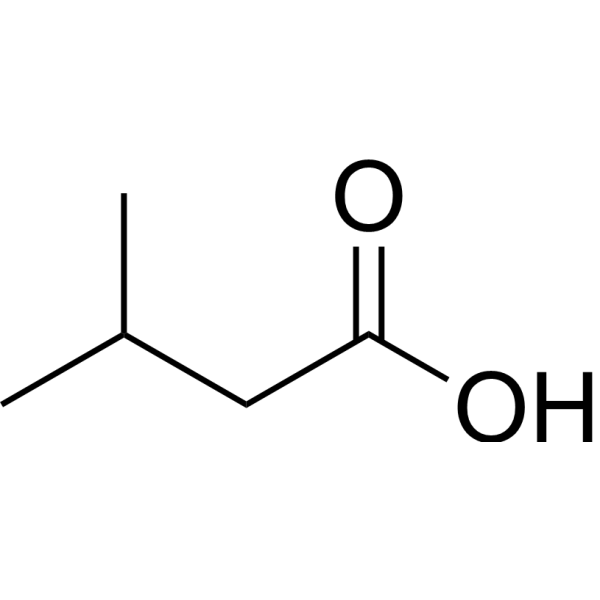

To place orders, for customer services and technical support, please contact: MedChemExpress USA
Tel: 609-228-6898 E-mail: [email protected] [email protected]


-
 Biological Activity
-
Chemical Information
-
Solvent & Solubility
- Protocols
- Purity & Documentation
- References
-
 Help & FAQs


-

HY-W001942
2-Methylbutanoic acidChemical Intermediate -

HY-W012980R
Isovaleric acid (Standard)AMPK Activator -
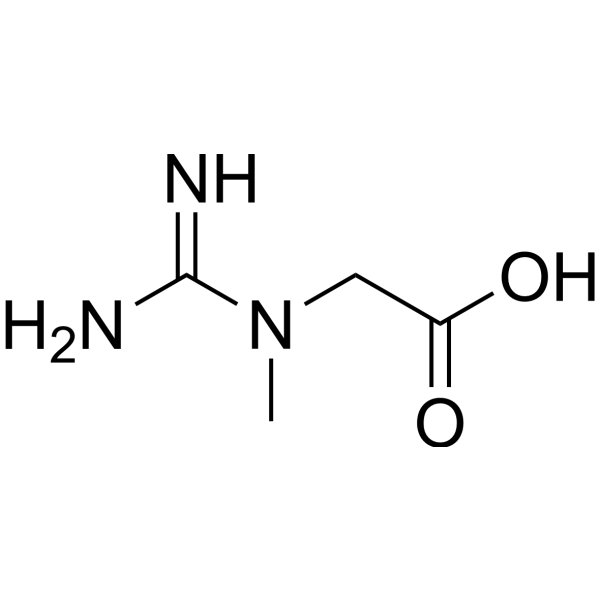
HY-W010388
CreatineEndogenous Metabolite -
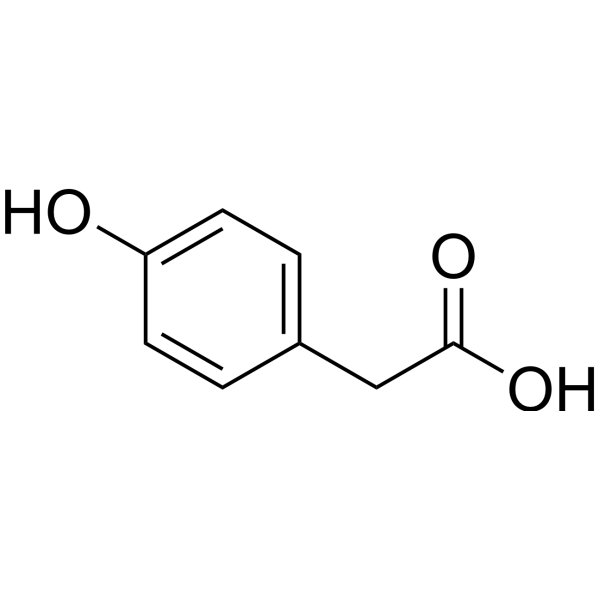
HY-N1902
4-Hydroxyphenylacetic acidEndogenous Metabolite -
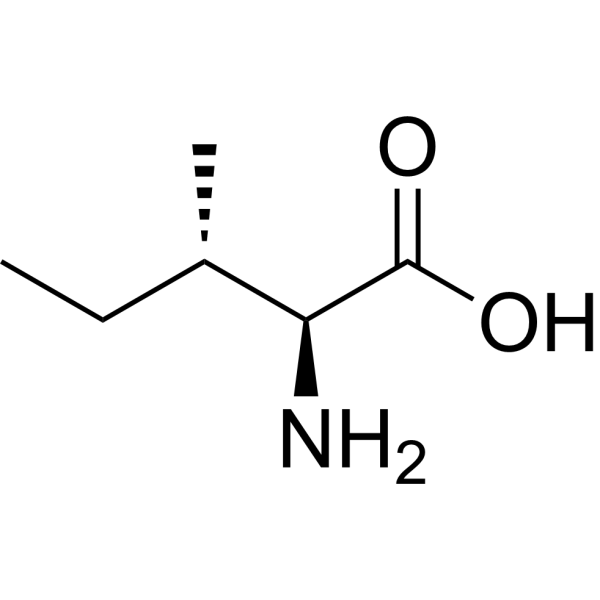
HY-N0771
L-IsoleucineEndogenous Metabolite, L-enantiomer of Isoleucine -
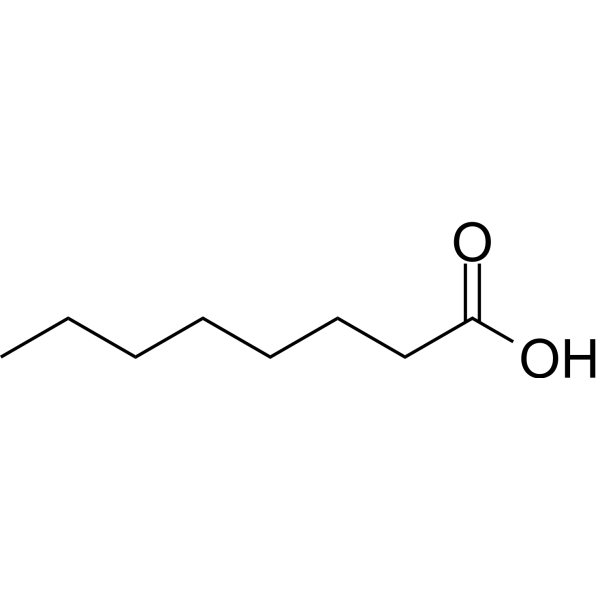
HY-41417
Octanoic acidAntibacterial Agent -
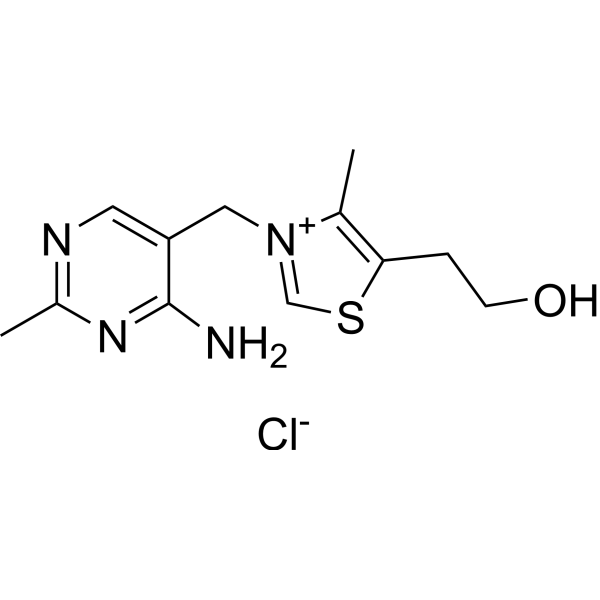
HY-A0100
Thiamine monochlorideNeuronal Effect Enhancer -
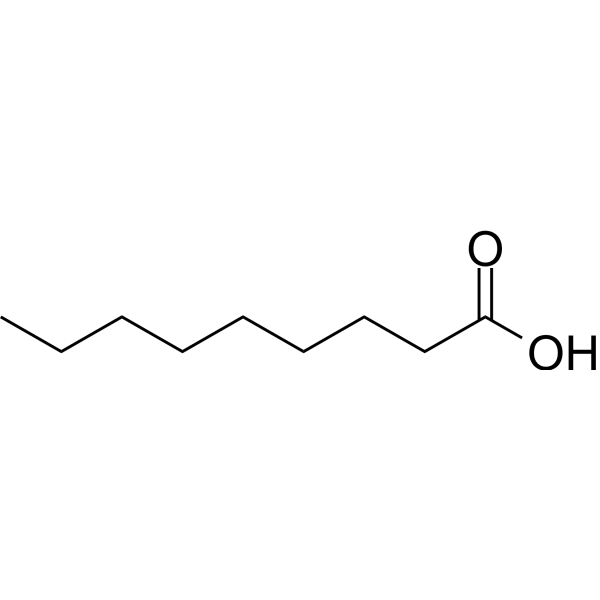
HY-N7057
Nonanoic acidAnti-bacterial Agent
Publications Citing Use of MedChemExpress (MCE) Isovaleric acid
MoreAll Endogenous Metabolite Isoforms
MoreAll AMPK Isoforms
More

Biological Activity
Description
IC50 & Target
|
Microbial Metabolite |
Human Endogenous Metabolite |
In Vitro
Isovaleric acid (5.0 mM, 1 h) reduces Na+, K+-ATPase activity in synaptic membranes from cerebral cortex of Wistar rats (40 days old)[2]. Isovaleric acid (200 μM, 5 days) inhibits RANKL (Receptor Activator of Nuclear Factor κB Ligand)-induced osteoclast (OC) differentiation by promoting AMPK phosphorylation[3]. Isovaleric acid (200 μM, 3 days) has an inhibitory effect on the expression of osteoclast (OC)-related genes[3]. Isovaleric acid (1-100 μM, 1 or 5 min) alleviates acetylcholine-induced colonic smooth muscle contraction by activating the cAMP/PKA pathway[4].
MedChemExpress (MCE) has not independently confirmed the accuracy of these methods. They are for reference only. Further protocols information, click here.
-
Cell Line:RANKL (Receptor Activator of Nuclear Factor κB Ligand) -induced multinucleated osteoclasts (OCs) (Derived from mouse bone marrow-derived macrophages (BMDMs))
-
Concentration:200 μM
-
Incubation Time:3 or 5 days
-
Result:Inhibited the protein expression of OC-related protein such as RANK, TRAF6, NFATc1 and c-fos. Upregulated the expression of phosphorylated AMPK.
-
Cell Line:RANKL (Receptor Activator of Nuclear Factor κB Ligand) -induced multinucleated osteoclasts (OCs) (Derived from mouse bone marrow-derived macrophages (BMDMs))
-
Concentration:200 μM
-
Incubation Time:3 days
-
Result:Significantly decreased the expression of OC-related genes including RANK, Blimp1, TRAF6, c-fos and NFATc1. Downregulated the expression of fusogenic genes including OC-STAMP, DC-STAMP and Atp6v0d2.
In Vivo
MedChemExpress (MCE) has not independently confirmed the accuracy of these methods. They are for reference only.
-
Animal Model:Ovariectomy (OVX)-induced osteoporosis C57BL/6 mice model (8 weeks old)[3]
-
Dosage:75 or 150 mM
-
Administration:Oral gavage (p.o.) (Isovaleric acid was added to drinking water), once daily for 32 days
-
Result:Reduced weight gain in Ovariectomy (OVX)-induced osteoporosis C57BL/6 mice, enhanced the expression of OC-related genes, including NFATc1, Ctsk, and TRAP, and decreased the pore area in bone tissue.


Chemical Information
-
CAS No. 503-74-2
-
Appearance Liquid (Density: 0.926 g/cm3)
-
Molecular Weight 102.13
-
Formula C5H10O2
-
Color Colorless to light yellow
-
SMILES
CC(C)CC(O)=O
-
Structure Classification
-
Shipping
Room temperature in continental US; may vary elsewhere.
-
Storage
Store at room temperature 3 years
In solvent -80°C 2 years -20°C 1 year


Publications (1)
-
Journal Impact Factor
-
Most Recent
-
NPJ Biofilms Microbiomes
Gut microbiota-derived isovaleric acid ameliorates influenza virus infection via gut-lung axis. [Abstract]2025 Jul 1;11(1):116. PMID: 40593739


Solvent & Solubility
In Vitro:
H2O : 100 mg/mL (979.14 mM; Need ultrasonic)
DMSO : 100 mg/mL (979.14 mM; Need ultrasonic; Hygroscopic DMSO has a significant impact on the solubility of product, please use newly opened DMSO)
Please refer to the solubility information to select the appropriate solvent. Once prepared, please aliquot and store the solution to prevent product inactivation from repeated freeze-thaw cycles.
Storage method and period of stock solution: -80°C, 2 years; -20°C, 1 year. When stored at -80°C, please use it within 2 years. When stored at -20°C, please use it within 1 year.
* Note: If you choose water as the stock solution, please dilute it to the working solution, then filter and sterilize it with a 0.22 μm filter before use.
Please refer to the solubility information to select the appropriate solvent. Once prepared, please aliquot and store the solution to prevent product inactivation from repeated freeze-thaw cycles.
Storage method and period of stock solution: -80°C, 2 years; -20°C, 1 year. When stored at -80°C, please use it within 2 years. When stored at -20°C, please use it within 1 year.
* Note: If you choose water as the stock solution, please dilute it to the working solution, then filter and sterilize it with a 0.22 μm filter before use.
Concentration (start) × Volume (start) = Concentration (final) × Volume (final)
In Vivo:
Select the appropriate dissolution method based on your experimental animal and administration route.
- For the following dissolution methods, please ensure to first prepare a clear stock solution using an In Vitro approach and then sequentially add co-solvents:
- To ensure reliable experimental results, the clarified stock solution can be appropriately stored based on storage conditions. As for the working solution for In Vivo experiments, it is recommended to prepare freshly and use it on the same day.
- The percentages shown for the solvents indicate their volumetric ratio in the final prepared solution. If precipitation or phase separation occurs during preparation, heat and/or sonication can be used to aid dissolution.
Add each solvent one by one: 10% DMSO 40% PEG300 5% Tween-80 45% Saline
Solubility: ≥ 2.5 mg/mL (24.48 mM); Clear solution
This protocol yields a clear solution of ≥ 2.5 mg/mL (saturation unknown).
Taking 1 mL working solution as an example, add 100 μL DMSO stock solution (25.0 mg/mL) to 400 μL PEG300, and mix evenly; then add 50 μL Tween-80 and mix evenly; then add 450 μL Saline to adjust the volume to 1 mL.
Preparation of Saline: Dissolve 0.9 g sodium chloride in ddH₂O and dilute to 100 mL to obtain a clear Saline solution.
Add each solvent one by one: 10% DMSO 90% (20% SBE-β-CD in Saline)
Solubility: ≥ 2.5 mg/mL (24.48 mM); Clear solution
This protocol yields a clear solution of ≥ 2.5 mg/mL (saturation unknown).
Taking 1 mL working solution as an example, add 100 μL DMSO stock solution (25.0 mg/mL) to 900 μL 20% SBE-β-CD in Saline, and mix evenly.
Preparation of 20% SBE-β-CD in Saline (4°C, storage for one week): 2 g SBE-β-CD powder is dissolved in 10 mL Saline, completely dissolve until clear.
For the following dissolution methods, please prepare the working solution directly:
It is recommended to prepare fresh solutions and use them promptly within a short period of time.
The percentages shown for the solvents indicate their volumetric ratio in the final prepared solution. If precipitation or phase separation occurs during preparation, heat and/or sonication can be used to aid dissolution.
Add each solvent one by one: PBS
Solubility: 100 mg/mL (979.14 mM); Clear solution; Need ultrasonic
In Vivo Dissolution Calculator
Please enter the basic information of animal experiments:
-
-
-
-
Recommended: Prepare an additional quantity of animals to account for potential losses during experiments.
Working solution concentration: 0.22 mg/mL
This product has good water solubility, please refer to the measured solubility data in water/PBS/Saline for details.

Protocols
-
Kinase activity and phosphorylation assays
Kinase activity assays measure the ability of kinases to transfer phosphate groups from ATP to specific substrates, while phosphorylation assays detect the presence and levels of phosphorylated proteins. Common methods include radiolabeled ATP incorporation (e. g. ,), ADP release detection via bioluminescence (e. g. ,[3]), enzyme-linked immunosorbent assays (ELISA) for phospho-specific epitopes (e. g. ,[6]), and microtiter-based formats for high-throughput screening (e. g. ,[8]). The ADP-Glo assay quantifies kinase activity by measuring ADP produced during phosphorylation using a luciferase-based system. Radiometric assays involve autoradiography or scintillation counting after incorporation of 32P-labeled ATP into substrate proteins. ELISA-based approaches rely on phospho-specific antibodies to detect activated kinases in cell lysates or purified samples.
-
Western Blot
Western blotting (WB) is a commonly used experimental method in molecular biology, biochemistry, and immunogenetics for identifying and quantifying target proteins. It combines gel electrophoresis with immunoassay, enabling researchers to analyze protein expression, post-translational modifications, and molecular weight.
-
Protocol for Kinase activity and phosphorylation assays
Kinase activity assays measure transfer of phosphate from ATP to a protein or peptide substrate, generating phosphorylated substrate, ADP, or incorporated radiolabeled phosphate as the readout; phosphorylation assays measure site-specific phosphorylation in cells or tissues as a proxy for kinase-pathway activation, inhibition, or substrate regulation. Phosphorylation can be detected by phospho-specific Western blot, immunoprecipitation kinase assay, phospho-immunofluorescence, phospho-flow cytometry, luminescent ADP detection, radiolabeled ATP incorporation, or reporter-based pathway assays, and these readouts can be applied to cancer cells, primary neurons, mouse tumors, organoids, inflammatory macrophages, ferroptosis studies, and mitophagy studies when the kinase target is biologically relevant.
-
Osteoclast differentiation from monocyte/macrophage precursors
Osteoclast differentiation is an in vitro induction assay in which monocyte/macrophage-lineage precursors are exposed to macrophage colony-stimulating factor (M-CSF) and receptor activator of NF-κB ligand (RANKL), generating multinucleated osteoclasts that are commonly identified by tartrate-resistant acid phosphatase (TRAP) staining and functionally confirmed by resorption pits on dentin, bone, or mineralized substrates. M-CSF supports survival and expansion of osteoclast precursors, while RANKL binding to RANK drives osteoclast commitment, fusion, maturation, and resorptive function; osteoprotegerin inhibits this pathway by binding RANKL and preventing RANK activation. The main readouts are the number of TRAP-positive multinucleated cells, formation of F-actin rings, and resorbed surface area; TRAP-positive multinucleated cells indicate osteoclast differentiation, whereas pit formation on dentin, bone, or mineralized coating indicates functional bone-resorbing activity.


Purity & Documentation
-
Data Sheet (283 KB)
-
SDS (477 KB)
- English - EN (477 KB)
- Français - FR (477 KB)
- Deutsch - DE (477 KB)
- Norwegian - NO (477 KB)
- Español - ES (477 KB)
- Swedish - SV (477 KB)
- Italian - IT (477 KB)
- Korean - KR (477 KB)
- Portuguese - PT (477 KB)
-
Handling Instructions (2659 KB)
References
[1]. Ackman RG, et al. Birthweights in the Faroe Islands: possible role of isovaleric acid. J Intern Med. 1989 Feb;225(2):73-5. [Content Brief]
[2]. Ribeiro C A J, et al. Isovaleric acid reduces Na+, K+-ATPase activity in synaptic membranes from cerebral cortex of young rats[J]. Cellular and molecular neurobiology, 2007, 27: 529-540. [Content Brief]
[3]. Cho K M, et al. Isovaleric acid ameliorates ovariectomy‐induced osteoporosis by inhibiting osteoclast differentiation[J]. Journal of Cellular and Molecular Medicine, 2021, 25(9): 4287-4297. [Content Brief]
[4]. Blakeney BA, et al. Branched Short-Chain Fatty Acid Isovaleric Acid Causes Colonic Smooth Muscle Relaxation via cAMP/PKA Pathway. Dig Dis Sci. 2019 May;64(5):1171-1181. [Content Brief]


Complete Stock Solution Preparation Table
Please refer to the solubility information to select the appropriate solvent. Once prepared, please aliquot and store the solution to prevent product inactivation from repeated freeze-thaw cycles.
Storage method and period of stock solution: -80°C, 2 years; -20°C, 1 year. When stored at -80°C, please use it within 2 years. When stored at -20°C, please use it within 1 year.
| Optional Solvent | Concentration Solvent Mass | 1 mg | 5 mg | 10 mg | 25 mg |
|---|---|---|---|---|---|
| H2O / DMSO | 1 mM | 9.7914 mL | 48.9572 mL | 97.9144 mL | 244.7861 mL |
| 5 mM | 1.9583 mL | 9.7914 mL | 19.5829 mL | 48.9572 mL | |
| 10 mM | 0.9791 mL | 4.8957 mL | 9.7914 mL | 24.4786 mL | |
| 15 mM | 0.6528 mL | 3.2638 mL | 6.5276 mL | 16.3191 mL | |
| 20 mM | 0.4896 mL | 2.4479 mL | 4.8957 mL | 12.2393 mL | |
| 25 mM | 0.3917 mL | 1.9583 mL | 3.9166 mL | 9.7914 mL | |
| 30 mM | 0.3264 mL | 1.6319 mL | 3.2638 mL | 8.1595 mL | |
| 40 mM | 0.2448 mL | 1.2239 mL | 2.4479 mL | 6.1197 mL | |
| 50 mM | 0.1958 mL | 0.9791 mL | 1.9583 mL | 4.8957 mL | |
| 60 mM | 0.1632 mL | 0.8160 mL | 1.6319 mL | 4.0798 mL | |
| 80 mM | 0.1224 mL | 0.6120 mL | 1.2239 mL | 3.0598 mL | |
| 100 mM | 0.0979 mL | 0.4896 mL | 0.9791 mL | 2.4479 mL |
* Note: If you choose water as the stock solution, please dilute it to the working solution, then filter and sterilize it with a 0.22 μm filter before use.


Isovaleric acid Related Classifications
HY-W012980 Related Classifications
 Powered by Bioz